interfaith · sermon · torah

Do not hide the tears of tolerance


As some of you know, my kippah is a permanent fixture on my head, and has been since my early 20s. I often get asked whether I experience any feedback for being so visibly Jewish. My answer is: yes. Occasionally, Christians come up to me and say “shalom.” I say “shalom” back.

Well, this week, I have a more interesting story to tell.

Last Saturday night, Laurence and I were on our way back from a friend’s birthday lip synch. (Yes, in my time off, I do competitively mime to Nicki Minaj wearing a space suit and kitten heels.)

We were heading into Vauxhall Station. A group of men in their early 20s were dancing around, holding hands, and reaching out their hands for others to join them.

It will probably not surprise you to hear that I joined in. The boys cheered.

Within moments of joining them, I realised I might have made a terrible mistake. The man whose hand I was holding was, in fact, wearing a Palestine football shirt. They were all speaking Arabic. A taller man noticed my kippah and said to the others “hu yehudi.” I know what this means in Arabic, because you say it the same way in Hebrew: he’s Jewish.

And I thought, well, it’s basically the same language, I’ll try talking with them in Hebrew. Friends, these gentlemen did not, in fact, speak Hebrew. Their English was pretty stilted too.

Right next to us, a fist fight broke out between two white guys.

We all fumbled awkwardly, and tried to communicate across a language barrier. The tension became palpable. It was just me and Laurence and a whole group of Palestinian men.

I asked: “where are you from?”

“We are from Gaza,” the one who had been holding my hand said. “Do you support the government?”

I said: “of course not.”

The man said: “Really?”

I said: “Yes.”

The men cheered, and resumed dancing. I got on my train back to Ditton.

There was no time to explain that the Israeli government wasn’t actually my government at all, but my answer would have been the same whichever government he was talking about.

I am under no illusion that this story could have ended differently. But, as it is, the story ended with dancing in the streets of London, and everybody walking away with their dignity intact.

Now, I may have been the first visibly Jewish person these men had met who was not wearing a military uniform. And perhaps now, with the freedom of London, they will get the chance to learn more about who Jews are.

And perhaps I will go away and actually do my Arabic homework so that I can have a better quality conversation. At least, in the future, I won’t default to Hebrew as a good enough alternative.

I think we tend to imagine that tolerance is the true harmony of everyone fully understanding each other; living side by side; eating in the same restaurants; celebrating and grieving together.

I still believe that true peace will come, when everyone has full equality, and nobody has any more need for conflict.

But, most of the time, life is not like that.

As long as there is inequality, those with less will want what those with more have; and those who have more power will exert it over those with less. Until we all have everything we need, there will be conflict for the power and possessions we lack.

Tolerance, in our society, is the decision to set grudges aside, to suspend prejudice, and to just let each other go on with life. It is the decision of the stronger to spare the weaker. It is a choice to ignore stock characters and old grievances for the sake of everyone getting on with their day.

It is not easy passivity, but a conscious choice to accept the world as it is. Sometimes, that is painful.

So it is with Joseph and his brothers.

Consider all the array of feelings Joseph must have held when he first saw his brothers. The last time he had encountered them, they had thrown him in a pit, then sold him at a cheap price to travelling merchants.

Do you think he was in the mood for forgiving?

And what about his brothers? They are now in abject poverty. They have travelled miles on foot to escape famine in their homeland. And they have to prostrate themselves and beg before a foreign king in a language they do not understand.

The powerful and the powerless have switched places; the resources are now all in Joseph’s hands.

Joseph doesn’t just shrug his shoulders and get over it. Instead, he decides to test his brothers and bring his entire estranged family to Egypt.

Joseph hides a silver cup in his brother Benjamin’s satchel and uses the supposed theft as a pretext to hold him hostage. Joseph announces to his family that he is going to keep their youngest brother as a slave, making them relive what they did to him.

At the moment when our parashah ends, we don’t actually know how the story is going to pan out. We, who have heard this story many times, are already aware that the brothers will repent and offer their lives for Benjamin’s. We know that Joseph will announce himself and forgive his siblings.

But, for this week, we are suspended in the tests of Joseph and his brothers.

The Joseph narrative is the longest part of the Book of Genesis, not least because of the extensive detail given to Jacob’s sons’ journey back and forth between the two countries, and the lengthy description of how Joseph examines his brothers’ hearts.

This story is, in fact, repeated almost exactly in the Quran. Surah Yusuf is a lengthy narrative in the formative text of Islam. Within the chapter itself, the Quran says that it is repeating the words of previous prophets and is confirming the prior revelation of the Torah.

But there is a key difference between the Torah’s version and the Quran’s. In the Islamic retelling, Benjamin is in on the ruse from the start. Joseph reveals himself to Benjamin before hiding the cup and tells him to go along with the ploy.

Perhaps the goal here is to make Joseph seem more righteous. That is, indeed, what many of our midrash do when they retell Torah narratives. They iron out biblical figures’ imperfections.

But, if you look at the texts of the stories side by side, the parallel verse in the Torah reveals something more interesting. In our recension, rather than revealing himself, Joseph runs off to his room and cries.

The Quran’s version, then, makes the story less painful. It glosses over how heart-wrenching and difficult this process is of forgiving and letting go.

There is a lesson here for us. We all want to jump ahead to the part of the story where everyone is friends again and loves each other. We all want to fast forward to the point in history where there is lasting peace and harmony.

But, the Torah tells us, you have to stay in the feelings. You have to live in the mess for a while.

As Jews in Britain, we are forever doing a delicate dance of interfaith relations, while plagued by trauma. As the whole world seems ever more oriented towards intolerance and tribalism, we still need to show up to shared spaces with our best faces and our best expectations of others. We need to set aside prejudices for the sake of a better society.

And that is hard. So don’t gloss over the tears. Don’t hide the pain away in another room. Let us be honest with ourselves and each other that the task of building a multicultural society is tough.

But, while we hold the challenge, remember that we do still know how this story ends. We know that we are heading towards an ultimate conclusion of liberty and equality. God has a plan for the world. And it will end with true peace.

One day, all people will embrace one another as members of the human family. One day, we will all weep together over the years wasted on war. One day, without fear, we will all dance unabashedly in the streets.

May that time come soon and last forever.

Amen.

Alexander Ivanov, The Silver Goblet is Found in Benjamin’s Sack

judaism · theology

A Theological Platform for a Judaism that Does Not Yet Exist

1. We are living in apocalyptic times. War, climate disaster, and neoliberal capitalism are plunging us into ongoing and worsening crisis. Apocalyptic times call for apocalyptic theologies.

2. When we survey how Jewish people rebuilt their communities in the face of devastation, we see that Jews have stubbornly held onto hope. From the destructions of the Temples, through Crusades and Expulsions, to colonialism and genocide, our greatest leaders have never wallowed in despair. They always reaffirmed their faith in God and humanity.

3. The task of building the Messianic age is more pressing than ever. Like our forebears, we affirm that the Messiah will not be a man, but a time, in which all will understand the Oneness that lies beneath all superficial differences. The Messianic Age will be defined by equality between people, peace between nations, and harmony with nature. Our task is to build it.

4. Because of faith in God, we understand that our desire for a transformed world is sacred and just. With an outstretched arm and wondrous deeds, God liberated the slaves from Egypt. God hears the cries of all who suffer and shares their pain. God continues to defend the dignity of all who are subjugated.

5. In every age, our people have sought to understand the will of God. In their hardship, they communed with their Creator. Out of their struggles, they developed theologies. These are our inheritance: Torah; Prophets; Writings; rabbinic literature; Jewish philosophies. We claim them for our own time.

6. Our texts are central to our worldview. They are incomplete and polyvocal. We will never make idols of them by treating them as unquestionable authorities. Rather, they are our dialogue partners to understand our God, our world, and ourselves. We uphold the tradition of questioning, reconsidering, and retelling. Every answer is open to interrogation.

7. We affirm belief in the pure monotheism to which our ancestors aspired. We seek to connect with God, who is singular and infinite; immaterial and transcendent; eminent and imminent. Our God is nevertheless directly part of our lives. As the source of ultimate truth, God seeks to impart to us truth as we can understand it.

8. Life has meaning. Its meaning is intrinsic. Everything that lives on this earth was placed here deliberately by a loving Creator to serve a purpose. All that affirms life affirms God.

9. Jews are called upon specifically and by name. We feel that the task of healing the world has been entrusted to us, personally and collectively. This is what it means to be chosen. The task of Jews is to speak God’s truth and to fulfill God’s dominion on earth. A world ruled by God will be one in which no human being can subjugate another.

10. God created all people, replete with diversity, deliberately. We do not wish to make others like us. We reject any uniformity. We accept that people inhabit multiple, contradictory, and overlapping spiritual realities.

11. We bring our spiritual reality to life through our rituals. Our laws, practices and customs are all articulations of our moral purpose. Even where they carry no obvious moral instruction, they instill within us discipline, wonder at creation, and hold us together in community.

12. Our ancestors call to us from history. As refugees and outcasts, they knew what it was to live on the margins. Their memories demand vindication.

13. We have witnessed the progress of humanity. Scientists have developed incredible medicines. Engineers have shown how to harness natural resources to power the entire planet. Activists have shown how collective strength can transform history. We believe that it is our duty to sustain that progress.

14. In the hands of oppressors, progress is a dangerous force. Warmongers have found ever more efficient ways to kill. Capitalists have found increasingly profitable ways to exploit. We have seen how human ingenuity can be employed for systemic violence. We must wrest the tools of progress from those who worship the false god of wealth.

15. Nationalism is a sickness that is plaguing the world. We repudiate all xenophobia and chauvinism. We will not worship the false idols of states and their symbols. We reject all efforts to politically divide humanity.

16. Until all of humanity is fully redeemed, we remain in exile. Only when everyone has achieved full political, economic and spiritual freedom can we say we have reached our Jerusalem. The earthly Jerusalem is as much a part of exile as any other city, until the day when it becomes the heartland for peace and brings all humanity into unity with God. As such, we align ourselves with all those who seek to bring about an earthly Jerusalem based on the prophets’ visions of dignity, human rights, and liberation.

17. Individualism is killing us. Human beings have survived by being social creatures. The ideas of autonomy and personal choice do not serve us in this age. We need to resist the atomisation of people and create community, which necessitates sharing norms, ideals, and practices.

18. We see the Jewish family as expansive and interconnected. We are all responsible for one another, and want to live as if we are one family. This includes a commitment to loving rebuke where necessary.

19. We return to halachah. We see it not as the binding decisions of previous generations but as the creative forum of the present, in which we find new ways to live by our shared values.

20. We commit to Jewish time, which is shaped like a snail shell: always progressing, and always returning to the same points. We return constantly to our shabbats, our fasts, and our festivals. Every time we return to them, we learn more of what God requires of us, and we urge ourselves on to the next stage of our development.

21. The end of time is coming. It does not have to be disastrous. It could be wondrous. Our telos is a perfected world. We will never reach it. We will always fight for it.

Rabbi Lev Saul

high holy days · sermon

The changing face of the Jewish family

Imagine a Jewish family. Go on, close your eyes and envisage what a Jewish family looks like. 

How many of them are there? Where are they? What do they look like? What are they wearing? 

OK, you can open your eyes again. 

Perhaps you pictured one of the families from Shtisel. You’ve conjured up Haredim in black hats and long coats and white socks. You might be picturing women with covered heads, racing around a dinner table, providing food and clearing away dishes, while a bearded patriarch at the head of the table murmurs prayers from a benscher. Yes, that is a Jewish family. 

Or maybe you imagined the family from Gogglebox. A husband and a wife. Two children, a boy and a girl. They sit on the sofa in front of the TV. They eat their meals on their laps. They light the shabbes candles and sing together the brachah, then go back to watching X Factor.

Yes, that’s a Jewish family too.

Or maybe you’re remembering your own family, from your own childhood, at some festival or simchah, and seeing yourself in your own family make-up. 

You might reminisce on siblings, cousins, single mother, married parents, step-parents, step-siblings, uncles, aunties, grandparents, great-grandparents, step-great-grandparents, neighbours, babies, babysitters, cats, dogs, goldfish. You can scratch out and fill in whatever applies. You’ve got a Jewish family. 

If you’ve got a family and there are Jews in it, that’s a Jewish family.

The truth is there is no one way to have a Jewish family. We come in so many shapes and sizes. We are too diverse even for a single stereotype. 

Still, people often have an idealised vision of what a Jewish family should be and how it should look. Take today’s Torah reading. 

On the second day of Rosh Hashanah, we read of Sarah’s anguish at having one too many children. 

In our parashah, Sarah knows she must provide an heir to Abraham. At first, she offers up her handmaid, Hagar, as a surrogate so that Abraham might sire a child. This is successful, and leads to the birth of Ishmael. Later, God blesses her with her own child, Isaac. 

But this is where things get really complicated. Sarah wanted Hagar to have Ishmael when she thought he’d be the only one. She liked the idea when she was providing her heir for her husband. But now Ishmael looked like a competitor for her son Isaac’s birthright. 

Sarah had an image in her head of what her family was supposed to look like. When her surrogate son plays with the child that she gave birth to, Sarah decides only one of them can last. Sarah instructs Abraham to cast out Hagar and Ishmael into the wilderness. Now, the Jewish family of five gets swiftly reduced down to two. 

Sarah had an image in her head of how her Jewish family was meant to look. But it didn’t match up with reality. Rather than adjust her expectations to her reality, Sarah decided to make reality conform with the fantasy. Even if it meant making people destitute and homeless. Even if it meant cutting up the family she had.

Unfortunately, this desire to force reality to fit the fantasy still permeates Jewish life centuries later. In our communities, people still want to police what a Jewish family should look like. 

The result can only be disappointing for everyone. Families that don’t fit the mould find themselves excluded and cast out from communal life. The people who are “on the inside” get increasingly frustrated that nobody is coming along to synagogue who matches up with their idealised vision of the Jewish family. Eventually, synagogue leaders find themselves exasperated that their membership is dwindling and short on children. 

Rather than fighting reality by clinging onto a fantasy, successful synagogues find ways of embracing change. The best and most active shuls make sure they celebrate diversity, rejoicing in how manifold their membership can be. 

So, let’s take stock of what Jewish families really look like today.

Today, a Jewish family may only have one Jew in it. According to research, a quarter of Jews are in mixed relationships with people from other religions and none. 

In the 90s, moral panic about Jews “marrying out” meant a lot of community resources were spent trying to get Jews into relationships with each other by any means possible. After decades of bemoaning mixed families and complaining that these Jewish groupings don’t look right, there are more mixed families than ever. That number is set to grow.

Contrary to Orthodox and establishment Jewry, Reform Jews made it our mission that we would celebrate families in all their diversity. People could know that, no matter who they loved, the synagogue would be here for them and support them through every step of their life’s journey.

Because the family has changed, conversion has changed too. Decades ago, you could reasonably assume that, if somebody was converting, it was for marriage. That is no longer the case. 

The vast majority of Jewish converts over the last few years have been “spiritual seekers”: people looking for God who have found something meaningful in our traditions. Last year, over 80% of candidates at the Reform Beit Din were lesbian, gay, bi and trans. They are people who looked for a religion of integrity that celebrated them as they are, and found it with us. 

Like the rest of the country, our families reflect the choice that people have over how they want to live. Our families are sometimes one dad with three children and sometimes two mums with a baby; they are cousins and grandparents living under one roof; and they are friends raising children together as neighbours. 

So, imagine your Jewish family again. And again. And again. Keep picturing them until, as in Abraham’s promise, you have as many configurations of families as there are stars in the sky.

Yes, now we know what a Jewish family looks like.

And now we can welcome and encourage them in all their diversity. We can find ways to bring everyone into the synagogue and feel like this is a home where they are loved and encouraged. We can make sure that nobody is turned away.

Imagine the possibilities.

Shana tova. 

I gave this sermon on Second Day Rosh Hashanah at South West Essex and Settlement Reform Synagogue

sermon · torah

Breaking the Cycle of Trauma

Trauma. No matter what we do, it seems contagious. If we talk about it, we’re passing it on. If we ignore it, we’re leaving an elephant in the room. If we follow everything the psychologists say and talk about it in exactly the right way, apparently it can still show up in our children’s genes. As if the trauma itself wasn’t worrying enough, we now have to be concerned that it might be inescapably hereditary.

As I and my peers embark on parenting journeys, or make the conscious choice not to, many of us keep circling back to the question of what we do with Jewish neurosis. If we have children, when do we tell them about the Holocaust, or the pogroms, or our fears? Should we tell them? If we do not have children, what role do we play in shaping the communities in which young people are raised? 

These are intensely sensitive questions. I do not want to dictate to anyone how they should feel about them, nor to project my own concerns onto other people’s families. But this week marked the anniversary of the Kindertransporters arriving in Britain, and a magazine asked me to comment on my family’s experience. It would be for a non-Jewish audience. I realised that I have spoken more about the existential issues around the Shoah to non-Jews than I have within the community, and feel that a conversation is overdue. 

Often, I feel like these discussions only take place in private conversations. Few of us are willing to publicly acknowledge how intergenerational anxieties shape our communal responses to everything from government policy to synagogue membership statistics. 

In particular, while the previous generation of Jewish leaders had people who felt comfortable sharing their own experiences and reflections on our collective traumas, as generations are increasingly separated from the events that caused the anxiety, we have become less willing to discuss them. It seems we have decided to move on without explicitly saying how we intend to do so or where we plan to go.

If we want to look forward to a Jewish future, we must first acknowledge its past. That begins, of course, with the Torah. Genesis can be seen as an exploration of overcoming intergenerational trauma. The story of the human family begins with Adam and Eve, who are cast out of paradise and subjected to the first experiences of suffering and pain.

Their children are Cain and Abel. In the first parashah, one jealous brother murders another. The survivor, Cain, carries a scar that he will pass on to his descendants as a remembrance of that violence.

Generations pass, but that cycle of sibling rivalry continues. Abraham’s two sons, Isaac and Ishmael, keep up that conflict, spurred on by competitive parents. Ishmael is banished into the wilderness with his mother. Isaac is almost sacrificed on an altar. Isaac does not speak to Abraham again. He and Ishmael are only reunited at the point when Abraham dies, when they come together to bury him.

Isaac’s children fare no better. From the first moment, Jacob grabs Esau’s heel on the way out of the womb. Isaac and Rebecca seemingly pit their sons against each other. Jacob tricks Esau out of his birthright. Laban tries to kill Jacob. 

Now, at the point when this week’s parashah begins, we expect the violence to be heightened. Jacob is trepidant, fully expectant that Esau will also try to kill him. He sends envoys of gifts, goodwill and messages of peace. Esau comes out with four hundred men, and it looks like the two parties will have to prepare for all-out war. Instead, Jacob bows seven times before his brother. Esau runs up to Jacob, throws his arms around him, kisses him, and cries. At the final moments of this parashah, Jacob and Esau bury Isaac together.

Healing takes time. It can take centuries. The span from Cain and Able to Jacob and Esau is 20 generations. That was how long it took for those brothers to make the first steps towards acknowledging the trauma they had inherited and trying to reconcile. 

Healing can happen in an instant. All it took was for Jacob to show humility and Esau to show compassion. Tears, heartache, and honesty can do in a few minutes what years of failed initiatives cannot. It requires a decision not to be defined by the tumult of the past. 

This brings us to the present. The behaviours of the patriarchs might be likened to the trauma responses of some of our own community members in facing the tragedies of the past. Some chose Isaac’s path of silence. Some, like Jacob, could not bear to tell the truth. Some even took up Cain’s route and engaged in violence. And yes, some, like Esau, made the decision to leave the past behind them and find new meanings.

I am not casting judgement on how any individual has responded to their suffering. I think, most likely, each of us has adopted all of these postures at some point. But what concerns me is how, communally, the British Jewish community has decided to interpret the Holocaust. It seems that, in our communal press and many of our institutions, there has been a tacit, possibly even unconscious, decision, not to move on from the past. 

Instead, we are constantly re-traumatised, reminded that another genocide could await us at any moment if we are not completely vigilant to even the slightest threat, however real or imagined. During the build-up to the General Election a year ago, I had to patiently counsel many terrified older people that there was no existential threat to Jewish life, and they could still sleep safely in their homes. We should never have reached the point where they felt so scared. 

I look at some of our discourse and despair at raising a child in the Jewish community. What values are we communicating when almost every response is an anxious trigger, rather than a measured engagement with reality? I think there are some who believe that constantly teaching our children about Jewish suffering will convince them into remaining Jewish. Even if they are right, at what cost does their Judaism continue? If they are only affiliated out of guilt or paranoia, what quality of Jewish engagement do they really have?

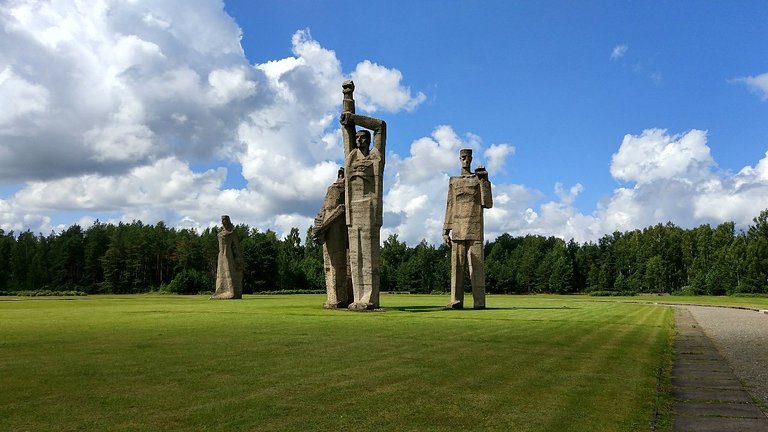
This is why making the conscious choice of Esau is so important. About ten years ago, I followed my dad to the site of Saraspils concentration camp in Latvia. At that time, we believed that this had been the site where his grandparents were killed. We now know it was Auschwitz. But I am glad we believed it was Saraspils, because that was a good place to pay respects. Little remained of the camp or the technology of genocide. The area had grown over with trees and plants and grass. Life had ended there, but life had also continued. 

We said kaddish, remembered their names, and talked about our hopes for the future. Then, as we walked back, we talked about what we could do for those facing similar violence today. It was a recognition of the past, an opportunity to grieve, and a chance to translate that suffering into meaning. I felt like I had my moment of reconciliation, if only brief, and I think the rest of my family felt the same way.

In 1982, Rabbi David Hartman (zichrono livracha) warned Israeli civil society that they faced a choice between being defined by Auschwitz or by Sinai. At Auschwitz, we learnt the wickedness of which people were capable. At Sinai, we learnt the wonders of what God could do. The Israelis could either define themselves by the trauma of the gas chambers or by the miraculous moral message of revelation. 

That essay has been cited many times, but I don’t think the British Jewish community has yet accepted that it might have lessons for us too. We are also faced with the choice of structuring our lives as if they are a moral calling from God or as if they are a cause to be constantly afraid of the rest of humanity. Only once we realise that we have taken the wrong path will we stand a chance of facing up to our trauma, and beginning to heal.

Shabbat shalom.

Saraspils concentration camp memorial

I gave this sermon to Glasgow Reform Synagogue for Parashat Vayishlach on Shabbat 5th December 2020

judaism · sermon

My DNA test results

When I sent the sealed tube back to a laboratory in America, I had high hopes for what would come back. My parents were mixed – Scottish Presbyterian and Anglo-Jewish. I had grandparents and great-grandparents from Poland, Portugal, Peru and Prussia. (By Prussia, I mean Germany, but that doesn’t begin with P). Family legends trace our roots to Italy, Spain and North Africa.

I was excited. I hope my DNA results would come back like a scratch map of the entire world. I would proudly proclaim myself a global citizen. I would research my relatives in Tanzania, the Philippines and even more exotic locations like Scunthorpe.

After weeks of waiting, I opened the results with trepidation. Here they were. European: 99.7%.

Breakdown: 47.8% British and Irish. 48.4% Ashkenazi Jewish. Trace amounts of other ancestries: 1.9% ‘Broadly European’. 0.7% French and German.

I was so disappointed. Where was my globe lit up with dots on every continent? Where were my secret ancestors from places I’d never heard of? And what was I going to do with all my ‘We Are the World’ t-shirts? Perhaps all the family narratives were unreliable.

Maybe I’d need to rethink my entire identity. I wondered if I should perhaps just accept my Ashkenazi heritage and start pronouncing tafs as samechs, mumbling my prayers to myself, even letting my sideburns grow into locks. Or perhaps I should celebrate my connection to the British Isles by listening to Gaelic folk music and trying to revive Welsh as a language.

I confessed my confusion to a friend, who is a geneticist. He reassured me: “these tests are 92% nonsense.”

“But what about the other 8%!” I exclaimed, “surely that counts for something.”

He laughed “That 92% is just as arbitrary as all the percentages on your DNA results. DNA testing is like getting your fortune read at a funfair. They pick 100 genes out of a sequence of thousands, run them up against trends they’ve already found, and act like they’ve given you a whole picture. Treat it as a science-based game, not as a guide to your whole history.”

Well, now I felt even more confused. My family history might be unreliable, and the science was probably pretty suspicious too. The pillars I thought I could rely on for my identity were toppling around me.

I thought about this week’s parashah. Here, in Shmini, as part of all the levitical rules on sacrifice and cultic life, were the rules on which foods we could and couldn’t eat.

Although historians once understood these rules to be about health and cleanliness, biblical critics are now less sure. They point to the fact that any of these meats could cause diseases, and raise the issue that almost every neighbouring nation of the Ancient Near East had its own proscribed foods. Rather than taking a rational, medical approach, they suggest that the original purpose of these rules may have been to develop a sense of national unity. When people knew they had to eat the same foods as each other, they bonded as a community, creating an in-group. Kashrut rules were really there to form a sense of national identity.

I wondered if I could apply this to my own life. Perhaps what made me Jewish was my engagement with its food and ritual life. I seek out beigel bakeries, love challah, won’t eat pork or shellfish, and make cholent on Friday nights.

Maybe that was what made me British too. I think the slightest glimpse of sunlight is an excuse for a barbeque. Nothing makes me feel more at home than a pint of cider in a beer garden. I even like marmite.

I lived out my internationalism, too, in all the curries, sushi and pizza I could eat as a Londoner. My internationalism was bound up in important rituals like voting in the most important decisions facing our continent, like who should win Eurovision.

But this answer wasn’t that satisfying either. Rituals and foods can help build communal identities, but they don’t tell us that much about who we really are. These forms of banal nationalism might well create a sense of in-group, but the flipside is they create exclusions. In the wrong hand, any sense of nationhood based on these traits can be turned to nationalism, chauvinism and xenophobia. By comparison, DNA results and family legends felt relatively benign.

I came to realise what the founders of Liberal Judaism understood long ago. All ideas of nationhood are myths. Whether we route them in science, history or culture, they’re just stories we tell ourselves to make sense of the world. They don’t really help us know how to act, and in the globalised world of the 21st Century, they can even be harmful to facing our challenges. What we should really ask ourselves isn’t “who are we?” but “what do we need to do?”

In 1917, in the midst of the First World War, Lily Montagu delivered an address to the West Central Club. In it, she gave a scathing critique of Jewish nationalism, challenging its very foundations. She insisted that her citizenship was British, but her primary allegiance was to the religious goals of Judaism. At its inclusion, she declared: “the Jewish ideals, the ideals of peace and unity and love and righteousness, are for all times and all places. We are to express them to the world. That is our life’s task.”

Reading this again now, I realise that the reason why Liberal Judaism is so embracing of mixed families, of converts and of diversity, is not just a matter of pragmatism or a weak sense of tolerance. It is born out of the firmly held conviction that what makes life matter is what we do with it. What makes a Jewish life matter is how ethically we live, and how hard we strive to apply these values of social justice in our world today.

When Judaism is defined not by nationhood, but by ethical principles, it is open to everyone who shares them. What is at stake in conversations about who belongs is a fundamental question about what being Jewish really is.

Our founders had it right when they proclaimed Judaism’s emphasis to be in its prophetic vision. Today, what makes us who we are isn’t who our ancestors were but what world we create for our descendants. That is our life’s task.

Shabbat shalom.

dna-illustration

I delivered this sermon on Shabbat 30th March for Parashat Shmini at Finchley Progressive Synagogue. I’m still disappointed by my DNA results.

high holy days · judaism · sermon · Uncategorized

Building a home

A young Talmud scholar moves from Lithuania to London. Years later he returns home to visit his family.

His mother asks: “Yossele but where is your beard?”

“Oh, mama, in London, nobody wears a beard.”

“But do you at least keep Shabbat?”

“No, mama, in London people work all the time. We have to make money.”

“Oy vey. But do you still keep kosher?”

“Mum, I’m sorry, kosher food is expensive and hard to find.”

“Yossele…” she says. “Are you still circumcised?”

Coming home from rabbinical school for Rosh Hashanah, I feel like I have my parents asking the same questions in reverse. “Lev you’re laying tefillin now? You’re keeping shabbat now? You’re training to be a rabbi now?! Lev, are you still patrilineal?”

I can confirm with great pride that I am still not Jewish according to the Orthodox beit din. I still have no desire to leave a religious movement that embraces me for one that doesn’t.

Still, anxieties are understandable. I have to admit that I am more than a little daunted coming home for the High Holy Days this year. It is quite one thing to lead services for strangers in far-flung places like Cornwall and Newcastle. But giving a sermon to the community that raised me, in front of my cheder teachers and old friends, adds a whole new level of pressure. It turns out it’s easier to talk to strangers about God than it is to engage with your family. Perhaps Chabad are onto something after all.

Reading Liberal Jewish Community is now celebrating its 40th year. Everybody who attended the birthday celebrations in July fed back what a great time they had, and members of the community who I met at Liberal Judaism’s biennial told me how inspired they were to keep this community going and make it even stronger.

Rosh Hashanah is a good time to take stock of that. We are at the start of autumn and ten days before Yom Kippur. In the time of our ancestors, this was when the harvest season finished, and the Torah cycle came to its end. The days became darker and insecurity about rainfall set in. Farmers and nomads wondered what the new year would bring, whether they would have enough food to feed their families, and what new challenges they might face. So they set this period as a time for reflection on how their lives had gone and where they would go in the coming year.

Rosh Hashanah is a time when we return to the same place as we have always been and look at it again with fresh eyes. This is, then, a poignant moment for all of us, to reflect on where we as a community have been and where we will go. I think then that the best I can offer in this Rosh Hashanah sermon is not so much Torah learning but reflections on the amazing impact this community has had, both on my life and on the life of Judaism in Britain.

This synagogue really has pioneered a future for Liberal Judaism. For such a small community, it is remarkable how many of the children who were in cheder at the same time as I was have gone on to be engaged Jews. Graham has worked for various Jewish charities; Abs has led Limmud; Katherine attends services when she can fit them into her busy schedule as a doctor. (The list goes on, so if anybody has some naches they want to share, do feel free.) This is not, by any means, a coincidence. This synagogue created such an amazing intergenerational community for us. At cheder, we learnt not just the facts about Judaism but how to really engage with it, have opinions on it, and integrate it into our lives.

All that fostered strong relationships between people of all ages. My brother loved being able to go round to Susanna’s house and speak German with her. Across the board, people fostered really meaningful bonds. Today, the buzzword in Jewish circles is “relational Judaism” – the idea that Judaism is not a transaction where congregants purchase a service off a rabbi, but that Judaism is something we build through our relationships with each other. I think we can say with some pride, we were doing that long before it was cool.

Perhaps what made Reading’s community so special was Meir’s farm. When I tell people that this existed, often people barely believe me. One day, we will need to write down the history of this community, or in fifty years the idea that there was a religious community in Berkshire living out a kibbutznik’s dream on a crop farm in Berkshire will be just a strange myth. The experiences of Meir’s farm were unbelievably special. Harvesting rhubarb on Shavuot, building a Sukkah out of real twigs and greenery, seeing how the biblical year lined up with an agricultural cycle. One of my strongest childhood memories is of when we buried the old siddurim, Service of the Heart, at Tu B’Shvat, and planted on top of them a Burning Bush.

This all made such an impression on me that, when I moved to London, I wondered where they went to plant trees on Tu B’Shvat. I thought that perhaps the councils gave them permission to do something in the public parks or that they might link up with one of the city farms. I was shocked to realise that this practice of earth-based Judaism was something special and unique to Reading. I felt like Londoners were really missing out on a proper Jewish experience. How can you live Judaism properly in a big city like London? Apparently, some other people agreed with me, because in the last few years a group of young pioneers have set up Sadeh, a Jewish farm in rural Kent. That farm has become a magnet for young Jews across Europe and restored an important sense of community around agrarian Judaism. We at Reading anticipated that and I am sure there is much wisdom that established members can share with those people if they so choose.

What sticks out for me most, however, was how much this community embraced diversity. I have amazing memories of dressing up as Dana International for Purim here, and performing her Eurovision-winning hit ‘Diva’ on the bimah. This world is not an easy place to grow up LGBT, but this community made it so much easier and created a genuinely warm and accepting environment. As an adult, I have seen many of my friends struggle with their sexuality and gender and wonder if they have a place in this world. I am so incredibly grateful that I never had to doubt that I had a God and a religion that loved me exactly as I was.

Reflecting on all this, and on the wonderful Jewish upbringing I had in this community, what I really want to say is thank you. You enriched my life and have done for so many Jews who come through these doors. Keep going, stick with it, because you never know what great things you are achieving with small gestures. This synagogue is not just my home community, it is a home for everyone who needs it.

As Rav Kook, the first Ashkenazi Chief Rabbi of Palestine and a great 20th Century mystic, said: “Through returning home, all things are reunited with God– returning home is, in essence, an effort to return to one’s original status, to the source of life and higher being in their fullness; without limitation and diminution, in their highest spiritual character, as illumined by the simple, radiant divine light.”[1]

I’m pretty sure he was talking about Berkshire.

At the grand age of 40, I say to this Jewish community: may you live to be 120! And then some.

Shanah tovah.

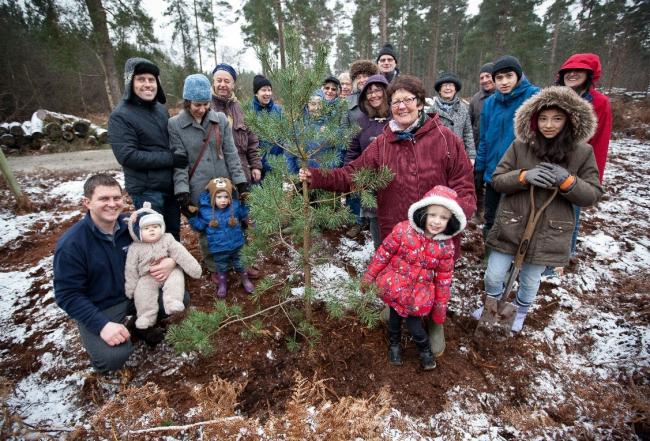
rljc trees

I gave this sermon in the synagogue that raised me, Reading Liberal Jewish Community. It was a very tender and nostalgic experience.

[1] Orot HaTeshuva, 4:2