protest · sermon · social justice

God died last month

God died last month.

The newspapers barely reported it. No politician offered a eulogy. There was no radio broadcast of a moment’s silence. The subject did not come up over dinner. God died last month and we barely noticed.

How is it possible that God could die? Who could kill God so callously and get away with it? To understand what happened to God last month, you need to know everything that happened to God since the beginning. You need to hear about God’s life.

It was after the Exodus that the Israelites began to see how vulnerable God was. They had been redeemed from Egypt. They had crossed the Sea of Reeds. They had received the Ten Commandments from a thunderstorm. 

Moses, Aaron, and seventy elders ascended the mountain once more to ratify their covenant with that God Almighty. When they reached the summit, they were shocked by what they saw. 

Under God’s feet were building bricks like sapphire, as blue as the sky itself. Those feet were trapped. Those beautiful bricks bound them. The elders asked what had happened. God replied: “As long as you were enslaved, I was enslaved too. As long as you built bricks from clay, I built bricks from clouds. As long as you were in pain, I was suffering too.” 

Of course, not all of God could be imprisoned. The infinite God transcends all space. But there is a part of God that lives with us and in us. A part of God labours when we toil. Cries when we cry. Hurts when we hurt.

The Israelites continued to catch glimpses of God’s frailty throughout their relationship. God had promised Jacob at the outset: “I will go myself with you to Egypt, and I myself will bring you back.”

It wasn’t just a promise of solidarity. It was a sad admission that, when the Israelites were refugees, God would be in exile too. When the Babylonia came to displace them and hold them in captivity, God travelled with the Israelites to Babylon. God sat with them in the synagogues. God was weeping by the river banks too. 

Of course, not all of God could be exiled. The infinite God transcends all space. But there is a part of God that lives with us and in us. A part of God leaves when we leave. Cries when we cry. Hurts when we hurt.

God’s sympathy was not confined to the biblical age of miracles and prophecies. God stayed with us through history, even when we thought we had been abandoned. Yes, even in the concentration camps. God was there. 

Elie Wiesel survived the Nazis and came to tell us what he had seen. He saw a child strung up by the guards, dangling. The child was left there for hours, dying in slow agony. The camp inmates had to stare him in the face with his still-red tongue and eyes not yet glazed.

“Where is God now? Where is He?” someone behind him asked. “Where is God now?”

And Wiesel whispered inside his heart: “Where is He? Here He is—He is hanging here on these gallows…”

God died there in Auschwitz. Of course, not all of God could be killed. The infinite God transcends all time. But there is a part of God that lives with us and in us. A part of God leaves when we leave. Cries when we cry. Hurts when we hurt. Dies when we die.

God has died with us many times. One hundred thousand sacred sparks have been extinguished in the UK this year alone. But God does not die in statistics on spreadsheets. God dies with one person at a time when one story is snubbed out too early in an unspeakable injustice. That is how God dies.

And now you know how it was possible for God to die last month. And now you need to ask why. 

God died on 9th January at his home in Cardiff. He was 24 years old. He had been in police custody because someone suspected he had breached the peace. We are still not sure what that means. He was released without charge.

When his aunt picked up from the police station, he was covered in wounds and bruises. She says he didn’t have them when he was taken to jail. 

52 police officers had contact with him in the 24 hours that he was held in Cardiff police station. None of them saw anything suspicious. The police are running toxicology reports and investigating themselves. They are looking at the CCTV footage but so far they have found no misconduct by officers and no use of excessive force. 

The police have refused to release the footage. They say we will never see it.

We may never know how God died or why. But we know that God died last month. 

And he was a black man named Mohamud Hassan. And he had a life that was worth living. And he should not be dead now.

And now you know how it was possible for God to die last month.

And now that you know that God has died, you are a witness to the crime.

And now that you are a witness, you will have to testify.

You are summoned before the Only Judge to give your testimony about why he died.

Black lives matter. 

Shabbat shalom.

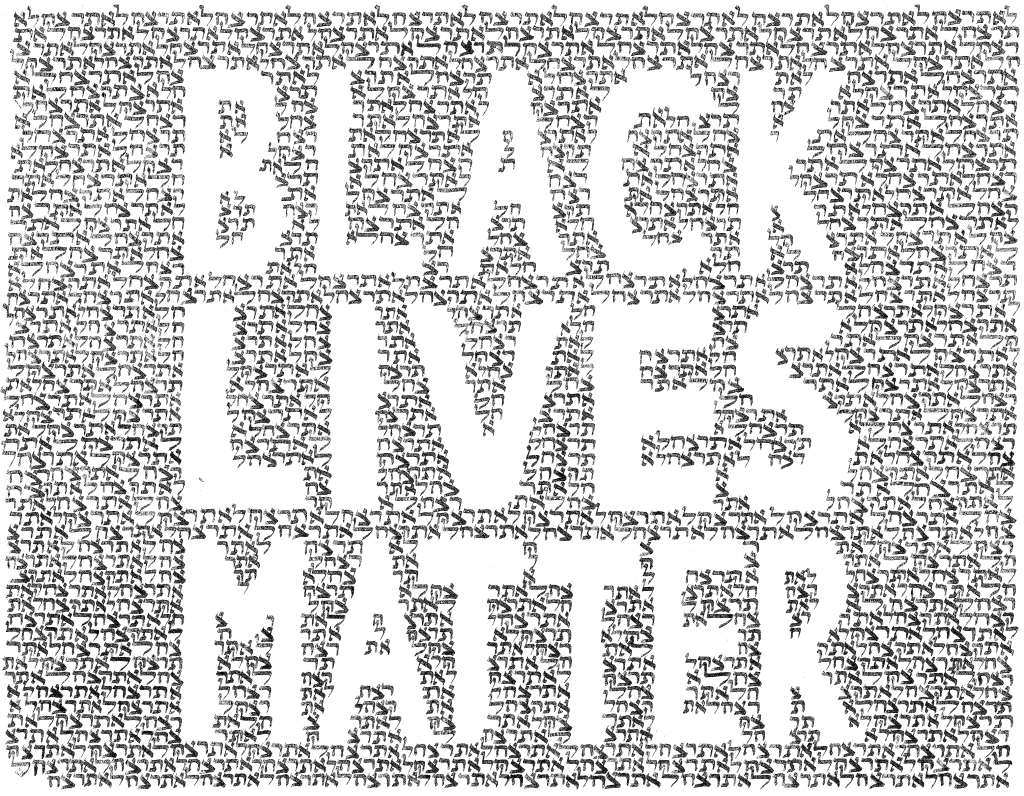
The white fire says “Black Lives Matter.” The black fire contains Exodus 20’s commandment: “Thou shalt not murder” in Hebrew. Artwork by Rachel Stone.
theology · torah

Stop doubting. Start doing.

Job was a man of complete integrity. According to his eponymous book of the Tanach, no matter what happened, Job was the epitome of Jewish righteousness. Then hardship fell, and Job began to doubt God’s justice.

This was hardly surprising. God had stripped him of everything, ridden him with disease, killed his children and destroyed his livelihood to test whether or not Job would remain faithful.[1]

As it turned out, Job could only endure so much. His friends comforted him with explanations of how God must be righteous after all, but they were insufficient. Finally, Job began to snap. What if God was not just?

Just then, God burst out through the clouds. “Who are you to question Me?” demanded God.[2]

After a lengthy excursus from Job’s inadequate interlocutors, we might expect a more thorough explanation. God has arrived and will explain the nature of justice.

Instead, God goes off on one about mythical beings. God talks about the Behemoth, an enormous bull-like monster that can rampage fields. God describes Livyathan, a fire-breathing dragon that cannot be killed.[3]

And this, apparently, satisfies Job.[4] Well, I’m not satisfied. I don’t know about you, but if I’m having doubts about my faith, “have you heard about the monsters God tamed?” won’t really cut it for me. You can’t respond to rational concerns by piling on ever more improbable legends. Now I’m filled with even more doubts.

But perhaps that’s the point. The author of Job, arguably the most philosophically complex text in our Tanakh, probably knew that these myths weren’t really an answer to the question posed.

The real answer, hidden within these poetic arguments, is that we don’t know. Whatever God is, it is beyond our comprehension.[5] Whatever justice is, we cannot fully reason it enough to grasp it. ‘You don’t need to understand,’ is what God is really saying.

Similarly, our parashah this week concerns Moses’s doubts. We have come to the book of Exodus, and Moses has already run away into the wilderness. Out of a flaming thicket, God summons Moses to rescue the Israelites from their slavery in Egypt.[6]

Just as God answered Job from the clouds, so too does God answer Moses. But the answer Moses receives is no more comforting. ‘You don’t need to understand,’ says God, ‘you need to get going.’

“What if I’m not good enough?” asks Moses. “You will be,” says God.[7]

“Who even are you?” asks Moses. “I will be whatever I will be,” God roars back. “Tell the Israelites ‘I will be’ sent you.”[8]

“What if nobody believes me?” asks Moses. “They will,” says God.[9]

“But what if I can’t find the words?” asks Moses. At this point, God loses patience. “I gave you your mouth, I will give you the words! Now get yourself down to Egypt and set those slaves free!”[10]

Miracles might be convincing to some. Logic and reason might work some of the time. But, ultimately, you have to act. When faced with injustice, there is little time to contemplate the nature of sin and perfection and God’s role in it. You have to get out and do.

Rabbi Abraham Joshua Heschel was a Conservative theologian and civil rights activist, famously pictured alongside Martin Luther King Jr at the march on Selma. He said that Judaism does not require a leap of faith, but a leap of action. We are called upon, first and foremost, to act. Whatever we think about it can come later.

This might sound strange to us, educated in a Western thought system that teaches us to calculate and reason before making choices. But it was not strange to the Israelites. When God called on them at Mount Sinai, they replied “we will do and we will hear.”[11]

According to the Talmud, a heretic accused Rava using this verse. Rava was sitting, so engrossed in study, that he didn’t notice he had trapped his finger in a chair leg and it was spurting blood everywhere. “You impulsive people!” the heretic said. “You still bear your impulsiveness of acting before you think. Listen first, work out what you can do, then act.”[12]

Rava responded with the verse from Proverbs:[13] “The integrity of the upright will guide them.”[14] We trust in our integrity. We trust in our conscience. We can be moved by our faith that we know right from wrong.

I think, over the last few years, progressives have done a great deal of doubting. We have been introspective and thoughtful. We have wondered, internally and out loud, whether we are right after all. Perhaps, as nationalist ideas return and religious conservatism gains strength, we might be able to make compromises on our ideals and find a middle-ground with others.

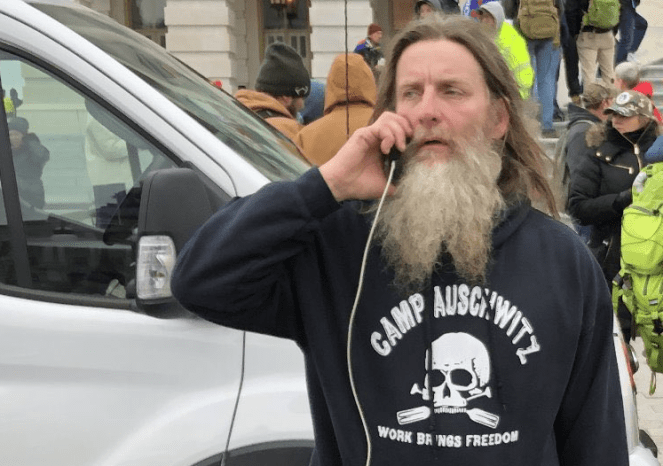
This week, fascists marched on the White House. They carried Confederate flags into Congress. A Nazi showed up among the rioters wearing a shirt that said: “Camp Auschwitz” on the front, and “staff” on the back, as if taking credit for the mass murder of Jews. They proudly displayed nooses, the symbol of anti-Black lynchings. Every brand of far-right conspiracy theorist and white supremacist descended on Washington, and video evidence shows that the police not only tolerated them but let them in.

Where has all our doubt and consideration left us? In our desire to find common ground and engage in reasoned discourse, we now come across as morally ambiguous and uncertain in our principles. We have left an ethical vacuum, and fascists have stormed into it. Intellectual curiosity is little use against the blunt force of white supremacists seeking to violently cease power.

Rabbi Professor Tony Bayfield has pointed out that our uncertainty is what differentiates us from fascists. Fascists are, by definition, absolutists. They do not interrogate their views or consider other perspectives. Our advantage over fascists comes from the fact that we give arguments due consideration and approach our own convictions with humility.

He may be right. Doubt might separate us intellectually from fascists. But it is action that separates fascists politically from power. There is no joy to be had in feeling superior if white supremacists gain power in government.

This week’s events may have been a terrifying climax to Trump’s presidency. But it is equally likely that they are a prelude to worse events. American white nationalists are emboldened and convinced that they can seize power through either ballots or bullets, depending on whichever method suits them. The situation in Britain is scarcely different, where racists have not felt so confident in decades.

Whether Trump now recedes into the background or his racist ideas come to dominate the world will depend on how we act. It will not depend on what we think, but on what we do. Events are calling us to action. If we want to eradicate fascism, we must be willing to fight it.

By all means, have doubts. Moses doubted. Moses was unsure. But God said to him, ‘go anyway. Get down to Egypt and free those people.’

We must be willing to face the Pharaohs of our time with the same vigour. We must be able to say: “I have come to act because God sent me. I am standing for justice because I know it to be right and true. I am standing against racism because I know it to be wrong. I will free these people. I will uproot tyrants. I will defend democracy and advance the cause of the oppressed.”

The integrity of the upright will guide us.

Although we may not fully understand these monsters before us, we will slay them.

And we will vanquish fascism for good.

Shabbat shalom.


I am giving this sermon on 9th January 2021 at Newcastle Reform Synagogue for Parashat Shmot.

[1] Job 1

[2] Job 40

[3] Job 41

[4] Job 42

[5] Job 11

[6] Ex 3

[7] Ex 3:11-12

[8] Ex 3:14

[9] Ex 4:1-9

[10] Ex 4:11-12

[11] Ex 24:7

[12] BT Shabbat 88a

[13] Prov 11:3

[14] BT Shabbat 88b

judaism · sermon

We know darkness

It was a dark, cold and stormy night. Mendelsohn, an old man, knew that the end was near. “Call the priest,” he said to his wife “and tell him to come right away.”

“The priest? Honey, you’re delirious. You mean the rabbi!”

“No, no,” said Mendelsohn. “Call the priest. Why disturb the rabbi on a night like this?”

Darkness is familiar to most of us.

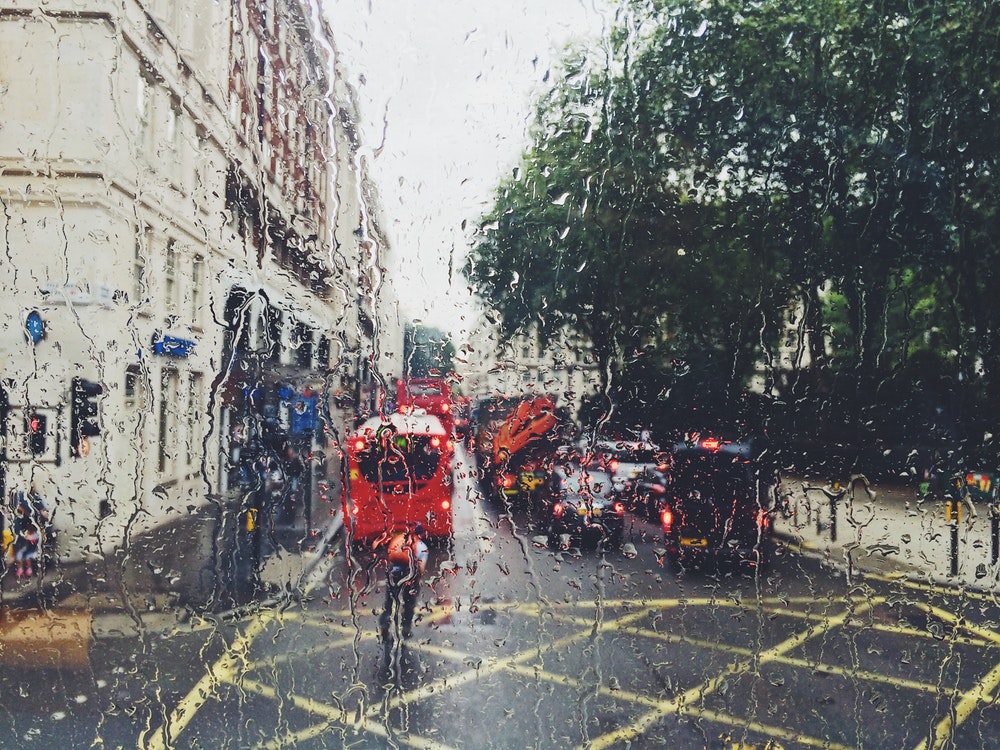
In this week’s parashah, God brings a plague worse than all those that have preceded. Worse than frogs, blood, boils and locust. God brings on eternal darkness. When it’s day, it’s dark. When it’s night, it’s dark. After a while, people lose track of whether it’s day or night. Nothing grows. It’s never warm. People can feel the lack of sunlight on their skin and in their bones. They’re agitated and grumpy. It sounds a lot like London in January.

The month of January is notorious for being the most miserable. The days are so short. The nights are so long. It’s cold and wet and it feels like it will never end. Personally, I find just getting out of bed a struggle. The idea of slogging along on a bus with cold hands and feet, dripping in my raincoat with all the other commuters, just feels unbearable. It’s not a coincidence that this is the time when people can be most unhappy.

In fact, this coming Monday is said to be the most unhappy day of the year. Perhaps consequently, today is Mental Health Shabbat. People are broke. We’re at our coldest. Our bodies are aching. The darkness feels like it will never end.

A few years ago, the darkness started driving me to distraction. I couldn’t sleep when I needed to, and when I needed to be awake, I felt constantly tired. I was itchy and irritable. I have a spine disease, which fuses the joints in my back, and this was the worst year I’d had for pain. I could barely move. All that pain made sleeping even harder, being awake even more tiring, and my mood even worse.

I tried all sorts of things to get my body back on track. I tried upping the dosage of painkillers. I started drinking camomile tea in the evening to soothe me. I invested in one of those SAD lamps that slowly lights up, creating a synthetic dawn in my bedroom. Still, I felt hopeless.

I tried something else as well. I tried praying. I got up in the morning and said a few words of gratitude. Thank you, God, Creator of the Universe, for giving me this day. I wrapped tefillin on my head and arms and took a few moments for reflection. It was a struggle. It required discipline. I forced myself to say thank you even when I felt like I had nothing to be thankful for.

But that discipline did something new to me. It made me reflect on what was good in the world. Even if everything was dark and cold and painful, I was still alive. That was enough.

I realised, with time, that I’d been trying to push myself to be something I wasn’t. I was cursing my body for being disabled. I was trying to pretend that it was dawn when it wasn’t. I was angry, all the time, at the way the world was. And I was angry at myself just for being angry.

I couldn’t handle that it was cold and dark because that was just the way January was meant to be. January was the way it was meant to be and I was the way I was meant to be. I was comparing January to July, when they’re completely different months. Neither of them are meant to be like each other.

I was comparing myself to healthy people, with all the mobility, flexibility and energy they had. That wasn’t the body I had. That wasn’t who I was. The problem wasn’t me and the problem wasn’t the month. The problem was that I was comparing everything to an artificial standard. As if there was one ideal body, one ideal night’s sleep, one ideal mind, one ideal season, one ideal month, one ideal day. No such thing exists.

Prayer gave me permission to stop trying to live up to false standards. When I pray in the morning, thanking God that I’m alive, I’m not asking to be any different. I’m not saying thank you for things I don’t have or wishing for things I did. I’m just acknowledging one reality: that I’m alive.

We live in a system that teaches us that we have to always live up to this perfect standard. Capitalism requires us to be productive. We internalise that attitude so that we worry when we’re not efficient enough. We can even take that attitude home with us, striving for an ideal of a perfect home that we can never quite attain. And we can’t attain that ideal because it’s impossible. It’s somebody else’s standard.

Judaism teaches us that we are created in the image of God. We are, each one of us, a mirror of the Divine. So, no matter what cards we’ve been dealt, we are the standard. Just by being alive, we are living up to the standard that God set for us.

That’s what’s enabled me to deal with the darkness. When things are at their worst, I remind myself that things can’t always be perfect. I cannot live up to somebody else’s expectations of me. All I can do is accept myself for who I am, and give thanks that I’m alive.

January is a difficult month. This week may feel unusually hard. But I believe that we can get through it. If we are willing to love ourselves for who we are, and accept what we are not, we can make this darkness a little easier.

Shabbat shalom.

rainy london

I gave this sermon at Mosaic Liberal in Harrow for Parashat Bo on 12 January 2019.