festivals · judaism · torah

What happened at Mount Sinai?


We are days away from Shavuot, the Feast of Weeks, when we celebrate having received the Torah. At this festival, we affirm we have received God’s word and that it is unfailing.

This is what we think we know: these words are not only God’s.


They have human origins, and they were written over many centuries. The Torah is not a single, unaltered revelation. It is a book with a history.

What happened at Mount Sinai matters immensely. It is the foundation of our faith. It is the basis not only of Judaism but of every monotheism that followed it.

The story has been told so many times. Hordes of Hebrews fled from Egypt, gathered around the foot of a desert peak, and heard the voice of the One True God.

What they experienced, they told to their children, and they to theirs, until – after generations – the vision was written down into a collection of stories and laws we call the Torah.

We have to know what really happened at Sinai; so much hinges on this indecipherable point of history.

We have to believe in the real world, where history is something made by human beings, who work, and struggle over resources, and build societies.

We have to believe in the God of Judaism, who is revealed through history.

We must synthesise the two. We cannot split the material and the spiritual. We need to know what the material reality was that lay underneath this spiritual truth. We need to know what happened at Sinai.

We cannot truly know, but we have to try and work it out. A group of human beings felt so inspired that they wrote down ten commandments and passed them on for thousands of generations. Why?

A group of human beings, who surely worked and slept and ate and drank and dreamed, proclaimed that they had seen God.

Something marvellous must have happened at that time. Something awe inspiring – to give us this treasury of ancient wisdom. Who committed these words to paper, what happened to them, and what made these commandments feel so important to them?

What really happened at Mount Sinai? The biblical historian pores over our texts, strips them back, digs out inconsistencies, looks for parallels in ancient cultures, and analyses the language in which the stories are told. The biblical historian discards impossibilities, looks for likelihoods, and reconstructs the best possible version of events.

We cannot know for certain, but we can do our best to do the same – to discard, seek and reconstruct. And, when we do, the truth of/ Mount Sinai that we are left with is far more radical than we might imagine.

For the historian, Mount Sinai may not have been Mount Sinai at all. It may be, as the Samaritans claim, Mount Gerizim, near Nablus, since that is also one of the mountains the Torah names as a site of revelation. It may have been Mount Pisgah or Mount Nebo, on the eastern side of the Jordan River, since our Torah names those locations too.

We do not know at which mountain the important revelation happened. But there was a mountain.


This is what we think we know: there was a mountain.

Some people went there. They may not have been Jews, since that word did not exist yet. They may not even have been Israelites, since the story teaches that they only became Israelites through the process of what happened at that mountain.

They were, says the Torah, a mixed multitude. They were drawn from all the nations of the Ancient Near East: from Ethiopia and Yemen; through Egypt and Sudan; to Lebanon and Syria.

They were, by their own self-description, border-crossing nomads. They had no land or title. There are no records to suggest they owned any weapons, let alone that they had military strength.

If we are to trust how they wrote about themselves, they were menial workers. Water drawers; grain carriers; tenant farmers; shepherds. They had been slaves. They were a ragtag of the ancient world’s lowest classes.

We do not know who these people were. But they were poor and transient.

This is what we think we know:
the poorest people of many ethnicities came together at a mountain.


We are not sure when it happened. It may have been any time from the 15th Century BCE. The latest it could have been is the 5th Century BCE, when the Torah was edited into its final form. That is a difference of nearly a thousand years.

We do not know what brought them to that mountain. We cannot prove that the exodus took place exactly as it was described in the Torah.

But we do know that, in the 12th Century BCE, there was a massive societal collapse in all the nations of the Mediterranean basin. In the broad period when our Torah tells us that our ancestors received the Ten Commandments, the Egyptian empire was crumbling.

We also know this. When Egypt was collapsing in the late Bronze Age, a Pharaoh wrote a stele, complaining of slave uprisings by a group of nomads on the fringes of his empire. He calls those people Habiru. The biblical historian notes the linguistic similarity between these people and the Hebrews.


This is what we think we know: the poorest people of many ethnicities rebelled together against a decaying empire some time around the late Bronze Age.
They met at a mountain.

The stories they tell of their experiences at that mountain are fantastical. Fire descended from heaven. Thunder crashed and lightning roared. Thick smoke descended over the peak. The earth trembled violently. The Creator of Heaven and Earth became manifest before them.

How can we know if any of this happened? Nobody else could have testified to what they saw. There are no contemporary meteorological records. There are only two possibilities: either the authors of our Torah really believed that was what they experienced, or they made it up.

If they made it up, so many others were convinced that they had been part of that experience at the mountain, that they faithfully transmitted the story for hundreds of years to their children and grandchildren. Which is more likely: that these people lied, or that they genuinely believed they had a transcendent experience?

This is what we think we know: the poorest people of many ethnicities rebelled together against a decaying empire some time around the late Bronze Age.
At a mountain, they had an experience so profound that they felt as if they saw God manifest, and it changed their lives and the lives of their descendants forever.

The God they thought they heard told them: “Although the whole earth is Mine, you will be for Me a dominion of priests and a holy nation.”

The poorest people in the world affirmed belief in a God who knew no borders and rejected all hierarchies. Every one of these ancient landless waifs would be holy.

According to our Torah, those people entered into a covenant.

Until this point in history, contracts of these kind were predominantly made between empires and vassal states. They took the form: “you will pay me tribute, and I will be your landlord.”

This was a covenant of a new kind. It said:
“you will do justly by one another, and I will be your God.”

They ratified this new agreement and remade what a covenant was. They swore an oath, committing themselves to an entirely new society. They bound themselves to a Law that knew no Sovereign save for a universal God.

They promised that their society would have no more killing; no more trafficking in human beings; no more greed. They declared fealty to each other, to their God; and to their sacred days of rest.

Take our texts. Strip them back. Dig out inconsistencies. Look for parallels in ancient cultures. Pay close attention to language. Discard impossibilities.

From what remains, you can reconstruct the best possible version of events.

This is where we have arrived.
This is what we think we know.

Thousands of years ago, poor people from many ethnicities got together in common rebellion against a decaying empire. They had an experience so profound that they felt as if they saw God manifest.
At a mountain, they made a covenant to create a society based on dignity.

Many hands have since re-written and interpreted that event – but, deep at its core, buried under years of transmission and analysis, was one moment.

This, is what we think we know:

Somewhere in history, there was a slave rebellion by a mountain.

And it was marvellous.

Originally published in Vashti.

sermon · theology · torah

Purity or justice

Let’s start with a question.

An adult couple accidentally runs over their pet dog. Instead of burying their dog in the garden, they take it home, cook it in the oven, and eat it. 

Here’s the question: have they done something immoral? 

Most of us will have an instinctive reaction: what that couple did was disgusting. We will feel some revulsion.

But whether you think it was morally wrong will depend on how you see the world. It will depend on your moral palate. 

This was what was demonstrated by the Jewish-American psychologist, Jonathan Haidt, in his popular book, The Righteous Mind.

Haidt sought to find out why it was that caring, rational people could disagree so profoundly on moral issues. Why was it that America was so polarised? There, people fight furiously about issues like abortion, guns, and marriage, as if they have no common moral basis.

Haidt argues that we do have shared moral bases, but our morality is more like the palate on our tongue. “We humans all have the same five taste receptors, but we don’t all like the same foods,” he says. “It’s the same for moral judgments.”

We have, he says, five main taste receptors: care, fairness, loyalty, authority, and sanctity. 

If you are an educated person who lives in an urban area of a Western capitalist country, you are likely to feel that the couple who ate their dog did not do anything morally wrong. You’ll be disgusted, sure, but you might not think that they violated any kind of moral rule.

That’s because, in these cultures, people have a moral palate that puts a big emphasis on ethics of care and harm. If nobody was hurt, then there’s nothing immoral.

If, however, you live in a close-knit community of farmers, you are far more likely to say that the couple who ate their dog did do something morally wrong. That’s because those cultures have a strong sense of sanctity and taboo.

Both of these systems are ways to help people get on with each other. In a busy metropolis like London, you need to be able to live and let live, because if you can’t tolerate diversity, society will fall apart. In a tribal farming community, like ancient Israel, you need to have strong social norms to protect people.

Both these impulses – care and sanctity – come from a deep, ancient social need. 

Since humanity’s beginning, our survival has depended on our ability to care for our most vulnerable members. How would we have lasted a single generation if not for looking after the young, the old, and the vulnerable?

From the start of civilisation, we have also needed to be able to express disgust. It comes down to the most basic distinction between excrement and edibles. We need to tell each other: “this food is poisonous; this disease is contagious; this behaviour is dangerous…” Without clearly agreed boundaries and taboos, we would quickly perish.

It is worth holding these two tendencies in mind – care and sanctity; purity and justice – as we approach our readings for this week.

Our Torah portion goes into minute detail about how to do proper sacrifices, how to lay out the Temple, and who is supposed to do what in religious services. To us, the attention to detail might seem absurd.

But remember that this is part of a group of people’s moral palate. This is their sense of the sacred. Messing it up, from their point of view, would be ethically disastrous. It would be similar to eating the family pet. 

No wonder, then, that the prophet Ezekiel opens the haftarah by telling the Israelites “if they are ashamed of all they have done, make known to them the design of the temple.” Failure to get it right, says Ezekiel, is a serious sin.

There are two great moral impulses in Torah: justice and purity. This trend appears throughout the whole Scripture: contradictory, competing moral voices speak through our books.

The voice of justice tells us about care and compassion. It tells us about fairness and redistribution. The voice of justice charges us towards more equality and more freedom. Justice says that a society is only as strong as its weakest members.

The voice of purity tells us about how to keep holy things sacred. It tells us what the boundaries are on sex, so that we do not cross them. The voice of purity tells us not to eat octopus and not to mix linens. Purity makes sure everything is kept in its proper place, so that society can function, and people feel safe.

The voice of purity might feel less relevant to us today. We celebrate the prophets for their concern for the most vulnerable, because it fits so well with our ethics of care. We see ourselves in the narratives of the exodus because they chime with our moral intuitions about freedom from slavery. Laws on architecture… feel less like big moral issues.

That’s because what the big taboos and boundaries are can change a lot between time periods. 

When I was growing up, one of the big focuses of popular disgust was gay men. There was a long period when the media was seemingly obsessed over sex between men, especially in public toilets. This was the full gambit of taboos: waste and excrement; sex between the wrong sorts of people; and blurring the boundaries between public and private.

I think that is why some of the things that cause people moral disgust today just don’t bother me. I have had to push through a society telling me I was disgusting, and unlearn that contempt towards gay people. Now, the other sources of disgust just seem like passing fads. 

Knowing that has helped me understand where others are coming from.

I find Haidt’s ideas about moral palates really helpful for thinking through why sometimes it’s hard for people to agree. My ethical taste buds are highly attuned to care and fairness, but I don’t get much flavour from sanctity, and I can barely taste authority. 

Please do not think that one of these is left-wing and the other is right-wing. There are plenty of conservatives deeply motivated by wanting to make sure people are cared for and that distribution is just. There are just as many socialists who want to ensure the purity of the Marxist tradition, and to live in a world without contaminating ideas or contaminating people. 

What we morally feel is not just about ideology, but about all the factors in our cultures and upbringing that make us need to focus on certain values.

So, this is my advice. The next time you encounter someone that you really disagree with, try not to assume they are evil or weird. Think back, instead, to this Torah portion. Maybe what is just a building to you is somebody else’s Temple. Maybe what really triggers one person just doesn’t impact you.

Haidt’s goal, when he did this study, was to make it possible for people to talk to each other across divides. I don’t want us to become like America, where some issues cause massive wedges between neighbours. 

So let’s try listening to each other, and hearing each other’s worldviews.

Shabbat shalom.

judaism · sermon · torah

Perhaps we are not powerless

I have a horrible, on-off relationship with the news. I wouldn’t call it a love-hate relationship so much as a hate-hate relationship. 

There are days when I can do nothing but stare at it, soaking in every detail: climate collapse; species extinction; earthquakes: natural disasters; social breakdown; cost of living; refugees in detention centres; wars, wars, wars…

And then there are days when I switch off entirely. I become so overwhelmed I refuse to hear the radio or see current events on TV. I don’t look at any of the news apps or social media for fear that I’ll be reminded of all that is wrong in the world.

Whether endlessly scrolling through the horrors or studiously avoiding admitting they are there, I think I’ve become trapped in a cycle of feeling powerless. It’s all so big, and so frightening. 

But what can I do? I’m one person, seeing the world collapse, and all I can do is observe. 

If this feels at all relatable to you, perhaps you’ll find some comfort in this week’s Torah portion, as I did.

After all, didn’t Moses feel too small and powerless too, at the beginning? He tried to change things, and look where that got him. Stuck in exile, looking after sheep. Moses looked at all that was wrong in his world, found it far too much to bear, and retreated into the wilderness. 

And he would have stayed there too. He could have lived out the rest of his life with a lovely family tending flocks in Midian. 

But God had other ideas. God heard the cry of the Israelites in bondage and decided it was time to set them free. 

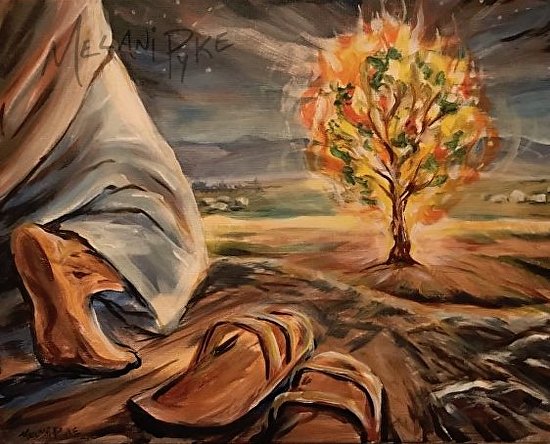
So God reached out to Moses from a thornbush. God set a small thicket in the wilderness ablaze and called Moses on his mission.

A thornbush, of all things. Why would God decide to speak from such a lowly and despised place? The thornbush is, at best, a plant to be ignored and, at worst, an annoyance that scratches against bare legs. It’s the desert equivalent of stinging nettles. 

In our Talmud, Rav Yosef says: not because the thornbush is the greatest of plants did God choose to speak from it, but because it is the least of the creatures. God disregarded all the most beautiful trees of the desert in order to be with the lowliest. 

Similarly, God chose to give the Torah from Mount Sinai not because it was the highest or most magnificent of desert peaks, but because it was small and covered in unremarkable roughage. 

In the natural world, God singles out the powerless and unimportant. That’s where God works the real miracles. 

That’s why God chose Moses too. Moses had no idea of his miraculous birth or impressive destiny. As far as he was concerned, he was a loner in the desert.

When Moses gets the call, it’s not God that he doubts. He doubts himself

His first question is: “Who am I that I should go to Pharaoh and bring the Israelites out of Egypt?”

God doesn’t build Moses up or tell him how he wonderful he is. He says: just trust. Have faith.

We don’t get to decide what times we live in or what role we have to play in them. God decided that Moses was going to take the Israelites from Egypt and that was what was going to happen.

But Moses still can’t see how he can make a difference. He doesn’t doubt God’s power, he doubts his own. He says: “what if nobody believes me? What if they don’t listen to me? What if they don’t trust that I spoke with God?”

At this point, God shows Moses some miracles. We might think these miracles are about God flexing Divine might, showing Moses all the wonders. In fact, a bush burning in the desert without being consumed by flames would be quite enough to achieve that.

These miracles aren’t about showing God’s power: they’re about showing Moses his own. 

First, God turns Moses’s shepherd’s crook into a venomous snake. Moses recoils in fear. Then God turns it back again.

Next, God afflicts Moses with a deadly skin disease. Moses thinks his life is over. Then God heals him.

Both miracles make Moses face his greatest fears. They are exposure therapy. The worst thing that Moses could imagine is death. God shows him that he can stare it in the eye. Moses thinks he is not brave enough. God shows him that he is.

It’s not that Moses ever doubted God’s power. What he doubted was his own. Now God shows him he does indeed have power. He is stronger and more resilient than he realised.

It’s not that Moses ever doubted God’s importance. What he doubted was his own. Why would anyone care what a stammering wreck like him had to say? 

When God performs miracles through Moses, the message is clear: “I, the Eternal One, care. I care enough to work wonders on you. I care enough to meet you in the desert. I care enough to save you from death.”

And, if God can care about Moses that much, why can’t the Israelites? Why can’t Moses care about Moses that much?

Still, Moses is not ready to own his power. He protests to God: “I can’t speak. I’m slow of speech and stammer constantly.”

God gives the perfect answer: “And who made you that way?”

God made Moses that way. God decided that Moses would be who he was. His speaking ability is not a flaw – it’s the characteristic God gave him that makes him exactly the right man for the moment.

What a message this brings for us, who feel so powerless and insignificant. 

What are we but matter in the void, and yet the Creator of the Universe has chosen for us to be alive at this time?

Who are we with all our foibles and imperfections? But God has made us exactly as we are.

So why don’t we trust in ourselves, and recognise our own power? 

Don’t ask why God made a world with so many problems and sent no solution. The solution is here: God made us.

So I think I need to stop the cycle of doomscrolling and avoiding. Life isn’t just something that happens to me – it’s something I make, too. Society doesn’t just exist apart from me, I’m an active player in making it. And the news isn’t just something that lives on TVs and in devices – it’s something that we can create, every day, if we so choose.

In the Mishnah, Ben Azzai teaches: “Hate nobody, because everyone has their time and everything has its place.” 

We did not choose to be born here and now, but God saw fit that we should be alive at this place and time. God wants us here, in this moment. 

We are like that weedy thornbush in the desert. We might seem insignificant. But God has chosen for us to be here. And, because of that, we can burn brightly enough to change everything.

Shabbat shalom.

halachah · judaism · social justice

Are Jews allowed to lend money at interest?

Of course, I am Jewish, but I also consider myself very English. I am English in the very parochial sense that I love canal boats, think provincial churches are beautiful, will definitely barbecue on the only day of summer, and put mayonnaise with everything. But, last autumn, I did the most English thing I have ever done. 

I wrote a disapproving letter of correction.

I had never done it before. I’ve never written in to the BBC or a newspaper. To the best of my knowledge, I’ve never sent a letter of complaint about anything. But this one was too important to simply ignore.

Someone in a play had misrepresented a complex point of Jewish law. 

Now, this may seem trivial. But, six months later, I am still so incensed about this common misconception of halachah, that I feel the need to preach on it. 

In September, last year, I got a real treat: to go see one of our members perform at the Royal Court Theatre. Rachel Hosker, who will be getting married under our auspices in the summer, was performing in a play called ‘Jews. In their Own Words.’ Written by Jonathan Freedland, the play interviews famous Jews, including Tracy-Ann Oberman, Luciana Berger, Margaret Hodge, and Howard Jacobson, trying to give a sense of antisemitism, past and present. 

I’m not a theatre critic, but let me tell you: Rachel acted fantastically. She and the rest of the cast did a fantastic job of bringing the characters to life. 

But there was a line, really a throwaway comment, that stuck with me. The play was attempting to explain the trope of the money-hungry Jew, and how Jews had come to be associated with money-lending. An actor representing CST’s Dave Rich said: “the rulings of the church forbade lending money at interest, which was considered usury, whereas Jewish law allowed it.”

This, to me, is alarmingly inaccurate. It shows not only a misunderstanding of Jewish law, but also of antisemitism, and how it works. It places the responsibility for Jews as medieval money-lenders onto Jews, and our religion. Nothing could be further from the truth.

If it was the case that Jewish law allowed money-lending at interest, you would be hard-pressed to explain the commandment in this week’s Torah portion: “You may not act as a creditor to your people. You may not exact interest from them.” You would also have to reckon with the same commandment, given in the Holiness Code: “Do not exact advance or accrued interest, but fear your God… Do not lend your money at interest, and do not give your food at interest.” The same commandment is repeated again in Deuteronomy: “do not deduct interest from loans to your kindred.”

Of course, you might say, the Torah is not the only source of Jewish law. Perhaps these commandments are amended in the Mishnah, or the Talmud, or the Codes. No, no, and no. The Mishnah says charging interest is so reprehensible that it involves breaking six commandments. The Talmud says that even scribes and witnesses who participate in such contracts are guilty. 

In the defining law code for most of the Jewish world, the Mishneh Torah, Rambam looks at the word for interest – neshech – which is the same as the word for a snakebite, and says it is called as such “because it bites, it causes pain to a fellow human being, and consumes a person.” He repudiates it completely.

Be in no doubt: Jewish law does not permit money-lending at interest.

So, how did it happen that Jews nevertheless ended up associated with money-lending, despite its very explicit prohibition?

In the 4th Century CE, Church Father Augustine of Hippo declared that Jews would be permitted to survive as “living witnesses” to the truth of the Bible, but must be kept in a degraded state, with the mark of Cain, for their refusal to accept Jesus. This became the official policy of Christian Europe’s primary institutions: its churches and monarchies. 

Jews were allowed to live in England neither as citizens nor serfs. They could not own land or participate in the nation. They were excluded from universities, and cut out of the professions. They were only allowed to live in the country on condition that they did the dirty work of the ruling class: tax collecting and money-lending. 

Now, most Jews did not do such jobs. They did the work that was needed for their community, as bakers, vintners, stonemasons, and millers. But, as long as some Jews fulfilled these functions for the monarchy, all Jews could live in European countries as “treasured subjects” – effectively pets of the king. 

This had a profound impact on the lives of medieval European Jews. They were forced to wear humiliating clothes to mark them out. Associated with tax collecting and money-lending, many of the local peasants associated the Jews with all the financial problems they faced. 

The local lords actively exploited this division. They drummed up hatred against Jews, and treated them as a pressure valve, so that, in times of economic crisis, peasants would attack their local Jews rather than turn their ire on the landowner class.

That is why the worst pogroms that we have recorded came in times when the monarchy was in financial straits. In England, these came when the country was bankrupted by its military Crusades to capture Jerusalem. Jews, the perceived cause of money problems, and naturally associated with the Holy Land, had all the anger and resentment of impoverished people poured out on them. 

If the monarchy or the Church were struggling with their own debts, they had an easy way out: they could simply expel the Jews and confiscate all their property. In 1290, Edward I expelled the Jews from England to cancel his debts and win back the support of the knights and lords in parliament, who were also heavily indebted.

This put the rabbis, the arbiters of Jewish law, in a very difficult position. If they permitted lending at interest, they would turn their backs on their entire religious inheritance. If they insisted that Judaism forbade money-lending at interest, they would effectively force their community to leave where they were. And, since all of Christian Europe had adopted the same policy, they would have nowhere to go. 

So, the rabbis had to find a way. They looked at the laws, which said such lending was only prohibited to their kin. Rabbi David Kimchi, writing in medieval France during pogroms and expulsions, said that Jews were not permitted to lend at interest to people who respect Jews. The corollary was that if people would not treat the Jews as full human beings, then they, in turn, could lend to them at interest. In England, the Christians had estranged them and made them explicitly not their kin.

This is why correcting this point on the understanding of Jewish law is so important. It is not just because we are sticklers for getting the halachah right. It is so that we understand what antisemitism is and how it works. 

We Jews did not create this system. We did not allow it, nor have the power to stop it. For over a millennium, European powers embedded and promoted antisemitism to prop up their system. As Rabbi Lionel Blue, of blessed memory, so pithily wrote: “The problem of the Jews in Europe was never the Jews. It was Europe.”

Now, we are citizens in this country. With Emancipation, we might have hoped that it would bring an end to cultures of debt and division. True, most of the banks and money-lenders are now not owned by Jews, and very few Jews today engage in such work. 

But that is not because we are living closer to the laws of the Torah or our rabbis. It is because the whole of our society is caught up in loans. All of us are more indebted and more divided than we ever were. We are pitted against each other by a media eager to see us all fighting. 

Combating antisemitism does not only mean counteracting myths and biases against Jews. It is also about dismantling the material realities that created antisemitism. The hatred of Jews erupts when we are scapegoated for economic problems in society. We must not only contradict the myth that we are responsible, but also fight to ensure that the problems people face of economic hardship and drowning in debts no longer exist. 

When we realise that the world has enough for all of us, and distribute it so that everyone can prosper, we will be far closer to a world without prejudice and fear.

Shabbat shalom.

sermon · theology

A grown-up God for grown-up Jews


When we are children, we have a child’s view of God. A big bearded man in the sky with a benevolent smile, a beard and sandals. Maybe a maternal godhead, embracing us.

We imagine God as our idealised parent, fulfilling all our needs, giving punishments and rewards, guiding us to do right. We see the world as children because we have no other reference point.

Then, we become teenagers, and our worldview shifts. Suddenly, we are able to question authority, push boundaries, and assert our own independence.

We go through growth spurts, physically and emotionally. We close the gap in height with our parents so that we can see over their shoulders. They are no longer demigods, but imperfect human beings that we can challenge.

At this point, many of us give up on God. The childlike view we once had cannot hold, because the view we had of our parents has altered too. We realise that, if we can challenge authority, we can push back against the ultimate force we had imagined too.

I fulfilled the stereotype of a rebellious teenage atheist. I rejected the sky-daddy and all the nonsense of religion. This was a pretty lacklustre rebellion to my parents, who were themselves Marxist atheists.

I don’t remember the moment I stopped believing, or when I started again. But when I came back to faith, the beliefs I held were not the same as when I had been a child. I had to reconstruct God.

I took snippets from Jewish tradition. I listened attentively to my friends who were Quaker, Baptist, Muslim, Sikh, and Catholic, finding the parts that resonated. I reimagined what it would mean to believe in God if the Divine Parent surrounded by clouds no longer existed.

I realised that many others had engaged in the same thoughts too. All the while, when grown-ups had been talking about God, they hadn’t believed in the primary school version either. They had also gone through that process of maturing, and their ideas had developed with them.

It turns out that the God that atheists don’t believe in, the religious don’t believe in either.

This week is the Israelites’ coming of age.

Throughout Genesis, we only knew the God of stories. God created the world; God made people and gave them special purpose; God gave out punishments for wrongdoing and rewarded the good.

Now, we find ourselves in a situation in which we must rebel. We enter the Book of Exodus, where the Israelites are enslaved and forced to do hard labour. They are beaten and abused. Meanwhile, all around them, the Egyptian empire and the social order on which it is built are crumbling. We cannot believe in their gods, and we cannot find our own.

Our hero, Moses, sees through the nonsense. He stands up against his father’s power in the royal palace. He beats a slaver to death. He breaks away from the only regime he has known and runs into exile.

In the years that Moses ran away, he had to give up on all his old beliefs. The fantasies he’d held about his family. The dreams he’d had about what his own life meant.

He married a woman of a different tribe, Tzipporah, and worked for her father, Yitro. They were Kenites, and Yitro was a Midianite priest. Perhaps Moses could just have substituted his old beliefs for the Midianite ways. He would have simply worshipped a new pantheon of gods and taken on different customs.

Instead, Moses is forced to reimagine God altogether.

While tending his flocks, Moses meets his Creator in a thicket on a mountain. He sees a bush on fire, but not burning, that calls out to him and demands he remove his shoes.

Could this be one of the gods of Midian or Egypt? Could it be one of the spirits that inhabited the ancient world?

Moses must know. He asks “who are you?”

The voice from the burning bush replies: “אהיה אשר אהיה.” I will be what I will be.

This God does not have a name. It is not one of the idols that the nations worship. It is not something that can be held or controlled. This God will be what it will be. This God is the sum total of all that will ever exist.

When I teach bnei mitzvah children portions, I try to get them to understand what they are saying, so I teach them the roots of Hebrew words. They learn what is going on in each word of their parashah.

In Hebrew, every word has a root: three letters that hold all the possible meanings. Words like kaddish (the prayer for the dead), kiddush (blessing the sabbath), and kiddushin (getting married) all have the same root: kaf-dalet-shin. The root gives us all the words to do with holiness and making things special.

In nearly every parashah, we get to the unpronounceable name of God. The students nearly always try to pronounce it, but find it quite impossible.

We don’t say the word as it appears, but substitute it with “Adonai” (my Ruler) or “Hashem” (the name). That way the name stays sacred, or kadosh.

And then I teach them the root of this ineffable name. Hashem is a composite of three words: היה (what was); הוה (what is) and יהיה (what will be). God’s root is existence. God is the thing that always exists, and from which all existence comes.

When God says “I will be what I will be,” it means that God is everything. God is existence itself. God is whatever it means for something to actually exist.

This is the mature view of God. It is not a fairytale or a Santa Claus. It is a way of understanding all of reality.

This God will not do what it is told, or sort out your problems for you.

That’s why this God comes with a demand. “Go back to Egypt. Get over there and bring the people out of that land. Do whatever you can, bring everyone with you, and get yourselves free.”

When we are children, we have a child’s view of God. One who gives out punishments and rewards. One like an ideal parent.

Now, we are faced with the good of adulthood. The one who is the foundation of all existence. The one who gives all life meaning. The one who says: “I am not going to free you by magic. You will have to start freeing yourself.”

Shabbat shalom.

judaism · sermon

The tribes that broke apartheid

We are all members of tribes. Human beings are tribal creatures. We organise into packs and stick together. We identify into groups. 

You are probably a member of more than one tribe. You are a member of this synagogue, which binds together hundreds of families into a community. You might also have your workplace, neighbourhood group, union, political party, youth movement, charity association. 

Tribes are a core part of life. And it is this week, as we receive the Ten Commandments at Mount Sinai, that the Israelites become a tribe. When we left Egypt, we were slaves. We were a mixed multitude escaping persecution. Now, as we stand in the wilderness, we form into something stronger. But what kind of tribe do we become? 

In 2008, a group of researchers got together to study different tribal cultures. David Logan and his team looked at hundreds of workplaces and social groupings to see how they operated. While all these groups formed tribes, they found that there could be very divergent kinds. 

These researchers divided up the tribes into five kinds, based on their cultures. At the lowest level, Level One, were those tribes that functioned worst and, at the highest level, Level Five, were those that functioned best. 

Interestingly, as we look at the stages, it seems like exactly the progression the Israelites go through as they form as a tribe. They begin low on these researchers’ scale and, as the story continues, they advance to higher levels of performance. 

At Level One, tribes take the attitude that life is awful. They systematically sever relationships with other tribes and pool with people who think like they do. They are entire groups of angry misanthropes. These are the kinds of people who say “everyone is horrible, so we’ll be horrible, too. People will attack and rob us, so we’re going to get them first.” People who think life sucks will be toxic towards themselves, their own group members, and anyone they consider an outsider.

This is the Israelites at the start of the Exodus narrative. They are crying out for help under tyrannical persecution. They are a mixed multitude of all the lowest classes of Egypt, and have no concept of anything but toil. They don’t even trust Moses when he tries to start setting them free.

At Level Two, tribes say “my life is awful, but there is better stuff out there.” The world might be a good place, but I don’t have access to the goodness in it. These are the kinds of people who will bemoan how persecuted they are. They will complain that other groups have better jobs, or get taken more seriously, or produce better culture, or have more influence. These tribes don’t believe in themselves enough to make positive changes for their own tribe, let alone others.

This is the next stage for the Israelites. They decide that there is a better world out there. Their lives are horrible but, if they left Egypt, they might get a taste of something better. They get up and go, seeking to find a new life as they leave through the Sea of Reeds.

In a Level Three tribe, the mantra is “I’m great, and you’re not.” Here, people are competing for prestige, wealth, and honour. These are groups where everyone wants to compare notes about how much better their kids are doing in school, or how much better their careers are going. The tribe can do good things, but only because it creates cultures where individuals flourish.

That’s the level we reach at the start of this week. Betzalel emerges as a fantastic architect and interior designer, showing off his skills at the Tabernacle. Aaron and his family come forward to be priests. They show how well they can perform religious rituals. But, because they have no defining values, they end up worshipping a golden calf and recreating the same systems they knew in Egypt.

Stage Four is where really impressive tribes begin to emerge.  These are groups where people are united by something greater than their individual competences. They turn from small groups into something large and meaningful. They are actually conscious of being a tribe, and united by values. They extend their reach by connecting with other tribes and finding points of value alignment. 

Only now, as Moses presents the Ten Commandments, can the Israelites reach Stage Four. They are a conscious tribe, united by shared values. We, these freed slaves, have one God. We reject idols. We honour our families. We hold time sacred. We refuse to engage in murder, theft and lies. We are one people joined by a shared vision of what a just society could be. Anyone who shares that dream can join us.

But that is not the end of the journey. The highest level is rare, and most groups never get there. 

The fifth level is when a tribe is united by values that affirm life, each other, and the future. We only see glimpses of this kind of tribal behaviour in Tanach – on those incredible occasions when the prophets extend their message full of joy about who humanity is and hope of what it could be.  

The researchers who ranked the groups only offered one example of a tribe that reached such a high level. That was the Truth and Reconciliation Commission in South Africa. 

This was convened in 1996. With Nelson Mandela’s release from prison and the end of formal apartheid, nobody knew which direction the country would go in. Some anticipated civil war, or resurgent racist nationalism.

Archbishop Desmond Tutu brought together thousands of tribes from all across South Africa. He set up the Truth and Reconciliation Commission, which would aim to restorative justice between all people. Victims and perpetrators faced each other, to speak honestly about what had happened during apartheid, and how they could make amends.

He united people on a programme that they could be better than they had been. He coalesced people around a vision that they could be honest with each other and foster a future based on cooperation. 

Consider what courage and moral fortitude that must have taken. For decades, black, Indian, and Coloured South Africans had been subjected to segregation, poverty and violence. The anti-apartheid activists had faced imprisonment, state abuse, and separation from their families.

After all that, Tutu took these tribes to a level we almost never see. He created a culture where people believed in themselves, in each other, and joined by a vision of joy and hope. 

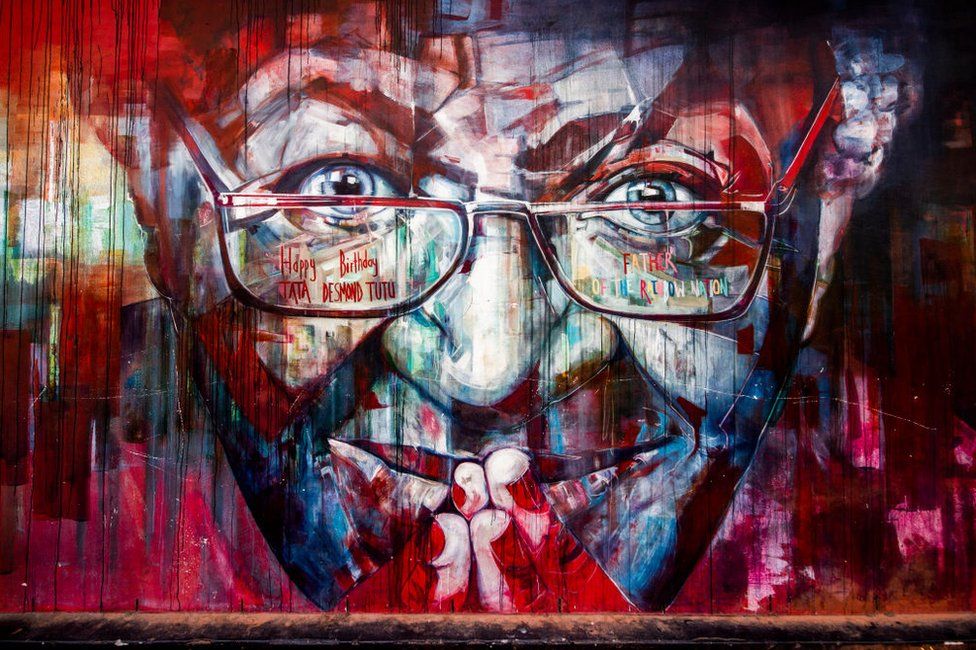
When Desmond Tutu died just over a month ago, it reminded people of what a giant he had been for religious people worldwide. His theology was one that still intimidates many. He preached true universalism, arguing that God was not a Christian, but belonged to every religion. He advocated sincere justice, never shrinking from social issues. And he believed, despite all he saw, that people were capable of fantastic things.

That was what made his assembly of tribes exceptional. Only those who see the best in people and hold the greatest of values can take people beyond what they know. If we are to defeat the racism, segregation and division that plague us today, we need to muster similar attitudes.

So, which tribe will we Jews be today? Will we sit at the bottom rung, only believing the worst about the world? Will we be like those who complain that we don’t count but others do? Will we create a culture where individuals can flourish but don’t cohere as a whole group? Will we unite around clear values and come together consciously with pride? And can we achieve that rarest of things: a level where we affirm what is wonderful in ourselves and the world, and foster unity around a joyous vision of the future?

The faith that inspired us at Sinai tells us today: we can achieve remarkable things. If we believe in ourselves, we will.

sermon · social justice

When did Moses stop being Egyptian?

When did Moses stop being an Egyptian?

When Moses was born, he was decidedly Hebrew. This fact was dangerous. The Hebrews were living under oppressive rule, enslaved and oppressed by hard labour. Fearing the Hebrews’ strength in numbers, the Pharaoh had decreed that all first-born Hebrew boys were to be drowned in the Nile. Staying Hebrew would have meant certain death for Moses.

So, he was raised Egyptian. His mother put him in a basket and sent him down the river, where he was picked up by the Pharaoh’s daughter and raised in the central palace. He was given an Egyptian name and raised as if he was a member of the Egyptian aristocracy. 

But, at some point, Moses ceased being an Egyptian. One day, he saw a slavemaster beating a Hebrew. Seeing the Hebrew as his brother, and the Egyptian as his enemy, Moses struck back and beat the slaver. He killed the Egyptian. Moses fled into exile in the Midianite desert. He knew he was no longer Egyptian. 

There are varying accounts of how Moses ceased being Egyptian. In the classic Dreamworks film, Prince of Egypt, Miriam and Aaron bump into him in the street, reveal to Moses his history, and persuade him to join the slaves’ revolt. The film is so ubiquitous that many imagine this is the Torah’s version of events.

This version makes for fantastic cinema, but doesn’t quite fit with the narrative presented in Exodus. In our story, Moses’s mother, Yocheved, and his sister, Miriam, put themselves forward to care for Moses in the Pharaoh’s palace. Surely his own family, having stayed with him since birth, who look more like him than Pharaoh’s daughter, would have raised him to know his history, even if only secretly. 

As Rabbi Dr Jonathan Magonet astutely notes, the text suggests that Moses held onto both identities. In the same verse where Moses rises up against the slavemaster, he calls both the Egyptians and the Israelites his “brothers.” He goes out to join his brothers the Egyptians in surveying the building works, then beats the slaver in solidarity with his brothers the Hebrews.

Moses could have quite easily continued living as an Egyptian while knowing he was a Hebrew. Many people throughout history have held multiple nationalities without contradiction. The useful question is not when Moses became Hebrew, but when he stopped being an Egyptian. 

Perhaps, as some of our commentators have suggested, the key lies a few verses before. There, it says that Moses grew up. Rabbis of the past have wondered what this growing up could mean. Surely it can’t refer to weaning or early childhood, because he has the strength to hit back against a fully grown adult wielding a whip. It must refer to a deeper maturity: Moses reaches the age where he can question the lies of Egyptian society. He reaches the emotional maturity to put his heart with the oppressed and rebel against injustice.

Moses was always a Hebrew, but he stopped being an Egyptian once he refused to identify with their system. As soon as Moses was willing to rebel against Egypt, he not only lost his identification with his enemy, but he lost the protection of being part of the elite family. He had to flee into exile. The only circumstance in which he could return was to lead the mass exodus of his people, the Hebrews.

It may seem surprising that Egypt and brutal slavery were so entwined that Moses could not remain Egyptian while opposing the evils of its system. How can it be that this country was so repressive that the slightest opposition made him stateless? How can it be that even a member of the elite, raised in the palace of the most powerful man in the land, could be rendered an exile just by standing up against the cruelest possible thing one human can do to another?

Of course, today we live in more enlightened times. We now live in a society where citizenship is awarded as a birthright, not as a reward for good behaviour. We have systems of international law that guard against making people stateless. Our government in Britain would never behave as Pharaoh’s did. 

Or would they? Two weeks ago, the government passed a law through the House of Commons called ‘The Nationalities and Borders Bill.’ According to this new law, anyone who is entitled to claim another nationality can be stripped of British citizenship without warning. 

This builds on the hostile environment initiated by Theresa May, which makes it harder for immigrants to reach Britain and easier to deport them. Similar policies have already been used to send away Carribeans who have lived in Britain their whole lives and to make refugees in this country stateless.

This new law expands these powers. And it affects us. 

How many members of the Jewish community have held onto second passports in case antisemitism becomes destructive again? How many Jews do you know who are also dual nationals with Israel, South Africa, Canada, or a European country from which they were once exiled? 

My dad and brother claimed German citizenship as part of post-Holocaust reparations. Now, this very fact makes them vulnerable to have their British citizenship revoked at a moment’s notice, without them even being informed. 

Indeed, every one of us could be subjected to similar treatment. A study for the New Statesman indicates that 6 million Britons – a tenth of us – could now be deported by Priti Patel. 

This law may not have been intended for us, but it could easily be applied against us. There is plenty of historical precedent. When governments want to issue repressive measures, they begin by attacking foreigners. Anne Frank was a German until the Nazis decided she was a Jew. Moses was Egyptian until the slavers decided he was a Hebrew.

Our community should be deeply concerned by these draconian measures. Whether out of solidarity with those who have already been deported from this country, or for fear that we, too, could fall victim to these new powers, we must be willing to speak up against it.

But there is reason to be hopeful. Earlier this year, when a Home Office van came to remove two asylum seekers from their home in Glasgow, their neighbours fought back. Two hundred local people surrounded the van and refused to move until their friends were freed. The immigration authorities were forced to capitulate and let the refugees free.

Our parashah teaches that the Hebrews could not be contained by the Pharaoh’s repressive measures. “The more they oppressed them, the more they rebelled.” Like our ancestors, we must be willing to do the same. 

The more this government treats foreigners as enemies, we must be willing to accept them as friends. The more this government declares that people do not belong here, we must be willing to assert that they do. The more they say that people are illegal, we must be willing to loudly assert: nobody is.

No one is illegal. Everyone who is here belongs here. You cannot deport our neighbours and friends. You cannot take away our passports.

Shabbat shalom.

South West Essex and Settlement Reform Synagogue; Parashat Shmot; Saturday 25th December 2021

festivals · judaism · sermon · torah

We are leaving the tight spaces

As a child, I loved Watership Down. Based on a book by Richard Adams, it was turned into an animated film in 1972. On rainy days, I kept going back to it, and my love has continued as an adult.

In Watership Down, a group of rabbits leave the only warren they have ever known to build a new burrow. They promise each other they will find a “strange and marvelous place where no one even stops to notice that you stare about you.”

Fiver, a small, stammering rabbit has profound visions. His brother, Hazel, explains them to the other rabbits and convinces them it’s time to leave. On the way, these escapees miraculously cross a great body of water, pass over a treacherous highway, lodge with suspicious friends and find terrifying enemies. But ultimately they reach their destination: an enormous, fertile hill, topped by a fruit tree. 

As an adult, I can now see that it was an allegory for the Exodus from Egypt. In fact, now that I look back, I can see how every event in Watership Down maps on somehow to a story in the Torah.

I come back to it with new eyes and realise that Watership Down made the biblical story relatable to me in a unique way. From my perspective as a child in England, I had no concept of what a desert was like and I’d never been to a Middle Eastern city.

But I knew the joy of tall trees and long grass. I knew what it was like to find the perfect hill on a warm spring day. Somehow the rabbits felt real in a way that even Moses and Miriam did not.

Don’t get me wrong. This was no pastoral idyll. Parts of the film were terrifying. Some people look back and wonder how it was even classed as suitable for children. It includes death, peril and violence between bunnies. 

But the most frightening part of all is not the journey the rabbits take. It’s Fiver’s vision of what will happen if they don’t leave. He imagines the rabbits trapped in their burrows, squeezed to death as men filled in the holes. He foresees them all being crushed in the tight confines underground. 

That is their Egypt. I don’t know whether Richard Adams had any knowledge of Judaism. In fact, I highly doubt it. But, somehow, with this image, he captured a great Jewish esoterical tradition about Egypt.

In Hebrew, the word for Egypt is Mitzrayim. The Zohar, a great medieval exploration of biblical mysticism, breaks down this word. Tzar, in Hebrew, is a narrow place. Tzarim is the plural: narrow places. The prefix ‘mi’ means ‘out of.’ Mitzrayim: “out of confined spaces.” Egypt is the narrow straits we must escape. 

Today is a special Shabbat in the liturgical calendar. This morning, we read the very last of Exodus. Tomorrow, we start the new month of Nissan.  It is called Shabbat haChodesh – the Shabbat of the Month. We leave Exodus and begin the month of the festival of Pesach, the celebration of our liberation.

That liberation does feel quite imminent to me, even if the Jewish calendar doesn’t quite match up with the government’s road map. We are on our way out of confinement and heading for open spaces.

The most profound moment on that journey for me has been getting my first dose of the vaccine. About a month ago, faith leaders were summoned by our local authorities to get the life-saving injection. 

I knew that this was not just important but felt like a holy moment. In the build up to being jabbed, I consulted with all my colleagues about what blessing I should recite when it happened. Everyone had different opinions

Some suggested we should say “rofei hacholim” – God heals the sick. Others thought the best prayer was “shehechiyanu,” the blessing that thanks God for allowing us to live to see the day. In the end, I said “hatov vehameitiv”: God is good and does God. It’s the prayer you say when something happens for your benefit and the benefit of the entire community. 

This week, Reform Judaism distributed our own liturgy for what we can see when the vaccine comes our way. Rabbi Paul Freedman has carefully compiled a single a4 document with words to recite in Hebrew and in English. 

The prayers are familiar, but the opening verses took me by surprise. Rabbi Freedman has chosen to start us off with a line from Psalm 118: 

מן המצר קראתי יה

Out of the meitzar I called to God.

The meitzar. The thing that causes distress. The small and confined place. The thing that presses us down. 

Out of the meitzar. Out of the narrow spaces. Out of Egypt.

Yes, that is truly what receiving the vaccine means. For over a year, we have been in narrow spaces. My French colleagues even call lockdown ‘confinement.’ We have been in our homes. We have been stuck in our front line workplaces and unable to go any further. We have only seen each other in small boxes, the narrow Zoom frames on our small computer screens. These have been our Mitzrayim. 

And now, as we turn to the new month of Nissan, we can finally see a way out. Our own exodus is beginning to feel tangible. In only two weeks, we will do our seder again online, and we will tell each other that we are leaving Egypt. We will promise each other to see each other next year in person. And this time, God willing, it will be possible.

So do take your vaccine when your turn comes. The Jewish community is responding well to the call from medical experts to get immunised, and I’m thrilled every time I hear that one of you has had the jab. 

If you have doubts and want to speak to a medical professional about what it involves, just ask and I will happily put you in touch with someone.

Please don’t hesitate or wait because you think someone else might be more deserving. Our epidemiologists and ethicists all say the same thing: when the doctors say it’s your turn, take your turn. Every immunised person protects many more people in the community.

We have known confinement and narrow spaces. We have lived in Egypt. And now we have been given our own little miracle. The vaccine is a sign and wonder. With an outstretched arm, you can receive it, and thank God that you will live to see another season.

The wide expanse awaits us. Soon, like the rabbits of Watership Down, we too will congregate in open spaces. We will sit under fruit trees on perfectly verdant hills surrounded by family and friends.

Our own Promised Land is in reach.

Shabbat shalom.

judaism · sermon

What do Jews look like?

A woman on a train walked up to a man across the table. “Excuse me,” she said, “but are you Jewish?”

“No,” replied the man.

A few minutes later the woman returned. “Excuse me,” she said again, “are you sure you’re not Jewish?”

“I’m sure,” said the man.

But the woman was not convinced, and a few minutes later she approached him a third time. “Are you absolutely sure you’re not Jewish?” she asked.

“All right, all right,” the man said. “You win. I’m Jewish.”

“That’s funny,” said the woman.” You don’t look Jewish.”

This classic Jewish joke actually highlights a good question: what do Jews look like? I am often told either that I do look like one, or that I don’t, and when I ask what it is… nobody ever wants to tell me! Whatever the reason, people have in their minds a picture of a Jew.

As it turns out, this isn’t altogether a new thing. Indeed, this week, we read about the clothes for Aaron and his descendants of the priestly caste. They have a strict identifying uniform.

Linen headdress, sash and and robes. A metal encrusted breastplate. Ephod, urim, tumim, incense. Aaron looks holy. Aaron looks like he stands out. Aaron looks… Aaron looks a lot like the Tabernacle he serves.

Aaron is to dress in the same white linen that we are told covers the Holy of Holies. He is to wrap himself in yarns of crimson and turquoise, just like the sashes that decorate the sanctuary. He is framed in gold like the Tabernacle’s curtain rails. He must wear a breastplate encrusted with stones representing the twelve tribes, just as the stones were ritually placed at the major resting points of the Israelites. 

Aaron is the Tabernacle in miniature. He is a microcosmic representative of the function he serves. The clothes he wears even assist in atoning for the Israelites’ sins, just as a sacrificial altar would.

Aaron dresses like what he does. He says: I am going to do holy things, and I require holy garb to do it in.

What a contrast with the Megillah we read just yesterday. In the book of Esther, there is an initial threat to the Jews. Haman, their wicked adversary, stomps through the city and plots Jewish mass murder. But Esther, our triumphant hero, foils the plot and overturns the decision. Now, instead, her uncle Mordechai will stomp through the streets of Shushan.

The Book of Esther draws our attention especially to what Mordechai was wearing on his horseback gallivant. “Mordecai left the king’s presence in royal robes of blue and white, with a magnificent crown of gold and a mantle of fine linen and purple wool.”

What does Mordechai look like? He looks just like a Persian palace. He has the crown and clothes of a king. He has the horse of his vizier. He looks like the empire. He looks like his enemy.

Having adopted the outfit of the oppressor, Mordechai soon acts like one. Under his instruction, the Jews go off on their own rampage, killing Haman, his sons, and 75,500 of their supporters. What Haman had planned for Mordechai, Mordechai did to Haman.

In Reform Judaism, we often gloss over this awkward ending, but it is very important. Victims given power can become no different to their persecutors. Here, the Megillah wants to slap us in the face with that fact. Look, it says, Mordechai looks just like everything he set out to oppose!

There must be a lesson in this for us. If we can look holy and we can look like oppressors, we have to think carefully about how we appear. 

Perhaps, then, I am right in my decision to always wear a collared shirt and suit jacket when I come to preach on Shabbat. After all, these clothes show that I’m serious and taking the services seriously. 

Ah, but the trouble is, arms dealers, politicians and tobacco lobbyists also wear suits. Aren’t I just dressing up like them, mimicking the clothing of 21st Century professionals, and subconsciously siding with them?

Perhaps, then, I need to switch to jeans and a t shirt? Oh, those haven’t been subversive since Tony Blair got out a guitar and rebranded the country as “Cool Britannia.” Mark Zuckerberg goes to work in jeans and a t-shirt, I’d hardly be making a different point.

Maybe I should copy our friends in Gateshead. After all, if I wear a black hat, long coat and beard, nobody will doubt that I’m Jewish. The people who stumbled to tell me why I looked Jewish before will now have a very clear answer.

Only the trouble is Haredim just dress like Eastern Europeans did 300 years ago. Theirs might fit someone else’s stereotypes better, but there’s nothing more authentic about it. Besides, I’m not convinced I’d look any less oppressive to a great number of Progressive Jews.

So how do we stop ourselves looking like our oppressors? In honesty, I think a Jew only looks like our enemy when we are determining what Jews should look like. When we stereotype, we repeat prejudices. When we gatekeep people for their clothes, we play into classism and prejudice. When we set out an image of a Jew, we exclude and hurt others. Deciding who looks Jewish is the least Jewish thing we can do.

So, what does a Jew look like? Open arms. An open heart. A broad smile. Curious eyes. A face that says, welcome, you are welcome here. A Jew looks like someone who knows that Jews look like everyone. 

Shabbat shalom.

protest · sermon · social justice

God died last month

God died last month.

The newspapers barely reported it. No politician offered a eulogy. There was no radio broadcast of a moment’s silence. The subject did not come up over dinner. God died last month and we barely noticed.

How is it possible that God could die? Who could kill God so callously and get away with it? To understand what happened to God last month, you need to know everything that happened to God since the beginning. You need to hear about God’s life.

It was after the Exodus that the Israelites began to see how vulnerable God was. They had been redeemed from Egypt. They had crossed the Sea of Reeds. They had received the Ten Commandments from a thunderstorm. 

Moses, Aaron, and seventy elders ascended the mountain once more to ratify their covenant with that God Almighty. When they reached the summit, they were shocked by what they saw. 

Under God’s feet were building bricks like sapphire, as blue as the sky itself. Those feet were trapped. Those beautiful bricks bound them. The elders asked what had happened. God replied: “As long as you were enslaved, I was enslaved too. As long as you built bricks from clay, I built bricks from clouds. As long as you were in pain, I was suffering too.” 

Of course, not all of God could be imprisoned. The infinite God transcends all space. But there is a part of God that lives with us and in us. A part of God labours when we toil. Cries when we cry. Hurts when we hurt.

The Israelites continued to catch glimpses of God’s frailty throughout their relationship. God had promised Jacob at the outset: “I will go myself with you to Egypt, and I myself will bring you back.”

It wasn’t just a promise of solidarity. It was a sad admission that, when the Israelites were refugees, God would be in exile too. When the Babylonia came to displace them and hold them in captivity, God travelled with the Israelites to Babylon. God sat with them in the synagogues. God was weeping by the river banks too. 

Of course, not all of God could be exiled. The infinite God transcends all space. But there is a part of God that lives with us and in us. A part of God leaves when we leave. Cries when we cry. Hurts when we hurt.

God’s sympathy was not confined to the biblical age of miracles and prophecies. God stayed with us through history, even when we thought we had been abandoned. Yes, even in the concentration camps. God was there. 

Elie Wiesel survived the Nazis and came to tell us what he had seen. He saw a child strung up by the guards, dangling. The child was left there for hours, dying in slow agony. The camp inmates had to stare him in the face with his still-red tongue and eyes not yet glazed.

“Where is God now? Where is He?” someone behind him asked. “Where is God now?”

And Wiesel whispered inside his heart: “Where is He? Here He is—He is hanging here on these gallows…”

God died there in Auschwitz. Of course, not all of God could be killed. The infinite God transcends all time. But there is a part of God that lives with us and in us. A part of God leaves when we leave. Cries when we cry. Hurts when we hurt. Dies when we die.

God has died with us many times. One hundred thousand sacred sparks have been extinguished in the UK this year alone. But God does not die in statistics on spreadsheets. God dies with one person at a time when one story is snubbed out too early in an unspeakable injustice. That is how God dies.

And now you know how it was possible for God to die last month. And now you need to ask why. 

God died on 9th January at his home in Cardiff. He was 24 years old. He had been in police custody because someone suspected he had breached the peace. We are still not sure what that means. He was released without charge.

When his aunt picked up from the police station, he was covered in wounds and bruises. She says he didn’t have them when he was taken to jail. 

52 police officers had contact with him in the 24 hours that he was held in Cardiff police station. None of them saw anything suspicious. The police are running toxicology reports and investigating themselves. They are looking at the CCTV footage but so far they have found no misconduct by officers and no use of excessive force. 

The police have refused to release the footage. They say we will never see it.

We may never know how God died or why. But we know that God died last month. 

And he was a black man named Mohamud Hassan. And he had a life that was worth living. And he should not be dead now.

And now you know how it was possible for God to die last month.

And now that you know that God has died, you are a witness to the crime.

And now that you are a witness, you will have to testify.

You are summoned before the Only Judge to give your testimony about why he died.

Black lives matter. 

Shabbat shalom.

The white fire says “Black Lives Matter.” The black fire contains Exodus 20’s commandment: “Thou shalt not murder” in Hebrew. Artwork by Rachel Stone.