judaism · sermon · torah

If you don’t believe in equality, you don’t believe in love

This is the week of our Torah dedicated to love stories. Our religious texts often contain laws or stories of struggle, but this is a unique reprieve, in which we are offered some romance.

At the beginning of our parashah, Sarah dies, and Abraham bargains for the perfect burial site. He wants to ensure her burial arrangements are in exact order. Later, he will be buried beside her, so that they can be joined forever in the hereafter.

The Talmud clearly picks up on how sweet these negotiations are, because it embellishes a story of what happened many centuries after they had died. Rabbi Benah was marking burial caves. When he arrived at the Cave of Machpelah, where Abraham and Sarah were buried, he found Abraham’s faithful servant Eliezer, standing before the entrance.

Rabbi Benah said to Eliezer: “Can I go in? What is Abraham doing?”

Eliezer replied: “Abraham is lying in Sarah’s arms, and she is gazing fondly at his head.”

Rabbi Benah said: “Please let him know that Benah is standing at the entrance. I don’t want to barge in during a moment of intimacy.”

Eliezer said: “Go on in, because, in the higher world that they inhabit, souls no longer experience lust. All that is left is love.”

Benah entered, examined the cave, measured it, and left.

It’s such a beautiful story. It teaches what an ideal relationship should be, where a couple loves each other long after death.

Perhaps, most significantly, it tells a story of mature love; of what happens when relationships really do last, and people carry on loving each other until their last days. I think we all know of such couples, but their stories rarely appear in our culture. We get romantic comedies. We get depictions of what love is like when it’s just starting out, but not so much about how it endures. Our media shows the hero get the girl, but not how they make their relationships work.

Don’t get me wrong. I love a good rom com. Yes, I did think Ten Things I Hate About You was a masterpiece when I was a teenager. And I absolutely did binge watch both series of Bridgerton on Netflix.

They all follow a predictable plotline. Two loveable heroes, and you’re rooting for them both. They encounter a tribulation. They overcome an obstacle. There’s a grand gesture. They realise they’re supposed to be together. In the end, there’s a wedding and they all live happily ever after.

In a way, that’s the story that we find immediately after Sarah’s funeral. Abraham realises that Isaac needs a wife. He sends out a search party, led by ten camels. He sets a test: whichever woman offers water to the camels by the well is the one meant for Isaac.

Immediately, we root for Rebekah. She is beautiful. She’s strong. She’s hard-working. She offers to feed all the camels, and rushes back and forth, drawing water from the well, feeding an entire herd of camels. Obstacle surmounted, we get our grand gesture. She is presented with a huge gold nose ring and two huge gold bracelets. She accepts. Their families rejoice. Everyone agrees that this was arranged by God.

There’s just one snag to reading a romantic comedy into all of this. The hero in the story isn’t Isaac. The man who goes out with all the camels, sets the challenge, starts the relationship, and makes the big gesture, is Abraham’s servant, Eliezer. By rights, if this were a love story directed by Richard Curtis, the wedding would be between Rebekah and Eliezer!

Isaac isn’t even involved. They’re engaged and the deal is done before the couple have met. Rebecca doesn’t know what he looks like. When Isaac later comes clopping along on his horse, Rebecca asks who it is. We have to hope that she was impressed, but we can’t be sure.

All we know is that, once married, Isaac feels comforted after the death of his mother. The heroin in our story, at the end, is reduced to a replacement mum for her husband. A love story this is not.

But, do they at least go on to have a happy marriage? Of course not. They were forced together as strangers as part of an economic arrangement.

In the entirety of our Torah, they never say two words to each other. They just pick favourite children and pit them against each other. They trick each other, lie, and form an unbelievably dysfunctional family.

The whole thing is a nightmare. It’s far more Silent Hill than Notting Hill.

This could never have been a love story! We’d never have got Sandra Bullock narrowly missing out on an Oscar for her heart-wrenching performance as Rebekah. We can only wish for Sacha Baron Cohen bumbling as a comedy father Abraham.

90s cinema didn’t invent romantic love, but it was far closer to its origins than Isaac and Rebekah were. The idea of romantic love, as we know it, was born out of the Enlightenment.

During the Age of Reason, philosophers had the wild idea that partnerships between people might be based on more than just combining property and keeping families happy. They suggested that marriage might not just be a way for nobility to make treaties between nations, but borne of a deep feeling common to all people. They even offered up the radical idea that women were people, and might have an opinion on their relationships too.

In those heady days, Judaism split between those who accepted the ideas of the Enlightenment, and those who did not. We, who embraced those fantastic ideas of equality, became the Movement for Reform Judaism.

As we accepted the ideas of love between equals, our rituals and ceremonies have progressed with us.

In a traditional ceremony, the woman is acquired with a ring. The ring is, in its origin, a symbol that the woman has been purchased. When Rebekah received her nose ring and bracelets, she was effectively accepting the shackles of her new owner.

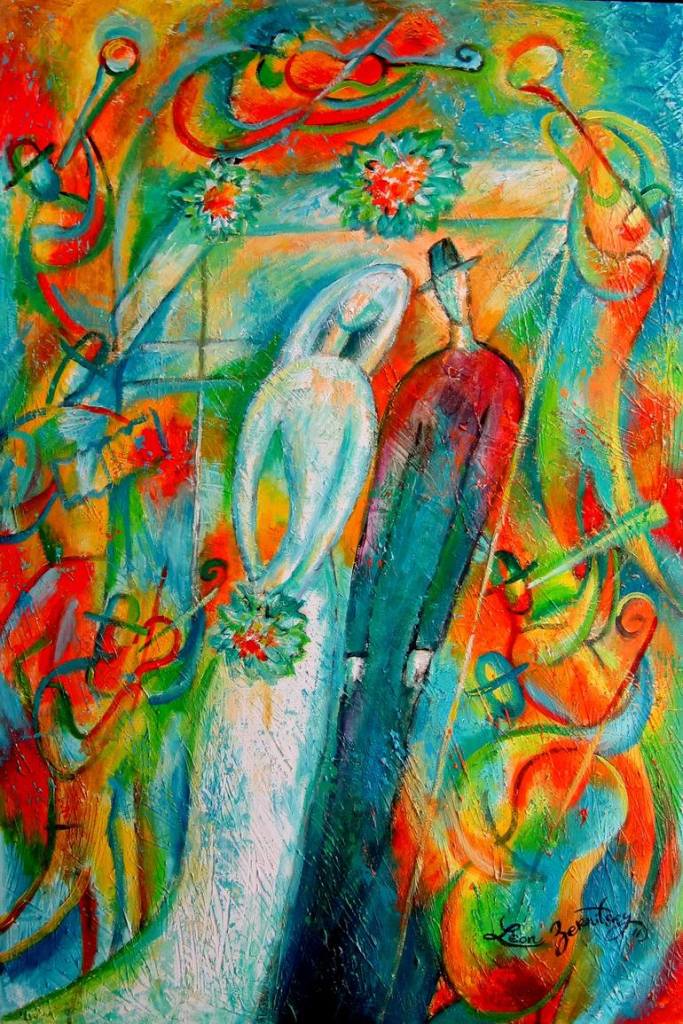
In our ceremonies, both partners to the wedding mutually acquire each other, or even forgo rings in favour of an alternative symbol of equal partnership. Both partners encircle each other under the chuppah, showing their shared space.

Whereas in a traditional ceremony, a woman may remain silent, Reform weddings require explicit consent from both parties. Both read their vows, and some couples choose to produce their own.

This may now seem obvious and intuitive, but it is only because the ideas of the Enlightenment have taken such hold. Love – the idea that people can be equal and caring partners – has had to be won.

Love is really a Reform value. It is something special to our movement. Our ancestors spent centuries fighting for the idea of meaningful love, so that we could celebrate it today in all its forms. You can only really celebrate love in a place that really believes human beings are equal.

And that is why Sarah, holding Abraham in her arms, gazing lovingly at his head, joined with him in an immortal embrace, was the first Reform Jew.

Shabbat shalom.

Parashat Chayyei Sarah, 5783

spirituality · story

God is sharing her location on WhatsApp

The king is in the field.

Last weekend, a new moon hung in the sky, marking the new month of Elul. This season, is a time dedicated to reflection on who we are and who we can become. It is a time when we turn back to God and aim at healing our relationships.

At this time, you may hear Chabadniks greet each other, saying “the king is on the field.” It comes from a story taught by the Alter Rebbe, Rabbi Schneur Zalman of Liadi, who was the founder of the Chabad-Lubavitcher dynasty in the 18th Century. He used to explain the month of Elul using the parable of a king coming out in a field.

According to the analogy, the king’s usual place is in the capital city, in the royal palace. Anyone wishing to approach the king must go through the appropriate channels in the palace bureaucracy and gain the approval of a succession of secretaries and ministers. He must journey to the capital and pass through the many gates, corridors and antechambers that lead to the throne room. His presentation must be meticulously prepared, and he must adhere to an exacting code of dress, speech and mannerism upon entering into the royal presence.

However, there are times when the king comes out to the fields outside the city. At such times, anyone can approach him; the king receives them all with a smiling face and a radiant countenance. The peasant behind his plow has access to the king in a manner unavailable to the highest ranking minister in the royal court when the king is in the palace.

The king described by the Alter Rebbe in this metaphor is God. In his analogy, God is the ruler of all, but is hard to access except by an elite few. During Elul, the heavenly king comes out from his palace and makes himself accessible to all. In this month leading up to the High Holy Days, everyone has the chance to approach God, seeking favour and forgiveness.

It’s a beautiful analogy. But metaphors also have their problems, and we need to check them to see if they really work for us.

First of all, is God really a man? Well, of course not. God is too great and infinite to be held by anything as small as a body or a gender. Some Jews have therefore chosen only to use gender-neutral language to describe God, deploying words like “Holy One” and “Source of Life.” Alternatively, some Jews have chosen to reclaim divine feminine language, emphasising God’s femininity.

As Reform Jews, our belief in gender equality is essential to us, and that is bound to come through in how we think about God. To be honest, I’m happy addressing God by any pronouns because none of them capture what God really is. You can really insert whatever gender you like.

The much bigger question is what kind of personality this anthropomorphic God has. In the Lubavitcher parable, God is a king. There is plenty of precedent in Jewish tradition for such a reading: God is “adon olam,” the Lord of the universe; God’s throne is eternal and His sceptre stands upright; God is described as the king over all kings, and we are called upon to build God’s kingdom on earth.

I really don’t like this imagery at all. True, it tells us something about how powerful God is, but the image of a benevolent ruler isn’t very helpful to self-improvement. If a king tells you to change your ways, you’ll do it out of fear of violence or retribution. A king, to me, conjures up images of unearned power, and I want to deliberately rebel against it.

I prefer the idea of God as a loved one. When I approach Elul, I want to improve so that I can be the best possible version of myself. The people that make me aspire to that are my partner, best friends, and close family members. They remind me that I’m loved, and inspire me to do better by others.

This idea is also very present in Jewish interpretations of Elul. Some rabbis have noticed thar the letters of Elul could be an acronym for the beautiful love poetry of the Song of Solomon: ani ledodi vedodi li; “I am my beloved’s and my beloved is mine.” In this allegory, God and Israel are lovers working together. I much prefer this idea of equality and mutual partnership.

This idea of equality really doesn’t fit with how Chassids imagine God or social relationships. As they explain in the Alter Rebbe’s fable, God is only accessible to elite people most of the time. That is a core ideological belief for many Chassids. They see their rebbes not only as teachers but as holy men, who have a special connection to God. They advocate dveikus: cleaving to special people so that we, through them, can get closer to God.

They don’t hold this belief because they are somehow traditional and we are not. At the time when Chassidism was birthed, roughly contemporary with Reform Judaism, many of its greatest opponents within Orthodoxy criticised them for creating hierarchies and dynasties within Judaism. God, they said, had no intermediaries, and Judaism did not have hereditary hierarchies.

The story of the king in the field is quite beautiful, but when subjected to scrutiny, it looks much less appealing. It speaks to a worldview in which everything is divided up on a power ladder. Men above women; special Jews above ordinary people; and God as a king on top of it all.

That doesn’t mean we should completely abandon this teaching about Elul. The idea of coming back to God is helpful, and I adore the image of meeting God in the open country.

I want us to imagine an alternative. I want us to imagine what this theology would look like if all of humanity were equals. What would we say if our relationship to God was not a vertical one of subject to king but a horizontal one between lovers?

So, I submit to you, an alternative telling of the analogy of the king in the field, updated for modern times and modern beliefs.

God has turned on location sharing.

You receive a WhatsApp message. She is letting you know she’s on her way.

You haven’t seen her all year, so your heart immediately flutters with excitement. You can’t wait to see her again.

You love her. When she’s around, you feel like the best version of yourself. You laugh more. You give more of yourself. You feel more compassionate and honest. You want to bottle up the love you feel when you’re with her so that you can share it with others the rest of the year.

The little location sharing pin says she is inching closer towards you.

Only inching. She appears to be walking through fields. You calculate how long it might take him to reach you. Weeks, perhaps.

Still, seeing her is worth the wait. You wonder if you could meet her sooner.

You text back: “Can I meet you somewhere along the way?”

She answers instantly: “Yes.”

Your heart beats a little faster as you get dressed, tie your walking boots and head out. She walks faster than you. You will be reunited soon.

It is Elul. God is coming closer to you, and you are getting closer to God. As we trudge through the muddy fields of this month, let us relish the chance to draw nearer to our loving God.

Shabbat shalom.


sermon · social justice · theology

What do we stand for?

Five years ago, I interviewed to start rabbinic training. Over four days, I went into different rooms, where rabbis, academics and lay leaders quizzed me about why I wanted to be a rabbi. 

It was intense. In one interview, one of the rabbis asked me: “what do you think you most want to learn while you are here?”

I said: “I’d like to learn what we stand for.” 

My interviewers scrunched up their faces. I imagined them thinking, “are you sure you’re in the right place?”

How could I not know what we believe? We are Progressive Jews; we stand for Progressive Judaism. Perplexed, she pushed me: “can you think of any principles of Progressive Judaism?” 

I thought, and said: “informed choice.” We do what we like, in conversation with Jewish tradition.

The rabbi sat back and took notes. I wasn’t sure whether I had given a correct answer, and she was confused how I could say I didn’t know what we stood for if I had that grounding, or if I’d missed something more important.

What I was trying to ask was: surely we don’t just choose whatever we like? A Progressive Jew can’t make the informed choice to commit murder. We don’t look at that central commandment and think: ‘ah, but it was for its time.’ We have a shared assumption that the prohibition on killing applies to every time. So how do we make these informed choices? What decides for us which choices are right and wrong?

Permissiveness is not really a value. It’s something you do out of indifference. There must be something stronger than that motivating our congregants to get out of bed and labour for the welfare of their community. 

Apparently, I am not alone. Throughout my time as a student, going to congregations across the country, people have asked me that very same question in different ways. 

What are the values of Reform Judaism? What does living by Progressive Jewish values actually mean?

After 4 years of study, well… I still don’t have the answer. But I feel much closer to it than I did when I started. And the answer begins with this week’s parashah.

At the end of Masei, we hear the story of the daughters of Tzelafchad. They come forward before Moses and assert their rights to inheritance. Their father, they say, was a good man who had no sons. As it stands, his property will be passed on to nobody, and these women will be left destitute. They argue that they should be the ones to inherit his estate. Moses talks to God. God agrees.

This is a big deal in Torah terms. It shows that a law can change. Decisions are not fixed in stone but can adapt with the times. It fits exactly with the Progressive mindset. We look at the laws again, and work out if they are still relevant. Moses looked at inheritance law, saw that it wasn’t working, and decided it was time to set a new precedent.

This is at the heart of Progressive Judaism. We progress. We treat the Torah and our traditions as our basis, but we are always willing to review it, and find new ways that better suit our reality.

The case of the daughters of Tzelafchad is a great example. It fits with our intuitions about what is right and wrong. Of course these women should inherit.

But does that mean every time a law changes, it’s an improvement? In the course of the Torah, laws also change to take rights away from people. Laws can change that make people’s lives worse. 

The reason why we consider this legal change so praiseworthy is because it makes life better for people. In particular, because it makes life better for women. 

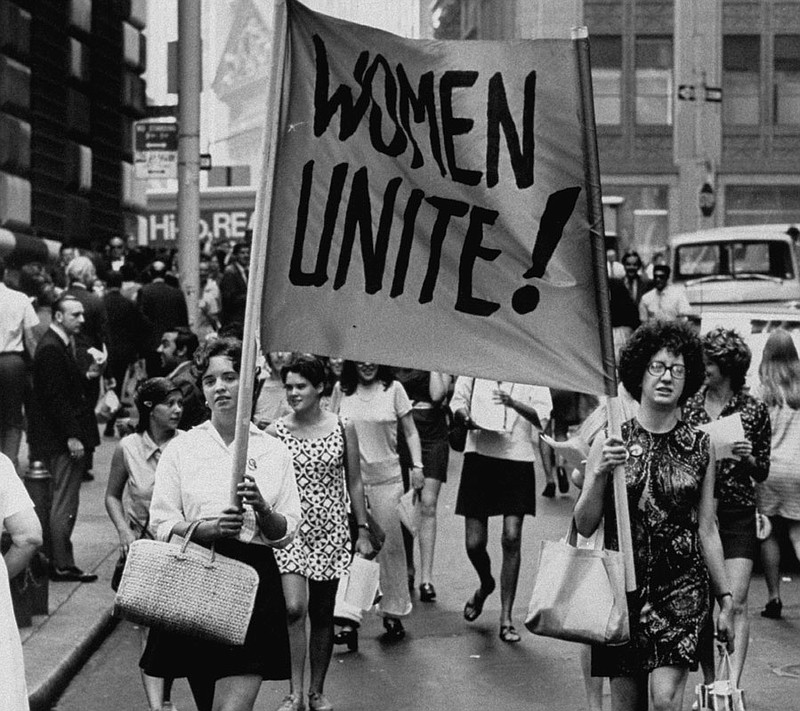
It fits with the feminist lesson we have learnt from history. Through the last century of the women’s liberation movement, our religion learned the importance of giving everyone their full rights and abilities to participate in Jewish life.

We have our own hashkafah: our own way of looking at the world. We see progress in terms of what gives people the most equality, dignity, and justice. 

Other strands of Judaism may give priority to tradition, nationalism, or conservatism. We say that what matters is equity. 

We did not decide to pursue this egalitarian cause because we thought it would make things easier. Quite on the contrary: it made things harder for many people. At the start of our movement, people were disowned by their families and ridiculed by the religious establishment because of their conviction that equality mattered. They took the more difficult course because it was the right one.

Since the early days of Reform Judaism, we have prioritised gender equality. This week, I met with one of the founder members of SWESRS, who said that in their very first days, the community discussed what they wanted from a synagogue. Even in the 1950s, they insisted that equality between men and women would be of the utmost importance.  

This synagogue has gone on to create a legendary legacy. The UK’s first woman rabbi, Jackie Tabick, was raised here. This is a place with a proud history of putting forward that great principle of Reform Judaism: that equality matters.

That is how we approach the question of whether and when to change a law. We are not beholden to tradition, forced to do everything today and tomorrow, just because we did it that way yesterday. Nor will we go along with every change, just because it feels fashionable or convenient. 

At every stage, the question we ask ourselves is: is this right? Is this just?

We seek to make changes that will make people more equal, more empowered, and more dignified. 

So, now, if I am asked what we stand for, I have a much clearer answer.

We stand for equality.

We stand for the emancipation of all of humanity.

We stand up for the oppressed and stand beside the marginalised.

We stand in the footsteps of Moses, who changed laws because he could see that justice mattered.

We stand before God, proud to inherit a tradition; and courageous enough to change that tradition for the better. 

That is where we stand.

Shabbat shalom. 

This sermon is for South West Essex and Settlement Reform Synagogue, Parashat Matot-Masei, 10th July 2021