academic · poem

Immanuel of Rome’s 9th Machberet

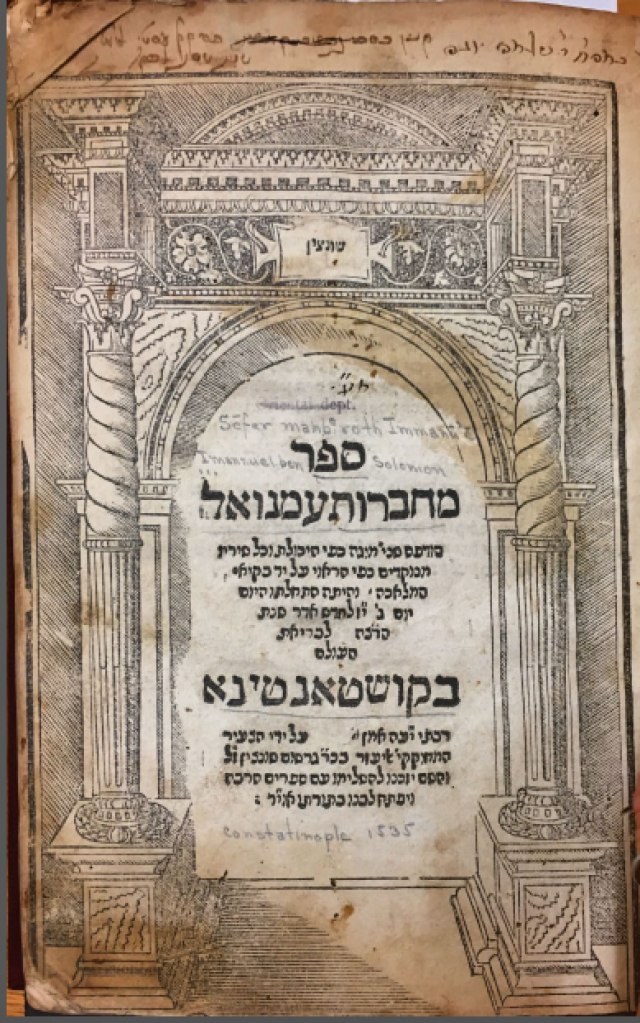
Emmanuel of Rome –in Hebrew, Emmanuel haRomi; in Italian, Manoello Giudeo – was born to an aristocratic Italian-Jewish family in 1261. Although only a minor poet by comparison to his pre-Renaissance contemporaries, Emmanuel was the first ever poet to write sonnets in any language other than Italian. Around 1300, Emmanuel produced a series of Hebrew sonnet collections that dealt with both secular and religious themes.

Using Dov Yarden’s edition of the Hebrew, I have created English translations of Immanuel’s 9th Machberet, which is a series of sonnets for each month of the Jewish year. So far, there has not been any systematic effort to translate all of Emmanuel’s works and only a few contemporary scholars show much interest in him. By putting these translations into the public domain, I hope others will take up interest in him.

I tell my story and say: וָאֶשָּׂא מְשָׁלִי וָאֹמַר 

TISHRI 

In Tishri, I rejoice; as the feasts to God 
Awaken me, to songs of passion sing  
I will delight in honey and nectar 
A time when willows string up violins 
And I shall surround myself  with youth 
I’ll eat a banquet fit to feed a king 
While staring at the apple of my eye, 
The juice of grapes and pomegranates drink. 
My face in battle, like before a flame 
I won’t be mute, but surely I will sing 
As her warden, I open up my lips  
I borrow kisses from Ofra’s wellspring 
And thank the Lord who made humanity 
Complete with all the perfect openings  
בְּתִשְׁרִי אֶשְׂמְחָה כִּי מוֹעֲדֵי אֵל
 יְעִירוּנִי לְשׁוֹרֵר שִׁיר עֲגָבִים
 וְאֶתְעַנַּג בְּנֹפֶת צוּף וּפַנַּג
 וְכִינוֹרַי תְּלוּיִם עַל עֲרָבִים
 וְאַצִּיבָה סְבִיבוֹתַי נְעָרַי
 וּמוּל פָּנַי לְאַיֶּלֶת אֲהָבִים
 וְאֶסְעַד מַעֲדַן מֶלֶךְ וְאֶשְׁתֶּה
 עֲסִיס רִמּוֹן וְאֶשְׁכַּר דַּם עֲנָבִ
ים וְאֶשְׁכַּח רִישׁ וְלֹא אַחְרִישׁ וְאָרֹן
 וּפָנַי בַּקְּרָב כִּפְנֵי לְהָבִים
 וְאֶלְוֶה מִשְּׂפַת עָפְרָה נְשִׁיקוֹת
 וְלִפְרֹעַ שְׂפָתַי לָהּ עֲרָבִים
 וְאוֹדֶה אֵל אֲשֶׁר יָצַר בְּחָכְמָה
 בֵּני אָדָם וּבָרָא בָם נְקָבִים 

MAR-CHESHVAN 

In Mar-Cheshvan, we’re lifted up by light 
I long to stand on dark borders of clouds 
And cry out from the fastened fires of night 
So sticky honey drips on land unploughed 
Upon the borders of the fields I press 
The nectar into syrup and the olives into chow 

I drink until I forget poverty 
And drive out all the grief from hearts somehow 
I bless each bairn to any woman born  
I see this as the time for seeds to sow 
The autumn plants assert this as their hour 
Nothing has thorns that sting as sharp as now 
But shoots will spring from barren earth again 
Like men from graves, accomplishing God’s vow  
בְּמַרְחֶשְׁוָן מְאוֹר יַעְלוֹת וְזִיוָן
 אֱהִי עֹרֵךְ לְמוּל אֹפֶל עֲנָנָיו
 וְקָרָתוֹ בְּאֵשׁ חֵשֶּׁק אֲגָרֵשׁ
 וְתַמְרוּרָיו בְּנֹפֶת צוּף עֲדָנָי
 וּמוּל פִּרְשׁוֹ יְהִי חֵשֶק וְדִבְשׁוֹ
 וְאֶל מוּל בָּאֳשׁוֹ רֵיחַ שְׁמָנָיו

  אֲנִי אֶשְׁתֶּה וְאֶשְׁכַּח רִישׁ וְאַחְרִישׁ
 וְאָסִיר מִלְּבָבִי עִצְּבוֹנָיו
 וּמִכָּל חַי יְלוּד אִשּׁה אֲבָרֵךְ
 אֲנִי נֹחַ וְנִטְעֵי נַעֲמָנָיו
 אֲשֶׁר לוּלֵי נְעִימוֹתָם יְכֻסֶּה
 זְמָן חָרוּל וְעָלוּ קִמְּשׁוֹנָיו
 עֲלֵי יָשְׁרוֹ אֲחוֹנֵן אֶת עֲפָרוֹ
 בְּתוֹךְ קִבְרוֹ וְאֶרְצֶה אֶת אֲבָנָיו 

KISLEV 

In Kislev, God’s horseman I will be 
And through calm pride I surely will agree 
A light on high supports a needy man 
To lift the dust of earth to build freely 
We light each night an eight pronged candel’bra 
Drink whiskey like the finest smooth honey 
The beauty of the girls’ arms, so exposed 
Whose eyes, like light’ning, shine in front of me 
One woman sets the table for the meal 
Another one runs after her to clean 
One coyly turns aside and rends men’s hearts 
Another bakes up biscuits for high tea 
I need not wonder what the meal will be 
The main course is spread out in front of me
בְּכִסְלֵו אֶהְיֶה שָׁלֵו וְאוֹדֶה
 לְצוּר רֹכֵב בְּגַאְוָתוֹ שְׁחָקִים
 וְאוֹר עֶלְיוֹן אֲשֶׁר אִישׁ דַּל וְאֶבְיוֹן
 מְרִימִי מֵעֲפַר אֶרֶץ וּמֵקִים
 וְנֵרוֹת אֶהְיֶה מַדְלִיק שְׁמֹנָה
 וְשִׁקּוּיַי כְּנֹפֶת צוּף מְתוּקִים
 וְהַיָּפוֹת זְרוֹעֹתָן חֲשׂוּפוֹת
 וְעֵינֵיהֶן יְרוּצוּן כַּבְּרָקִים
 וְאַחַת עֹרְכָה שֻׁלְחָן וְאַחַת
 תְּשַׂדֵּד אַחֲרֶיהָ הָעֲמָקִים
 וְאַחֶרֶת תְּלַבֵּב הַלְּבִבוֹת
 וְאַחֶרֶת תְּבַשּׁל הָרְקִיקִים
 וְצַפִּיחִת וּמַעְשֵׂה הַחֲבִתִּים
 וּמַרְחֶשֶׁת מְזָוֵינוּ מְפִיקִים 

TEVET 

The tenth Tevet: a fast for those who died 
When God’s children, like roaring seas, shall thrive 
They come in waves before the courts of God 
Where fools can dream and helping hands can strive 
To dig the chilly ground; this cold man shakes  

Those muscly men who work the harsh outside 
Who pull the jumpers round their necks and hide 
On snowy roads beneath the winter sky 
On days like these, I look for doe-eyed dames 
In secret surfaces where they reside 
My life is like a dead stalk in decay 
And yet, with only a gaze, I revive 
I know that God will crush all those who hate 
But meanwhile, I’ll be fortified by wine 
בְּטֵבֵת בַּעֲשָׂרָה בוֹ יְצוּמוּן
 בְּנֵי אֵל חַי וְכַיַּמִּים יְהִימוּן
 לְבוֹא צַר בֵּית אֱלֹהִים וַחֲצֵרָיו
 בְּכֵילַפּוֹת וְכַשִּׁיל יַהֲלֹמוּן
 וְהַקֹּר יַחֲלֹף הָאִישׁ וְיִדְקֹר

  פְּנֵי שָׂרִים הֲכִי חָבוּשׁ בְּטָמוּן
 וּמִטְרוֹת עֹז וְטִיט חוּצוֹת וְקֶרַח
 וְשֶׁלֶג עַל מְסִילֹּתַי יְרֻמוּן
 לְעֵת כָּזֹאת אֲשַׁחֵר הַצְּבִיּוֹת
 אֲשֶׁר סוֹד עַל יְגוֹנִים יַעֲרִימוּן
 וְעֵינֵיהֶן וְהוֹד צִיצַת לְחֵיהֶן
 יְחַיּוּנִי נְבֵלָתִי יְקִימוּן
 וְאֵיךְ אִירָא וְיֵינִי לִי לְעֶזְרָה
 וְהוּא יִמְחַץ מְשַׂנְאַי מִן יְקוּמוּן 

SHVAT 

Your face is harsh as bastards’ are, Shevat 
You send your time and frosty ice like loaves 
The whizzing snow breaks skies and cools my heart 
I spot the lovers hiding in alcoves 
They thrust and grab with their bosoms exposed 
Their voices cry out loud within their homes 
I cursed the stupid sermons as I froze 
And realised I was better off alone  
שְׁבָט אַכְזָר וְעַז פָּנִים כְּמַמְזֵר
 וּבוֹ יַשְׁלִיךְ זְמָן קַרְחוֹ כְפִתִּים
 וְהַשֶּׁלֶג גְּאוֹן הַלֵּב יְפַלֵּג
 וְהַדּוֹדִים בְּחֵיק יַעְלוֹת נְחִתִּים
 וְרָצֵי הַצְּבִיּוֹת הֵם דְּחוּפִים
 וְכָרוֹזָא בְּקוֹל קָרֵא בְּבָתִּים
 אֲרוּרָה דֹּרְשָׁה צֶמֶר וּפִשְׁתִּים
 לְעֵת כָּזֹאת לְבַד מַעְשֵׂה חֲבִתִּים 

ADAR 

Adar arrives to teach the bawdy tale 
Of how Haman and Zeresh caused such shame
If I had not such wealth and dignity 
I could not feast upon these geese and game 
In my right hand, a cup of toddy wine 
I shout each time I hear Haman’s curs’d name 
I join my mates and drink myself insane 
Until the heroes and the brutes are same 
We cheer with throats full of liquor and food 
For tyrants who will never rise again 
Only good wine can expel pain and strife 
And so we praise its healing holy name  
בְּאַדָּר אֶהְיֶה ישֵׁב וְדֹרֵשׁ
 וְאַזְכִּיר חַסְדֵי הָמָן וְזֶרֶשׁ
 וְלִי יוֹנִים וּבַרְבֻּרִים אֲבוּסִים
 וְלֹא אָחוּשׁ הֲאִם לִי הוֹן וְאִם רֵישׁ
 וְהַיַּיִן מְבֻשָּׂם אֶל יְמִינִי
 בְּקוֹל קֹרֵא וּבַדִּבּוּר יְפָרֵשׁ
 וְאִם אֹמַר אֲרוּר הָמָן וְזֶרֶשׁ
 יְשִׁיבוּן אַל תְּקַלֵּל דּוֹד לְחֵרֵשׁ
 וְקוֹל קֹרֵא אֱכֹל וּשְׁתֵה לְשָׁכְרָה
 וְלֹא תַשְׁאִיר לְנֹחֵל אוֹ לְיוֹרֵשׁ
 בְּיַעַן הוּא לְבַד רִפְאוּת וּמָזוֹר
 וְכָל רַע וָחֳלִי גָּרֵשׁ יְגָרֵשׁ 

NISSAN 

Nissan, I will recall God’s miracles 
Come see our homes, delight with joyous Jews 
How good and pleasant are these former slaves 
Our ancestors whom God opted to choose 
Once cloaked in cloud, they wandered in deserts 
But now delight and wonder are our views 
Up from these blossomed trees call turtle doves 
Our doorways filled with special treats, infused I fall
in love with her between the flower beds 
And couples ride the heavens in pursuit 
I will sacrifice the flesh and wool 
Of lambs and rams and farmers’ choicest ewes 
Let me cry out to all my famished friends: 
Jerusalem and food wait here for you!  
Upon the Torah’s head a diadem 
And graceful bracelets embedded with jewels 
Her crown reveals her lovely wonderment 
Each heart lights up to listen to her news 
Although a broken world encroaches now 
When morning comes, the world awaits her truth 
בְּנִיסָן אֶזְכְּרָה נִסֵּי אֱלֹהִים
 וּבֹו אוֹרָה וְשִׂמְחָה לַיְּהוּדִים
 וַּמה טּוּבוֹ וַּמה יָּפְיוֹ אֲשֶׁר בּוֹ
 אֲבֹתַי יָצְאוּ מִבֵּית עֲבָדִים
 וּפָשַׁט הַזְּמָן עָנָן לְבֻשׁוֹ
 וְעָטָה אוֹר וְכֻלּוֹ מַחֲמַדִּים
 וְקוֹל הַתּוֹר עֲלֵי מִפְתָּן וְכַפְתּוֹר
 וְאֶרְאֶה עַל פְּתָחַי כָּל מְגָדִים
 וְחשֵׁק עִם חֲשׁוּקָה בֵּין עֲרֻגוֹת
 בְּשָׂמִים רֹכְבִים יַחְדָּו צְמָדִים
 וְאֶזְבַּח שׁוֹר וְשֶׂה נָקֹד וְטָלוּא
 לְבַד מִן הַתְּיָשִׁים הָעֲקֻדִּים
 וְאַעְבִיר קוֹל לְכָל צַד כָּל דְּכָפִין
 וְצָרִיךְ לֶאֱכֹל יִהְיוּ עֲתִידִים
 וְאַצִּיב יַעֲלַת הַחֵן לְנֶגְדִּי
  בְּרֹאשָׁהּ צִיץ וְעַל יָדָה צְמִידִים
 וְהִיא תַעְנוּג לְכָל לֵב נוּג וְלַחְרֹט
 פְּאֵר הוֹדָהּ יְדֵי הָעֵט כְּבֵדִים
 לְדַעְתָּהּ יֵצְאוּ יָדַי גְּדוּדִים
 וְעַד בֹּקֶר הֲכִי נִרְוֶה בְדֹדִים 

IYYAR 

Iyyar asks me a joyful oath to swear  
I join my hands, both left and right, as pairs 
With lustful oxen, all Hebrews will unite 
By seeking dreams and chirpy birdsong pray’r 
I will never see liberation come 
Nor hear lads singing in the streets somewhere 
The world removes the mourning clothes she wears 
To swap for fancy garb, with lovers shared 
I free myself from books I have to read 
The Talmud’s texts, to which I am an heir 
Instead, I’ll set myself beside a doe 
Her body giving life beyond compare 
And though the heat of morning beats us slow 
When death does come, we will be holy there  
בְּאִיָּר אֶשְׂבְּעָה שׂבַע שְׂמָחוֹת
 וּבִשְׂמֹאלִי וּבִימִינִי נְעִימוֹת
 בְּשׁוּרִי חשְׁקִים מִכָּל עֲבָרִים
 בְּצִיץ צִצִּים לְשַׁחֵר הָעֲלָמוֹת
 וְלֹא אֶרְאֶה לְבַד גִּילַת וְרַנֵּן
 וְלֹא אֶשְׁמַע לְבַד שִׁיר עַל עֲלָמוֹת
 וְתֵבֵל תַּחֲלִיף סוּת אַלְמְנוּתָהּ
 וְלִכְבוֹד חשְׁקִים תִּלְבַּשׁ רְקָמוֹת
 וְאֶתֵּן גֵּט לְעֵרוּבִין וְגִטִּין
 וְסַנְהֶדְרִין וּמַסֶּכֶת יְבָמוֹת
 וְאֶבְחַר לִי לְצֵידָה הַצְּבִיָה
 לְחִי שׁוֹשָׁן נְשָׁמָה לַנְּשָׁמוֹת
 פְּנֵי חַמָּה אֲשֶׁר כָּל שֹׁחֲרֶיהָ
 קְדֹשִים יִהְיוּ בָהּ אַחֲרֵי מוֹת 

SIVAN 

Sivan makes me remember all God’s deeds 
How by wonder, He lifts us up, proceeds 
He brought His treasur’d people to freedom 
His children follow after where he leads 
They see his words and statutes as their light 
Enlightened by the Torah’s sacred creed 
Hear us, O God, as we cry out to You 
Comfort our fears in this, our hour of need 
O, show us Moses, whom we need so close 
Who came from mountains in the clouds, decreed 
To us the ten statutes by which we live 
For Jeshurun bowed down and found he’d heed 
Then Esau saw that God fulfilled His will 
And Ishmael learnt that God would be his steed  
בְּסִיוָן אֶזְכְּרָה פִּלְאוֹת אֱלֹהִים
 אֲשֶׁר נִשָּׂא וְגָבַהּ עַל גְּבֹהִים
 אֲשֶׁר יָצָא לְיֵשַׁע עַם קְרֹבוֹ
 יְלָדָיו הֹלְכִים אַחְרָיו וְנִנְהִים
 וְנָתַן הוֹד וְנֵר מִצְוָה וְתוֹרָה
 לְעַם קָדְשׁוֹ לְאוֹר יִשְׁעוֹ כְמֵהִים
 וְשָׁמַעְנוּ אֱלֹהִים חַי מְדַבֵּר
 וְנַחְנוּ פֹּחֲדִים מֶנְהוּ וְרֹהִים
 וְרָאִינוּ אֲזַי משֶׁה בְּגִשְׁתּוֹ
 לְעַרְפַלָּיו וְעָמַדְנוּ תְמֵהִים
 וְהִתְוָה תָו עֲשֶׂרֶת דִּבְּרוֹתָיו
 הֲתִשְׁתּוֹחַח יְשֻׁרוּן עוֹד וְתָהִים
 שְׁאַל עֵשָׂו הֲרָאָה כֵן בְּעֹשָׂיו
 וְיִשְׁמָעֵאל הֲשָׁמַע קוֹל אֱלֹהִים 

TAMMUZ 

Stripped bare and broken, in Tammuz, I go 
To play and say the eulogies of woe 
My contrite heart cries out in broken pain 
My clothes are drenched in blood and wet sorrow 
That soaks the valleys of God’s holy home 
The plunder and destruction of my foes 
Those heathens burn the sacred sites they hate 
And tear up Torah scrolls, they overthrow 
An idol stands upon God’s conquered throne 
It breaks my heart in ways I’ve never known 
I take my sword, prepare myself for war 
The huntsman within me readies his bow 
So all of my tears will break down these walls 
In grieving the lost ones, I cry alone 
בְּתַמּוּז אֵלְכָה עָרוֹם וְשׁוֹלָל
 וְלִשְׂחוֹק אֹמְרָה נַפְשִׁי מְהוֹלָל
 וְאֶתְעַנֶּה בְּלֵב נִשְׁבָּר וְנֶעְכָּר
 וּמַלְבּוּשִׁי בְּדַם דִּמְעִי מְגוֹלָל
 אֲשֶׁר בּוֹ הָבְקְעָה עִיר בֵּית אֱלֹהַי
 וְהֵצַר צַר וּבָזַז בַּז וְשָׁלָל
 וּבָטְלוּ הַתְּמִידִים בּוֹ וְשָׂרַף
 אֲפוֹסְטוֹמוֹס לְתוֹרַת אֵל וְחִלָּל
 וְצֶלֶם הֶעֱמִיד תּוֹךְ הֵיכְלֵי אֵל
 מְשׂוֹשׂ לִבִּי לְזֹאת חָרַב וְדָלָל
 הֲיַעְרֹךְ צִיר אֱלֵי צִירִי וּמַכְאֹב
 לְמַכְאֹבִי אֲשֶׁר בָּא לִי וְעוֹלָל
 וְלָכֵן כֹּל אֲשֶר דִּמְעָה יְפַכֶּה
 וְיִתְאַבֵּל לְפִי שִׂכְלוֹ יְהֻלָּל 

AV 

Throughout the month of Av, I will cry and grieve 
I’ll pump out reservoirs of tears of pain 
For desecration of God’s wasted home 
The refugees removed by Rome’s campaign 
On one long day, like Haman’s sons we hang 
While God destroys His seat of holy reign 
With fuming rage, my life force God destroys 
I sob out floods of salty tear-filled rain 
Now traitors and cynics surround me 
But I won’t eat or make love for the slain 
And were it not for God’s endless mercy 
My mouth would never know to laugh again  
בְּחֹדֶשׁ אָב אֱהִי נִכְאָב וְאֶדְאַב
 וְאֶשְׁאַב מֵי דְמָעַי מִכְּבֵדִי
 וְאֶתְעַנֶּה לְחָרְבַּן בֵּית אֱלֹהַי
 וְעִיר קָדְשׁוֹ וְעַל הָגְלַת כְּבוֹדִי
 בְּיוֹם אָרוּךְ כְּמוֹ וָי”ו וַיְזָתָא
 בְּחֻמּוֹ נֶהֱפַךְ חֹרֶב לְשַׁדִּי
 וְהַמַּיִם אֲשֶר אֶשְׁתֶּה לְשִׂכִּים
 בְּמוֹ עֵינַי וְלִצְנִינִים בְּצִדִּי
 וְאַרְחִיק הַצְּבִיָּה מִיְּצֻעַיְ
 וְאֶתְגּוֹלֵל בְּמִטָּתִי לְבַדִּי
 וְלוּלֵי נַחֲמוּ בִּבְנֵי אֲוָזָיו
 יְמַלֵּא פִי שְׂחוֹק אֶבְכֶּה בְעוֹדִי 

ELUL I 

The nobles’ daughters now are frollicing 
On flower beds of Elul’s evenings 
And balls run down the rafters of downswings 
Like those who made our rabbis into kings 
O, let us go and see the vineyards spring 
We’ll search for fresh grown figs until ev’ning 
Where trees not only grow but even sing 
And they will speak words kind and flattering 
Lift up your hand and don’t forget a thing  

I wrote these words of verse when I was young 
So ev’ry month could have its praises sung 
Today, in age, I wrote another one 
In sacred oil to praise the Elul month 
And now my greatest poem has begun…  
בְּאֵלוּל אֶעֱלֹז עִם בַּת נְדִיבִים
 בְּעֶרֶשׂ רַעֲנָנָה עַל עֲרָבִים
 וְהַגֻּלּוֹת יְרֻצוּן בָּרְהָטִים
 כְּאִלּוּ יִתְּנוּ שָׁמַי רְבִבִים
 וְנַשְׁכִּימָה וְנֵצֵא לַכְּרָמִים
 לְשַׁחֵר הַתְּאֵנָה עַד עֲרָבִים
 וְאָז אֶרְאֶה גְפָנַי אֹמְרִים לִי
 בְּפֶה חָנֵף וּבִדְבָרִים עֲרַבִים
 הֲתִקַּח הַתְּאֵנָה דּוֹד לְמָנָה
 נְשָׂא יָדְךָ וְאַל תִּשְׁכַּח עֲנָבִים

  אֵלֶּה הֵם הַשִּׁירִים הַמְפֹאָרִים
 אֲשֶר חִבַּרְתִּי עַל הֶחֳדָשִׁים בִּימֵי הַנְּעוִּרים
 וְעוֹד חִבַּרְתִּי שִׁיר עַל חֹדֶשׁ אֱלוּל
 בֶּשֶׁמן מִשְׁחַת קֹדֶשׁ בָּלוּל
 וּלְיָפְיוֹ הוּא עִלָּה וְכָל שִׁיר זוּלָתוֹ עָלוּל
 וְהוּא זֶה 

ELUL II 

If only you would bless my eyes, Elul, 
For you I would become an Amora 
A lord of words, a student to Rava 
And I will fast and search for sweet Mannah 
Within the vineyards I will sit pretty 
And sing and dance although my death’s not far
And I will leave my soul behind in words 
I’ll suckle breasts from vine shoots as they are 
בְּאֵלוּל תְּבַלּוּל בְּעֵינַי יְהִי אִם
 אֲקַנֵּא לְרָבָא וְלִהְיוֹת אֲמוֹרָא
 אֲנִי הַתְּאֵנָה אֲבַקֵּשׁ לְמָנָה
 לְנַפְשִׁי וְאֶדְרשׁ אֲנִי רֹאשׁ אֲמִיָרה
 וְתוֹךְ הַכְּרָמִים אֲנִי בַנְּעִימִים
 אֲכַלֶּה יְמוֹתַי בְּשִׁירָה וְזִמְרָה
 וְאָשִׂים גְּפָנַי סְבִיב צַוְּרֹנַי
 לְעָנָק וְאִינַק שְׁדֵי הַזְּמוֹרָה 
story · torah

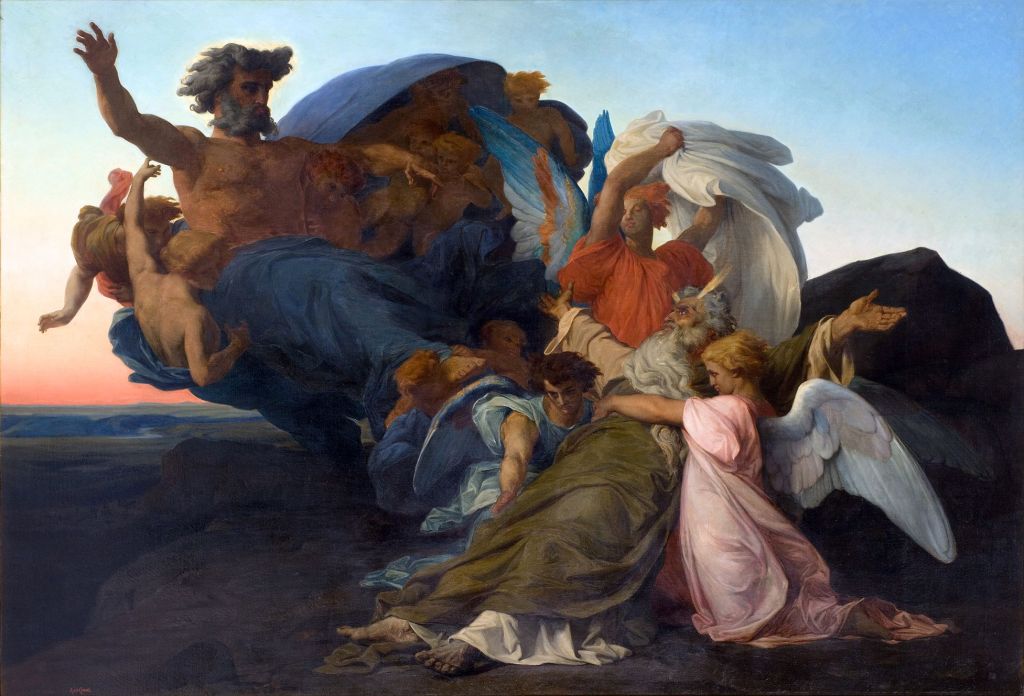
A letter to Joshua, from Moses

Dear Joshua,

It’s me, Moses.

Please forgive my shaky handwriting. It has been many years since I wrote anything down.

Can you believe it has already been forty years since we came to that great desert mountain and came into contact with the One God? Twice, I carried those miraculous tablets, etched with the Laws of Life, down from that mountain peak.

I could not carry them now. I would not have the strength. And I do not just mean that because of the way my hands tremble when I lift my food or the staggered steps I take when I wake in the morning. I do not have the zeal I once did. I cannot go on much longer.

Joshua, I am dying, and I will soon be dead.

I wish desperately that I could walk with you across that Jordan. All I have ever wanted was to arrive with you at that great destination to which we have journeyed.

But the Eternal One has told me that I will not go on much longer. I will die here, in the desert, and be buried in the wilderness sands.

At first, I was affronted. I cried out to my Maker. ‘Why, God? Why can I not pass over to finally see the freedom for which I have longed?’

God, who has given me so many words, remained silent.

I think I have an answer, though.

The truth is I was free the moment I first left Egypt. Before I returned with my staff and my message. Before any of those miracles and signs and visions. Before I even knew the God of Israel watched over us.

I was free as soon as I took my life into my own hands and refused to be part of the Egyptian system any longer. Once I decided not to be a slaver; not to subjugate others, nor to be subjugated, I was already then mentally emancipated.

These years we have spent in the desert were a way to work out what to do with that freedom. We have been reciting these laws and developing these rituals to find ways of living that keep us from ever going back to the oppressive ways of Egypt.

Joshua, this is what I need to tell you. Do not go back there. Not even in your mind. Do not try to own and control people. Do not allow others to own or control you. Let your soul be free, so that you can dedicate it to the God who led you here.

I am writing this down so that you can refer back to it, and remember what the point of it all was. Why we left Egypt. Why we spent all this time trudging thirsty through shrubland. Why we said we would go to that country from which our ancestors came many mythical centuries ago.

The point was not the land. The point was what we might do there. That we might be free. That we might finally see every human being as a living representation of their Creator. That we might cease using each other as means to an end but as ends in themselves. That we might truly know the Oneness of God and the deep mysteries underlying our universe.

That’s why I’m writing this now, as a reminder.

I know, I have said this all many times before. Call this my mishneh torah, my deutero-nominon; the repetition of everything I said before. It needs to be repeated, over and again, because freedom is hard to achieve and subjugation is such an easy default.

Please, read it out loud. Read it many times. Read it all the time. Even when the words feel trite and you feel like you have repeated the same phrases all your life, keep coming back to it. Remind yourself why you are here. Remind yourself what is at stake in this brief life we have been given.

I will say it again. Do not become like them. Do not worship the work of your hands. Do not think that work is the goal. Do not seek to own and control. Do not kill or oppress or endanger. Choose life. Seek God. Find holiness in everything that lives.

Joshua, I worry, even as I write these words, that you will not heed them. I know you want to. Ever since you were a boy, you used to sit at my feet and lap up every word. You were desperate to be closer to Divinity, to reach for higher things.

When I said we could conquer Canaan, only you and your friend Caleb believed me. You saw giants and were certain you could slay them. You had more faith than any of us. You had more faith than I did.

Joshua, there have been times when you carried me. Literally. In the war against the Amalekites, you put your shoulders under my arms and kept me upright. You are so, so faithful.

But where will all that zealotry go, once you are charged with leading people in the land? When you no longer have giants and Amalekites left to fight, what will you do with all your conviction?

I am asking too much of you. I am asking you to remember a life you have not lived.

You never knew Egypt. You were born here, in the wasteland, after we had already fled. You don’t remember what it was like to be owned. You cannot know what it meant to be a subject of a system that meant to destroy you.

In some ways, this means you have always been free, because you were not born a slave. In other ways, it means you have never been free, because you have never had to fight for it. You do not know what it feels like to start moving, then notice you are shackled, and to keep moving still, and to never stop moving, and to keep going with nothing but faith to carry you.

And you cannot know it. Just as I cannot follow you over the Jordan River, you cannot follow me out of Egypt. Some lessons can only be learned by life’s journey, and some journeys can only be made once.

Perhaps, when you go into that new country, you will make the place I dreamed about. Maybe it will flow with milk and honey. It might become a light unto the nations, where everyone lives with equality and dignity, where everyone can walk in the ways of God.

Or perhaps you will make a new Egypt. You, who never knew Egypt, will find new ways to conquer and subjugate and destroy. Maybe you will crown kings and build empires and wage wars.

Then what will the point have been?

I am asking too much of you. I am asking you to build a world I could not, and to do it all without my help. I am asking to you to know things you have not learnt, and to be perfect in ways I was not. I am sorry to put so much pressure on you. It is not fair.

You may not be able to do what I am asking. But at least you can remember. Tell your children where we came from. Teach them where we were trying to go.

And, then, perhaps, when they see new Egypts emerging, or they see that new Zions are possible, they will find paths through the wilderness that you and I could not see. Keep the story alive, so that the dream may continue.

Joshua, I am going to die here.

These words are all you will inherit from me.

I love you, Joshua.

Your friend,

Moses

spirituality · story

God is sharing her location on WhatsApp

The king is in the field.

Last weekend, a new moon hung in the sky, marking the new month of Elul. This season, is a time dedicated to reflection on who we are and who we can become. It is a time when we turn back to God and aim at healing our relationships.

At this time, you may hear Chabadniks greet each other, saying “the king is on the field.” It comes from a story taught by the Alter Rebbe, Rabbi Schneur Zalman of Liadi, who was the founder of the Chabad-Lubavitcher dynasty in the 18th Century. He used to explain the month of Elul using the parable of a king coming out in a field.

According to the analogy, the king’s usual place is in the capital city, in the royal palace. Anyone wishing to approach the king must go through the appropriate channels in the palace bureaucracy and gain the approval of a succession of secretaries and ministers. He must journey to the capital and pass through the many gates, corridors and antechambers that lead to the throne room. His presentation must be meticulously prepared, and he must adhere to an exacting code of dress, speech and mannerism upon entering into the royal presence.

However, there are times when the king comes out to the fields outside the city. At such times, anyone can approach him; the king receives them all with a smiling face and a radiant countenance. The peasant behind his plow has access to the king in a manner unavailable to the highest ranking minister in the royal court when the king is in the palace.

The king described by the Alter Rebbe in this metaphor is God. In his analogy, God is the ruler of all, but is hard to access except by an elite few. During Elul, the heavenly king comes out from his palace and makes himself accessible to all. In this month leading up to the High Holy Days, everyone has the chance to approach God, seeking favour and forgiveness.

It’s a beautiful analogy. But metaphors also have their problems, and we need to check them to see if they really work for us.

First of all, is God really a man? Well, of course not. God is too great and infinite to be held by anything as small as a body or a gender. Some Jews have therefore chosen only to use gender-neutral language to describe God, deploying words like “Holy One” and “Source of Life.” Alternatively, some Jews have chosen to reclaim divine feminine language, emphasising God’s femininity.

As Reform Jews, our belief in gender equality is essential to us, and that is bound to come through in how we think about God. To be honest, I’m happy addressing God by any pronouns because none of them capture what God really is. You can really insert whatever gender you like.

The much bigger question is what kind of personality this anthropomorphic God has. In the Lubavitcher parable, God is a king. There is plenty of precedent in Jewish tradition for such a reading: God is “adon olam,” the Lord of the universe; God’s throne is eternal and His sceptre stands upright; God is described as the king over all kings, and we are called upon to build God’s kingdom on earth.

I really don’t like this imagery at all. True, it tells us something about how powerful God is, but the image of a benevolent ruler isn’t very helpful to self-improvement. If a king tells you to change your ways, you’ll do it out of fear of violence or retribution. A king, to me, conjures up images of unearned power, and I want to deliberately rebel against it.

I prefer the idea of God as a loved one. When I approach Elul, I want to improve so that I can be the best possible version of myself. The people that make me aspire to that are my partner, best friends, and close family members. They remind me that I’m loved, and inspire me to do better by others.

This idea is also very present in Jewish interpretations of Elul. Some rabbis have noticed thar the letters of Elul could be an acronym for the beautiful love poetry of the Song of Solomon: ani ledodi vedodi li; “I am my beloved’s and my beloved is mine.” In this allegory, God and Israel are lovers working together. I much prefer this idea of equality and mutual partnership.

This idea of equality really doesn’t fit with how Chassids imagine God or social relationships. As they explain in the Alter Rebbe’s fable, God is only accessible to elite people most of the time. That is a core ideological belief for many Chassids. They see their rebbes not only as teachers but as holy men, who have a special connection to God. They advocate dveikus: cleaving to special people so that we, through them, can get closer to God.

They don’t hold this belief because they are somehow traditional and we are not. At the time when Chassidism was birthed, roughly contemporary with Reform Judaism, many of its greatest opponents within Orthodoxy criticised them for creating hierarchies and dynasties within Judaism. God, they said, had no intermediaries, and Judaism did not have hereditary hierarchies.

The story of the king in the field is quite beautiful, but when subjected to scrutiny, it looks much less appealing. It speaks to a worldview in which everything is divided up on a power ladder. Men above women; special Jews above ordinary people; and God as a king on top of it all.

That doesn’t mean we should completely abandon this teaching about Elul. The idea of coming back to God is helpful, and I adore the image of meeting God in the open country.

I want us to imagine an alternative. I want us to imagine what this theology would look like if all of humanity were equals. What would we say if our relationship to God was not a vertical one of subject to king but a horizontal one between lovers?

So, I submit to you, an alternative telling of the analogy of the king in the field, updated for modern times and modern beliefs.

God has turned on location sharing.

You receive a WhatsApp message. She is letting you know she’s on her way.

You haven’t seen her all year, so your heart immediately flutters with excitement. You can’t wait to see her again.

You love her. When she’s around, you feel like the best version of yourself. You laugh more. You give more of yourself. You feel more compassionate and honest. You want to bottle up the love you feel when you’re with her so that you can share it with others the rest of the year.

The little location sharing pin says she is inching closer towards you.

Only inching. She appears to be walking through fields. You calculate how long it might take him to reach you. Weeks, perhaps.

Still, seeing her is worth the wait. You wonder if you could meet her sooner.

You text back: “Can I meet you somewhere along the way?”

She answers instantly: “Yes.”

Your heart beats a little faster as you get dressed, tie your walking boots and head out. She walks faster than you. You will be reunited soon.

It is Elul. God is coming closer to you, and you are getting closer to God. As we trudge through the muddy fields of this month, let us relish the chance to draw nearer to our loving God.

Shabbat shalom.


high holy days · liturgy · sermon

It is on us.

What are we doing here tonight, beating our chests and chanting our sins? Haven’t we been through enough?

We have spent most of this year, from Purim onwards, sitting in our houses, staring at screens as nothing but bad news floods in. Coronavirus. Climate catastrophe. Police brutality. Rising inequality. Economic collapse.

Frankly, shouldn’t we able to take a night off? You might think we should get to the High Holy Days and only hear reassuring pleasantries. But Judaism never lets us off that easily. If that is what you want, Selichot is the wrong service. It’s very meaning is apologies, penitences, petitions. Its whole purpose is to summon us to ethical action and force us to examine our deeds.

At this service, we have to be confronted with Hillel’s maxim:

 אִם אֵין אֲנִי לִי מִי לִי. וּכְשֶׁאֲנִי לְעַצְמִי מָה אֲנִי. וְאִם לֹא עַכְשָׁיו אֵימָתָי

If I am not for myself, who is for me? But if I am for my own self [only], what am I? And if not now, when?[1]

This saying from the Mishnah is often rendered in the more memorable format: if not you, who? Yes, life would be much easier if we could look to others to resolve our problems. If only the government would do a better job… if only the European Union would sort things out… if only Jeff Bezos would spread his wealth around a bit… if only God would stop Coronavirus… if only God would send Moshiach to us today and sort the whole thing out! If only.

But your religion isn’t asking you to look at what others should be doing. It is calling on you to consider what you should be doing. Every time we pray, we recite the immortal words of Aleinu: “t is our duty to praise the Ruler of all, to recognise the greatness of the Creator of first things, who has chosen us from all people by giving us Torah.”[2]

Aleinu. It is on us. The power and responsibility for what happens in this world rests with us. To be a Jew is to be singled out, directly and personally, by God. You, as an individual have been called upon by God and tasked with Torah, with the moral welfare and social responsibility for all humanity. You are asked to take action.

And what does Aleinu say we must do? To cut off the worship of material things. To destroy prejudice and superstition. To speak out against oppression. To unite the whole world. To bring goodness and truth and justice to this world.[3]

That is our calling. That is what we must answer. According to folklore, this prayer was introduced into the daily liturgy in the 12th Century, when a group of Jewish men and women were burned at the stake for refusing conversion. As the flames piled up around them, they sang these lyrics to a haunting melody, refusing to give up even unto death.

Faced even with being burned alive, these martyrs’ first recourse was to recall their own moral duties. They used their last moments to remember why they were placed on earth. Why, in this time of Coronavirus, should we be any different? We must see this season as a time to take up the yoke of responsibility Judaism has bestowed.

As we recite our selichot, challenge yourself. Ask: have I been as generous as I should? Have I done enough to reach out to vulnerable people?  Have I prayed? Have I built community? Have I supported my loved ones? Have I been kind?[4]

And, if, on any point, you find yourself deficient, now is the time to correct your ways. If not you, who? If not now, when?

I gave this sermon on Saturday 12th September 2020 at Glasgow Reform Synagogue for Selichot.

[1] Pirkei Avot, 1:14

[2] Forms of Prayer 2008, p. 310

[3] Forms of Prayer 2008, p. 311

[4] Based on Babylonian Talmud Shabbat 127a

high holy days · judaism · torah

Not everything must be forgiven

Not everything must be forgiven.

Earlier in the year, I went to a Holocaust Survivors Centre to deliver a service. After we had sung songs, discussed Torah and celebrated the day, I went to join some of the survivors to eat.

We sat and chatted. They were all elderly, but brimmed with life. These refugees, mostly women, who had survived camps and treacherous journeys to get here, seemed to possess a vitality I rarely saw in people my own age.

They talked about their grandchildren, their local community and their synagogues. But they wasted no time getting to the really gritty questions. “Why should I believe in God after what happened to us?” “Did God let that happen to us?” “Do you believe in an afterlife?” I bashfully tried to answer their questions, often replying that I did not know.

But then one of them asked a question to which I did know the answer. To which I was in no doubt. She asked me: “Do I have to forgive the Nazis?”

“No,” I said. “No you do not have to forgive the Nazis.”

I did not cite a Torah verse or a scholar or a halachah. I just said no. There are things that are unforgivable, and I was taken aback at even the suggestion that a survivor could forgive the Nazis for what they did.

Not everything must be forgiven. Not everything should be forgiven. Not everything can be forgiven.

We have reached Elul. The new month has begun and we have entered the last lunar cycle of the year, taking us through to Rosh Hashanah. This is our season of contemplation and reflection; of apology and of forgiveness. In this time, it is natural that we want to unburden ourselves of the guilt we have clung to.

Forgiveness is supposed to be the release of resentment and vengeance when we feel we have been wronged. With it ought to come a feeling of relief and a sense of restitution in the world.

Yet, so far, I have encountered far more people struggling because they cannot forgive than because they cannot apologise. I think it is important to stress: you do not have to forgive everything and you cannot be expected to forgive everyone.

Rabbi Elazar ben Azariah taught: “for transgressions between a human being and God, Yom Kippur atones, but for transgressions between human beings, Yom Kippur does not atone, unless the wronged party forgives.”[1] Judaism has no absolution. Our religion teaches that you must work to earn forgiveness, and guilt cannot be magically removed by prayer.

Even then, there are sins that can never be forgiven. For the most heinous crimes, like murder, even God does not forgive.[2]

We must assume that God does not forgive such an act because no human being could. Murder is irreversible in a way that other acts or not. The murdered person is not alive to forgive; no family member could forgive on their behalf. Even if they could, nobody could reasonably ask the family member of a murdered person to provide forgiveness, because it would take a super-human level of magnanimity.

In this week’s Torah portion, Shoftim, Moses creates cities of refuge throughout Canaan.[3] In ancient Israelite culture, the relatives of murdered people were not only not asked to forgive. They were expected to kill the killer as a matter of honour. Such a person was called a “blood redeemer.” They were required to avenge their family member’s killer, even in a case of accidental manslaughter.[4]

Moses established the cities of refuge so that the accidental manslaughterer would have somewhere to run. The killer could live there and escape being killed. Although they would need to start a new life, they would not be executed by the blood-redeemer, nor punished by the courts.

What is noteworthy about this system is how compassionate it is. There are times when people commit crimes and there is nobody at fault. Deuteronomy gives the example of a wood-chopper’s axe that backfires and kills a co-worker.[5] In this case, it would be improper to try the killer as a murderer, because there was no malice.

Yet, more importantly, it is compassionate to the victims. It does not ask the victim’s family to abandon their anger, but builds in an assumption that there would be raw feelings that would never be resolved within the court system. Rather than tell them to forgive, Moses establishes systems that mitigate their anger and prevent a cycle of violence.

Moses knew that not everything could be forgiven. That principle follows us through to this day. During the Second World War, Simon Wiesenthal, who was interred in the concentration camps, met an SS officer, who begged his forgiveness. The Nazi, on his death bed, admitted to having killed over 300 Jews by burning down their house and shooting at those who escaped. He said that he needed a Jew to forgive him. Wiesenthal did not.

Over the years, Wiesenthal contemplated whether he should have forgiven the Nazi after all. He wrote to thinkers across the world, including rabbis, philosophers, judges, priests and historians, asking for their view. He collected all their letters back into a volume called ‘The Sunflower’.[6] Of the respondents, not one Jew said he should forgive.

Most of those who said he should forgive replied as Christians, and said they would do as ambassadors for Jesus. Yet there is a more compelling answer offered by Jose Hobday,[7] who was a Catholic priest of Native American descent. He wrote of his experiences as an indigenous person in North America, experiencing genocide and persecution. He explains how those experiences and indigenous spirituality had taught him to forgive, not for the sake of his oppressors, but for the sake of himself. That forgiveness helped him transcend the wrongs that were done to him and his people. That if he did not forgive, it would only make him feel worse.

Yes, if forgiving will make you feel better, then you can do so for your own sake. But believing that you have to forgive when you cannot will only make you feel worse. Sometimes it is necessary for hurt people to hold on to their hurt and not relinquish it through forgiveness.

So, for your own sake, go into this Elul knowing that you do not need to forgive everything. You do not need to forgive those who have not made amends and you do not need to forgive what is beyond your capacity.

Judaism is not about creating perfect people, absolved of blemishes and able to exercise the infinite mercy we expect of God. It is about accepting we are real people, who make real mistakes, learn from them and try to improve. It is about accepting that we are vulnerable people, who are capable of hurting and being hurt, and who might not find resolution in this lifetime.

Work on what you can change in yourself. Apologise for what you have done wrong. Forgive where you can forgive.

But know that not everything must be forgiven. Not everything should be. Not everything can.

Shabbat shalom.

sunflowers

I will give this sermon on Saturday 22nd August at Newcastle Reform Synagogue.

[1]Mishnah Yoma 8:9

[2]Babylonian Talmud Sanhedrin 74a

[3]Deuteronomy 19:1-3

[4]Deuteronomy 19:6

[5]Deuteronomy 19:5

[6]Schocken Books, 1970

[7]Chapter 23