sermon · torah

Who gets to see the world?

Hello, I am back from my holidays in Spain and France. I brought you all back some lovely little trinkets from The Louvre. Just don’t tell anybody you got them from me. 

I spent my holiday thinking about how easy it is for me to travel, and how impressive my journey would seem to previous generations. I wondered about what it was like in earlier centuries for people travelling the world. 

In 1532, a great king travelled across the Atlantic to meet a previously unencountered tribe. The king was, in some ways, disgusted by the society he encountered, which was rife with inequality, governed by a despotic ruler, near constantly in a state of war, and yet to develop serious hygiene practice.

He was, however, impressed by the luxuries he saw in the local king’s palace, and intrigued by the sophisticated religious culture the people had developed. 

The indigenous people went by many names, but the locals called themselves “the English.”

That’s right, in the early 16th Century, an Aimoré king travelled across the Atlantic from Brazil to the court of King Henry VIII and attended the palace as a distinguished guest.

We are used to thinking of international travel in the Tudor Age as something that voyagers from England, Portugal, Italy and Spain did to the so-called “New World,” but plenty of people also went the other way. 

Recently, the historian Caroline Dodds Pennock released a book called On Savage Shores, which looks at the people who travelled from the Americas to Europe. They gave their own verdicts on European society, often quite damning of its inequality and sanitation.

Dodds Pennock is well aware that, by telling these stories, she is reversing the gaze. To the indigenous travellers, it was the Europeans who were the strange exotic outsiders. 

If this feels surprising to us, it is probably because we are so in the habit of imagining that rich colonising men go out and see the world, but we don’t often think of those same men getting looked at by the world.

There is a reason that Abraham’s story of setting out from Haran was so compelling to its ancient listeners. Most people did not travel more than a mile from their own town. The world beyond was a mysterious and exciting place. They could only hear about the journeys, people, animals, and plants that others saw from testimonies, like those given in the Torah.

Abraham’s trek belongs, then, in a similar category of travel literature to Homer’s Odyssey, which was likely told as an oral story, and then committed to writing at a similar time to Abraham’s journey in the Torah. Odysseus encounters singing sirens, multi-headed monsters, and lotuses that make you forget your home. 

Abraham, on the other hand, goes on a thousand-mile hike with no less than the One True God. Along the way, he marries a foreign princess, meets the king of Egypt, does battle in the Dead Sea with local lords, and meets angelic messengers over a meal.

This story must have remained compelling to many generations of Jews afterwards. Medieval Jews were used to living in one place. They may have been visited by merchants and Crusaders. Some may have gone away on fixed routes as merchants, and there were times when whole communities had to leave in haste. 

But the idea that one of their own – the first ever Jew – went out on such an exciting adventure would have been thrilling to the Torah’s audience. 

We know much of what other people thought of the Jews they met. Medieval accounts describe Jews almost as a people fixed in time; like a noble relic from a simpler age. The European travellers who encounter Jews treat them with a combination of scorn and exotic interest. In that sense, the Jews of Europe had more in common with the colonised people of the Americas, who were similarly treated as foreign oddities. 

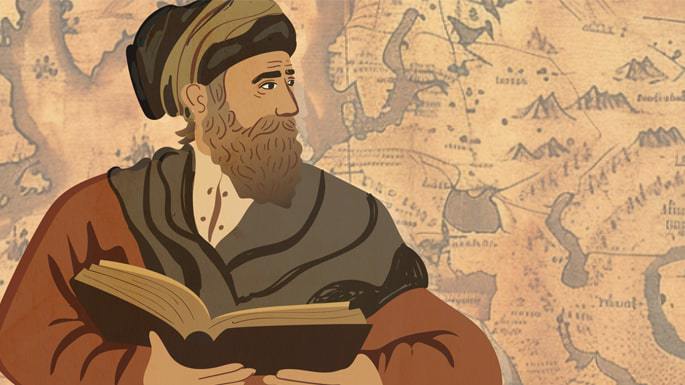
Bucking the trend, however, was a fascinating figure of the 12th Century, called Benjamin of Tudela. Born in the Spanish kingdom of Navarre, Benjamin went out on a journey tracing the Jewish communities of southern Europe, northern Africa, and south west Asia. 

He took a long route on pilgrimage to Jerusalem that brought him through countries we would know today as Italy, Greece, Turkey, Syria, Lebanon, Iraq and Iran. He seems also to have travelled around the Arabian peninsula, looking for the Jews of Africa, but never reaching the Gondar region of Ethiopia, where he might have found them. 

Benjamin recorded all of his encounters in Hebrew, in a book called Sefer HaMasa’ot, the Book of Travels. His chronicles were so fascinating that they were reproduced over many centuries, and translated into Latin and most European languages.

Today, Benjamin’s records have attracted scholarly attention, not least because they subvert our expectations of who goes exploring and who gets explored. Benjamin writes with fascination and joy about the Pope in Rome and the Caliph in Baghdad. 

Most importantly, when Benjamin meets Jews in other countries, he is at once meeting his own people and meeting people entirely different from himself. When he sees how other Jews do things differently, he feels joy in diversity. When he sees Jews doing well, he feels pride; and when he sees other Jews in a persecuted condition, he suffers with them as his own.

This is the great blessing of Benjamin’s travelogue: he can see the world through two sets of eyes – as both an outsider and as an insider. When he travels, he is never quite the colonialist going out to comment on others, but he’s never just looking at his own people. This gives him an impressive position of humble curiosity.

As British Jews, we may learn to do the same thing. 

We have a blessing by dint of our position. That blessing is a special ability to look at the world through multiple sets of eyes.

We can, indeed, look at the world through European eyes. We are Europeans, and we belong here. We can see England as it is imagined by the English, where this island is the centre of the world, its monarchs the most illustrious, its culture the highest human attainment. We should not shy away from seeing the best in Europe: we are part of it, and there is much to love.

We can also, if we choose too, see this continent through outsiders’ eyes. We can see its flaws, its delusions of grandeur, and its odd habits. We can be the best possible internal critics of our country, because we understand what it is to belong, and what it is to feel like we do not.

The danger in either of these sets of eyes is that we turn them into a haughty gaze. Like the early colonialists, we have the capacity to see every other culture as backward and barbaric, or its people and lands as subjects for exploitation. Inverting the gaze, we might come to see the Europeans as horrible invaders, without directing the critical lens on ourselves. 

But if, instead, we can approach the whole world with modesty, we can see every nation and every place with loving curiosity. With humility, we can see ourselves as fellow travellers with everyone else, discovering this wonderful world together.

If we can do this, then, like Abraham, we may truly learn to walk with God.

Benjamin of Tudela

festivals · judaism · torah

What happened at Mount Sinai?


We are days away from Shavuot, the Feast of Weeks, when we celebrate having received the Torah. At this festival, we affirm we have received God’s word and that it is unfailing.

This is what we think we know: these words are not only God’s.


They have human origins, and they were written over many centuries. The Torah is not a single, unaltered revelation. It is a book with a history.

What happened at Mount Sinai matters immensely. It is the foundation of our faith. It is the basis not only of Judaism but of every monotheism that followed it.

The story has been told so many times. Hordes of Hebrews fled from Egypt, gathered around the foot of a desert peak, and heard the voice of the One True God.

What they experienced, they told to their children, and they to theirs, until – after generations – the vision was written down into a collection of stories and laws we call the Torah.

We have to know what really happened at Sinai; so much hinges on this indecipherable point of history.

We have to believe in the real world, where history is something made by human beings, who work, and struggle over resources, and build societies.

We have to believe in the God of Judaism, who is revealed through history.

We must synthesise the two. We cannot split the material and the spiritual. We need to know what the material reality was that lay underneath this spiritual truth. We need to know what happened at Sinai.

We cannot truly know, but we have to try and work it out. A group of human beings felt so inspired that they wrote down ten commandments and passed them on for thousands of generations. Why?

A group of human beings, who surely worked and slept and ate and drank and dreamed, proclaimed that they had seen God.

Something marvellous must have happened at that time. Something awe inspiring – to give us this treasury of ancient wisdom. Who committed these words to paper, what happened to them, and what made these commandments feel so important to them?

What really happened at Mount Sinai? The biblical historian pores over our texts, strips them back, digs out inconsistencies, looks for parallels in ancient cultures, and analyses the language in which the stories are told. The biblical historian discards impossibilities, looks for likelihoods, and reconstructs the best possible version of events.

We cannot know for certain, but we can do our best to do the same – to discard, seek and reconstruct. And, when we do, the truth of/ Mount Sinai that we are left with is far more radical than we might imagine.

For the historian, Mount Sinai may not have been Mount Sinai at all. It may be, as the Samaritans claim, Mount Gerizim, near Nablus, since that is also one of the mountains the Torah names as a site of revelation. It may have been Mount Pisgah or Mount Nebo, on the eastern side of the Jordan River, since our Torah names those locations too.

We do not know at which mountain the important revelation happened. But there was a mountain.


This is what we think we know: there was a mountain.

Some people went there. They may not have been Jews, since that word did not exist yet. They may not even have been Israelites, since the story teaches that they only became Israelites through the process of what happened at that mountain.

They were, says the Torah, a mixed multitude. They were drawn from all the nations of the Ancient Near East: from Ethiopia and Yemen; through Egypt and Sudan; to Lebanon and Syria.

They were, by their own self-description, border-crossing nomads. They had no land or title. There are no records to suggest they owned any weapons, let alone that they had military strength.

If we are to trust how they wrote about themselves, they were menial workers. Water drawers; grain carriers; tenant farmers; shepherds. They had been slaves. They were a ragtag of the ancient world’s lowest classes.

We do not know who these people were. But they were poor and transient.

This is what we think we know:
the poorest people of many ethnicities came together at a mountain.


We are not sure when it happened. It may have been any time from the 15th Century BCE. The latest it could have been is the 5th Century BCE, when the Torah was edited into its final form. That is a difference of nearly a thousand years.

We do not know what brought them to that mountain. We cannot prove that the exodus took place exactly as it was described in the Torah.

But we do know that, in the 12th Century BCE, there was a massive societal collapse in all the nations of the Mediterranean basin. In the broad period when our Torah tells us that our ancestors received the Ten Commandments, the Egyptian empire was crumbling.

We also know this. When Egypt was collapsing in the late Bronze Age, a Pharaoh wrote a stele, complaining of slave uprisings by a group of nomads on the fringes of his empire. He calls those people Habiru. The biblical historian notes the linguistic similarity between these people and the Hebrews.


This is what we think we know: the poorest people of many ethnicities rebelled together against a decaying empire some time around the late Bronze Age.
They met at a mountain.

The stories they tell of their experiences at that mountain are fantastical. Fire descended from heaven. Thunder crashed and lightning roared. Thick smoke descended over the peak. The earth trembled violently. The Creator of Heaven and Earth became manifest before them.

How can we know if any of this happened? Nobody else could have testified to what they saw. There are no contemporary meteorological records. There are only two possibilities: either the authors of our Torah really believed that was what they experienced, or they made it up.

If they made it up, so many others were convinced that they had been part of that experience at the mountain, that they faithfully transmitted the story for hundreds of years to their children and grandchildren. Which is more likely: that these people lied, or that they genuinely believed they had a transcendent experience?

This is what we think we know: the poorest people of many ethnicities rebelled together against a decaying empire some time around the late Bronze Age.
At a mountain, they had an experience so profound that they felt as if they saw God manifest, and it changed their lives and the lives of their descendants forever.

The God they thought they heard told them: “Although the whole earth is Mine, you will be for Me a dominion of priests and a holy nation.”

The poorest people in the world affirmed belief in a God who knew no borders and rejected all hierarchies. Every one of these ancient landless waifs would be holy.

According to our Torah, those people entered into a covenant.

Until this point in history, contracts of these kind were predominantly made between empires and vassal states. They took the form: “you will pay me tribute, and I will be your landlord.”

This was a covenant of a new kind. It said:
“you will do justly by one another, and I will be your God.”

They ratified this new agreement and remade what a covenant was. They swore an oath, committing themselves to an entirely new society. They bound themselves to a Law that knew no Sovereign save for a universal God.

They promised that their society would have no more killing; no more trafficking in human beings; no more greed. They declared fealty to each other, to their God; and to their sacred days of rest.

Take our texts. Strip them back. Dig out inconsistencies. Look for parallels in ancient cultures. Pay close attention to language. Discard impossibilities.

From what remains, you can reconstruct the best possible version of events.

This is where we have arrived.
This is what we think we know.

Thousands of years ago, poor people from many ethnicities got together in common rebellion against a decaying empire. They had an experience so profound that they felt as if they saw God manifest.
At a mountain, they made a covenant to create a society based on dignity.

Many hands have since re-written and interpreted that event – but, deep at its core, buried under years of transmission and analysis, was one moment.

This, is what we think we know:

Somewhere in history, there was a slave rebellion by a mountain.

And it was marvellous.

Originally published in Vashti.

israel · sermon

Remember in order not to forget

There are ways of remembering intended to make you forget.

There are ways of forgetting intended to help you remember.

So, says the Torah, remember in order not to forget.

This week is Shabbat Zachor, the Sabbath of remembrance. Just before Purim, we are called to read three additional lines of Scripture. Deuteronomy instructs:

Remember what Amalek did to you on your journey out of Egypt [… ] You shall erase the memory of Amalek from under heaven. Do not forget.

Remember… erase the memory… do not forget.

Is the demand to remember not contradicted by the insistence on erasing the memory?

Is the commandment to remember not exactly the same as the one not to forget?

Perhaps not. There are ways of remembering that encourage forgetting, and ways of forgetting that make you remember.

Alan Bennett’s play, The History Boys, is an exploration of what it means to teach history, and what we can learn from it.

In a powerful scene, the newest teacher, Tom Irwin, takes his sixth-form grammar school students on a tour of a war cemetery.

As they walk, he tells them:

The truth was, in 1914, Germany doesn’t want war. Yeah, there’s an arms race, but it’s Britain who’s leading it. So, why does no one admit this?

That’s why. The dead. The body count. We don’t like to admit the war was even partly our fault cos so many of our people died. And all the mourning’s veiled the truth. It’s not “lest we forget”, it’s “lest we remember”. That’s what all this is about -the memorials, the Cenotaph, the two minutes’ silence-. Because there is no better way of forgetting something than by commemorating it.

The truth to these words is palpable. In every village square throughout Britain there is a stone column, inscribed with names. The Cenotaph is so finite. Its concrete defies questions. You cannot ask it: what did they die for?

As we lay wreaths, the liturgy intones that the war dead “made the ultimate sacrifice.” These words carry such gravity that you forget it was a conscript army. You dare not ponder: who sacrificed them, and for what cause?

Then, there is silence. So much silence that you cannot hear the echo: was it worth it?

Real memories are not fixed. They are fluid and living, constantly opening up new interpretations and interrogations. When you really remember, you pore over the details with others, seeking perspectives you missed, guided by a quest for greater understanding. You always want to know what you can learn from it, since the memory teaches something new to each moment.

But, as Alan Bennett’s character teaches us, that is not what happens with certain war memorials.

They are ways of remembering in order to make you forget.

There are, too, ways of forgetting to make you remember.

In 1988, the Israeli historian and Holocaust survivor, Yehuda Elkana, wrote an article for HaAretz called The Need to Forget. Not long after its publication, this article entered the new Jewish canon as one of the most challenging and profound commentaries on Shoah memorialisation.

In it, he warns against the danger that Holocaust consciousness poses to Israeli society.

He writes:

I see no greater threat to the future of the State of Israel than the fact that the Holocaust has systematically and forcefully penetrated the consciousness of the Israeli public.

Reflecting on the school trips to Yad Vashem, Elkana comments:

What did we want those tender youths to do with the experience? We declaimed, insensitively and harshly, and without explanation: “Remember!” “Zechor!” To what purpose? What is the child supposed to do with these memories? Many of the pictures of those horrors are apt to be interpreted as a call to hate. “Zechor!” can easily be understood as a call for continuing and blind hatred.

So, says Elkana, while the rest of the world may need to remember the Holocaust, the Israelis needed to learn to forget it. They needed to uproot the injunction to remember “to displace the Holocaust from being the central axis of our national experience.”

Elkana’s invocation of forgetting is also an invitation to remember. Forget the past in order to remember that we have a future. Forget the cruelties inflicted on our people in order to remember that we are greater than our misery. Forget the wars in order to remember the possibility of peace.

Elkana is not talking about an alternate reality where everyone wakes up tomorrow with amnesia about the last hundred years of history. He is talking about an active process of forgetting: forgetting by asking new questions and building new memories.

These are ways of forgetting intended to help you remember.

There are ways of remembering intended to make you forget.

But, the Torah tells us: remember in order not to forget.

What type of remembering would this be?

A full remembering, the type repeated twice by our parashah, the kind that forces you not to forget.

This remembering, then, must be one that always asks questions and returns to itself. A history that invites constant revision and ever wants to teach new lessons.

For the last sixteen months, Israel has been gripped by war. It has been unavoidable as its details have filled our news feeds and lives.

I know it is too soon to start the painstaking soul-searching involved in real remembering.

But it is plenty early enough to forget.

Already there are those who would like us to forget, so that they can eschew their own accountability.

How easily we can be made complicit in their acts of wilful forgetting.

So I have been considering how to fulfil the Torah’s commandment to remember.

I want to remember in fullness and complexity, always returning to new questions.

I want to remember all the suffering, for there has been so much suffering.

I want to remember all the dead. Every name. There are so many names.

I want to remember all those responsible. Every name. There are so many names.

I want to remember all the alternatives, because there have always been so many options, and there are still so many other ways.

I want to remember completely who I have been, who we have been, at best and at worst throughout this whole time.

It is too soon to remember.

It is too much to remember.

It is too painful to remember.

But, if we do not remember, we will forget.

festivals · theology

We are still leaving Egypt

We are still leaving Egypt.

There was a time when we lived at the whim of tyrants; when we worked without a break and only rested so we could work more; when we owned nothing but debts. 

There was a time when we lived in mitzrayim. Today, we translate that word as ‘Egypt,’ fixing it to a specific time and place. 

Our Torah does not permit us to read the story as if from a history textbook. Which Egypt were we living in? What were its borders? In which century did it take place? Who was the Pharaoh?

In Torah, all Pharaohs are simply called Pharaoh. To the migrant labourers and the chattel slaves of the ancient world, it made no difference whether the emperor was Ramses, Amenhotep or Cleopatra. As far as their lives were concerned, each century was broadly the same.

We want to imagine that this place is miles away from here and centuries apart from now. We want to draw a line to divide ourselves from the past.

The word for Egypt – mitzrayim – means ‘narrow, oppressive straits.’ It means places of anguish and control. That place does not have fixed borders between Sudan and the Mediterranean sea. It is a place we have all inhabited. It is a place we all still inhabit.

At Pesach, we are commanded to tell the story of the Exodus as if we ourselves had lived it. The haggadah instructs us to recall the events as if they are part of our collective experience. 

It is not just so that we can remember the bitterness of slavery in the taste of maror, or the tears of persecution in our salt water. This is far more than bringing a story to life. 

It is so that we will understand that Egypt was not simply one place and time. It is any place and time in which people are not free. And because it is any place and time, it is every place and time.

We must understand that we really were slaves in Egypt. We must believe, deep within the sinews of our bodies, that we are still there.

Because if we can remember how we were oppressed, we will remember that we were able to free ourselves. 

We will feel the strength and joy that comes from rising up and leaving constricting spaces. It is so that we will feel empowered to do it again. We must still leave Egypt.

The seder is a process of embodied retelling to help us understand that message.

Yes, in the first half of the seder, we read that we were slaves in the land of Egypt. But, in the second, we invoke Messianic redemption. 

When our plates are cleared and the afikoman has been retrieved and the dinner is done, we turn back to our haggadahs and complete our seder. 

We pour out a fifth glass of wine, open the door, and implore the prophet Elijah to return and finally bring us to freedom. We acknowledge that the struggle is not yet complete. We still have to leave the Egypts of our era.

As the seder concludes, we lift our glasses and promise: “next year in Jerusalem!”

Please do not mistake this toast for a tourism brochure. We are not praying for cheap easyJet tickets to Tel Aviv. The Jerusalem we hope to reach next year is miles away from the one in Israel today. 

Our fellow Reform Jews in Israel are still very much in exile, and crying out to leave their own narrow straits. If the Jerusalem in the contemporary Levant were the one we were reaching for, Judaism would be over. History would be complete, and so would the sacred purpose of the Jews.

If that were Jerusalem, the ultimate Jerusalem, we would have to say that we are satisfied with segregation, militarism, and fanaticism. 

But we are not. 

We are not in Jerusalem until the whole world knows unending freedom. Until there is no more oppression, we are all in Egypt.

We British Jews are still in Egypt too. We have made many advancements. We are citizens in our country with full civic rights. When this was granted to European Jews, many felt it was so miraculous that they considered the exile to be over.

Moses Mendelssohn, the founder of the Jewish Enlightenment, proposed that the social and moral progress encapsulated by Jewish emancipation would bring about a new society. A utopia of tolerance and conclusion based on the values Judaism had imparted to humanity. What would such a place be called? Jerusalem. 

He titled his book as such, anticipating that, when we reached such an age, Berlin would be Zion.

For all our greatest aspirations, Europe has not become the Promised Land. Not yet. Nor is Israel. Not yet. 

If we limit ourselves to imagining emancipation as a geographical phenomenon, we will keep chasing after new countries, hoping they will be our final destination, only to find that, in every location, we remain in exile.

That is because exile is not simply a place. It is a state of being isolated from the true and complete justice of God. 

That promised land is yet to be found.

As long as there is progress to be made, we will keep journeying.

As long as there are slopes to freedom, we will continue to climb that mountain. 

Until the day when we are all free, every year, we will pray that, next year, we will live in a world redeemed. 

Now, we are still leaving Egypt.

Next year in Jerusalem. 

judaism · sermon

The tribes that broke apartheid

We are all members of tribes. Human beings are tribal creatures. We organise into packs and stick together. We identify into groups. 

You are probably a member of more than one tribe. You are a member of this synagogue, which binds together hundreds of families into a community. You might also have your workplace, neighbourhood group, union, political party, youth movement, charity association. 

Tribes are a core part of life. And it is this week, as we receive the Ten Commandments at Mount Sinai, that the Israelites become a tribe. When we left Egypt, we were slaves. We were a mixed multitude escaping persecution. Now, as we stand in the wilderness, we form into something stronger. But what kind of tribe do we become? 

In 2008, a group of researchers got together to study different tribal cultures. David Logan and his team looked at hundreds of workplaces and social groupings to see how they operated. While all these groups formed tribes, they found that there could be very divergent kinds. 

These researchers divided up the tribes into five kinds, based on their cultures. At the lowest level, Level One, were those tribes that functioned worst and, at the highest level, Level Five, were those that functioned best. 

Interestingly, as we look at the stages, it seems like exactly the progression the Israelites go through as they form as a tribe. They begin low on these researchers’ scale and, as the story continues, they advance to higher levels of performance. 

At Level One, tribes take the attitude that life is awful. They systematically sever relationships with other tribes and pool with people who think like they do. They are entire groups of angry misanthropes. These are the kinds of people who say “everyone is horrible, so we’ll be horrible, too. People will attack and rob us, so we’re going to get them first.” People who think life sucks will be toxic towards themselves, their own group members, and anyone they consider an outsider.

This is the Israelites at the start of the Exodus narrative. They are crying out for help under tyrannical persecution. They are a mixed multitude of all the lowest classes of Egypt, and have no concept of anything but toil. They don’t even trust Moses when he tries to start setting them free.

At Level Two, tribes say “my life is awful, but there is better stuff out there.” The world might be a good place, but I don’t have access to the goodness in it. These are the kinds of people who will bemoan how persecuted they are. They will complain that other groups have better jobs, or get taken more seriously, or produce better culture, or have more influence. These tribes don’t believe in themselves enough to make positive changes for their own tribe, let alone others.

This is the next stage for the Israelites. They decide that there is a better world out there. Their lives are horrible but, if they left Egypt, they might get a taste of something better. They get up and go, seeking to find a new life as they leave through the Sea of Reeds.

In a Level Three tribe, the mantra is “I’m great, and you’re not.” Here, people are competing for prestige, wealth, and honour. These are groups where everyone wants to compare notes about how much better their kids are doing in school, or how much better their careers are going. The tribe can do good things, but only because it creates cultures where individuals flourish.

That’s the level we reach at the start of this week. Betzalel emerges as a fantastic architect and interior designer, showing off his skills at the Tabernacle. Aaron and his family come forward to be priests. They show how well they can perform religious rituals. But, because they have no defining values, they end up worshipping a golden calf and recreating the same systems they knew in Egypt.

Stage Four is where really impressive tribes begin to emerge.  These are groups where people are united by something greater than their individual competences. They turn from small groups into something large and meaningful. They are actually conscious of being a tribe, and united by values. They extend their reach by connecting with other tribes and finding points of value alignment. 

Only now, as Moses presents the Ten Commandments, can the Israelites reach Stage Four. They are a conscious tribe, united by shared values. We, these freed slaves, have one God. We reject idols. We honour our families. We hold time sacred. We refuse to engage in murder, theft and lies. We are one people joined by a shared vision of what a just society could be. Anyone who shares that dream can join us.

But that is not the end of the journey. The highest level is rare, and most groups never get there. 

The fifth level is when a tribe is united by values that affirm life, each other, and the future. We only see glimpses of this kind of tribal behaviour in Tanach – on those incredible occasions when the prophets extend their message full of joy about who humanity is and hope of what it could be.  

The researchers who ranked the groups only offered one example of a tribe that reached such a high level. That was the Truth and Reconciliation Commission in South Africa. 

This was convened in 1996. With Nelson Mandela’s release from prison and the end of formal apartheid, nobody knew which direction the country would go in. Some anticipated civil war, or resurgent racist nationalism.

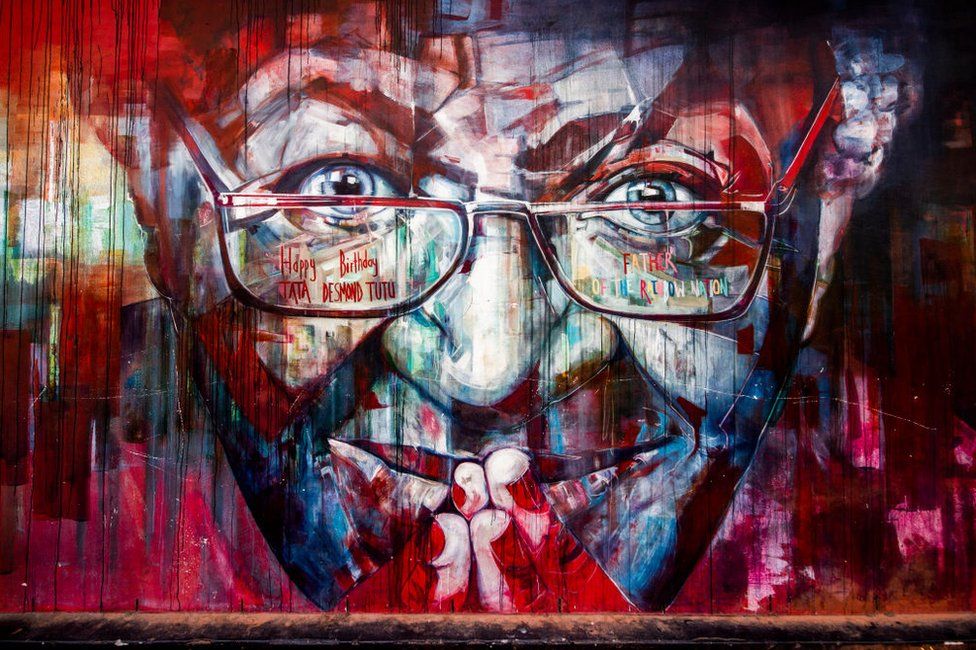
Archbishop Desmond Tutu brought together thousands of tribes from all across South Africa. He set up the Truth and Reconciliation Commission, which would aim to restorative justice between all people. Victims and perpetrators faced each other, to speak honestly about what had happened during apartheid, and how they could make amends.

He united people on a programme that they could be better than they had been. He coalesced people around a vision that they could be honest with each other and foster a future based on cooperation. 

Consider what courage and moral fortitude that must have taken. For decades, black, Indian, and Coloured South Africans had been subjected to segregation, poverty and violence. The anti-apartheid activists had faced imprisonment, state abuse, and separation from their families.

After all that, Tutu took these tribes to a level we almost never see. He created a culture where people believed in themselves, in each other, and joined by a vision of joy and hope. 

When Desmond Tutu died just over a month ago, it reminded people of what a giant he had been for religious people worldwide. His theology was one that still intimidates many. He preached true universalism, arguing that God was not a Christian, but belonged to every religion. He advocated sincere justice, never shrinking from social issues. And he believed, despite all he saw, that people were capable of fantastic things.

That was what made his assembly of tribes exceptional. Only those who see the best in people and hold the greatest of values can take people beyond what they know. If we are to defeat the racism, segregation and division that plague us today, we need to muster similar attitudes.

So, which tribe will we Jews be today? Will we sit at the bottom rung, only believing the worst about the world? Will we be like those who complain that we don’t count but others do? Will we create a culture where individuals can flourish but don’t cohere as a whole group? Will we unite around clear values and come together consciously with pride? And can we achieve that rarest of things: a level where we affirm what is wonderful in ourselves and the world, and foster unity around a joyous vision of the future?

The faith that inspired us at Sinai tells us today: we can achieve remarkable things. If we believe in ourselves, we will.

sermon · social justice

When did Moses stop being Egyptian?

When did Moses stop being an Egyptian?

When Moses was born, he was decidedly Hebrew. This fact was dangerous. The Hebrews were living under oppressive rule, enslaved and oppressed by hard labour. Fearing the Hebrews’ strength in numbers, the Pharaoh had decreed that all first-born Hebrew boys were to be drowned in the Nile. Staying Hebrew would have meant certain death for Moses.

So, he was raised Egyptian. His mother put him in a basket and sent him down the river, where he was picked up by the Pharaoh’s daughter and raised in the central palace. He was given an Egyptian name and raised as if he was a member of the Egyptian aristocracy. 

But, at some point, Moses ceased being an Egyptian. One day, he saw a slavemaster beating a Hebrew. Seeing the Hebrew as his brother, and the Egyptian as his enemy, Moses struck back and beat the slaver. He killed the Egyptian. Moses fled into exile in the Midianite desert. He knew he was no longer Egyptian. 

There are varying accounts of how Moses ceased being Egyptian. In the classic Dreamworks film, Prince of Egypt, Miriam and Aaron bump into him in the street, reveal to Moses his history, and persuade him to join the slaves’ revolt. The film is so ubiquitous that many imagine this is the Torah’s version of events.

This version makes for fantastic cinema, but doesn’t quite fit with the narrative presented in Exodus. In our story, Moses’s mother, Yocheved, and his sister, Miriam, put themselves forward to care for Moses in the Pharaoh’s palace. Surely his own family, having stayed with him since birth, who look more like him than Pharaoh’s daughter, would have raised him to know his history, even if only secretly. 

As Rabbi Dr Jonathan Magonet astutely notes, the text suggests that Moses held onto both identities. In the same verse where Moses rises up against the slavemaster, he calls both the Egyptians and the Israelites his “brothers.” He goes out to join his brothers the Egyptians in surveying the building works, then beats the slaver in solidarity with his brothers the Hebrews.

Moses could have quite easily continued living as an Egyptian while knowing he was a Hebrew. Many people throughout history have held multiple nationalities without contradiction. The useful question is not when Moses became Hebrew, but when he stopped being an Egyptian. 

Perhaps, as some of our commentators have suggested, the key lies a few verses before. There, it says that Moses grew up. Rabbis of the past have wondered what this growing up could mean. Surely it can’t refer to weaning or early childhood, because he has the strength to hit back against a fully grown adult wielding a whip. It must refer to a deeper maturity: Moses reaches the age where he can question the lies of Egyptian society. He reaches the emotional maturity to put his heart with the oppressed and rebel against injustice.

Moses was always a Hebrew, but he stopped being an Egyptian once he refused to identify with their system. As soon as Moses was willing to rebel against Egypt, he not only lost his identification with his enemy, but he lost the protection of being part of the elite family. He had to flee into exile. The only circumstance in which he could return was to lead the mass exodus of his people, the Hebrews.

It may seem surprising that Egypt and brutal slavery were so entwined that Moses could not remain Egyptian while opposing the evils of its system. How can it be that this country was so repressive that the slightest opposition made him stateless? How can it be that even a member of the elite, raised in the palace of the most powerful man in the land, could be rendered an exile just by standing up against the cruelest possible thing one human can do to another?

Of course, today we live in more enlightened times. We now live in a society where citizenship is awarded as a birthright, not as a reward for good behaviour. We have systems of international law that guard against making people stateless. Our government in Britain would never behave as Pharaoh’s did. 

Or would they? Two weeks ago, the government passed a law through the House of Commons called ‘The Nationalities and Borders Bill.’ According to this new law, anyone who is entitled to claim another nationality can be stripped of British citizenship without warning. 

This builds on the hostile environment initiated by Theresa May, which makes it harder for immigrants to reach Britain and easier to deport them. Similar policies have already been used to send away Carribeans who have lived in Britain their whole lives and to make refugees in this country stateless.

This new law expands these powers. And it affects us. 

How many members of the Jewish community have held onto second passports in case antisemitism becomes destructive again? How many Jews do you know who are also dual nationals with Israel, South Africa, Canada, or a European country from which they were once exiled? 

My dad and brother claimed German citizenship as part of post-Holocaust reparations. Now, this very fact makes them vulnerable to have their British citizenship revoked at a moment’s notice, without them even being informed. 

Indeed, every one of us could be subjected to similar treatment. A study for the New Statesman indicates that 6 million Britons – a tenth of us – could now be deported by Priti Patel. 

This law may not have been intended for us, but it could easily be applied against us. There is plenty of historical precedent. When governments want to issue repressive measures, they begin by attacking foreigners. Anne Frank was a German until the Nazis decided she was a Jew. Moses was Egyptian until the slavers decided he was a Hebrew.

Our community should be deeply concerned by these draconian measures. Whether out of solidarity with those who have already been deported from this country, or for fear that we, too, could fall victim to these new powers, we must be willing to speak up against it.

But there is reason to be hopeful. Earlier this year, when a Home Office van came to remove two asylum seekers from their home in Glasgow, their neighbours fought back. Two hundred local people surrounded the van and refused to move until their friends were freed. The immigration authorities were forced to capitulate and let the refugees free.

Our parashah teaches that the Hebrews could not be contained by the Pharaoh’s repressive measures. “The more they oppressed them, the more they rebelled.” Like our ancestors, we must be willing to do the same. 

The more this government treats foreigners as enemies, we must be willing to accept them as friends. The more this government declares that people do not belong here, we must be willing to assert that they do. The more they say that people are illegal, we must be willing to loudly assert: nobody is.

No one is illegal. Everyone who is here belongs here. You cannot deport our neighbours and friends. You cannot take away our passports.

Shabbat shalom.

South West Essex and Settlement Reform Synagogue; Parashat Shmot; Saturday 25th December 2021

sermon · social justice

It could be you

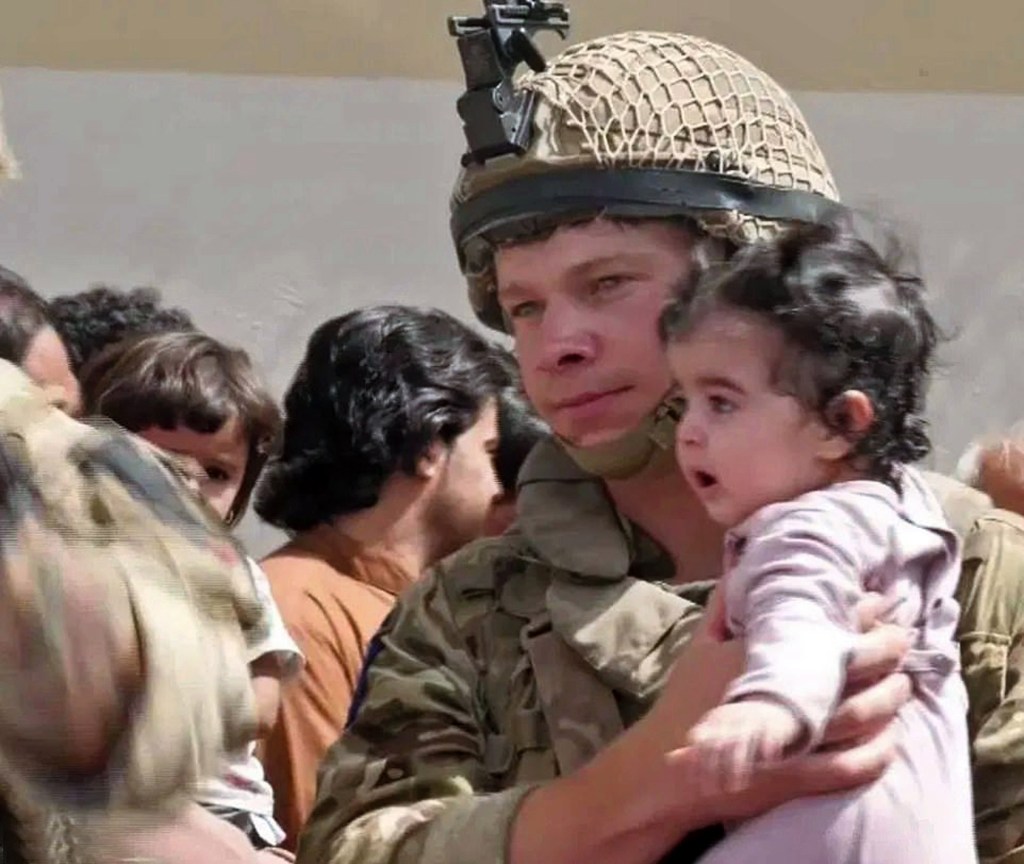
A woman passes her baby over the fence to an American soldier. She does not know the soldier. She does not know if the baby will be safe. She does not know whether she will ever see the baby again. But she knows that she must give the baby to someone, anyone, so that he doesn’t grow up there.

A sixteen year old boy with a promising career as a footballer grabs on to the side of a plane. He begs. He hopes the plane will take him too. The plane takes off, flinging him to the ground. He dies instantly.

An elderly woman with nothing to her name takes off on a long journey across desert mountains by foot. If she is lucky, she will arrive in a squalid refugee camp and spend the rest of her days living in white tents managed by the UN. She probably will not be so lucky.

Today those people are Afghans. 

Only a few generations ago, they might have been you. 

Most of the people here have ancestors who fled just as these refugees do today.

The great migration of Jews into England came at the end of the 19th Century. They had been living in the Pale of Settlement in Russia and Eastern Europe for centuries. Under Tsarist persecution, Jews were confined only to certain parts of the Russian Empire. They worked as peasants and in menial jobs, building their own communities in the shtetls.

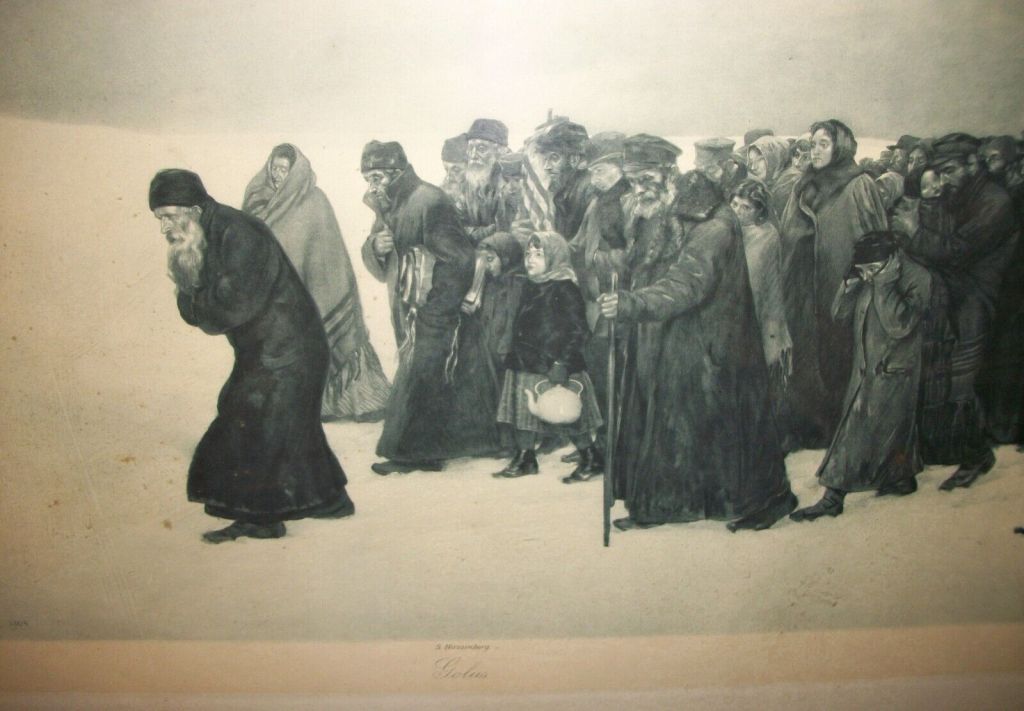
When the Tsar’s power was threatened and the Russian Empire began to crumble, his supporters blamed the Jews. For decades, state-backed mobs rampaged through the villages. They torched houses, massacred people, stole property and made life unbearable. We call these waves of antisemitic violence pogroms.

So, our forebearers fled. Most did not make it. Some arrived in England. When they did, they were met by hostility, racism, cramped housing and sweatshop jobs. 

Not long ago, the hordes of fleeing refugees were you. You know what it meant to be a stranger. Even if you do not remember. 

The Torah asks you to remember. According to our narrative, thousands of years ago, we were strangers in the land of Egypt. We were refugees from a famine in Canaan. We were wandering migrants with no home. We were enslaved and confined to one part of the Nile and worked hard labour building garrisons for the Pharaoh. We were mistreated and judged with prejudice. We are instructed by Scripture to remember how that felt.

This week’s parashah sets out the rights of migrants. Never abuse them. Do not exploit them. Pay them upfront. Don’t hold their property hostage. Give them dignity. Don’t mess them around. Make sure they have food and shelter. Look after them.

Why? Over and over again, Deuteronomy repeats: “Always remember that you were a slave in the land of Egypt. That is why God enjoins you to observe this commandment.”

You have to support strangers because they are you. When you look at migrants and refugees, you are not allowed to see them as different. You have to look at them as you. It is the most-repeated commandment in the whole of Torah: to know what it is like to be a foreigner in a foreign land. Remember what this means.

Not everyone remembers. 

Last week, Danny Finkelstein wrote in The Times praising border controls. He took his family story of fleeing as refugees from the Nazis to advocate for keeping some foreigners out.

He wrote, and I quote here: “strongly believe in immigration control. And I am not in the slightest bit put off by the suggestion that this would have prevented my grandfather from becoming a British citizen […] yes, I would deny immigration to some very deserving and worthy people I would be quite happy to live next door to. Even people I would be happy to be related to. Just because I favour immigration for someone, that doesn’t mean I favour it for everyone.”

Personally, I cannot share Mr. Finklestein’s flippant disregard for immigrants, or join him in championing border controls. Like his, my family also fled the Nazis. Most did not make it out. Only a few, who were children, or who could prove they would be useful as nurses, were permitted entry. Under the current system, I doubt they would have been allowed. If I were a refugee today, I would not fare so well as my grandfather did.

But the reason I object to Danny Finkelstein so strongly is not selfish pragmatism. It is religious. It is because I truly believe what the Torah teaches about the rights of strangers. Those refugees are my ancestors who fled persecution. They are my progenitors from millennia ago who were strangers in the land of Egypt. Those Afghans, gripping onto planes and handing their babies to soldiers and walking for miles in the sun… they are me.

And they could be me again.

The only thing that stands between a comfortable citizen today and a desperate refugee tomorrow is luck. 

We in this room do not have to think about what we would do if our corner of the world was faced with famine or war. We do not have to imagine where we would go when faced with our own version of the Taliban.

But if ever I did have to think about this, I would pray that somebody, somewhere, had taken to heart the message of the Torah. I would want somebody to say that no number is too many, that their homes were open, and that my life mattered, no matter what I could provide.

Thankfully, there are people in Britain today, making precisely this case. 

The Jewish Council for Race Equality has put together a Jewish community response to the Afghan refugee crisis. It sets out clear actions the government must undertake to meet its moral obligations.

It must scrap its anti-asylum seeker legislation. It must stop deporting Afghans back to certain danger. It must allow more refugees into this country. 

I urge you all to sign this petition in support of these very reasonable demands.

These are really the minimum standards we must meet. The Torah never even thinks to introduce border controls or to police citizenship. Our Scripture assumes that migration is natural and inevitable. God’s instruction is that, once strangers are with you, you give them all the rights and compassion you would show to someone you have known all your life.

Torah repeats itself so many times to drill home this message.

Always remember that you were a slave in the land of Egypt. That is why God enjoins you to observe this commandment.

Shabbat shalom. 

I delivered this sermon at South West Essex and Settlement Reform Synagogue on 21st August 2021 for Parashat Ki Teitzei.

festivals · judaism · sermon · torah

We are leaving the tight spaces

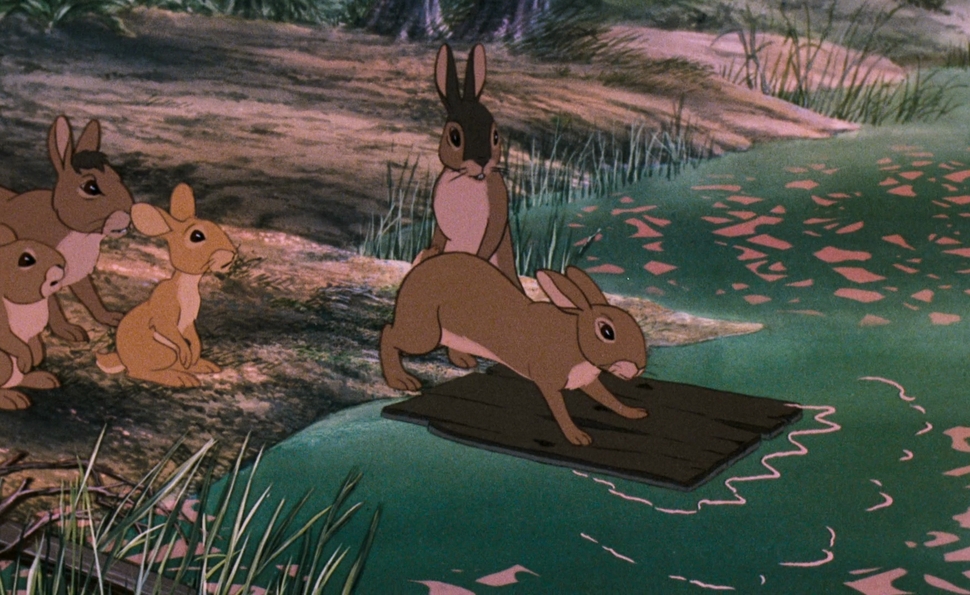
As a child, I loved Watership Down. Based on a book by Richard Adams, it was turned into an animated film in 1972. On rainy days, I kept going back to it, and my love has continued as an adult.

In Watership Down, a group of rabbits leave the only warren they have ever known to build a new burrow. They promise each other they will find a “strange and marvelous place where no one even stops to notice that you stare about you.”

Fiver, a small, stammering rabbit has profound visions. His brother, Hazel, explains them to the other rabbits and convinces them it’s time to leave. On the way, these escapees miraculously cross a great body of water, pass over a treacherous highway, lodge with suspicious friends and find terrifying enemies. But ultimately they reach their destination: an enormous, fertile hill, topped by a fruit tree. 

As an adult, I can now see that it was an allegory for the Exodus from Egypt. In fact, now that I look back, I can see how every event in Watership Down maps on somehow to a story in the Torah.

I come back to it with new eyes and realise that Watership Down made the biblical story relatable to me in a unique way. From my perspective as a child in England, I had no concept of what a desert was like and I’d never been to a Middle Eastern city.

But I knew the joy of tall trees and long grass. I knew what it was like to find the perfect hill on a warm spring day. Somehow the rabbits felt real in a way that even Moses and Miriam did not.

Don’t get me wrong. This was no pastoral idyll. Parts of the film were terrifying. Some people look back and wonder how it was even classed as suitable for children. It includes death, peril and violence between bunnies. 

But the most frightening part of all is not the journey the rabbits take. It’s Fiver’s vision of what will happen if they don’t leave. He imagines the rabbits trapped in their burrows, squeezed to death as men filled in the holes. He foresees them all being crushed in the tight confines underground. 

That is their Egypt. I don’t know whether Richard Adams had any knowledge of Judaism. In fact, I highly doubt it. But, somehow, with this image, he captured a great Jewish esoterical tradition about Egypt.

In Hebrew, the word for Egypt is Mitzrayim. The Zohar, a great medieval exploration of biblical mysticism, breaks down this word. Tzar, in Hebrew, is a narrow place. Tzarim is the plural: narrow places. The prefix ‘mi’ means ‘out of.’ Mitzrayim: “out of confined spaces.” Egypt is the narrow straits we must escape. 

Today is a special Shabbat in the liturgical calendar. This morning, we read the very last of Exodus. Tomorrow, we start the new month of Nissan.  It is called Shabbat haChodesh – the Shabbat of the Month. We leave Exodus and begin the month of the festival of Pesach, the celebration of our liberation.

That liberation does feel quite imminent to me, even if the Jewish calendar doesn’t quite match up with the government’s road map. We are on our way out of confinement and heading for open spaces.

The most profound moment on that journey for me has been getting my first dose of the vaccine. About a month ago, faith leaders were summoned by our local authorities to get the life-saving injection. 

I knew that this was not just important but felt like a holy moment. In the build up to being jabbed, I consulted with all my colleagues about what blessing I should recite when it happened. Everyone had different opinions

Some suggested we should say “rofei hacholim” – God heals the sick. Others thought the best prayer was “shehechiyanu,” the blessing that thanks God for allowing us to live to see the day. In the end, I said “hatov vehameitiv”: God is good and does God. It’s the prayer you say when something happens for your benefit and the benefit of the entire community. 

This week, Reform Judaism distributed our own liturgy for what we can see when the vaccine comes our way. Rabbi Paul Freedman has carefully compiled a single a4 document with words to recite in Hebrew and in English. 

The prayers are familiar, but the opening verses took me by surprise. Rabbi Freedman has chosen to start us off with a line from Psalm 118: 

מן המצר קראתי יה

Out of the meitzar I called to God.

The meitzar. The thing that causes distress. The small and confined place. The thing that presses us down. 

Out of the meitzar. Out of the narrow spaces. Out of Egypt.

Yes, that is truly what receiving the vaccine means. For over a year, we have been in narrow spaces. My French colleagues even call lockdown ‘confinement.’ We have been in our homes. We have been stuck in our front line workplaces and unable to go any further. We have only seen each other in small boxes, the narrow Zoom frames on our small computer screens. These have been our Mitzrayim. 

And now, as we turn to the new month of Nissan, we can finally see a way out. Our own exodus is beginning to feel tangible. In only two weeks, we will do our seder again online, and we will tell each other that we are leaving Egypt. We will promise each other to see each other next year in person. And this time, God willing, it will be possible.

So do take your vaccine when your turn comes. The Jewish community is responding well to the call from medical experts to get immunised, and I’m thrilled every time I hear that one of you has had the jab. 

If you have doubts and want to speak to a medical professional about what it involves, just ask and I will happily put you in touch with someone.

Please don’t hesitate or wait because you think someone else might be more deserving. Our epidemiologists and ethicists all say the same thing: when the doctors say it’s your turn, take your turn. Every immunised person protects many more people in the community.

We have known confinement and narrow spaces. We have lived in Egypt. And now we have been given our own little miracle. The vaccine is a sign and wonder. With an outstretched arm, you can receive it, and thank God that you will live to see another season.

The wide expanse awaits us. Soon, like the rabbits of Watership Down, we too will congregate in open spaces. We will sit under fruit trees on perfectly verdant hills surrounded by family and friends.

Our own Promised Land is in reach.

Shabbat shalom.

judaism · sermon

We know darkness

It was a dark, cold and stormy night. Mendelsohn, an old man, knew that the end was near. “Call the priest,” he said to his wife “and tell him to come right away.”

“The priest? Honey, you’re delirious. You mean the rabbi!”

“No, no,” said Mendelsohn. “Call the priest. Why disturb the rabbi on a night like this?”

Darkness is familiar to most of us.

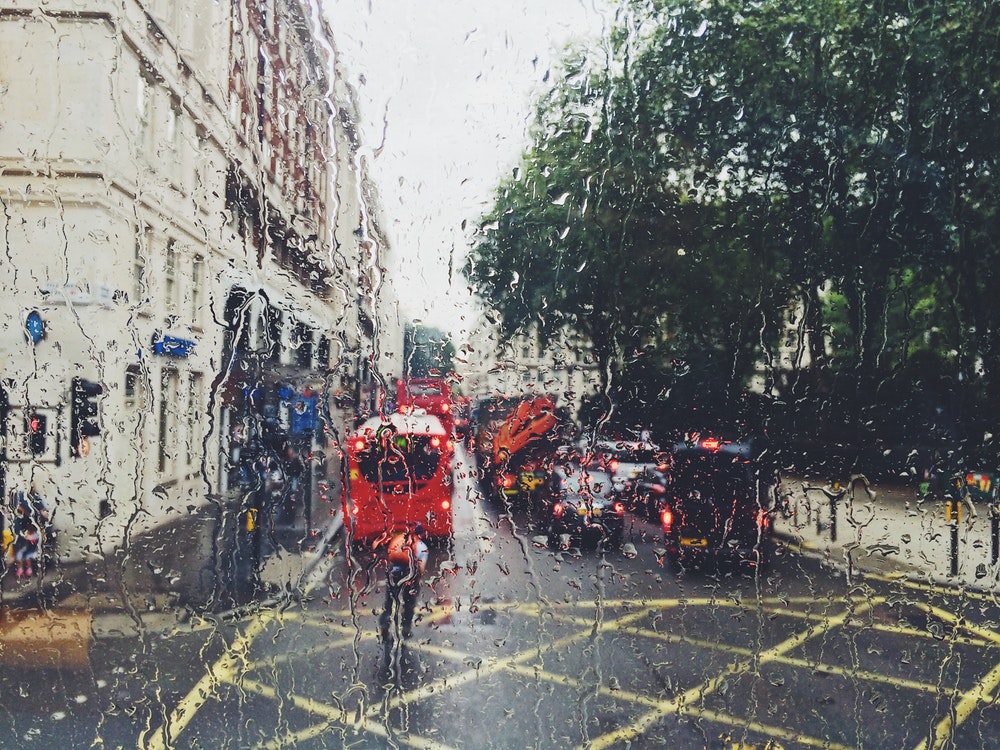
In this week’s parashah, God brings a plague worse than all those that have preceded. Worse than frogs, blood, boils and locust. God brings on eternal darkness. When it’s day, it’s dark. When it’s night, it’s dark. After a while, people lose track of whether it’s day or night. Nothing grows. It’s never warm. People can feel the lack of sunlight on their skin and in their bones. They’re agitated and grumpy. It sounds a lot like London in January.

The month of January is notorious for being the most miserable. The days are so short. The nights are so long. It’s cold and wet and it feels like it will never end. Personally, I find just getting out of bed a struggle. The idea of slogging along on a bus with cold hands and feet, dripping in my raincoat with all the other commuters, just feels unbearable. It’s not a coincidence that this is the time when people can be most unhappy.

In fact, this coming Monday is said to be the most unhappy day of the year. Perhaps consequently, today is Mental Health Shabbat. People are broke. We’re at our coldest. Our bodies are aching. The darkness feels like it will never end.

A few years ago, the darkness started driving me to distraction. I couldn’t sleep when I needed to, and when I needed to be awake, I felt constantly tired. I was itchy and irritable. I have a spine disease, which fuses the joints in my back, and this was the worst year I’d had for pain. I could barely move. All that pain made sleeping even harder, being awake even more tiring, and my mood even worse.

I tried all sorts of things to get my body back on track. I tried upping the dosage of painkillers. I started drinking camomile tea in the evening to soothe me. I invested in one of those SAD lamps that slowly lights up, creating a synthetic dawn in my bedroom. Still, I felt hopeless.

I tried something else as well. I tried praying. I got up in the morning and said a few words of gratitude. Thank you, God, Creator of the Universe, for giving me this day. I wrapped tefillin on my head and arms and took a few moments for reflection. It was a struggle. It required discipline. I forced myself to say thank you even when I felt like I had nothing to be thankful for.

But that discipline did something new to me. It made me reflect on what was good in the world. Even if everything was dark and cold and painful, I was still alive. That was enough.

I realised, with time, that I’d been trying to push myself to be something I wasn’t. I was cursing my body for being disabled. I was trying to pretend that it was dawn when it wasn’t. I was angry, all the time, at the way the world was. And I was angry at myself just for being angry.

I couldn’t handle that it was cold and dark because that was just the way January was meant to be. January was the way it was meant to be and I was the way I was meant to be. I was comparing January to July, when they’re completely different months. Neither of them are meant to be like each other.

I was comparing myself to healthy people, with all the mobility, flexibility and energy they had. That wasn’t the body I had. That wasn’t who I was. The problem wasn’t me and the problem wasn’t the month. The problem was that I was comparing everything to an artificial standard. As if there was one ideal body, one ideal night’s sleep, one ideal mind, one ideal season, one ideal month, one ideal day. No such thing exists.

Prayer gave me permission to stop trying to live up to false standards. When I pray in the morning, thanking God that I’m alive, I’m not asking to be any different. I’m not saying thank you for things I don’t have or wishing for things I did. I’m just acknowledging one reality: that I’m alive.

We live in a system that teaches us that we have to always live up to this perfect standard. Capitalism requires us to be productive. We internalise that attitude so that we worry when we’re not efficient enough. We can even take that attitude home with us, striving for an ideal of a perfect home that we can never quite attain. And we can’t attain that ideal because it’s impossible. It’s somebody else’s standard.

Judaism teaches us that we are created in the image of God. We are, each one of us, a mirror of the Divine. So, no matter what cards we’ve been dealt, we are the standard. Just by being alive, we are living up to the standard that God set for us.

That’s what’s enabled me to deal with the darkness. When things are at their worst, I remind myself that things can’t always be perfect. I cannot live up to somebody else’s expectations of me. All I can do is accept myself for who I am, and give thanks that I’m alive.

January is a difficult month. This week may feel unusually hard. But I believe that we can get through it. If we are willing to love ourselves for who we are, and accept what we are not, we can make this darkness a little easier.

Shabbat shalom.

rainy london

I gave this sermon at Mosaic Liberal in Harrow for Parashat Bo on 12 January 2019.