story · torah

A letter to Joshua, from Moses

Dear Joshua,

It’s me, Moses.

Please forgive my shaky handwriting. It has been many years since I wrote anything down.

Can you believe it has already been forty years since we came to that great desert mountain and came into contact with the One God? Twice, I carried those miraculous tablets, etched with the Laws of Life, down from that mountain peak.

I could not carry them now. I would not have the strength. And I do not just mean that because of the way my hands tremble when I lift my food or the staggered steps I take when I wake in the morning. I do not have the zeal I once did. I cannot go on much longer.

Joshua, I am dying, and I will soon be dead.

I wish desperately that I could walk with you across that Jordan. All I have ever wanted was to arrive with you at that great destination to which we have journeyed.

But the Eternal One has told me that I will not go on much longer. I will die here, in the desert, and be buried in the wilderness sands.

At first, I was affronted. I cried out to my Maker. ‘Why, God? Why can I not pass over to finally see the freedom for which I have longed?’

God, who has given me so many words, remained silent.

I think I have an answer, though.

The truth is I was free the moment I first left Egypt. Before I returned with my staff and my message. Before any of those miracles and signs and visions. Before I even knew the God of Israel watched over us.

I was free as soon as I took my life into my own hands and refused to be part of the Egyptian system any longer. Once I decided not to be a slaver; not to subjugate others, nor to be subjugated, I was already then mentally emancipated.

These years we have spent in the desert were a way to work out what to do with that freedom. We have been reciting these laws and developing these rituals to find ways of living that keep us from ever going back to the oppressive ways of Egypt.

Joshua, this is what I need to tell you. Do not go back there. Not even in your mind. Do not try to own and control people. Do not allow others to own or control you. Let your soul be free, so that you can dedicate it to the God who led you here.

I am writing this down so that you can refer back to it, and remember what the point of it all was. Why we left Egypt. Why we spent all this time trudging thirsty through shrubland. Why we said we would go to that country from which our ancestors came many mythical centuries ago.

The point was not the land. The point was what we might do there. That we might be free. That we might finally see every human being as a living representation of their Creator. That we might cease using each other as means to an end but as ends in themselves. That we might truly know the Oneness of God and the deep mysteries underlying our universe.

That’s why I’m writing this now, as a reminder.

I know, I have said this all many times before. Call this my mishneh torah, my deutero-nominon; the repetition of everything I said before. It needs to be repeated, over and again, because freedom is hard to achieve and subjugation is such an easy default.

Please, read it out loud. Read it many times. Read it all the time. Even when the words feel trite and you feel like you have repeated the same phrases all your life, keep coming back to it. Remind yourself why you are here. Remind yourself what is at stake in this brief life we have been given.

I will say it again. Do not become like them. Do not worship the work of your hands. Do not think that work is the goal. Do not seek to own and control. Do not kill or oppress or endanger. Choose life. Seek God. Find holiness in everything that lives.

Joshua, I worry, even as I write these words, that you will not heed them. I know you want to. Ever since you were a boy, you used to sit at my feet and lap up every word. You were desperate to be closer to Divinity, to reach for higher things.

When I said we could conquer Canaan, only you and your friend Caleb believed me. You saw giants and were certain you could slay them. You had more faith than any of us. You had more faith than I did.

Joshua, there have been times when you carried me. Literally. In the war against the Amalekites, you put your shoulders under my arms and kept me upright. You are so, so faithful.

But where will all that zealotry go, once you are charged with leading people in the land? When you no longer have giants and Amalekites left to fight, what will you do with all your conviction?

I am asking too much of you. I am asking you to remember a life you have not lived.

You never knew Egypt. You were born here, in the wasteland, after we had already fled. You don’t remember what it was like to be owned. You cannot know what it meant to be a subject of a system that meant to destroy you.

In some ways, this means you have always been free, because you were not born a slave. In other ways, it means you have never been free, because you have never had to fight for it. You do not know what it feels like to start moving, then notice you are shackled, and to keep moving still, and to never stop moving, and to keep going with nothing but faith to carry you.

And you cannot know it. Just as I cannot follow you over the Jordan River, you cannot follow me out of Egypt. Some lessons can only be learned by life’s journey, and some journeys can only be made once.

Perhaps, when you go into that new country, you will make the place I dreamed about. Maybe it will flow with milk and honey. It might become a light unto the nations, where everyone lives with equality and dignity, where everyone can walk in the ways of God.

Or perhaps you will make a new Egypt. You, who never knew Egypt, will find new ways to conquer and subjugate and destroy. Maybe you will crown kings and build empires and wage wars.

Then what will the point have been?

I am asking too much of you. I am asking you to build a world I could not, and to do it all without my help. I am asking to you to know things you have not learnt, and to be perfect in ways I was not. I am sorry to put so much pressure on you. It is not fair.

You may not be able to do what I am asking. But at least you can remember. Tell your children where we came from. Teach them where we were trying to go.

And, then, perhaps, when they see new Egypts emerging, or they see that new Zions are possible, they will find paths through the wilderness that you and I could not see. Keep the story alive, so that the dream may continue.

Joshua, I am going to die here.

These words are all you will inherit from me.

I love you, Joshua.

Your friend,

Moses
high holy days · sermon

We can be proud of how we handle death

It is no secret that Oaks Lane sees its fair share of death. The fact that so many of you are here for this service is testament to that.

This is one of the Reform movement’s largest synagogues, and a large number of our members die each year. During the Covid pandemic, Rabbi Lisa carried out some 350 funerals. How she managed to do that with such grace will always be a source of personal wonder to me.

Before I came here, then, I expected that coming to work at Oaks Lane would mean constantly swimming against a tide of grief. I thought that this community would be defined by pain and sadness, eking out moments of joy through a long slew of burials.

I was wrong. I was wrong about Oaks Lane. More importantly, I was wrong about grief.

I had accepted the conventional wisdom that grieving was the tough work of slogging through sadness. I believed, without much interrogation, that people had to process stages of denial and anger and sadness to eventually begrudgingly accept the mortality of their loved ones. 

Yet, when I began working in this synagogue, I was astounded by what actually happened. I discovered that, in their last moments, people were eager to pass on their happiest moments and their favourite jokes. 

I found that, while funerals were always deeply sombre affairs, shiva houses could be full of raucous laughter and mourners could be alleviated by relief that the deceased had gone on to a better place. I was amazed at how quickly families made meaning of their loss, and turned the memory of their loved one into positive action. 

Even concerning the saddest and most unjust deaths, the grieving people of this community are amazingly strong.

The truth is that this congregation can feel very proud of how it handles grief.

It turns out that grief is deeply sad, but that’s not all it is. It also shows the immense capacity human beings have to be resilient.

That observation is now supported by scientific study. The psychologist George Bonnano has dedicated his life to studying grief. When he first came to look at bereavement, he found that, while there were plenty of big claims about how grief works, there was scant little evidence to back it up. 

Over years of working with mourners, hearing their stories, and measuring their emotional responses, Dr Bonnano found that all the stereotypes about grieving were wrong. 

As it turned out, the five stages of grief rarely turned up in people’s lived experiences. In many cases, people did not need to go deep into the recesses of their subconscious to find out why a death had hurt them so much. 

Quite on the contrary, many mourners found that they could make meaning of their lives and honour their dead. Many grieving people found that their emotions were close at hand, and that they could handle them best by being honest about them.

Above all, mourners did not need to “get over” their sadness. Instead, people emotionally processed best when they understood their sadness as a helpful emotion. Sadness, it turns out, slows us down, makes us more contemplative, helps us to create more accurate memories, and focuses us on what truly matters.

Bonanno discovered that one of the factors that made people most adverse to handling grief was the Western obsession with reason. The demand that we be constantly rational, strip ourselves of rituals, and just ignore our spiritual inclinations in times of distress actually exacerbates emotional trauma, and can prolong the grieving process. 

Of course, that does not mean dealing with death is easy. For some people, the sadness can go on for years, and some people experience very traumatic and complex grief. In all of his studies, Bonnano could not find a single unifying factor for why some struggled more than others. It doesn’t really say anything about a person or their loved one if they struggle more with death.  In fact, it seems to be largely random.

One thing Bonnano did find is that, in cultures that ritualise communicating with their dead, and that have a sense of death’s sacred purpose, mourning is often healthier.

From that point of view, I think we Jews can be very proud of how we deal with death.

The tractate of the Talmud that deals with death and dying is called smachot. Literally, the word means “joys” or “festive celebrations.” I had always assumed that the title was a euphemism, to cover over all the other great feelings associated with death. 

Now, I wonder if perhaps the rabbis gave it that title as a reminder of what was at stake. Yes, you will feel sadness, but all of those are for the sake of remembering your joys. Yes, these mourning rituals will be sad and sombre occasions, but they may also be festive celebrations of the lives you have lost.

Smachot sets out a clear set of guidelines for how to handle death. Bury as soon as possible. Sit in remembrance for seven days. Avoid certain kinds of work for thirty. Say kaddish for a year. 

At every stage, the rabbis provide us with a spiritual framework that means we always have something to do, and continually have receptacles for our grief. With the infrastructure established, Jews are free to experience the full gambit of emotions associated with death.

In addition to its regulations on mourning, Smachot advises ways to handle people who are grieving. Rabbi Meir teaches that, in the early days of somebody’s bereavement, you should offer them words of consolation, then ask them how they are. After the first thirty days, you should ask them how they are, and then offer words of comfort. By the time twelve months have passed, you shouldn’t bring up the death at all unless the mourner does, so that you do not re-open wounds. 

All of this provides a way to speak openly and honestly about grief, without allowing it to be all-consuming. I find this rabbinic wisdom incredibly powerful, but it is even more poignant when we see it in real life.

Over the last year, I have watched in awe as our senior rabbi handled his own grief. This time last year, Rabbi Jordan and I switched our expected slots, and I took the yizkor service, so that Rabbi Jordan could have a chance to grieve his recently deceased mother. 

Grief could have swallowed Jordan up. Instead, he set up a weekly minyan so that he could say kaddish with all the others who were bereaved. He wore his mourning openly, and channelled it into helping everyone in the community to heal. Perhaps most surprisingly, throughout that whole period of aveilut, Jordan led this congregation with integrity, sincerity and passion. There is much in here for him to feel proud.

I am also continually impressed by the Jewish Joint Burial Society, whose work can never be sufficiently celebrated. Whenever I call Mitzi, Ian or Andrew, they combine a great sense of dignity with humour and good spirit. They oversee hundreds of funerals every year, and support families in their very hardest moments, and do so with an incredible sense of holy purpose. They are an endless source of pride.

More than anything, this community is a source of pride. Its volunteers in the care team leap at the chance to call up people on their yahrzeits. I rarely attend to a family that hasn’t already heard from a congregant already. Alan, Adrienne, Hazel, Brenda, Sheila, and Ailsa… you do more for the people in this congregation than you will ever fully know.

And that is true for all of you. As members, you repeatedly show up for each other and support each other. As mourners, you do everything in your power to honour your loved ones.

So keep on doing what you’re doing. Keep asking after each other. Keep showing up. Keep being vulnerable and honest. 

As we sit here, together, mourning our dear loved ones, know that you are here for yourself and you are here for everyone else. And we truly appreciate your presence. 

I am incredibly proud of how this community handles death.

Gmar chatimah tovah.

high holy days · sermon

It’s time to go home

At the end of a holiday, you pack your bags the same way as you did when you were heading out. Only now, your clothes are covered in sand. Your swimwear is salty and smells of chlorine. You put them in black bin bags, and tie them up. Some of the books you brought with you are battered on the spine because you lay them flat on your subbed while you were reading. And some of the books you brought haven’t been opened – why did you think you needed so many?

Maybe you took a photo or two. Maybe there’s a group shot of everyone who was there. Maybe you’ll go back with a postcard from the gift shop, or a keyring, or a fridge magnet, or one of those novelty pencils that you’ll never use.

But ultimately, all you’ll have is your memories. The clothes you wore will get washed and go back in the drawers. The photos you took might get put in a scrapbook, or saved online somewhere, or posted to social media, and then they’ll fade. But it doesn’t matter, because the goal wasn’t to get souvenirs. It was to experience it, and be on the holiday, and enjoy it.

So it is with life. Our mortal bodies are only here for a short stay. Our souls come on a brief holiday. And when we have to go back where we came, everything is a little more worn and broken and used than when we first got it. But that’s only because we’ve used it the way we were meant to. Our faces are a little bit more wrinkled and our hearts are a bit more tired. And we’re ready to go home.

Today is Shabbat Shuva, the Sabbath of Return. It sits at the cusp of Yom Kippur, today, only a day before. Tomorrow evening, we will gather for judgement day, a dress rehearsal for our deaths. Tradition asks us to wear the clothes in which we will be buried and deprive ourselves of food and drink and recite the deathbed confessions and last rites over our own bodies.

Today, Shabbat Shuva, is more muted. It is a day of preparation for that funereal enactment. It is a time when we reflect on the end that is coming, and on what was the point of our lives.

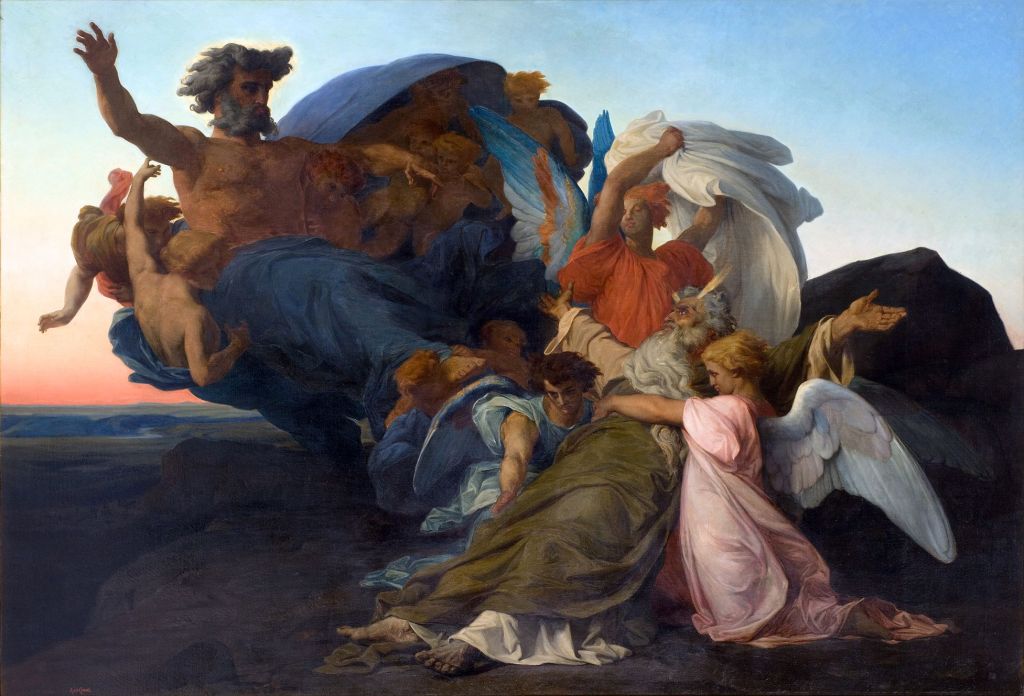
In this week’s Torah portion, we read the final words of Moses and his preparation to depart the mortal world.

God instructs Moses: “Go, climb Mount Nebo, and survey the land. Look over the plains of Moab and the country of Canaan. That is where the others are going.”

“But,” says God. “You can’t go with them. You are mortal just like everyone else. You were only here in this life for a short stay, and now you have to come home. Now, it’s time to come back to Me.”

Moses went up from the steppes of Moab to the summit of Pisgah and looked over absolutely everything, from the western sea to the city of palm trees, and breathed in the life he had lived. Moses was mortal, just like you and me.

He had lived, and he had been great, and he will be remembered longer than any of us will. But, in the end, he was just a man. He had tried and failed and worked just like anybody else. He came to an end and was buried in a plot on the mountain.

Moses returned his soul back to its Sender, now second-hand and a bit more battered than when it had first arrived. He died, as we all know we will.

If you believe the rabbinic tradition, the scroll which recounts the death of Moses was discovered by King Josiah, hidden under a layer of stones in the First Temple. When builders were carrying out renovations on the Temple, they discovered a new text there. That parchment, it is said, was the Book of Deuteronomy, containing all of Moses’ last words and relaying his final hours.

Josiah sent that book by messengers to the prophetess, Huldah, the keeper of the sacred wardrobe. Huldah was then an elderly woman, and one of the sagest prophets to be found throughout Israel. She gingerly inspected the scroll and confirmed that it was indeed the word of God.

Huldah said to the messengers “Go tell the man that you sent you that everything he read in this Book will come true, including the disasters it warns of for Israel.”

The rabbis, reading these words from the prophetess, are horrified. Why does she say “go tell that man” and not “Please inform the King…?” Isn’t this haughty arrogance on her part? Quite on the contrary, because through her gift of prophecy, Huldah could see that Josiah, although King, was still just a man. She knew that he must be, because she had just read in the Torah that even Moses was just a man.

A folktale says that, when Josiah died, there was an enormous procession. Thousands of mourners came out, grieving, and crying, and beating their chests, and lamenting songs in distress.

They carried the King’s casket all the way from Megiddo to Jerusalem, surrounded by crying subjects. They walked with the coffin up to Mount Zion, to the sepulchre of the House of David.

There, at the gates to the tomb where all the great kings had been buried, Huldah, the keeper of the sacred wardrobe, was waiting, keys in her hands. She was ready to begin the final prayers.

At the head of the procession, the High Priest called out: “The Great King Josiah demands admittance to his temple to be laid to rest alongside his ancestors.”

Huldah the prophetess shook her head. “I do not know him.”

The High Priest ruffled with consternation. “King Josiah, son of Amon and Yedidah, descendant of the House of David, Ruler of Judah, insists on being interred according to the Laws of the God of Israel.

Huldah shook her head. “I do not know him.”

Again, the High Priest issued a proclamation. “This is the King, Josiah, restorer of the true faith, protector of the Torah of Moses, rebuilder of God’s Temple, opponent of idolaters and destroyer of the altars of Baal. He must receive burial.”

Again, Huldah shook her head. “I do not know him.”

Now the priest approached Huldah directly and whispered: “A penitent sinner humbly requests to lie down in the ground.”

“Ah yes,” smiled Huldah. “I know him. He can come home.” And she opened the gates.

On Shabbat Shuva, we remember that, no matter who we were in life, we all become the same in death. We were just mortals, offered a split second of existence, permitted to take a short stay on this beautiful planet. We are just holidaymakers here, required only to enjoy this life, and leave this place a little better than when we came. But, eventually, our bodies will go back like battered suitcases from a week away.

On this Shabbat Shuvah, we are called on to return. We remember that we only ever had one true place we belong, and that is with God.

And, soon, it will be time to go home.

Shabbat shalom.