high holy days · judaism · sermon

Knowing we will die helps us live to the fullest

Here’s the deal. Let’s see who will take it.

Today, you get a million pounds. But the catch is, tomorrow you die.

Any takers?

I didn’t think so.

You value living more than you value money. 

In fact, when you put death into the equation, you realise how much living matters to you. It matters more than any amount of wealth or status you could accrue.

Knowing we will die helps us understand what we value from life.

In many ways, Yom Kippur is a death rehearsal.

We act out today as if these were the last moments we would be alive.

Like the dying, we refrain from food and water. 

We turn up in modest clothes, without jewellery. Some wear white, the colour of the funeral shroud. Some wear kittels, the gowns in which we will be buried. Some wear tallits all day, from evening to evening – a unique point in the year when we do so – just as the dead are traditionally buried wearing their tallits. 

Over the course of this fast, we repeatedly recite vidui, the prayer of deathbed confession. We say psalms and chant petitions that are associated with death and funerals.

All of this serves as a ritual memento mori: a reminder that we will die.

Then, as we approach the end, we erupt into songs. We joyfully recite the neilah prayers. For many of us, there is a great rush of relief and joy as we realise we have made it through this marathon day. 

Yes, today is a reminder of our death, and it is one that affirms life. 

On this day, our Torah instructs us: “choose life.” Only by recognising that death is inevitable can we do so.

By really considering the finite amount of time we have on this earth, we are able to celebrate the days we have and live them to the fullest.

So much of modern Western society shies away from death.

For previous generations, death was a sacred process undertaken among family and community.

Today, it is sanitised: dealt with in hospitals and hospices by qualified experts.

There are great advantages to this. The professionalisation of death means that the sick can receive high quality care and pain relief right up to the last moments of their life. It takes a great deal of pressure off of family and friends, because the care for the dying does indeed require constant work.

But one downside to our compartmentalisation of death is that it means it is kept out of sight and taboo. 

When we do have to face death, it is often a shock, and can cause great trauma to living loved ones. Intellectually, all of us know we are mortal, but facing death as a lived and embodied experience can feel like a real rupture.

Having the Yom Kippur experience – which draws our attention to our mortality and makes us reflect on the quality of our lives – can be a powerful way to help us face death. In these rituals and fasts, we can prepare for our mortality. 

This real confrontation with death isn’t morbid. It’s a direction to truly embrace life. 

Knowing we will die helps us consider what we want to do with life.

In Progressive Judaism, we have a tendency to downplay some of the more explicit symbolism of death and mortality in our services. It is there in the machzor – in our silent confessions, themed readings, and traditional prayers. But our services often tiptoe over death’s undercurrents in the prayers.

This year, I have tried to reintroduce some of those themes to the service. 

Last night, at Kol Nidrei, we joined the rest of the Jewish world in holding the scrolls out of the ark, leaving it bare. The great American Reform liturgist, Rabbi Larry Hoffman, points out that the open ark is supposed to evoke a coffin. We stare into the empty space, which usually includes our Book of Life, and lay witness to our own tomb.

This morning, during shacharit prayers, we reintroduced the prayer “who by fire,” a traditional part of Unetaneh Tokef, which recounts the many ways in which a person might die. It is painful to consider life’s fragility, and all the vulnerabilities we face in life. 

But, by facing up to the possibility we will die, we get better at deciding how we will live.

We realise that we value life, and we take stock of what it is we love about it.

Marie de Hennezel is a French therapist focused on end-of-life care. In the early 90s, she was among the first staffers at a palliative care unit for people dying of HIV/AIDS. At this time, there was no cure – the deaths of HIV patients often involved rapid deterioration and great suffering. 

In 1995, de Hennezel wrote up her experiences of accompanying the dying into a memoir, entitled Intimate Death: How the Dying Teach Us to Live. The book even carried a foreword by French president Francois Mitterand.

She recounts stories of individual patients, as well as their carers, doctors, and nurses. In each vignette, she tenderly lays out how important it is to be with the dying. 

From her support, the patients often learn to live through challenging ordeals. Those who feel like giving up or who contemplate suicide decide that they will indeed live until their last moments on earth. By helping them face their death, the patients gain the strength to embrace their life.

This work, it seems, also transforms the carer. De Hennezel writes that she has learnt so much about living from the dying.

She writes poignantly:

Life has taught me three things: The first is that I cannot escape my own death or the deaths of the people I love. 

The second is that no human being can be reduced to what we see, or what we think we see. Any person is infinitely larger and deeper than our narrow judgments can discern. 

And third: one can never be considered to have uttered the final word on anything, is always developing, always has the power of self-fulfilment, and a capacity through all the crises and trials of life.

Let us take this as our message from Yom Kippur today.

Our lives are not over. We can affirm them. We can do so much with them.

And, though we do not always realise it, we love our lives more than any amount of wealth or status.

By facing up to the fact that we will die, we can live the days we have to the fullest.

Gmar chatimah tovah – may you be inscribed in the Book of Life for good.

Yom Kippur Yizkor 5786

israel · sermon

Remember in order not to forget

There are ways of remembering intended to make you forget.

There are ways of forgetting intended to help you remember.

So, says the Torah, remember in order not to forget.

This week is Shabbat Zachor, the Sabbath of remembrance. Just before Purim, we are called to read three additional lines of Scripture. Deuteronomy instructs:

Remember what Amalek did to you on your journey out of Egypt [… ] You shall erase the memory of Amalek from under heaven. Do not forget.

Remember… erase the memory… do not forget.

Is the demand to remember not contradicted by the insistence on erasing the memory?

Is the commandment to remember not exactly the same as the one not to forget?

Perhaps not. There are ways of remembering that encourage forgetting, and ways of forgetting that make you remember.

Alan Bennett’s play, The History Boys, is an exploration of what it means to teach history, and what we can learn from it.

In a powerful scene, the newest teacher, Tom Irwin, takes his sixth-form grammar school students on a tour of a war cemetery.

As they walk, he tells them:

The truth was, in 1914, Germany doesn’t want war. Yeah, there’s an arms race, but it’s Britain who’s leading it. So, why does no one admit this?

That’s why. The dead. The body count. We don’t like to admit the war was even partly our fault cos so many of our people died. And all the mourning’s veiled the truth. It’s not “lest we forget”, it’s “lest we remember”. That’s what all this is about -the memorials, the Cenotaph, the two minutes’ silence-. Because there is no better way of forgetting something than by commemorating it.

The truth to these words is palpable. In every village square throughout Britain there is a stone column, inscribed with names. The Cenotaph is so finite. Its concrete defies questions. You cannot ask it: what did they die for?

As we lay wreaths, the liturgy intones that the war dead “made the ultimate sacrifice.” These words carry such gravity that you forget it was a conscript army. You dare not ponder: who sacrificed them, and for what cause?

Then, there is silence. So much silence that you cannot hear the echo: was it worth it?

Real memories are not fixed. They are fluid and living, constantly opening up new interpretations and interrogations. When you really remember, you pore over the details with others, seeking perspectives you missed, guided by a quest for greater understanding. You always want to know what you can learn from it, since the memory teaches something new to each moment.

But, as Alan Bennett’s character teaches us, that is not what happens with certain war memorials.

They are ways of remembering in order to make you forget.

There are, too, ways of forgetting to make you remember.

In 1988, the Israeli historian and Holocaust survivor, Yehuda Elkana, wrote an article for HaAretz called The Need to Forget. Not long after its publication, this article entered the new Jewish canon as one of the most challenging and profound commentaries on Shoah memorialisation.

In it, he warns against the danger that Holocaust consciousness poses to Israeli society.

He writes:

I see no greater threat to the future of the State of Israel than the fact that the Holocaust has systematically and forcefully penetrated the consciousness of the Israeli public.

Reflecting on the school trips to Yad Vashem, Elkana comments:

What did we want those tender youths to do with the experience? We declaimed, insensitively and harshly, and without explanation: “Remember!” “Zechor!” To what purpose? What is the child supposed to do with these memories? Many of the pictures of those horrors are apt to be interpreted as a call to hate. “Zechor!” can easily be understood as a call for continuing and blind hatred.

So, says Elkana, while the rest of the world may need to remember the Holocaust, the Israelis needed to learn to forget it. They needed to uproot the injunction to remember “to displace the Holocaust from being the central axis of our national experience.”

Elkana’s invocation of forgetting is also an invitation to remember. Forget the past in order to remember that we have a future. Forget the cruelties inflicted on our people in order to remember that we are greater than our misery. Forget the wars in order to remember the possibility of peace.

Elkana is not talking about an alternate reality where everyone wakes up tomorrow with amnesia about the last hundred years of history. He is talking about an active process of forgetting: forgetting by asking new questions and building new memories.

These are ways of forgetting intended to help you remember.

There are ways of remembering intended to make you forget.

But, the Torah tells us: remember in order not to forget.

What type of remembering would this be?

A full remembering, the type repeated twice by our parashah, the kind that forces you not to forget.

This remembering, then, must be one that always asks questions and returns to itself. A history that invites constant revision and ever wants to teach new lessons.

For the last sixteen months, Israel has been gripped by war. It has been unavoidable as its details have filled our news feeds and lives.

I know it is too soon to start the painstaking soul-searching involved in real remembering.

But it is plenty early enough to forget.

Already there are those who would like us to forget, so that they can eschew their own accountability.

How easily we can be made complicit in their acts of wilful forgetting.

So I have been considering how to fulfil the Torah’s commandment to remember.

I want to remember in fullness and complexity, always returning to new questions.

I want to remember all the suffering, for there has been so much suffering.

I want to remember all the dead. Every name. There are so many names.

I want to remember all those responsible. Every name. There are so many names.

I want to remember all the alternatives, because there have always been so many options, and there are still so many other ways.

I want to remember completely who I have been, who we have been, at best and at worst throughout this whole time.

It is too soon to remember.

It is too much to remember.

It is too painful to remember.

But, if we do not remember, we will forget.

story · torah

When is a person truly dead?

At home, my fiance paces back and forth, preparing for his exams in anaesthetics. In a week, he will be tested orally to see if he can become a consultant. He recites definitions of key medical terms, revises laws of physics, gives diagnoses of uncommon diseases. 

One definition he has repeated so many times it is now imprinted in my mind too.

Death is the irreversible loss of capacity for consciousness and loss of capacity for breathing.

At times, we have pondered over such terms together. On long walks, we have discussed medical ethics through Jewish lenses. We have debated whether and how modern medicine aligns with ancient wisdom. 

Now is not the moment to challenge him on the medical definition of death. But the definition sticks with me, because this is an area where I do not think science and religion align. 

While Laurence prepares for his exams, you will have to listen to my thoughts on what Judaism teaches about mortality.

Death is the irreversible loss of capacity for consciousness and loss of capacity for breathing.

Is it? Is that what it means to die?

If it were, then would living simply be brain activity and breathing? Is that all we are?

Chayyei Sarah – the life of Sarah – is our portion. It opens with her death. By telling us about her life from her death, the Torah is telling us something about how life and death interact. 

The parashah is a recounting of Sarah’s burial. It is a terse text, where the primary narrative concerns Abraham’s attempt to purchase a lot for internment. 

So much is left unsaid. So many emotions are not expressed. In the silences and interstices, we are left to reconstruct our own imaginings of what Abraham was thinking. Let us try.

Abraham proceeded to cry and eulogise Sarah.

He held her hands, once so strong and firm. Those hands had kneaded bread for strangers at a moment’s notice. They had sewn garments for whole families. They had, at times, pointed accusations, separated children, raised objections… Strong hands. Determined hands. Strong, determined hands, that were now drained of all their vigour, and sat coldly in his own palms.

Abraham rose from beside his dead, and spoke to the Hittites.

Abraham sprang into action. Sarah had not died in the land of her own family in Egypt, nor of Abraham’s in Chaldea. They were in a strange place, far from their own homes, among Hittites in the hill-country of Canaan. 

Abraham said: “Here I am, a stranger and a foreigner among you. Please sell me a piece of land so I can give my wife a proper burial.”

Sarah had left her father’s home in the palaces of Egypt, where she lived as a princess. She was an aristocrat in a great empire who gave it up to travel with a wandering man. Abraham claimed to have spoken with the One True God, and Sarah just followed him. She forsook luxury for a life on the road. Now, she lay dead on the road, and there would be no fine processions to pyramids to entomb her.

The Hittites replied to Abraham, “Listen, my lord, you are an honoured prince among us. Choose the finest of our tombs and bury her there. No one here will refuse to help you in this way.”

Sarah used to laugh with her whole belly. Her shoulders bounced up and down. She can find humour where nobody else could. Even when she struggled with infertility, she found ways of making jokes. Abraham would not hear her laugh again.

So Abraham bowed low before the Hittites and said, “Since you are willing to help me in this way, be so kind as to ask Ephron son of Zohar to let me buy his cave at Machpelah, down at the end of his field. I will pay the full price in the presence of witnesses, so I will have a permanent burial place for my family.”

Sarah had been so beautiful people tripped over themselves staring at her. On their wanders, every prince desired her. Sarah was as beautiful at 127 as she had been when they had first met. She was still just as honourable and God-fearing. Nobody would be as good and beautiful and true again. 

Ephron was sitting there among the others, and he answered Abraham as the others listened, speaking publicly before all the Hittite elders of the town. 

Sarah received no ennoblement or reward for marrying Abraham. Yet so much honour came to Abraham through her. She could see visions and speak with God. 

“No, my lord,” he said to Abraham, “please listen to me. I will give you the field and the cave. Here in the presence of my people, I give it to you. Go and bury your dead.” 

Abraham had bargained over everything. He had struck a deal with Avimelech to share water sources. He had even negotiated with God over the destruction of a city. This was a bargain he could not accept.

Abraham again bowed low before the citizens of the land, and he replied to Ephron as everyone listened. 

“No, listen to me. I will buy it from you. Let me pay the full price for the field so I can bury my dead there.”

Abraham was ageing too. Who would bury him? He had cast out one son and tried to murder another. 

Ephron answered Abraham, “My lord, please listen to me. The land is worth 400 pieces of silver, but what is that between friends?”

What is four hundred shekels between strangers? What is a price on the life of Sarah? What sort of burial could ever be enough for her? 

Ephron said: “Go ahead and bury your dead.”

These are some words we may complete into the silences. They come from the other biblical stories and midrash, and they paint a fuller picture. In the spaces, we see that this is not a negotiation over a burial plot, but a negotiation over the nature of death.

Death is the irreversible loss of capacity for consciousness and loss of capacity for breathing.

Is it? Is that what it means to die?

If it were, then would living simply be brain activity and breathing? Is that all we are?

Medically, scientifically… maybe.

Spiritually, Jewishly… no. 

Death is as much a journey as life is. 

For seven days, we eulogise, as the last imprint of a person leaves us. For thirty days, we mourn, as the shock and grief harrow us. For eleven months, we pray, as some part of the soul heads on its journey to Heaven. 

Then, every year, we say the names of the dead, and some part of our loved ones returns to us. Their soul breaks through the gaps in Aramaic words and we feel them with us once more.

Thousands of years later, we still say Sarah’s name, and some part of her keeps living long after breath and consciousness. 

We are more than what we exhale: we are the laughter and joy we bring to others. We are more than our own thoughts: we are the memories living on in others. 

In memory, in prayer, in faith, we grasp something greater than the material world.

Trusting in You, Eternal God, we see life beyond death.

Amen.

Van Gogh, The Cave of Machpelah

story · torah

A letter to Joshua, from Moses

Dear Joshua,

It’s me, Moses.

Please forgive my shaky handwriting. It has been many years since I wrote anything down.

Can you believe it has already been forty years since we came to that great desert mountain and came into contact with the One God? Twice, I carried those miraculous tablets, etched with the Laws of Life, down from that mountain peak.

I could not carry them now. I would not have the strength. And I do not just mean that because of the way my hands tremble when I lift my food or the staggered steps I take when I wake in the morning. I do not have the zeal I once did. I cannot go on much longer.

Joshua, I am dying, and I will soon be dead.

I wish desperately that I could walk with you across that Jordan. All I have ever wanted was to arrive with you at that great destination to which we have journeyed.

But the Eternal One has told me that I will not go on much longer. I will die here, in the desert, and be buried in the wilderness sands.

At first, I was affronted. I cried out to my Maker. ‘Why, God? Why can I not pass over to finally see the freedom for which I have longed?’

God, who has given me so many words, remained silent.

I think I have an answer, though.

The truth is I was free the moment I first left Egypt. Before I returned with my staff and my message. Before any of those miracles and signs and visions. Before I even knew the God of Israel watched over us.

I was free as soon as I took my life into my own hands and refused to be part of the Egyptian system any longer. Once I decided not to be a slaver; not to subjugate others, nor to be subjugated, I was already then mentally emancipated.

These years we have spent in the desert were a way to work out what to do with that freedom. We have been reciting these laws and developing these rituals to find ways of living that keep us from ever going back to the oppressive ways of Egypt.

Joshua, this is what I need to tell you. Do not go back there. Not even in your mind. Do not try to own and control people. Do not allow others to own or control you. Let your soul be free, so that you can dedicate it to the God who led you here.

I am writing this down so that you can refer back to it, and remember what the point of it all was. Why we left Egypt. Why we spent all this time trudging thirsty through shrubland. Why we said we would go to that country from which our ancestors came many mythical centuries ago.

The point was not the land. The point was what we might do there. That we might be free. That we might finally see every human being as a living representation of their Creator. That we might cease using each other as means to an end but as ends in themselves. That we might truly know the Oneness of God and the deep mysteries underlying our universe.

That’s why I’m writing this now, as a reminder.

I know, I have said this all many times before. Call this my mishneh torah, my deutero-nominon; the repetition of everything I said before. It needs to be repeated, over and again, because freedom is hard to achieve and subjugation is such an easy default.

Please, read it out loud. Read it many times. Read it all the time. Even when the words feel trite and you feel like you have repeated the same phrases all your life, keep coming back to it. Remind yourself why you are here. Remind yourself what is at stake in this brief life we have been given.

I will say it again. Do not become like them. Do not worship the work of your hands. Do not think that work is the goal. Do not seek to own and control. Do not kill or oppress or endanger. Choose life. Seek God. Find holiness in everything that lives.

Joshua, I worry, even as I write these words, that you will not heed them. I know you want to. Ever since you were a boy, you used to sit at my feet and lap up every word. You were desperate to be closer to Divinity, to reach for higher things.

When I said we could conquer Canaan, only you and your friend Caleb believed me. You saw giants and were certain you could slay them. You had more faith than any of us. You had more faith than I did.

Joshua, there have been times when you carried me. Literally. In the war against the Amalekites, you put your shoulders under my arms and kept me upright. You are so, so faithful.

But where will all that zealotry go, once you are charged with leading people in the land? When you no longer have giants and Amalekites left to fight, what will you do with all your conviction?

I am asking too much of you. I am asking you to remember a life you have not lived.

You never knew Egypt. You were born here, in the wasteland, after we had already fled. You don’t remember what it was like to be owned. You cannot know what it meant to be a subject of a system that meant to destroy you.

In some ways, this means you have always been free, because you were not born a slave. In other ways, it means you have never been free, because you have never had to fight for it. You do not know what it feels like to start moving, then notice you are shackled, and to keep moving still, and to never stop moving, and to keep going with nothing but faith to carry you.

And you cannot know it. Just as I cannot follow you over the Jordan River, you cannot follow me out of Egypt. Some lessons can only be learned by life’s journey, and some journeys can only be made once.

Perhaps, when you go into that new country, you will make the place I dreamed about. Maybe it will flow with milk and honey. It might become a light unto the nations, where everyone lives with equality and dignity, where everyone can walk in the ways of God.

Or perhaps you will make a new Egypt. You, who never knew Egypt, will find new ways to conquer and subjugate and destroy. Maybe you will crown kings and build empires and wage wars.

Then what will the point have been?

I am asking too much of you. I am asking you to build a world I could not, and to do it all without my help. I am asking to you to know things you have not learnt, and to be perfect in ways I was not. I am sorry to put so much pressure on you. It is not fair.

You may not be able to do what I am asking. But at least you can remember. Tell your children where we came from. Teach them where we were trying to go.

And, then, perhaps, when they see new Egypts emerging, or they see that new Zions are possible, they will find paths through the wilderness that you and I could not see. Keep the story alive, so that the dream may continue.

Joshua, I am going to die here.

These words are all you will inherit from me.

I love you, Joshua.

Your friend,

Moses

high holy days · sermon

We can be proud of how we handle death

It is no secret that Oaks Lane sees its fair share of death. The fact that so many of you are here for this service is testament to that.

This is one of the Reform movement’s largest synagogues, and a large number of our members die each year. During the Covid pandemic, Rabbi Lisa carried out some 350 funerals. How she managed to do that with such grace will always be a source of personal wonder to me.

Before I came here, then, I expected that coming to work at Oaks Lane would mean constantly swimming against a tide of grief. I thought that this community would be defined by pain and sadness, eking out moments of joy through a long slew of burials.

I was wrong. I was wrong about Oaks Lane. More importantly, I was wrong about grief.

I had accepted the conventional wisdom that grieving was the tough work of slogging through sadness. I believed, without much interrogation, that people had to process stages of denial and anger and sadness to eventually begrudgingly accept the mortality of their loved ones. 

Yet, when I began working in this synagogue, I was astounded by what actually happened. I discovered that, in their last moments, people were eager to pass on their happiest moments and their favourite jokes. 

I found that, while funerals were always deeply sombre affairs, shiva houses could be full of raucous laughter and mourners could be alleviated by relief that the deceased had gone on to a better place. I was amazed at how quickly families made meaning of their loss, and turned the memory of their loved one into positive action. 

Even concerning the saddest and most unjust deaths, the grieving people of this community are amazingly strong.

The truth is that this congregation can feel very proud of how it handles grief.

It turns out that grief is deeply sad, but that’s not all it is. It also shows the immense capacity human beings have to be resilient.

That observation is now supported by scientific study. The psychologist George Bonnano has dedicated his life to studying grief. When he first came to look at bereavement, he found that, while there were plenty of big claims about how grief works, there was scant little evidence to back it up. 

Over years of working with mourners, hearing their stories, and measuring their emotional responses, Dr Bonnano found that all the stereotypes about grieving were wrong. 

As it turned out, the five stages of grief rarely turned up in people’s lived experiences. In many cases, people did not need to go deep into the recesses of their subconscious to find out why a death had hurt them so much. 

Quite on the contrary, many mourners found that they could make meaning of their lives and honour their dead. Many grieving people found that their emotions were close at hand, and that they could handle them best by being honest about them.

Above all, mourners did not need to “get over” their sadness. Instead, people emotionally processed best when they understood their sadness as a helpful emotion. Sadness, it turns out, slows us down, makes us more contemplative, helps us to create more accurate memories, and focuses us on what truly matters.

Bonanno discovered that one of the factors that made people most adverse to handling grief was the Western obsession with reason. The demand that we be constantly rational, strip ourselves of rituals, and just ignore our spiritual inclinations in times of distress actually exacerbates emotional trauma, and can prolong the grieving process. 

Of course, that does not mean dealing with death is easy. For some people, the sadness can go on for years, and some people experience very traumatic and complex grief. In all of his studies, Bonnano could not find a single unifying factor for why some struggled more than others. It doesn’t really say anything about a person or their loved one if they struggle more with death.  In fact, it seems to be largely random.

One thing Bonnano did find is that, in cultures that ritualise communicating with their dead, and that have a sense of death’s sacred purpose, mourning is often healthier.

From that point of view, I think we Jews can be very proud of how we deal with death.

The tractate of the Talmud that deals with death and dying is called smachot. Literally, the word means “joys” or “festive celebrations.” I had always assumed that the title was a euphemism, to cover over all the other great feelings associated with death. 

Now, I wonder if perhaps the rabbis gave it that title as a reminder of what was at stake. Yes, you will feel sadness, but all of those are for the sake of remembering your joys. Yes, these mourning rituals will be sad and sombre occasions, but they may also be festive celebrations of the lives you have lost.

Smachot sets out a clear set of guidelines for how to handle death. Bury as soon as possible. Sit in remembrance for seven days. Avoid certain kinds of work for thirty. Say kaddish for a year. 

At every stage, the rabbis provide us with a spiritual framework that means we always have something to do, and continually have receptacles for our grief. With the infrastructure established, Jews are free to experience the full gambit of emotions associated with death.

In addition to its regulations on mourning, Smachot advises ways to handle people who are grieving. Rabbi Meir teaches that, in the early days of somebody’s bereavement, you should offer them words of consolation, then ask them how they are. After the first thirty days, you should ask them how they are, and then offer words of comfort. By the time twelve months have passed, you shouldn’t bring up the death at all unless the mourner does, so that you do not re-open wounds. 

All of this provides a way to speak openly and honestly about grief, without allowing it to be all-consuming. I find this rabbinic wisdom incredibly powerful, but it is even more poignant when we see it in real life.

Over the last year, I have watched in awe as our senior rabbi handled his own grief. This time last year, Rabbi Jordan and I switched our expected slots, and I took the yizkor service, so that Rabbi Jordan could have a chance to grieve his recently deceased mother. 

Grief could have swallowed Jordan up. Instead, he set up a weekly minyan so that he could say kaddish with all the others who were bereaved. He wore his mourning openly, and channelled it into helping everyone in the community to heal. Perhaps most surprisingly, throughout that whole period of aveilut, Jordan led this congregation with integrity, sincerity and passion. There is much in here for him to feel proud.

I am also continually impressed by the Jewish Joint Burial Society, whose work can never be sufficiently celebrated. Whenever I call Mitzi, Ian or Andrew, they combine a great sense of dignity with humour and good spirit. They oversee hundreds of funerals every year, and support families in their very hardest moments, and do so with an incredible sense of holy purpose. They are an endless source of pride.

More than anything, this community is a source of pride. Its volunteers in the care team leap at the chance to call up people on their yahrzeits. I rarely attend to a family that hasn’t already heard from a congregant already. Alan, Adrienne, Hazel, Brenda, Sheila, and Ailsa… you do more for the people in this congregation than you will ever fully know.

And that is true for all of you. As members, you repeatedly show up for each other and support each other. As mourners, you do everything in your power to honour your loved ones.

So keep on doing what you’re doing. Keep asking after each other. Keep showing up. Keep being vulnerable and honest. 

As we sit here, together, mourning our dear loved ones, know that you are here for yourself and you are here for everyone else. And we truly appreciate your presence. 

I am incredibly proud of how this community handles death.

Gmar chatimah tovah.

high holy days · sermon

It’s time to go home

At the end of a holiday, you pack your bags the same way as you did when you were heading out. Only now, your clothes are covered in sand. Your swimwear is salty and smells of chlorine. You put them in black bin bags, and tie them up. Some of the books you brought with you are battered on the spine because you lay them flat on your subbed while you were reading. And some of the books you brought haven’t been opened – why did you think you needed so many?

Maybe you took a photo or two. Maybe there’s a group shot of everyone who was there. Maybe you’ll go back with a postcard from the gift shop, or a keyring, or a fridge magnet, or one of those novelty pencils that you’ll never use.

But ultimately, all you’ll have is your memories. The clothes you wore will get washed and go back in the drawers. The photos you took might get put in a scrapbook, or saved online somewhere, or posted to social media, and then they’ll fade. But it doesn’t matter, because the goal wasn’t to get souvenirs. It was to experience it, and be on the holiday, and enjoy it.

So it is with life. Our mortal bodies are only here for a short stay. Our souls come on a brief holiday. And when we have to go back where we came, everything is a little more worn and broken and used than when we first got it. But that’s only because we’ve used it the way we were meant to. Our faces are a little bit more wrinkled and our hearts are a bit more tired. And we’re ready to go home.

Today is Shabbat Shuva, the Sabbath of Return. It sits at the cusp of Yom Kippur, today, only a day before. Tomorrow evening, we will gather for judgement day, a dress rehearsal for our deaths. Tradition asks us to wear the clothes in which we will be buried and deprive ourselves of food and drink and recite the deathbed confessions and last rites over our own bodies.

Today, Shabbat Shuva, is more muted. It is a day of preparation for that funereal enactment. It is a time when we reflect on the end that is coming, and on what was the point of our lives.

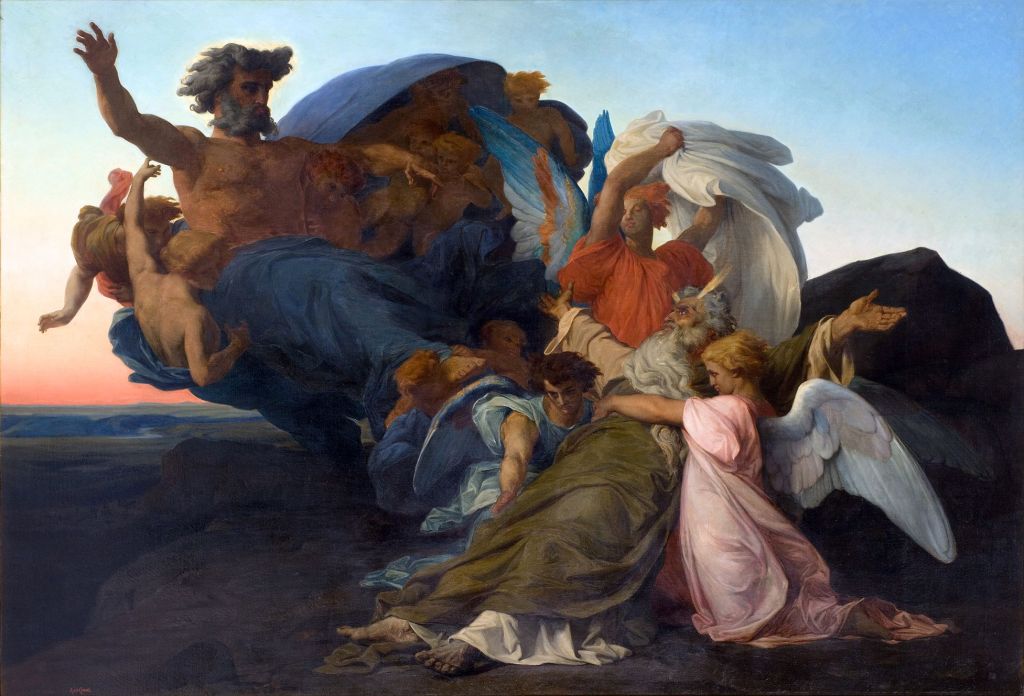
In this week’s Torah portion, we read the final words of Moses and his preparation to depart the mortal world.

God instructs Moses: “Go, climb Mount Nebo, and survey the land. Look over the plains of Moab and the country of Canaan. That is where the others are going.”

“But,” says God. “You can’t go with them. You are mortal just like everyone else. You were only here in this life for a short stay, and now you have to come home. Now, it’s time to come back to Me.”

Moses went up from the steppes of Moab to the summit of Pisgah and looked over absolutely everything, from the western sea to the city of palm trees, and breathed in the life he had lived. Moses was mortal, just like you and me.

He had lived, and he had been great, and he will be remembered longer than any of us will. But, in the end, he was just a man. He had tried and failed and worked just like anybody else. He came to an end and was buried in a plot on the mountain.

Moses returned his soul back to its Sender, now second-hand and a bit more battered than when it had first arrived. He died, as we all know we will.

If you believe the rabbinic tradition, the scroll which recounts the death of Moses was discovered by King Josiah, hidden under a layer of stones in the First Temple. When builders were carrying out renovations on the Temple, they discovered a new text there. That parchment, it is said, was the Book of Deuteronomy, containing all of Moses’ last words and relaying his final hours.

Josiah sent that book by messengers to the prophetess, Huldah, the keeper of the sacred wardrobe. Huldah was then an elderly woman, and one of the sagest prophets to be found throughout Israel. She gingerly inspected the scroll and confirmed that it was indeed the word of God.

Huldah said to the messengers “Go tell the man that you sent you that everything he read in this Book will come true, including the disasters it warns of for Israel.”

The rabbis, reading these words from the prophetess, are horrified. Why does she say “go tell that man” and not “Please inform the King…?” Isn’t this haughty arrogance on her part? Quite on the contrary, because through her gift of prophecy, Huldah could see that Josiah, although King, was still just a man. She knew that he must be, because she had just read in the Torah that even Moses was just a man.

A folktale says that, when Josiah died, there was an enormous procession. Thousands of mourners came out, grieving, and crying, and beating their chests, and lamenting songs in distress.

They carried the King’s casket all the way from Megiddo to Jerusalem, surrounded by crying subjects. They walked with the coffin up to Mount Zion, to the sepulchre of the House of David.

There, at the gates to the tomb where all the great kings had been buried, Huldah, the keeper of the sacred wardrobe, was waiting, keys in her hands. She was ready to begin the final prayers.

At the head of the procession, the High Priest called out: “The Great King Josiah demands admittance to his temple to be laid to rest alongside his ancestors.”

Huldah the prophetess shook her head. “I do not know him.”

The High Priest ruffled with consternation. “King Josiah, son of Amon and Yedidah, descendant of the House of David, Ruler of Judah, insists on being interred according to the Laws of the God of Israel.

Huldah shook her head. “I do not know him.”

Again, the High Priest issued a proclamation. “This is the King, Josiah, restorer of the true faith, protector of the Torah of Moses, rebuilder of God’s Temple, opponent of idolaters and destroyer of the altars of Baal. He must receive burial.”

Again, Huldah shook her head. “I do not know him.”

Now the priest approached Huldah directly and whispered: “A penitent sinner humbly requests to lie down in the ground.”

“Ah yes,” smiled Huldah. “I know him. He can come home.” And she opened the gates.

On Shabbat Shuva, we remember that, no matter who we were in life, we all become the same in death. We were just mortals, offered a split second of existence, permitted to take a short stay on this beautiful planet. We are just holidaymakers here, required only to enjoy this life, and leave this place a little better than when we came. But, eventually, our bodies will go back like battered suitcases from a week away.

On this Shabbat Shuvah, we are called on to return. We remember that we only ever had one true place we belong, and that is with God.

And, soon, it will be time to go home.

Shabbat shalom.

halachah · sermon · social justice

My objections to euthanasia

I try not to broadcast disagreement with the rabbinate, especially when many colleagues are very senior, and I am still a student. It is even more cavalier, then, to express opposition to something advocated by the two Progressive movements, both Liberal and Reform Judaism. This issue, however, has been brewing for some time, and I feel compelled to speak out on it.

I do not agree with the current responsa coming from the movements on euthanasia. In fact, they make me deeply uncomfortable. I know that wading into such a morally complex discussion will undoubtedly upset people. Please know that my position is, almost certainly, a minority one. Please also understand that it is very sincerely and deeply held.

In June of this year, Liberal Judaism became a founding member of the Religious Alliance for Dignity in Dying, a collection of multi-faith groups that campaigns for the rights of terminally ill people to determine how, when and where they die. 

This signaled the movement’s support for euthanasia, or assisted dying: when patients with incurable diseases are legally killed by their doctors. At the time, the decision caused some consternation in the Liberal rabbinate. Only a handful of people had made the decision with very little consultation. Dissidents objected that this was not a morally cut-and-dry decision, but one that needed much more careful thought than had been given. 

Nevertheless, the movement celebrated the media coverage they had received. They proudly displayed their reporting in The Sunday Times, Politics Home, and The Jewish News. Bold stances certainly grab headlines, and this was as bold as they could get.

This week, Reform Judaism took a more measured approach. After a great deal of consultation and discussion, the movement effectively arrived at the decision not to pick a side. Their responsum, published on the front page of the Jewish Chronicle this week, says we “will not campaign either in favour or against efforts to change the law on the issue.” 

Nevertheless, the decision garnered media attention because, for the first time, Reform Judaism promised it would provide pastoral care to patients who did choose to end their lives. In itself, that might not have been newsworthy. Since our founding, we have endeavoured to provide compassionate care to everyone who sought it, regardless of beliefs or life choices. 

It is uncontroversially the right choice that we should support individuals, regardless of our personal beliefs, and stay neutral on the law, when we are so patently divided. It would have been far more surprising if Reform Judaism had announced it was not going to provide pastoral care to terminally ill people. That would have resulted in much greater outrage.

Clearly, the “landmark” decision received the attention it did because it sent a subtle message of support for euthanasia. It suggested, while of course doing everything possible to argue to the contrary, that the movement endorsed such decisions. This responsum was consequently followed up by much media coverage, including an opinion leader in The Times.

The two movements are certainly leading a conversation in this country on assisted dying, but are they leading it in the right direction? I think not. 

This is not because I am in any way a conservative on this issue. In general, Jewish religious law up to this point has stood against the principle of assisted dying. The traditional Jewish response has been that life comes from God, belongs to God, and only God can take it away.

As such, the Mishnah rules that even closing the eyes of a dying person is tantamount to murder. The Shulchan Aruch says that a dying person must be given all the rights of a living one, and the Mapa adds that it is forbidden to do anything to hasten death.

These halachic rulings form the backbone of Orthodox objection to euthanasia. Most Progressive Jews share the Orthodox belief in the sanctity of life. Since at least the 1980s, however, we have had internal debates about what that means and how it should be implemented. Some have argued that, with necessary safeguards, relief of pain should be prioritised over unnecessary prolongation of life. 

As Progressive Jews, we are not bound by the decisions of the past, but seek to draw on them in conjunction with the best medical and moral reasoning of our age. We move with the times.

My objection is not to the abstract principle of euthanasia, but to the political context in which these decisions are being made. We never legislate in a vacuum, but have to consider what we advocate in the context of what is happening in the context of society at large. 

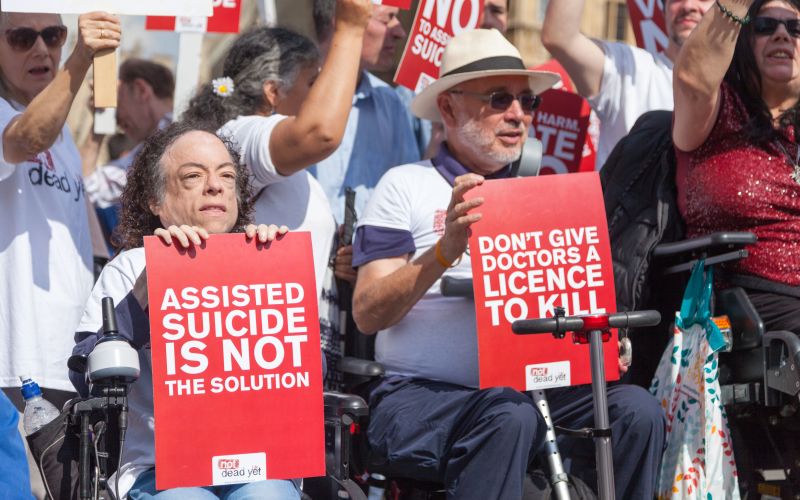
Yes, we can move with the times, but let’s look at where our times are heading. Right now, there is a wholesale assault on the rights and dignity of disabled people. Successive governments going back many decades have vilified disabled people as scroungers, leeching off the state, taking more from society than they give to it. 

With the introduction of fiscal austerity in Britain, the greatest burden fell on disabled people, who had their services, welfare, and jobs cut. Since the beginning of the pandemic, many ministers have made it clear that they see the lives of clinically vulnerable people as disposable. They have shown that they would prefer to prioritise the economy over the lives of people in hospitals and care homes. It is little wonder that some disabled people want to die, when they have been deprived of so much in life.

What message does it send out now if we say that we support assisted suicide? We may have been silent on the great attacks on disabled people’s lives, but, don’t worry, we are liberals, we will let you die. Just to show how caring we are, we’ll let you commit suicide, with support from the very state that has made your life so difficult.

If we are moving with the times, we are moving very much in the wrong direction. Coming out as pro-euthanasia now puts us on the side of those who are currently dehumanising the elderly and disabled. Publicly championing euthanasia is not defending the vulnerable, but attacking them.

Yes, as Progressive Jews, we do advocate choice and personal autonomy. But not all choices should have our enthusiastic support. The actor and disabled rights  activist, Liz Carr, has rightly said that, if someone is going to kill themselves, it is hard to stop them, but “that does not mean when a fellow human being – disabled or abled – expresses the wish to die because their life is shit, that we should agree with them.”

Some disabled people already feel that they are too great a burden on others. This is because we live in a system that reinforces that message: focusing on a person’s ability to be “economically productive” as their sole source of value, rather than loving them unconditionally for the fact of being alive.

That system, and the ideological apparatus around it, tells disabled people that their lives are not worth living. If we join in as cheerleaders for assisted dying, we are sharing the message that we agree with them. No wonder every disabled rights charity in the country opposes euthanasia liberalisation.

If we want to send out the right messages, I suggest we need to go in a different direction entirely. Rather than campaigning on people’s right to die, we should put the weight of our movements on campaigning for the right to live.

That means channelling our energy in campaigning for jobs for disabled people; proper welfare provision; decent and accessible social housing; the restructuring of our cities and public transport networks so that everyone can access them; investment in clubs and societies people can actually reach.

Yes, all of these things cost money. But the way we are going now costs lives.

I want you to know that, whatever you decide to do in life, I will absolutely support you and be there with you. But I will do that because I believe, on a fundamental religious level, that your life is precious and worth living. I believe in making that it is the duty of religious people, and of the government, to make people’s lives on earth as good and fulfilling as they can be.

We should absolutely support people at every stage of their lives, but the build up to someone wanting to die matters far more than enabling them to do it. We ought to assist people to live, not to die.

Shabbat shalom.

high holy days · sermon

A life without regrets

If today were your last day, what would you make of the time you have had? Would you be satisfied that you’d lived your life right? Would you feel like you had left much undone or unresolved?

If today was your last day, would you feel confident in your end? Would you know for certain what had made your life worthwhile?

These are the uncomfortable questions Yom Kippur pushes us to consider. And they are indeed uncomfortable questions. Without even mentioning God, morality, or religion, I know that some will feel affronted by the line of questioning. I know that if I were the one being asked, I would feel affronted. I would be raising objections to the questions. 

But everything about the rituals of Yom Kippur forces us into that way of thinking. 

We dress in the clothes in which we will be buried. A kittle, or cassock, for Ashkenazim. A simple tallit for Sephardim. No jewellery, no perfumes, no fancy shoes. We are dressed not too differently from how we expect to leave this world.

We pray.  We pray that we will be allowed to live. We recount the many ways in which we might die: by fire, water, beast, sickness, ordeal. We recite vidui: the final words we expect to say on our deathbed.

We fast, afflict, and deprive ourselves. All of this is supposed to make us reckon with our mortality. It is a death rehearsal. Yom Kippur asks us whether or not we are ready for death.

Today is Shabbat Shuva, the Shabbat midway between Rosh Hashanah and Yom Kippur. While some of our readings are special to the occasion, the Torah continues where we last left it before the High Holy Days, with Moses proclaiming his last speeches of Deuteronomy. 

At this stage, Moses knows that he will die, and he contemplates his coming end. His life is over, and so is his mission. He will not reach the Promised Land to which he has travelled, and he must handover power. God tells Moses: “The time is coming close for you to die. You will soon lie down with your ancestors.”

God offers Moses no reassurance that he has succeeded in his life’s task. Quite the opposite, God tells Moses that the people will now chase after false gods, neglect the holy laws, and forget their covenant with God.

After all that. Plagues and miracles in Egypt. Signs and wonders and an outstretched hand to deliver them. They had seen the sea part and bread fall from the sky. They had received the commandments from a thunderous mountain. Now, God tells Moses, they will forget it all and ignore what they learned.

Moses must have wondered in that moment if his life had been worth living at all. His projects may not be continued. His beliefs might not be upheld. Everything he did may have been for nought. 

Yet, somehow, Moses seems to have achieved a kind of calm. He no longer protests against his Creator. He does not challenge the decree. He hands over to Joshua and lets him take the reins.

Perhaps, by this stage, Moses has learned that what matters in life isn’t whether your work succeeds, but whether you perform it with integrity. What matters isn’t whether you find out all the answers, but that you seek to learn. And what matters isn’t whether you perfect the world, but that you treat the world as if it can be improved. In short, what matters is that you do your best.

In the Babylonian Talmud, Rava tells us that, upon dying, Heaven will ask of us six questions:

  • Did you have integrity in your work?
  • Did you make time to study Torah?
  • Did you care for your family?
  • Did you try to make the world better?
  • Did you welcome new ideas?
  • And did you have reverence for your Maker?

Our task on earth is not to be wealthy or famous or powerful. It is to be honest, studious, caring, supportive, optimistic, inquisitive and loving. It doesn’t matter so much what we do with life, but how we do it.

Heaven doesn’t ask what our job was. It asks if we did it faithfully. Did we conduct our working lives in ways that we could be proud to give account of ourselves before God? Did we act as if how we treated others in business mattered for the sake of our own souls?

Heaven doesn’t ask if you can recite the whole of the Mishnah by heart. It doesn’t ask whether you mastered some sacred texts. It doesn’t even ask if you learnt your aleph-bet. Did you try? Did you take an interest in your traditions and heritage? Did you actually look to the past to see if it had any bearing on your own life?

Heaven doesn’t expect you to have had only one marriage of the right kind. It asks whether you actually looked after people. Did you care for those around you? According to palliative nurses, the most common regret among the dying is that they did not spend enough time with those they loved. At the end of life, God also challenges you with the same question. 

Heaven does not ask if you brought about salvation of all humanity. It asks tzafita lishua? Were you on the look out for redemption? Did you search for chances to make the world better? Did you hold onto hope that the world could be changed?

And Heaven does not ask if you arrived at the right answers. It asks whether you asked wise questions. Were you curious? Were you inquisitive? Were you interested in what others have to say?

Above all else, the question we are asked is whether we had yirat Hashem, awe of God. Without this, all the other questions are irrelevant. The Talmud compares someone without reverence for Heaven to someone who only has the keys to the door inside the house, but can’t actually get into the house.

Ultimately, what matters is that we treat our lives like they have meaning. You have to actually care about how you live, and believe that it really matters.

When Moses reaches the end of life, he doesn’t wonder whether it was worth it. He is faced with the far more fundamental question of whether he really lived right. 

Integrity. Curiosity. Kindness. Justice. Effort. Love.

These are the things that really matter in the end. We will get to the end and our only regrets will be the attitude we took towards life itself. 

Yom Kippur is, indeed, a preparation for death. But above all else it is a calling to live. It demands of us that we look at our lives and resolve to conduct them better, with fewer regrets.

Shabbat Shalom

protest · sermon · social justice

God died last month

God died last month.

The newspapers barely reported it. No politician offered a eulogy. There was no radio broadcast of a moment’s silence. The subject did not come up over dinner. God died last month and we barely noticed.

How is it possible that God could die? Who could kill God so callously and get away with it? To understand what happened to God last month, you need to know everything that happened to God since the beginning. You need to hear about God’s life.

It was after the Exodus that the Israelites began to see how vulnerable God was. They had been redeemed from Egypt. They had crossed the Sea of Reeds. They had received the Ten Commandments from a thunderstorm. 

Moses, Aaron, and seventy elders ascended the mountain once more to ratify their covenant with that God Almighty. When they reached the summit, they were shocked by what they saw. 

Under God’s feet were building bricks like sapphire, as blue as the sky itself. Those feet were trapped. Those beautiful bricks bound them. The elders asked what had happened. God replied: “As long as you were enslaved, I was enslaved too. As long as you built bricks from clay, I built bricks from clouds. As long as you were in pain, I was suffering too.” 

Of course, not all of God could be imprisoned. The infinite God transcends all space. But there is a part of God that lives with us and in us. A part of God labours when we toil. Cries when we cry. Hurts when we hurt.

The Israelites continued to catch glimpses of God’s frailty throughout their relationship. God had promised Jacob at the outset: “I will go myself with you to Egypt, and I myself will bring you back.”

It wasn’t just a promise of solidarity. It was a sad admission that, when the Israelites were refugees, God would be in exile too. When the Babylonia came to displace them and hold them in captivity, God travelled with the Israelites to Babylon. God sat with them in the synagogues. God was weeping by the river banks too. 

Of course, not all of God could be exiled. The infinite God transcends all space. But there is a part of God that lives with us and in us. A part of God leaves when we leave. Cries when we cry. Hurts when we hurt.

God’s sympathy was not confined to the biblical age of miracles and prophecies. God stayed with us through history, even when we thought we had been abandoned. Yes, even in the concentration camps. God was there. 

Elie Wiesel survived the Nazis and came to tell us what he had seen. He saw a child strung up by the guards, dangling. The child was left there for hours, dying in slow agony. The camp inmates had to stare him in the face with his still-red tongue and eyes not yet glazed.

“Where is God now? Where is He?” someone behind him asked. “Where is God now?”

And Wiesel whispered inside his heart: “Where is He? Here He is—He is hanging here on these gallows…”

God died there in Auschwitz. Of course, not all of God could be killed. The infinite God transcends all time. But there is a part of God that lives with us and in us. A part of God leaves when we leave. Cries when we cry. Hurts when we hurt. Dies when we die.

God has died with us many times. One hundred thousand sacred sparks have been extinguished in the UK this year alone. But God does not die in statistics on spreadsheets. God dies with one person at a time when one story is snubbed out too early in an unspeakable injustice. That is how God dies.

And now you know how it was possible for God to die last month. And now you need to ask why. 

God died on 9th January at his home in Cardiff. He was 24 years old. He had been in police custody because someone suspected he had breached the peace. We are still not sure what that means. He was released without charge.

When his aunt picked up from the police station, he was covered in wounds and bruises. She says he didn’t have them when he was taken to jail. 

52 police officers had contact with him in the 24 hours that he was held in Cardiff police station. None of them saw anything suspicious. The police are running toxicology reports and investigating themselves. They are looking at the CCTV footage but so far they have found no misconduct by officers and no use of excessive force. 

The police have refused to release the footage. They say we will never see it.

We may never know how God died or why. But we know that God died last month. 

And he was a black man named Mohamud Hassan. And he had a life that was worth living. And he should not be dead now.

And now you know how it was possible for God to die last month.

And now that you know that God has died, you are a witness to the crime.

And now that you are a witness, you will have to testify.

You are summoned before the Only Judge to give your testimony about why he died.

Black lives matter. 

Shabbat shalom.

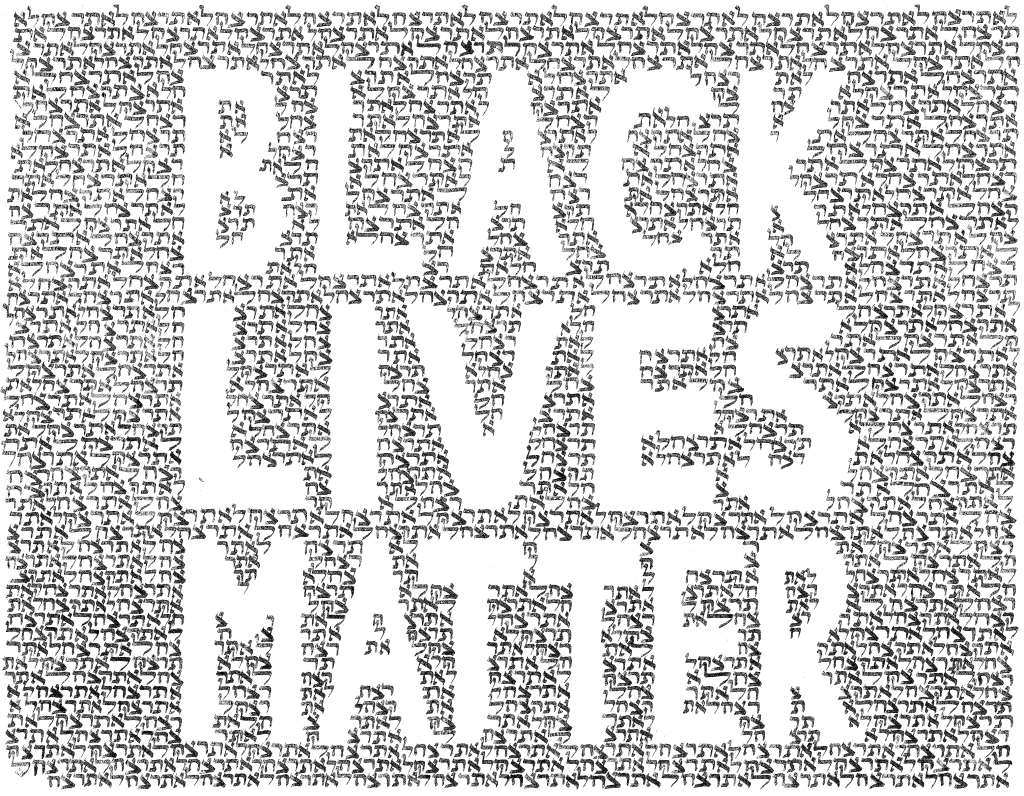
The white fire says “Black Lives Matter.” The black fire contains Exodus 20’s commandment: “Thou shalt not murder” in Hebrew. Artwork by Rachel Stone.
fast · high holy days · sermon

Closing the Gates

These are the short sermons I delivered for the final two services of Yom Kippur 5781.

Yizkor

This morning, I talked about how this year could be understood through the lens of grief. Yet nothing can compare to the grief of losing a loved one. Every feeling we described, of denial, bargaining, sadness, anger and acceptance, is intensely heightened by the enormity of the lives that have been lost in this last year.

I will not say numbers. Their lives were not statistics. They cannot be reduced to the collateral damage in government reports about which measures worked best. They were full human beings, imbued with the sacred light of God. They were people with pasts and dreams, filled with stories. They were complete people, with flaws and complexities and little idiosyncrasies.

And we have not yet even begun to mourn them. In the midst of a pandemic, we have been like the Israelites in the desert, forced to keep on moving and maintaining high spirits for an undefined period of time. We keep looking straight ahead to keep our spirits awake, so struggle to look back at the hurt. Even old wounds from people long dead have returned to us, and we have struggled to find ways to heal.

Here, in this moment, for this brief service, we can take the time. Let’s stop in this space and reflect. We remember the names of everyone who mattered to us. We loved them. We cared for them. They cared for us. We admired them. We looked up to them. They took inspiration from us. We laughed with them. We cried with them. We got angry with them. We hated them. Sometimes. We spent precious time with them. We did not spend enough time with them.

And now, in this moment, we remember them. And we refuse to let them ever be forgotten.

Neilah

This year has been challenging for all of us. As much as our physical health has been at stake, everyone’s psychological wellbeing has taken a toll. Public health experts warn that we are facing a delayed mental health crisis. 

This morning, I spoke about how the year could be understood through the stages of grief. Those feelings, however, can be pathological when taken to an extreme. Sadness can become depression. Anger can become anxiety. Denying what exists and accepting what does not can result in psychosis. 

We will need to pull together in the coming year. We will need to check in on each other more than ever and find new ways to support each other. Above all, please talk about your feelings. If it feels like it’s going too much, do talk to a rabbi for pastoral support, or to a doctor for medical help. It is important that we all look after each other.

I know that we begin Yom Kippur by annulling the vows we have made with God. I think, however, this year, we need to end by making a new one. We need to promise each other we will make it. We must swear to each other that we will do everything we can to keep our bodies, minds and souls alive in the coming year. Say it to God, make it a vow.

As the gates of prayer close, I vow that I will care for myself and my community. I vow that I will be honest with my feelings and kind to my body. I vow that I will be here next year.

Next year, in a world without pandemic. Next year, in a world built back better without racism and injustice. Next year, in a world where we can see each other in person. Next year, in the building, with each other, holding hands and singing together.

We will make it to next year. Shanah tovah.