The great sage of the Mishnah, Ben Zoma, once exclaimed:
How hard must the first ever human being have worked before he had bread to eat! He plowed, sowed, reaped, sheaved, threshed, winnowed, separated the grain from the chaff, ground the grain into flour, sifted, kneaded, and baked… and only then did he get the chance to eat. But I wake up and find all of these prepared for me.
He added:
How hard must the first human being have worked before he had clothes to wear. He sheared, laundered, combed, spun and wove… and only then could he put on a shirt. But I wake up and find all of these prepared for me.
And, of course, he is right. How many hands must have touched everything we enjoy. Ben Zoma knew this was true 2,000 years ago. How much more true is it now that we live in a globalised world with food, clothes and technology Ben Zoma could not even have fathomed. Anything that anyone in this world does is because many people have worked together to make it happen.
But Ben Zoma also says something ridiculous. He imagines that Adam, the first human being, did all this alone. We know that is patently false. First of all, at the very minimum, Adam was accompanied by Eve in Eden. And, if we follow the biblical story, God provided that first couple with everything they needed. They could pick fruit off the trees without trouble and never bothered with bread. They didn’t even need clothes until they had left their paradise garden.
When Adam and Eve did leave Eden, they immediately found wives for their male children. The Torah doesn’t explain how they got there, but any other explanation for how humanity came about would be very troubling. The Torah knew that it was impossible for human beings to ever achieve something on their own.
And, in fact, the Talmud, where this saying from Ben Zoma is quoted, knew this too. This imaginary world where individuals only do things for themselves comes as part of a sugya that speaks in celebration of groups of large people. The Talmud marvels at the diversity of human beings, where every face and mind is completely different. It speaks in praise of migration, hospitality, crowded marketplaces and huge throngs flocking to the same place.
Human beings are social animals. From the off, we have done everything in groups. Before civilisation, we hunted and gathered in packs. When we first set up farmsteads and villages, we did so together, in groups. The modern world was built by people sharing technology, innovation, resources, and working together to develop them. The only evolutionary advantage that human beings really have is that we can organise in ways that no other animal can.
For the last year, some forms of collectivity have been permitted, and some have been forbidden. People have been allowed to meet each other in warehouses, factories, and takeaways, where they make and distribute things to those who can afford them.
People have not been allowed to encounter each other in parks, or houses, or community centres, or gyms. They have rarely been able to accompany the sick at their bedsides, or celebrate births and marriages, or share ideas in public forums.
Now, as things ease, people are permitted to gather, but only if they are spending money. We can meet in shops, pubs, and restaurants, and even sit indoors without masks on. But very few of the community activities for children have returned. Older people in hospitals and hospices are still rarely seeing their families.
Certainly, almost every form of protest or public demonstration remains criminalised, and it may stay so for a very long time. Like last summer, even with a nearly completed vaccination programme, the government is keen to rush people back to work, but reluctant to allow people time to just be together and heal.
Still fearing the virus, despite minimal risk of transmission to the vulnerable, many people have given up on public transport. There is more regular car use in the UK now than at any previous point in history. I see people avoiding each other, avoiding making real contact, even though the option is there.
I look at this so-called ‘recovery’ from Coronavirus and wonder if anybody has considered what actually makes life worth living. We are not automatons, created to work like robots. The best part of being human is other human beings. We are social creatures, whose purpose is derived from what we can do together.
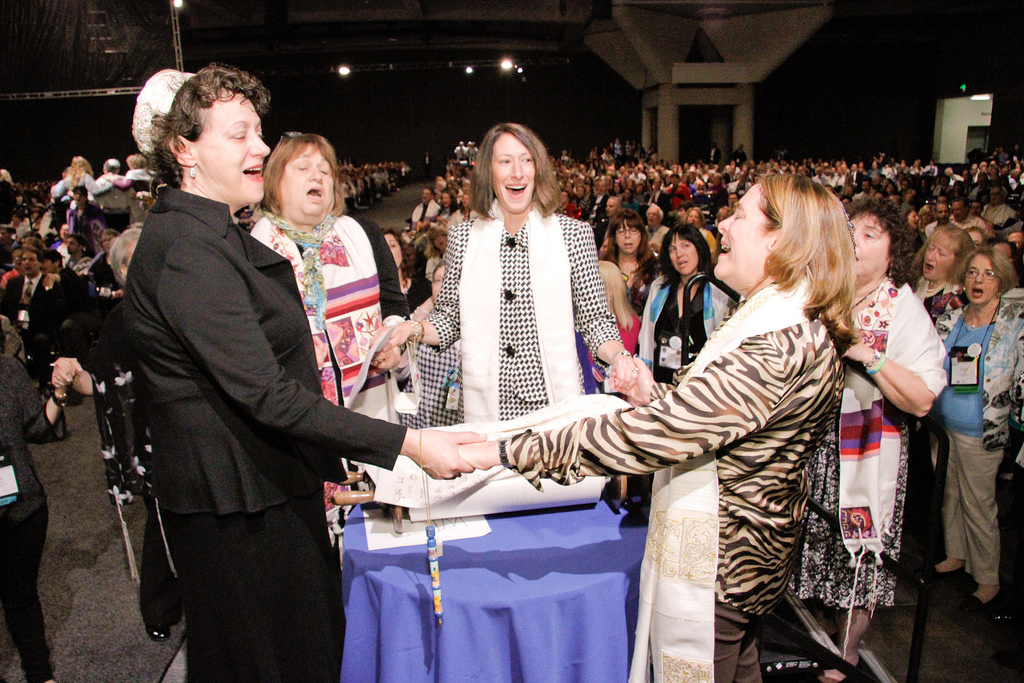
And there is a place where people are supposed to be able to meet for just that purpose. Its name in Greek is ‘synagogue,’ which means ‘shared path.’ In Hebrew it is called a ‘beit knesset: ‘a house of meeting.’ In Yiddish, we call it ‘shul,’ which just means ‘school.’ This. This is it. This thing where we come together to sing in unison and study communally and hear how people are really doing, this is what life is supposed to be about.
This. This place where babies are blessed, bnei mitzvah celebrated, weddings solemnised, healing recognised and deaths memorialised. This is how people recognise the humanity in others, and in themselves.
This is my last service with you. I have absolutely adored working with you. I have got to know so many of you in such depth, without even leaving my home. I have heard about your families, your fears, your hopes, your dreams, and your life stories. I cannot wait to do that with you in person again.
We have weathered an entire year together through a pandemic. That much is remarkable. I have been so impressed by the ways you have continued to pastorally support each other online, and to provide essential services to the vulnerable.
The next stage is going to be hard. It means meeting people face to face again. It means taking risks, being brave, and trusting each other. It means accepting compromises and imperfections. But above all, it means truly building a community that is loving and generative.
I look forward to returning to Newcastle to see you all again in the building, in person, shaking hands, embracing, and catching up on the things that matter. I sincerely hope it will not be long before this community sings in harmony once more and natters over homemade foods at kiddush.
At no point in our history has anyone managed to go it alone. The future sees us together.
Shabbat shalom.

 Sim Lev