judaism · sermon

Are Jews a religion or a race?

At present, Reform and Liberal Judaism are deciding whether to become a single movement. You will be able to vote on this, and I encourage you to do so. 

As the procedural questions unfold, it is hard to imagine how strongly felt the ideological divisions were between the two movements, even forty years ago. I believe, however, that those differences are now almost entirely within the movements, rather than between them. 

On some fronts, we will find unity, and on others, differences will remain.

There is one point, however, which, to me, is so intrinsic to Liberal thought that I could not stand it to see it lost. That is: there is no such thing as a Jewish race.

There is no such thing as Jewish blood, as a Jewish womb, as Jewish DNA, or as Jewish features.

It is precisely because our Liberal tradition teaches that there is no Jewish race that we have been able to fully embrace converts and, from the very beginning, accepted patrilineal Jews. 

These ideas were critical stumbling-blocks to merger attempts in previous decades. Reform Judaism would not accept patrilineal Jews, and insisted that converts went and were reborn from the “Jewish womb” of a mikvah.

In the past few years, Reform Judaism has come to accept patrilineal Jews, and Liberal Judaism has come to accept that the mikvah can be a meaningful ritual.

Yet not everyone has come to accept the underlying ideology that made these matters so central to Liberal Judaism. The originators of our movement saw Judaism as a religious community, where Jewishness was communicated socially, not “biologically.”

That is no longer a sectarian issue. There are Reform rabbis who ardently agree on this point; and there are Liberals who, instead of denying any racial Jewishness, focus on being “inclusive” about who belongs.

Rejecting the idea of a Jewish race was absolutely foundational to early Liberal thinkers. Regardless of whatever new ideas emerge as rabbis come together, I intend to hold doggedly to their understanding of Jewishness.

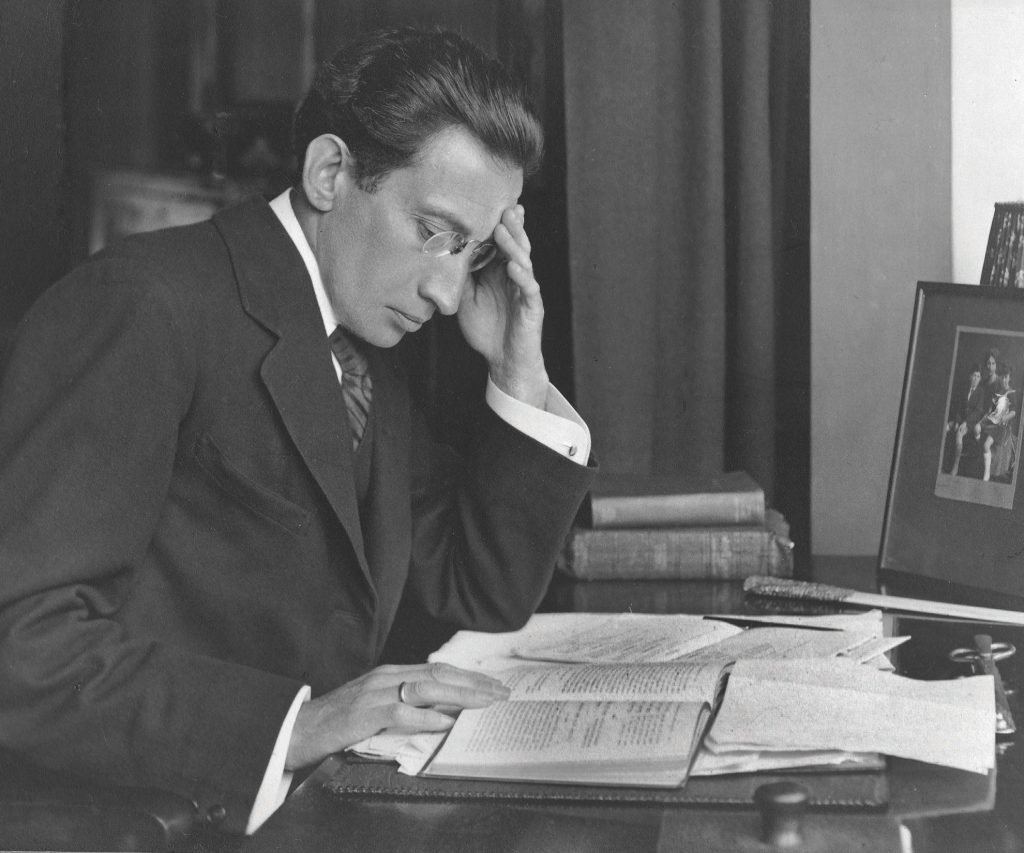
Israel Mattuck was the first Liberal rabbi in the UK. In 1911, he was recruited by Lily Montagu and Claude Montefiore from America to lead the Liberal Jewish Synagogue in St John’s Wood. He was a prolific preacher, ideologue, and scholar.

At the LJS, Dr Mattuck taught a Confirmation class, for 16-year-olds affirming their faith. He later took his notes and turned them into a book, entitled Essentials of Liberal Judaism so that everyone would know what he thought it meant to be a Jew.

Jews, he insisted, were not a race, but spanned the globe. What made people  Jewish was that they held Jewish ideas, followed a Jewish way of life, and kept Jewish observances. 

He wrote: “In spite of all the differences among them, the Jews of the world constitute a people; but they are a people in a different sense from any other people. Their unity is based on religion and history.”

Editing in 1947, Mattuck was eager to avoid any misconceptions. He insisted that this history was not an unbroken tale of misery and persecution, but one of great spiritual achievements. We were, he said, the first witnesses to God’s unity through the revelation at Sinai. Our history was that of the prophets, the priests, the scholars, the mystics, and all those who sought to reach closer to religious truth. 

Mattuck was clear that you could not be Jewish in anything more than name if you rested on race. You want to be a Jew? Walk humbly with God, taught Rabbi Mattuck from the prophet Micah. 

There is no race – only a demand to live right.

Now, you may be thinking, this all sounds a lot like the Critical Race Theory that Mr Trump so zealously warned us about. Indeed it is! And the American President has good reason to fear people taking a critical approach to race.

In the USA, races were invented to divide and rule people so that the wealthy whites could maintain their plantation economy. Poor whites were incentivised to enforce and uphold slavery by being given some privileges on the basis of their skin colour.

As a result, they felt they could identify with the rich whites, even though they had very little in common with them socially or economically. Using racism, they demeaned and humiliated the stolen Africans so that they would not have the confidence to challenge their own condition.

That is why race-critical scholars in America have the slogan: “race exists because of racism, not the other way round.”

In Race: A Theological Account, the African-American scholar of religion J. Kameron Carter shows how racist ideology had earlier roots – in how European Christians treated Jews. 

To create a system where Jews were second-class citizens, they needed an ideology where Jews were defective human beings. So they made up stories about Jewish bodies, Jewish blood, Jewish noses and hair – even Jewish horns – to justify their system of oppression. It was a nasty division for the purposes of exploitation.

This was exactly why Mattuck was so resistant to talk of Jews as a race, and so adamant about our religion.

In 1939, Mattuck wrote his first major work, What are the Jews?, which was a harsh rebuttal, not only to Jewish racial nationalism, but to racial nationalism as such.

We belong everywhere, he asserted. In the Age of Enlightenment, all citizenship should be communicated on civic grounds, never on ethnic or religious ones. 

A Jew, he felt, could be a nationalist, but they must first adhere to the religious calling. That is: they could be Jewish and happen to have nationalist leanings, but it could not define them as Jewish. 

Nevertheless, he thought that, by properly conceiving of ourselves as a religion, we would be more likely drawn to universal ethics. We would measure our Jewishness by our conduct towards others and our connection with our God, rather than by the supposed quality of our genetic make-up. We could pull apart the stories that separated people and build common bonds.

Racial thinking, thought Mattuck, must be resisted.

Race is a horrible and divisive lie. Religion is a beautiful and unifying truth.

I want to be open about why this idea is hard for others to hold.

It is more demanding. It says that nobody can take their Jewishness for granted, and must work for it. It means that you cannot be “born” Jewish, but have to live Jewish. It sets high ethical and practical demands on anyone who claims Jewishness.

When we say that there is no Jewish race, we also mean that somebody with an unbroken chain of matrilineal descent but without any Jewish upbringing or identity must also learn how to be Jewish, in the same way as a patrilineal Jew would. Everyone has to properly engage with the traditions and practices. Contrary to the doctrine of inclusion, this makes us more exclusive than the Orthodox.

Denying the existence of a Jewish race also has profound implications for how we engage with Israel. If we are a religious community, the demand to achieve a Jewish ethnic majority – still less racial supremacy – is not just grotesque. It is absurd. The measure of whether the state was sufficiently Jewish would not be by how many Jews there were, but by how well it upheld Jewish moral values.

Yet it is precisely because of this more demanding approach to Jewishness that I will keep holding onto it. The call that we be moral in our dealings, conscientious in our practices, and connected with our traditions is a far better one than the narrow pull of racial nationalism. 

Through such a religion, we may connect to every other Jew in a spirit of solidarity.

Through religion, we may connect to all of humanity, by recognising our shared Creator.

Through religion, we may draw nearer to the mystery that is our God.

Through religion, we may live out the words of our haftarah: “For you who revere My Name, the sunbeams of righteousness will rise, with healing in their wings. Then you will go forth and skip about like calves from the stall.”

Shabbat shalom.
judaism · sermon · social justice

You are not sick

Imagine if I stood up here on a shabbat and I told you I could fix you. 

Imagine if I said there was something fundamentally wrong with you. That some property intrinsic to you, about your soul, was fundamentally wrong. Sinful.

Imagine if, when we read out the names of people in need of healing, your name was on there. You hadn’t asked to be placed there and you felt fine. But somebody in the community had decided that who you were, as a person, was contrary to their religious beliefs, and that made you sick.

Imagine if your child or grandchild came to see me at the synagogue and ask for rabbinic advice about their personality. Instead of offering them love and support to be happy with who they were, I told them that they needed to repent. I told them that God thought they should feel guilty. I told them they should pray and fast until the wickedness in them was gone.

Imagine it. Imagine any preacher in any religious building doing such a thing.

You don’t have to imagine. It happens today, here in Britain.

It is called conversion therapy. 

Conversion therapy is when queer people are told, often by a religious leader, that prayer, exorcism or counselling can change their gender or sexuality. It is when somebody tells a gay person that they can be made straight, or a trans person they can be made cis.

It happens in the British Jewish community. One survivor of this practice, Joe Hyman, spoke out about how a religious Jewish group tried to counsel him out of homosexuality. At first, it involved telephone appointments where he was told he could be healed. He sat round in a room and was forced to examine every homosexual thought he experienced through a lens of judgement and shame.

Another British-Jewish woman, Maya, went through conversion therapy classes that told her that her parents hadn’t nurtured her enough and that she must have been abused as a child. 

There are Jewish retreats in New York and Israel, where participants are made to do psychologically damaging activities including stripping naked and berating themselves while staring at a mirror.

You might well wonder why such an abhorrent practice has not yet been banned. For that, you would have to ask Boris Johnson. 

This week, his government leaked reports that they have abandoned plans to stop conversion therapy. They have bowed to pressure from conservatives and fundamentalists. 

When the various LGBT charities expressed their outrage, and the public followed suit, the government back-pedalled, but only slightly. They said they would ban conversion therapy for sexuality, but not for gender identity. They have decided that lesbian, gay, and bi people should not be subjected to this psychological torture, but that they will keep it up for trans people. 

Not content to only permit the practice, the government has decided to get in on bullying trans people. Boris Johnson used a recent speech to mock trans people. A public discourse has emerged that pathologises and humiliates people who do not conform to gendered expectations. 

Trans women, in particular, are the subject of a horrible narrative of hate. I don’t think it would be helpful or responsible to repeat the things I’ve heard, even from respectable platforms like the BBC. You have probably heard it too, and speaking it from the pulpit would only lend this hate speech legitimacy it doesn’t deserve.

The pathologisation of sex and bodies is as old as the Bible. In ancient Israel, when a person’s genitals seemed emitted an unusual discharge, or found they could not ejaculate, a priest would declare them a zav. This meant they were ritually impure, prohibited from entering holy places and forbidden from engaging in acts of worship. 

This was not just recognising the existence of genital problems or sexual diseases. It was making them into signs of defilement. It was saying that the people who had them were in some way sinful. It turned the body into something shameful. 

By the time of the Mishnah, the rabbis were conscious of how problematic this system of stigmatising people was. They announced mitigating circumstances for when somebody might not be considered a zav: if they had jumped; lifted something heavy; been unwell; seen something arousing; thought about something sexual; had eaten or drunk something unusual. If they had done any of these things, even if they had symptoms of a zav, they were not considered a zav. They were exempt from being treated as sick.

To this already expansive list, Rabbi Akiva added two more categories: if somebody had eaten or drunk anything at all, they were not a zav. His students were astonished. They said: “if that’s the case, there will be no more zavim anywhere any more!” Rabbi Akiva responded: “it is not your job to make sure people are considered impure.”

Rabbi Akiva understood something profound. Nobody should be considered sick. Nobody should be stigmatised for who they are. So, to combat the stigma, he found a way to make sure everyone was exempted.

That is what is needed today to combat this senseless hatred against trans people. That is why we so desperately need to ban conversion therapy and stop treating people as if there is something wrong with them.

All we are asking is that people can access non-judgemental support to talk about their gender. We are asking that people can be free to explore it, open to the possibility that their gender might not be the one they have always been told it was. We are asking for people to have the freedom to go on a journey with their gender, open to the possibility that this might mean changing their name, or their pronouns, or the way they dress, or the way their body looks. 

I understand that perhaps that might sound frightening to some. But what truly terrifies me is that people can’t. Young people exploring their gender currently cannot feel safe turning to authority figures to talk about their gender when there is so much vitriol emanating from the country’s highest offices of power. And they are even less safe when leaders continue to have the power to tell trans kids that they are sick and can be cured.

From this pulpit, there is only one message you will get. You are not sick. You are loved. You are supported by this community. You are safe to be whoever you want to be. 

In this synagogue, we believe in a loving God. In this religious movement, we affirm that you have a unique journey to find your own way with your Creator. And we will never try to change you.

Shabbat shalom.

With massive thanks to Rabbi Laura Janner-Klausner for helping me think through how to talk about this when the issue makes me so emotional

sermon · social justice · theology

God is the reason I am gay

God is the reason I am gay. 

I am not making any claims about how God made me or what plans God had in store. I have no idea whether my personality was predetermined. I do not have any opinion on whether I am gay because of nature or nurture. I stopped caring about that a long time ago. 

But I still say that God is the reason I am gay. Because God is the reason that, if I were given the choice whether or not to keep being gay, I would stay exactly as I am. God is the reason I am proud to be open.

Growing up, there were many reasons I ought to have felt shame. In the 1990s, there was widespread public panic about gay men. I remember as a child opening up a ‘dictionary of new words.’ On one of the first pages was AIDS, whose entry redirected to ‘Gay-Related Disease.’ News stories proliferated about gay men grooming children, having sex in toilets and ruining families. The public image, only 20 years ago, was that gays were dirty, lived in sewers, and spread disease. 

Synagogue was a place where I felt safe. In the small shul in my provincial town, I found serenity. And I heard religious leaders and cheder teachers speak about the innate dignity of all human beings; the Divine spark that permeated through everyone; the obligation to protect the stranger and the vulnerable. 

The first time I ever heard an adult defend gay rights was in a community member’s living room. I must have been 11. Recently, a local parliamentary candidate had been outed after he was found having sex in a public toilet. Someone said something homophobic – I don’t remember the details. 

A middle-aged Jewish woman leapt to the gay man’s defence. She spoke with absolute passion. She laughed when one of the homophobes said he had a gay friend. She was a grown-up telling off a bigot, and she rallied the rest of the room behind her. 

As a young queer boy questioning who I was, I looked up to her and thought that was what Judaism looked like in practice. That was what it meant to defend the marginalised. I had permission – from her, and from the God in whom she believed – to be gay.

Gradually I came to realise that I was one of the people that the Jewish woman in the living room had been defending. I didn’t meet many other people like me until I got to university. When I did, I heard from many of them how religious hatred had hurt them and made them reluctant to be open about who they were.

I was grateful that I had known the true God. Progressive Jews worshipped the Source of love and justice, the universal God who did not judge, and who always stood beside the oppressed, and never sided with the oppressor. I thanked God for making me gay.

Later still, I looked around for role models. I wondered what gays could become. I knew a few celebrities existed, like Graham Norton, Elton John and George Michael. But my greatest comfort was knowing that there were gay rabbis. Rabbis like Lionel Blue. 

As I looked for purpose in my twenties, I had an inspiring lesbian rabbi. I realised how much strength and joy a synagogue could give, especially to future LGBT kids. I decided I had to create that safe space for others. So God made me gay and, in turn, being gay made me seek out God.

That is the power of religion. Done right, it can affirm people when they are weakest. It can give hope to children that people like them deserve defending. It can be the champion of all who are suffering. It can be the cause of their liberation. 

And that power can be profoundly abused. There are those who wield religious power to scare gays into submission. There are those who sit down with queer children and tell them that they need to seek forgiveness for their sinful thoughts. That they have been brainwashed by transgender ideology. That they are mentally disturbed. That they are possessed by demons. 

Apparently it is called ‘conversion therapy.’ In this practice, authority figures tell LGBT people that they can stop them being trans or turn them straight. They convince them that if they suppress their personalities, conform to rigid gender roles and only love who they are told, they will be healed. And they do so in the name of God.

And this practice is legal. In Britain. Today. 

It is even practised within the British Jewish community. Recently, LGBT people have come forward to share their traumatic stories of how they were manipulated into believing they could be ‘cured’ of non-conformity. They were convinced that if they failed, they would lose their family and community for having let down God.

If queer-affirming religion can make me the person I am today, imagine the damage it can do to teenagers struggling to work out who they are. 

As the possibility was raised that this cruel practice could be stopped, a coalition of evangelical churches comprising thousands of members published an open letter saying that banning conversion therapy would effectively outlaw their religion.

At Easter, Labour leader, Keir Starmer, went to one of those very churches to give his festive address. In response to the consternation this provoked from LGBT people, Stephen Timms, a Labour MP, tweeted in support of the homophobic church.

The two most recent prime ministers, Boris Johnson and Theresa May, had both visited this church too, causing outrage. The former Liberal Democrat leader, Tim Farron, recently accepted a donation of £75,000 from an evangelical church that lobbies in defence of conversion therapy.

When politicians spend their time and take money from homophobic religious institutions, they send out a clear message. They tell religious lesbian, gay, bi and trans people that they are, at best, indifferent to homophobia. 

When public figures choose to attend these places of worship that claim they can cure gays, rather than any of the mainstream faith houses that embrace gays, they send a message about what they consider to be proper religion, and which God they think matters.

But it is possible to send a different message. We can say that conversion therapy is unacceptable. While banning the practice won’t stop it happening, it lets everyone know that it is not OK. Young people will still talk to their rabbis about how they’re feeling, but religious leaders should not be able to answer LGBT children by promising to take away their gayness or transness.

Instead, they can give them a better message. Young LGBT people can grow up to see that their lives are sacred and deserve to be protected. They can know that they are wonderful as they are and do not need to be changed. 

God is the reason I am gay, and I wouldn’t have it any other way.

I wrote this sermon for Leo Baeck College, where I am in my fourth year of studies.

judaism · sermon · theology

Abraham and the Paradox of Jewish Evangelism

A priest, a monk and a rabbi are debating which of their religions is the correct one. They decide to settle it with a contest to convert a bear to their religion.

The rabbi tries first. Two days later, the priest and the monk end up visiting him in the hospital.

The rabbi says: “OK, maybe I shouldn’t have begun with circumcision.”

Let’s set aside the foreskin jokes, because I don’t think the rabbi would have had much better luck with a lady bear. Isn’t it a strange fact of our religion that we almost never set out to proselytise?

We, of course, welcome all sincere converts, and this synagogue is happy to encourage anyone on their spiritual journey. But you won’t find us outside Asda, handing out flyers with words from the Mishnah. And you certainly won’t turn on your TV to see a rabbinic televangelist warning you about the perils of pork.

But if you think you have stumbled upon spiritual knowledge, don’t you want to share it with the world? Who are we to zealously guard the secrets of the universe?

Even if you take a more humble approach to Judaism’s teachings, and think they’re just as good as any other people’s, there must be something particularly worthwhile about Judaism for you to log in to this morning’s service rather than watching Bargain Hunt. (Wait, don’t go, I promise this is going somewhere!)

That strange paradox of Judaism – that we have a universal truth but don’t seek to spread it – is encapsulated in the story of Abraham.

This week, God tells Abraham: “Go out by yourself. I will make your name great and you shall be a blessing.”[1]

Then, in the next two verses, as if a parallel to the first, God says: “All the families of the earth shall be blessed by you.” Then Abraham goes out with Lot and Sarah.[2]

So… does Abraham go out to bless himself or does he go out to bless others? Which is it?

This is the great tension in Judaism. Do we exist only for Jews? If so, why are we trying to change the world? Or do we exist for humanity? In which case, why aren’t we trying to make everyone Jews?

Our midrash plays with this tension. Bereishit Rabbah, a collection of rabbinic explorations of Genesis, contains an unusual parable. In it, Rabbi Berekhyah compares Abraham to a tightly sealed bottle of perfume. The bottle was left in the corner and nobody smelt it. As soon as it was moved, its fragrance was emitted. This, says our midrash, is what it was like when God told Abraham to go out from place to place and make his name great in the world.[3]

Makes perfect sense, right? No? Fine, let’s unpack it.

Abraham is a tightly closed bottle of perfume when he starts out in Haran. At this stage, Abraham has encountered God. Abraham has realised that the idols amount to nothing and the Creator of the Universe is a singular and invisible presence. He is somehow pure and untouched. The Pagans have not affected his beliefs, and he has not affected theirs. He is hermetically sealed.

Then God tells him to lech lecha – to go out. Abraham moves around out from Haran and down to Shchem and Be’ersheva in the land of Canaan. As he moves between these places, others get to smell him. They encounter the truth that Abraham has learned about ethical monotheism. God is one and just! Now everywhere he goes people can get a whiff of this knowledge.

Only there’s another problem. Bottles of perfume don’t emit their scent because you move them. They only work when you open them. In this analogy, the balsamic bottle that is Abraham still remains sealed. How is he spreading his fragrances everywhere if he hasn’t even opened up?

I don’t think the editors of our midrash have made some mistake. I think they are telling us something profound about the Jewish paradox. We have a truth that we want others to know and yet we don’t want to convert anyone. Our role as a light unto the nations is that we go from place to place, showing others who we are, but not changing anything about who they are. We are still Abraham, that sealed bottle, going out from Haran, somehow expecting others to smell our perfumes but not opening up wide to spread our scent.

The very word “evangelism” is a Greek one, meaning good news, referring to the Christian Gospels. The early Church actively went out on recruitment drives, telling people about Jesus and his message. We have no such good news to share. What would we say to people? “Rejoice! God has commanded you to pursue justice and only eat unleavened bread in the springtime!” Jewish evangelism seems somehow a contradiction in terms.

And yet we do go out and share our beliefs. We are happy to expound our Torah to anyone. We expect to transform the societies we are in. When we speak out for justice wherever we live, we are very much hoping that others will take note of our concern for the stranger and adjust their actions accordingly. How can we reconcile this desire to change others with our lack of desire to convert them?

Perhaps the problem isn’t perfume metaphors and paradoxes. Maybe the issue is how we understand Judaism’s mission. Abraham wasn’t sent out to turn others into Jews. Abraham was sent out to be a Jew.

Abraham had to go out and be different, to hold a truth that no one else held. Even when he passes it on to his children, they each hold a different truth. Isaac becomes the founder of our Judaism. Ishmael becomes the founder of Islam. They go out holding different truths, both contradictory and complementary. Abraham’s revelation of God’s unity is a realisation that this universal God can never be captured by one person in a single truth.

Abraham’s mission wasn’t to make everyone Jews. It was to enable everyone to be themselves. It was that all these other nations could celebrate their differences, just as Abraham loved his own.

That is our task today. We don’t say to the nations: “we want you all to be Jews.” We say: “we want you all to be you.”

We are models of difference in a society where we are not a majority and in a world where we are not dominant. Our role is to show how to conduct that uniqueness in a way that demonstrates dignity.

This is our evangelism. That is the truth we hold and that we want to share. That difference is a wonderful and treasured thing. From our differences, we are blessed. And in our differences, we bless each other.

So go out from Haran and share that sacred truth. And don’t worry – you don’t need to go circumcising bears.

This sermon is for Parashat Lech Lecha. I will give this sermon on Saturday morning 31st October 2020 at Newcastle Reform Synagogue, and a shortened version the night before for Edgware and Hendon Reform Synagogue.


[1] Gen 12:1-2

[2] Gen 12:3-5

[3] Ber Rab 39:2