high holy days · sermon

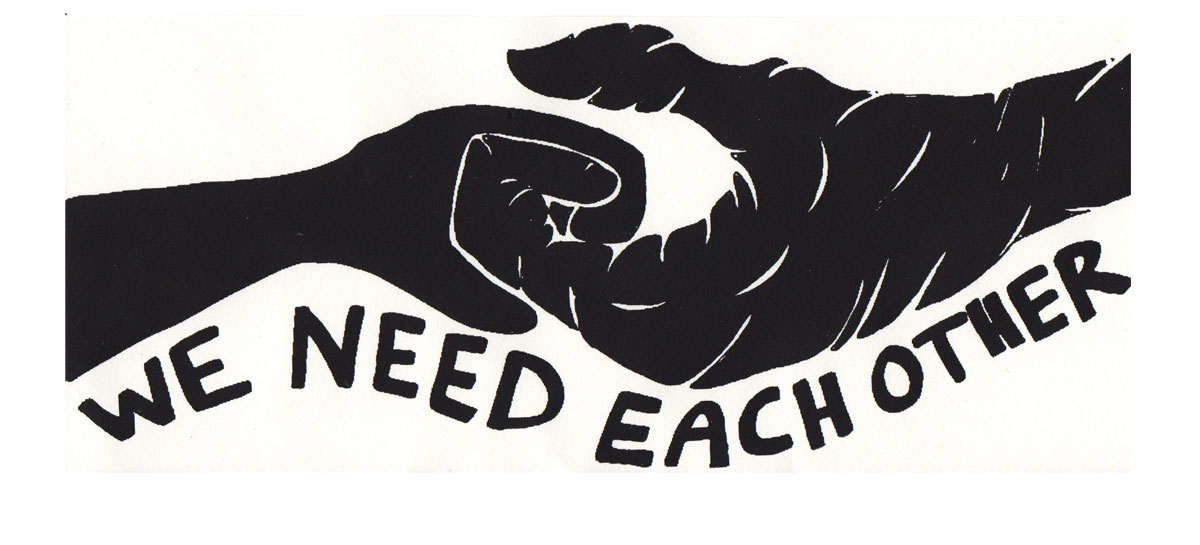
The world is governed by compassion

“Hineni he’ani mi-ma’as – behold, I am poor in deeds and lacking in merit. Nevertheless, I come trembling in the presence of You, O God, to plead on behalf of Your people Israel who sent me, although I am neither fit nor worthy of the task. You who examine hearts, be my guide, and accept my prayer. Treat these words as if they were spoken by one more righteous than me. For you listen to prayers and delight in repentance. Blessed are You, O God, who hears our prayers.”

In the synagogues of medieval Europe, the service leader used to begin with this public prayer of atonement, openly acknowledging their own inadequacy. 

In the Liberal world, we have been shaped by the Victorian attitude that eschewed public vulnerability. So, instead, this prayer is given out to rabbis to read privately to themselves. 

The days when we had to pretend to be perfectly put-together are over. In our age, we recognise that openly sharing our insecurities builds a more emotionally authentic culture, where people are better at handling their feelings.

So, this year, I not only quietly recite this prayer in my office, but share it with you openly.

This year, these words feel more profound than usual. 

This is a sensitive time, and I know how fragile so many hearts are. 

In the build-up to these Days of Repentance, an American Masorti rabbi, Joshua Gruenberg, wrote:

“Rabbis stand before their congregations with trembling hearts. We know that every word matters. We know that words can wound and words can heal. And we know that in a climate like this one, the margin for error feels impossibly thin. […] The only way we will find wholeness is if we grant each other the space to be imperfect, the courage to be vulnerable, and the grace to be human.”

As this year came to an end, I thought back on the conversations I’d had with you over my time here. I thought back over some of the pain and worry you had felt, and realised just how much stress some members of the community were feeling. 

Words can, indeed, hurt and heal. They matter. I want to honour that, by reflecting on the pain some of you have expressed.

We come here because we want to be together, in our fullness, with all our wounds and trauma, so that we can move towards healing. 

To that end, let’s consider how we can approach anxious and hurting people with compassion. That is, after all, what we all need from each other.

The world has changed greatly in the last few years. So much feels more precarious. 

Ten thousand people rallied at Tommy Robinson’s far right march in London to a speech by Elon Musk telling the crowds to get ready for violence against immigrants. The news from Israel and Gaza, and Russia and Ukraine, and Sudan and Ethiopia, keeps rolling in, feeling ever worse. 

For me – and I know for some of you – the horrors of October 7th and the ensuing assault on Gaza marked a major turning point. In many of us, these events have brought up trauma responses we didn’t even know we had.

Since then, so much has unfolded that is out of our hands. This can feel painful when your instinct is to find solutions and assume control.

We have to accept our own limitations. I sometimes recite to myself the Serenity Prayer: “God, grant me the serenity to accept the things I cannot change, the courage to change the things I can, and the wisdom to know the difference.”

Those of us within this room do not have the power to bring about peace between the Israelis and the Palestinians. We cannot get the hostages back or stop the starvation of Gaza.

That feels hard. If it were up to the members of this synagogue I have no doubt that the whole world could live in peace. 

I am certain that we could indeed solve the country’s problems and fix our hurting planet. But nobody seems to be letting us do that, outside of setting the world to rights over kiddush.

But that does not mean we have no power at all. 

The one area where we have real power is in our own homes and our own community. 

And, there, we have the power to decide how much compassion we feel.

Even in the face of our own trauma and fear, we can choose to feel compassion for others.

Perhaps you can relate: in the immediate aftermath of October 7th, I felt intensely isolated. I felt a void where compassion ought to be.

I felt, among Jews, my own people, that I struggled to find many people who felt compassion for the people in Gaza. 

On the left, as much my natural home as the synagogue, I struggled to find many people who felt compassion for Israelis. 

Initially, I narrowed my circle to a small niche of Progressive Jews with left-wing opinions. It was comfortable and reassuring, when what I needed was to feel safe. 

But if I was looking for compassion in the world, I needed to bring it into the world. I needed to model it. 

Not just with the people who I knew felt like I did, but also with those whom I assumed were miles away from me. 

It is easy to love humanity in general, and fine to pity people on TV. It is much harder to love the people nearest you when you feel so distant, or to understand them when it feels like they are living in a different world. 

How could I look for compassion elsewhere if it wasn’t in my own heart? 

How can we look for compassion if we do not feel it?

You can’t expect others to extend compassion to strangers when you can’t even have conversations with the people you already know.

I felt then – I still feel – that, perhaps, if we can feel compassion in our synagogues, and extend it out towards the world, and that others could extend their compassion too, then it might cause something to shift.  

And, ultimately, that shift might make this world, which is harsh and unkind, a little better than it has been.

The message of compassion is already explicit in the liturgy of our Yom Kippur service. 

God’s name is Compassion. 

We read the refrain that repeats throughout the High Holy Days: “Adonai, adonai, el rachum vechanun… a God compassionate and gracious, slow to anger, abounding in compassion and faithfulness…”

It is a beautiful invocation of God’s qualities to help us through Yom Kippur. 

The verses come from Moses’s second acsent of Mount Sinai, when he takes the new set of the Ten Commandments in his hand. As Moses walks down the mountain, God comes with him.

As Moses chants out these declarations of God’s mercy, it is as if Moses has truly understood what kind of God he is dealing with.

He learns how the world really works. He sees that it is governed by compassion.

Just before coming to get the new tablets of the law, Moses had seen the Israelites worshipping a golden calf, and smashed up the first set of the Ten Commandments. 

These are great sins: idol worship and wanton destruction are strictly prohibited. The Israelites have been wayward. Moses has been angry. 

Still, God, abounding in compassion and faithfulness, says: “Try it again. Have another go.”

In the Talmud, Rabbi Yohanan teaches that whenever the Jewish people sin, they should think back to this verse.

In the repetition of “Adonai, Adonai,” the Jews should understand that God is their Loving Creator before a person sins, and God is their Loving Creator after a person sins and performs repentance.

God is always willing to give people another chance.

In the same section of Talmud, we learn that, in the moment when Moses recited those words, God made a covenant based on thirteen attributes of mercy. It was a promise that God would always hear our prayers.

Later, in the Middle Ages, the French commentator Rashi elucidated what these thirteen attributes were.

In each word, says Rashi, is a reflection of the type of compassion God feels. 

God is slow to anger to give you a chance to repent.

God is abundant in mercy, even with those who don’t deserve it.

God remembers good deeds even for a thousand years.

Even when we hear that God holds grudges for three and four generations, Rashi says that this only refers to people who maintain the evil ways of their ancestors. If they repent, all can be forgiven of them too.

This is how one truly maximises compassion.

So, let us be compassionate.

Let us maximise how much compassion we feel.

Our own community and our own homes are small places where we can truly practise compassion in a world where it seems so sorely lacking.

Last week, in her Rosh Hashanah address, Rabbi Angela Buchdahl, of the American Reform movement’s flagship synagogue in New York, reflected on how the division in the world was creating strife even within her synagogue.

She urged her congregation to practise compassion, saying:

“It now seems that any expression of compassion for “the other side” is regarded with suspicion – as disloyal, or even threatening. Is our capacity for empathy so finite? Are our hearts so small, that if we increase our empathy for certain people, that we need to reduce it for others — until one day, we conclude: that ‘other side’ is not deserving of any compassion?”

Here, the “other side” could be so many different groups in this increasingly polarised and hostile world. 

We all want to feel like people understand our own side, but struggle to extend our understanding the other way.

You don’t have to agree with people to love them. You just have to be curious, and try to understand them.

Some days, we may be capable of less compassion than others. On those days, let’s give ourselves grace, take time out, and remember how flawed we all are.

Even on our worst days, we can always try to understand each other. We can hold our own hearts while making them permeable enough to feel others’ pain too.

When people challenge us, let’s look for the best in them. Imagine their best intentions, and try to consider what problems they might be facing.

We are, all of us, flawed and temperamental. We all ask good grace of others, and we can all give it in return.

This year, let’s try to feel compassion for the people in our own families and homes.

Let’s try to find compassion for the people in our neighbourhoods. Perhaps we will shift something in them.

Let’s find compassion for the people in our community, so that we can hold each other, in our diversity, through these trying times. 

And, as much as we can, let’s try to find compassion for everyone. 

It won’t change the news cycle, but it might change you. And you might change others. 

It is a small contribution to this world, but it is a mighty one. 

It is the best that we can do.

Behold, I am poor in deeds and lacking in merit. Nevertheless, I come trembling in the presence of the One who hears the prayers of Israel. O God, You listen to prayers and delight in repentance. Blessed are You, O God, who hears our prayers.

Amen.
Kol Nidrei 5786, Kingston Liberal Synagogue

festivals · sermon

The four children of Covid

Every seder, we read about the four children. These characters in our Haggadah have come to us from the Palestinian Talmud, and are based on Torah verses. They’ve entered our liturgy as a joyous part of the seder ritual.

It’s a fun annual party game to speculate about which of the four you might be, and even to assign the attributes to other guests at the party.

For what it’s worth, I usually play the wicked child of the Haggadah. I quite like the idea of being the trouble-maker.

But is it really how we want to define people, and their relationship to Judaism? My teacher, Professor Jeremy Schonfield, has pointed out that all the four children are really quite negative stereotypes, and they all get punished for their questions.

The chacham – or wise child – might better be called the know-it-all. She sits at the seder and already knows all the answers. So she comes along and, puffing up her chest, asks: “what are the laws of Passover?” Oh, she thinks she already knows. She’s asked this question every year. She can smugly rattle off to you how well she prepared koshering the house and she has strong opinions on what everyone else should be eating. Yes, you’ve met her.

So how do you respond to her? Tell the wise child the most complicated laws about Pesach, even the one about how you don’t start the second part of the meal until you’ve found the afikomen. That’s at the very end of Mishnah Pesachim, and she probably won’t have got that far. That’s it, put her in her place. Make sure she knows that she doesn’t really know it all. Thank you, chacham, for your very wise remarks, the rest of us would like to get on with the meal.

Then you’ve got the rashaa – the wicked son – who asks “what does all this mean to you?” To you, not to him. He doesn’t care. He’s not interested. Why are you doing all this? Your wicked son will do whatever he likes, but from his aloof standpoint, he can take a shot at you with your primitive rituals. The accusing patriarch responds to this by telling him he should have been left in Egypt. Hope you can take scorn as good as you give it, rashaa.

Next comes along the child who is tam. The Reform Haggadah generously translates this as naïve, probably to avoid the ableist overtones of the more familiar translation that this child is simple. The word could just as easily mean ‘mute’ or ‘modest’, but we’re probably meant to imagine her as clueless. She asks: “what’s this?” Like a lost sheep bewildered by the most basic rituals of the most famous festival, she’s stuck, absently pointing at objects and asking what’s going on.

How do we help her? The seder leader responds by saying “God took us out of Egypt with an outstretched hand…” – and then doesn’t even bother finishing the sentence. There’s a long verse you could quote to the tam but you assume she’s already lost interest and, frankly, you’ve already lost patience. Why bother with someone who’s simple?

You turn straight to the child who doesn’t know how to ask. And you repeat exactly what you just said to the simple child. How much more patronising can you get? You’re not going to even bother trying to include him. You just tell him what he already knows because he just heard you say it to your daughter.

If anything, the Haggadah is a model in how not to engage people. It’s an exercise in what happens when you label children and assume the worst in them. You respond with terrible answers that leave your dinner guests feeling deflated.

In 1950, the great Hebrew poet Leah Goldberg wrote a response to the Four Children. It was the only poem she ever wrote about the Second World War, and it’s a stunning meditation on how the trauma of genocide shaped her contemporaries’ outlooks. In this poem, she completely reimagines who the four children are, picturing each of their postures as a trauma response.

She begins with the child who does not know how to ask, imagining a woman heartbroken by survivors’ guilt. She has witnessed the most horrific brutality and lived to talk about it. Only now she has no words. Stumped, she asserts:

I am not wicked, not smart, not even simple,

And for this reason, I asked no questions

Her survivor cajoles the reader: If you can, then open me up.

Goldberg then helps us understand why someone might become ‘wicked.’ She tells of a man who has been toughened up by circumstances and now cannot bear to empathise. His tears have dried up and his heart has hardened. So he vows to be cruel and cool and estranged. He tells God:

To you, I blunt my teeth.

What about the simple child? Goldberg tells us of someone who has known so much pain that just looking at stars reminds her of her anguish. She looks at the millions of stars and sees the millions dead. The stars remind her of her night terrors:

On all other nights against a dark arrogant sky,

Against a delirious moon and against the milky-way

Great gloomy ghosts of a day gone by

And, just once, she wants to get back her naivety. She wants to be able to stop seeing her pain when she looks up at night. So she implores:

On all other nights, anticipation, silence

On this night – only stars

Why shouldn’t she be permitted her simplicity?

The wise child, in Goldberg’s poem, is the one who says the least. He is the one who died. That is what wisdom meant to a survivor of the Shoah.

Reframed through Leah Goldberg’s eyes, we can understand the four children not by their worst intentions but by the trauma they carry and the way they deal with pain.

This seems to me a much better way of greeting dinner guests. It should be a starting assumption that everyone we meet is carrying baggage. Everyone is hurting. We have to be able to meet people at their most vulnerable and our most sympathetic.

As lockdown eases, I am aware that many people are only just processing what we have been through. I am not by any means comparing what we have experienced to the Holocaust, but we have certainly been through something unprecedented and destabilising. Our old certainties about our religion, our health, and our community have been disrupted. We have known death, heartache, family struggles and isolation.

Now we meet each other. We can choose what responses we adopt. We will meet people who seem wicked, or who seem naïve, or who seem like they know it all, or who seem like they have nothing to say. We may well want to blunt our teeth at them and put them in their place. We may want to be impatient or patronising.

But the better response, the more Jewish response, will be to meet them where they are, and hear them in their hurt. Whatever type of child they seem to be, the important thing to remember is that inside them is a child. Someone inside of them is vulnerable, scared, and looking for assurance. Someone inside of you is the same.

Let us not label each other and dismiss people, but greet each other with compassion and empathy.

Moadim lesimcha.

Shabbat shalom.

This sermon is for Edgware and Hendon Reform Synagogue, Seventh Day Pesach, 3rd April 2021

judaism · theology

We are not our past mistakes.

We are not our past mistakes.

Rabbi Meir was the greatest rabbi of his generation. He learnt from both the great masters of Mishnah, Akiva and Eliezer. He was ordained a rabbi by his teacher, Elisha ben Abuyah, younger than any of his contemporaries and gave more rulings than any of them.[1]

Meir was a great rabbi, but his wife, Beruriah, was even greater. She once learnt 300 rulings from 300 different sages in one day.[2] She was the only woman to be credited with making religious decisions. Sometimes she even overruled her husband. 

One day, Beruriah came in on her husband and heard him praying. He had been harassed by local hooligans. Rabbi Meir cried out in supplication to God: “Sovereign of All Worlds, I wish You would kill those bandits!”

Beruriah was shocked. “What are you thinking?!” she demanded. Meir looked surprised: “I am only asking for what it already says in the Psalms – let sinners disappear from the earth and the wicked be no more.”[3]

“That’s not what the verse says,” retorted Beruriah. “It says: let sins disappear from the earth, not sinners. The wicked won’t just disappear because someone wishes them away. They will only disappear because they will repent and give up their sins. The wicked do not disappear because God takes vengeance on them, but because God has mercy on them.”

From then on, Rabbi Meir changed his prayer. Instead, he said: “May God have mercy on them and may they change their ways.”[4]

God takes no pleasure in the death of the wicked, but wishes only that they will turn from their evil ways and live.[5]

That is the message at the heart of this season. This is the last Shabbat in Elul, opening the last week of this month of repentance. Tonight, in Ashkenazi custom, we begin the practice of Selichot – reciting penitential prayers in the evenings. They are intended to help us acknowledge where we are going wrong so that we can correct our ways. 

As we approach the end of the year, we also approach the end of the Torah. We have been on a journey through the wilderness, and God has journeyed with us. 

When our story began, God wanted to destroy humanity. At the start, God flooded the world in anger at our violence. At Babel, God struck down the nations for our defiance. At Sodom, too, God destroyed a city for failing in its moral obligations. 

Now, at the end of the narrative, God no longer wishes to destroy us, but instead promises to rescue us. We are told that if we try to return, God will bring us back in love. No matter how far we think we have gone, God can find us and return us. No matter how much of an outcast you imagine yourself to be, God will be in your corner.[6]

That is the essence of teshuvah. Although often translated as repentance, it really means returning. It is the practice of becoming who you already are. At core, you are good, honest and faithful. If you do wrong, you are departing from your natural state. 

Contrary to the Christian doctrine that preaches we are born in a state of original sin, Judaism teaches that we are constantly reborn in a state of moral purity. Each morning, God sends us back our soul, renewed and ready to do good.

God has already given you the greatest gift you could need to face up to your flaws: you have another day. You have the chance to get up this morning and correct what you did wrong. You have the opportunity to be better than you were. You can revert to your initial state of holiness.

Teshuvah is the process we undergo to turn away from doing wrong. We look inside ourselves. We acknowledge where we have gone wrong. We announce that we will not make the same mistakes again. We make amends for what we did. And then, faced with the same situation again, we do not repeat our old errors.[7]

At this time of year, we are forced to face up to our mistakes. The more we look at them, the more we realise how many there are. Faced with our own inadequacies, we might despair. We might think that our lives our not worth living or that we are better off destroyed. This week’s parashah teaches us: it is not too late. We are not our past mistakes.

Rabbi Meir only truly learnt this much later in life. His teacher, Elisha ben Abuya, had given up on Judaism entirely. He had stopped believing and stopped pretending to believe. He was acting immorally. Meir came to find him. He said to him: “Come back, rabbi, make teshuvah.”

But Elisha replied: “I cannot. Because I have heard the divine voice reverberating: “Return, O backsliding children,”[8] except for Elisha ben Abyuah, who knew My strength and yet rebelled against Me.” Meir’s teacher, Elisha, believed he was beyond redemption. He believed he had gone too far for God to still love him.

At the end of Elisha’s life, he fell ill, and Rabbi Meir went to visit him. He said: “Return!” Elisha asked: “Having gone so far, will I be accepted?” Rabbi Meir replied: “The Torah teaches: “God will allow a person to return, up to their being crushed,”[9] even up to the time that life is being crushed out of them.” In that instant, Elisha ben Abuyah began to weep, and then he died. Rabbi Meir rejoiced, saying: “My master departed in a state of repentance!”

But the story doesn’t end there. After Elisha was buried, fire came down from heaven to burn his grave. The other rabbis came and told Meir: “The grave of your master is on fire!” Rabbi Meir went out, spread his cloak over the grave, and prayed that God would redeem Elisha. “But if God is not willing to redeem you, then I, Meir, will redeem you.” Then the fire went out.[10]

When he was young, Meir learned that he should pray for sins to be destroyed, not sinners. And when he was old, Rabbi Meir learned that he should pray for people to make teshuvah, even when he believed it was too late.

And his prayer for others, that God have mercy on them and they change their ways, reverberated and affected his teacher in his tomb. God’s mercy extended beyond the grave.

Yes, God can bring us back even in our dying moments. God can help us make teshuvah even after death.

Our mistakes do not define us.

We are not our past mistakes.

Shabbat shalom.

I gave this sermon on Shabbat 12th September 2020, Parashat Nitzavim, for Newcastle Reform Synagogue.

[1] Babylonian Talmud Sanhedrin 14a

[2] Babylonian Talmud Pesachim 62b

[3] Psalms 104:35

[4] Babylonian Talmud Berachot 10a

[5] Ezekiel 3:11

[6] Deuteronomy 30

[7] Mishneh Torah, Hilchot Teshuvah, 2:2

[8] Jeremiah 3:14

[9] Psalms 90:3

[10] Jerusalem Talmud, Hagiga 77b

judaism · sermon

Whose quarantine?

By this stage in quarantine, you have probably broken down, cried, experimented with an unusual haircut, argued with your partner or room mate, attempted to pick up a new skill, laughed, watched a movie, read all the Corona-related news items, avoided reading all the Corona-related news items, lost your mind, twice, and finally accepted the new reality. Now, it’s time to have breakfast and go through the whole process all over again.

It’s hard to put into words what is happening for us in lockdown right now. Whenever I talk to friends or family about how they’re experiencing this unprecedented life event, we revert to discussing the latest rules or the political ramifications or what they understand of the emerging medical news. We can only really sum up how we’re dealing with the situation in odd phrases, like “getting by”, “finding new meanings”, “struggling” or, “drinking before midday.”

That’s probably why I have trouble finding out what quarantine was like for our ancient ancestors. This week’s parashah is Tazria-Metzora. It is the Torah reading about quarantine. Rabbis rejoice! For so long the processes and rituals around self-isolating for infectious diseases seemed so irrelevant to our lives. Suddenly a pandemic comes along and we can join the ranks of overnight experts with a niche specialism in ancient Israel.

Except, strangely, Leviticus doesn’t really tell me what I want to know. It describes in graphic detail the infectious skin disease our forebearers were trying to prevent – called tzara’at, it resulted in white flaky peeling of the skin and made its sufferers look like the walking dead. It would start as a small patch and gradually expand across the body.1

It also tells me exactly how the priests would deal with it. Anybody with the affliction would have to isolate themselves outside of the camp for 7 days. At the end of these, a priest would come out to inspect the patient. If the patient had been healed, the priest would make ritual offerings of birds to spiritually cleanse him.2 They would be shaved, washed and then readmitted to the community.3 If not, back into quarantine he would go.

Yet for all this detail spread out over chapters of the Torah, it doesn’t answer the question I really want to ask: what were their lives like? How did it feel to have the scaly skin disease in ancient Israel? What did they do when they were isolated from their communities? The Torah provides scarce little information about these questions, and biblical scholars seem surprisingly unconcerned. In fact, the main trend among academics has been to question how much we can even know about the biblical world, shedding great doubt on the texts that have reached us.4

We are told that the isolators were kept outside the camp, or outside the city walls. I wonder whether they had dedicated centres. The harsh desert sun of the Negev must have made simply staying outside longterm impossible. I wonder how they got food. Did people deliver it to them in designated places? Were they expected to scavenge for themselves?

All I can gather from the text is how people were managed, punished, ritualised and redeemed. I cannot work out how the ancient people keep themselves entertained when they had no access to other human beings, nor to Netflix, WiFi, or books to read. I do not know how they loved, supported each other, struggled, found things difficult and ultimately survived. Those positive stories of endurance are hidden between the lines of the text. I do not know how they felt.

But, in this community, I don’t need to just wonder how people feel and how they are managing. Our welfare committee has done an incredible job of checking in on everyone. Our healthy members are going out of their way to ensure that the others get the food and supplies they need. I know that, across this community, people are checking in on each other to find out how they are. This community should be an inspiration to others across the country.

Much is made in the media about people’s acts of selfishness and inconsideration, but for my part I have only seen the reverse. I have been overwhelmed by the kindness of people reaching out to share in feelings, offering support with shopping and errands, and generally being as supportive as they can in these exceptional times.

When our biblical forbearers wrote about quarantine, they wrote about its rituals. When the scholars wrote about it, they took interest in its medical diagnoses. When the media write about it, they write about everything that goes wrong. These stories of rituals, rules and wrongdoing might make for compelling reading, but they don’t reflect people’s lived reality.

Meanwhile, we are quietly writing a different story through our deeds. We are writing stories of generosity, kindness and self-sacrifice. We are showing every day in little ways how much we care about ourselves, each other and our communities.

One of the surprising facts about crises is that they do not engender selfishness, but altruism. At the time of the last financial crash, I was working in the charity sector, and we were all perplexed when we discovered that, in times of economic hardship, poorer people’s charitable donations went up. This week, a German science journal reported on a significant uptick in people’s compassion in their attitude to others since the crisis began. We see the results of that: thousands of people volunteering for mutual aid groups and the NHS supporters. The more people struggle, the more they care about the struggles of others.

Priests and politicians may want to write one kind of story, but ordinary people write much better ones. May we continue to write those stories, and may they be the ones we pass on to later generations.

Shabbat shalom.

coronavirus-volunteers-list

I delivered this sermon over Zoom on 25th April 2020 for Three Counties Liberal Judaism.

1Milgrom on Leviticus 1-16, pp. 816-824

2Lev 14:1-6

3Lev 14:9-10

4Watts, Ritual and Rhetoric, pp. 27-32