sermon · torah

Who gets to see the world?

Hello, I am back from my holidays in Spain and France. I brought you all back some lovely little trinkets from The Louvre. Just don’t tell anybody you got them from me. 

I spent my holiday thinking about how easy it is for me to travel, and how impressive my journey would seem to previous generations. I wondered about what it was like in earlier centuries for people travelling the world. 

In 1532, a great king travelled across the Atlantic to meet a previously unencountered tribe. The king was, in some ways, disgusted by the society he encountered, which was rife with inequality, governed by a despotic ruler, near constantly in a state of war, and yet to develop serious hygiene practice.

He was, however, impressed by the luxuries he saw in the local king’s palace, and intrigued by the sophisticated religious culture the people had developed. 

The indigenous people went by many names, but the locals called themselves “the English.”

That’s right, in the early 16th Century, an Aimoré king travelled across the Atlantic from Brazil to the court of King Henry VIII and attended the palace as a distinguished guest.

We are used to thinking of international travel in the Tudor Age as something that voyagers from England, Portugal, Italy and Spain did to the so-called “New World,” but plenty of people also went the other way. 

Recently, the historian Caroline Dodds Pennock released a book called On Savage Shores, which looks at the people who travelled from the Americas to Europe. They gave their own verdicts on European society, often quite damning of its inequality and sanitation.

Dodds Pennock is well aware that, by telling these stories, she is reversing the gaze. To the indigenous travellers, it was the Europeans who were the strange exotic outsiders. 

If this feels surprising to us, it is probably because we are so in the habit of imagining that rich colonising men go out and see the world, but we don’t often think of those same men getting looked at by the world.

There is a reason that Abraham’s story of setting out from Haran was so compelling to its ancient listeners. Most people did not travel more than a mile from their own town. The world beyond was a mysterious and exciting place. They could only hear about the journeys, people, animals, and plants that others saw from testimonies, like those given in the Torah.

Abraham’s trek belongs, then, in a similar category of travel literature to Homer’s Odyssey, which was likely told as an oral story, and then committed to writing at a similar time to Abraham’s journey in the Torah. Odysseus encounters singing sirens, multi-headed monsters, and lotuses that make you forget your home. 

Abraham, on the other hand, goes on a thousand-mile hike with no less than the One True God. Along the way, he marries a foreign princess, meets the king of Egypt, does battle in the Dead Sea with local lords, and meets angelic messengers over a meal.

This story must have remained compelling to many generations of Jews afterwards. Medieval Jews were used to living in one place. They may have been visited by merchants and Crusaders. Some may have gone away on fixed routes as merchants, and there were times when whole communities had to leave in haste. 

But the idea that one of their own – the first ever Jew – went out on such an exciting adventure would have been thrilling to the Torah’s audience. 

We know much of what other people thought of the Jews they met. Medieval accounts describe Jews almost as a people fixed in time; like a noble relic from a simpler age. The European travellers who encounter Jews treat them with a combination of scorn and exotic interest. In that sense, the Jews of Europe had more in common with the colonised people of the Americas, who were similarly treated as foreign oddities. 

Bucking the trend, however, was a fascinating figure of the 12th Century, called Benjamin of Tudela. Born in the Spanish kingdom of Navarre, Benjamin went out on a journey tracing the Jewish communities of southern Europe, northern Africa, and south west Asia. 

He took a long route on pilgrimage to Jerusalem that brought him through countries we would know today as Italy, Greece, Turkey, Syria, Lebanon, Iraq and Iran. He seems also to have travelled around the Arabian peninsula, looking for the Jews of Africa, but never reaching the Gondar region of Ethiopia, where he might have found them. 

Benjamin recorded all of his encounters in Hebrew, in a book called Sefer HaMasa’ot, the Book of Travels. His chronicles were so fascinating that they were reproduced over many centuries, and translated into Latin and most European languages.

Today, Benjamin’s records have attracted scholarly attention, not least because they subvert our expectations of who goes exploring and who gets explored. Benjamin writes with fascination and joy about the Pope in Rome and the Caliph in Baghdad. 

Most importantly, when Benjamin meets Jews in other countries, he is at once meeting his own people and meeting people entirely different from himself. When he sees how other Jews do things differently, he feels joy in diversity. When he sees Jews doing well, he feels pride; and when he sees other Jews in a persecuted condition, he suffers with them as his own.

This is the great blessing of Benjamin’s travelogue: he can see the world through two sets of eyes – as both an outsider and as an insider. When he travels, he is never quite the colonialist going out to comment on others, but he’s never just looking at his own people. This gives him an impressive position of humble curiosity.

As British Jews, we may learn to do the same thing. 

We have a blessing by dint of our position. That blessing is a special ability to look at the world through multiple sets of eyes.

We can, indeed, look at the world through European eyes. We are Europeans, and we belong here. We can see England as it is imagined by the English, where this island is the centre of the world, its monarchs the most illustrious, its culture the highest human attainment. We should not shy away from seeing the best in Europe: we are part of it, and there is much to love.

We can also, if we choose too, see this continent through outsiders’ eyes. We can see its flaws, its delusions of grandeur, and its odd habits. We can be the best possible internal critics of our country, because we understand what it is to belong, and what it is to feel like we do not.

The danger in either of these sets of eyes is that we turn them into a haughty gaze. Like the early colonialists, we have the capacity to see every other culture as backward and barbaric, or its people and lands as subjects for exploitation. Inverting the gaze, we might come to see the Europeans as horrible invaders, without directing the critical lens on ourselves. 

But if, instead, we can approach the whole world with modesty, we can see every nation and every place with loving curiosity. With humility, we can see ourselves as fellow travellers with everyone else, discovering this wonderful world together.

If we can do this, then, like Abraham, we may truly learn to walk with God.
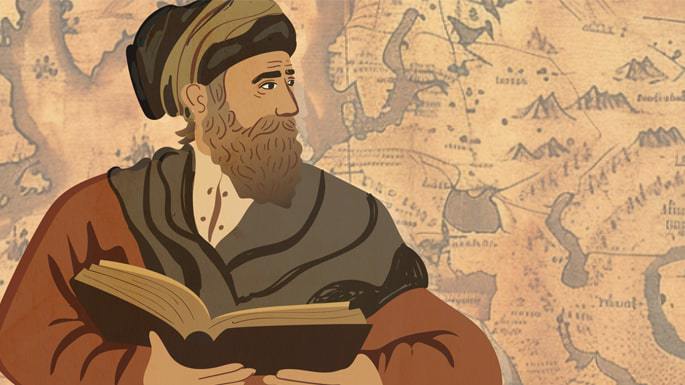
Benjamin of Tudela

sermon · torah

If only we understood each other less

“Nobody understands me!”

It’s the rallying cry of adolescence. 

I would never want to be a teenager again. 

What a difficult time. Do you remember how lonely and anxious it all felt? Do you remember how much you felt like nobody understood?

As adults, we now often put down this pubescent behaviour to hormones, or, worse, to the kid just being annoying. 

But what young adults are going through is really important. All that sadness and angst is a healthy part of their development. 

They are realising that the world is a much meaner and more confusing place than they had thought in infancy. 

And the truth is they are right: very few people understand them. And they understand very few others. That takes real adjustment. 

But once teens can accept how little understood they are, that can make them much more functional adults. 

They can embrace their individuality and celebrate it. They can appreciate difference, without feeling a need to change others. And, when they find people who are like them, and who do understand, they can appreciate the connection so much more. 

Understanding how little understood we can be helps us to truly value loving and being loved.

So, it’s true, nobody understands me. Isn’t that wonderful?

What kind of world would it be if everyone automatically understood everyone else! We would lose our humanity. We would just be cattle, following along, without the possibility of freedom or growth. 

That’s what it was like at the Tower of Babel.

This story in Genesis l tells of humanity’s own coming of age. 

At some point, in mythic time, we all spoke the same language. Like robots, we all set about making a massive tower. 

God saw us and said “who knows what they’ll do next!” So God confounded us, gave us all different languages, and dispersed us throughout the world.

That is God’s message at Babel. Diversity is the foundation of society. Humanity needs to mature. You need to be different and know that you are different. It is a good thing not to understand and not to be understood.

The ancient Israelites knew the value of not being understood all too well. To them, Babel was not just an ancient city. It was the capital of the major empire that colonised them.

Babylon took over the entirety of the ancient Near East. Wherever they went, they imposed their laws, their government, their military, and their taxes. 

They also imposed their language. They spread their alphabet to all of their colonies. What we now call the Hebrew alphabet is, in fact, the script of the Babylonian empire. The original Paleo-Hebrew script is now lost to stone blocks in museums.

The Babylonians carved up and named the territories. That naming, that fact of telling everyone who they were, and where their borders were, was their way of exerting control. It was the basis in words for all that would follow: all the military and economic violence they would enforce. 

During Jehoiakim’s reign, the Babylonians took hold of Judah and tried to turn it into a vassal state.

The ancient Judeans rebelled, fighting for their homeland and their dignity.

The Babylonians took all of the Jewish leaders and imprisoned them. They forced thousands of them into a tiny strip of land, hoping to militarily crush the rebellion.

Of course, no people forced into subjugation will just concede. When rebels are backed into a corner, they usually fight back even harder.

That’s exactly what happened with the Judeans. Less than a decade later, those left in the country launched another assault on Babylon. 

In response, the Babylonians completely flattened Judea. They ripped down its cities, destroyed Jerusalem, and killed anyone who stood in their way. They installed their own puppet dictator, Gedalia.

As you would expect, the Judeans killed Gedalia and kept on resisting. 

We must, therefore, understand the story of the Tower of Babel in the context of what Babylon meant to the Jews. To them, the Babylonians were the people who wanted to destroy and persecute them. They were the empire that wanted to steal their money and their land.

While warriors fought with swords, storytellers fought back with this literary protest. 

They said: “Look at the Babylonians: they want to force everyone to have one language and want to bend everyone to their will.”

Our ancestors told the story of Babel as a warning. Look at what happens when you force a language on people. You end up like Babylonians. You become monsters. Once you impose your words on others, there is nothing to stop you imposing your will. 

We must have diversity. We must be incomprehensible. We must be as unlike each other as possible, so that nobody can be subjugated to another. 

The true story of the history of the world is not that it went from a single language to many, but that it began with many languages and had fewer and fewer. 

As empires rose, they enforced their own words and worldviews, and suppressed the heterogeneity of all they conquered.

The reason that so many people of the mediaeval world spoke Greek, Latin, Arabic, or Chinese was because those were the biggest empires. The reason that so many people today speak English, French or Spanish, is because our small European countries colonised over half the globe. 

Their primary purpose may have been to take the land and resources of those countries. But as part of doing that, they also needed to impose languages on people. They needed to force people to conform to words they had previously not known.

They said: this is now Christendom, and that is the Uma. This is the Old World, and that is the New. This is Europe, and that is Barbary. This is civilisation, and those are savages. This is white, and that is black. 

They took the world under one language, and forced it to conform to their understanding. They understood the world, for the sake of controlling and conquering it.

With each century of imperial conquest, hundreds of languages are rendered extinct. When languages die, we lose not only a way of speaking, but can witness an entire culture being eliminated. 

This is why the definition of genocide does not only encompass killing people, but can include destroying ways of life.

So, let us suggest, understanding each other might not be such a good thing. If anything, we might aspire to understand each other less.

Our Torah wants us to look for something better than understanding. It tells us this story not just because they are angry about their subjugation as the oppressed, but also because they are worried for the souls of their oppressors.

To the ancient Judeans, the Babylonians were stuck in a spiritual adolescence. Like immature children, who just want to manipulate the world, the Babylonians had not yet achieved the wisdom of accepting what they cannot know. 

They taught an alternative theology to the conquering power of Empire. Not knowledge. Love.

Love is the Torah’s answer.

When you love someone, you do not want to control them. Quite on the contrary, you want them to be free. 

When you love someone, you don’t want to change them. 

When you love someone, you don’t want to categorise them.

And yes, you may want to understand them, but in the sense of being infinitely curious about them, wondering who they are, and how they think. But always knowing that you cannot reduce them or ever comprehend their essence.

So, it is time to stop trying to understand people. It is time to stop trying to be understood. 

We need to understand each other less and love each more.

Nobody understands me. Thank God.

Shabbat shalom.

fast · high holy days · sermon

Creating cultures of repentance

We are, apparently, in the grips of a culture war. 

It must be an especially intense one, because the newspapers seem to report on it more than the wars in Syria, the Central African Republic, or Yemen, combined. 

According to the Telegraph, this war is our generation’s great fight. It was even the foremost topic in the leadership battle for who would be our next Prime Minister, far above the economy, climate change, or Coronavirus recovery.

Just this last month, its belligerents have included Disney, Buckingham Palace, the British Medical Journal, cyclists in Surrey, alien library mascots, and rural museums.

But which side should I choose? One side is called “the woke mob.” That seems like it should be my team. After all, they are the successor organisation to the Political Correctness Brigade, of which I was a card-carrying member when that was all the rage.

The so-called “woke mob” are drawing attention to many historic and present injustices. From acknowledging that much of Britain was built on the back of the slave trade to criticising comedians who say that Hitler did a good thing by murdering Gypsies, they are shining a light on wrongs in society.

The trouble is, I hate to be on the losing side. For all the noise and bluster, this campaign hasn’t managed to get anyone who deserves it. The most virulent racists, misogynists, abusers, and profiteers remain largely unabated. 

Even if they were successful, I find the underlying ideas troubling. It seems to assume that people’s wrong actions put them outside of rehabilitation into decent society. Some people are just too bad

This strikes as puritanical. While the claims that so-called “cancel culture” is ruining civilisation are wildly overstated, it is right to be concerned by a philosophy that excludes and punishes.

So, will I throw my lot in with the conservatives? Perhaps it’s time I joined this fightback against the woke mob. 

On this side, proponents say that they are combatting cancel culture. How are they doing this? By deliberately upsetting people. They actively endeavour to elicit a reaction by saying the most hurtful thing they can.

When, inevitably, these public figures receive the condemnation they deserve, they go on tour to lament how sensitive and censorious their opponents are. As a result, they get book deals, newspaper columns, and increased ticket sales. 

Ultimately, this reaction to “cancel culture” is a mirror of what it opposes. It agrees that people cannot heal or do wrong. It celebrates the idea that people are bad, and provides a foil that allows people to prop up their worst selves.

If this is the culture war, I want no part in it. Neither side is interested in the hard work of repentance, apologies, and forgiveness. It offers only two possible cultures: one in which nobody can do right and one in which nobody can do wrong.

This is the antithesis of the Jewish approach to harm. 

Our religion has never tried to divide up the world into good and bad people. We have no interest in flaunting our cruelty, nor in banishing people.

Instead, the Jewish approach is to accept that we are all broken people in a broken world. We are all doing wrong. We all hurt others, and have been hurt ourselves. The Jewish approach is to listen to the yetzer hatov within us: that force of conscience, willing us to do better.

The culture we want to create is one of teshuvah: one in which people acknowledge they have done wrong, seek to make amends, apologise, and earn forgiveness. 

A few weeks ago, just in time for Yom Kippur, Rabbi Danya Rutenberg released a new book, called Repentance and Repair: Making Amends in an Unapologetic World.

Rabbi Rutenberg argues that Jewish approaches to repentance and repair can help resolve the troubled society we live in.

She locates some of the issues in America’s lack of repentance culture in its history. After the Civil War, preachers and pundits encouraged the people of the now United States of America to forgive, forget and move on. It doesn’t matter now, they said, who owned slaves or campaigned for racism, now they were all Americans. 

The Civil War veterans established a social basis in which there was no need for repentance or reparations, but that forgiveness had to be offered unconditionally. Without investing the work in true teshuvah, they created an unapologetic society that refused to acknowledge harm.

We, in Britain, also have an unapologetic and unforgiving culture, but our history is different. 

True, we also failed to properly address our history of slavery. When the slave trade was abolished at the start of the 19th Century, former slave traders and slave owners were given substantial compensation. The former slaves themselves were not offered so much as an apology.

But we have not been through a conscious process of nation-building the way the United States has. 

In fact, Britain has not really gone through any process of cultural rebuild since the collapse of its Empire. In 1960, the then Prime Minister Harold Macmillan gave his famous speech, in which he acknowledged “the wind of change” driving decolonisation. Whether Brits liked it or not, he said, the national liberation of former colonies was a political fact. 

At that time, he warned “what is now on trial is much more than our military strength or our diplomatic and administrative skill. It is our way of life.” Britain would need to work out who it was and what its values were before it could move forward and expect the family of nations to work with it.

More than 60 years later, it seems we still have not done that. As a nation, we are simply not clear on who we are. We do not know what makes us good, where we have gone wrong, or what we could do to be better.

So, we are caught in shame and denial. Shame that, if we admitted to having caused harm, we would have to accept being irredeemably evil. Denial that we could be bad, and so could ever have done wrong.

The two sides of the so-called “cancel culture” debate represent those two responses to our uncertainty. Those who are so ashamed of Britain’s history of racism and sexism that they have no idea how to move forward. And those who are so in denial of history that they refuse to accept it ever happened, or that it really represented the great moral injury that its victims perceived.

This creates a toxic national culture, stultified by its past and incapable of looking toward its future. 

So, Rabbi Rutenberg suggests, we need to build an alternative culture, one built on teshuvah. We need a culture where people feel guilty about what they have done wrong and try to repair it. For those who have been hurt, that means centering their needs as victims. For those who have done wrong, that means offering them the love and support to become better people. 

Rutenberg draws on the teachings of the Rambam to suggest how that might happen.  The Rambam outlined five steps people could take towards atonement, in his major law code, Mishneh Torah. 

First, you must admit to having done wrong. Ideally, you should stand up publicly, with witnesses, and declare your errors. 

Next, you must try to become a better person. 

Then, you must make amends, however possible. 

Then, and only then, can you make an apology. 

Finally, you will be faced with a similar opportunity to do wrong again. If you have taken the preceding steps seriously, you will not repeat your past mistakes.

For me, the crucial thing about Ruttenberg’s reframing of Rambam, is that it puts apologies nearly last. It centres the more difficult part: becoming the kind of person that does not repeat offences. It asks us to cultivate virtue, looking for what is best in us and trying to improve it.

You must investigate why you did what you did, and understand better the harm you caused. You must read and reflect and listen so that you can empathise with the wronged party. And, through this process, you must cultivate the personality of one who does not hurt again.

That is what Yom Kippur is really about. It is not about beating ourselves up for things we cannot change, nor about stubbornly holding onto our worst habits. It is not about shrugging off past injustices, nor is it about asking others to forget our faults.

It’s about the real effort needed to look at who we are, examine ourselves, and become a better version of that.

If there is a culture war going on, that is the culture I want to see. 

I want us to live in a society where people think about their actions and seek to do good. I want us to see a world where nobody is excluded – not because they are wrong or because they have been wronged. One where we are all included, together, in improving ourselves and our cultural life.

To build such a system, we need to start small. We cannot change Britain overnight. 

We have to begin with the smallest pieces first. Tonight, we begin doing that work on ourselves.

Gmar chatimah tovah – may you be sealed for good.