judaism · theology

A Theological Platform for a Judaism that Does Not Yet Exist

1. We are living in apocalyptic times. War, climate disaster, and neoliberal capitalism are plunging us into ongoing and worsening crisis. Apocalyptic times call for apocalyptic theologies.

2. When we survey how Jewish people rebuilt their communities in the face of devastation, we see that Jews have stubbornly held onto hope. From the destructions of the Temples, through Crusades and Expulsions, to colonialism and genocide, our greatest leaders have never wallowed in despair. They always reaffirmed their faith in God and humanity.

3. The task of building the Messianic age is more pressing than ever. Like our forebears, we affirm that the Messiah will not be a man, but a time, in which all will understand the Oneness that lies beneath all superficial differences. The Messianic Age will be defined by equality between people, peace between nations, and harmony with nature. Our task is to build it.

4. Because of faith in God, we understand that our desire for a transformed world is sacred and just. With an outstretched arm and wondrous deeds, God liberated the slaves from Egypt. God hears the cries of all who suffer and shares their pain. God continues to defend the dignity of all who are subjugated.

5. In every age, our people have sought to understand the will of God. In their hardship, they communed with their Creator. Out of their struggles, they developed theologies. These are our inheritance: Torah; Prophets; Writings; rabbinic literature; Jewish philosophies. We claim them for our own time.

6. Our texts are central to our worldview. They are incomplete and polyvocal. We will never make idols of them by treating them as unquestionable authorities. Rather, they are our dialogue partners to understand our God, our world, and ourselves. We uphold the tradition of questioning, reconsidering, and retelling. Every answer is open to interrogation.

7. We affirm belief in the pure monotheism to which our ancestors aspired. We seek to connect with God, who is singular and infinite; immaterial and transcendent; eminent and imminent. Our God is nevertheless directly part of our lives. As the source of ultimate truth, God seeks to impart to us truth as we can understand it.

8. Life has meaning. Its meaning is intrinsic. Everything that lives on this earth was placed here deliberately by a loving Creator to serve a purpose. All that affirms life affirms God.

9. Jews are called upon specifically and by name. We feel that the task of healing the world has been entrusted to us, personally and collectively. This is what it means to be chosen. The task of Jews is to speak God’s truth and to fulfill God’s dominion on earth. A world ruled by God will be one in which no human being can subjugate another.

10. God created all people, replete with diversity, deliberately. We do not wish to make others like us. We reject any uniformity. We accept that people inhabit multiple, contradictory, and overlapping spiritual realities.

11. We bring our spiritual reality to life through our rituals. Our laws, practices and customs are all articulations of our moral purpose. Even where they carry no obvious moral instruction, they instill within us discipline, wonder at creation, and hold us together in community.

12. Our ancestors call to us from history. As refugees and outcasts, they knew what it was to live on the margins. Their memories demand vindication.

13. We have witnessed the progress of humanity. Scientists have developed incredible medicines. Engineers have shown how to harness natural resources to power the entire planet. Activists have shown how collective strength can transform history. We believe that it is our duty to sustain that progress.

14. In the hands of oppressors, progress is a dangerous force. Warmongers have found ever more efficient ways to kill. Capitalists have found increasingly profitable ways to exploit. We have seen how human ingenuity can be employed for systemic violence. We must wrest the tools of progress from those who worship the false god of wealth.

15. Nationalism is a sickness that is plaguing the world. We repudiate all xenophobia and chauvinism. We will not worship the false idols of states and their symbols. We reject all efforts to politically divide humanity.

16. Until all of humanity is fully redeemed, we remain in exile. Only when everyone has achieved full political, economic and spiritual freedom can we say we have reached our Jerusalem. The earthly Jerusalem is as much a part of exile as any other city, until the day when it becomes the heartland for peace and brings all humanity into unity with God. As such, we align ourselves with all those who seek to bring about an earthly Jerusalem based on the prophets’ visions of dignity, human rights, and liberation.

17. Individualism is killing us. Human beings have survived by being social creatures. The ideas of autonomy and personal choice do not serve us in this age. We need to resist the atomisation of people and create community, which necessitates sharing norms, ideals, and practices.

18. We see the Jewish family as expansive and interconnected. We are all responsible for one another, and want to live as if we are one family. This includes a commitment to loving rebuke where necessary.

19. We return to halachah. We see it not as the binding decisions of previous generations but as the creative forum of the present, in which we find new ways to live by our shared values.

20. We commit to Jewish time, which is shaped like a snail shell: always progressing, and always returning to the same points. We return constantly to our shabbats, our fasts, and our festivals. Every time we return to them, we learn more of what God requires of us, and we urge ourselves on to the next stage of our development.

21. The end of time is coming. It does not have to be disastrous. It could be wondrous. Our telos is a perfected world. We will never reach it. We will always fight for it.

Rabbi Lev Saul

climate change · sermon

This world could just as easily be wonderful


In the time that we are alive on this earth, it could burn in front of us. There could be droughts and famines and wildfires and pandemics of deadly diseases.

But. In the time that we are alive on this earth, it could be transformed into a paradise. The planet could become run entirely on renewable energy, with enough food for everyone, where everything that lives could have all its needs met.

Within our lifetimes, we could once more see a resurgence of fascism, racist nationalism, and global war. We might see once more the increased subjugation of women and the rise of bigoted intolerance.

But. Within our lifetimes, we might be the first generation to witness world peace. We might see a new flourishing of tolerance and inclusion. We might live in a society without inequality, where the rights of all are respected.

Why is it so much easier to imagine disaster than success? Why do we allow our imaginations to deprive us of the possibilities of a better world?

Sure, this world could be horrible. But it could just as easily be wonderful.

What world will our children inherit?

Will it be the burning dystopia that feels so present, or the perfected society that seems so distant?

The Prophet Isaiah was not sure either.

In the build-up to the High Holy Days, we read haftarot from the Prophet Isaiah. The lectionary cycle offered us three readings of warnings and six of comfort. That great leader of ancient Israel struck fear into our hearts with threats of how horrible the future might be. Then he promised us solace with visions of how wonderful life could be. Which should we believe?

In one of his prophecies, Isaiah warns that the coming world will be “a cruel day, with wrath and fierce anger—to make the land desolate and destroy the sinners within it.” He forewarns of unending darkness and exile and terror. He offers no remedy. He tells us that everyone will go to war against each other, that every neighbour will become the other’s oppressor, and nobody will win.

Yet elsewhere, Isaiah envisions a redeemed world, in which the poor see justice, and wolves lie with lambs, and refugees find home, and people beat their swords into ploughshares and no nation goes to war any more.

Isaiah holds two visions in the balance. One of hope and one of fear.

Perhaps we might say that this is the same vision seen from different perspectives: that what would be wondrous for some would seem disastrous for others. That justice for the poor would feel like tragedy to the rich. That the end of war for its victims would be calamity for its profiteers.

But that doesn’t seem plausible. Surely, there will either be outright war or there will be none? Justice may be subjective, but conflict over resources is a fact. Either everyone will have all they need or all humanity will battle fir scraps.

You might say: perhaps these prophecies were given at different points in Isaiah’s life? The historical critics argue that the book of Isaiah in fact had three different authors, all writing in different periods.

But this still doesn’t explain the discrepancy. Within even the same chapter and verse, Isaiah oscillates between dream and nightmare, holding both possibilities in contrast.

The contradiction only exists if you imagine prophets as fore-tellers of a pre-ordained history. The Jewish tradition has tended to see them instead as forth-tellers: bringing God’s word to show what might be possible.

In this week’s haftarah, Isaiah promises both together. Isaiah talks about vengeance and redemption.

Isaiah is showing us the two ways in which humanity might go, and leaving open both options. This world might be brought to its end by disaster. But it could be wonderful too.

The fear of what this world might be can sometimes keep me up at night. I think of unfolding climate catastrophes, with floods and wildfires already engulfing parts of the globe. I see escalating wars between major powers in multiple countries. I hear the rhetoric from political leaders, ramping up racism, xenophobia, sexism and transphobia. And Isaiah’s nightmares do not seem so distant.

But I am trying to rejig my perspective. There is nothing radical or interesting about pessimism. Misery is easy. It is the default for minds accustomed to defeat, prone to anticipate worst case scenarios.

But hope. Hope is harder. Hope demands far more imagination as we expand our horizons of the possible. If we have hope, we cannot give in to how things are. Hope demands of us action.

Recently, I have found reason to hope in fiction. There is a wealth of writing by Jewish eco-futurists, who create worlds set in the not-too-distant future. Instead of the dystopias imagined by 20th Century writers like Orwell and Huxley, they ask a much bolder question: what if we made it right? What would the world look like if, instead of accepting the inevitability of defeat, we projected winning?

A few years ago, TV star and beloved Essex Jew, Simon Amstell, made a film imagining a world fifty years in the future. In it, the whole world is engaged in a truth and reconciliation process, as elders try to explain to the young where they went wrong and how they rebuilt. The new world is idyllic, and all that had to happen, says Amstell, is that everyone stopped eating meat.

The film, called Carnage, is clearly satirical, and takes a self-referential jibe at preachy vegans. But it also posits something intuitively true and beautiful: a better world than this one could be possible with very small changes.

Over the summer, I have been reading the solar-punk fiction of author Sim Kern. Their works imagine alternative worlds to this one. In their major book, ‘Depart Depart’ a dybbuk haunts a Jewish youth as he makes his way through a world ravaged by climate catastrophe. Yet, in more recent works, Kern imagines alternative worlds in which humanity made steps towards addressing these disasters. Imperfect, true, and still full of tension – otherwise there would be no story – but they still pitch another reality. And inhabiting those fictional worlds has helped me realise how real they could be.

Enough with pessimism.

Sure, this world could be horrible. But it could just as easily be wonderful.

Let’s make it so.

halachah · sermon

What makes food kosher today?

Not long ago, after a near-lifetime of vegetarianism, I decided to try treif. And not just any treif, but the real deal: pork.

I knew I wanted to give it a go but I was afraid of being seen by other Jews. So I went on holiday to Gran Canaria, sat down in a fancy restaurant, and ordered a full-blown roast pork.

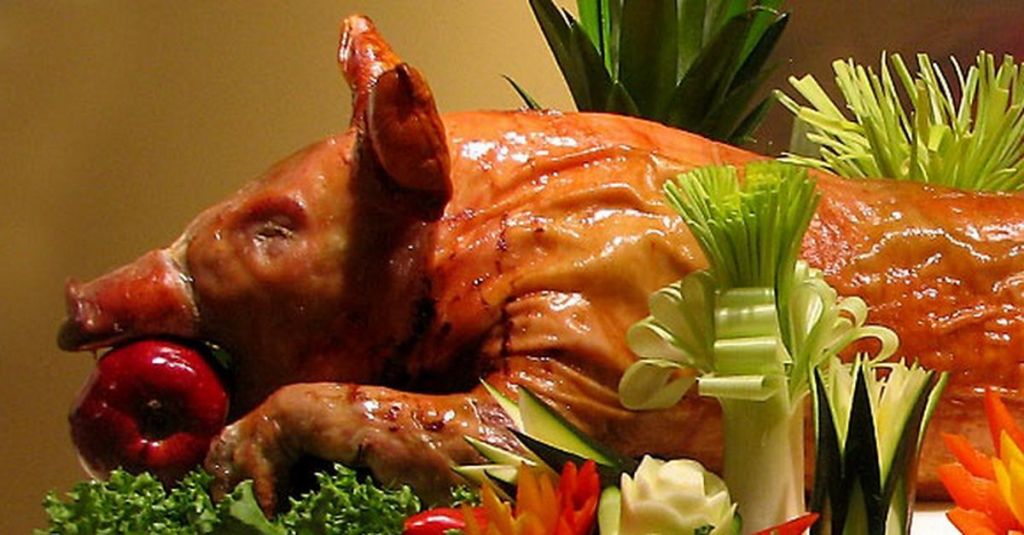
As I was waiting, however, a couple from my old congregation walked into the same restaurant. They instantly recognised me and came up to say hello. Just as we greeted each other, my pork came out from the kitchen: a giant pig on a massive platter with a big red apple in its mouth.

Flummoxed, I exclaimed: “My goodness… so this is how they serve apples here!”

OK, so that last part didn’t happen, but I really did decide to try treif about a decade ago. I’ll be honest with you, some of it tastes pretty good, but they’re not worth giving up Judaism for.

I hadn’t eaten pork since childhood. Aged 6, I had precociously insisted to my parents that I wanted to be religious and go to synagogue. My mum had told me that if I was going to force her to go to synagogue, I’d have to give up sausages. I wanted to be Jewish and I wasn’t allowed to do it half-heartedly.

I think all of us know that food laws play some role in our Judaism. Some of you here keep kosher kitchens. Some of you guiltily sneak a steak when you think you won’t get caught. Some of you, like my brother, eat extra bacon ‘to make up for all the ancestors who missed out on it.’

Whatever your choices, being a Reform Jew means to get to make those decisions for yourself. Our movement believes in informed choice.

Making the choice is your responsibility. But making sure you are informed is mine. So it’s my responsibility to share with you that there are lively debates happening in the Reform rabbinate about what kosher should mean today.

I recently attended my first Assembly of Reform Rabbis, where learned colleagues were discussing kashrut for the first time since the 1970s. It says something interesting that the topic hasn’t been addressed in such a long time.

The reason we are discussing kashrut again today is that the government is contemplating whether to ban traditional ritual slaughter – shechita. For many centuries, Jewish butchers have used the same methods for killing animals. That is: they slit their throats, puncturing the trachea, oesophagus and arteries with one rapid incision.

Throughout our history, Jews have considered this to be the cleanest and most humane method of killing animals. It comes out of a desire to show respect for the animals and to minimise risk of diseases.

Today, however, there is a new movement to favour stun slaughter. In this method, animals are electrocuted before they are killed. For cattle, this means putting a charged bolt through their heads. For chickens, it means electrifying them as a group. Proponents argue that this is more humane, since it renders animals insensitive to pain in their final moments.

There are two other factors that have made stun slaughter so popular, neither of which should be ignored. One is that industrial meat production means that factories produce far more meat. They want to be able to slaughter as efficiently as possible to maximise profit from the animals. Industrial stun slaughter certainly helps here.

Another factor is antisemitism. Across Europe, the movements to ban traditional slaughter have largely been led by white supremacists. Their primary target is Muslims, whose customs around halal slaughter are very similar to our own methods of shechita. Jews are really collateral damage in cultural wars about trying to retain Europe’s status as a Christian continent.

These factors make addressing this issue exceptionally complex. Proponents of stun slaughter ask us to set aside questions about racism and capitalism, just to focus on the issue at hand. I find that very hard to do. Rabbinic law is never about making moral decisions in the abstract. We make our ethical choices as real people living in the real world.

I think it is highly doubtful we will ever be able to prove that taking an animal’s life is better served by electrocution than through throat slitting. It may well be true that these new methods of industrial killing cause less pain, but shechita requires butchers to actually look animals in the eye before taking their lives. I’m not convinced either is more humane.

But, even if one were, we cannot escape the horrific systems that underpin animal consumption. Right now, the insatiable demand for meat is one of the leading causes of global warming. This week, we saw record-breaking temperatures. We can expect such heat waves to take place more regularly and more ferociously as runaway climate change unfolds.

The meat industry is an enormous enterprise that involves destroying natural habitats, depleting the oceans, battery-farming animals, deplorable working conditions, and unspeakable cruelty.

In every generation, Reform Jews have to work out anew what the most ethical way of living is. Today, it is hard to make the case that this includes participating in such an unjust system.

Rather than engaging in debates about specific methods of killing, I feel the appropriate response should be to question whether we should keep eating meat at all.

Indeed, this synagogue has long been an exclusively vegetarian site. This is partly because of convenience: it means we can host anyone and we can avoid messy arguments about separating meat from milk. But it also comes from the moral courage of previous leaders in this community, like Rabbi Henry, who felt that was the best way to live our values.

Please do not think me preachy. Quite on the contrary, I want to be open about my own hypocrisy. I still do eat meat on occasion, especially fish and chicken. I eat eggs and cheese. But, deep down, I know that the ethical vegans have already won the argument.

I once expressed my sadness about this to a frum vegan friend. She advised me: don’t let perfect be the enemy of the good. If you wish you could be vegan but can’t give up cheese, be vegan except for cheese! If you wish you could be vegetarian but like fish too much, be pesacatarian! We must all find ways to reduce our meat intake and limit our negative impacts on the planet.

The Reform rabbinate is still in open conversation about how we redefine kosher for our age. We did not settle the matter at the Assembly, and I don’t want to leave this sermon as if I have reached a definite conclusion. Instead, I want to bring you into the conversation. I want to hear how you think we should best live our values today.

Let us engage in open discussion. Let us talk with each other about our own practices and our own driving values. And let us fashion together a new future for what an ethical Jewish life looks like.

Shabbat shalom.

climate change · high holy days

Another trip around our fragile planet


This year, Richard Branson saw the planet from a completely different angle. The owner of Virgin was on board a rocket and saw the Earth as it appears from space.

It must have been incredible. The globe with its big blue oceans and grey-green continents, set against the great dark expanse of our solar system. 

I have always associated that image with Rosh Hashanah. I remember being in cheder as a child, drawing out the world like this in crayon.

“This festival is the birthday of the world,” I learned. 

We celebrate the world’s creation and another trip around the sun. According to rabbinic tradition, the Earth is now approaching the ripe old age of 5782. Mazal tov!

Our ancestors may not have known that the world was, in fact, billions of years old. They probably did not even realise that it is, as Branson would have seen, spherical and rotating on its own axis. 

But they understood something deeply important. This planet is a gift from God. It is a sacred place, existing in an improbable balance that allows the perfect conditions for life. It is filled with more animals and plants than we will ever be able to name. As the Psalmist declared: “How manifold are your works, Eternal One!” 

At the Jewish New Year, we celebrate creation and our place within it. We thank God for the bees that made us honey and the trees that bore us apples. We count another year when God placed human beings in a perfect garden and charged us with caring for it.

What Richard Branson might not have seen from all the way up there was how delicate this planet really is. Once again, we experienced our hottest summer on record, where wildfires spread across the western coast of North America. Some congregants at my synagogue in Essex lost their homes to flooding, as sudden thunderstorms struck. 

Our climate is rapidly changing. We have witnessed snowstorms in Texas and flash floods in China and Germany. Whole swathes of the Amazon rainforest have been destroyed. Parts of the Great Barrier Reef in Australia have died from sun bleaching, leaving ocean graveyards behind.

Experts warn that melting polar ice caps and close contact with cattle will mean even more deadly pandemics.

The midrash on Genesis teaches that God took Adam and Eve around Eden, showing them every living thing . “Look after this world and care for it,” said the Holy One. “For if you destroy this world, there will be nobody after you to repair it.”

Now look at this world. Are we not in danger of ruining it? As it stands, the planet is being consumed by a few, while the many are exploited, in a way that could destroy us all.

We cannot separate Richard Branson’s trip into space from the unfolding ecological disaster. Every rocket launch emits one hundred times more greenhouse gases than a single flight on an aeroplane. 

Right now, Branson is engaged in a battle with other billionaires for who can most colonise the atmosphere. Other heads of corporations, including Jeff Bezos and Elon Musk are engaged in a space race. They want to project themselves furthest away from this planet and create an entire industry charging others for the same privilege. 

I do not want to see the world from space if I cannot live in it. I certainly do not want only a covetous few to explore space if it means they leave a burning planet behind for the rest of us.

This earth cannot have been given by God only so that a wealthy few could enjoy seeing it, but that every one of us could live in it and marvel at its wonders.

It doesn’t have to be this way. The last year has shown us how fragile the planet is. But it has also shown us how adaptable human beings are. 

We know how caring and supportive people have been to each other throughout the last year’s difficulties. The Jewish community has shown the very best of itself in its mutual aid and compassion for our most vulnerable members. 

Incredibly, we have also seen a vaccine developed, approved, and distributed in record time. Everyone across the community has rallied to take up the offer of protecting themselves and others. 

We have the power to send people into space and cure diseases. Through hard work, cooperation, and creativity, humanity has already shown it can face off its greatest challenges.  

As Progressive Jews, we talk often about the importance of “tikkun olam”: healing the world. We have a sacred duty to preserve and perfect the planet. 

The energy and investment that has gone into space programmes could support the development of new green technologies and a just transition to a sustainable future. 

Across the country and the world, campaigners are pushing us to rethink our entire economy. They urge governments of the world to invest in jobs, resources and renewable energy. It is not too late to defeat climate change, even as it arrives on our own doorstep.

We can have clean air and clean waters; a flourishing planet for our children to grow up.

If it is possible to see the world from space, it must also be possible to save it.

This year, let us rise to the challenge.

Shanah tovah.

climate change · story · torah

Who built the ark

A boat is coming to carry people away from the flood.

You do not have a ticket.

You do not have the money to get a ticket. 

You cannot forge a ticket.

You fumble in your pocket anyway, despite knowing you will find nothing.

If you are wondering whether you know anyone who might be able to get you the money or the paperwork, you do not. You do not even know anyone who knows anyone.

The flood is coming. It has been coming for a while. It has reached others. You have heard reports. You have seen it yourself. You have met victims. 

You didn’t think it would come for you. At least, you didn’t think it would come for you to begin with. Now it is nearly here. 

So is the boat. But you are not allowed on the boat.

The boat is reserved for one man and his family. His name is Noah. He and his sons and their partners and their grandchildren will be rescued. You will not. You will not even be allowed on the ship even to serve them and clean up after them. You cannot stowaway.

Many said that floods were coming. They saw the weather signs. They felt the ground dry up. They knew the trees had stopped bearing leaves. They saw the black clouds and felt the stormy winds. 

You did not laugh at people who said the floods were coming. You did not join in with alarmist panic either. 

You did not commission people to make sure you would be insulated against environmental catastrophe because you didn’t have that kind of money. You knew you were powerless either way when the warnings came. 

You just kept working. What else could you do? You worked and raised your children and made sure you had shelter and a roof over your head. You had fun times with your friends and family. You tried to enjoy life. You tried not to think about it.

You got on with your job. 

And this is the kicker: your job is building boats. 

You are a skilled carpenter. You sand down wood and hammer nails and apply coats of varnish. You breathe in sawdust and work twelve hours a day and learn how to make the dimensions exactly right so that a ship of any size will float. 

You know the boat is coming because you are building it.

You were among the people commissioned to build the ark that is going to take that man and his family away.

You have never been able to afford to go on any of the boats you have made before. This will be no exception. 

Even with the floods already here and the rains rising all around you, you have no choice but to watch.

Noah will float away to safety on the boat that you are building, because he has the wealth to commission you. And the power to leave you behind. 

He has his wealth because his father, Lamech, had wealth. And his father before him had wealth; Methusaleh said he was so rich he could defy time. 

The family gained their wealth through placing indentured servants in long-term debt bondage. Their slaves would work the land without pay and Noah’s family would cream off the profits from their work. In that sense, Noah is no different from any other man who has wealth and power.

But he is different, because he will have a boat. People call him a visionary and a genius. People say he is a prophet because he knew that it was the right time to build a boat when he realised that floods were coming. Some of them stand on and watch in awe as you saw planks for him. 

In years to come, children will ask who built the ark. They will not say your name. They will chant back the name of the man who commissioned you to build it.

You are not building this boat alone. You are building it with hundreds of others. There are people who chop the wood, who transport it to you, who treat it, who clean it, who keep you fed, who watch the children, who make sure everyone is clothed, who design the ships, who furnish the insides, who create the infrastructure to make sure boats can be built. 

You are among many.

There would be enough room for all of you on this ark. Noah is taking his collection of exotic pets.

Nobody is impressed by your ability to make boats. They are impressed by Noah’s ability to commission you to make them. 

Many people do not share such reverence. They fight over the last scraps of food and clean water. They scramble to reach the highest perches, and push others out of them, even though it will ultimately be pointless because the floods will drown everyone. 

Everyone except the people on that ark.

They know that. People fight to reach the ship so that they can get a place on it. They will not get one.

Noah has hired the strongest people to prevent the others from fighting with each other. They form a solid ring to stop anyone reaching the boat. They control the food and water rations. The floods will drown them too.

The man they think is a genius because he has money will sail away on a boat you cannot afford to get on and leave the whole of humanity to drown.

Afterwards, he will tell the story from his perspective. He will say that everyone else was violent. He will say that you deserved to drown.

He will say that he was the only righteous person throughout the entirety of his generation. He will say that the flood was God’s will.

He will say that, if anything, he saved humanity. He will take the credit for the survival of the animals.

And you will be washed away.

So, why do you keep building?

Ark

I wrote this in response to unfolding environmental catastrophe. I will likely preach it in October for Parashat Noach.

judaism · liturgy · sermon

Pray for the right kind of rain

Every day, we pray for the right kind of rain. 

The Amidah praises God’s holiness and dominion over the natural world. 

We change how we address God in rhythm with the seasons. In the summer, we thank God for making dew descend. in the winter, for bringing on heavy rains. 

For us living in cities, we can feel quite disconnected from how important this water cycle is. I only catch snippets of how it causes concern. A radio broadcast says British farmers are worried that there hasn’t been enough frost in January. In a supermarket, a cashier tells me there is a shortage of aubergines because there wasn’t enough rain in Portugal this year. 

The cycle of the right rains affects whether we have enough to eat. It can mean the difference between living safely and losing everything. There is a reason the greatest catastrophe our ancestors could imagine was a flood.

This week, we gained a sense of how important and delicate the rain cycle is. 

At the start of the week, I was heading back from a holiday in the Lake District. It was searing hot. The hottest summer we’ve ever had, people kept saying. As I climbed mountains, normally soft moss felt like dry straw under my hands. The shops had stopped selling barbecues and matches. 

Everyone said that the slightest spark could set the whole forest on fire. We would wind up like California or the Amazon, with acres burnt to a crisp. Thankfully, it didn’t happen, but I left with an awareness of the forests’ fragility and a deep concern that England was not ready for climate catastrophe. 

Only days later, I came back to intense flooding. The rains fell intensely, relentlessly. I thanked God that I was safe inside as the skies turned black and stayed that way for what seemed like days. The area around our synagogue was drenched. Charlie Brown’s roundabout flooded again. Some in this community saw damage to their property. Members of our synagogue were displaced: moved initially to the higher floor of the care home, then relocated. 

I was taken aback by how well our care team took to handling the crisis. Claire, Sue, Debz and others made sure everyone who might be affected received calls, and that anyone who needed help got it. They showed the very best of what this synagogue is for. 

But I was most impressed by the bnei mitzvah students I met this week. Jacob and Layla, twins, are preparing to come of age around Pesach, at the time when we stop praying for heavy winter rains and start celebrating the gentle dew. I asked them what they want to be when they grow up. Jacob wants to be a primary school teacher. Layla says she wants to be an environmental activist.

I have to be honest. When I was Layla’s age, I had no idea campaigning could be a job. It is a testament to her curiosity and sense of justice that she has found this out.

But it is also a wake-up call of how dire things are with our environment that Layla has to think of this job. The problems we saw this week had many causes. We have a rapidly changing climate. Companies have over-consumed fossil fuels and spoiled the ecosystem. Developers have built on flood plains. Much of the development after the Olympics destroyed natural wetlands, worsening the situation. But all of these factors share a common problem: we have taken nature for granted.

In this week’s parashah, we read: 

If you listen, if you truly pay attention, the Eternal One your God will grant the right rains at the right times: autumn rain for autumn and spring rain for spring. You will be able to eat and so will your cattle. 

But you must guard yourself against a straying heart. If you serve other gods and bow down to them, God’s anger will blaze out against you. God will shut up the sky. There will be no rain.

This text might feel familiar. It is the second paragraph of the Shema, found on page 214 in your siddur for the Shabbat morning service. You may have read it before, but it’s unlikely you’ll have heard it read aloud in any service. 

It is the custom of this synagogue, and of all Reform synagogues, to read these verses in silence. So, why do we whisper it? 

One reason is that we are very uncomfortable with what is implied theologically here. It suggests that good things happen to good people and bad things to bad people. We know this isn’t true. The righteous suffer and the wicked prosper. Our rabbis knew long ago that there is no individual reward for good deeds in this life. So we won’t say it out loud when we have doubts about it.

But what if it is true? The warnings in these verses are not about how God might deal with individuals, but the impact of actions on entire groups of people. If you don’t pay attention to the ethics of Torah, you all can be destroyed. If you worship gods other than the Source of all creation, you will find yourself helpless before the forces of nature. Cause and effect. Action and consequence. 

In the biblical world, worshipping other gods meant turning to material things. Whereas the idol-worshippers bowed down to wood and stone, what marked out the ancient Israelites was that they only prayed to the transcendental God, who held all of nature in balance.

And that is what is happening in our world today. We are disregarding our ethical obligations to care for the planet, and we are seeing what happens. People have substituted the Eternal God for the material elilim of oil and gas. We have traded humility before nature for the arrogant belief that we can control and manipulate our environment without consequences. 

Now we are living the impact. We are dealing with the wrong rains. We are witnessing floods here, in China, in Germany, in New York, and in India. 

The Torah warns us: “Do not believe you have made all this with your own hands!”

We may have built cities and roads and bombs and planes, but we didn’t make the grass grow. We haven’t made the sun shine. It’s not us that makes the rains fall. 

All that is in the hands of a supreme Creator, who has charged us with protecting and sustaining this planet. We must hear, and truly pay attention, to that God, whose Word calls to us today. We must take up the challenge of replacing fossil fuels with renewable energy; of rebuilding our world in harmony with nature, rather than against it; of tackling carbon emissions and climate disaster. We must enable Layla to inherit a living planet so that she actually has something to protect.

We must act now. 

Shabbat shalom.

This sermon is for South West Essex and Settlement Reform Synagogue, 31 July, Parashat Eikev

climate change · protest · social justice · Uncategorized

Tzedakah annuls the evil decree

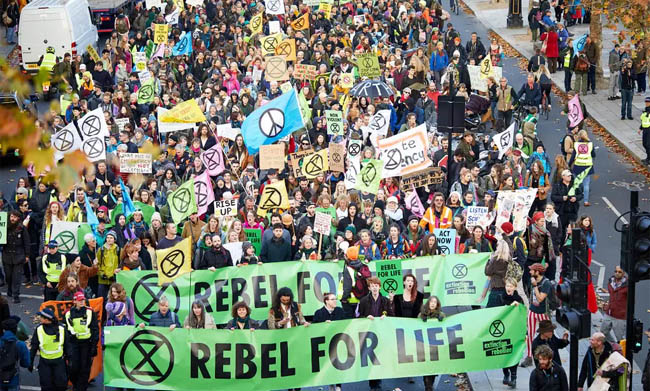
Tonight I will attend a protest against climate change in Parliament Square with Extinction Rebellion Jews. My speech for the demonstration is below.

Tzedakah annuls the evil decree! So we are promised every year in the liturgy for Rosh haShanah and Yom Kippur. And with those words, the chair of your synagogue will usually stand up to tell you about the charity appeal and where you should donate.

Do not be deceived for a minute into thinking that tzedakah is the same as charity. Tzedakah does not mean charity. Tzedakah comes from the same root as ‘tzedek’: economic justice. 

In Deuteronomy we are told: tzedek, tzedek tirdof. Justice, justice you shall pursue, so that you will live and inherit the land. Yes, Torah tells us that justice is a prerequisite for our continued life and for the continued health of the planet. 

This is not justice of the general kind, but specifically of the economic kind. When the Torah brings this word, it brings with it warnings that you must have fair weights and measures, resist corruption, and equitably distribute the wealth. This is what the Torah means when it tells us to pursue justice. 

So we know – we know – that climate justice is deeply connected to the economy. We are facing extinction because the richest corporations are squeezing the planet’s sacred resources for the sake of profit. The world is in crisis because capitalism demands constant production, consumption and expansion. 

When the Torah tells us to pursue justice that we may live, we have to understand this as an economic system that encourages life; that brings our natural world in accordance with people’s needs; where communities govern the resources ourselves. That system is called socialism, and we should not be afraid to say its name. We should be proud to pursue that form of justice.

Tzedakah is the smaller form of tzedek. It is the economic justice that we can do at an individual and community level. Yes, sometimes, that means redistributing wealth within the community. Sometimes that means donating to righteous causes. And sometimes that means taking money away from places where it should not be.

The most forward-thinking synagogues and Jewish movements in this country are taking their funds away from fossil fuels. They are refusing to bank with oil barons, frackers and gas extractors. They are divesting from any association with the corporations that are killing the planet.

That must be our tzedakah for this Extinction Rebellion. We must pursue economic justice in our own communities. When you leave here today, go back to your synagogues and ask them: where is our money invested? Who are we banking with? And does this accord with the stated values of this congregation?

If not, then we will take to our leaders the words of Torah: justice, justice shall you pursue, that you may live and inherit the land. 

May we see climate justice, speedily and in our days.

Amen veamen. 

Extinction-Rebellion

sermon · social justice

Whose responsibility is climate change?

Whose responsibility is climate change?

For years, climate change has been in the corner of my peripheral vision. It has been like a mould growing in my bedroom. Every time I’ve seen it, I’ve quickly turned away and pretended it wasn’t there. Acknowledging the problem would mean I have to do something about it. But what? I don’t know how to deal with it. Isn’t there somebody professional that can sort it out?

It’s not that I haven’t been aware of climate change. At university, many of my friends campaigned on it so enthusiastically. They understood the problems. They campaigned for fossil fuel divestment, transition to renewable energy, commitments to meet carbon emission reduction targets. And I pretended to understand what they were saying. I cared about it, but only because they cared about it.

One of my first jobs was working for an amazing charity called People & Planet. This organisation supported activists to campaign on issues of political import. The campaigners in the office were split into two teams: those focused on people, and those focused on the planet. You can guess which side I was on.

I was campaigning against sweatshops and labour rights violations. The other team campaigned on… something to do with the environment. Wind turbines maybe? I honestly don’t think I ever knew. The planet campaigners had graphs and maths and scientific facts. Our campaigns team had people crying out for solidarity as they took on their bosses. It was easy to identify with factory workers. It was much harder to identify with changing global temperatures. I didn’t understand it, so I took it to be somebody else’s responsibility.

If the goal of Extinction Rebellion was to give people a wake-up call, in my case they have succeeded. Over Pesach, London was suddenly disrupted. Cars pulled to a standstill. Every day they were on the news as old ladies got arrested and carted off in police cars. They forced me to think. If these people care so much to take on that level of responsibility, there must be something important happening.

I decided to do my research. Like any good rabbinic student, I started with a sacred tradition: watching Netflix. It turns out there are a lot of documentaries about nature if you’re not actively avoiding thinking about the death of the planet. There was a show about coral. An easy start, I thought. Corals are pretty and everyone loves the ocean.

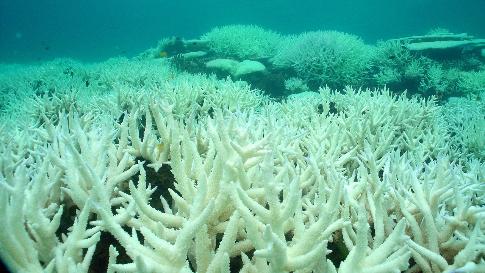
It turns out that most of the ocean’s coral are now dead. Overheating of the ocean has caused the coral to bleach and die, leaving white skeletons along the seafloor. This means that the natural habitat for so much of our sealife has been destroyed, possibly beyond repair.

That mould I talked about in my bedroom suddenly looked a lot bigger. I’ve ignored it for so long that it’s taken over the house and the foundations are at risk.

Somebody has to do something, I thought. If the oceans have been so depleted, how much more damage is being done unseen to our forests, fields and wildlife? I don’t want to think about it. I know I must. Extinction Rebellion warns us that humanity itself may become an endangered species if we do not act.

Somebody has to do something. But who? One of the critiques of the climate movement has been that it puts too much responsibility onto individual consumers and not enough onto the biggest perpetrators of pollution and destruction: corporations. The CEOs of the world’s biggest gas, oil and coal companies have a lot more to answer for than individuals who use plastic straws or take baths instead of showers.

But if the world’s top richest exploiters of the environment disappeared tomorrow, what would happen? New CEOs would emerge in their place. Mining would not stop, nor would oil extraction. People would continue to fill up their cars with petrol. Loggers would keep chopping down rainforests. As long as our global economic system is predicated on constant growth, expansion and exploitation of natural resources, our living planet will remain under threat. Only systemic change of how the world’s resources are distributed and consumed will fundamentally help save the planet.

This isn’t a call to revolution. Although I am hardly opposed to such a thing, revolution does not answer the question I am posing. I am not asking what must be done, but who must do it. Whose responsibility is climate change anyway? By putting the onus onto global system change, it can make the much-needed action feel too abstract and inaccessible. In his groundbreaking book on Jewish messianism, Gershom Scholem observes the paradox that the more grand and utopian Jewish visions of the future have been, the less likely people have been to act on them. If we set the bar too high for the change we want, people will fall into the despondency of inactivity. We will end up waiting on God to fix the problems that are incumbent on us.

Saving the planet should not be considered a radical, messianic idea. It should be plain common sense that if we want to live to old age and hand over a healthy world to  our grandchildren, we have to reverse climate change and restore our natural world now.

None of this is to let the big companies and governments off the hook. They may well be the biggest cause and have the most power to affect change, but the responsibility has to lie with us. All of us.

This week’s parashah is Kedoshim. It is the Torah’s greatest hits, bringing together laws concerning sacrifice and ritual purity with moral rules about respect for the elderly, empowerment of the Disabled and justice for the poor. “A holy people you will be,” it begins. “For I, the Eternal One, am holy.” It does not ask to be responsible because we are capable, nor because we are at fault, nor because we understand. It tells us to take responsibility because that is what God does. Every one of us is tasked with the moral welfare of the world, for no less reason than that doing so is a holy act.

It goes further, teaching us not to show deference to the rich or favour to the poor. Everyone is liable. Everyone must do justice. We may not be able to do everything, or fundamentally change society on our own, but we have to act as if the responsibility falls on us personally.

The Talmud teaches us that every Jew is responsible for every other. The midrash teaches us that humanity has been granted stewardship over the earth. While Judaism is a profoundly collective religion, it is also a call to every individual to do justice. My responsibility to tackle climate change comes, then, not as a citizen, consumer, worker or even as a human being, but as a Jew commanded by God to be holy.

With all that in mind, I have run out of excuses. I can no longer ignore climate change. I cannot plead ignorance. I cannot hope that people more expert will sort it out. I cannot blame CEOs without doing anything to hold them to account. I cannot say we need system change without working to bring it about. I cannot wait another day.

The responsibility for climate justice lies with me. I am still very uneducated and will need a lot of guidance, but I know I must make a start. I have joined Extinction Rebellion Jews. And I hope you will too.

coralbleaching
Bleached coral

I gave this sermon on 11 May at Manchester Liberal Jewish Community. As it stands, the lectionaries of the Liberal and Orthodox movements, as well as of Israel and the Diaspora, are out of synch. In the land of Israel, Pesach traditionally has seven days, while in the Diaspora it traditionally has eight. This means that for Diaspora Jews there is an additional Shabbat that falls on Pesach, while for Israelis, the lectionary resumes one week earlier. For the next few weeks, then, different synagogues will be out of synch. The early Jewish reformers felt that there should be no difference between Israel and the Diaspora, since we no longer laid a religious claim to Israel, so ordained that our calendars would align. As a result, most progressive synagogues would have been reading Emor this Shabbat, while most Orthodox ones read Kedoshim. I chose to read Kedoshim not to make any theological or political point, but simply because I prefer that parashah.