judaism · sermon · social justice

A world without walls

There was a time before there were fences and walls. 

At some point in the distant past, recorded only in our folktales, the world used to grow wild and free. Trees and plants sprouted wherever they wanted. Animals moved at their own will. There were no roads, no houses, no cars, and no banks. 

Back then, human beings were hunter-gatherers. Our ancestors lived in caves, chased down animals with spears, foraged for berries, and moved wherever the weather was best. 

Then, about 10,000 years ago, something changed. In a place that we now call the Middle East, a group of people realised that they did not just have to take whatever nature allowed them. 

They could change their environment to meet their needs. They could plant, sow, grow, cultivate, reap and nurture crops. They could turn entire fields into places where just one thing was grown, like olive groves, barley fields and orchards. 

This was the beginning of civilisation.

It was also the beginning of war. Armies grew. The spears that had been used to hunt cattle were now used to kill people. 

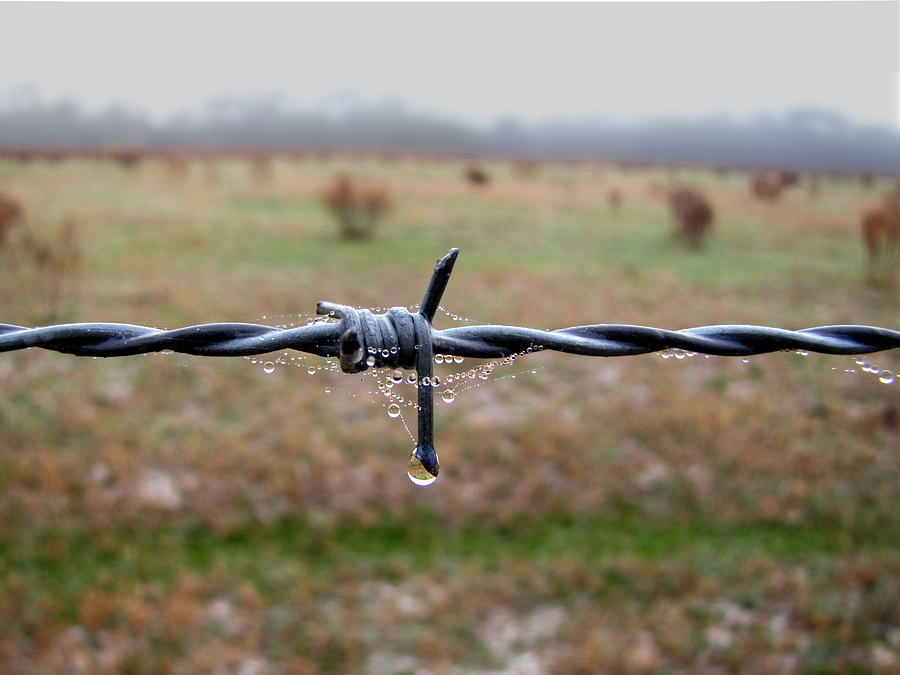
Fences were put up. At first, they were used to keep animal livestock in. Then, they were used to mark out who owned which fields. Then, they were used to keep people in their place.

The people who had control of the fields needed people to work them. The workers, often vanquished or nomadic people, needed a place to stay and a way to get fed when all the food was fenced in. 

So the workers became indebted to the owners. The landowners would feed and house the workers. The workers would labour over the land to make it profitable. The landowners gained more wealth and more land. The workers became increasingly in debt. 

Sometimes, people were born into slavery, and this would be passed down for generations. Their debt to the landowners could never be repaid. 

The owners, in turn, passed on the land to their children.

This presented a big problem. People could become infinitely indebted, with no hope of their descendants ever paying it off. People could become infinitely wealthy, as they conquered more land and made more people work for them. The owning people would have to use increasingly violent measures to make sure the working people did not rebel against them. 

That was the situation in the ancient world. Debt. Wealth. Slavery. Borders. Violence. Revolutions.

And, according to the 19th Century historian Moses Finley, every revolution had the same demand: cancel all the debts and redistribute all the land. 

When you understand this historical background, this week’s parashah, Behar, makes a lot more sense. This week, we read Leviticus 25. It is a remarkable chapter of the Bible in that, on its own, it comprises an entire sidra of the Torah, and all 50 verses deal with the same subject. This whole chapter is dedicated to how the ancient Israelites could break the cycle of debt, slavery and land acquisition. 

It begins with the shmita. Every seven years, you give the land a break. You cannot overwork it. It is like a shabbat for nature, free from human interference. 

Then you count seven lots of seven, seven shmitas, adding up to forty-nine years. In the fiftieth year, you have a Jubilee. Now all the land must be redistributed again. Noone can accumulate all the fields. It is a complete reset. Everyone goes home. Noone exploits anyone else. 

At this time, all the debts are annulled. Nobody can rack up infinite obligations to others.

There is no ancient version of Carol Vordeman advertising that you can consolidate all your debts into one monthly loan repayment.

This means that even slaves can be set free. The law forbids landowners from charging interest to their slaves. They can’t charge them extra for the food they eat or the place where they sleep. They might be in debt, but they have to have a way of getting out of it. 

Every seven years, slaves have the option to go free. Then, in the Jubilee year, all slaves are redeemed. Nobody can remain in slavery forever.

Repeatedly, Leviticus insists:

 לֹֽא־יִרְדֶּ֥נּֽוּ בְּפֶ֖רֶךְ

Do not grind them down. 

Don’t be ruthless.

Leviticus was written in a time of great inequality, when landowners took up huge amounts of land and charged huge amounts of interest. Workers accrued huge amounts of debt and passed on slavery to their great-grandchildren. Leviticus came to offer an alternative. The system of Jubilees means nobody can become too rich and nobody can become too poor.

This system works because there is someone to defend the poor and resist the rich. There is a force stronger than any spear and higher than any fence. There is a being who will advocate against even the wealthiest landowner and the mightiest army.

That being is God. 

Nobody can be a slave forever, because, ultimately, we all serve God. Nobody can own the land forever because, ultimately, the land belongs to God. In this religious system that our Torah creates, nobody can really claim to be better than anybody else.

God tells us something that no ledger sheet can. Whereas debtors can calculate the value of every loan and landowners can weigh up the worth of every harvest, faith tells us about the things we cannot count. 

You can’t put a value on human life. You can’t put a value on freedom. You can’t put a value on social harmony.

This is why the Torah makes such a special contribution to human history. In a world structured by violence, it tells us that people must be set free. In a world divided by inequality, it tells us that everyone has equal value. It calls on us to relieve all debts and free all slaves. 

Ours is a world of fences and walls. Ours is a world of great debt and great wealth. Ours is a world where some are too poor and some are too rich. 

But Leviticus challenges us to remember a world before this was the case. It instructs us to imagine a world where inequality is no longer the case. 

It teaches us to build a world without fences or walls. Let us heed that call.

Shabbat shalom. 
story · torah

A rock-eating worm built the Temple

This is the story of how the Temple was built.

This story comes to us from the Talmud. It was copied from the Mishnah. It belongs to the folk legends of King Solomon that may have predated it by some centuries. This is an old story. I sincerely doubt whether any of it ever happened, but I assure you it’s all true.

This is the story of how the Temple was built by a rock-destroying worm. When King Solomon decided to build the Temple, he brought up entire stones from the quarry. He wanted to carve those stones without swords. He knew there was only one way.

Somewhere in his kingdom there was a rock-destroying worm called Shamir. This monster was created at the very beginning of time, during the six days of creation in which light and darkness were separated and the first trees were planted. 

Some say the Shamir ate stones for breakfast; chewed through the hardest granite, making passageways like the holes in Swiss cheese. Some say it could cut through the rocks with only its gaze: a laser-like stare that sliced solid metal. Whatever were its methods, Solomon knew he had to have it.

In fact, the only way to catch this creature was to find something really soft. You had to wrap it up in cotton wool and barley bran. These materials would be too gentle and the Shamir would have no way of chewing through them.

Yes, this is all in the Talmud. This is our tradition. And if you feel like this rock-gobbling worm is far-fetched, I hope you will forgive me if I tell you that Solomon captured this creature by tricking the King of the Demons.

Solomon knew that Ashmedai, the world’s greatest demon, lived in the bottom of a pit on the top of the world’s tallest mountain. And the pit was filled up with gallons of rainwater that the demon swallowed whole every day, then waited for it to refill. 

Solomon sent his servant up that mountain and into that pit. The servant drained the pit of its rainwater and filled it again with fortified wine.

You might think that the King of the Demons would not fall for such a simple trick, and you’d be right. Ashmedai scoffed at the wine-filled pit and refused to drink from it. But days passed and the monster missed his gallons of water. Oh, he became so parched. Eventually, he gave in and took several enormous mouthfuls of the wine. 

Within moments, he fell fast asleep. Solomon’s servants tied him up and carried him back to Jerusalem. When Ashmedai woke up on the Palace floor, he roared at Solomon: “is it not enough that you have conquered the whole world, but now you must imprison me too?”

“I promise you,” said Solomon. “All I want is one creature. The shamir. The worm that eats through stone. I need it to build my Temple for God.”

Ashmedai sighed, and he replied: “I do not own the shamir. It belongs to the ministering angel of the sea, who has entrusted it to the wild rooster. Together they hide in the uninhabitable hills, where the rooster guards his eggs.” 

I’m quoting to you from the Talmud directly here, so you know that what I’m telling you is true. 

When Solomon knew where to find the wild rooster, he covered its nest with transparent glass. Seeing that it couldn’t get in, the rooster brought over the shamir to bore through the rocks. As soon as he’d seen the monster, Solomon knocked the chicken off of the nest and ran to collect his prize.

According to our tradition, that is how the First Temple was built. Overseen by Solomon, the King of the world, accompanied by Ashmedai, the King of the Demons, a stone-chewing worm carved out every brick. It snaked through all the pillars and ate at every rock. After years of winding through the granite, Solomon’s Temple was complete.

So, why did the Talmud come up with such a tall tale? Can it be that our rabbis really believed the Temple was built in such a fantastical manner? Somehow I doubt it. But nevertheless, I am adamant that this story is true. At least, I think it tells us something important we need to know.

Our rabbis were answering a textual problem. The Bible told us that King David was not allowed to build the Temple because there was too much blood on his hands. He had fought too many wars, subjugated too many peoples and built too much of his empire on the labour of others.

Only Solomon, whose name in Hebrew is cognate with peace, was able to overcome the violent tendencies of his father and build a Temple that would truly be fitting for God. How could he build such an edifice without getting blood on his hands?

When our rabbis imagine the construction of the Temple, they picture it as it ought to have been. No wars are fought to secure land. No natural resources are exploited to gain the raw materials. No workers are hurt in the making of the building. All that happens is a natural process, where a worm that would eat rocks anyway works its way through the stones to build God’s home.

The only people vaguely harmed are a demon who got drunk and a rooster that was knocked off its perch. This is the dream of how the Temple should have been made. It was created in complete peace and harmony with nature. 

By encouraging us to inhabit this fantasy, the Talmud draws our attention to the harshness of reality. Even the greatest and most noble civilisations are built on violence. Cities, skyscrapers and the highest cultures are all products of real graft. Human beings do interfere with nature. We do exploit workers. We do plunder natural resources and we do secure territories through war.

When we imagine a world where rock-destroying worms can carve out our accomplishments for us, we know that we are imagining something impossible. But the nature of Talmud is to challenge us to do impossible things.

The Talmud asks us to picture a different relationship between human beings, nature, and civilisation. In a world where the climate is being damaged in unspeakable ways, such imagination is required of us again. Humanity is at a juncture when we must completely rethink how to use resources and what kinds of civilisations we build.

That is what makes it true and that is why it still speaks to us today. The Temple was built by a rock-eating worm. Perhaps one day, we will build the world that way again.

I gave this sermon for Edgware and Hendon Reform Synagogue, Parashat Terumah, on 20th February 2021. For the sources, look at Sotah 48b and the sugya beginning in Gittin 67b