story · torah

When is a person truly dead?

At home, my fiance paces back and forth, preparing for his exams in anaesthetics. In a week, he will be tested orally to see if he can become a consultant. He recites definitions of key medical terms, revises laws of physics, gives diagnoses of uncommon diseases. 

One definition he has repeated so many times it is now imprinted in my mind too.

Death is the irreversible loss of capacity for consciousness and loss of capacity for breathing.

At times, we have pondered over such terms together. On long walks, we have discussed medical ethics through Jewish lenses. We have debated whether and how modern medicine aligns with ancient wisdom. 

Now is not the moment to challenge him on the medical definition of death. But the definition sticks with me, because this is an area where I do not think science and religion align. 

While Laurence prepares for his exams, you will have to listen to my thoughts on what Judaism teaches about mortality.

Death is the irreversible loss of capacity for consciousness and loss of capacity for breathing.

Is it? Is that what it means to die?

If it were, then would living simply be brain activity and breathing? Is that all we are?

Chayyei Sarah – the life of Sarah – is our portion. It opens with her death. By telling us about her life from her death, the Torah is telling us something about how life and death interact. 

The parashah is a recounting of Sarah’s burial. It is a terse text, where the primary narrative concerns Abraham’s attempt to purchase a lot for internment. 

So much is left unsaid. So many emotions are not expressed. In the silences and interstices, we are left to reconstruct our own imaginings of what Abraham was thinking. Let us try.

Abraham proceeded to cry and eulogise Sarah.

He held her hands, once so strong and firm. Those hands had kneaded bread for strangers at a moment’s notice. They had sewn garments for whole families. They had, at times, pointed accusations, separated children, raised objections… Strong hands. Determined hands. Strong, determined hands, that were now drained of all their vigour, and sat coldly in his own palms.

Abraham rose from beside his dead, and spoke to the Hittites.

Abraham sprang into action. Sarah had not died in the land of her own family in Egypt, nor of Abraham’s in Chaldea. They were in a strange place, far from their own homes, among Hittites in the hill-country of Canaan. 

Abraham said: “Here I am, a stranger and a foreigner among you. Please sell me a piece of land so I can give my wife a proper burial.”

Sarah had left her father’s home in the palaces of Egypt, where she lived as a princess. She was an aristocrat in a great empire who gave it up to travel with a wandering man. Abraham claimed to have spoken with the One True God, and Sarah just followed him. She forsook luxury for a life on the road. Now, she lay dead on the road, and there would be no fine processions to pyramids to entomb her.

The Hittites replied to Abraham, “Listen, my lord, you are an honoured prince among us. Choose the finest of our tombs and bury her there. No one here will refuse to help you in this way.”

Sarah used to laugh with her whole belly. Her shoulders bounced up and down. She can find humour where nobody else could. Even when she struggled with infertility, she found ways of making jokes. Abraham would not hear her laugh again.

So Abraham bowed low before the Hittites and said, “Since you are willing to help me in this way, be so kind as to ask Ephron son of Zohar to let me buy his cave at Machpelah, down at the end of his field. I will pay the full price in the presence of witnesses, so I will have a permanent burial place for my family.”

Sarah had been so beautiful people tripped over themselves staring at her. On their wanders, every prince desired her. Sarah was as beautiful at 127 as she had been when they had first met. She was still just as honourable and God-fearing. Nobody would be as good and beautiful and true again. 

Ephron was sitting there among the others, and he answered Abraham as the others listened, speaking publicly before all the Hittite elders of the town. 

Sarah received no ennoblement or reward for marrying Abraham. Yet so much honour came to Abraham through her. She could see visions and speak with God. 

“No, my lord,” he said to Abraham, “please listen to me. I will give you the field and the cave. Here in the presence of my people, I give it to you. Go and bury your dead.” 

Abraham had bargained over everything. He had struck a deal with Avimelech to share water sources. He had even negotiated with God over the destruction of a city. This was a bargain he could not accept.

Abraham again bowed low before the citizens of the land, and he replied to Ephron as everyone listened. 

“No, listen to me. I will buy it from you. Let me pay the full price for the field so I can bury my dead there.”

Abraham was ageing too. Who would bury him? He had cast out one son and tried to murder another. 

Ephron answered Abraham, “My lord, please listen to me. The land is worth 400 pieces of silver, but what is that between friends?”

What is four hundred shekels between strangers? What is a price on the life of Sarah? What sort of burial could ever be enough for her? 

Ephron said: “Go ahead and bury your dead.”

These are some words we may complete into the silences. They come from the other biblical stories and midrash, and they paint a fuller picture. In the spaces, we see that this is not a negotiation over a burial plot, but a negotiation over the nature of death.

Death is the irreversible loss of capacity for consciousness and loss of capacity for breathing.

Is it? Is that what it means to die?

If it were, then would living simply be brain activity and breathing? Is that all we are?

Medically, scientifically… maybe.

Spiritually, Jewishly… no. 

Death is as much a journey as life is. 

For seven days, we eulogise, as the last imprint of a person leaves us. For thirty days, we mourn, as the shock and grief harrow us. For eleven months, we pray, as some part of the soul heads on its journey to Heaven. 

Then, every year, we say the names of the dead, and some part of our loved ones returns to us. Their soul breaks through the gaps in Aramaic words and we feel them with us once more.

Thousands of years later, we still say Sarah’s name, and some part of her keeps living long after breath and consciousness. 

We are more than what we exhale: we are the laughter and joy we bring to others. We are more than our own thoughts: we are the memories living on in others. 

In memory, in prayer, in faith, we grasp something greater than the material world.

Trusting in You, Eternal God, we see life beyond death.

Amen.

Van Gogh, The Cave of Machpelah

judaism · sermon · torah

Matchmaker, matchmaker

“Matchmaker, matchmaker, make me a match. Find me a find, catch me a catch…”

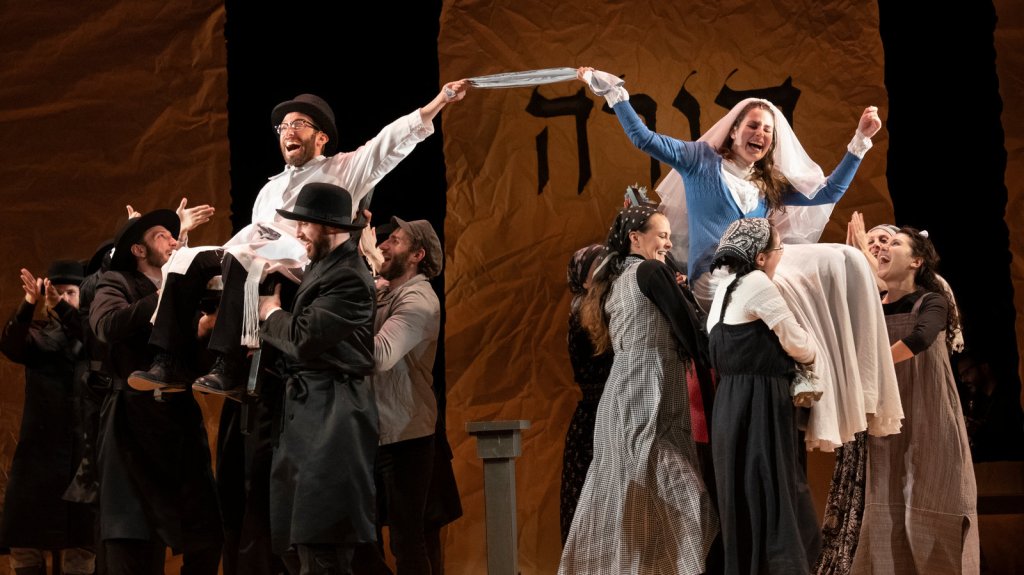
Tzeitel, Hodel and Chava joyously sing these words in their iconic scene from Fiddler on the Roof. It’s a classic musical film set in Tsarist Russia at the turn of the century, when huge upheavals are taking place throughout the Jewish world. People are moving, traditional ways of living are changing, and new ideas are coming to the fore. 

Nowhere is this difference clearer than in the confusing world of romantic relationships. According to shtetl customs, the girls would expect to be matched with their perfect partners by a shadchan, or matchmaker, and they would settle down to a quiet life of conventional piety in the kitchens while their husbands worked on making a living and reading the Talmud. So, at the start of the story, each of the girls calls upon the matchmaker – called Yenta – to find them their dream husband. They wish for someone wealthy, learned, and acceptable to their parents.

But this is a world where conventions are being upended, and fate has other plans for the lovebirds. Tzeitel, the eldest, turns down her match with the old, ugly and wealthy butcher, refusing the match made for her by the shadchan. Instead, she marries the poor and humble, but decent, tailor. Her father agonises with the betrayal of tradition, but ultimately acquiesces.

Next up is Hodel. A Torah scholar would have been lovely for a foregone era, but at the turn of the 20th Century, a Marxist radical and heretic was exactly what she craved. She falls in love with a Jewish social revolutionary, much to her father’s dismay. A communist! Of all things. Once again, he agonises over the break with tradition, but ultimately accepts it as inevitable.

Finally, the youngest daughter finds someone completely unacceptable. A Russian Orthodox man from outside the village. Her father cannot even bear to permit a marriage to a non-Jew, so they wed in secret. The scandal it must have caused. 

What a far cry this all was from the idealised matchmaking process envisaged in this week’s parashah. The story of Rebecca and Isaac falling in love is like a classic romantic comedy from a bygone era. The star of our scene is Eliezer, Abraham’s servant, who is set by his master a major task. Isaac cannot marry a Canaanite, but must marry someone from his own tribe. She must be strong and wealthy and beautiful and kind and willing to marry Isaac of her own accord. 

Eliezer prays to God and says that the ideal woman will help him feed his camels. Well, Rebecca does far more than that. She comes down herself, despite being a noblewoman, and offers Eliezer a drink. She chastises the other women at the well for not having done the same. She calls up the water from the well effortlessly and carries gallons of that to feed Eliezer’s entire caravan of camels. Oh, this Rebecca is strong and wealthy and beautiful and kind! She is exactly what Eliezer had sought after. He immediately pulls out a wedding ring for Rebecca to wear through her nose…

But was she willing? After all, Isaac has been pretty much a non-entity in this story so far. He hasn’t even talked since Abraham tried killing him as part of a wild game of chicken with God, and seems to spend most of his time wandering about in fields looking contemplative. Yes! She puts on the ring instantly and agrees to marry him, then gets consent from her own family. 

Just a few days later they meet each other for the first time and fall in love. 

Now, isn’t that how relationships are supposed to be? It might seem strange to modern ears, but those were the expectations of our ancestors. A matchmaker, like Eliezer in the Torah, or Yenta in Fiddler on the Roof, would set up a couple. They would come from similar backgrounds in terms of class, status and religion. They would often even be cousins. Their parents arranged the relationship and, once they were together, they built a home and learned to love each other. 

That world was upended with the modern era, when emancipation, urbanisation, and progressive ideals started to change people’s expectations of relationships. In this new reality, people had choices. 

They could leave their village, practise their religion differently, decide not to practise it at all, and marry non-Jews. Women could even have opinions. Fiddler on the Roof speaks to the concerns emerging from that new reality of relationships a century ago. Today, many of those tensions still exist.

Progressive Judaism was, in part, a response to those worries. Jews could have rejected modernity and held tight to the old ways of doing things in the time of Rebecca and Isaac. Jews could have rejected Judaism and embraced modernity, leaving behind all the traditions and texts in the past. 

Or we could find a middle way, our way, that embraced modern relationships and traditional Judaism under one chuppah. This is what we have done. We have come to celebrate interfaith partnerships, second marriages, non-conformists and unusual relationships. Tzeitel, Hodel and Chava would all be able to find a home in our synagogue. 

We  are finding new ways to embrace the realities of modern relationships and families. Our synagogues today are becoming welcoming places for single parents, people who have chosen not to have children, couples who have no intention of marrying, blended step-families and a whole host of other options. It should be a point of pride that we accept people as they come, in all their diversity.

Yet something is making a comeback that would have surprised the cast of Fiddler, and even a previous generation of Progressive Jews. Matchmaking is on the way into fashion. Yes, the matchmaker, matchmaker is back. The majority of people meet their partners because they are introduced by friends or coworkers, like Yelta and Eliezer of the past. The role of families in matchmaking may have declined, but the practice itself continues.

Personally, I’m thrilled about this development. I love matchmaking. There is an old superstition that someone who matches three couples will merit a place in the World to Come, and I boast that I can sin as much as I like now.

When the first national lockdown began, I worked with my housemate to put together a ‘Love is Blind’ matchmaking experiment, where we paired people up based purely on personality, without them getting to see each other. Nearly a year later, one of our matches is still a couple going strong. As the new national lockdown begins, we’re doing the same enterprise again; this time introducing people for dates via Zoom.

It’s just a bit of fun to help our friends pass the time, but it tells us something important about relationships in the 21st Century. Of course, modern matchmaking has to celebrate relationships in all their diversity. The old model of putting together a man and a woman to make babies doesn’t fit anymore. One of the reasons matchmaking fell out of fashion was that that style of connecting people was coercive and stifling.

But we can still connect people, if we do away with the prejudices of the past. Modern matchmaking takes a proudly pro-LGBT stance, reveling in our community’s gender and sexual diversity. Equally, the people we match often don’t expect to find the right person on their first date, and are just as interested in finding friends or casual flings. The idea of a bashert – a single partner who will fulfill someone’s needs for life – is no longer so significant to people. 

Society has already adapted to that change. I’m sure that Progressive Judaism will find ways of doing the same. Ultimately, what we most want to retain is that people can be loved and accepted, no matter how they choose to live. With that in mind, let us continue to find new ways to celebrate people and the relationships they have. That is the true Jewish tradition.

I gave this sermon on 14 November 2020 for Parashat Chayyei Sarah at Newcastle Reform Synagogue.

judaism · theology

God will reign forever

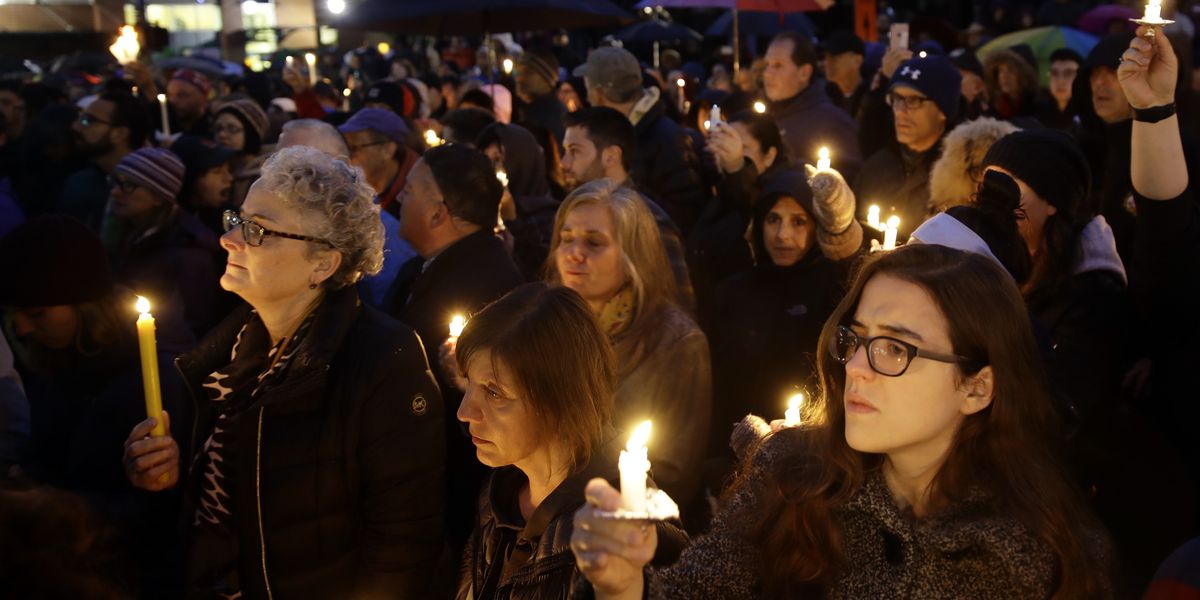
Tonight, at Manchester Liberal Jewish Community, I won’t speak much, in order to give everyone a chance to express their sadnesses, fears and hopes. The Jewish community is still reeling from shock at the shooting at Eitz Chayyim synagogue in Pittsburgh. I know I am not alone in fearing the rise of fascists in Brazil, Italy and Hungary. People will need to name their fears and have them heard. But I will say a few words before we daven to set the tone. I share them here.

I have a secret love, perhaps unbecoming of a Liberal Jew. I love Chassidic house music. Shwekey, Nachas, Beri Weber… I love the upbeat, pop-py, happy tunes with Jewish liturgical slogans chanted over them.

A couple of months ago, a housemate came in to find me singing along to it as I cleaned the kitchen. I spritzed the table and mopped it up, chanting “Hashem melech! Hashem malach! Hashem yimloch le’olam va’ed!” The song’s lyrics mean “God reigns, God has reigned, and God will reign forever.”

My housemate, who had grown up in Habonim Dror, a secular socialist Jewish youth movement, was horrified. “How can you say that? You of all people?”

I reflected on his question. Of all the Chassidic house music I’ve sung along to, this seemed the least offensive lyrics I could think of. These were words that we say regularly in prayer.

I think the problem is that we have different views about what God is. What he thought I was singing for was theocratic tyranny. If I imagined that God was that bearded, judgemental man in the sky, I would do everything possible to stop Him from reigning anywhere. Indeed, we have all seen what happens when religious people that do believe such things take power.

For me, God is not that judgemental man, but the force of love and justice that gives morality meaning. God is an indescribable binding power, an energy of love that hums beneath the chatter of man-made hate.

And yes, I believe that force reigns, has reigned, and will reign forever.

Today, when we see the rise of fascists and we mourn murdered Jews, the underlying force of love and justice is still there, and still has power.

In our darkest moments, when we have witnessed personal tragedies and collective atrocities, the power of morality still reigned. Our lives still possessed a deeper meaning.

And God – our God – the God of love – will outlive every antisemite, every president, every nation, every empire. No matter how dark things seem, I know that God will reign forever.

Let us pray.

candlelit vigil