Everything has changed. Everything keeps changing.
We meet tonight to pause.
Tonight is a return to a definite, reliable point in the calendar. While the world spins on outside, for a brief moment, we stop. We reflect. We take stock of all that has changed, so that we might change too.
You have already seen this evening many simanim – symbols of the Rosh Hashanah seder. These small tokens speak to us about what the festival means.
There is another one, though, that you won’t see here, partly because our synagogue is a meat-free site, and partly because it just would not feel right in a Liberal synagogue.
It is a ram’s head.
Yes, in many New Year seders throughout the centuries, Jews would place the carcass of a sheep’s skull in the centre of the table. This tradition goes all the way back to 9th Century Babylonia.
By the 15th Century, the German rabbi, the Maharil, explained the custom using a phrase from the Psalms:
שנהיה לראש ולא לזנב
– that we should be the head and not the tail.
There is a play-on-words here. After all, what does Rosh Hashanah literally mean?
The Rosh is the head. It is the head as in the beginning; it is the head as in the body part; and it is the head as in the one who has control.
This symbolism works because, in Hebrew, a word contains multiple meanings and associations.
So, the fish head represents our being on top of our own lives.
Now, what about hashanah? The word shanah does indeed mean year, but its root ש-נ-ה also means cycle, difference, repetition, or change.
This makes sense: a year is a cycle, a return point that we repeat, each time observing the change.
So Rosh Hashanah does mean “start of the year.” But, through the associations with the words’ other meanings, Rosh Hashanah is also “the master of change.”
Outside of these walls, the world is full of changes. AI unleashes new technology into a society that has already been completely transformed by the Internet. Our climate is changing, and we are truly starting to notice its effects on our own seasons.
International relations are changing: violence, war, and fear feel like a new normal. And, of course, we are only a few years out of global pandemic and lockdowns.
So, at this juncture, we return to the start, and try to find a small oasis of calm to reflect on this changing world.
Yet, inside these walls, things have changed too. This is my first High Holy Days with you. This is your first High Holy Days in the newly refurbished sanctuary. This is our first High Holy Days where we have voted to join a new movement.
This is our first time doing the High Holy Days without the choir in every service and, as you will see, that means we are changing how we do music.
In every case, these changes will evoke many feelings, including excitement, trepidation, loss, and growth. This is a chance to face all our feelings.
Change is inevitable. Change can be good. And, yes, change is hard.
I don’t know about you, but I have changed. I have not just grown a year older since the last Rosh Hashanah. I also feel like I have aged many decades in the last few years.
The world transforms and I shift with it. As I shift, I do not even always notice the ways I change, or work out what they mean.
I don’t even have time to decide if I like who I am becoming before I find that things changing again.
So, at Rosh Hashanah I come to this space, this synagogue, this everlasting home with God, and ask: can I love myself better? Can I love my community? Can I muster up the strength to face all that is changing?
Can I find a way to be the head and not the tail?
Blessed are You, Eternal One our God, who gives us the power to change.
There is a verse in the Torah so radical that one of my teachers did not believe me it was even in there.
I was working on a project as a rabbinical student and I brought a text that cited this verse.
“That can’t be in the Torah,” my teacher said. She was a serious scholar, with not only rabbinic ordination but also a PhD in rabbinics and a host of published articles.
“No ancient society would allow a law like that. The entire economy would collapse.”
I thought, perhaps I had misread it. It was a bold claim. So I went back to look.
But there it was, nestled among a litany of miscellaneous commandments in Deuteronomy. On one side of this law was the instruction to make sure soldiers did not have nocturnal emissions, and on the other side was the requirement not to bring money gained from prostitution as a Temple offering.
There it was, a law completely at odds with ancient society, which threatened to collapse an entire economy if enforced:
Do not hand over a slave to his master who is taking refuge with you from his master. He will dwell with you in your neighbourhood in the place he chooses, in one of your gates that is good for him. Do not oppress him.
– Deuteronomy 23:16-17
Let us start by acknowledging why this law is so radical. Ancient agrarian states were built on slavery. Prisoners of war, pillaged people, indentured servants and trafficked humans did back-breaking work to make the farms run. Their unpaid labour was what made the brutal machinations of early states even possible.
Here we have a rule: do not hand over any slave to their master. The Torah is biased, and it’s not on the side of the owners!
More than this, if you get a runaway, your duty is to look after them. You have to give them accommodation. You have to give it in a place where the refugee himself feels is good for him, within the gates of one of your towns.
This is bold.
But still, it may be I had misunderstood. We already know from many other Torah sources that Israelites cannot be held as slaves. They might be debt labourers and bondsmen, but if somebody is part of the Israelite family, they can never be subjected to lifelong slavery.
So, perhaps, this law is just talking about what to do if an Israelite runs away. In such a case, they might have been the slave of another Israelite, in which case they were being held against the law. Of course you would then give the slave refuge.
Or they might have been an Israelite running away from another country, like an Edomite who had captured them in war. Well, then, they have come back to their people and need to be cared for.
So, have I mistranslated? Is this actually about Israelite slaves?
I’d have to look at earlier translations to check what it means.
The earliest translation of the Torah is Targum Onkelos, a 2nd Century rendition of Scripture into the vernacular Aramaic.
This translation gives details that clarify things. In this case, it adds an adjective to the Torah’s word for slave. עממין – from the foreign nations. A non-Israelite. The translation is unambiguous: we are talking specifically about foreigners.
This is even more radical. It’s saying we insist on looking after complete outsiders. They have no connection to us.
They may even, then, be running away from Israelite masters. The Torah is saying that, if a slave runs away from their master, even though the slave is definitely not one of us, and the master might actually be one of us, we are on the side of the slaves.
About a century after this translation, the rabbis in the school of Rabbi Akiva wrote a commentary on the Book of Deuteronomy to expound its meaning. The book is called Sifre Devarim, and it takes all the legal verses from these books and adds oral traditions about how to interpret the laws.
Sifre’s explanation of this verse gives details on how you are supposed to treat a runaway slave when they come to you. Not only do you have to welcome them into your towns, say the rabbis, you also have to make it possible for them to make a living. They have to live with you, and not on the borders of the town.
It adds that the commandment not to oppress the runaway extends even towards words. Even the language you use must be kind. And it insists: you have to make them feel like the place they have come to is better than the one they left.
This is even bolder than where we began. It’s an official open borders policy to every runaway, with the requirement that they not only get refuge but actually get a livelihood and integration in the place where they move to.
It is not only uneconomical, it goes against all the foundations of the ancient economy.
You cannot even appeal to other economic reasons. There’s no organised mass of runaway slaves that the law-givers need to accommodate. There’s no suggestion that there was great pressure from the peasantry to be kind to foreigners.
It is a law entirely based on compassion.
What makes this law so radical is that it seems to be motivated entirely by altruism. That is why my teacher was so incredulous about the law being in the Torah at all.
And yet, isn’t that why we turn to the Torah to begin with? Not for cold economics, but to know the right way to live. We want a moral guide for how we should treat people.
Rabbi Julia Neuberger, who serves as a crossbencher in the House of Lords, has been a consistent voice for refugees, as each successive government has threatened hostility and sanctions.
As a lawmaker and a rabbi, she has to balance the high moral demands of our religion with the practicalities of government.
In all her addresses, she emphasises the need for compassion. She treats refugees as a litmus test for the compassion of a society, because their marginal status tells us how our country is likely to treat everyone else.
Baroness Neuberger advocates firmly for the rights of refugees.
Perhaps that is why the Torah introduces this seemingly radical rule. It wants to set a culture where the most vulnerable people get the best possible treatment, so that the whole of society will be based on kindness.
The foundation of Torah law is about caring for the poor, the orphan, and the widow. This most intense case – a complete outsider running away from slavery – is the Torah’s own test for its moral system.
It is a test every society faces. How people treat refugees shows what they think of human beings.
For the past few weeks, protesters have been gathering outside hotels, demanding refugees be sent back. The main political parties have entered into a race to the bottom for how unwelcome they would make refugees.
Their rhetoric and laws may turn out to be a threat to us all. They may undermine the very basis of a compassionate society.
Let us consider what would happen if Britain implemented Torah laws in its approach to refugees.
What would happen if this country made an active decision to welcome refugees and refuse to send them back? To deliberately integrate them and make sure they were firmly part of our towns? To set them up so that they could make a livelihood and refuse any insult to them?
Would this collapse our economy, or would it make this place better for everyone?
And, if we had to choose, why would we not choose to follow the Torah?
1. We are living in apocalyptic times. War, climate disaster, and neoliberal capitalism are plunging us into ongoing and worsening crisis. Apocalyptic times call for apocalyptic theologies.
2. When we survey how Jewish people rebuilt their communities in the face of devastation, we see that Jews have stubbornly held onto hope. From the destructions of the Temples, through Crusades and Expulsions, to colonialism and genocide, our greatest leaders have never wallowed in despair. They always reaffirmed their faith in God and humanity.
3. The task of building the Messianic age is more pressing than ever. Like our forebears, we affirm that the Messiah will not be a man, but a time, in which all will understand the Oneness that lies beneath all superficial differences. The Messianic Age will be defined by equality between people, peace between nations, and harmony with nature. Our task is to build it.
4. Because of faith in God, we understand that our desire for a transformed world is sacred and just. With an outstretched arm and wondrous deeds, God liberated the slaves from Egypt. God hears the cries of all who suffer and shares their pain. God continues to defend the dignity of all who are subjugated.
5. In every age, our people have sought to understand the will of God. In their hardship, they communed with their Creator. Out of their struggles, they developed theologies. These are our inheritance: Torah; Prophets; Writings; rabbinic literature; Jewish philosophies. We claim them for our own time.
6. Our texts are central to our worldview. They are incomplete and polyvocal. We will never make idols of them by treating them as unquestionable authorities. Rather, they are our dialogue partners to understand our God, our world, and ourselves. We uphold the tradition of questioning, reconsidering, and retelling. Every answer is open to interrogation.
7. We affirm belief in the pure monotheism to which our ancestors aspired. We seek to connect with God, who is singular and infinite; immaterial and transcendent; eminent and imminent. Our God is nevertheless directly part of our lives. As the source of ultimate truth, God seeks to impart to us truth as we can understand it.
8. Life has meaning. Its meaning is intrinsic. Everything that lives on this earth was placed here deliberately by a loving Creator to serve a purpose. All that affirms life affirms God.
9. Jews are called upon specifically and by name. We feel that the task of healing the world has been entrusted to us, personally and collectively. This is what it means to be chosen. The task of Jews is to speak God’s truth and to fulfill God’s dominion on earth. A world ruled by God will be one in which no human being can subjugate another.
10. God created all people, replete with diversity, deliberately. We do not wish to make others like us. We reject any uniformity. We accept that people inhabit multiple, contradictory, and overlapping spiritual realities.
11. We bring our spiritual reality to life through our rituals. Our laws, practices and customs are all articulations of our moral purpose. Even where they carry no obvious moral instruction, they instill within us discipline, wonder at creation, and hold us together in community.
12. Our ancestors call to us from history. As refugees and outcasts, they knew what it was to live on the margins. Their memories demand vindication.
13. We have witnessed the progress of humanity. Scientists have developed incredible medicines. Engineers have shown how to harness natural resources to power the entire planet. Activists have shown how collective strength can transform history. We believe that it is our duty to sustain that progress.
14. In the hands of oppressors, progress is a dangerous force. Warmongers have found ever more efficient ways to kill. Capitalists have found increasingly profitable ways to exploit. We have seen how human ingenuity can be employed for systemic violence. We must wrest the tools of progress from those who worship the false god of wealth.
15. Nationalism is a sickness that is plaguing the world. We repudiate all xenophobia and chauvinism. We will not worship the false idols of states and their symbols. We reject all efforts to politically divide humanity.
16. Until all of humanity is fully redeemed, we remain in exile. Only when everyone has achieved full political, economic and spiritual freedom can we say we have reached our Jerusalem. The earthly Jerusalem is as much a part of exile as any other city, until the day when it becomes the heartland for peace and brings all humanity into unity with God. As such, we align ourselves with all those who seek to bring about an earthly Jerusalem based on the prophets’ visions of dignity, human rights, and liberation.
17. Individualism is killing us. Human beings have survived by being social creatures. The ideas of autonomy and personal choice do not serve us in this age. We need to resist the atomisation of people and create community, which necessitates sharing norms, ideals, and practices.
18. We see the Jewish family as expansive and interconnected. We are all responsible for one another, and want to live as if we are one family. This includes a commitment to loving rebuke where necessary.
19. We return to halachah. We see it not as the binding decisions of previous generations but as the creative forum of the present, in which we find new ways to live by our shared values.
20. We commit to Jewish time, which is shaped like a snail shell: always progressing, and always returning to the same points. We return constantly to our shabbats, our fasts, and our festivals. Every time we return to them, we learn more of what God requires of us, and we urge ourselves on to the next stage of our development.
21. The end of time is coming. It does not have to be disastrous. It could be wondrous. Our telos is a perfected world. We will never reach it. We will always fight for it.
Suppose you woke up one morning and discovered, to your surprise, that you had inherited an enormous mansion.
The lord of the manor has welcomed you as a guest to his entire estate. You have no need to pay rent.
This country villa has plush places to sleep, wonderful waters to swim in, and endless entertainment.
More than that, this house is magical. It provides for your every need. Its luscious garden grows your favourite fruit and vegetables. There is plenty of space to graze and raise whatever animals you desire.
It belongs to you and your descendants forever.
What if I told you that you had indeed been bequeathed such a home, and that you were already living in it?
It is this Earth.
That is how Moses understood the planet on which we live when he instructed the Israelites in Deuteronomy. Moses wanted to impart to the people what a miracle it was to be alive, and to get to live in this abundant and fertile world.
So, says Moses, “the Eternal One your God is bringing you into a good land – with brooks, streams, and deep springs gushing out into the valleys and hills; a land with wheat and barley, vines and fig trees, pomegranates, olive oil and honey; a land where you can eat bread and never run out, where you will lack nothing; a land where the rocks are iron and you can dig copper out of the hills.”
This is the biblical mindset. You are guests in God’s mansion.
You have inherited a paradise and it is the whole world. The seas, the ice caps, the deserts, the mountains, and the forests. They are all yours. And they are all everyone else’s too.
Every human being was granted this world as a gift. Every living creature was placed here by their loving Creator.
Now, if you inherited a mansion like that, you wouldn’t trash it on the first day. You’d want to look after it and make sure your children and theirs got to enjoy it the way you did. You’d want to make sure the grass stayed green and the water kept flowing and the fruit trees kept producing. You’d want to know that everybody would be able to dwell in it for all time.
So, says Moses: “Keep faithfully every commandment I am giving to you this day, so that you can thrive and increase and come and inherit this land which was promised to your ancestors.”
Yes, this land requires no rent, but it does have conditions attached. You have to tend to it. You cannot be violent or greedy or deceitful. You must regularly redistribute the land, and make sure that everyone who lives in it gets their fill, and make sure everyone gets plenty of time for rest.
Well, these are small stipulations, given how wonderful my portion is. I get to live on this earth, which is so abundant, and all I have to do is look after it and share it? It sounds like a fantastic deal.
It is, but there is a trap. You see, you might get used to how great this mansion is. You might forget who gave it to you.
You might commit the gravest sin: you might think that this is yours, and yours alone.
This, says Moses, is a terrible error. “You may say to yourself, “My power and the strength of my hands have produced this wealth for me.” Instead, remember the Eternal One your God, for it is God who gives you the power to produce wealth.”
You might think that you earned the mansion, and you built it, and you can do with it as you please. Well, then, you would become a threat. A threat to the mansion and everyone that lives there. A threat to its babbling brooks and fig trees.
If you fool yourself into thinking this is yours, warns Moses, then “your heart will become proud and you will forget the Eternal One, your God, who brought you out of Egypt, out of the land of slavery.”
Yes, you have a dark past. A history of slaves and masters. There was a time when people claimed ownership over everything. They declared that the Nile River and the rainwater belonged to them. They hoarded the grain and took possession over the vineyards. They owned the animals. They even owned you.
Do you want to go back there?
Now, look around at our home, here in Surrey. This place truly is wonderful. Working here, I have had the chance to paddleboard down the River Wey, walk on the Surrey Downs, and watch others swim in Divers Cove. I can really believe this county was a gift from God.
And yet this county is certainly not treated as a common treasury.
How did it happen that God’s creation became so gated?
You see, Moses’s description of the world as a common heritage bequeathed by God wasn’t just an idle fantasy. That was how many people saw the world throughout a large part of history.
Until the start of the 17th Century, large swathes of English land were held in common by all people. This meant that everyone could graze the land together. They could rotate crops together; care for the land together; and make sure everyone got fed.
It’s not that England was one great egalitarian utopia. Far from it. There had been kings, paupers, lords, peasants, and landless workers, for centuries. But, at least a part of it was treated as a shared inheritance.
Then, in 1605, the government began a process called Inclosure. They took all that had been previously common and handed it over to the already wealthy. They stripped the poor from their land and forced them into the cities to work in factories. They destroyed whole ways of life.
This mansion, already divided, became the possession of just a few. Just as Moses had warned, the wealthy imagined that their power had come about by their own hands. They thought of themselves as more than lords; more than pharaohs: as gods.
Now, right here in Surrey, a group of people tried to resist them. In 1649, on St George’s Hill, and at Little Heath near Cobham, a group of religious dissidents got together, and decided that they would take the land back from the lords. They were called The Diggers.
Their leader, Gerard Winstanley, has a memorial plaque near Weybridge Station, and there is a tour you can take with historic placards, showing where the Diggers went.
The Diggers wanted a return to the Law of Moses and the biblical attitude.
In the Levellers’ Standard, Gerard Winstanley wrote: “The Earth (which was made to be a Common Treasury of relief for all, both Beasts and Men) was hedged in to In-closures by the teachers and rulers, and the others were made Servants and Slaves: And that Earth that is within this Creation made a Common Store-house for all, is bought and sold, and kept in the hands of a few, whereby the great Creator is mightily dishonoured, as if he were a respector of persons, delighting in the comfortable Livelihoods of some, and rejoycing in the miserable povertie and straits of others.”
Like Moses before him, Winstanley was adamant that God was not a propertarian but a generous host, and human beings simply welcome guests. How, then, could some divide up the land and force others off of it?
The Diggers lost their battle for the land, and the world we inherit is made according to the laws of those who enacted Inclosure.
But there is a message, that rings out through time, from the era of Moses through the 17th Century, and right up to today.
That message is that this world is a paradise, bequeathed to us all. And we need to act like it is so.
After our wedding, everyone was excitedly sharing photos and videos. Laurence pored over them and made albums.
I liked them, but the pictures felt a bit flat. What I was craving was words.
I wanted to re-read everything everyone had said. I went about collecting the speeches people had given, and recounted them again. On honeymoon, Laurence and I re-read our vows to each other, this time pausing and discussing them.
I discovered anew how much more I loved words than pictures or videos. Pictures are static. Even videos, because they only caption one moment from one perspective, feel too final.
To me, words feel so much more alive. Stories are such a great way to engage with events and ideas, because they can be retold so many times and in different ways.
Isn’t this, after all, what religion is: storytelling to access something sublime and unfathomable; a collaboration by people sharing their best narratives and ideas?
We have inherited a literary tradition, our Torah, which is an exercise in storytelling: a process of openly wondering at the world through poetic sagas and emotion-filled songs.
For some, however, these stories fall flat. They see the words the way that I see pictures.
Fundamentalists will look at our story of a donkey talking to a prophet about an angel and think: that must be the historical truth of what happened.
Similarly, the New Atheists look at this beautiful poetic piece about the prophet Balaam and think: how stupid must religious people be to believe this nonsense?
This is not just a misunderstanding of Scripture. It’s a misunderstanding of storytelling itself.
Seemingly, it does not occur to them that this might be an invitation into conversation. They can’t comprehend that this might be a poem, crying out to be read aloud, sung, chanted, interpreted, and retold to make sense of all the wonders of the world.
Perhaps these talking animals and sword-wielding celestial beings aren’t part of history textbooks but reveal a different kind of truth altogether.
In Britain, we are mercifully spared from most of these types of fundamentalist reading. We don’t have to deal with as many evangelical Christians as our American cousins do.
But we have our own local brand of biblical literalists. They are the radical atheists who have got to know our sacred texts solely for the purpose of showing how irrational they are. The most famous of them is Professor Francesca Stavrakopoulou, a biblical scholar at the University of Exeter.
In 2021, Stavrakopoulou brought out her most recent work, God: An Anatomy. The book’s objective is to show that the God of the Bible was an embodied being. He was a gargantuan man with a big beard who sat on his throne in the Jerusalem Temple, gobbling up the sacrifices priests burned for Him.
The God of the Bible, Stavrakopoulou argues, was just like any other ancient god: basically a massive person with all the associated wants and desires. She collapses about 4,000 years of history and three continents into one culture and seeks to show that the biblical god was just like all the others.
And, like all the others, the biblical god had a body.
Sometimes, her evidence for this scant. There are entire pages dedicated to making quite wild claims about the biblical god, appended with just one footnote that points to an obscure translation of a verse from the Psalms.
But, overall, there is plenty of material to go off. If you open up any page of Tanach, you will probably find God described in anthropomorphic terms.
Take our haftarah.
This week’s reading comes from the book of Habakkuk, a 6th Century BCE Prophet in Judah. The book is a vivid war fantasy, where the prophet describes the Judahites crushing the invading armies, some time in the mythic past, and hopes that it will happen again.
Throughout the text, God comes alive as a warrior. He (and I’m going to use the masculine pronoun advisedly here) is an embodied fighter on behalf of the people.
God’s hand lights up with radiance; God’s feet trample over mountains; God’s piercing eyes make the nations trembled with fear.
God has all the equipment of an ancient military commander. He rides in on a chariot with His horses and shoots out arrows from His archer’s bow. God rips the spear from the opposing general’s arm and stabs it into his head.
How are we supposed to read this?
Well, for a biblical literalist, you have to take it at face value. That’s exactly what Stavrakopoulou does. She makes the case that this was precisely how the ancient biblical authors and audience understood their god.
Their god was a big bloke with some massive weapons and blood lust.
Stavrakopoulou draws on other ancient gods, whose worshippers also describe them in embodied terms. The Canaanite high god El also had radiant arms. The Akkadian god Enki also trampled over mountains. The Assyrian god Ashur also fought with a bow.
The Israelites, then, were just riffing on old themes. Like the Pagans around them, they were silly enough to believe in all that religious nonsense of big beings. The biblical god was no different to Zeus or Jupiter.
Overall, reading Stavrakopoulou, you get the impression of someone listening to a concerto who can identify every note from every instrument but cannot hear the music. Her entire objective is to show that the tune isn’t even that good because other songs have been written before.
All the way through, it seems like a strange motivation for going to all the effort of learning Scripture and Ancient Near Eastern texts. Then, we get to the final chapter, entitled “Autopsy,” and we understand her true objectives.
She concludes: “the God of the Bible looks nothing like the deity disected and dismissed by modern atheism. […] Their dead deity is a post-biblical hybrid being, a disembodied, science-free Artificial Intelligence, assembled over two thousand years from selected scraps of ancient Jewish mysticism, Greek philosophy, Christian doctrine, Protestant iconoclasm and European colonialism. In the contemporary age, this composite being has become a god who forgot to create dinosaurs and failed to account for evolution; a god who allows cancer to kill children but hates abortion…”
Stavrakopoulou despises religious belief. So, if she can demonstrate that the biblical god was just like the Egyptian pantheon, and that this embodied god could be killed, then she can also strip the modern god of His powers and kill Him too.
This is the worst of Enlightenment hubris. 19th-century anti-religionists imagined that all religion was just silly superstition, which would eventually be washed away by the cold science of reason.
Our movement, like all progressive religions, has consistently argued for an alternative approach. We see all of history as an evolving effort to understand the sacred mystery beyond our comprehension.
It almost certainly is true that, before Ezra led the exiles back from Babylonian captivity in the 4th Century BCE, most Israelites did worship a small pantheon of Canaanite deities. The Prophets from before this time regularly condemn them for it.
But, while they may have been idolaters, they were not idiots.
If you told one of them that you’d just seen the fertility goddess Asherah out for a stroll in the marketplace, or that the storm god Baal came to your house this morning for a cup of tea, they would think something was wrong with you.
Another scholar of ancient religion, Iraqi Assyriologist Zainab Bahrani, helps us make sense of the ancient worldview. For the Mesopotamians, images were not reproductions of originals like portraits and photographs are for us today.
Instead, they saw their icons as ways of writing existence into being. They were in an active process with their gods of creating reality.
In matters of religion, literal interpretations are dead-ends. Words like metaphor don’t do it justice. Symbols like clay deities stand in for whole cosmologies. They are ways that human beings have tried to understand something that, by definition, is beyond our comprehension.
Perhaps most importantly, Stavrakopoulou misses what a massive departure it was that ancient Israelites abandoned all images in favour of a predominantly literary culture.
In a society where you cannot depict God, but can only engage in description and storytelling, you have to be more imaginative when you try to make sense of infinity.
Poems, sagas, and speeches, like those from our Tanach, are never fixed in their meaning. They are openings that invite listeners to think with them, talk back to them, and struggle for deeper understandings.
When someone reads a text too literally, they strip it of its vitality. Atheists and fundamentalists, both literalists of different kinds, strip the soul from the search for divine truth.
Tell stories, make poems, create art, look for that great truth beyond our reach… and don’t take any of it too seriously.
We are days away from Shavuot, the Feast of Weeks, when we celebrate having received the Torah. At this festival, we affirm we have received God’s word and that it is unfailing.
This is what we think we know: these words are not only God’s.
They have human origins, and they were written over many centuries. The Torah is not a single, unaltered revelation. It is a book with a history.
What happened at Mount Sinai matters immensely. It is the foundation of our faith. It is the basis not only of Judaism but of every monotheism that followed it.
The story has been told so many times. Hordes of Hebrews fled from Egypt, gathered around the foot of a desert peak, and heard the voice of the One True God.
What they experienced, they told to their children, and they to theirs, until – after generations – the vision was written down into a collection of stories and laws we call the Torah.
We have to know what really happened at Sinai; so much hinges on this indecipherable point of history.
We have to believe in the real world, where history is something made by human beings, who work, and struggle over resources, and build societies.
We have to believe in the God of Judaism, who is revealed through history.
We must synthesise the two. We cannot split the material and the spiritual. We need to know what the material reality was that lay underneath this spiritual truth. We need to know what happened at Sinai.
We cannot truly know, but we have to try and work it out. A group of human beings felt so inspired that they wrote down ten commandments and passed them on for thousands of generations. Why?
A group of human beings, who surely worked and slept and ate and drank and dreamed, proclaimed that they had seen God.
Something marvellous must have happened at that time. Something awe inspiring – to give us this treasury of ancient wisdom. Who committed these words to paper, what happened to them, and what made these commandments feel so important to them?
What really happened at Mount Sinai? The biblical historian pores over our texts, strips them back, digs out inconsistencies, looks for parallels in ancient cultures, and analyses the language in which the stories are told. The biblical historian discards impossibilities, looks for likelihoods, and reconstructs the best possible version of events.
We cannot know for certain, but we can do our best to do the same – to discard, seek and reconstruct. And, when we do, the truth of/ Mount Sinai that we are left with is far more radical than we might imagine.
For the historian, Mount Sinai may not have been Mount Sinai at all. It may be, as the Samaritans claim, Mount Gerizim, near Nablus, since that is also one of the mountains the Torah names as a site of revelation. It may have been Mount Pisgah or Mount Nebo, on the eastern side of the Jordan River, since our Torah names those locations too.
We do not know at which mountain the important revelation happened. But there was a mountain.
This is what we think we know: there was a mountain.
Some people went there. They may not have been Jews, since that word did not exist yet. They may not even have been Israelites, since the story teaches that they only became Israelites through the process of what happened at that mountain.
They were, says the Torah, a mixed multitude. They were drawn from all the nations of the Ancient Near East: from Ethiopia and Yemen; through Egypt and Sudan; to Lebanon and Syria.
They were, by their own self-description, border-crossing nomads. They had no land or title. There are no records to suggest they owned any weapons, let alone that they had military strength.
If we are to trust how they wrote about themselves, they were menial workers. Water drawers; grain carriers; tenant farmers; shepherds. They had been slaves. They were a ragtag of the ancient world’s lowest classes.
We do not know who these people were. But they were poor and transient.
This is what we think we know: the poorest people of many ethnicities came together at a mountain.
We are not sure when it happened. It may have been any time from the 15th Century BCE. The latest it could have been is the 5th Century BCE, when the Torah was edited into its final form. That is a difference of nearly a thousand years.
We do not know what brought them to that mountain. We cannot prove that the exodus took place exactly as it was described in the Torah.
But we do know that, in the 12th Century BCE, there was a massive societal collapse in all the nations of the Mediterranean basin. In the broad period when our Torah tells us that our ancestors received the Ten Commandments, the Egyptian empire was crumbling.
We also know this. When Egypt was collapsing in the late Bronze Age, a Pharaoh wrote a stele, complaining of slave uprisings by a group of nomads on the fringes of his empire. He calls those people Habiru. The biblical historian notes the linguistic similarity between these people and the Hebrews.
This is what we think we know: the poorest people of many ethnicities rebelled together against a decaying empire some time around the late Bronze Age. They met at a mountain.
The stories they tell of their experiences at that mountain are fantastical. Fire descended from heaven. Thunder crashed and lightning roared. Thick smoke descended over the peak. The earth trembled violently. The Creator of Heaven and Earth became manifest before them.
How can we know if any of this happened? Nobody else could have testified to what they saw. There are no contemporary meteorological records. There are only two possibilities: either the authors of our Torah really believed that was what they experienced, or they made it up.
If they made it up, so many others were convinced that they had been part of that experience at the mountain, that they faithfully transmitted the story for hundreds of years to their children and grandchildren. Which is more likely: that these people lied, or that they genuinely believed they had a transcendent experience?
This is what we think we know: the poorest people of many ethnicities rebelled together against a decaying empire some time around the late Bronze Age. At a mountain, they had an experience so profound that they felt as if they saw God manifest, and it changed their lives and the lives of their descendants forever.
The God they thought they heard told them: “Although the whole earth is Mine, you will be for Me a dominion of priests and a holy nation.”
The poorest people in the world affirmed belief in a God who knew no borders and rejected all hierarchies. Every one of these ancient landless waifs would be holy.
According to our Torah, those people entered into a covenant.
Until this point in history, contracts of these kind were predominantly made between empires and vassal states. They took the form: “you will pay me tribute, and I will be your landlord.”
This was a covenant of a new kind. It said: “you will do justly by one another, and I will be your God.”
They ratified this new agreement and remade what a covenant was. They swore an oath, committing themselves to an entirely new society. They bound themselves to a Law that knew no Sovereign save for a universal God.
They promised that their society would have no more killing; no more trafficking in human beings; no more greed. They declared fealty to each other, to their God; and to their sacred days of rest.
Take our texts. Strip them back. Dig out inconsistencies. Look for parallels in ancient cultures. Pay close attention to language. Discard impossibilities.
From what remains, you can reconstruct the best possible version of events.
This is where we have arrived. This is what we think we know.
Thousands of years ago, poor people from many ethnicities got together in common rebellion against a decaying empire. They had an experience so profound that they felt as if they saw God manifest. At a mountain, they made a covenant to create a society based on dignity.
Many hands have since re-written and interpreted that event – but, deep at its core, buried under years of transmission and analysis, was one moment.
This, is what we think we know:
Somewhere in history, there was a slave rebellion by a mountain.
Before the Enlightenment, the world was governed by unknowable spirits and invisible entities.
There was so much we did not know.
If your farm didn’t produce any crops or the skies did not give you enough rain, you did not have modern technology to inform you about drought predictions for the next three years. You would have no way to know that the water coming from your clouds was directly connected to oceans miles away.
But you had your priests, and your rituals, and your superstitions. You had small gods in the hill country to which you offered libations. And, so far, when you had upheld your traditions, the rain came as it was supposed to.
When you got sick with a skin infection, you could not see a GP who would consult a modern medicine manual and give you a cream that would clear it up in just a few days. You would not have knowledge about germs, allergies, and viruses.
But you had your priests, and your rituals, and your superstitions. You had your rules governing sin and repentance. You had reliable experience that bodily suffering could be healed by atonement. And, so far, when you had upheld your traditions, the rain came as it was supposed to.
Please hold this in mind as we read this week’s Torah portion.
It may be easy for a modern mind, after the Enlightenment, to scoff at the strange priests, rituals, and superstitions that govern these chapters in the Book of Leviticus.
You might feel slightly embarrassed to imagine the rites our ancestors slit open goats, threw their entrails around and burned them for days until they stunk out a tent as expiation for their sins.
You might squirm at the vivid descriptions of cotton-clad priests flailing around the limbs of slaughtered cattle to win the favour of their god.
It may even seem primitive how they delight at the animal fat creating explosive fire, which they see as evidence of their god’s approval.
But they were doing what they could with what they knew. And they were engaging earnestly with what they did not know. Beyond the world they experienced was an unfathomable mystery, and they wanted to draw closer to it.
Indeed, only verses later, we get an insight into their own feelings of inadequacy. We get a real sense that they knew how much they did not know.
Nadav and Abihu do absolutely everything right. They follow the priests, carry out the rituals, and trust in the superstitions. They are formally inducted into all the correct practices by their father, Aaron the High Priest.
They do everything right. And then they die.
The burning animal fat explodes in a blaze that kills them both.
How can our ancestors make sense of this?
Our Torah gives two answers. The first is from Moses. Moses recalls a prophecy when God said: “Among those who approach me I will be proved holy; in the sight of all the people I will be honored.’”
We may interpret this as a way of Moses defending God. Moses is saying: while this may feel like a violation of our belief system, it is in fact proof of it. Holiness is a very dangerous quality.
God has demonstrated how sacred it is to engage in the rituals. God has shown what honour and risk are involved in holy service.
So, for Moses, this sudden death of their priests does not undermine their belief system. It’s just evidence of how little they understand about their sacred rituals. In the fire, they have reached the limits of their knowledge.
Aaron, too, offers an answer. Silence.
We may interpret Aaron’s unspoken response variously. We may read into it horror, resignation, anger, acceptance, or solemnity.
But regardless of what he was feeling, we see that Aaron has no intellectual answer to the problem. He neither agrees nor disagrees with Moses. Aaron finds the limits of speech. He finds the boundaries of what he can even express.
Moses and Aaron lived in a world of unknowable spirits, governed by superstition. They made sense of their confusing world through priests and sacrifices. And no matter how well they constructed their rituals, they still found their limits.
There were things they did not know.
But we live in an era after such theologies. From the 17th Century onwards, Western Europe was gripped by a profound truth.
As the people challenged the unlimited power of the established church, philosophers pulled apart the stories religions had told.
This was the Enlightenment.
No more would they be hoodwinked by magical thinking or damned by promises of divine retribution. Everything, every idea, would be subjected to ruthless scrutiny. The greats of these generations would challenge the tenets of even science itself.
We live now in a world formed by their ideas. While our ancestors were beholden to talismans, omens, and sacrificial fire, we have evolved to hold modern ideals of truth and rational enquiry.
So, why hasn’t religion disappeared?
Isn’t that the obvious next question?
We have rid ourselves of superstitions, but synagogues are stronger than ever. Most of the world is still deeply religious. Despite constant predictions of its demise, faith remains stronger than ever.
For those who wish to understand God’s persistence after the Enlightenment, they may want to look to Immanuel Kant.
Kant was the last of the Enlightenment thinkers. His impact on this period of intellectual history was so great that some even date its end to his death.
Kant was a profound writer on truth, ethics, the scientific method, and what we can really know. He was also a devout Christian.
Kant was animated by the same questions that bothered our ancestors who witnessed Nadav and Abihu die.
He was not confused about why burning fat could cause a blaze, or why religious rituals didn’t always yield the same results. Those were the questions of the past.
The question still lingered, however: why does it seem like there is no justice in the world? Why do bad things happen to good people, and why do the wicked seem to get away with it? Why, no matter what happens, does evil seem to persist?
In his essay, The Miscarriage of All, Kant says he will put God’s justice before the trial of reason. Kant contemplates all the possible answers.
Maybe what we think is evil isn’t really. Maybe the world works in ways we don’t understand so that evil has to be permitted. Maybe there are other forces in the world beyond God’s goodness.
And Kant gives us an answer, which is… we don’t know.
All of these explanations only expose the limits of our understanding.
None of the answers anybody has come up with is satisfactory.
We are finite beings trying to understand Infinite Truth.
And still, says Kant, we retain our faith.
For Kant, none of these questions undermine the existence of God’s justice. They just show what we do not know.
So, perhaps we need to approach these stories with more humility and less contempt.
The ancient priests may well have splashed ox blood around an altar to ward off sin, but we are no closer to answering the questions that motivated their rituals.
We are barely separated from them by any time at all.
We are still just animals, scrambling in the dark, trying to make sense of our world.
And we still need each other, with all our beliefs and rituals, to get through this life that can seem so unjust.
We are each other’s guides through a mystery we may never resolve.
Some years ago, an Orthodox friend asked me: “what would you do if the Messiah came and it turned out we’d been right about everything? What would you say to the Messiah?”
What would I do if the End of Days came, and Elijah literally came storming out of the whirlwind in a chariot made of fire and declared that the Son of David had arrived to cast judgement? And that we were to be judged on how strictly we had separated men and women; how well we had obeyed family purity laws; how stringently we had adhered to traditional authorities?
What would I say to this Messiah?
I have thought about it for a good few years and I think I now have my answer.
I would say: “F@£& off.”
I would tell that messenger: “You are not my Messiah and you’re not my king. Now go back where you came from.”
In this week’s haftarah, we read the prophet Ezekiel’s vision of the valley of the dry bones. For centuries, Orthodox Judaism has based its understanding of Messianism on these verses.
Ezekiel finds himself in a desert surrounded by skeletons. God tells Ezekiel to prophesy to the bones, and he does so, covering them in sinew, breathing life back into their lungs, and reviving their bodies, so that they stand up as a skeleton army.
These, says God, are representative of the people of Israel.
So, Orthodox Jewish tradition teaches, a day will come when the dead are literally physically resurrected. The corpses of pious Jews throughout the ages will be brought back to life; the exiles gathered to Jerusalem; and all judged by a righteous king descended from the biblical King David.
For this reason, many Orthodox Jews eschew cremation, and insist on being buried intact, so that their bodies can be resurrected at the End of Days. They vie for graves on the Mount of Olives, so that they can have front row seats when the Messiah arrives at the walls of Jerusalem and summons up the dead from their tombs.
In recent decades, religious fanatics have come to espouse an even more intense version of this apocalyptic vision.
There are Orthodox Jewish extremists, funded by American evangelical Christians, who are trying to destroy the Al Aqsa Mosque on the Temple Mount; build a Third Temple; and restore animal sacrifice and priestly leadership. They seek to expand Israel’s borders to restore the ancient Kingdom of King David.
This week, Rabbi Charley Baginsky was quoted powerfully in The Times, saying: “We are afraid — not just for Israel’s future, but for Judaism itself. What becomes of our tradition if it is captured by messianic extremism, by racism disguised as religion, by power without principle? If the current trajectory continues, if Jewish supremacy becomes policy, then Judaism itself may become synonymous with oppression.”
In this context, you might be forgiven for thinking that messianism itself is the problem. Surely a religious zeal that drives people to commit such crimes is itself dangerous. For some, witnessing this fervour makes them question the foundations of Judaism itself.
The Israeli religious scholar, Avraham Uriah Kalman, warns against this way of thinking. His article earlier this year, entitled Another Messianism, addresses a tendency in Israeli secular society to dismiss all religion as varying stripes of nationalist fanaticism.
Yet, he claims, precisely because of the strength with which racist extremists have captured Judaism, we must return with equal zeal in our reclamation of Judaism. We, who believe in justice, democracy, and human rights must just as vigorously defend our corner.
If we do not have an equally powerful vision for what society could be, we will always be on the back foot, compromising with monstrous ideologies that want to blow up buildings and raze down villages.
Our ethics are grounded in the Jewish tradition. They are derived from the Jewish texts. They are sourced from the Living God.
We cannot allow the far right to take exclusive hold over any part of Jewish life, or we surrender it to them. That includes Messianism – the grand utopian visions of ideal societies promoted in every book of the Prophets.
The Prophets, whose mission of speaking truth to power and uplifting the lowly, are far more in line with our Progressive visions of the world than they are with the soulless dreams of those who want to oppress women and gays as part of their supremacist agenda.
In the Prophets, we see clear visions of a perfected world. Their writings testify to a world of peace; where all resources are shared; where everyone lives in dignity; and where all are free.
Outside of specific esoteric texts like this week’s mystical imaginings from Ezekiel, it is hard to see any of the far right’s fantasies reflected in our Prophetic texts.
Messianism is really supposed to represent a rupture in the established order, but that is not really what the far right offers. War, racism, and misogyny are already the norm. At core, they don’t really want to change anything except to make existing tendencies more violent and oppressive.
So, says Dr Kalman, progressives must embrace messianism. We must turn to the Prophets as our source of hope, rather than buckling under the weight of despair. From our own utopian visions, we can develop ethics that speak to our daily lives and help us practically realise a better religious vision.
Kalman draws on a whole range of Jewish religious traditions, including Talmud, Kabbalah, Musar, and 17th Century Tzfat mystics.
Yet, curiously, he seems not to be aware that this project, of developing a Progressive Messianism, has already been deeply thought through. The early Reform movement in Germany, from which Liberal Judaism descends, was animated by looking to the Prophets to rethink Jewish eschatology.
The early Reformers taught that the Messiah would not be a man, but an Age.
It would not be characterised by Temple and Kingdom revival, but through the realisation of the values of the Prophets. It would be a world of peace and justice, achieved through the moral advancement of all humanity.
Explaining this theology, Rabbi Sybil Sheridan writes:
“Though the end goal is world peace, the ideal is not pacifism, nor is it the peace of treaties at the end of war that are based on winners and losers. That notion continues the imbalance of power among peoples and nurtures the resentment that leads to dreams of revenge. The peace of the Messianic Age is a peace forged in complete mutuality. No one should be afraid that people may covet their vine or fig tree, no one will fear the loss of land or resources, no one will be humiliated. The world provides enough for everyone and sufficiency will take away the desire for war.”
While we Progressives do not accept the Orthodox doctrine of bodily resurrection and rebuilt Temples, that does not mean we should reject Messianic thinking. Times of despair and horror are when we most need to cling onto our hopes for a better world.
Progressive Messianism takes the task of perfecting the world away from mythical figures like Elijah and King David, and places it directly in our own hands. It says: we will not wait for someone else to bring about redemption; we are going to do it ourselves.
So, if Elijah came down from the Heavens and declared that the Orthodox had been correct all along, I would tell him he was wrong.
For thousands of years, we have sought to create a better world. We have learnt through struggle about the dignity of women; the importance of justice; and the shame of racism. We now have a much better idea of how the world can be.
We can see a future in which every human being lives in harmony with each other and their planet. We can see a world where all live in freedom and peace. We are sure now that we can live in love and equality.
We are going to realise our Messianic age.
And nobody- not even a prophet descending from the skies – is going to stand in our way.
“How many more signs do you need that God is not there?”
This was the question one congregant asked last week when I went round for a cup of tea. In fact, a few of you have asked similar things recently.
None of you was asking out of arrogance or triviality, but expressing a real despair at the state of the world. The ongoing war, which has claimed far too many lives, is enough to incite a crisis of faith in even the most devout believers.
Why will God not just stop the war? It is a serious question, and one that deserves a serious answer.
How desperate are we all to see a ceasefire, to see Gaza rebuilt, to see the hostages returned home, to know that the Israelis will no longer hide in bomb shelters, to know that no more people will be rushed to hospitals, to see an end to all the violence and bloodshed?
And it goes deeper than that. How much do we all wish that none of this had ever happened; that there was no war for us to wish to end?
In our anguish at the cruelty, we cry out to the Heavens. There is no answer from On High, so we wonder if there is Anyone there listening at all.
I will not be so presumptuous as to imagine I have the answers. I do not know the nature of God and can give no convincing proof of how our Creator lives in this world. In fact, if I found anyone who thought they did, I would consider them a charlatan.
The great 15th Century Sephardi rabbi, Yosef Albo, said: “If I knew God, I would be God.” We are, all of us, animals scrambling in the dark, as we try to make sense of the mystery.
But we come to synagogue so that we can scramble in the dark together, feeling that if we unpick the mystery in community, we will get further, and develop better ideas. Allow me, then, to share some of my own thinking, so that we can be in that conversation together.
How many more signs do you need that God is not there?
In our Torah, there were times when God did indeed show signs of presence. In the early chapters of Genesis, God walks through the Garden of Eden in the cool of day. At the exodus from Egypt, God came with signs and wonders and an outstretched arm. As the Israelites wandered in the desert, God appeared as a pillar of cloud by day and a pillar of fire by night.
This is the kind of sign that we might want from God now, then.
At a hostel in Jerusalem, I met an evangelical Christian who was absolutely convinced that everything happening in the Middle East was already foretold by the Bible and that God was about to rain down hell on the Palestinians and then all the Jews would finally accept Jesus.
Suffice to say I do not think such a God would be worthy of worship.
And I highly doubt this is the kind of divine intervention any of us would embrace.
Is there an alternative way we could wish for a sign?
Some great indication that Someone greater than us is involved in the story and cares about human suffering. Perhaps just a gentle hand to reassure us everything will be OK.
Deep down, most of us know that no such sign will come.
God did, however, send another sign in the Torah. A sign, perhaps, not to look for signs. A sign that God was not going to get involved, no matter how desperate it all seemed.
The rainbow.
At the start of the story of Noah, the world was filled with violence. Everyone had turned to war – nation against nation – all against all. The entire planet was rife with destruction.
God slammed down on the reset button. God sent a flood so catastrophic that it killed everyone bar one family. The flood was like a thorough system cleanse, designed to strip the earth back to its original state and allow Noah to rebuild.
Then, as soon as the rains had stopped and the land had returned, God looked at the devastation, and swore: “never again.”
God promised Noah: “I will maintain My covenant with you: never again shall all flesh be cut off by the waters of a flood, and never again shall there be a flood to destroy the earth.”
God hung a rainbow in the sky, and told Noah it was a symbol that there would be no more divine interventions:
“When I bring clouds over the earth, and the bow appears in the clouds, I will remember My covenant between Me and you and every living creature among all flesh, so that the waters shall never again become a flood to destroy all flesh.”
The rainbow, then, is a sign that God is there, and a sign that God will not get involved. Even if humanity goes back to being as violent as it was in the Generation of the Flood, God is not going to step in and destroy as at the start.
If the rainbow is a sign that God will not come and strike people down when the world is in crisis, it is also a sign of the other half of the covenant. Human beings must now be God’s hands on earth. We have to be the ones to do what we wish God would.
For Jews in the rabbinic period, every rainbow was a reminder to them that God would not act, so they had to take the initiative. They would look up at the sky and say “blessed is God, who remembers the covenant.”
According to the Jerusalem Talmud, no rainbow was seen during the entire lifetime of Rabbi Shimeon bar Yochai. He was so righteous and brought so many others to do good deeds that there was no need to be reminded any more of the covenant. Bar Yochai was one who acted so much like he was God’s actor on earth that even God did not need to send reminders.
The idea that human beings had to be God’s hands became even more important in the post-Holocaust world. Rabbi Eliezer Berkovits escaped from Germany in 1939 and went on to become one of the leading Orthodox rabbis of the 20th Century. For him, a traditional religious Jew, grappling with the enormity of the Shoah, he had to find a way to deal with God’s seeming absence at Auschwitz.
So, Rabbi Berkovits said, the problem lay not with God’s inaction, but with humanity’s. In his book, Faith After the Holocaust, Berkovits wrote:
“Since history is man’s responsibility, one would, in fact, expect [God] to hide, to be silent, while man is going about his God-given task. Responsibility requires freedom, but God’s convincing presence would undermine the freedom of human decision. God hides in human responsibility and human freedom.”
What Berkovits is saying is that it might be in God’s nature to prevent catastrophe, but it would undermine human nature if God did. In order that people can realise our freedom and our full potential, God has to stand back.
It seems that, in almost every generation, Jews are asking why God does not intervene to stop violence.
In each generation, we find an answer: God does not intervene, because that’s our job.
It’s not that any of these classical sources doubt God’s existence or question God’s presence. They just don’t think it is God’s responsibility to act. It is ours.
There is no flood coming to wipe out war or lightning bolt coming from the sky to strike down the wrongdoers.
We began with a question.
How many more signs do you need that God is not there?
Perhaps we can now reframe it positively.
How many more signs do you need that you must act?
God is not going to stop war. So we have to do our bit to bring it to an end.
Even in our small corner of the world, we have to do all we can to push for peace and justice.
So, on the days when you find yourself looking for the sign, you be the sign.
You need to be the sign to somebody else that there is hope in this world.
In 1922, archaeologists dug up a site in modern-day southern Iraq. There, they found incredible spans of gold and sophisticated armour, and Iron Age Sumerian artefacts, encased within stone walls. They dubbed this place “the Royal Cemetery of Ur,” an ancient Babylonian mausoleum.
On that site, they also discovered evidence of hundreds of human sacrifices. Among the human sacrifices, a considerable number were children.
Nearly all of the skeletons were killed to accompany an aristocrat or member of the royal family into the afterlife. Some had drunk poison. Some had been bashed over the head with blunt objects. After their death, many were exposed to mercury vapour, so that they would not decompose, but would remain in a lifelike posture, available for public display.
Excavations from the Royal Cemetery at Ur
This site dates to sometime around 2,500 BCE in the ancient city of Ur. According to our legends, another figure came from the ancient city of Ur sometime around 2,500 BCE.
His name was Abraham.
In the biblical narrative, Abraham wandered from Ur to ancient Canaan, where he began to worship the One God, and founded Judaism.
The world in which Abraham purportedly lived was rife with child sacrifice. Across the Ancient Near East, archaeologists have uncovered remains of children on slaughtering altars. They have found steles describing when and why they sacrificed children. They have found stories of child sacrifice from the Egyptian, Greek, Sumerian, and Assyrian civilisations.
So problematic was child sacrifice in the ancient world that our Scripture repeatedly condemns it. The book of Leviticus warns: “Do not permit any of your children to be offered as a sacrifice to Molech, for you must not bring shame on the name of your God.” The prophet Jeremiah describes disparagingly how the Pagans “have built the high places to burn their children in the fire as offerings to Baal.” In the Book of Kings, King Josiah tears down the altars where people are sacrificing their children.
Abraham put a stop to the practice of child sacrifice. It seems to happen suddenly, and without warning, and with even less explanation. No reason is given why he abruptly ended all the cultural deference that had gone before and opposed an entrenched religious practice.
The question we now must ask is: why?
One reason that comes to mind is that it is so obviously immoral. Surely it should be self-evident that you don’t kill kids! But that wasn’t obvious to all the people around Abraham. And that wasn’t obvious to traditional commentators, either. In their world, the morally right thing was always to obey God.
Fresco of the Binding of Isaac at the 3rd Century Duro Europos Synagogue, Syria
A traditional reading says that Abraham stopped child sacrifice in obedience to God. In the story we read today, Abraham is called upon by God to go up on Mount Moriah and slay his son. Only at the summit, when he holds up his arm to murder Isaac, does God stop him, telling Abraham that he has proved his devotion to God by not withholding his son, and that he does not have to kill Isaac.
Yet there are several problems with this story. If we adhere to the traditional reading, God still wanted child sacrifice, and felt that doing so would prove Abraham’s devotion. In fact, nearly all traditionalist readers interpret it this way,saying that obedience before God should be a sacred virtue. A conservative reader of the Bible says that the moral of the story is that we should be subservient to God, and do what we are told.
God said not to perform child sacrifices, so we no longer do. That would mean, then, that if God had said child sacrifice was permitted, we would still be doing it.
In 2007, the Israeli philosopher Omri Boehm offered a radical reinterpretation of the story of the binding of Isaac. The story, Dr Boehm argues, is not about Abraham’s fealty to God, but his disobedience. Dr Boehm shows how, reading against the grain of traditional interpretation, this is not a story where God changes tact and decides not to ask for child sacrifices anymore, but where Abraham rebels against authority and refuses to commit murder.
For Boehm, what was truly radical about the Binding of Isaac was that it set out a new set of values, completely at odds with those of the Ancient Near East. Where other cultures practised child sacrifice because it was part of their established culture, Abraham resisted and put life above law. Where others encouraged obedience to authority, so much that poor people could be killed in the palaces of Ur to serve their masters in the afterlife, Abraham made a virtue of rebellion. For our ancestor Abraham, refusing to follow orders, even God’s, was the true measure of faith. By not killing, even if God seemingly tells you to, you show where your values really lie.
This is not a story about obedience, but rebellion. And that message – of resistance against authority in defence of human life – has much to teach us today.
Boehm reconstructs what the archetypal story of child sacrifice was in the Ancient Near East. Across many cultures and time periods, there was a familiar refrain to how the story went. The community is faced with a crisis: some kind of famine, natural disaster, or war. The community realises that its gods are angry. To placate the gods, the community leader brings his most treasured child and sacrifices him on an altar following the traditional rites. Then, the gods are pleased and the disaster is averted.
We can see that the biblical narrative clearly subverts the storytelling tradition that was around it. In other cultures, the community leader really did sacrifice his special child, and that really did please their Pagan god. In our story, the community leader does not sacrifice his special child, and the national God proclaims no longer to desire human sacrifice. This is already then, a bold message to the rest of the world: you might sacrifice children, but we will not.
Boehm takes this a step further and looks at source criticism for the text. Most scholars of Scripture accept that Torah is the work of human hands over several centuries. One of the ways we try to work out who wrote which bits is by looking at what names for God they use. Whenever we see the name “Elohim” used for God, we tend to think this source is earlier. Whenever we see the name “YHVH” used for God, we tend to assume the source is a later edit by Temple priests.
The story of the binding of Isaac is odd because it uses the name “Elohim” almost the entire way through, until the very end, when the angel of God appears and tells Abraham not to kill Isaac. That means that most of the text is from the early tradition and only the very end part, where the angel of God tells Abraham not to kill Isaac, comes from the later priests.
So, Boehm asks, what was the earlier version of the text? If you take out the verses where God is YHVH and have only the version where God is Elohim, what story remains?
Well, in the version that we know, where both stories are combined, an angel of God calls out and tells Abraham not to sacrifice Isaac. That’s the bit where God is YHVH. If you take that out, and have only God as Elohim, Abraham makes the decision himself. No angel comes to tell him what to do. Next, if we cut out the parts where God is YHVH, there is no praise from the angel, telling Abraham he made the right choice. Instead, you get a story where Abraham deliberately disobeys his God because he loves the life of his son more.
Adi Nes, ‘Abraham and Isaac’, 2004
The earliest version of the text, before the Torah was edited and a later gloss was added, is one in which Abraham is commanded by God to sacrifice Isaac, goes all the way up Mount Moriah, and then refuses. Without prompt or praise from God, Abraham decides to sacrifice a ram instead of his son. In the earliest version of the biblical narrative, when source critics have stripped away priestly edits, God tells Abraham to sacrifice his son and Abraham rebels.
The earliest version, then, is an even more radical counter-narrative to the other stories of the Ancient Near East. Not only do we not sacrifice children. We also recognise that sometimes you have to say no to your god. In this version, rebellion is more important than obedience, especially when it comes to human life.
This isn’t just a modern Bible scholar being provocative and trying to sell books. In fact, Boehm shows, this was also the view of respected Torah scholars like Maimonides and ibn Caspi. These great mediaeval thinkers didn’t think of the Torah as having multiple authors, but they could see that multiple stories were going on in one narrative. One, they thought, was the simple tale of obedience, intended for the masses. But hiding between the lines was another one, for the truly enlightened, that tells the story of Abraham’s refusal.
Boehm terms this “a religious model of disobedience.” By the end of the book, you go away with the unshakable impression that Boehm is right. True faith, he says, is not always doing what you think God is telling you. Sometimes it is reaching deep within your own soul to find moral truth. Sometimes you really show your values by how you defy orders.
In his conclusion, Boehm takes aim at Rabbi Shlomo Riskin, an American religious leader, who lives in the West Bank settlement of Efrat. Rabbi Riskin had said, in his analysis of the binding of Isaac, that Abraham was a model of faith by his willingness to kill his son. Riskin insisted that he was willing to sacrifice his own children in service of the state of Israel.
This, says Boehm, is precisely the opposite of the message of the binding of Isaac. The point was not to let your children die. The point was to bring a final end to child sacrifice. The point was not to submit to unjust authority, but to rebel in defence of life.
Rabbi Riskin does not realise it, but by offering child sacrifice, he is really advocating for the Pagan god. He is describing the explicitly forbidden ritual of allowing your children to die.
Abraham thoroughly opposed these false gods who demanded ritual murder. They were idols; and child sacrifice a monstrous practice that we were supposed to banish to the past. The very essence and origin of Jewish monotheism is its thorough rejection of killing children.
Boehm could not have known how pertinent his words would become. This year has been one of the worst that those of us connected to Israel can remember. Beginning on October 7th, with Hamas’s horrendous massacres and kidnappings, the last Jewish year has seen us rapt in a horrific and seemingly never-ending war.
This year, thousands of Israelis were killed. This is the first time in a generation that more Israeli youth have died in war than in car crashes. Reading through the list of names, it is remarkable how many of the soldiers were teenagers.
That is not to even mention the 40,000 Palestinians whom the IDF have killed. According to Netanyahu’s own statements, well over half were civilians. Around a third were children. As famine and food insecurity rises, the risk of deaths will only accelerate. It has been agonising to witness, and I cannot imagine how painful it has been to live through.
Yet, during my month in Jerusalem, I saw that the voice of Abraham has not been extinguished. There are few groups I hold in higher esteem than the Israeli peace movement. Against untold threats and coercion, in a society that can be intensely hostile to their message, they uphold Abraham’s injunction against killing.
One of the leaders of the cause against war was Rachel Goldberg-Polin. On October 7th, her 19-year-old son, Hersh, was kidnapped by Hamas. His arm was blown off and he was taken hostage in Gaza. From the very outset, Mrs. Golderg-Polin argued fervently for a ceasefire and a hostage deal that would bring her son home. She warned that the only way her son would come home alive would be as part of political negotiations.
At the end of August, as Israeli forces neared to capture Hersh as part of a military operation, Hamas shot her son, Hersh, in the head.
Rachel Goldberg-Polin’s refusal to give up hope, refusal to sacrifice her son, and steadfast insistence on peaceful alternatives is a true model of Abraham’s faith.
Israeli peace protestors
And it involves serious rebellion too. When I met with hostage families in Jerusalem, I was shocked to hear how, for protesting against the war to bring their families home, they had been beaten up by Ben Gvir’s police. I saw this with my own eyes when I marched alongside them. People shouted and jeered at them, and the police came at them with truncheons.
In July, when I went with Rabbis for Human Rights to defend a village in the West Bank against settler violence, we were joined in our car full of nerdy Talmud scholars by a surprising first-timer. A strapping 18-year-old got in to volunteer in supporting the Palestinian village. What was most remarkable was that he himself lived in a West Bank settlement.
He explained that he had refused to serve in the military. He did not know that others had done it before, or that there were organisations to support Israeli military refusers. Instead, he said, he thought to himself: “if I don’t go, they won’t kill me; if I do go, I might kill someone.” What could be a truer expression of Abraham’s message: no to death! No to death, no matter the cost.
He really had to rebel. For refusing to serve in the war, the conscientious objector I met spent seven months in jail. Still now, there are dozens of Israeli teenagers in prison because they would not support the war.
Throughout my time in Jerusalem, I attended every protest against the war and for hostage release that I could. One of the most profound groups I witnessed was the Women in White, a feminist anti-war group going back decades. One of these women, with grey hair and the look of a veteran campaigner, held a placard that read in Hebrew: “we do not have spare children for pointless wars.”
Is this not exactly what Abraham would say? We will not sacrifice our children on the altar of war!
Theirs is truly the voice of Abraham, the true voice of Judaism. It is the voice that opposes child sacrifice. Theirs is the voice that upholds the God who chooses life.
Talmud tells us that, when we blast the shofar one hundred times on Rosh Hashanah, we are repeating the one hundred wails of Sisera’s mother when she heard her son had died. Sisera was, in fact, an enemy of the Israelites, who waged war on Deborah’s armies, and was killed by the Jewish heroine, Yael. Still, at this holy time of year, we place the grief of Sisera’s mother at the forefront of our prayers.
We take the cry of every mother who has lost a child and we make it our cry.
Thousands of years after the Sumerian Empire had ceased existing, archaeologists dug up its remains, and saw a society that practised child sacrifice. From the very fact of how they carried out murder and permitted death, the excavators could tell a great deal about what kind of society this was. One that killed people to serve their wealthy and their gods.
One day, thousands of years from now, historians may look upon us too, and ask questions about what our society was like, and what we valued. May we take upon ourselves the mantle of Abraham.
May they look back and say that we chose to value life. May they look back and see that our people despised death and war. May they look back on us and see a society that practised faithful disobedience.

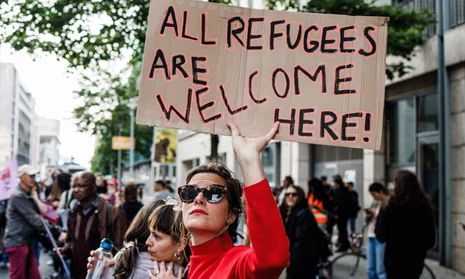

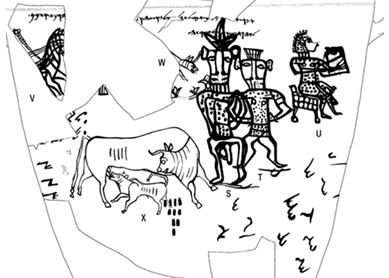


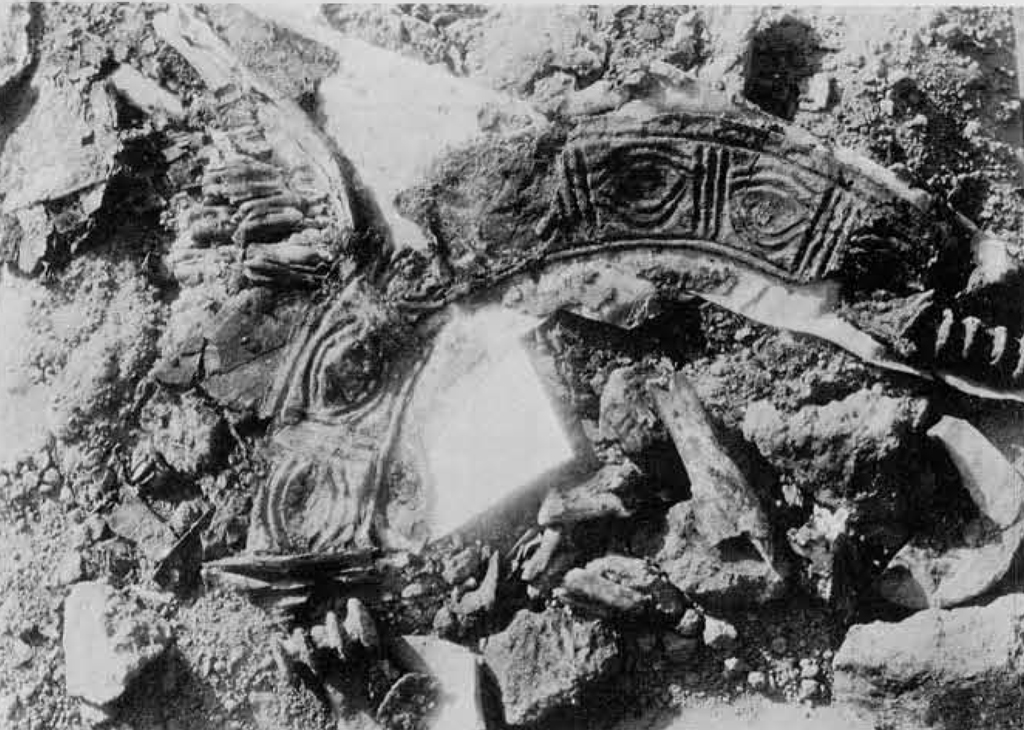
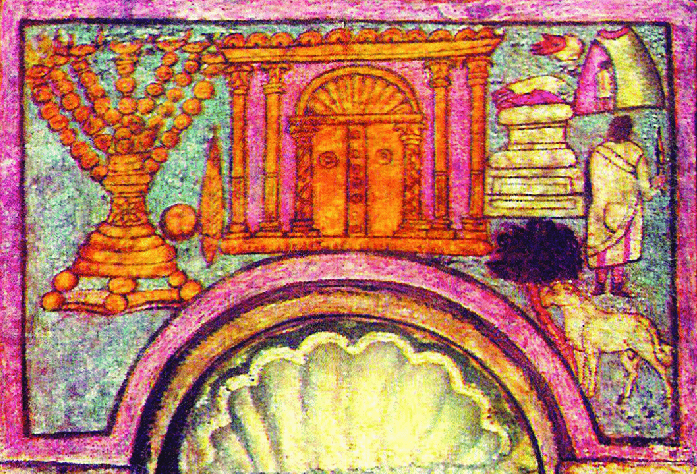

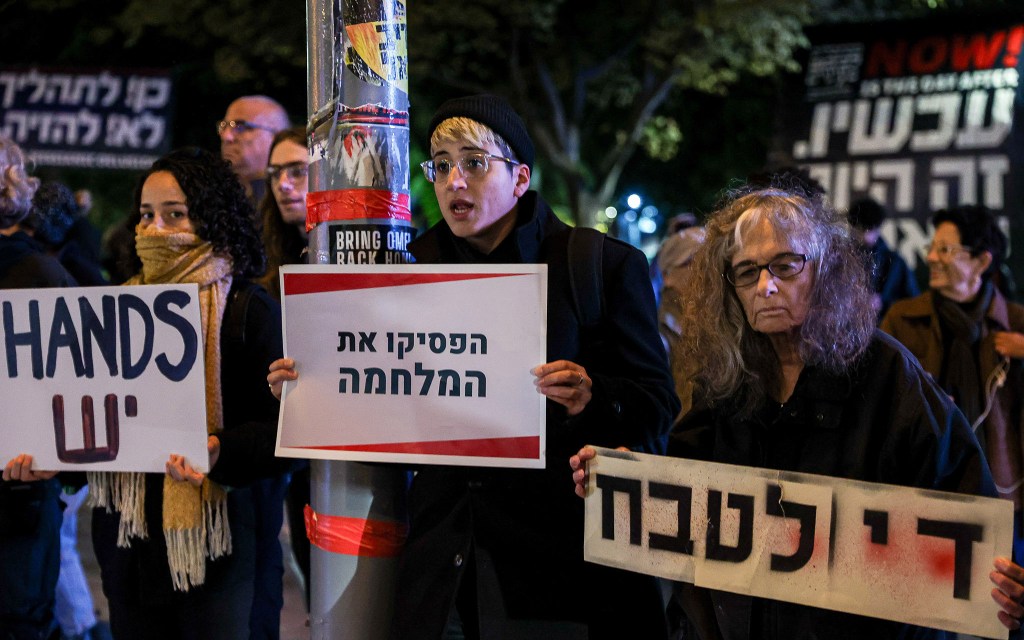
 Sim Lev