festivals · high holy days · sermon

From an open roof to a closed scroll

We are nearing the end of Sukkot and entering Simchat Torah.

We move from fragility to strength, from an open roof to a closed scroll, from the impermanence of life to the eternal truth of God.

What makes a sukkah kosher is its frailty. With its open walls and starlit roof, it stands in for all our wanderings and confusion. It is makeshift and temporary.

In its fragile state, it teaches us about the human condition: that we are vulnerable, at the whim of forces beyond our control. Into this transient home, we bring guests, both living and ancestral, who teach us that we only live by community. 

The sukkah teaches us about the human heart: that it must be open and porous, welcoming to strangers, able to let others in and accept our own emotional helplessness.

But the sukkah also has another feature of what makes it kosher. It must be able to stand for eight days. It must be strong enough to withstand the weather. It cannot be drowned by rain or upended by windstorms. 

This, too, teaches us about the spirit. We must be resilient. We must be confident enough to know our boundaries. We must be strong enough not to let others wave or topple us.

This is the tension we hold in the transition between Sukkot and Simchat Torah: between fragility and strength.

There is a story that Abraham’s tent was open on all sides. 

Wherever Abraham looked, he could see whether strangers were coming to visit him.

If he looked out and saw them coming, he would run to meet them. Abraham was the model of generosity, so full of love for the wayfarer that he would do anything to let them in.

This explains why he greeted the angels who came to visit him at Mamre so enthusiastically, even though he thought they were just human beings. It explains how he was righteous enough to receive God’s blessing, and to become the progenitor of monotheism. 

This is the version of the story that we find in Bereishit Rabbah, and you will find it printed in all sorts of commentaries. It is a beautiful myth that captures our imaginations and features heavily in sermons preaching charity. It teaches us about the importance of welcoming. 

But it is not the only version of the story in rabbinic literature. A few centuries later, Avot deRabbi Natan, a commentary on the same text, explains it slightly differently. Instead of the example of Abraham, this midrash says we should be like Job. 

It teaches:

Your house should have a spacious entrance on the north, south, east, and west, like Job’s, who made four openings to his house. Job opened up every side so that the poor would not be troubled to go all around the house: no matter what direction a stranger came from, they could enter in their stride.

At a glance, it tells the same story, just with a different prophet named. Job was also described as righteous and upright, a man who feared God and turned away from evil. 

But there is a difference. Unlike Abraham’s, Job’s house is actually mentioned as having four sides. How do we know? Because, at the very start of Job’s story a messenger comes to tell Job that his house has blown down. “A mighty wind swept in from the desert and struck the four corners of the house. It collapsed on the young people and they are dead.”

Job’s house was so open that it was destroyed and killed everyone in it.

Job’s house was open on all sides. No wonder it fell down!

This later midrash is satirising the earlier one. Sure, openness is good, but too much openness leaves you exposed. 

We have to exist, instead, in the tension between fragility and strength; between vulnerability and boundaries.

It may seem strange to preach boundaries from the bimah. Admittedly, it feels strange to me. 

I used to believe that openness was the ultimate religious value. That being hospitable and welcoming were the most important spiritual attributes. And I do still hold them in high regard.

But I am increasingly learning that it is equally important to have structural integrity, and borders, and lines that cannot be crossed. Without them, the entire structure collapses, and the people the structure was established to protect can be destroyed with it.

Sukkot teaches us to live with utmost susceptibility, but only for a short time. We must eat and sleep and live in this shaky fruity shack, exposed to all elements and strangers. It teaches us to put ourselves in harm’s way. 

But not forever.

At some point, the sukkah must come down. At some point, we must return to our own beds and kitchen tables and modern comforts. At some point, we have to hold on to something firm.

As we enter Simchat Torah, we turn to that certainty. That is our Torah, our faith, our belief in God-given moral truths. We grasp it steadfastly, and refuse to waiver from it.

Torah is our foundation. It is our immovable structure. There is some truth that we must hold on to tightly, never allowing it to be permeated or eroded. For us, that is our moral conviction.

The Mishnah instructs us to build a fence around the Torah. This commandment has been abused by some in Orthodoxy to justify always taking the most conservative approach, defending every law against the slightest leniency or adaptation. As such, Reform Jews have often poured scorn on the assertion, seeing it always as a reactionary threat.

But a fence is not the same as a wall. In fact, the word used in the Mishnah is siyag, which is closer to hedge. It is a boundary. It is a line that keeps some things in and some things out. It is a way of protecting the essence. 

That does not mean it has no ways in and no ways out. It just means that some things must be shielded. 

We are nearing the end of Sukkot and entering Simchat Torah.

We move from fragility to strength, from an open roof to a closed scroll, from the impermanence of life to the eternal truth of God.

We have learnt to be vulnerable and precarious. Now, we must learn to protect what we love.

Shabbat shalom.

Shabbat Chol HaMoed 5783, October 15th 2022
interfaith · sermon · torah

Who gets to be Jacob?

I am told that, as a toddler, whenever it came to game-playing, I had to be Postman Pat. No matter what the game was, I insisted on playing that friendly gentleman with a black and white cat. As I grew up, I had to compete with other children for different parts in our roleplay. We couldn’t all be the robbers, somebody would have to be the cops. Not everyone can be the Yellow Power Ranger and we can’t all be Ginger Spice.

Those were, at least, the parts we competed for in the 1990s. It was fairly low stakes, but it seemed quite important at the time.

But it’s nothing compared to the fight for roles that went on in the 5th Century CE. This big broigus was not just between two individuals, but between two whole religious groups: the Jews and the Christians. That battle was played out in two foundational texts of our traditions: a sermon by St Augustine of Hippo on the Christian side and the midrash, Bereishit Rabbah, for the Jews. Both were determined that they were Jacob, and the other side was Esau.

Which one would get to be Jacob?

At stake in this question is an ancient prophecy, told to Rebecca while she was pregnant: “Two nations are in your womb, and two peoples will emerge from your body. One shall be stronger than the other; and the older shall serve the younger.”

When Rebecca gave birth to Jacob and Esau, she was not just birthing twins, but rival nations. A strong one and a weak one. An older one that would serve the younger.

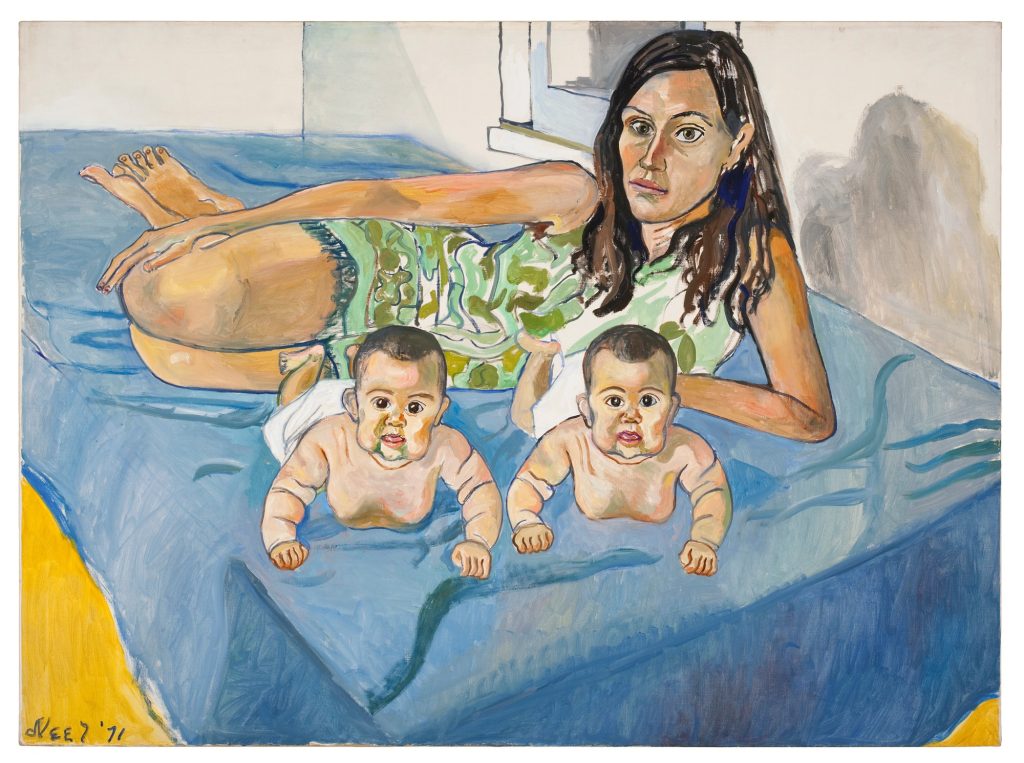
We have Esau: the hairy, ruddy hunter. We have Jacob: the smart, younger upstart.

The contest over Isaac’s blessing and birthright laid out in our parashah was more than a competition between siblings. It was a war between peoples.

So which one is the Jews? And which one is the Christians?

As far as the Jewish texts are considered, Jacob must be the Jewish nation. Meak and smart? That’s us. Gentle but witty? Sounds Jewish. He even changed his name to Israel. Bnei Yisrael, the children of Israel, klal Yisrael, the community of Israel, daat Yisrael, the laws of the Jews. Surely Jacob must be us!

And meanwhile Esau… well, he’s Rome. He changed his name to Edom, which, granted, is on the other side of the River Jordan in Mount Seir, but was the birthplace of Rome’s most wicked emperor and Temple-destroyer, Hadrian. And look at those Romans. They’re the hairy, barbarous, fighting ones. They’ve got their swords and their empires, just as Esau had his bow and his field.

Bereishit Rabbah, our classical midrash on Genesis, spells it out for us.

Two proud nations are in your womb, one is proud of his world and one is proud of his kingdom. Two prides of their nations are in your womb – Hadrian amongst the gentiles and Solomon amongst the Israelites.

We’re Jacob. We’re the one that God has chosen. We are the descendants of Solomon, proud of the world of Torah and obligation. They’re Esau. They’re the other brother. They’re the descendants of Hadrian, proud of their ill-gotten Empire.

Except, of course, for one obvious problem. Jacob is supposed to be the younger brother. Aren’t we, the Jews, clearly the older sibling? Our revelation is much older than the Christian one and the kingdom of David long predates the Caesarian Empire.

This fact was not missed by our Christian interlocutors.

Foremost among these Christians was St Augustine of Hippo. Augustine was a Father of the Christian Church, a theologian living in North Africa. His ideas were definitive in Christianity for many centuries, and people of all religious stripes still reverentially refer back to his writings. As far as Augustine was concerned, Jacob had to be Christendom. Israel, God’s treasured child, was the Church.

True, says Augustine, the Jewish nation sprang from Jacob, but since then, they have gone on to become Esau. They’re the elder people whom God has rejected. Esau was born shaggy and hairy, which means full of sins. Just look at the Jews – that’s clearly them!

Augustine continues: the prophecy promised that the elder would serve the younger, but that never happens in the biblical text. Esau goes on to become very rich and both wind up blessed in their lifetimes. Clearly, this refers to events that had not yet transpired: that the real Jacob would go on to have the upper hand. Now look at the world of Augustine, where the Christian Empire spans the globe and the Jews are a fractured diaspora in their lands. Surely this is the proof that the Jews are now Esau, serving their younger brother, the Christian Jacob.[1]

This battle of biblical exegesis probably sounds quite twee today. After all, why should it matter which of our religions gets to be Jacob? But this battle for religious identity and purpose shaped interfaith relations in medieval Europe.

If the Jews were Esau, then the Christians had replaced them as Jacob. Judaism was superseded, no longer necessary, and its practitioners were hairy remnants of an outdated doctrine. As Esau, the Jews were a savage menace who needed to be tamed by the genteel, pious Christians in their role as Jacob. This Christian doctrine was the theological basis for Jewish subjugation in Europe.

Faced with such hostility and oppression, it was only natural that medieval Jews felt the need to double down and insist that they were still Jacob. They imagined that Christian dominion would only last so long but that the Jews would ultimately triumph. They could still be Israel, despite what was said about them.

The modern era has seen reconciliation between Jews and Christians. Over time, theologians and historians on both sides have come to emphasise their kinship over rivalry. Perhaps, in the conflict over who got to be Jacob, these twin religions forgot that they were, in fact, siblings. Perhaps, still stuck in childhood contests, our communities had ignored the way the story ends.

By the time of the story’s completion, Jacob and Esau are no longer warring for the same birthright. They have both struggled, and lost, and achieved their own blessing. In maturity, Jacob and Esau meet again and wrap their arms around each other. They weep as they realise that God’s blessing is not finite. They never needed to fight over it.

After 2000 years of struggle, perhaps we Jews and Christians can reach the same intellectual adulthood. The campaign for who is the favourite brother can be put aside as we realise that we are on twin paths. We are both children of the same Divine Parent.

Perhaps we cannot all be Postman Pat, or Ginger Spice, or the same Power Ranger. But everyone can be Jacob.

I will give this sermon at Edgware and Hendon Reform Synagogue on Shabbat 21st November 2020 for Parashat Toldot.


[1] ‘Sermon on Jacob and Esau’, Jacob Rader Marcus and Marc Saperstein, The Jews in Christian Europe, pp. 33-34