judaism · sermon · theology

God is here, and I did not know it

One of the loveliest parts of synagogue life, which many of you will have experienced here, is getting to teach our religion to visiting schools. It’s such a joy to pull out things we normally leave aside, and point to things we often take for granted.

By teaching others about our ritual objects, things that are familiar become foreign. We have to reconsider what they are, and why we have them.

Take, for example, the tallit. Of course, these prayer shawls have existed in some form since biblical times. But, showing them to non-Jewish children, we need to come up with an explanation for why we continue to use them here and now.

I tell the school kids: these four corners remind me that God is everywhere, and the knots on them tell me all of the good deeds I can do in my life.

I do, indeed, feel that way when I wrap myself in the tzitzit. I feel enveloped by God’s mantle. I see the strings and think of all the mitzvot- not, in the Orthodox sense of listing out food rules, but of all that God has asked me to do in this world.

It’s nice to have a visible reminder of God’s presence.

That’s just what Jacob gets in this week’s Torah portion. Jacob lies down while travelling on a certain mountain and has the profound dream of a ladder ascending to heaven, with angels going up and down.

In his dream, the Eternal One appears to promise Jacob many descendants, spreading out like dust across the desert, and that God will forever accompany Jacob on his travels.

When he awakes, Jacob exclaims: “Wow, God is in this place and I did not know it!”

How could Jacob not realise that God was on that mountain? Surely he already knows that God is everywhere?

Perhaps Jacob did not realise already that God is everywhere. For some commentators, this is the beginning of Jacob’s prophecy. Only now does he really understand who God is and that this God is with him.

There is a deeper meaning in the language, too. Before the revelation, God is called Elohim. For the ancients, Elohim was universal- the God that permeates all places and things.

Then, in the dream, God is announced by the ineffable Name, Hashem, which we often render as Adonai. This name of God, in Torah, is specific. It is the personal God, who communicates directly with human beings.

When Jacob awakes, he says: “Behold, Hashem is in this place, and I did not know it.”

Jacob knew that God in general was there, because God is generally everywhere, but only at this moment does Jacob realise that the personal God who cares about him is also present.

Now we can understand why God says to Jacob: “I will not leave you until I have done with you what I promised.” God is helping Jacob understand that he is never truly alone. Not only is the world full of God, but so is Jacob’s own life.

In fact, in the moment before Jacob falls asleep, a miracle happens that is so subtle it can’t be noticed until after he wakes up.

When Jacob lays down his head, the Torah says there are many stones in the place, and he takes one of them as a pillow. When he wakes up, there is only one under his head.

Our Talmud says that this is a divine act. According to Rabbi Yitzḥak, all the stones on the mountain argued with each other about who would lie under Jacob’s head. Unable to decide, they merged together into a single rock. That rock, in turn, became an altar to God.

This is a wonderful view of the world, where God is not only in all places and with human beings personally, but acts in every part of nature. Even stones are agents of miracles and servants of God.

If we take seriously this idea that God is everywhere and personally connected with all that exists, there are real consequences for our lives. It means that everything is sacred. It suggests that we need to treat this world as an arena for revealing divinity.

For Progressive Jews, this is one way we might think of commandments. Rather than just a list of dos and don’ts, they’re an attitude towards reality. They see everything as an opportunity to do good, and to make the world better. We are blessed with the chance to show how God is everywhere, including in our own actions.

The same section of the Talmud says that this is why God loves humanity so much. Angels can only praise God when they are told to. Rocks can only move by miracle. But we, endowed with freedom and reason, can perform miracles and make things sacred whenever we want.

That’s what I see when I look at the tzitzit of my tallit. That God is in every place and that every moment is a chance to do right.

You don’t need to wear a tallit to do that. This is my suggestion to you for this week. Try and shift, ever so slightly, how you see the world.

Look around, for a moment, and imagine that everything permeates God’s presence. See God in the bricks of your home and the slabs of the street. At some point this week, try to picture the space where you are as a massive canvas that you can paint with good deeds.

Let us all try to be like Jacob and say: “Wow, God was here, and I did not even know it.”

Shabbat shalom.


high holy days · judaism · sermon

Everything hangs in the balance

Everything hangs in the balance.

Rosh Hashanah is a moment when all judgement is suspended. The scales are suspended, and the weights could fall either way.

At this moment, anything can happen. We reflect on how precarious life is, and how delicately all is held together.

In the light of Rosh Hashanah, our own lives come into focus. How fragile is our existence. 

The rest of the year, we take for granted this delicate balance that allows us to go on living. Today, we notice how remarkable our lives are, and assess what we are doing with them.

Have we embraced life’s blessings and sought to make the most of our days? Have we multiplied joy and generosity in others? What were the moments we squandered or took for granted?

At Rosh Hashanah, we acknowledge our vulnerability. We listen for God’s voice within us. We hear the messages this day brings. God, in turn, hears us. 

Then, we find a way to go on. We affirm our lives.

The stories of Rosh Hashanah point us to moments of precarity. We read of times when life almost did not come about, and of moments when life almost came to an end. Through these ancestral tales, we access our own vulnerability. 

Hannah longs for a child to be born to her barren womb. She asks: “why do I exist?” Then, God hears her anguish, and she gives birth to a boy. His name is Samuel, meaning God hears.

Sarah laughs at the thought that she could conceive in old age, then God remembers her, hears her, and she has Isaac.

Isaac is destined to be Abraham’s heir, then Abraham takes him up to Mount Moriah to kill him. 

When we picture the Binding of Isaac, we can clearly see Abraham’s raised hand – slaughtering knife outstretched to the sky – ready to murder his own son. We are struck by the moment when all hangs in the balance. 

Finally, God speaks, and Isaac is to be killed no more.

In all these vignettes, we find ourselves caught in stories of people whose lives are racked with precarity, but who listen out for God’s voice, take away a message, and find a way to go on that affirms life.

Interwoven with this story of the main characters, our ancestors, is another story, of people living more marginal lives. The story of Hagar and Ishmael speaks even more explicitly to life’s precarity.

In Orthodox communities, where they observe the second day of Rosh Hashanah, the story of Hagar and Ishmael is usually read today. Here, in the Liberal lectionary, wherein we follow the Israelis and  hold by one day chag, we are given the option of reading either Isaac’s or Ishmael’s story. 

I have opted to read the story of Ishmael because I believe it speaks most clearly to the festival’s theme of life’s uncertainty. Everything about the lives of Hagar and Ishmael is left to the hands of those more powerful than themselves.

Hagar is called a handmaid – a word that glosses over the gross crime inherent in a purchased human being. 

A handmaid had no property, no income, and no family to come and redeem her. Most handmaidens were separated from their own kin, and stripped of their original language. 

Hagar’s name means “the foreigner.” The Torah calls her “the Egyptian.”

She was beholden to her mistress, Sarah. Hers is the most precarious position one could have in life.

A handmaid cost more than a male servant because the handmaid could produce the most valuable good: more slaves. 

Unlike the other women in our readings, Hagar does not long for a child. She expresses no desire; she offers no consent. She is simply used as a vehicle so that Sarah can have a son. 

Abraham will take her as a concubine. The child will be Sarah’s property and Abraham’s heir.

This is already a dangerous situation. If she does not give birth, Hagar fails to deliver on the terms of her purchase. If she does have a child, she could become a rival to her mistress.

That is precisely what happens. 

Hagar becomes pregnant, and Sarah immediately flies into a jealous rage. Hagar runs away, but has nowhere to go. She can either risk the harsh desert as a single pregnant woman, or she can return to an abusive household. 

For Hagar, everything hangs in the balance. Then, God hears her and intervenes. An angel tells her that God knows her suffering, but promises that her life will get better. 

She will bear a son. He will be a highwayman, attacking everyone, and attacked by everyone. His name will be Ishmael, meaning “God has heard.”

As with all our protagonists in Rosh Hashanah stories, Hagar finds her life in the balance. She realises how precarious her existence is. Then, she listens for God. Hearing God, she finds a way to move forward.

So, Hagar returns. And her life hangs in the balance once more. 

This is where the Rosh Hashanah reading begins.

Here, Sarah sees Ishmael playing and demands of Abraham “cast out that slave and her child, because that son-of-a-slave will not share in the inheritance of my son Isaac.”

Abraham followed Sarah’s words, and sent Hagar out into the desert with nothing more than some bread and a skin of water. 

She wandered about in the wilderness of Beersheva until they had completely exhausted her water.

We are told that Hagar sat an arrow-shot away from Ishmael. 

This language seems to make us consider Hagar’s own thoughts: in this moment, Hagar thinks: “maybe I could put the boy out of his misery.” But she cannot do it. She cries out “I do not want to see the child die” and bursts into tears. 

Then God hears. God hears Ishmael’s voice crying out, and sends forth an angel from Heaven. 

Every bit of hope was lost. Everything hung in the balance. But Hagar listened. And God listened. And they heard each other. And Hagar found a way to go on.

The angel says: “כִּי שָׁמַע אֱלֹהִים אֶל קוֹל הַנַּעַר בַּאֲשֶׁר הוּא שָׁם” – “for God has heard the voice of the boy where he is.”

In the Talmud’s treatise on Rosh Hashanah, this is the hook our rabbis use to tell us about our own place before God. 

The rabbis say this means that God hears Ishmael in the moment when he cries out.

To God, Ishmael’s past and future actions matter not. 

God does not care that Ishmael comes from the lowest and most vulnerable place within Israelite society. God does not care about the prediction that Ishmael will go on to be a highwayman. All that matters is that Ishmael cries out at that moment.

This, says the Talmud, is how we should all see ourselves on Rosh Hashanah. Rabbi Yitzhak declares “every person is only judged according to their deeds at their moment of trial.” 

We are only judged by our hearts in this moment of reflection. 

We are not our past mistakes, nor our future errors. We are the people that God beholds today. We are the people who chose to turn up, on this Rosh Hashanah, who knew we wanted to engage with our own souls. 

That is all that God sees.

This is a part of the Talmud’s more general argument about Rosh Hashanah, that it is a time when everything hangs in the balance. 

Our rabbis teach that we should all imagine that the whole world is finely balanced between good and evil, and that it is our responsibility to tip the scales. 

Moreover, say the rabbis, our own hearts are precariously weighted, with an even chance of falling to the side of good or evil. In this analysis, then, the fate of the whole world can rest on just how we direct our own hearts.

So, we need to take every opportunity to place a greater load on the scale of good.

The Talmud offers things we can do to make such a change: give to charity, call out in prayer, and change our behaviour. Any one of these actions can cause a shift in that delicate balance. 

A small prayer, a slight modification to how we act, a donation to a righteous cause – any of these can transform everything.

We live in a time when all can feel uncertain. Life seems nerve-wracking. At times, it does indeed feel like the balance of all the scales in the world is tilting ever more toward evil. 

The Talmud tells us that we still have some control. We can still be a force for good. We can still nudge the fine weightbridge an inch towards goodness.

The Torah gives us examples of people whose own lives hung in the balance. They listened for God, and God listened for them. And God answered “I have heard you where you are.”

So, if you feel like you are hanging in the balance, hang on in there.

God is hanging in there with you.

Shanah tovah. 

sermon · torah

You can’t be in a community on your own

Can you help me build a community?

Hi, my name is Lev, and I’m a rabbi. I’m here because I need your help.

I’m looking for a Jewish community. I’ve been trying to build one on my own, but it’s been so difficult.

Last week, I put on my best clothes, and sat in my living room alone saying “amen.” Honestly, it wore off after only five minutes. So I went into my kitchen, where I lay out a lovely spread of bridge rolls and fish balls. I stood around awkwardly with crisps on a paper plate, but there was nobody to make small-talk with.

It was worse during the Holidays. At Purim, I played every character in the spiel, and acted it out to myself. At Pesach, I had the Afikoman in a place I thought my guests  would never find it, but then, I was the only guest, and I found it straight away. At Simchat Torah. I danced around fervently to klezmer, but there were no musicians, and the hora doesn’t work solo.

All I wanted to do was go to a bat mitzvah, find a friend, and kvetch about the rabbi. But there was no bat mitzvah. There was no friend. And I was the rabbi!

So I’m looking for your help. Can you tell me what I’ve been doing wrong?

It seems like in order to do anything Jewish, you need a community.

Apparently I’m not alone in coming up against this problem. In fact, the Talmud relates that even back in Babylon, rabbis needed communities in order to be Jews.

Once, according to the very beginning of Berachot – the tractate on blessings –  Rav Nahman had not been to the synagogue for a little while.

Rav Yitzhak came to see him, and said: “where have you been? Why haven’t you been at shul?”

Rav Nahman answered: “I’ve been sick.”

So Rav Yitzhak suggested: “Gather ten of your students, and we’ll hold services in your house.”

Rav Nahman said: “I don’t want to impose on anyone.”

So Rav Yitzhak suggested: “Why not get a messenger who will come and tell you when we’re doing prayers, so you can join in?”

Rav Nahman went to protest, and then Rav Yitzhak finally asked: “what’s really going on here?”

And Rav Nahman finally answered: “You have told me many things the community could do for me, but nothing that I can do for the community. I need to feel like God won’t hear your prayers unless I’m there.”*

What do we learn from this story?

First, we learn that it really is important to come to synagogue.

Second, we learn that if you can’t come to synagogue, the synagogue can still come to you.


And, third, we learn that people need to feel needed.

A synagogue is not a subscription service. It’s a membership organisation. You only get out of it what you put into it. And people only come when they have something to put in.

It is the definition of community: we are all in it together, building it together, with a shared stake in its future.

Sometimes, in previous synagogues, Jews said to me: “I’m a member, but I don’t want to be involved.” And I used to say: “don’t worry, Judaism will still be here when you need it.”

But that’s not necessarily true, is it? Judaism needs people who believe in it; who turn up, week in, week out, to keep it living. There is no Judaism without Jews, and Judaism needs every single Jew.

In our Torah portion this week, Moses teaches that if you have an extra sheaf of corn, you need to set it aside for others. When you have olives left on your trees, leave them so that people wandering by can eat them. Got leftover grapes? Share them round.

The point is, in the economy of the Torah, you don’t just feed yourself. You feed everyone. Yes, you make sure you have enough to eat, and then you give away the rest.

The same is true with our religious selves. Yes, we all need the spiritual sustenance we get from coming to synagogue. We all need the companionship; the moments of the serenity; and the support through tough times.

But, when you feel full up on Judaism, that’s when it’s time to share what you have. If your cup overflows, make sure you give the other synagogue goers a sip.

Everyone in this community needs you here. You have skills, strengths, time, and energy that are completely unique to you.

We need you.

I need you. I’m here because I’m a rabbi and I can’t build a Jewish community alone.

This synagogue is in an important moment of transition. Just a couple of weeks ago, you said goodbye to your beloved rabbi of seven years, Rene. In the next few weeks, you will spend Rosh Hashanah and Yom Kippur with our wonderful colleague, Daniel. And then, at Sukkot, I’ll be starting with you.

I am really hoping that this will be a long term partnership, where we will grow together. For that to happen, I really do need your help. I need you to turn up to synagogue, do mitzvot here, and make all our Shabbats and festivals meaningful. I need you to offer up your time and skills, wherever you can, to make this community run successfully.

Above all, I am asking you to make room for me.

In this week’s haftarah, the prophet Isaiah says: “Enlarge the site of your tent, extend the size of your dwelling.”

So that’s my request to you. I’m a Jew looking for a community. Can you make your dwelling a bit bigger to let me in? Can I come and be part of your tent?

I can’t be a Jew alone. And I’d like to be a Jew with you.

Shabbat shalom.

*Not exactly what he says, but it’s a sermon, and I’m taking license.

sermon · talmud

Approaching an ending

We are approaching the end of our time together.

In January, I handed in my notice. 

Over the last few months, I have packed away my books and cleared my office.

On Wednesday, I will hand back my keys to the synagogue building.

Today is the last time I will stand up here and address you. 

We are approaching the end of Pesach. In two days from now, we will carry out our final service of this festival. In the evening, we will start eating leaven again, and bring back out our toasters and bread machines.

We are also approaching the end of the rainy season. In ancient Israel, this time of year marked the transition from when they hoped for life-giving downpours to the dry heat of summer when they prayed for morning dew.

The rabbis could not agree on exactly when the change took place. The Mishnah asked when we should stop praying for the rain and switch to asking for dew.

Rabbi Yehudah said: “We should keep our prayers going until the festival of Pesach has ended.” 

Rabbi Meir disagreed: “We should keep our prayers going until the end of the month of Nissan.” 

Centuries later, in Babylon, Rav Hisda came along and said: “this is not difficult.”

Now, this is the Talmud. If I’ve learnt one thing from studying the Talmud, it’s that, when a rabbi comes along and says something isn’t difficult, what follows will be really confusing.

Rav Hisda says these rabbis do not actually disagree at all! They’re just talking about different things. There’s a difference, he says, between praying for rain, and mentioning rain in your prayers. 

Clear? As muck.

You can see why this question made the rabbis feel anxious. Endings are hard. And knowing when one thing ends and another begins is important. 

Don’t worry. Another rabbi, Ulla, comes in. He says the problem isn’t that Rabbi Meir and Rabbi Yehudah disagree with each other. It’s that there are two different ways of reading Rabbi Yehudah. 

We are going to have to agree with Rabbi Yehuda, says Ulla. We’re just not sure what he means.

Rabbi Yehuda says that prayers for rain end when Pesach ends. And we agree with him.

But hang on a minute! When does Pesach end?

A whole new raft of rabbis enter the discussion, each with conflicting opinions. 

Personally, I would have thought Pesach would end at evening on the eighth day. The rabbis do not even consider this as an option.

No – their first suggestion is that Pesach is the first day, so that is when we should shift our prayers.

But we don’t put requests into our prayers at festivals. They’re like Shabbat – they’re God’s days off from being bothered by us. So that can’t possibly be the day we stop asking for rain. We weren’t going to ask for anything then anyway.

So maybe,  instead, after Pesach means after the need for slaughtering a paschal lamb has passed. In Temple times, the paschal lamb was killed just before the Pesach festival started. 

So the prayers for rain end when we would have slaughtered the paschal lamb. 

But that would mean Pesach ends before Pesach starts!

And the Talmud is even more confused now, because we no longer have a Temple and we live in the Diaspora and we are still nowhere closer to knowing when one prayer for rain stops and another one starts.

Clear? But Rav Hisda said it wasn’t difficult!

OK I have chosen a really complicated bit of Talmud to hang this sermon on. I still don’t understand it myself. Maybe that’s just because the changes of seasons really are confusing.

Perhaps the Talmud doesn’t quite want to resolve the question. They want to leave us hanging, so that there is always a slight liminal time when one season is ending and another is beginning.

Transitions are hard. In fact, this sugya of Talmud keeps coming back to the same stock phrase: this isn’t difficult. It seems to say it so often because it knows that it is.

This obviously matters to me, because I am standing here in liminal time, in the gap between having been a rabbi here and not being one anymore. It is important to say, with surety, that there is an end date. I won’t be preaching here again.

But I think we can learn something from the Talmud too. The Talmud knows that sometimes dew comes in winter and sometimes there are heavy downpours when it’s dry. All water is part of a bigger cycle of seasons. 

The rain teaches us how transitions carry within them all that has gone before and all that is yet to come.

Seasons and rainfalls are strange, transitory moments. We can read great meaning into them. 

Having a clear sense of when one passes into another matters. So let’s make this our moment of acknowledging a shift. 

This is our last time praying on Shabbat together. It is my last time preaching from here. 

You will continue to grow in this community, and I will go and minister elsewhere. 

And, just like the passing between the winter and the summer rains, we will always be part of the same water cycle. Our rains will be part of each other forever.

I will hold onto and cherish the droplets I carry from Oaks Lane. Your piety, your care for the sick, your love of music, your attention to detail, your Yiddish soul. 

I pray that some of the best of the waters I poured here will stay, and that you will find some use in them too, after I have gone.

It has been a privilege.

Shabbat shalom. 

sermon · talmud

Can you purify this spider?


Spider season seems to have begun early this year.

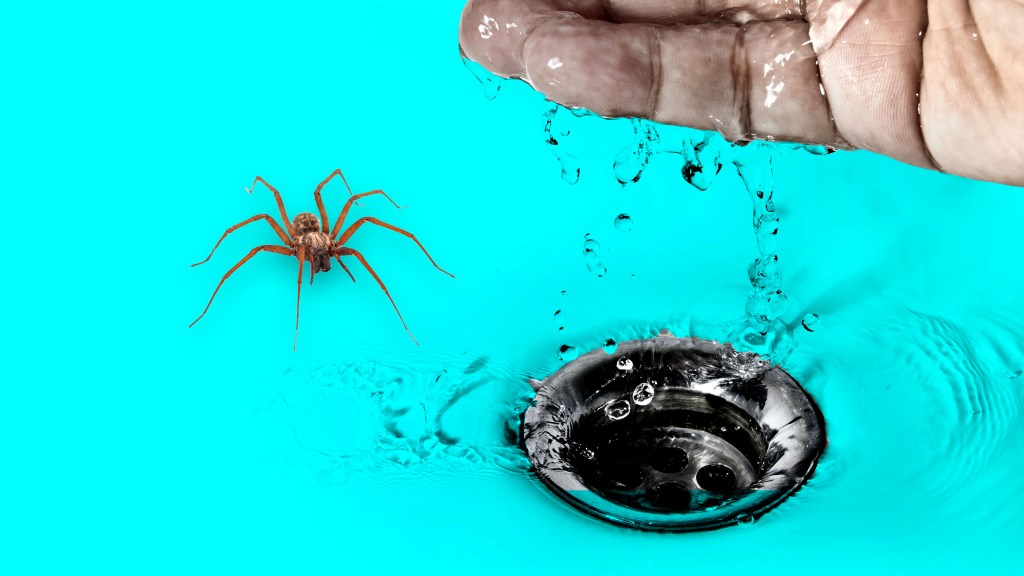
It’s that time of the year when we start seeing spiders, climbing up walls, hanging out in sheds, and getting comically stuck in bathtubs. Of course, they live all year round, but in early autumn they are visible everywhere.

I love spiders. I think they’re quite cute. We don’t have any dangerous ones in this country, as far as I know, and they eat the ticks that we really don’t want in our houses.

But I get why other people are creeped out by them. They’ve got eight legs, which is far too many, and they scurry around like they’re up to no good. We’ve been fed media images of terrifying tarantulas and it’s understandable that people would associate them.

The Torah has a word for these beasties. Sheretz. It’s root is resh-vav-tzadi, to do with running around, so most translations render sheretz as ‘creepy-crawly,’ or ‘creeping thing.’ It applies, first and foremost, to mice and lizards, but extends to any scuttling insect or racing rodent. There are also the sheretz bamayim – the creepy-crawlies underwater, like jellyfish, octopus and lobster you might find scampering on ocean floors.

They were created by God on the fifth day. They are mentioned by name. For some reason, God decided that spiders were supposed to exist. God made room for them in the world and dedicated a verse of Torah to celebrating their creation. God made mosquitoes and shrews and chameleons and God saw that they were good. So, if you’re in the camp that loves spiders, you get a point.

God has also banned them. We are prohibited from eating them. They are described as disgusting and as abominations. On some level, we are supposed to revile them. So, if you’re in the camp of people who can’t stand spiders, you get a point too.

(I promise you, this is going somewhere.)

I’ve spent the last week thinking about the sheretz. From Monday to Thursday, this synagogue hosted the Queer Yeshiva. It was a momentous occasion. Never before in Progressive British history have so many people come together to study the Talmud in such an intense way. Everybody talked about how wonderful this synagogue is, and I want to thank you all for opening this space to a bunch of LGBT people to study Torah.

Over the week, we read a sugya of Talmud from Sanhedrin, a tractate that deals with capital crimes. It asks questions about who gets to condemn somebody for the death penalty, and on what grounds.

It contains a list of characteristics expected of Jewish high court judges: tall; wise; handsome; elderly; fluent in at least seventy languages; and, of course, familiar with sorcery.

So, who is eligible? Do we have any candidates for the Sanhedrin in this congregation? I won’t be putting my hat in the ring. It’s tricky to find someone, but I’m sure such people exist.

Then it adds another requirement. Anyone who wants to sit on a Sanhedrin has to find grounds for declaring clean the sheretz. You want to put somebody to death? You’ve got to be able to make lobsters kosher. You have to be able to purify a spider.

Who can make unclean things clean? Who can make what’s treif kosher? If anyone in this room can do it, you will be welcomed with open arms to the Jewish law courts of Babylonia.

But it seems unlikely that will fall within any of our skill sets. It sets an impossibly high standard.

Perhaps that’s the point. You have to be so good at thinking and reasoning that only the highest standards of scholars can join. You have to be of such excellent calibre that you know Torah inside out and can interpret it, even against itself.

Many have understood this edict that way. In fact, elsewhere in the Talmud, we learn that there are as many as 150 ways to make shrimp kosher. There’s not just one secret method of purifying a sheretz – there are a whole bunch of them – and you should be able to work them out.

But the Talmud doesn’t give any convincing explanations as to how this is possible. Even where rabbis have a stab at it, they are soon shot down. Nice try, but no. That’s not how you make mice edible.

As a result, plenty of rabbis throughout the ages have tried to show that they can purify the sheretz. Great thinkers who knew the Torah inside out have tried to show that they are eligible for sitting on the Sanhedrin.

But here’s the thing. You can do all the reasoning you like. A spider will still be a spider. A lizard will still be a sheretz. And a sheretz will still be unclean. You can’t actually change what the Torah says.

So the rabbis have made sitting on the Sanhedrin impossible. It is so restricted that we will never find people capable of achieving it. De facto, the rabbis have abolished the death penalty.

This is a tremendous achievement. Subtly, and without saying so, they have done exactly what they say needs to be done: they have turned the Torah against itself. Except, instead of turning the Torah against itself so that they can kill people, they turn the Torah against itself so nobody can!

Suppose somebody were to come along and actually give convincing proof that spiders are really kosher. OK, then we would have a problem. My hunch is that the rabbis have already thought of this. Anybody who could do so would, by their nature, refuse to implement the death penalty.

A person who can see the kosher in a lobster can see the goodness in a convict.

A person who could cleanse the body of a mouse could cleanse the soul of a criminal.

You have to be able to see people, and creepy-crawlies, the way that God sees them: as good.

This is the rabbis’ genius way of telling us who is allowed to judge others. The only person we would permit the authority to judge others is the one who would judge them favourably.

The spiders are out and about in our houses. We might love them or hate them or greet them with indifference. But who gave any of us the right to kill them? God, for whatever reason, has determined that they have a place on this earth and it is not our job to decide they don’t.

The world is full of people we don’t like. Some of them do detestable things. And we might feel fear and hatred and anger towards them. And sometimes those feelings are justified.

But we don’t have the right to kill them.

We are not worthy to judge them.

Unless you can purify a spider, you have to live in this world with everyone else.

God has made enough room for them in this world and we have to make enough room in our hearts.

Shabbat shalom.

high holy days · sermon

A life without regrets

If today were your last day, what would you make of the time you have had? Would you be satisfied that you’d lived your life right? Would you feel like you had left much undone or unresolved?

If today was your last day, would you feel confident in your end? Would you know for certain what had made your life worthwhile?

These are the uncomfortable questions Yom Kippur pushes us to consider. And they are indeed uncomfortable questions. Without even mentioning God, morality, or religion, I know that some will feel affronted by the line of questioning. I know that if I were the one being asked, I would feel affronted. I would be raising objections to the questions. 

But everything about the rituals of Yom Kippur forces us into that way of thinking. 

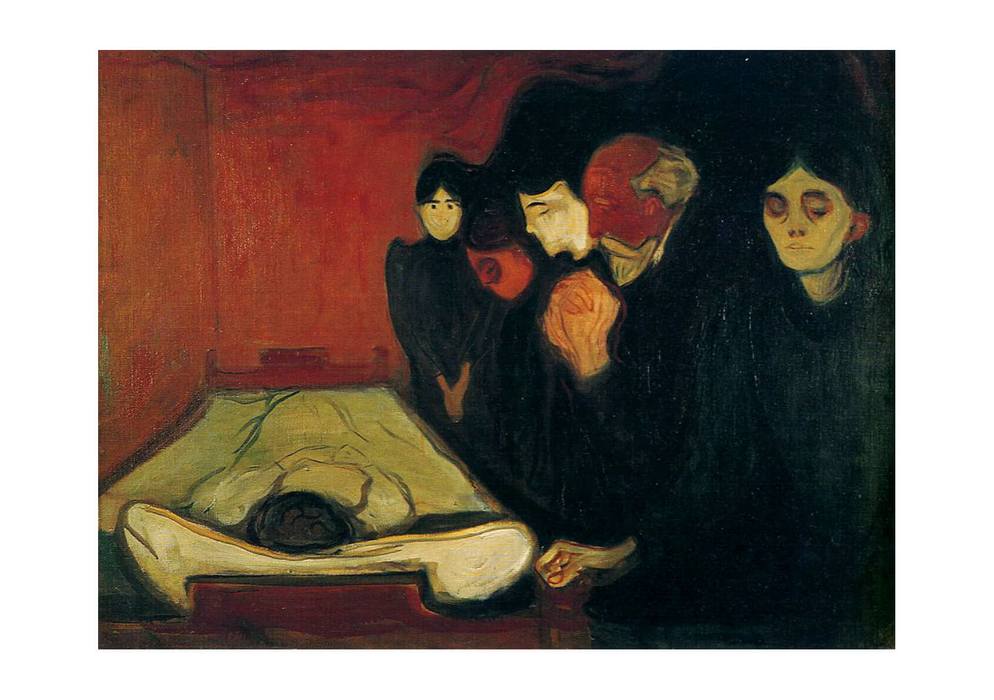
We dress in the clothes in which we will be buried. A kittle, or cassock, for Ashkenazim. A simple tallit for Sephardim. No jewellery, no perfumes, no fancy shoes. We are dressed not too differently from how we expect to leave this world.

We pray.  We pray that we will be allowed to live. We recount the many ways in which we might die: by fire, water, beast, sickness, ordeal. We recite vidui: the final words we expect to say on our deathbed.

We fast, afflict, and deprive ourselves. All of this is supposed to make us reckon with our mortality. It is a death rehearsal. Yom Kippur asks us whether or not we are ready for death.

Today is Shabbat Shuva, the Shabbat midway between Rosh Hashanah and Yom Kippur. While some of our readings are special to the occasion, the Torah continues where we last left it before the High Holy Days, with Moses proclaiming his last speeches of Deuteronomy. 

At this stage, Moses knows that he will die, and he contemplates his coming end. His life is over, and so is his mission. He will not reach the Promised Land to which he has travelled, and he must handover power. God tells Moses: “The time is coming close for you to die. You will soon lie down with your ancestors.”

God offers Moses no reassurance that he has succeeded in his life’s task. Quite the opposite, God tells Moses that the people will now chase after false gods, neglect the holy laws, and forget their covenant with God.

After all that. Plagues and miracles in Egypt. Signs and wonders and an outstretched hand to deliver them. They had seen the sea part and bread fall from the sky. They had received the commandments from a thunderous mountain. Now, God tells Moses, they will forget it all and ignore what they learned.

Moses must have wondered in that moment if his life had been worth living at all. His projects may not be continued. His beliefs might not be upheld. Everything he did may have been for nought. 

Yet, somehow, Moses seems to have achieved a kind of calm. He no longer protests against his Creator. He does not challenge the decree. He hands over to Joshua and lets him take the reins.

Perhaps, by this stage, Moses has learned that what matters in life isn’t whether your work succeeds, but whether you perform it with integrity. What matters isn’t whether you find out all the answers, but that you seek to learn. And what matters isn’t whether you perfect the world, but that you treat the world as if it can be improved. In short, what matters is that you do your best.

In the Babylonian Talmud, Rava tells us that, upon dying, Heaven will ask of us six questions:

  • Did you have integrity in your work?
  • Did you make time to study Torah?
  • Did you care for your family?
  • Did you try to make the world better?
  • Did you welcome new ideas?
  • And did you have reverence for your Maker?

Our task on earth is not to be wealthy or famous or powerful. It is to be honest, studious, caring, supportive, optimistic, inquisitive and loving. It doesn’t matter so much what we do with life, but how we do it.

Heaven doesn’t ask what our job was. It asks if we did it faithfully. Did we conduct our working lives in ways that we could be proud to give account of ourselves before God? Did we act as if how we treated others in business mattered for the sake of our own souls?

Heaven doesn’t ask if you can recite the whole of the Mishnah by heart. It doesn’t ask whether you mastered some sacred texts. It doesn’t even ask if you learnt your aleph-bet. Did you try? Did you take an interest in your traditions and heritage? Did you actually look to the past to see if it had any bearing on your own life?

Heaven doesn’t expect you to have had only one marriage of the right kind. It asks whether you actually looked after people. Did you care for those around you? According to palliative nurses, the most common regret among the dying is that they did not spend enough time with those they loved. At the end of life, God also challenges you with the same question. 

Heaven does not ask if you brought about salvation of all humanity. It asks tzafita lishua? Were you on the look out for redemption? Did you search for chances to make the world better? Did you hold onto hope that the world could be changed?

And Heaven does not ask if you arrived at the right answers. It asks whether you asked wise questions. Were you curious? Were you inquisitive? Were you interested in what others have to say?

Above all else, the question we are asked is whether we had yirat Hashem, awe of God. Without this, all the other questions are irrelevant. The Talmud compares someone without reverence for Heaven to someone who only has the keys to the door inside the house, but can’t actually get into the house.

Ultimately, what matters is that we treat our lives like they have meaning. You have to actually care about how you live, and believe that it really matters.

When Moses reaches the end of life, he doesn’t wonder whether it was worth it. He is faced with the far more fundamental question of whether he really lived right. 

Integrity. Curiosity. Kindness. Justice. Effort. Love.

These are the things that really matter in the end. We will get to the end and our only regrets will be the attitude we took towards life itself. 

Yom Kippur is, indeed, a preparation for death. But above all else it is a calling to live. It demands of us that we look at our lives and resolve to conduct them better, with fewer regrets.

Shabbat Shalom

sermon · spirituality

In defence of large groups of people

The great sage of the Mishnah, Ben Zoma, once exclaimed:

How hard must the first ever human being have worked before he had bread to eat! He plowed, sowed, reaped, sheaved, threshed, winnowed, separated the grain from the chaff, ground the grain into flour, sifted, kneaded, and baked… and only then did he get the chance to eat. But I wake up and find all of these prepared for me.

He added:

How hard must the first human being have worked before he had clothes to wear. He sheared, laundered, combed, spun and wove… and only then could he put on a shirt. But I wake up and find all of these prepared for me.

And, of course, he is right. How many hands must have touched everything we enjoy. Ben Zoma knew this was true 2,000 years ago. How much more true is it now that we live in a globalised world with food, clothes and technology Ben Zoma could not even have fathomed.  Anything that anyone in this world does is because many people have worked together to make it happen.

But Ben Zoma also says something ridiculous. He imagines that Adam, the first human being, did all this alone. We know that is patently false. First of all, at the very minimum, Adam was accompanied by Eve in Eden. And, if we follow the biblical story, God provided that first couple with everything they needed. They could pick fruit off the trees without trouble and never bothered with bread. They didn’t even need clothes until they had left their paradise garden.

When Adam and Eve did leave Eden, they immediately found wives for their male children. The Torah doesn’t explain how they got there, but any other explanation for how humanity came about would be very troubling. The Torah knew that it was impossible for human beings to ever achieve something on their own.

And, in fact, the Talmud, where this saying from Ben Zoma is quoted, knew this too. This imaginary world where individuals only do things for themselves comes as part of a sugya that speaks in celebration of groups of large people. The Talmud marvels at the diversity of human beings, where every face and mind is completely different. It speaks in praise of migration, hospitality, crowded marketplaces and huge throngs flocking to the same place.

Human beings are social animals. From the off, we have done everything in groups. Before civilisation, we hunted and gathered in packs. When we first set up farmsteads and villages, we did so together, in groups. The modern world was built by people sharing technology, innovation, resources, and working together to develop them. The only evolutionary advantage that human beings really have is that we can organise in ways that no other animal can.

For the last year, some forms of collectivity have been permitted, and some have been forbidden. People have been allowed to meet each other in warehouses, factories, and takeaways, where they make and distribute things to those who can afford them.

People have not been allowed to encounter each other in parks, or houses, or community centres, or gyms. They have rarely been able to accompany the sick at their bedsides, or celebrate births and marriages, or share ideas in public forums. 

Now, as things ease, people are permitted to gather, but only if they are spending money. We can meet in shops, pubs, and restaurants, and even sit indoors without masks on. But very few of the community activities for children have returned. Older people in hospitals and hospices are still rarely seeing their families. 

Certainly, almost every form of protest or public demonstration remains criminalised, and it may stay so for a very long time. Like last summer, even with a nearly completed vaccination programme, the government is keen to rush people back to work, but reluctant to allow people time to just be together and heal. 

Still fearing the virus, despite minimal risk of transmission to the vulnerable, many people have given up on public transport. There is more regular car use in the UK now than at any previous point in history. I see people avoiding each other, avoiding making real contact, even though the option is there.

I look at this so-called ‘recovery’ from Coronavirus and wonder if anybody has considered what actually makes life worth living. We are not automatons, created to work like robots. The best part of being human is other human beings. We are social creatures, whose purpose is derived from what we can do together. 

And there is a place where people are supposed to be able to meet for just that purpose. Its name in Greek is ‘synagogue,’ which means ‘shared path.’ In Hebrew it is called a ‘beit knesset: ‘a house of meeting.’ In Yiddish, we call it ‘shul,’ which just means ‘school.’ This. This is it. This thing where we come together to sing in unison and study communally and hear how people are really doing, this is what life is supposed to be about. 

This. This place where babies are blessed, bnei mitzvah celebrated, weddings solemnised, healing recognised and deaths memorialised. This is how people recognise the humanity in others, and in themselves. 

This is my last service with you. I have absolutely adored working with you. I have got to know so many of you in such depth, without even leaving my home. I have heard about your families, your fears, your hopes, your dreams, and your life stories. I cannot wait to do that with you in person again.

We have weathered an entire year together through a pandemic. That much is remarkable. I have been so impressed by the ways you have continued to pastorally support each other online, and to provide essential services to the vulnerable. 

The next stage is going to be hard. It means meeting people face to face again. It means taking risks, being brave, and trusting each other. It means accepting compromises and imperfections. But above all, it means truly building a community that is loving and generative. 

I look forward to returning to Newcastle to see you all again in the building, in person, shaking hands, embracing, and catching up on the things that matter. I sincerely hope it will not be long before this community sings in harmony once more and natters over homemade foods at kiddush. 

At no point in our history has anyone managed to go it alone. The future sees us together.

Shabbat shalom. 

story · torah

A rock-eating worm built the Temple

This is the story of how the Temple was built.

This story comes to us from the Talmud. It was copied from the Mishnah. It belongs to the folk legends of King Solomon that may have predated it by some centuries. This is an old story. I sincerely doubt whether any of it ever happened, but I assure you it’s all true.

This is the story of how the Temple was built by a rock-destroying worm. When King Solomon decided to build the Temple, he brought up entire stones from the quarry. He wanted to carve those stones without swords. He knew there was only one way.

Somewhere in his kingdom there was a rock-destroying worm called Shamir. This monster was created at the very beginning of time, during the six days of creation in which light and darkness were separated and the first trees were planted. 

Some say the Shamir ate stones for breakfast; chewed through the hardest granite, making passageways like the holes in Swiss cheese. Some say it could cut through the rocks with only its gaze: a laser-like stare that sliced solid metal. Whatever were its methods, Solomon knew he had to have it.

In fact, the only way to catch this creature was to find something really soft. You had to wrap it up in cotton wool and barley bran. These materials would be too gentle and the Shamir would have no way of chewing through them.

Yes, this is all in the Talmud. This is our tradition. And if you feel like this rock-gobbling worm is far-fetched, I hope you will forgive me if I tell you that Solomon captured this creature by tricking the King of the Demons.

Solomon knew that Ashmedai, the world’s greatest demon, lived in the bottom of a pit on the top of the world’s tallest mountain. And the pit was filled up with gallons of rainwater that the demon swallowed whole every day, then waited for it to refill. 

Solomon sent his servant up that mountain and into that pit. The servant drained the pit of its rainwater and filled it again with fortified wine.

You might think that the King of the Demons would not fall for such a simple trick, and you’d be right. Ashmedai scoffed at the wine-filled pit and refused to drink from it. But days passed and the monster missed his gallons of water. Oh, he became so parched. Eventually, he gave in and took several enormous mouthfuls of the wine. 

Within moments, he fell fast asleep. Solomon’s servants tied him up and carried him back to Jerusalem. When Ashmedai woke up on the Palace floor, he roared at Solomon: “is it not enough that you have conquered the whole world, but now you must imprison me too?”

“I promise you,” said Solomon. “All I want is one creature. The shamir. The worm that eats through stone. I need it to build my Temple for God.”

Ashmedai sighed, and he replied: “I do not own the shamir. It belongs to the ministering angel of the sea, who has entrusted it to the wild rooster. Together they hide in the uninhabitable hills, where the rooster guards his eggs.” 

I’m quoting to you from the Talmud directly here, so you know that what I’m telling you is true. 

When Solomon knew where to find the wild rooster, he covered its nest with transparent glass. Seeing that it couldn’t get in, the rooster brought over the shamir to bore through the rocks. As soon as he’d seen the monster, Solomon knocked the chicken off of the nest and ran to collect his prize.

According to our tradition, that is how the First Temple was built. Overseen by Solomon, the King of the world, accompanied by Ashmedai, the King of the Demons, a stone-chewing worm carved out every brick. It snaked through all the pillars and ate at every rock. After years of winding through the granite, Solomon’s Temple was complete.

So, why did the Talmud come up with such a tall tale? Can it be that our rabbis really believed the Temple was built in such a fantastical manner? Somehow I doubt it. But nevertheless, I am adamant that this story is true. At least, I think it tells us something important we need to know.

Our rabbis were answering a textual problem. The Bible told us that King David was not allowed to build the Temple because there was too much blood on his hands. He had fought too many wars, subjugated too many peoples and built too much of his empire on the labour of others.

Only Solomon, whose name in Hebrew is cognate with peace, was able to overcome the violent tendencies of his father and build a Temple that would truly be fitting for God. How could he build such an edifice without getting blood on his hands?

When our rabbis imagine the construction of the Temple, they picture it as it ought to have been. No wars are fought to secure land. No natural resources are exploited to gain the raw materials. No workers are hurt in the making of the building. All that happens is a natural process, where a worm that would eat rocks anyway works its way through the stones to build God’s home.

The only people vaguely harmed are a demon who got drunk and a rooster that was knocked off its perch. This is the dream of how the Temple should have been made. It was created in complete peace and harmony with nature. 

By encouraging us to inhabit this fantasy, the Talmud draws our attention to the harshness of reality. Even the greatest and most noble civilisations are built on violence. Cities, skyscrapers and the highest cultures are all products of real graft. Human beings do interfere with nature. We do exploit workers. We do plunder natural resources and we do secure territories through war.

When we imagine a world where rock-destroying worms can carve out our accomplishments for us, we know that we are imagining something impossible. But the nature of Talmud is to challenge us to do impossible things.

The Talmud asks us to picture a different relationship between human beings, nature, and civilisation. In a world where the climate is being damaged in unspeakable ways, such imagination is required of us again. Humanity is at a juncture when we must completely rethink how to use resources and what kinds of civilisations we build.

That is what makes it true and that is why it still speaks to us today. The Temple was built by a rock-eating worm. Perhaps one day, we will build the world that way again.

I gave this sermon for Edgware and Hendon Reform Synagogue, Parashat Terumah, on 20th February 2021. For the sources, look at Sotah 48b and the sugya beginning in Gittin 67b