israel · sermon · theology · torah

Why does God not just stop the war?

“How many more signs do you need that God is not there?”

This was the question one congregant asked last week when I went round for a cup of tea. In fact, a few of you have asked similar things recently.

None of you was asking out of arrogance or triviality, but expressing a real despair at the state of the world.  The ongoing war, which has claimed far too many lives, is enough to incite a crisis of faith in even the most devout believers.

Why will God not just stop the war? It is a serious question, and one that deserves a serious answer.

How desperate are we all to see a ceasefire, to see Gaza rebuilt, to see the hostages returned home, to know that the Israelis will no longer hide in bomb shelters, to know that no more people will be rushed to hospitals, to see an end to all the violence and bloodshed?

And it goes deeper than that. How much do we all wish that none of this had ever happened; that there was no war for us to wish to end?

In our anguish at the cruelty, we cry out to the Heavens. There is no answer from On High, so we wonder if there is Anyone there listening at all.

I will not be so presumptuous as to imagine I have the answers. I do not know the nature of God and can give no convincing proof of how our Creator lives in this world. In fact, if I found anyone who thought they did, I would consider them a charlatan.

The great 15th Century Sephardi rabbi, Yosef Albo, said: “If I knew God, I would be God.” We are, all of us, animals scrambling in the dark, as we try to make sense of the mystery.

But we come to synagogue so that we can scramble in the dark together, feeling that if we unpick the mystery in community, we will get further, and develop better ideas. Allow me, then, to share some of my own thinking, so that we can be in that conversation together.

How many more signs do you need that God is not there?

In our Torah, there were times when God did indeed show signs of presence. In the early chapters of Genesis, God walks through the Garden of Eden in the cool of day. At the exodus from Egypt, God came with signs and wonders and an outstretched arm. As the Israelites wandered in the desert, God appeared as a pillar of cloud by day and a pillar of fire by night.

This is the kind of sign that we might want from God now, then.

At a hostel in Jerusalem, I met an evangelical Christian who was absolutely convinced that everything happening in the Middle East was already foretold by the Bible and that God was about to rain down hell on the Palestinians and then all the Jews would finally accept Jesus.

Suffice to say I do not think such a God would be worthy of worship.

And I highly doubt this is the kind of divine intervention any of us would embrace.

Is there an alternative way we could wish for a sign?

Some great indication that Someone greater than us is involved in the story and cares about human suffering. Perhaps just a gentle hand to reassure us everything will be OK.

Deep down, most of us know that no such sign will come.

God did, however, send another sign in the Torah. A sign, perhaps, not to look for signs. A sign that God was not going to get involved, no matter how desperate it all seemed.

The rainbow.

At the start of the story of Noah, the world was filled with violence. Everyone had turned to war – nation against nation – all against all. The entire planet was rife with destruction.

God slammed down on the reset button. God sent a flood so catastrophic that it killed everyone bar one family. The flood was like a thorough system cleanse, designed to strip the earth back to its original state and allow Noah to rebuild.

Then, as soon as the rains had stopped and the land had returned, God looked at the devastation, and swore: “never again.”

God promised Noah: “I will maintain My covenant with you: never again shall all flesh be cut off by the waters of a flood, and never again shall there be a flood to destroy the earth.”

God hung a rainbow in the sky, and told Noah it was a symbol that there would be no more divine interventions:

“When I bring clouds over the earth, and the bow appears in the clouds, I will remember My covenant between Me and you and every living creature among all flesh, so that the waters shall never again become a flood to destroy all flesh.”


The rainbow, then, is a sign that God is there, and a sign that God will not get involved. Even if humanity goes back to being as violent as it was in the Generation of the Flood, God is not going to step in and destroy as at the start.

If the rainbow is a sign that God will not come and strike people down when the world is in crisis, it is also a sign of the other half of the covenant. Human beings must now be God’s hands on earth. We have to be the ones to do what we wish God would.

For Jews in the rabbinic period, every rainbow was a reminder to them that God would not act, so they had to take the initiative. They would look up at the sky and say “blessed is God, who remembers the covenant.”

According to the Jerusalem Talmud, no rainbow was seen during the entire lifetime of Rabbi Shimeon bar Yochai. He was so righteous and brought so many others to do good deeds that there was no need to be reminded any more of the covenant. Bar Yochai was one who acted so much like he was God’s actor on earth that even God did not need to send reminders.

The idea that human beings had to be God’s hands became even more important in the post-Holocaust world. Rabbi Eliezer Berkovits escaped from Germany in 1939 and went on to become one of the leading Orthodox rabbis of the 20th Century. For him, a traditional religious Jew, grappling with the enormity of the Shoah, he had to find a way to deal with God’s seeming absence at Auschwitz.

So, Rabbi Berkovits said, the problem lay not with God’s inaction, but with humanity’s. In his book, Faith After the Holocaust, Berkovits wrote:


“Since history is man’s responsibility, one would, in fact, expect [God] to hide, to be silent, while man is going about his God-given task. Responsibility requires freedom, but God’s convincing presence would undermine the freedom of human decision. God hides in human responsibility and human freedom.”

What Berkovits is saying is that it might be in God’s nature to prevent catastrophe, but it would undermine human nature if God did. In order that people can realise our freedom and our full potential, God has to stand back.

It seems that, in almost every generation, Jews are asking why God does not intervene to stop violence.

In each generation, we find an answer: God does not intervene, because that’s our job.

It’s not that any of these classical sources doubt God’s existence or question God’s presence. They just don’t think it is God’s responsibility to act. It is ours.

There is no flood coming to wipe out war or lightning bolt coming from the sky to strike down the wrongdoers.

We began with a question.

How many more signs do you need that God is not there?

Perhaps we can now reframe it positively.

How many more signs do you need that you must act?

God is not going to stop war. So we have to do our bit to bring it to an end.

Even in our small corner of the world, we have to do all we can to push for peace and justice.

So, on the days when you find yourself looking for the sign, you be the sign.

You need to be the sign to somebody else that there is hope in this world.

You need to be the sign that peace is possible.

You need to be the rainbow.

Shabbat shalom.

judaism · theology

Why Jews do not believe in Hell

When I was a teenager, I went on some kind of away day with other Progressive Jewish youth.

The rabbi – I can’t remember who – told a story. 

A woman dies and enters the afterlife. There, the angels greet her and offer her a tour of the two possible residencies: Heaven and Hell. 

First, she enters Hell. It is just one long table, filled with delicious foods. The only problem is that they all have splinted arms. Their limbs are fixed in such positions that they could not possibly feed themselves. They struggle, thrusting their hands against the table and the bowl. Even if they successfully get some food, they cannot retract their arms back to their mouths. They are eternally starving, crying out in anguish. That was Hell.

Next, she enters Heaven. Well, it’s exactly the same place! There is a long table, filled with delicious foods, and all the people sitting at it have splinted arms. But here, there is banqueting and merriment; everyone is eating and singing and chatting. The difference is simply that, while in Hell, people only tried to feed themselves, here in Heaven they feed each other. 

She ran back to Hell to share this solution with the poor souls trapped there. She whispered in the ear of one starving man, “You do not have to go hungry. Use your spoon to feed your neighbor, and he will surely return the favour and feed you.”

“‘You expect me to feed the detestable man sitting across the table?’ said the man angrily. ‘I would rather starve than give him the pleasure of eating!’

The difference between Heaven and Hell isn’t the setting, but how people treat each other.

At the conclusion of this story, one of the other teenagers – I can’t remember who, but I promise it wasn’t me – put his hand up and said: “But I thought Jews don’t believe in Hell?”

The rabbi shrugged and said: “True. It’s just a story.”

Years later, though, the story, and the resultant question, have stuck with me. 

Was it just a story? Do Jews really have no concept of Hell?

The truth is complicated. 

Among most Jews, you will find very little assent to the idea of punishment in the afterlife.

In part, that is simply because most of Judaism does not have a clear systematic theology. There is no Jewish version of the catechism, affirming a set of views about the nature of God, the point of this life, and the outcomes in the next. 

Rather, Judaism holds multiple and conflicting ideas. On almost every issue, you can find rabbinic voices in tension, holding opposite views that are part of the Truth of a greater whole. We don’t mandate ideas, we entertain them.

So, a better question would be: does Judaism entertain the idea of Hell?

And the answer is still: it’s complicated. 

Yes, it does. The story that rabbi told of the people with the splinted arms comes from the Lithuanian-Jewish musar tradition. It is attributed to Rabbi Haim of Romshishok.

The idea of pious Jews going on tours of Heaven and Hell has a long history. In the Palestinian Talmud, a pious Jew sees, to his horror, his devoted and charitable friend die but go unmourned. On the same day, a tax collector, a collaborator with the Roman Empire, dies and the entire city stops to attend his funeral. 

To comfort the pious man, God grants him a dream-vision of what happened to each of them in the afterlife. His righteous friend enjoys a life of happiness and plenty in Heaven, surrounded by gardens and orchards. The tax collector, on the other hand, sits by waters, desperately thirsty, with his tongue stretched out, but unable to drink. Where one gave in this life, he received in the next. Where the other took in this life, he was famished in the next. 

This is a revenge fantasy. The story comes from oppressed people coming to terms with the success of their conquerors and the humiliation of the good in their generation.

The fantasy is powerful, and the motifs repeat throughout Jewish history. In almost every generation, you can find people pondering about how bad people will be punished and good people will be rewarded when this life is over.

But, with equal frequency, you can find Jewish scepticism about this view of the world. The Babylonian rabbis warn us not to speculate on what lies in the hereafter, for God alone knows such secrets. Our greatest philosophers like Rambam and Gersonides strenuously deny any concept of post-mortem torture. 

These debates have persisted even into the modern era. During the Enlightenment, there were those who claimed that a rational religion could have no place for the primitive nonsense of Hell. Equally, there were those who said belief in divine retribution was the hallmark of a civilised belief system.

So where did the idea come from, asserted so confidently by that teenager on a day trip, that Jews have no concept of Hell?

The truth is it is very recent.

In surveys of attitudes, Jewish belief in Hell plummeted after the Second World War.

In all the revenge fantasies and horror stories that people could concoct about Hell, not one of them sounded as bad as Auschwitz. 

There is no conceivable God who is cruel enough to do what the Nazis did. No such God would be worthy of worship.

We have no need to fantasise about freezing cold places filled with trapped souls, or raging furnaces. We need not imagine a world after this one where people are starved and tortured and brutalised. We know that world has already existed here on earth.

Isn’t Hell already here still? Doesn’t it still exist right here in this world for all those mothers putting their toddlers in dinghies hoping the sea will take them away from the war? Don’t those horrors already exist in for people working in Congolese gold mines or Bangladeshi sweat shops? 

Hell is already here. It is war and occupation and famine and drought and slavery and trafficking. There is no need for nightmares of brimstone when people are living these things every day.

That was the point of the story that rabbi was telling us. 

The difference between Heaven and Hell isn’t the setting, but how people treat each other.

We already live in a world of plenty. We have the flowing streams and gardens and orchards our sages imagine. But, like the inhabitants of Hell, we are pumping sewage into the streams, turning the gardens into car parks, and logging the orchards for things we do not need. 

We are sat before a fine banquet where there is enough for everyone, but half the population are not eating while a tiny minority are engorged with more than they need. We are living the vision laid out in the parable.

Yes, this world is a Hell, but it could be a Heaven too. 

The difference between Heaven and Hell isn’t the setting, but how people treat each other.

Look at all that we have. Look at the support we can give each other. We may have splinted arms but all we need do is outstretch them. 

We have the capacity to annihilate all hunger, poverty, and war. We really could end all prejudice and oppression. This planet could be a paradise!

And, if we know that we can make this world a Heaven, why would we wait until we die? 

Shabbat shalom.

protest · sermon · social justice

God died last month

God died last month.

The newspapers barely reported it. No politician offered a eulogy. There was no radio broadcast of a moment’s silence. The subject did not come up over dinner. God died last month and we barely noticed.

How is it possible that God could die? Who could kill God so callously and get away with it? To understand what happened to God last month, you need to know everything that happened to God since the beginning. You need to hear about God’s life.

It was after the Exodus that the Israelites began to see how vulnerable God was. They had been redeemed from Egypt. They had crossed the Sea of Reeds. They had received the Ten Commandments from a thunderstorm. 

Moses, Aaron, and seventy elders ascended the mountain once more to ratify their covenant with that God Almighty. When they reached the summit, they were shocked by what they saw. 

Under God’s feet were building bricks like sapphire, as blue as the sky itself. Those feet were trapped. Those beautiful bricks bound them. The elders asked what had happened. God replied: “As long as you were enslaved, I was enslaved too. As long as you built bricks from clay, I built bricks from clouds. As long as you were in pain, I was suffering too.” 

Of course, not all of God could be imprisoned. The infinite God transcends all space. But there is a part of God that lives with us and in us. A part of God labours when we toil. Cries when we cry. Hurts when we hurt.

The Israelites continued to catch glimpses of God’s frailty throughout their relationship. God had promised Jacob at the outset: “I will go myself with you to Egypt, and I myself will bring you back.”

It wasn’t just a promise of solidarity. It was a sad admission that, when the Israelites were refugees, God would be in exile too. When the Babylonia came to displace them and hold them in captivity, God travelled with the Israelites to Babylon. God sat with them in the synagogues. God was weeping by the river banks too. 

Of course, not all of God could be exiled. The infinite God transcends all space. But there is a part of God that lives with us and in us. A part of God leaves when we leave. Cries when we cry. Hurts when we hurt.

God’s sympathy was not confined to the biblical age of miracles and prophecies. God stayed with us through history, even when we thought we had been abandoned. Yes, even in the concentration camps. God was there. 

Elie Wiesel survived the Nazis and came to tell us what he had seen. He saw a child strung up by the guards, dangling. The child was left there for hours, dying in slow agony. The camp inmates had to stare him in the face with his still-red tongue and eyes not yet glazed.

“Where is God now? Where is He?” someone behind him asked. “Where is God now?”

And Wiesel whispered inside his heart: “Where is He? Here He is—He is hanging here on these gallows…”

God died there in Auschwitz. Of course, not all of God could be killed. The infinite God transcends all time. But there is a part of God that lives with us and in us. A part of God leaves when we leave. Cries when we cry. Hurts when we hurt. Dies when we die.

God has died with us many times. One hundred thousand sacred sparks have been extinguished in the UK this year alone. But God does not die in statistics on spreadsheets. God dies with one person at a time when one story is snubbed out too early in an unspeakable injustice. That is how God dies.

And now you know how it was possible for God to die last month. And now you need to ask why. 

God died on 9th January at his home in Cardiff. He was 24 years old. He had been in police custody because someone suspected he had breached the peace. We are still not sure what that means. He was released without charge.

When his aunt picked up from the police station, he was covered in wounds and bruises. She says he didn’t have them when he was taken to jail. 

52 police officers had contact with him in the 24 hours that he was held in Cardiff police station. None of them saw anything suspicious. The police are running toxicology reports and investigating themselves. They are looking at the CCTV footage but so far they have found no misconduct by officers and no use of excessive force. 

The police have refused to release the footage. They say we will never see it.

We may never know how God died or why. But we know that God died last month. 

And he was a black man named Mohamud Hassan. And he had a life that was worth living. And he should not be dead now.

And now you know how it was possible for God to die last month.

And now that you know that God has died, you are a witness to the crime.

And now that you are a witness, you will have to testify.

You are summoned before the Only Judge to give your testimony about why he died.

Black lives matter. 

Shabbat shalom.

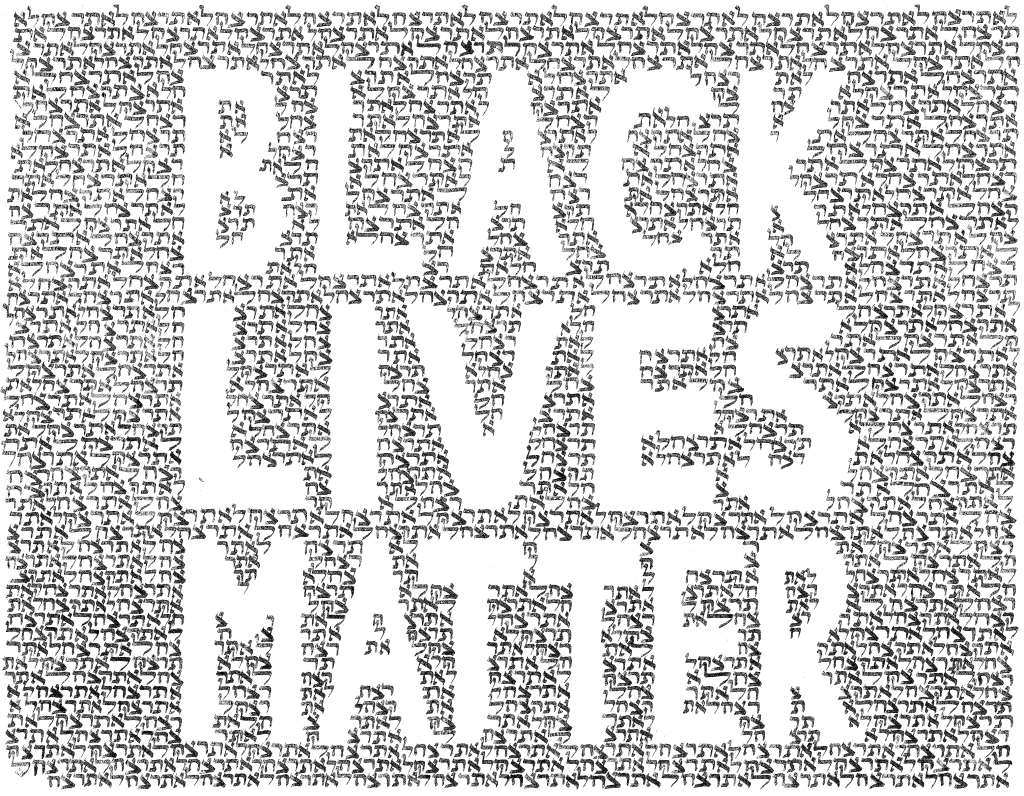
The white fire says “Black Lives Matter.” The black fire contains Exodus 20’s commandment: “Thou shalt not murder” in Hebrew. Artwork by Rachel Stone.
theology · torah

Stop doubting. Start doing.

Job was a man of complete integrity. According to his eponymous book of the Tanach, no matter what happened, Job was the epitome of Jewish righteousness. Then hardship fell, and Job began to doubt God’s justice.

This was hardly surprising. God had stripped him of everything, ridden him with disease, killed his children and destroyed his livelihood to test whether or not Job would remain faithful.[1]

As it turned out, Job could only endure so much. His friends comforted him with explanations of how God must be righteous after all, but they were insufficient. Finally, Job began to snap. What if God was not just?

Just then, God burst out through the clouds. “Who are you to question Me?” demanded God.[2]

After a lengthy excursus from Job’s inadequate interlocutors, we might expect a more thorough explanation. God has arrived and will explain the nature of justice.

Instead, God goes off on one about mythical beings. God talks about the Behemoth, an enormous bull-like monster that can rampage fields. God describes Livyathan, a fire-breathing dragon that cannot be killed.[3]

And this, apparently, satisfies Job.[4] Well, I’m not satisfied. I don’t know about you, but if I’m having doubts about my faith, “have you heard about the monsters God tamed?” won’t really cut it for me. You can’t respond to rational concerns by piling on ever more improbable legends. Now I’m filled with even more doubts.

But perhaps that’s the point. The author of Job, arguably the most philosophically complex text in our Tanakh, probably knew that these myths weren’t really an answer to the question posed.

The real answer, hidden within these poetic arguments, is that we don’t know. Whatever God is, it is beyond our comprehension.[5] Whatever justice is, we cannot fully reason it enough to grasp it. ‘You don’t need to understand,’ is what God is really saying.

Similarly, our parashah this week concerns Moses’s doubts. We have come to the book of Exodus, and Moses has already run away into the wilderness. Out of a flaming thicket, God summons Moses to rescue the Israelites from their slavery in Egypt.[6]

Just as God answered Job from the clouds, so too does God answer Moses. But the answer Moses receives is no more comforting. ‘You don’t need to understand,’ says God, ‘you need to get going.’

“What if I’m not good enough?” asks Moses. “You will be,” says God.[7]

“Who even are you?” asks Moses. “I will be whatever I will be,” God roars back. “Tell the Israelites ‘I will be’ sent you.”[8]

“What if nobody believes me?” asks Moses. “They will,” says God.[9]

“But what if I can’t find the words?” asks Moses. At this point, God loses patience. “I gave you your mouth, I will give you the words! Now get yourself down to Egypt and set those slaves free!”[10]

Miracles might be convincing to some. Logic and reason might work some of the time. But, ultimately, you have to act. When faced with injustice, there is little time to contemplate the nature of sin and perfection and God’s role in it. You have to get out and do.

Rabbi Abraham Joshua Heschel was a Conservative theologian and civil rights activist, famously pictured alongside Martin Luther King Jr at the march on Selma. He said that Judaism does not require a leap of faith, but a leap of action. We are called upon, first and foremost, to act. Whatever we think about it can come later.

This might sound strange to us, educated in a Western thought system that teaches us to calculate and reason before making choices. But it was not strange to the Israelites. When God called on them at Mount Sinai, they replied “we will do and we will hear.”[11]

According to the Talmud, a heretic accused Rava using this verse. Rava was sitting, so engrossed in study, that he didn’t notice he had trapped his finger in a chair leg and it was spurting blood everywhere. “You impulsive people!” the heretic said. “You still bear your impulsiveness of acting before you think. Listen first, work out what you can do, then act.”[12]

Rava responded with the verse from Proverbs:[13] “The integrity of the upright will guide them.”[14] We trust in our integrity. We trust in our conscience. We can be moved by our faith that we know right from wrong.

I think, over the last few years, progressives have done a great deal of doubting. We have been introspective and thoughtful. We have wondered, internally and out loud, whether we are right after all. Perhaps, as nationalist ideas return and religious conservatism gains strength, we might be able to make compromises on our ideals and find a middle-ground with others.

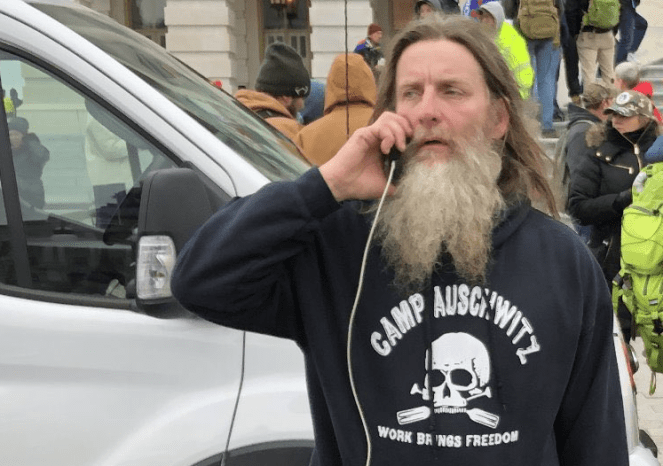
This week, fascists marched on the White House. They carried Confederate flags into Congress. A Nazi showed up among the rioters wearing a shirt that said: “Camp Auschwitz” on the front, and “staff” on the back, as if taking credit for the mass murder of Jews. They proudly displayed nooses, the symbol of anti-Black lynchings. Every brand of far-right conspiracy theorist and white supremacist descended on Washington, and video evidence shows that the police not only tolerated them but let them in.

Where has all our doubt and consideration left us? In our desire to find common ground and engage in reasoned discourse, we now come across as morally ambiguous and uncertain in our principles. We have left an ethical vacuum, and fascists have stormed into it. Intellectual curiosity is little use against the blunt force of white supremacists seeking to violently cease power.

Rabbi Professor Tony Bayfield has pointed out that our uncertainty is what differentiates us from fascists. Fascists are, by definition, absolutists. They do not interrogate their views or consider other perspectives. Our advantage over fascists comes from the fact that we give arguments due consideration and approach our own convictions with humility.

He may be right. Doubt might separate us intellectually from fascists. But it is action that separates fascists politically from power. There is no joy to be had in feeling superior if white supremacists gain power in government.

This week’s events may have been a terrifying climax to Trump’s presidency. But it is equally likely that they are a prelude to worse events. American white nationalists are emboldened and convinced that they can seize power through either ballots or bullets, depending on whichever method suits them. The situation in Britain is scarcely different, where racists have not felt so confident in decades.

Whether Trump now recedes into the background or his racist ideas come to dominate the world will depend on how we act. It will not depend on what we think, but on what we do. Events are calling us to action. If we want to eradicate fascism, we must be willing to fight it.

By all means, have doubts. Moses doubted. Moses was unsure. But God said to him, ‘go anyway. Get down to Egypt and free those people.’

We must be willing to face the Pharaohs of our time with the same vigour. We must be able to say: “I have come to act because God sent me. I am standing for justice because I know it to be right and true. I am standing against racism because I know it to be wrong. I will free these people. I will uproot tyrants. I will defend democracy and advance the cause of the oppressed.”

The integrity of the upright will guide us.

Although we may not fully understand these monsters before us, we will slay them.

And we will vanquish fascism for good.

Shabbat shalom.


I am giving this sermon on 9th January 2021 at Newcastle Reform Synagogue for Parashat Shmot.

[1] Job 1

[2] Job 40

[3] Job 41

[4] Job 42

[5] Job 11

[6] Ex 3

[7] Ex 3:11-12

[8] Ex 3:14

[9] Ex 4:1-9

[10] Ex 4:11-12

[11] Ex 24:7

[12] BT Shabbat 88a

[13] Prov 11:3

[14] BT Shabbat 88b

sermon · torah

Breaking the Cycle of Trauma

Trauma. No matter what we do, it seems contagious. If we talk about it, we’re passing it on. If we ignore it, we’re leaving an elephant in the room. If we follow everything the psychologists say and talk about it in exactly the right way, apparently it can still show up in our children’s genes. As if the trauma itself wasn’t worrying enough, we now have to be concerned that it might be inescapably hereditary.

As I and my peers embark on parenting journeys, or make the conscious choice not to, many of us keep circling back to the question of what we do with Jewish neurosis. If we have children, when do we tell them about the Holocaust, or the pogroms, or our fears? Should we tell them? If we do not have children, what role do we play in shaping the communities in which young people are raised? 

These are intensely sensitive questions. I do not want to dictate to anyone how they should feel about them, nor to project my own concerns onto other people’s families. But this week marked the anniversary of the Kindertransporters arriving in Britain, and a magazine asked me to comment on my family’s experience. It would be for a non-Jewish audience. I realised that I have spoken more about the existential issues around the Shoah to non-Jews than I have within the community, and feel that a conversation is overdue. 

Often, I feel like these discussions only take place in private conversations. Few of us are willing to publicly acknowledge how intergenerational anxieties shape our communal responses to everything from government policy to synagogue membership statistics. 

In particular, while the previous generation of Jewish leaders had people who felt comfortable sharing their own experiences and reflections on our collective traumas, as generations are increasingly separated from the events that caused the anxiety, we have become less willing to discuss them. It seems we have decided to move on without explicitly saying how we intend to do so or where we plan to go.

If we want to look forward to a Jewish future, we must first acknowledge its past. That begins, of course, with the Torah. Genesis can be seen as an exploration of overcoming intergenerational trauma. The story of the human family begins with Adam and Eve, who are cast out of paradise and subjected to the first experiences of suffering and pain.

Their children are Cain and Abel. In the first parashah, one jealous brother murders another. The survivor, Cain, carries a scar that he will pass on to his descendants as a remembrance of that violence.

Generations pass, but that cycle of sibling rivalry continues. Abraham’s two sons, Isaac and Ishmael, keep up that conflict, spurred on by competitive parents. Ishmael is banished into the wilderness with his mother. Isaac is almost sacrificed on an altar. Isaac does not speak to Abraham again. He and Ishmael are only reunited at the point when Abraham dies, when they come together to bury him.

Isaac’s children fare no better. From the first moment, Jacob grabs Esau’s heel on the way out of the womb. Isaac and Rebecca seemingly pit their sons against each other. Jacob tricks Esau out of his birthright. Laban tries to kill Jacob. 

Now, at the point when this week’s parashah begins, we expect the violence to be heightened. Jacob is trepidant, fully expectant that Esau will also try to kill him. He sends envoys of gifts, goodwill and messages of peace. Esau comes out with four hundred men, and it looks like the two parties will have to prepare for all-out war. Instead, Jacob bows seven times before his brother. Esau runs up to Jacob, throws his arms around him, kisses him, and cries. At the final moments of this parashah, Jacob and Esau bury Isaac together.

Healing takes time. It can take centuries. The span from Cain and Able to Jacob and Esau is 20 generations. That was how long it took for those brothers to make the first steps towards acknowledging the trauma they had inherited and trying to reconcile. 

Healing can happen in an instant. All it took was for Jacob to show humility and Esau to show compassion. Tears, heartache, and honesty can do in a few minutes what years of failed initiatives cannot. It requires a decision not to be defined by the tumult of the past. 

This brings us to the present. The behaviours of the patriarchs might be likened to the trauma responses of some of our own community members in facing the tragedies of the past. Some chose Isaac’s path of silence. Some, like Jacob, could not bear to tell the truth. Some even took up Cain’s route and engaged in violence. And yes, some, like Esau, made the decision to leave the past behind them and find new meanings.

I am not casting judgement on how any individual has responded to their suffering. I think, most likely, each of us has adopted all of these postures at some point. But what concerns me is how, communally, the British Jewish community has decided to interpret the Holocaust. It seems that, in our communal press and many of our institutions, there has been a tacit, possibly even unconscious, decision, not to move on from the past. 

Instead, we are constantly re-traumatised, reminded that another genocide could await us at any moment if we are not completely vigilant to even the slightest threat, however real or imagined. During the build-up to the General Election a year ago, I had to patiently counsel many terrified older people that there was no existential threat to Jewish life, and they could still sleep safely in their homes. We should never have reached the point where they felt so scared. 

I look at some of our discourse and despair at raising a child in the Jewish community. What values are we communicating when almost every response is an anxious trigger, rather than a measured engagement with reality? I think there are some who believe that constantly teaching our children about Jewish suffering will convince them into remaining Jewish. Even if they are right, at what cost does their Judaism continue? If they are only affiliated out of guilt or paranoia, what quality of Jewish engagement do they really have?

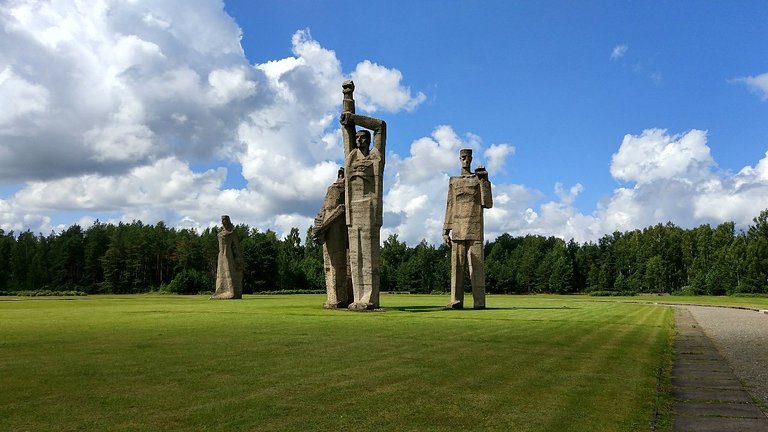
This is why making the conscious choice of Esau is so important. About ten years ago, I followed my dad to the site of Saraspils concentration camp in Latvia. At that time, we believed that this had been the site where his grandparents were killed. We now know it was Auschwitz. But I am glad we believed it was Saraspils, because that was a good place to pay respects. Little remained of the camp or the technology of genocide. The area had grown over with trees and plants and grass. Life had ended there, but life had also continued. 

We said kaddish, remembered their names, and talked about our hopes for the future. Then, as we walked back, we talked about what we could do for those facing similar violence today. It was a recognition of the past, an opportunity to grieve, and a chance to translate that suffering into meaning. I felt like I had my moment of reconciliation, if only brief, and I think the rest of my family felt the same way.

In 1982, Rabbi David Hartman (zichrono livracha) warned Israeli civil society that they faced a choice between being defined by Auschwitz or by Sinai. At Auschwitz, we learnt the wickedness of which people were capable. At Sinai, we learnt the wonders of what God could do. The Israelis could either define themselves by the trauma of the gas chambers or by the miraculous moral message of revelation. 

That essay has been cited many times, but I don’t think the British Jewish community has yet accepted that it might have lessons for us too. We are also faced with the choice of structuring our lives as if they are a moral calling from God or as if they are a cause to be constantly afraid of the rest of humanity. Only once we realise that we have taken the wrong path will we stand a chance of facing up to our trauma, and beginning to heal.

Shabbat shalom.

Saraspils concentration camp memorial

I gave this sermon to Glasgow Reform Synagogue for Parashat Vayishlach on Shabbat 5th December 2020