debate · sermon · torah

Did the God of the Bible have a body?


After our wedding, everyone was excitedly sharing photos and videos. Laurence pored over them and made albums.

I liked them, but the pictures felt a bit flat. What I was craving was words.

I wanted to re-read everything everyone had said. I went about collecting the speeches people had given, and recounted them again. On honeymoon, Laurence and I re-read our vows to each other, this time pausing and discussing them.

I discovered anew how much more I loved words than pictures or videos. Pictures are static. Even videos, because they only caption one moment from one perspective, feel too final.

To me, words feel so much more alive. Stories are such a great way to engage with events and ideas, because they can be retold so many times and in different ways.

Isn’t this, after all, what religion is: storytelling to access something sublime and unfathomable; a collaboration by people sharing their best narratives and ideas?

We have inherited a literary tradition, our Torah, which is an exercise in storytelling:  a process of openly wondering at the world through poetic sagas and emotion-filled songs.

For some, however, these stories fall flat. They see the words the way that I see pictures.

Fundamentalists will look at our story of a donkey talking to a prophet about an angel and think: that must be the historical truth of what happened.

Similarly, the New Atheists look at this beautiful poetic piece about the prophet Balaam and think: how stupid must religious people be to believe this nonsense?

This is not just a misunderstanding of Scripture. It’s a misunderstanding of storytelling itself.

Seemingly, it does not occur to them that this might be an invitation into conversation. They can’t comprehend that this might be a poem, crying out to be read aloud, sung, chanted, interpreted, and retold to make sense of all the wonders of the world.

Perhaps these talking animals and sword-wielding celestial beings aren’t part of history textbooks but reveal a different kind of truth altogether.

In Britain, we are mercifully spared from most of these types of fundamentalist reading. We don’t have to deal with as many evangelical Christians as our American cousins do.

But we have our own local brand of biblical literalists. They are the radical atheists who have got to know our sacred texts solely for the purpose of showing how irrational they are. The most famous of them is Professor Francesca Stavrakopoulou, a biblical scholar at the University of Exeter.

In 2021, Stavrakopoulou brought out her most recent work, God: An Anatomy. The book’s objective is to show that the God of the Bible was an embodied being. He was a gargantuan man with a big beard who sat on his throne in the Jerusalem Temple, gobbling up the sacrifices priests burned for Him.

The God of the Bible, Stavrakopoulou argues, was just like any other ancient god: basically a massive person with all the associated wants and desires. She collapses about 4,000 years of history and three continents into one culture and seeks to show that the biblical god was just like all the others.

And, like all the others, the biblical god had a body.

Sometimes, her evidence for this scant. There are entire pages dedicated to making quite wild claims about the biblical god, appended with just one footnote that points to an obscure translation of a verse from the Psalms.

But, overall, there is plenty of material to go off. If you open up any page of Tanach, you will probably find God described in anthropomorphic terms.

Take our haftarah.

This week’s reading comes from the book of Habakkuk, a 6th Century BCE Prophet in Judah. The book is a vivid war fantasy, where the prophet describes the Judahites crushing the invading armies, some time in the mythic past, and hopes that it will happen again.

Throughout the text, God comes alive as a warrior. He (and I’m going to use the masculine pronoun advisedly here) is an embodied fighter on behalf of the people.

God’s hand lights up with radiance; God’s feet trample over mountains; God’s piercing eyes make the nations trembled with fear. 

God has all the equipment of an ancient military commander. He rides in on a chariot  with His horses and shoots out arrows from His archer’s bow. God rips the spear from the opposing general’s arm and stabs it into his head.

How are we supposed to read this?

Well, for a biblical literalist, you have to take it at face value. That’s exactly what Stavrakopoulou does. She makes the case that this was precisely how the ancient biblical authors and audience understood their god.

Their god was a big bloke with some massive weapons and blood lust.

Stavrakopoulou draws on other ancient gods, whose worshippers also describe them in embodied terms. The Canaanite high god El also had radiant arms. The Akkadian god Enki also trampled over mountains. The Assyrian god Ashur also fought with a bow.

The Israelites, then, were just riffing on old themes. Like the Pagans around them, they were silly enough to believe in all that religious nonsense of big beings. The biblical god was no different to Zeus or Jupiter.

Overall, reading Stavrakopoulou, you get the impression of someone listening to a concerto who can identify every note from every instrument but cannot hear the music. Her entire objective is to show that the tune isn’t even that good because other songs have been written before.

All the way through, it seems like a strange motivation for going to all the effort of learning Scripture and Ancient Near Eastern texts. Then, we get to the final chapter, entitled “Autopsy,” and we understand her true objectives.

She concludes: “the God of the Bible looks nothing like the deity disected and dismissed by modern atheism. […] Their dead deity is a post-biblical hybrid being, a disembodied, science-free Artificial Intelligence, assembled over two thousand years from selected scraps of ancient Jewish mysticism, Greek philosophy, Christian doctrine, Protestant iconoclasm and European colonialism. In the contemporary age, this composite being has become a god who forgot to create dinosaurs and failed to account for evolution; a god who allows cancer to kill children but hates abortion…”

Stavrakopoulou despises religious belief. So, if she can demonstrate that the biblical god was just like the Egyptian pantheon, and that this embodied god could be killed, then she can also strip the modern god of His powers and kill Him too.

This is the worst of Enlightenment hubris. 19th-century anti-religionists imagined that all religion was just silly superstition, which would eventually be washed away by the cold science of reason.

Our movement, like all progressive religions, has consistently argued for an alternative approach. We see all of history as an evolving effort to understand the sacred mystery beyond our comprehension.

It almost certainly is true that, before Ezra led the exiles back from Babylonian captivity in the 4th Century BCE, most Israelites did worship a small pantheon of Canaanite deities. The Prophets from before this time regularly condemn them for it.

But, while they may have been idolaters, they were not idiots.

If you told one of them that you’d just seen the fertility goddess Asherah out for a stroll in the marketplace, or that the storm god Baal came to your house this morning for a cup of tea, they would think something was wrong with you.

Another scholar of ancient religion, Iraqi Assyriologist Zainab Bahrani, helps us make sense of the ancient worldview. For the Mesopotamians, images were not reproductions of originals like portraits and photographs are for us today.

Instead, they saw their icons as ways of writing existence into being. They were in an active process with their gods of creating reality.

In matters of religion, literal interpretations are dead-ends. Words like metaphor don’t do it justice. Symbols like clay deities stand in for whole cosmologies. They are ways that human beings have tried to understand something that, by definition, is beyond our comprehension.

Perhaps most importantly, Stavrakopoulou misses what a massive departure it was that ancient Israelites abandoned all images in favour of a predominantly literary culture.

In a society where you cannot depict God, but can only engage in description and storytelling, you have to be more imaginative when you try to make sense of infinity.

Poems, sagas, and speeches, like those from our Tanach, are never fixed in their meaning. They are openings that invite listeners to think with them, talk back to them, and struggle for deeper understandings.

When someone reads a text too literally, they strip it of its vitality. Atheists and fundamentalists, both literalists of different kinds, strip the soul from the search for divine truth.

Tell stories, make poems, create art, look for that great truth beyond our reach… and don’t take any of it too seriously.

judaism · theology

Be humble about what we can know


Before the Enlightenment, the world was governed by unknowable spirits and invisible entities.

There was so much we did not know.

If your farm didn’t produce any crops or the skies did not give you enough rain, you did not have modern technology to inform you about drought predictions for the next three years. You would have no way to know that the water coming from your clouds was directly connected to oceans miles away.

But you had your priests, and your rituals, and your superstitions. You had small gods in the hill country to which you offered libations. And, so far, when you had upheld your traditions, the rain came as it was supposed to.

When you got sick with a skin infection, you could not see a GP who would consult a modern medicine manual and give you a cream that would clear it up in just a few days. You would not have knowledge about germs, allergies, and viruses.

But you had your priests, and your rituals, and your superstitions. You had your rules governing sin and repentance. You had reliable experience that bodily suffering could be healed by atonement. And, so far, when you had upheld your traditions, the rain came as it was supposed to.

Please hold this in mind as we read this week’s Torah portion.

It may be easy for a modern mind, after the Enlightenment, to scoff at the strange priests, rituals, and superstitions that govern these chapters in the Book of Leviticus.

You might feel slightly embarrassed to imagine the rites our ancestors slit open goats, threw their entrails around and burned them for days until they stunk out a tent as expiation for their sins.

You might squirm at the vivid descriptions of cotton-clad priests flailing around the limbs of slaughtered cattle to win the favour of their god.

It may even seem primitive how they delight at the animal fat creating explosive fire, which they see as evidence of their god’s approval.

But they were doing what they could with what they knew. And they were engaging earnestly with what they did not know. Beyond the world they experienced was an unfathomable mystery, and they wanted to draw closer to it.

Indeed, only verses later, we get an insight into their own feelings of inadequacy. We get a real sense that they knew how much they did not know.

Nadav and Abihu do absolutely everything right. They follow the priests, carry out the rituals, and trust in the superstitions. They are formally inducted into all the correct practices by their father, Aaron the High Priest.

They do everything right. And then they die.

The burning animal fat explodes in a blaze that kills them both.

How can our ancestors make sense of this?

Our Torah gives two answers. The first is from Moses. Moses recalls a prophecy when God said: “Among those who approach me I will be proved holy; in the sight of all the people I will be honored.’”

We may interpret this as a way of Moses defending God. Moses is saying: while this may feel like a violation of our belief system, it is in fact proof of it. Holiness is a very dangerous quality.

God has demonstrated how sacred it is to engage in the rituals. God has shown what honour and risk are involved in holy service. 

So, for Moses, this sudden death of their priests does not undermine their belief system. It’s just evidence of how little they understand about their sacred rituals. In the fire, they have reached the limits of their knowledge.

Aaron, too, offers an answer. Silence.

We may interpret Aaron’s unspoken response variously. We may read into it horror, resignation, anger, acceptance, or solemnity.

But regardless of what he was feeling, we see that Aaron has no intellectual answer to the problem. He neither agrees nor disagrees with Moses. Aaron finds the limits of speech. He finds the boundaries of what he can even express.

Moses and Aaron lived in a world of unknowable spirits, governed by superstition. They made sense of their confusing world through priests and sacrifices. And no matter how well they constructed their rituals, they still found their limits.

There were things they did not know.

But we live in an era after such theologies. From the 17th Century onwards, Western Europe was gripped by a profound truth.

As the people challenged the unlimited power of the established church, philosophers pulled apart the stories religions had told.

This was the Enlightenment.

No more would they be hoodwinked by magical thinking or damned by promises of divine retribution. Everything, every idea, would be subjected to ruthless scrutiny. The greats of these generations would challenge the tenets of even science itself.

We live now in a world formed by their ideas. While our ancestors were beholden to talismans, omens, and sacrificial fire, we have evolved to hold modern ideals of truth and rational enquiry.

So, why hasn’t religion disappeared?

Isn’t that the obvious next question?

We have rid ourselves of superstitions, but synagogues are stronger than ever. Most of the world is still deeply religious. Despite constant predictions of its demise, faith remains stronger than ever.

For those who wish to understand God’s persistence after the Enlightenment, they may want to look to Immanuel Kant.

Kant was the last of the Enlightenment thinkers. His impact on this period of intellectual history was so great that some even date its end to his death.

Kant was a profound writer on truth, ethics, the scientific method, and what we can really know. He was also a devout Christian.

Kant was animated by the same questions that bothered our ancestors who witnessed Nadav and Abihu die.

He was not confused about why burning fat could cause a blaze, or why religious rituals didn’t always yield the same results. Those were the questions of the past.

The question still lingered, however: why does it seem like there is no justice in the world? Why do bad things happen to good people, and why do the wicked seem to get away with it? Why, no matter what happens, does evil seem to persist?

In his essay, The Miscarriage of All, Kant says he will put God’s justice before the trial of reason. Kant contemplates all the possible answers.

Maybe what we think is evil isn’t really. Maybe the world works in ways we don’t understand so that evil has to be permitted. Maybe there are other forces in the world beyond God’s goodness.

And Kant gives us an answer, which is… we don’t know.

All of these explanations only expose the limits of our understanding.

None of the answers anybody has come up with is satisfactory.

We are finite beings trying to understand Infinite Truth.

And still, says Kant, we retain our faith.

For Kant, none of these questions undermine the existence of God’s justice. They just show what we do not know.

So, perhaps we need to approach these stories with more humility and less contempt.

The ancient priests may well have splashed ox blood around an altar to ward off sin, but we are no closer to answering the questions that motivated their rituals.

We are barely separated from them by any time at all.

We are still just animals, scrambling in the dark, trying to make sense of our world.

And we still need each other, with all our beliefs and rituals, to get through this life that can seem so unjust.

We are each other’s guides through a mystery we may never resolve.

We need to be humble about what we do not know.

judaism · sermon

What is the point of Judaism?

What is the point of Judaism?

It might seem a strange question to ask. Do we even need to justify ourselves? In the shadow of antisemitism, and still reeling from the atrocities of the Holocaust, the fact that we exist at all is cause for celebration. It might seem egregious to even ask for explanation. We exist, and live our lives. Isn’t that enough?

But, I feel, it is exactly against this background that we have to ask this question. Many of the people we would expect to see here on Shabbat have become disillusioned with the religion. They might feel Jewish in their heart, and maintain a sense of Jewish culture, and even speak out with a moral voice in the name of their Jewishness. But our synagogues, our rituals, our traditional practices and our religious beliefs seem to have no meaning to them. To them, we have to answer the question: what is the point of Judaism?

At the same time, we progressive Jews are beset by a confrontation from the Orthodox. For them, Judaism’s point lies in its adherence to mitzvot: a total commitment to law codes laid down in the Middle Ages. Certainly, most would acknowledge that Judaism has an ethical and spiritual character, but the observance of law codes comes foremost.

To those who are Orthodox and to those who are disengaged, we have to be able to explain who we are and why Judaism holds such relevance to us. Tonight, I want to begin by addressing the first group. I want to spell out why, I think, Judaism should matter to somebody, even who does not believe in God, or who sees our practices as irrelevant to their world. Tomorrow morning, I will address the second question, and explain why I feel the progressive approach to Jewish religion is the best one for the 21st Century.

So what relevance does Judaism have to the people who feel it has no bearing on their lives? Let’s start with what people’s lives today are really like. Despite great advancements in time-saving technology, we seem to work harder than ever. Despite greater communication tools than we’ve ever known, people feel more lonely and disconnected. Although we are told that our economy is one of the greatest in the world, work is more precarious; housing more unstable; basic needs harder to meet.

Against this backdrop, religion might feel like an unnecessary burden, or a relic from a time when life was simpler. For many disconnected Jews, adding synagogue life to their commitments might well feel like another responsibility when all they’re looking to do is decompress.

Yet Judaism is precisely the antidote to this world. Whereas the secular world insists on work as the greatest virtue, Judaism elevates the highest form of life to rest – our Shabbat. Whereas the secular world seems to promote a life where everything can be reasoned and categorised, Judaism asks us to suspend all that in wonder at the fact that we exist. Whereas the secular world leaves people feeling lonely and disconnected, Judaism is, at its core, an effort to create a community.

That is exactly what happens in this week’s parashah. Having last week built the physical structures of their religion – the tabernacle in the desert – this week the Israelites create the community for which the space was intended. People volunteer. They pay subscription fees. They turn the tabernacle into more than a house for God, but into a home. This is the beginning of a lived community. We may see this is the start of an organised Jewish religion.

The idea of organised religion can make people bristle. People associate it with hierarchy, abuse and financial profiteering. If I thought that was essential to the idea, I would oppose it as vigorously and militantly as the most obsessed New Atheist. But what does it mean to be organised? Organised religion means religion that is made up of people working together. It must be contrasted with the isolated, individualised ‘spirituality’ that treats people as atoms with no connection to each other. Organised religion insists that people need each other. We are interdependent, strengthened by our relationships, and part of a community that goes way beyond our own homes.

It is true that, when people get organised, they can do terrible things. I do not need to list for you the crimes that have been committed in the name of religion. But it is also true that religion spurs people to do the most wonderful things for each other. I have never seen such good pastoral care of the elderly as I have here at Newcastle Reform Synagogue. I have never seen a place give children such a sense of pride and dignity as our synagogues do. In our synagogues, we bring together people from different classes, communities, backgrounds and ages to build truly integrated communities. Without the synagogue, how would that be possible?

You might object that this is just an argument in favour of community, not of religion itself. You might say, yes, but I can get community like that anywhere. To that, I have to ask: where? Where else is providing community of this kind? Where else has sustainably managed to bring people together like this for centuries and millennia?

The great Marxist-Jewish thinker of the last century, Gerry Cohen, reflected on this question when he wrote about his upbringing in the communist kibbutzim of Montreal. He acknowledges that the secular socialist Jewish community that had sustained him only managed to continue because the religious world on which they depended trundled on too.

This is the point of Judaism. No other community can sustain people in the way that religion can. That is not just because it is ancient and adaptable. It is because religion asks of us to put our faith in something greater than ourselves. We cannot live just by our self-interest. That is a lie of the 21st Century. The truth is that we need to believe that we are working towards something greater than this material world. For a community to truly function, we need God. We need hope in a world to come.

Tomorrow, I will talk about why progressive Judaism has the best answer to what the world we are building should look like.

diversity

I had intended to deliver this sermon on Friday 22nd February at Newcastle Reform Synagogue. In the end, however, I facilitated a discussion that yielded similar questions and conclusions.

debate · Uncategorized

Can religion play a positive role in progressive politics?

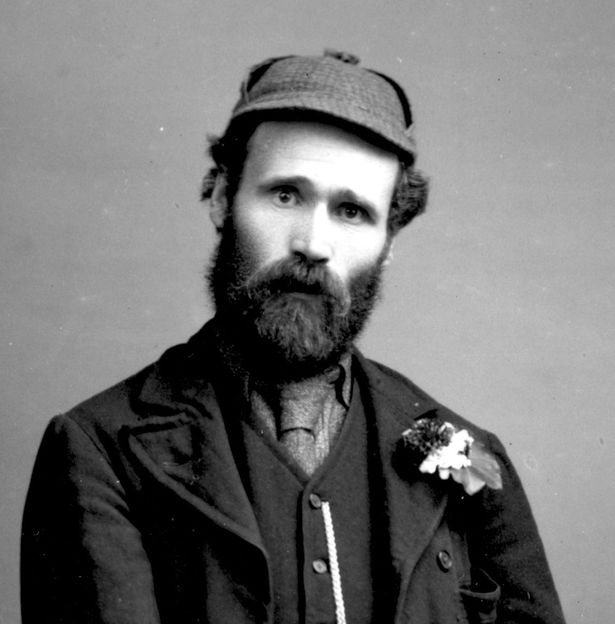
When Keir Hardie set up the Labour Party, he broke with many of the radicals who had preceded him by trying to organise his efforts where working class people really were: in the trade unions and the low church. He reached out to people in both their chapels – the ones where they organised their workplaces, and the ones where they organised their communities.

Since that time, both the trade unions and religious organisations have greatly declined in British public life, and in both cases we’re worse for it. Those traditional ways for people to meet, share culture, build up solidarity and envision a better future have been completely eroded. We’ve been left open to the worst austerity, neoliberal privatisation and attacks on the rights of marginalised people that we’ve ever known. Our lack of organisation and community has meant we’ve been constantly on the back foot, struggling against forces much stronger than us.

On the left, everyone acknowledges the decline in trade unionism for what it has been: a massive setback for working-class organising, an onslaught that has left us weaker, more divided and more isolated. But, to listen to some on the left talk, you’d think that the decline of religion was somehow a victory for our side. Millions of Britons no longer know their neighbours, no longer have any idea about the births, deaths, illnesses, tragedies and joys that are going on in their communities. Young people grow up without any access to traditional songs, stories and culture that was central to previous generations and instead only get the official versions of history. They learn that Churchill and Thatcher were heroes, but they never hear about the religious movements that shaped the country they live in, like the Chartists, Levellers and Quakers. People have completely lost connection to their community, and we’re supposed to somehow celebrate that as an accomplishment.

James-Keir-Hardie
Keir Hardie

Absolutely not. Religion isn’t the dark force that it’s been painted, but has been one of the greatest forces for progress and radical change. Keir Hardie recognised that. Socialists of previous generations were able to see the positive role religion could play because they were able to draw a necessary distinction. I say that Kier Hardie organised in the low church, because that’s where he was. He didn’t go out to the priests and the bishops and the high-ranking officials who’d latched on to state power. He was interested in the lay preachers. And that’s because there is a crucial difference between religion as it is imposed from above and religion created from below.

Like with all forms of culture, religion can go one of two ways: it can be a bourgeois, reactionary force that bolsters the forces of power, or it can be an emancipatory, proletarian force that empowers people to challenge systemic violence. I am not here to defend Iranian morality police, Bush’s crusader Christianity, the violent Islamophobia of India’s BJP, still less Kahanists in Israel. I do not want to defend religion’s connection to that kind of politics in any way.

But we need to be clear: the problem with connecting those politics to religion isn’t with religion itself, but with the politics we connect them to. I don’t want religion to play a role in the state – I want to abolish it. I don’t want religion to play a role in war – I want to abolish war. I don’t want religion to play a role in capital, the police, imperialism or the structures that uphold patriarchy, because in every case I want to abolish them.

The politics I’m interested in is politics from below – the struggles of working-class people, women, LGBT people, colonised, enslaved and massacred people to realise their own destinies and take control over the world. I think religion can play a very positive role there. It has done throughout the ages, and religion can continue to be a source of strength for all oppressed people.

When I talk about this religion for oppressed people, this isn’t an innovation. I’m not taking the message of religion and twisting it to meet my own ends. Quite to the contrary: combating oppression has been built into the meaning of religion since its inception. The earliest written religious texts, the Hindu Vadics, bring together a worldview that opposes all forms of systemic violence, from state warfare to animal consumption. The Torah is the story of rebel slaves turned refugees trying to build a just society. The prophet Amos denounced the ruling class of ancient Judea for stealing the spoils of the poor and hoarding them. The prophet Isaiah tells the rich that their prayers are worthless because they exploit people while they deliver them. Jesus comes to take direct action against money-lenders and the hypocrites that collaborate with a colonising army. The Talmud is a lengthy exegesis in how to bring anti-oppressive practices into every part of a person’s life. The Prophet Muhammad comes to affirm the unity and dignity of all of humanity, and to insist that people are treated as if they all contain the spark of the divine. Sikhism tries to break down all the barriers that differentiate religions, genders and ethnicities into one universalising faith. Religion, at its core, is anti-oppression. Don’t the politicians know that the God they claim to believe in despises them and their prayers?

Holy texts are brimming full of admonishments against the ruling class. Reactionaries leap on passing references to sexuality and gender difference, separate them from all context, and use them as a pretext to persecute people. They take what is a radical idea, focused on bringing about the kind of change socialists want to see, and they manipulate it to suit their own ends. 

But everyone needs to see that the religious tradition of speaking truth to power is much better represented by our heroes than by our enemies. It’s represented by all the religious activists who worked to end slavery, the ones who fought for democracy and debt relief, the anti-colonial fighters and the indigenous revolutionaries. They represent that prophetic tradition.

malcolm-x-9396195-1-402
Malcolm X

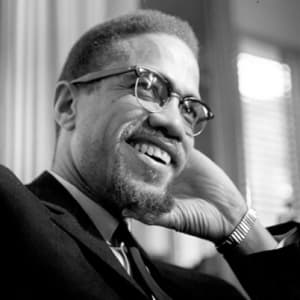
Two key people from the Black civil rights movement come to mind here: Malcolm X and Martin Luther King. Malcolm X – a Muslim minister in the slums of Chicago and New York, Martin Luther King Jr, a Christian reverend in America’s deep south. Both of them built their organising around their religious institutions and the deep network of Black faith communities across the USA. They based their activism around their religious buildings, religious texts, and religious traditions. Are you going to tell me that they didn’t play a positive role in politics?

It’s not like they could have done what they did without their religions either. Certainly they couldn’t have turned to the unions. At that time, the white-run unions were mostly fighting against black inclusion in workplaces and were trying to uphold segregation in places. They could be racist, reactionary lobbies, and their record of beating up protesters against the Viet Nam war and siding with anti-miscegenation politicians shouldn’t be quickly forgotten. That’s the context in which they were organising, and it was the religions that gave them the strength as a group to fight for their rights.

More than that, the turning point in the struggle for civil rights was when the white religious leaders from across the country came down to join the Black protesters in Selma, Alabama and showed that the weight of public opinion and that the moral voice of the country was firmly on the side of those protesters. The Patriarch of the Orthodox Church was on the frontlines, alongside the head of the Jewish Theological Seminary, Rabbi Abraham Joshua Heschel, who said “when I marched, I felt that my feet were praying.”

When religion is in the hands of the working-class, and when it is used as a fountain for oppressed people to draw strength from, it is a powerful and challenging force. But if you pour scorn on religion, and you say that it’s irredeemable, you hand over religion to the bigots. If you say you don’t want anything to do with it, then you’re leaving that source of power to be controlled by reactionaries. No wonder people wind up believing that God is a homophobic, misogynistic, capitalist demon if you completely disavow religion and leave it in the hands of the right.

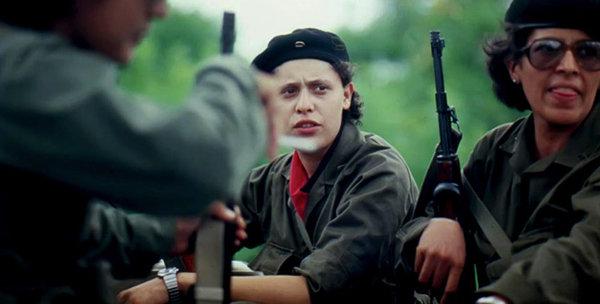
Socialists who have engaged with religions have seen incredible success. When the Latin revolutionaries, the Sandinistas, started out with atheistic, anti-religious Marxist arguments, they remained an isolated minority who had no relationship at all to the people. The ultimate success of the Nicaraguan revolution only came about because of the rise in liberation theology and the willingness of socialists to engage with the church.

sandinistas
Sandinistas

Vatican II of 1959 wanted to see the church more closely aligned with the poor and, as part of implementing this, Catholic activists set up “Christian base communities” rooted in poor favelas. These were the first platform from which poor communities could start organising against the capitalist authoritarian Somoza regime in Nicaragua, and it was not an accident. Church theologians of Latin America wrote explicitly about their need to bring their religious beliefs to a political mission. Liberation theology saw that the things most despised by Christianity: individualism, competition, materialism and greed were, in fact, integral to capitalism.

High-ranking bishops and the papacy were, of course, hostile to the work of these low-level bishops and sided with the regime. The upper echelons of the church had to come into direct conflict with their own members initially, but by 1977, the grassroots Catholic activists had been so successful in transforming the church that when Somoza’s newspaper Novedades asked the church to clarify its position, even the high-ranking officials were forced to side with the bishops against what they called institutionalised violence and inequality.  

These are not just interesting facts from history – they have a strong bearing on the present day. In my own organising in the Jewish community, I’ve seen how religions can play such a powerful role in activism. Synagogues have preserved the memory of what it meant to be refugees, how Jews came to this country hidden in the bowels of boats and rushed out on the last trains from Germany. This memory has been preserved so well in our religious institutions that, when the migrant crisis came to public attention, the Jewish community was at the forefront of offering help and refuge. Every synagogue in the country had collection points for aid to refugees. Key shuls in every area now have drop-in centres that provide free help and legal aid to asylum seekers. Young congregants drove out to deliver these aid packages and came back embolded and enlightened. I attended a service at an Orthodox synagogue where one such member came back, agitating in her community to lobby for rights and safe passage for refugees. South London Synagogue has organised for over 200 child refugees to be brought over from Calais and housed here. The Jewish community is not alone here. Religious institutions have played a powerful role in demanding an end to poverty, quality council housing and opposing racism. This is the reality of what religions in Britain today do.

I’ll say it again because it needs stressing: I’m not here to defend the religion of the ruling class – whatever form it takes. I’m here for radical religion that stays true to the message of fighting for justice. There is no doubt that awful things can be carried out in the name of religion, but just a cursory glance at history tells us that people are perfectly capable of carrying out the same atrocious acts without religion. 

Religion has been associated with violence when it’s been connected to state power and reactionary movements. There’s no doubt about that, but to suggest that it has some kind of connection to religious belief itself is completely ahistorical. Haven’t Stalinist gulags, Maoist terror and the genocides of Cambodia and Nazi Germany shown us that people are perfectly capable of committing the utmost evil without religion? The modern states of France and Turkey are perfect examples of how secularist ideology can be just as violent, colonialist and corrupt as any state that calls itself religious. The problem is capital. The problem is the state. The problem is the military. The problem is certainly not God.

The task of religions is to keep alive that moral, prophetic voice that insists on radical equality and seeks to transform the world. It would be a disaster to throw out all that religion has done to transform the political sphere for the better, solely because fundamentalists and puritans have hijacked it. Religion belongs to all those who practice it – and the faith of left-wing revolutionaries is far more sincere than that which connects itself to state power, capitalism and authoritarianism.

The central message of religion – of all religion – is a radical one that every socialist can support. It is that there is a force much greater than anything we can conceive; that though we are small in the grand scheme of the universe, our lives have meaning. Every one of us is indowed with a spark of the divine. The existence of God makes us all equal – in a profound and spiritual way. Religion challenges us to see that all of humanity is one, everyone deserving of dignity, and to bring that claim to life in the world. It is a call to action – to overthrow the Pharoahs of the world as Moses did; to cast out the demons of legions as Jesus did; to demand rights for widows, orphans and disabled people as Mohammed did; to resist sectarian violence as Guru Nanak did.

Faith can give us the courage to fight for a better world. Thank you.

fists raised

I gave this as a speech at Ideas for Freedom, the annual conference of Alliance for Workers’ Liberty, a Marxist-atheist sect, back in July 2016. There were two other panelists, arguing that religion could not play a positive role in politics. My speech was not well received.

I doubt I could get away with making the same speech today. My teachers would definitely chastise me for over-simplifying matters, making sweeping generalisations, going off on random tangents, and flattening out history. I stand by, however, the central idea, that religion has a radical core, rooted in resistance. I doubt any of my teachers would question that this was a legitimate and necessary expression of religion.

I was moved to upload it by my brother, with whom I spent a long time discussing this topic over the winter holidays. He asked that I write up some of my ideas, and I remembered that I already had. I will speak on a similar theme, albeit to a very different audience, when I preach this coming Shabbat in Newcastle.