judaism · sermon · torah

Who created the Jews?

One day, word came to Joseph, “Your father is failing rapidly.” So Joseph went to visit his father, and he took with him his two sons, Manasseh and Ephraim.

 When Joseph arrived, Jacob was told, “Your son Joseph has come to see you.” So Jacob gathered his strength and sat up in his bed.

Jacob was half blind because of his age and could hardly see. So Joseph brought the boys close to him, and Jacob kissed and embraced them. Then Jacob said to Joseph, “I never thought I would see your face again, but now God has let me see your children, too!”

He drew them close, so close, and kissed their foreheads, then offered his blessing, his last testimony upon his grandchildren. He placed his hands on his grandchildren’s heads and said:

“The  whole world hates us! They’ve always hated us, right from Pharaoh until today. They’ll never accept us, because they’re jealous of us. They can’t stop thinking about us, even though we’re a tiny fraction of the world. Well, good! We’re going to keep being Jewish to spite them. That’s it, boys, be Jewish to wind up the antisemites. As long as they hate us, wear your yarmulkes.”

Of course, this is not what Jacob said to his grandchildren. 

What would have happened to Jews and Judaism if this was all Jacob had to pass on?

Ephraim and Mannasheh would have nothing on which to base their identities but a negative. They would see themselves as Jews only by victim of circumstance. Their choices would be to reluctantly accept their Jewish status as a miserable burden from previous generations; or to concoct a paranoid worldview that lashed out at everyone; or to ditch being Jewish as soon as they got the chance. 

Jacob would just have left the boys a neurotic mess, with no pride in themselves or joy in their lives. 

Jacob would not have said this to his children, but what are we teaching to ours? Are we teaching them to love being Jewish, with all its culture, rituals, festivals, beliefs, and ways of building community? Are we showing them how to love themselves and their heritage so that they can delight in it for many generations?

Or, are we imparting a negative identity based on misery and fear? 

If you open up some of our communal newspapers or listen to some of our representative bodies, it is very much the latter. Maybe it is not as vulgar as the parody I just made up for Jacob, but it comes through in how they talk, and what stories they choose to tell.

It is as if, for them, Jews only exist because of antisemites, and our Jewishness is only exerted when defending ourselves against antisemitism. 

This idea is not new.

In 1944, as the war came to an end, French philosopher Jean-Paul Sartre was trying to understand antisemitism. He wrote “Portrait of an Antisemite,” in which he looked to his contemporary antisemitism in France. Sartre saw antisemitism as a lie to uphold class distinctions. The rich relied on antisemitism because it gave them an excuse to put the blame for inequality and injustice somewhere else. The poor turned to antisemitism because, by creating outsiders, it gave them a feeling of belonging to a nation in which they really had no portion.

Antisemites, he said, were people who couldn’t face their own reality, and absconded from their own freedom, to project their fears onto Jews, both real and imagined. From this, he coined the famous saying that “if Jews didn’t exist, antisemites would invent them.”

This was a useful way to begin to understand antisemitism – as a fear constructed about Jews, but in spite of what any Jews were actually like. 

Sartre then goes on to ask a question: “does the Jew exist?” That is, if antisemites are just angry at imaginary Jews, what does that make of real Jews? Sartre concludes that Jews do exist, because of their shared experience of antisemitism. Jews exist in response to the persecution they face. Quite literally, he says, “the antisemite creates the Jew.”

The Jews themselves, he said, were outside of history, but victims of its oppression. If antisemitism were to disappear, then, so, too, would Jews. If only everyone were to throw off the shackles of class society, the Revolution would resolve the contradictions that antisemitism needed, and Jews would be able to assimilate into a newly-ordered utopia. Then, they could give up being Jews, and finally become citizens of their countries.

What he outlines is really a popular Bolshevik understanding of antisemitism, sprinkled with existentialism. For many opponents of antisemitism, its appeal was that it could suggest a way out of hatred and racism. 

But, for those of who are Jews, that’s not helpful at all. If being liberated as people means being destroyed as Jews, why would we want such a thing?

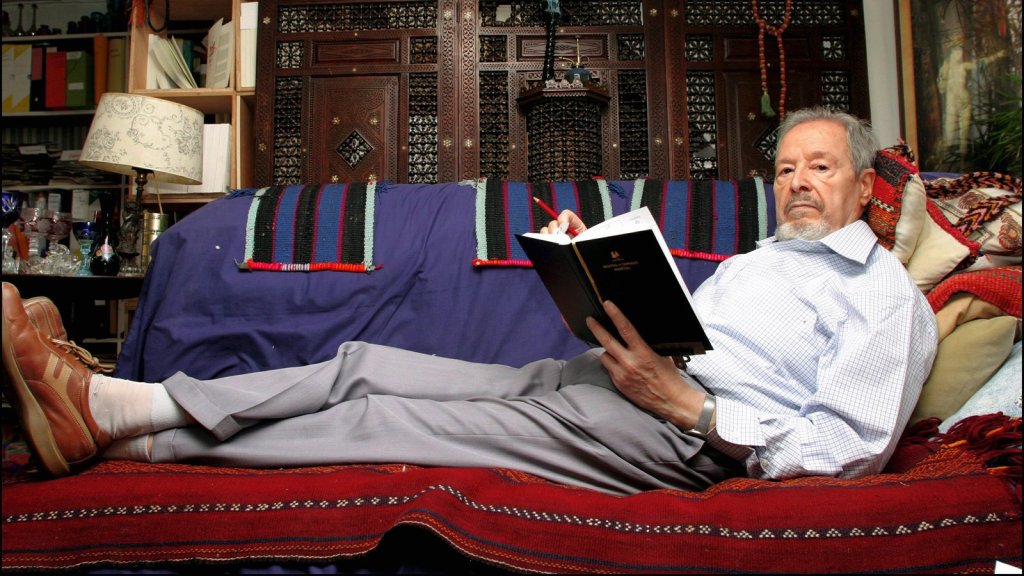
Sartre had a friend, interlocutor, and fellow intellectual, in Albert Memmi. Like Sartre, he was a French-inflected socialist. But, unlike Sartre, Memmi was a Jew. Born in Tunisia in 1920 to a poor Jewish family, Memmi became a leading thinker, and a revolutionary in Tunisia’s war for independence. Sartre admired Memmi, and brought his anticolonial writings to a European audience.

In response, Memmi wrote “Portrait of a Jew,” and its follow-up, “The Liberation of the Jew.” Memmi was able to describe first-hand experiences of antisemitism on two continents. His personal struggles with prejudice elucidated very clearly why Jews would not want to assimilate into Christian France, even in the classless society Sartre imagined. Centuries of racism and religious discrimination showed him that neither Christianity nor Frenchness offered much hope for Jewish emancipation.

More interestingly, Memmi decided to answer for himself the question, “does the Jew exist?” For Memmi, the answer was a resounding “yes.” Jews exist, and, contra Sartre, have our own history, culture, and civilisation. Yes, that has been created in response to antisemitism, but also in spite of it. Jews were constantly creating our own culture.

Jewishness, said Memmi, was what Jews decided to create in each generation, and could be constantly remade, as part of Jews’ engagement with their own heritage. For Memmi, if antisemitism did not exist, Jews still would. Even if, as many Bolsheviks imagined, the world could be freed of superstitious religion, the Jewish national culture would carry on, and thrive in new ways.

So, antisemitism may create the Jewish condition, but it was the Jews who created Jewishness. We were the authors of our history.

After the service, we will hear from Rachel Shabi, as she talks to us about antisemitism and its challenges. Her thoughts are prescient, and we should pay close attention to them. We need to understand antisemitism, where it comes from, and how to combat it.

Yet we must remember that studying antisemitism can only tell us about antisemites. It cannot teach us about Jews. 

Jews make Jews. We decide who we are. Through our love of our heritage and community, we build up Judaism, and we make it what it should be.

So, when we talk to the younger people in our communities, we cannot let their identities be formed by fear of antisemitism. 

We must tell them why we have chosen to keep on being Jewish, and give them good reasons to keep it up too. Whether raised Jewish, converted, or affirmed, all of us have chosen being Jewish, and for good reasons that are bound up in love, not defined by hate.

Tell them about your favourite recipes and the best of Jewish songs. Show them Jewish art and take them to Jewish plays. Celebrate the festivals with them because you truly want to bring them to life. Mourn and fast with them because it is filled with meaning.

Teach them that God has given us a sacred task on earth; that we exist in this world to perfect it. That everything we do can light up divine sparks. That we are called upon to unify all that exists with its Creator.

Bless them with the words that Jacob actually spoke, and say:

“May the God before whom my grandfather Abraham and my father, Isaac, walked—
the God who has been my shepherd all my life, to this very day, the Angel who has redeemed me from all harm. May the Eternal One bless these children. May they preserve my name and the names of Abraham and Isaac. And may their descendants multiply greatly throughout the earth.”
Albert Memmi

high holy days · sermon

Bring on the broigus

It’s never a boring time to be a Jew.

The life of a Jew is one that is constantly wrapped up in ideas, actions and movements. Centuries of precarious existence, an intimate relationship with texts and an intense struggle with God have implanted in us a restless culture that thirsts after new ideas.

It’s never a boring time to be a Jew, and this year has been no exception.

This week’s readings give an insight into just how important ideas are in our community. We read the stories of three remarkable women and three remarkable births of three remarkable sons. In our Torah portion, Hagar, an Egyptian princess transformed into Abraham’s nomadic handmaid, gives birth to Ishmael, in the stead of her mistress, Sarah. Then Sarah conceives Isaac at the age of 90. In our haftarah, Hannah, an infertile woman, prays so fervently that she gives birth to Samuel. Three unusual births.

These three boys then all suffer a similar fate: they all come close to dying. Isaac, as we know, is taken up Mount Moriah to be sacrificed by his father and ends up bringing about an end to all child sacrifice. Ishmael becomes stranded in the desert with his mother and comes so close to dying of dehydration that his mother considers putting him out of his mystery when the two are saved by a miracle well. Samuel really does die but comes back as a ghost to give advice to the king.

All the figures in these texts are more than just interesting people living interesting lives: they are models of ideas. According to the 15th Century Spanish mystic, Isaac Arama, Sarah is the representative of Jewish Torah, and Hagar of universal philosophy.[1] In the traditions of both religions, Isaac was the founder of Judaism and Ishmael the progenitor of Islam. Hannah is a model of piety and a symbol of how we should all pray. Her son, Samuel, was the archetypal prophet, and the first to establish monarchy in Israel by crowning King David.

Three remarkable women. Three boys conceived in impossible circumstances. Six ideas. Three ideas that nearly died. Six ideas that have come to define our modern world. Throughout our stories these characters sometimes come into conflict. They sometimes try to kill and banish each other. They sometimes come together. So it has been throughout our long history, that complicated and contradictory ideas of philosophy, Torah, piety, power and faith have interacted to do fascinating things.

I spent this summer in Jerusalem, as in previous years, and this time, decided that while I was there, I would try to read up on Jewish ideology. I took copies with me of Rabbi David Goldberg’s book, ‘To the Promised Land: A History of Zionist Thought’, and ‘Revolutionary Yiddishland’, by Alain Brossat and Sylvia Klingberg. These were archetypes of the exciting thought in European Jewry before the Second World War: the first of Jewish nationalism, or Zionism, and the latter of Jewish socialism. Both books reveal an era full of ideas, when Jews were passionate and tenacious enough to imagine every possible utopia. You get the feeling as you read them that anything is possible.

Indeed, it seems that pre-war Europe really was a time when ideas felt alive. Reading biographies of the time, you get the feeling that every street corner and café was abuzz with discussion about who the Jews were and what they could become. On the one hand, there were Bolsheviks, agitating for Jews to throw off their heritage, join the ranks of the working-class and commit themselves to overthrowing capitalism as citizens of the world. There were the Zionists, who maintained that Jews would never be safe or able to flourish until they had their own state. There were assimilationists, who wanted Jews to transform themselves and become loyal citizens of the countries where they lived. There were Bundists, who wanted to see Jewish cultural renewal in the Diaspora as part of a revolutionary overthrow of capitalism.

Out of this great social upheaval came, too, spiritual revival. There were the Orthodox, who insisted that Jews should focus on keeping halachah and not think about moving anywhere until the Messiah came. There were the reformers, the founders of our movement, who felt that Jews should cleave to their God and to the spirit of the prophets, so that they could be a light unto the nations in the Diaspora. These truly were interesting times to be a Jew.

The Nazis extinguished much of that discussion. Not only did they kill the people in their gas chambers, but they also destroyed their ideas. In the aftermath of a genocide, it was hard to believe that the Jews could ever be a light unto the nations. It was hard to believe that Jews could integrate, still less thrive in the Diaspora. It was hard to believe in halachah. It was hard to believe in God. There were certainly great ideologues in the generations after the genocide, but they had to make up in passion what they lacked in number.

When I left this synagogue and went to university, I felt very profoundly the absence of the ideas with which I had been raised here. I left behind here the ideas of community, of ethical mission and of religious hope. I wondered if perhaps those ideas only really belonged in my childhood. Among my Jewish peers, it seemed that one idea remained as the last man standing in post-war Europe: secular nationalism.

The reasons for that are unsurprising: across the whole of British society, the importance of collective religion had slowly declined. So, too, had the trade unions, community centres and political parties that had animated the ideas of public life. Israel, on the other hand, existed, and offered people a sense of security. Publicly supporting it, right or wrong, offered people a sense of purpose. The religious meanings ascribed to statehood, Diaspora and internationalism faded into the background as Anglo-Jewry invested much of its efforts in public advocacy for Israel.

This threatened to become the only manifestation of Jewishness in Britain. So great was the convergence across the movements among Jews in Britain that people had begun to talk about post-denominational Judaism. The great debates of the preceding decades had been laid to rest. Progressive Jews had fought so hard for women’s and LGBT liberation that even the most bigoted conservatives were powerless to resist it. Indeed, this year Britain gained its first Orthodox woman rabbi and only last week the Office of the Chief Rabbi issued a briefing on welcoming LGBT people into synagogues.

As feminism progressed, a consensus emerged in the Jewish community around a progressive, secular, nationalist vision: Jews in Britain would be liberal, atheistic, and attached to the state of Israel. Just as Fukuyama saw the end of history with the collapse of the Berlin Wall, leaving only liberal capitalism, Anglo-Jewry’s ideological debates tailed off, leaving only secular Zionism.

But it’s never a boring time to be a Jew, and this year has proved it. Like Samuel, Isaac and Ishmael, ideas that seemed dead suddenly found new life this year. The whole community has been abuzz with conversation. At Pesach, the leader of the Labour Party, Jeremy Corbyn, attended, Jewdas’s seder. Jewdas, a group that has done amazing things to help me find my own place in the Jewish community, promotes ideas of internationalism, Diasporism and socialism. Corbyn’s attendance opened up anew the questions in our community about antisemitism, our role in the world, and the values we support.

Only a few months later, a group of young Jews, most of whom had grown up in Zionist youth movements, stood in Parliament Square and recited kaddish, the prayer for the dead, over the Palestinians who had been killed in Israel’s attack on Gaza. This simple act of public prayer re-opened old conversations about Jewish religious practice, the significance of halachah, and Anglo-Jewry’s relationship with Israel. They challenged everyone to question what the limits were of liberal Zionism. Ideas that some imagined were buried – of Liberalism, Bundism, Orthodoxy, integrationism and Diasporism – re-emerged from their graves.

In the shock at seeing a consensus broken, some of the initial discourse was less than edifying. Perhaps what caused people to lash out so much was that they hadn’t realised how fragile the apparent consensus was or how safe it had made them feel.  Although hardly part of the mainstream within Anglo-Jewry, I was surprised in myself at how frightened and threatened I felt by the sudden and very public disagreement.

But disagreement need not be a cause for fear. The vitality of diverse ideas is an indication of the strength of feeling within the community. It means that, once again, Jews are wondering how the world can be different. After decades spent recovering from the shock of genocide, we may now be ready to imagine alternative futures and retell the stories of our past.

This year has been one of tumult and change, and we can only expect that the next one will see more of the same. We cannot stop the breakdown of consensus: we can only jump into it and embrace it. Anglo-Jewry is resourceful and resilient enough to have energetic conversations and remain a united community. We shouldn’t shy away from those conversations but should embrace them with whole hearts and open minds.

Ideological disagreement is far better for all of us than staid consensus. Indeed, in the conclusion of Rabbi Goldberg’s book on Zionism, an idea to which he is very sympathetic, he warns that without alternative ideas against which to pit itself, Zionism could become reactionary, conservative and devoid of the ability to be creative. Debate helps us to be imaginative, innovative and dynamic. This coming year presents us with opportunities to be upfront about our values and have real conversations about what God, religion, ethics, Diaspora and homeland really mean to us.

I cannot say definitively what Liberal Judaism’s position will be, or even whether it should have one at all. What excites me about the new culture of debate is that it is open-ended, and none of us know where it will lead. Yet there is one role that progressive Jews have always played, which is needed now more than ever: we need to offer hope.

It’s never a boring time to be a Jew. May the next year be even more interesting.

Shanah tovah.

bund
A poster of the Jewish Labour Bund

[1] Louis Ginzberg, Jewish Folklore, 1955