judaism · sermon · torah

Who created the Jews?

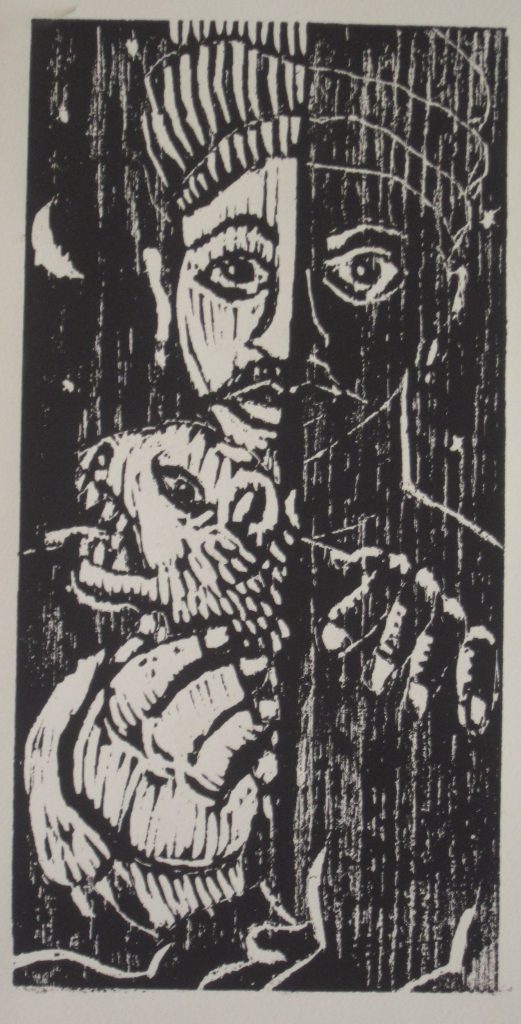
One day, word came to Joseph, “Your father is failing rapidly.” So Joseph went to visit his father, and he took with him his two sons, Manasseh and Ephraim.

 When Joseph arrived, Jacob was told, “Your son Joseph has come to see you.” So Jacob gathered his strength and sat up in his bed.

Jacob was half blind because of his age and could hardly see. So Joseph brought the boys close to him, and Jacob kissed and embraced them. Then Jacob said to Joseph, “I never thought I would see your face again, but now God has let me see your children, too!”

He drew them close, so close, and kissed their foreheads, then offered his blessing, his last testimony upon his grandchildren. He placed his hands on his grandchildren’s heads and said:

“The  whole world hates us! They’ve always hated us, right from Pharaoh until today. They’ll never accept us, because they’re jealous of us. They can’t stop thinking about us, even though we’re a tiny fraction of the world. Well, good! We’re going to keep being Jewish to spite them. That’s it, boys, be Jewish to wind up the antisemites. As long as they hate us, wear your yarmulkes.”

Of course, this is not what Jacob said to his grandchildren. 

What would have happened to Jews and Judaism if this was all Jacob had to pass on?

Ephraim and Mannasheh would have nothing on which to base their identities but a negative. They would see themselves as Jews only by victim of circumstance. Their choices would be to reluctantly accept their Jewish status as a miserable burden from previous generations; or to concoct a paranoid worldview that lashed out at everyone; or to ditch being Jewish as soon as they got the chance. 

Jacob would just have left the boys a neurotic mess, with no pride in themselves or joy in their lives. 

Jacob would not have said this to his children, but what are we teaching to ours? Are we teaching them to love being Jewish, with all its culture, rituals, festivals, beliefs, and ways of building community? Are we showing them how to love themselves and their heritage so that they can delight in it for many generations?

Or, are we imparting a negative identity based on misery and fear? 

If you open up some of our communal newspapers or listen to some of our representative bodies, it is very much the latter. Maybe it is not as vulgar as the parody I just made up for Jacob, but it comes through in how they talk, and what stories they choose to tell.

It is as if, for them, Jews only exist because of antisemites, and our Jewishness is only exerted when defending ourselves against antisemitism. 

This idea is not new.

In 1944, as the war came to an end, French philosopher Jean-Paul Sartre was trying to understand antisemitism. He wrote “Portrait of an Antisemite,” in which he looked to his contemporary antisemitism in France. Sartre saw antisemitism as a lie to uphold class distinctions. The rich relied on antisemitism because it gave them an excuse to put the blame for inequality and injustice somewhere else. The poor turned to antisemitism because, by creating outsiders, it gave them a feeling of belonging to a nation in which they really had no portion.

Antisemites, he said, were people who couldn’t face their own reality, and absconded from their own freedom, to project their fears onto Jews, both real and imagined. From this, he coined the famous saying that “if Jews didn’t exist, antisemites would invent them.”

This was a useful way to begin to understand antisemitism – as a fear constructed about Jews, but in spite of what any Jews were actually like. 

Sartre then goes on to ask a question: “does the Jew exist?” That is, if antisemites are just angry at imaginary Jews, what does that make of real Jews? Sartre concludes that Jews do exist, because of their shared experience of antisemitism. Jews exist in response to the persecution they face. Quite literally, he says, “the antisemite creates the Jew.”

The Jews themselves, he said, were outside of history, but victims of its oppression. If antisemitism were to disappear, then, so, too, would Jews. If only everyone were to throw off the shackles of class society, the Revolution would resolve the contradictions that antisemitism needed, and Jews would be able to assimilate into a newly-ordered utopia. Then, they could give up being Jews, and finally become citizens of their countries.

What he outlines is really a popular Bolshevik understanding of antisemitism, sprinkled with existentialism. For many opponents of antisemitism, its appeal was that it could suggest a way out of hatred and racism. 

But, for those of who are Jews, that’s not helpful at all. If being liberated as people means being destroyed as Jews, why would we want such a thing?

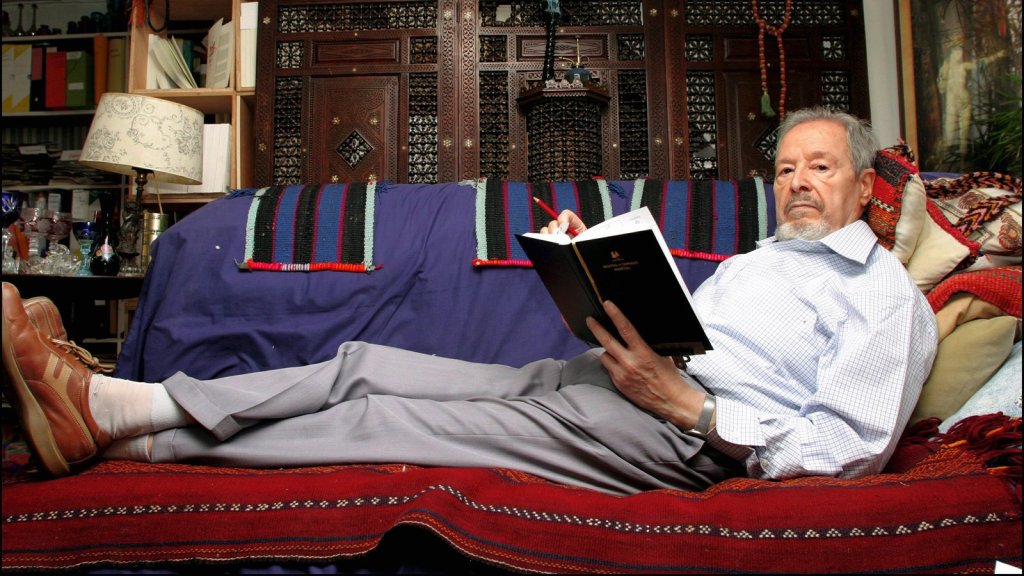
Sartre had a friend, interlocutor, and fellow intellectual, in Albert Memmi. Like Sartre, he was a French-inflected socialist. But, unlike Sartre, Memmi was a Jew. Born in Tunisia in 1920 to a poor Jewish family, Memmi became a leading thinker, and a revolutionary in Tunisia’s war for independence. Sartre admired Memmi, and brought his anticolonial writings to a European audience.

In response, Memmi wrote “Portrait of a Jew,” and its follow-up, “The Liberation of the Jew.” Memmi was able to describe first-hand experiences of antisemitism on two continents. His personal struggles with prejudice elucidated very clearly why Jews would not want to assimilate into Christian France, even in the classless society Sartre imagined. Centuries of racism and religious discrimination showed him that neither Christianity nor Frenchness offered much hope for Jewish emancipation.

More interestingly, Memmi decided to answer for himself the question, “does the Jew exist?” For Memmi, the answer was a resounding “yes.” Jews exist, and, contra Sartre, have our own history, culture, and civilisation. Yes, that has been created in response to antisemitism, but also in spite of it. Jews were constantly creating our own culture.

Jewishness, said Memmi, was what Jews decided to create in each generation, and could be constantly remade, as part of Jews’ engagement with their own heritage. For Memmi, if antisemitism did not exist, Jews still would. Even if, as many Bolsheviks imagined, the world could be freed of superstitious religion, the Jewish national culture would carry on, and thrive in new ways.

So, antisemitism may create the Jewish condition, but it was the Jews who created Jewishness. We were the authors of our history.

After the service, we will hear from Rachel Shabi, as she talks to us about antisemitism and its challenges. Her thoughts are prescient, and we should pay close attention to them. We need to understand antisemitism, where it comes from, and how to combat it.

Yet we must remember that studying antisemitism can only tell us about antisemites. It cannot teach us about Jews. 

Jews make Jews. We decide who we are. Through our love of our heritage and community, we build up Judaism, and we make it what it should be.

So, when we talk to the younger people in our communities, we cannot let their identities be formed by fear of antisemitism. 

We must tell them why we have chosen to keep on being Jewish, and give them good reasons to keep it up too. Whether raised Jewish, converted, or affirmed, all of us have chosen being Jewish, and for good reasons that are bound up in love, not defined by hate.

Tell them about your favourite recipes and the best of Jewish songs. Show them Jewish art and take them to Jewish plays. Celebrate the festivals with them because you truly want to bring them to life. Mourn and fast with them because it is filled with meaning.

Teach them that God has given us a sacred task on earth; that we exist in this world to perfect it. That everything we do can light up divine sparks. That we are called upon to unify all that exists with its Creator.

Bless them with the words that Jacob actually spoke, and say:

“May the God before whom my grandfather Abraham and my father, Isaac, walked—
the God who has been my shepherd all my life, to this very day, the Angel who has redeemed me from all harm. May the Eternal One bless these children. May they preserve my name and the names of Abraham and Isaac. And may their descendants multiply greatly throughout the earth.”

Albert Memmi

debate · sermon

We, who love being Jewish

Take a moment and think about what you love about being Jewish.

When I think about it, there are certain feelings, sounds, tastes and smells that transport me into this place of true Jewish joy. 

I smell cloves, absolutely anywhere and at any time, and I am immediately transported to havdallahs of my childhood. 

Similarly, leather seforim- those big bound Jewish books. I touch them and I can suddenly feel myself back in my grandfather’s study.

That feeling of stillness of being in a Jewish sanctuary. I used to love sitting in our little rented synagogue in Reading. Sometimes I come into this space, when nobody is here, and feel that same connection. 

There’s the music, there’s the text study, there’s the Friday night dinners, there’s meeting a complete stranger and finding you’re related, there’s the beigels, so much better here in East London than anywhere else… I could go on. 

Yes, I love Jewish life. And I love seeing others love their Jewish lives. 

Last week, I felt a certain eeriness walking around central London. Wherever I went, wearing my kippah and tzitzit, there was a massive picture of a smashed Star of David in every newspaper stand. The Evening Standard bore the harrowing headline “London’s antisemitism shame.”

This came after Mark Gardner from CST said Central London had become a “no-go area for Jews” on Saturdays. He wasn’t explaining where the eruv boundaries were. 

He was saying that Jews were not safe when the protests for Palestine were happening. 

I don’t feel I need to go into much detail on the headline. We all know that antisemitism is real, and some members here have had horrible experiences. It is not just about central London, as the local area can feel very intense. The demonstrations outside Lidl this week were intimidating, and clearly did include antisemitic harassment.

We all also know that London is mostly very safe, and comparisons with Nazi Germany of talk of mass Jewish departure are overblown. I have always felt absolutely fine being visibly Jewish in London. I can also feel the great tension that affects this area. We are all smart enough to come to a balanced judgement about the true picture.

What struck me about Mark Gardner’s statement was not in the headline, but buried in the text of the newspaper article. When asked about Jews who themselves go on the Palestine marches on Saturdays, the CST chief said: 

“There are two types of Jews who attend the protests in the main – ultra orthodox Jews who believe the state of Israel prevents the Messiah coming. Then you have revolutionary socialists using their Jewishness so people get the impression the movement is not fundamentally antisemitic.”

This was such a dismissive and unkind way to talk about fellow Jews, as if they could just be brushed aside and ignored. I bristled with indignation. 

Certainly, Haredim and socialists have always been regular attendees of pro-Palestine rallies. But, so what if they are? 

Are Haredim, the most visibly Jewish group and the most likely to experience structural discrimination for being Jewish, any less qualified to comment on what is antisemitic? Are socialists, who pride themselves on their culture and traditions, any less able to say what being Jewish means?

These are two groups of people who love being Jewish. 

You may not want to be Haredi (I don’t) and you may have criticisms of their approach to their religion (I do) but I would never dream of questioning their love of Jewishness, or their sincerity of conviction. 

The strictly Orthodox Jews in places like Stamford Hill and Hendon are crucial to London Jewish life. We have our kosher delis, our judaica shops, and our bookstores because of the commitment of Haredim to building up Jewish life here. 

When I think of the strictly Orthodox, I have no doubt that they, too, love being Jewish. They might not love all the same things that I do, and they might love some things I don’t, but they are fellow Jews, creating vibrant community.

I do not know the Haredi world, and have never been part of it, but I believe they have important things to say about being Jewish and facing antisemitism. 

I feel I can speak with more confidence about the revolutionary socialist Jews. That’s much closer to my world, and one that I interact with readily. That is a group of people I can say, with certainty, love being Jewish. 

It would be easy for such people to disregard their Jewishness, or downplay it. Plenty of Jews have, in all times and from all political persuasions, for varying different reasons. But the Jewish socialists have chosen to wear their Jewishness as a badge of honour.

These are people who have regular book groups, looking at Jewish thought. They are deep-divers of Jewish history, who keep alive the stories of the East End and the shtetl. They are Jews who will insist on telling me they are atheists, before heading off to Friday night dinners with each other, where they will sing the same songs and recite the same blessings that you all will at your dinner tables.

The revolutionary socialist Jews often see their politics coming precisely from their Jewishness, and not in spite of it. They are, in my experience, serious thinkers about antisemitism, who have done the reading, experienced the vitriol, and arrived at smart and nuanced conclusions about how to combat anti-Jewish hatred. 

They are with us, loving being Jewish, and building Jewish life.

What good does it do to dismiss them out of hand like that? 

Perhaps it is simply that they are easy to dismiss. They have no stake in the formal institutions of Anglo-Jewry, like the Board of Deputies, nor do they want to. In both cases, they will carry on living their Jewish lives as they want to, unhindered by such dismissal.

But I don’t think Gardner is quite right that socialists and Haredim are the only groups who march on Saturdays: increasingly, they are joined by young people who grew up in movements like Reform Synagogue Youth (RSY-Netzer.) They are the bulk of Jews in groups like Naamod. 

To see such people marching, especially in such numbers, was unthinkable only ten years ago. When they demonstrate, they are singing the songs they learnt in Reform youth camps. When they speak, they talk about the rabbis and leaders that shaped our Jewish world. They are attending as Progressive Jews.

One month ago, the movement workers for LJY-Netzer issued a statement, calling for a ceasefire, and decrying Netanyahu’s war. In their public message, they shared their dual sadness: on the one hand, at rising antisemitism; and, on the other, at a seeming inability to talk about Gaza.

LJY-Netzer is Liberal Judaism’s youth movement, parallel to the Reform one, RSY. The “Netzer” part is Hebrew, meaning Reform Zionist Movement. Today, while I lead here, Rabbi Jordan is meeting with them at Chagigah.

These critics of Israel are young people firmly within the institutions, who participate in their local synagogues. They love being Jewish, and, more than that, they love Progressive Judaism, our Judaism. 

Are they to be dismissed too? Will they find their Jewishness cast aside in some press release? Will they, for their principled stance, find they are no longer worthy to comment on Jewishness or antisemitism?

Ignoring them is not an option. It would be unconscionable to throw them away, with their opinions.

That doesn’t mean you have to agree with them. You should certainly disagree with them if that is how you feel! 

But do so from a place of love. Because you love being Jewish. Because they love being Jewish. Because you should love each other as Jews.

Disagree, by all means, but disagree as Jews. What could be more Jewish than lovingly disagreeing?

If we are faced with hatred, we will only love more. We will love ourselves more. We will love being Jewish more. We will love the sights and smells and sounds and rituals and families and discussions and Scriptures and songs.

We will love each other more. We will love others’ ways of being Jewish more. We will all embrace each other, seriously, and with affection, as fellow Jews. We will encourage others to love what they love about being Jewish. So that they will keep on loving being Jewish, long into the future.

Shabbat shalom.

protest · sermon · social justice

When a swastika appeared on my primary school wall

Do you remember the first sermon that really moved you?

I do. It was a primary school assembly.

Mrs. Kilou stood at the front of the hall, as all us uniformed children awaited the morning messages.

She began with a question: “who knows what I hate most in the world?”

A kid suggested: “Lateness.”

“No, not lateness.”

Another offered: “scruffiness.”

“No, not scruffiness.”

One more: “When we don’t do our homework.”

“No, this is the thing I hate most in the world. Way worse than lateness or scruffiness or not doing the homework. The thing I truly despise.”

Finally, a kid ventured: “racism.”

“Racism, that’s right!” She spat the word and the whole crowd sat up to attention. The fury in her voice was palpable.

She had good reason to be angry. Somebody had spray-painted a large swastika on the outer wall of our primary school.

***

For the last two months, I have been trying to work out what to say. There have been days recently when many of the parents from this community didn’t send their children into school, worried that they would be targets. Members have shared stories of taking down their mezuzot, and hiding their symbols of Jewishness. I have felt, at times, like the community is overtaken by panic.

What do you say to people who are so anxious and angry? How do you meet people in their fear, and help them move beyond it?

I haven’t known what to say. So, the last few times I have stood on this bimah, I have just shared what is in the Torah.

But there is a trauma that needs to be addressed.

It doesn’t help to tell people that there is nothing to fear. That only makes people feel alone in their feelings, and that just makes them more afraid.

What repeated studies show is that what matters about handling traumatic events is less what happens afterwards than what happened before. People are better able to negotiate destabilising situations when they already have a strong sense of self; feel proud of who they are; and have a clear story about themselves.

So, I think the best thing to do from here, for now, is to tell my own story. My own relationship to antisemitism.

My account is, of course, personal, and not definitive. But I hope it will open up spaces for others to share their stories, and for us to begin a conversation about who we are, and what experiences formed us.

***

The swastika on my school wall was not for me. Not in the direct sense. That is to say: whoever drew it did not have Jews at the forefront of their minds.

We were not a Jewish school. We were a multicultural one in the centre of an industrial town, surrounded by white suburbs, and even whiter countryside. The other students, my friends, were Pakistani Muslims, kids from the Caribbean, refugees from Kosovo… we were a little bubble of people from everywhere, and, though I did not know it then, were a source of moral panic among readers of certain newspapers. We were, to those that feared integration, a symbol that Britain wasn’t British anymore.

And, of course, that swastika very much was for me. It was an attack on my community. It was antisemitic because all swastikas are. It was calling to me, because all racism does.

Around that time, my parents began telling me stories. But not the stories you would expect. They didn’t tell me about family members who had escaped Germany or died there. They did not explain why some members of the synagogue had tattoos on their arms, or how others had met each other on refugee trains. I only came to learn that much later.

They told a story about how, not long ago, the Council had erected a new housing block. One of the first people to be offered a home there was a black woman. Racists came to protest. ‘Houses should be for whites.’ The Pakistani community centre came out in large numbers and escorted the racists back to the train station and out of town.

This is an oral history, and I won’t be able to verify it from newspaper reports, but I suspect my parents made it sound more peaceful than it really was.

They told me other stories too. Stories of hundreds turning out to see off the National Front. Stories like how the Jews and the Irish united to defeat the Blackshirts at Cable Street. Stories of partisans and resistors.

They told me how people could stand up against racism and win. They told me about how, when it comes to racism, our greatest strength is each other.

I don’t know if this was their intention, but I learnt then that the swastika was not something to be feared. It was something to be destroyed. And that people could, and did, destroy it, wherever it appeared.

So, I grew up feeling not so scared of Nazis as determined to stamp them out.

***

Some university students spend their weekends studying. Others spend them partying. Me and my friends? We spent our weekends chasing the English Defence League.

Don’t get me wrong. I did study. And I did party. But some of my most formative memories from that time were of bundling into minivans and car convoys with my housemates to towns in the Midlands and the North.

At that time, Tommy Robinson had assembled a band of white supremacists, bored football hooligans, and lost boys, to go and protest wherever there was a mosque. They usually targeted the mosque itself, and would go to the towns with the express aim of intimidating the Muslims.

Opposing them felt like the only right thing to do. Fighting fascism felt like a calling in a very similar way to how the rabbinate does today.

There was a group of us, from different towns, who always went along, led by a gentle couple called Simon and Sadia. We were always met by locals, usually gathered from community centres and religious groups, who would join in showing the racists that they weren’t welcome.

I learnt from these forays into antifascist activism that, while there were always some who resisted fascism, they weren’t necessarily popular. Media narratives after each protest often framed the unfolding events as if the fascists and their opponents were equally bad. As if it would be better if these small groups of students and locals stayed home and let the racists go unchallenged.

I might have believed them, if it weren’t for what I saw happen in Dudley. There, the English Defence League significantly outnumbered the protesters. Police lost control of the situation. Over that weekend, in broad daylight, those thugs went round smashing in the windows of any house with black and brown people living in it.

As we ran away from the violent gangs storming the town, we passed a house where a black teenager had been visiting a white family. Their windows had been smashed. “I’m sorry,” he was saying, “I think it’s because of me.”

I learnt from this a lesson that has informed how I think about all racism and antisemitism since. Our strength is in each other. Our defence is our neighbours.

This runs contrary to some of the received wisdom about antisemitism. We are, after all, a small minority that lives in concentrated areas of large British cities. One story about how to handle the prejudice we face is that we must depend on the state to defend us against the baying mob of our neighbours. It is because of this that older members will share the axiom: “as long as the king is safe in his castle, we’ll be safe in Tower Hamlets.”

My experiences turn this on its head. The non-Jewish majority is not our enemy. They are our most reliable bulwark against racism. When it comes to fascists, we are the masses and the masses are us. Our greatest strength is each other.

***

That story, of solidarity in the face of racism, is also played out in the story of this synagogue. My friend, Joseph Finlay, just completed his PhD, looking at Jews and race relations in post-war Britain. During his archival research into the history of fighting racism, one shul kept cropping up. This one.

During the 1960s and 1970s, this synagogue was led by the visionary rabbi, Dow Marmur. He arranged visits from volunteers to homes of new immigrants to Redbridge, as well as English conversation classes to help neighbours settle in. In 1978, the synagogue held a “multiracial dance,” in a clear statement of unity against racist scaremongering about miscegenation.

Rabbi Marmur brought a motion to the RSGB Conference of 1968, which encouraged other synagogues to adopt similar policies, and follow SWESRS’ example. He accompanied his motion with a powerful sermon.

While others shied away from fighting racism, or even expressed sympathy with the anti-black and anti-immigrant feeling, Rabbi Marmur issued an impassioned plea. Yes, he said, the racists do draw comparisons between Jews and black people, and “we have a special duty to remember the Prophet’s comparison and to affirm that we are, in fact, alike -in the beneficent eyes of God!”

He encouraged meaningful solidarity, urging “let us beware of condescending and patronising “do-goodery” … “And at no time must we allow ourselves to be fobbed off with cowardly calls for “prudence” and “caution” when these are euphemisms for inactivity and indifference.” Finally, Marmur compelled his listeners: “the primary force of our involvement must be our religious conviction; God bids us act-and we must obey!”

This summons stands at the centre of my own response to antisemitism. It is not only the swastika that calls me, but, more importantly, the voice of the Living God.

In that voice, I hear the demand to continue being Jewish, without apologies.

In God’s Word, I hear the call to resist antisemitism, not only out of self-preservation, but from a religious demand that there must be diversity.

And in God’s Torah, I hear, always, that most-repeated verse: “love your neighbour.” Yes, love your neighbour as yourself. Love them because they are you. Love each other because that is our strength.

And our love for each other may be our salvation.

Shabbat shalom.

sermon · torah

The things you hate in others are the things you hate in you.

The things you hate in others are the things you hate in you.

All too often, we create monsters out of others because we fear there is something monstrous in ourselves. We turn outsiders into figures of hate because there is something we cannot stand inside ourselves.

In the Talmud, Laban is called the trickiest of tricksters. He came from a family of tricksters, in a town of tricksters, and all he ever did was trick.

Now, Laban was indeed a trickster. He was a thief and a manipulator. But was he really the worst of the worst? Most importantly, was he really worse than Jacob?

Laban did wrong, multiple times. He behaved appallingly. 

From the outset, he took Jacob in on false pretences. 

Laban told Jacob that, if he worked for him for seven years, he could marry his younger daughter, Rachel. Jacob adored Rachel, and was willing to do anything for her, so fulfilled his obligations. 

Then, on the day of the wedding, Laban swapped out Rachel for her older sister, Leah. Laban made Jacob work another seven years to marry the woman of his dreams.

Once Jacob had married both daughters, Laban continued to trick and deceive. He kept trying to rob Jacob, arbitrarily changing the terms of the contract. 

Jacob says that Laban had tried to swindle him with new rules ten times. In our midrash, the rabbis say it was in fact a hundred. Laban absolutely stole, and absolutely tricked.

Now, can we compare this to Jacob?

Only last week, we saw how Jacob tricked his father and his brother to steal from them. Jacob dressed up as his brother, pretended to cook like his brother, and stole his brother’s birthright. Jacob took advantage of his elderly father, who was going blind, to swindle him out of a blessing.

Jacob, too, stole and tricked.

To read the rabbinic tradition, however, you would think it only went one way!

The midrash bends over backwards to exonerate Jacob. It says that his father, Isaac, knew what was going on all along, and was only pretending to be deceived. It says that his mother, Rebecca, was given prophecy by God, so she knew what the future of her sons entailed. Throughout rabbinic commentaries, we get apologia for why Jacob was really right to receive the birthright, and why Esau would have been a terrible choice.

None of this is in the text. It is really a PR campaign to protect Jacob’s reputation. 

Laban, by comparison, is subjected to thorough demonisation.

The rabbis say that Laban sought to kill Jacob, despite there being no evidence of it. They go further: Laban wanted to massacre the Israelites entirely so they would have no future. Laban wanted to subjugate the Israelites worse than Pharaoh ever could. The rabbis say Laban lived hundreds of years, and could think of nothing else but swindling Israelites throughout that entire time, motivated only by spite. They call him ugly, and stupid, and say he slept with animals.

Contrary to the plain reading of the text, our tradition turns Laban into a monster, with every flaw exaggerated to absurd degree. They warp him from being a simple trickster into a demonic tyrant.

Our rabbis’ goal is to divide the world into the two camps: the innocent and the evil. On the one side, they have Jacob, who, no matter what he did, can never be held accountable. On the other side, they have Laban, the pinnacle of malice. No matter what may have motivated him, Laban will always be depicted as a corrupt crook, lusting after the death and misery of others.

In fact, the crimes of Jacob and Laban were almost identical. Laban tricked; so did Jacob. Laban stole; so did Jacob. 

There is a good reason why the rabbis would want to defend Jacob and castigate Laban in this way. Jacob is us. He changed his name to Israel and became the founder of the Jewish people. If Jacob is bad, so are we. 

Laban is our enemy. If he can be excused, what does that make us? How can we be the good guy, if he is not the bad one?

Naomi Graetz, a scholar at Ben Gurion University, compiled all these sources and suggests that what is going on here is a classic case of negative projection. 

We know that Jacob did those bad things. But, if we throw them all onto Laban, they no longer stick to us. By constructing Laban as a monster, we can feel assured in the positive self-image we want to hold. 

This, she says, is what groups often do. They create “others” – people that they imagine to be different to them – so that they can throw at them the worst fears of what they themselves might be.

The things we hate in others are often, really, the things we like least about ourselves.

Hating others gives us an easy way to escape our own feelings of discomfort. If we can hate them, we don’t have to look too hard in our own mirror.

In mediaeval Europe, that was a big part of how antisemitism functioned. Jews were the “other” onto which their neighbours projected all their anxieties.

The Jews, according to the antisemitic imagination of the time, were usurers, stealing money from people. In the Middle Ages, most money-lenders were not Jewish. They were Christians. At this time, certain Christians were also becoming very wealthy as landlords and merchants. Rather than deal with it as a social problem shared by everyone, they racialised it. They turned it into a Jewish problem, so that they did not have to face it as their own.

Even the blood libel, a mediaeval conspiracy theory that Jews drank Christian blood, can be understood as projection. As part of regular Catholic services, they drink the blood of Jesus, in the form of wine. Clearly feeling some guilt about their own rituals, they thrust this fear onto the Jews. It is not us who drink blood, it’s them!

It is probably not a coincidence that the modern antisemitic trope of Jews ruling the world came about when the European empires were at their height.

Antisemitism was a way for Europeans to resolve their discomfort about who they were by turning it into hatred of someone else.

Still, if I only talk about how bad and racist others once were, I would be projecting. The point is not that they can do it, but that we can. 

We are very capable of making demons where there are just people. We can just as equally project our own fear by turning it into hatred of others.

We need to remember that the world is not made of heroes and villains. Humanity cannot be divided up so easily. 

If we look at the biblical story, as it appears in the Torah, Laban is not a monster. Nor is Jacob. They are just people. Flawed, messy, human beings, doing wrong, and making mistakes. They both did wrong. But neither of them were evil.

The Torah gives us a whole host of complicated characters. They are not models of perfect behaviour. They are not even moralising cautionary tales. They are just a reflection of reality: which is complex and scary. We learn best from our imperfect prophets. 

Rather than trying to resolve our anxieties with hatred, let us look inside ourselves.

When you see something in someone else that you hate, ask: what is it in me that makes me feel this?

When another group seems like devils, ask yourself: are we really angels?

People will do wrong. All the time. They will mess up and cause pain in all kinds of ways.

Most of the time, we cannot change that.

But we can work on the things we can change in ourselves.

We can forgive the things we cannot change. 

And if you accept that you are capable of harm, without it making you evil, you may be able to have compassion for yourself.

And you may find that you love yourself, after all. 

You may see yourself the way God sees you. As an imperfect human who makes mistakes. Not a monster. Just a mess. A thoroughly lovable mess. 

And if you can love yourself, warts and all, you may find you have less space left to hate others. You may find that you contain more compassion and empathy than you knew. 

The things we hate in others are the things we hate in ourselves.

The things we love in ourselves, we can love in others too.

Shabbat shalom.

halachah · judaism · social justice

Are Jews allowed to lend money at interest?

Of course, I am Jewish, but I also consider myself very English. I am English in the very parochial sense that I love canal boats, think provincial churches are beautiful, will definitely barbecue on the only day of summer, and put mayonnaise with everything. But, last autumn, I did the most English thing I have ever done. 

I wrote a disapproving letter of correction.

I had never done it before. I’ve never written in to the BBC or a newspaper. To the best of my knowledge, I’ve never sent a letter of complaint about anything. But this one was too important to simply ignore.

Someone in a play had misrepresented a complex point of Jewish law. 

Now, this may seem trivial. But, six months later, I am still so incensed about this common misconception of halachah, that I feel the need to preach on it. 

In September, last year, I got a real treat: to go see one of our members perform at the Royal Court Theatre. Rachel Hosker, who will be getting married under our auspices in the summer, was performing in a play called ‘Jews. In their Own Words.’ Written by Jonathan Freedland, the play interviews famous Jews, including Tracy-Ann Oberman, Luciana Berger, Margaret Hodge, and Howard Jacobson, trying to give a sense of antisemitism, past and present. 

I’m not a theatre critic, but let me tell you: Rachel acted fantastically. She and the rest of the cast did a fantastic job of bringing the characters to life. 

But there was a line, really a throwaway comment, that stuck with me. The play was attempting to explain the trope of the money-hungry Jew, and how Jews had come to be associated with money-lending. An actor representing CST’s Dave Rich said: “the rulings of the church forbade lending money at interest, which was considered usury, whereas Jewish law allowed it.”

This, to me, is alarmingly inaccurate. It shows not only a misunderstanding of Jewish law, but also of antisemitism, and how it works. It places the responsibility for Jews as medieval money-lenders onto Jews, and our religion. Nothing could be further from the truth.

If it was the case that Jewish law allowed money-lending at interest, you would be hard-pressed to explain the commandment in this week’s Torah portion: “You may not act as a creditor to your people. You may not exact interest from them.” You would also have to reckon with the same commandment, given in the Holiness Code: “Do not exact advance or accrued interest, but fear your God… Do not lend your money at interest, and do not give your food at interest.” The same commandment is repeated again in Deuteronomy: “do not deduct interest from loans to your kindred.”

Of course, you might say, the Torah is not the only source of Jewish law. Perhaps these commandments are amended in the Mishnah, or the Talmud, or the Codes. No, no, and no. The Mishnah says charging interest is so reprehensible that it involves breaking six commandments. The Talmud says that even scribes and witnesses who participate in such contracts are guilty. 

In the defining law code for most of the Jewish world, the Mishneh Torah, Rambam looks at the word for interest – neshech – which is the same as the word for a snakebite, and says it is called as such “because it bites, it causes pain to a fellow human being, and consumes a person.” He repudiates it completely.

Be in no doubt: Jewish law does not permit money-lending at interest.

So, how did it happen that Jews nevertheless ended up associated with money-lending, despite its very explicit prohibition?

In the 4th Century CE, Church Father Augustine of Hippo declared that Jews would be permitted to survive as “living witnesses” to the truth of the Bible, but must be kept in a degraded state, with the mark of Cain, for their refusal to accept Jesus. This became the official policy of Christian Europe’s primary institutions: its churches and monarchies. 

Jews were allowed to live in England neither as citizens nor serfs. They could not own land or participate in the nation. They were excluded from universities, and cut out of the professions. They were only allowed to live in the country on condition that they did the dirty work of the ruling class: tax collecting and money-lending. 

Now, most Jews did not do such jobs. They did the work that was needed for their community, as bakers, vintners, stonemasons, and millers. But, as long as some Jews fulfilled these functions for the monarchy, all Jews could live in European countries as “treasured subjects” – effectively pets of the king. 

This had a profound impact on the lives of medieval European Jews. They were forced to wear humiliating clothes to mark them out. Associated with tax collecting and money-lending, many of the local peasants associated the Jews with all the financial problems they faced. 

The local lords actively exploited this division. They drummed up hatred against Jews, and treated them as a pressure valve, so that, in times of economic crisis, peasants would attack their local Jews rather than turn their ire on the landowner class.

That is why the worst pogroms that we have recorded came in times when the monarchy was in financial straits. In England, these came when the country was bankrupted by its military Crusades to capture Jerusalem. Jews, the perceived cause of money problems, and naturally associated with the Holy Land, had all the anger and resentment of impoverished people poured out on them. 

If the monarchy or the Church were struggling with their own debts, they had an easy way out: they could simply expel the Jews and confiscate all their property. In 1290, Edward I expelled the Jews from England to cancel his debts and win back the support of the knights and lords in parliament, who were also heavily indebted.

This put the rabbis, the arbiters of Jewish law, in a very difficult position. If they permitted lending at interest, they would turn their backs on their entire religious inheritance. If they insisted that Judaism forbade money-lending at interest, they would effectively force their community to leave where they were. And, since all of Christian Europe had adopted the same policy, they would have nowhere to go. 

So, the rabbis had to find a way. They looked at the laws, which said such lending was only prohibited to their kin. Rabbi David Kimchi, writing in medieval France during pogroms and expulsions, said that Jews were not permitted to lend at interest to people who respect Jews. The corollary was that if people would not treat the Jews as full human beings, then they, in turn, could lend to them at interest. In England, the Christians had estranged them and made them explicitly not their kin.

This is why correcting this point on the understanding of Jewish law is so important. It is not just because we are sticklers for getting the halachah right. It is so that we understand what antisemitism is and how it works. 

We Jews did not create this system. We did not allow it, nor have the power to stop it. For over a millennium, European powers embedded and promoted antisemitism to prop up their system. As Rabbi Lionel Blue, of blessed memory, so pithily wrote: “The problem of the Jews in Europe was never the Jews. It was Europe.”

Now, we are citizens in this country. With Emancipation, we might have hoped that it would bring an end to cultures of debt and division. True, most of the banks and money-lenders are now not owned by Jews, and very few Jews today engage in such work. 

But that is not because we are living closer to the laws of the Torah or our rabbis. It is because the whole of our society is caught up in loans. All of us are more indebted and more divided than we ever were. We are pitted against each other by a media eager to see us all fighting. 

Combating antisemitism does not only mean counteracting myths and biases against Jews. It is also about dismantling the material realities that created antisemitism. The hatred of Jews erupts when we are scapegoated for economic problems in society. We must not only contradict the myth that we are responsible, but also fight to ensure that the problems people face of economic hardship and drowning in debts no longer exist. 

When we realise that the world has enough for all of us, and distribute it so that everyone can prosper, we will be far closer to a world without prejudice and fear.

Shabbat shalom.

high holy days · sermon

Come back to hoping, even if only slightly

Do you remember how you were as a child, when you only believed good things about the world, and you thought everyone was trustworthy and kind, and you felt you could achieve anything with the power of imagination? Come back to that. Just for a while. Come back to that.

Before the cynicism of adolescence set in and you realised your parents didn’t know everything and you started to question life’s meaning. Come back to that.

You can’t go all the way back. Years of experience have softened some pretensions and hardened some edges.

But try to reclaim a little bit of that optimism and wonder. The person who believed those things lives somewhere inside you still.

You don’t have to come back all the way. You don’t have to believe everything.

You don’t have to believe that God is perfect and created the world and will bring about the Messianic age any day now and will reunite us all with our loved ones.

You don’t have to have perfect faith. I don’t. I doubt many sincere people do.

But you have to hold onto some faith. You have to believe in something. You have to have hope, no matter how fragile it is.

Today is Shabbat Shuvah: the sabbath of return.

It calls on the words of our haftarah, Hosea, where the prophet beseeches us: “come back, O Israel, to the Eternal One your God.”

Return to the faith you once knew.

You have abandoned your self-confidence, says Hosea. You have accepted defeat by Samaria. Assyria will not save you, nor will its gods.

The prophet calls out: “You could blossom like a lily and be beautiful like an olive tree. You can live again.”

Reviving belief is a challenge. We have all suffered our defeats, personal and communal. They have embittered us with cynicism.

Shabbat Shuva is a calling back to faith. It is an invitation to try and remember what it was like to dream.

That is not easy. Some people had life’s harsh realities thrust upon them too young, and had to grapple with injustice too soon.

Primo Levi was such a man.

He was a Jewish chemist in Italy.

When I was a teenager and full of the arrogance that I’d got the world figured out, my dad gave me one of Levi’s books, The Periodic Table. Outside of religious literature, I think that is the only book I’ve finished reading and immediately restarted.

The Periodic Table tells of Levi’s story, through the prism of different elements.

From the noble gases of his Italian-Jewish heritage to the hard, grey metal of Vanadium in his old age, Levi talks us through his experiences of fascism in Italy, which began when he was an infant.

Italy was the first country to adopt fascism. Mussolini came to power on a platform of nationalism, tradition, corporatism, and dictatorial control. His slogan was “Everything in the State, nothing outside the State, nothing against the State.”

In Primo Levi’s teenage years, the Italian fascists introduced their racial laws, directed primarily against Italian Jews and Africans. The Africans were placed in colonial concentration camps. The Jews were initially stripped of citizenship and assets, banned from the professions.

At the time, Levi was training as a chemist in a laboratory. His Christian classmates were civil, but withdrew from him, and regarded him with suspicion, and he became a loner. He took solace in chemistry, hoping that its solid truths could puncture fascist lies.

To survive the racial laws, Levi said, he needed to take advantage of his youth and turn a willing blindness to everything happening around him. He needed to imagine that the world was still fine, as he imagined it ought to be. In that naivety, he did not even realise he could actively resist fascism.

When he and his comrades decided to fight the fascists, they turned to the Bible. He saw in his own struggle the struggles the prophets had waged against empires. But he also looked up to the sky and felt that it was empty. God would not save them. They would have to save themselves.

Perhaps this is what it means to have just enough faith. Not so much that you blindly invest your hopes in a God who rescues, but enough that you can draw inspiration from others, past and present. Enough faith to believe that your cause is just and that fascism can, ultimately, be defeated.

Levi knew he had to get angry, and act. He filled his heart, more with desperation than hope, and took up arms.

In the snowy mountains, he fought as a partisan, and was captured by the fascists.

How did he survive the camps? Levi took pride that he went into the camps as an atheist and never wavered in his disbelief. But he refused to succumb to pessimism. He never allowed himself to become disheartened completely. He would not let the fascists take from him his hope.

Who could blame Primo Levi for not having ultimate faith in God’s redemption? But he had just enough faith. Just enough to stay alive and keep fighting and, afterwards, to testify to the truth.

You do not have to believe everything. But you must believe something.

You must come back to hoping, even if only slightly.

I think you already know why I am telling you this.

Precisely one hundred years after Mussolini marched on Rome, the fascists have returned to power in Italy.

In the days before the election result came through, an Italian friend of many years texted me, to say how scared he was. It looked like the far right’s victory was already assured before the polls.

When the results came, they were worse than expected. Giorgia Meloni, and her far right party, the Brothers of Italy, had trounced all other parties at the ballot box, and would not even need Berlusconi’s support to form a government.

In her election address, she promised to give back Italian national identity that had been stolen by “international financiers.” She said she would bring back the family, which had been eroded by LGBT people.

She immediately pledged to replace the post-war constitution, which had enshrined democracy and minority rights.

I do not want to be alarmist, but I am also unable to blindfold myself to experience. There was a generation who could wait and see how fascism would pan out in Europe. We do not have the pleasure of such naivety.

We have to be sober. We cannot allow ourselves to be blindfolded to what is happening.

But we cannot ever allow that to become despair.

Hosea does not just implore the Israelites to return, but promises that God will come back too.

The Holy One promises: “I will heal them. I will cause them to return to Me in love. I will turn away from My anger.”

If you take a small step towards hope, hope will step towards you too. Hope will carry you.

On this Shabbat Shuva, however much faith you have, try to have a little more.

Remember faith. Come back to hoping, even if only slightly.

Shabbat shalom.


halachah · sermon

What makes food kosher today?

Not long ago, after a near-lifetime of vegetarianism, I decided to try treif. And not just any treif, but the real deal: pork.

I knew I wanted to give it a go but I was afraid of being seen by other Jews. So I went on holiday to Gran Canaria, sat down in a fancy restaurant, and ordered a full-blown roast pork.

As I was waiting, however, a couple from my old congregation walked into the same restaurant. They instantly recognised me and came up to say hello. Just as we greeted each other, my pork came out from the kitchen: a giant pig on a massive platter with a big red apple in its mouth.

Flummoxed, I exclaimed: “My goodness… so this is how they serve apples here!”

OK, so that last part didn’t happen, but I really did decide to try treif about a decade ago. I’ll be honest with you, some of it tastes pretty good, but they’re not worth giving up Judaism for.

I hadn’t eaten pork since childhood. Aged 6, I had precociously insisted to my parents that I wanted to be religious and go to synagogue. My mum had told me that if I was going to force her to go to synagogue, I’d have to give up sausages. I wanted to be Jewish and I wasn’t allowed to do it half-heartedly.

I think all of us know that food laws play some role in our Judaism. Some of you here keep kosher kitchens. Some of you guiltily sneak a steak when you think you won’t get caught. Some of you, like my brother, eat extra bacon ‘to make up for all the ancestors who missed out on it.’

Whatever your choices, being a Reform Jew means to get to make those decisions for yourself. Our movement believes in informed choice.

Making the choice is your responsibility. But making sure you are informed is mine. So it’s my responsibility to share with you that there are lively debates happening in the Reform rabbinate about what kosher should mean today.

I recently attended my first Assembly of Reform Rabbis, where learned colleagues were discussing kashrut for the first time since the 1970s. It says something interesting that the topic hasn’t been addressed in such a long time.

The reason we are discussing kashrut again today is that the government is contemplating whether to ban traditional ritual slaughter – shechita. For many centuries, Jewish butchers have used the same methods for killing animals. That is: they slit their throats, puncturing the trachea, oesophagus and arteries with one rapid incision.

Throughout our history, Jews have considered this to be the cleanest and most humane method of killing animals. It comes out of a desire to show respect for the animals and to minimise risk of diseases.

Today, however, there is a new movement to favour stun slaughter. In this method, animals are electrocuted before they are killed. For cattle, this means putting a charged bolt through their heads. For chickens, it means electrifying them as a group. Proponents argue that this is more humane, since it renders animals insensitive to pain in their final moments.

There are two other factors that have made stun slaughter so popular, neither of which should be ignored. One is that industrial meat production means that factories produce far more meat. They want to be able to slaughter as efficiently as possible to maximise profit from the animals. Industrial stun slaughter certainly helps here.

Another factor is antisemitism. Across Europe, the movements to ban traditional slaughter have largely been led by white supremacists. Their primary target is Muslims, whose customs around halal slaughter are very similar to our own methods of shechita. Jews are really collateral damage in cultural wars about trying to retain Europe’s status as a Christian continent.

These factors make addressing this issue exceptionally complex. Proponents of stun slaughter ask us to set aside questions about racism and capitalism, just to focus on the issue at hand. I find that very hard to do. Rabbinic law is never about making moral decisions in the abstract. We make our ethical choices as real people living in the real world.

I think it is highly doubtful we will ever be able to prove that taking an animal’s life is better served by electrocution than through throat slitting. It may well be true that these new methods of industrial killing cause less pain, but shechita requires butchers to actually look animals in the eye before taking their lives. I’m not convinced either is more humane.

But, even if one were, we cannot escape the horrific systems that underpin animal consumption. Right now, the insatiable demand for meat is one of the leading causes of global warming. This week, we saw record-breaking temperatures. We can expect such heat waves to take place more regularly and more ferociously as runaway climate change unfolds.

The meat industry is an enormous enterprise that involves destroying natural habitats, depleting the oceans, battery-farming animals, deplorable working conditions, and unspeakable cruelty.

In every generation, Reform Jews have to work out anew what the most ethical way of living is. Today, it is hard to make the case that this includes participating in such an unjust system.

Rather than engaging in debates about specific methods of killing, I feel the appropriate response should be to question whether we should keep eating meat at all.

Indeed, this synagogue has long been an exclusively vegetarian site. This is partly because of convenience: it means we can host anyone and we can avoid messy arguments about separating meat from milk. But it also comes from the moral courage of previous leaders in this community, like Rabbi Henry, who felt that was the best way to live our values.

Please do not think me preachy. Quite on the contrary, I want to be open about my own hypocrisy. I still do eat meat on occasion, especially fish and chicken. I eat eggs and cheese. But, deep down, I know that the ethical vegans have already won the argument.

I once expressed my sadness about this to a frum vegan friend. She advised me: don’t let perfect be the enemy of the good. If you wish you could be vegan but can’t give up cheese, be vegan except for cheese! If you wish you could be vegetarian but like fish too much, be pesacatarian! We must all find ways to reduce our meat intake and limit our negative impacts on the planet.

The Reform rabbinate is still in open conversation about how we redefine kosher for our age. We did not settle the matter at the Assembly, and I don’t want to leave this sermon as if I have reached a definite conclusion. Instead, I want to bring you into the conversation. I want to hear how you think we should best live our values today.

Let us engage in open discussion. Let us talk with each other about our own practices and our own driving values. And let us fashion together a new future for what an ethical Jewish life looks like.

Shabbat shalom.

debate · sermon

Jews are coming home

The 1996 UEFA Cup was when I first truly became aware of football. I was 7. Everyone was talking about it. My mum, a proud Glaswegian, made sure all the neighbours knew that she would be supporting Germany in the upcoming semifinal. Still, she seemed to feel little glee when England inevitably lost on penalties. 

Football, I soon discovered, was not for me, but I still enjoyed the atmosphere. In the last UEFA Cup, I couldn’t help but join in the excitement and feel the buzz of possibility. Everywhere, you could hear a song that had been popularised in the first competition I could remember. Football’s coming home, it’s coming home, it’s coming…

Legendary comedian, Frank Skinner, and his Fantasy Football League co-host, David Baddiel, wrote the song: ‘Three Lions’. It is more than a catchy anthem. It tries to put forward a vision of the nation that is about shared struggles and optimism in the face of defeat. It speaks to something wonderful: the joy of being an underdog; the thrill of hoping for a victory that might never be realised; the bittersweetness of feeling like your favourite thing belonged in your favourite place, but was also part of a much wider world. 

Recently, David Baddiel has come back into the public consciousness, this time with a new memorable slogan. Jews Don’t Count. This was the title of his book, published earlier this year, which seems to have been read by every politician and pundit in Britain. It is accessibly-written by a popular writer. Many Jews have a copy. Some have come to cite the book’s title, as if it were already a well-established truism.

This meant that, last week, as the Royal Court Theatre showcased a play where the main character was a greedy billionaire called Hershel Fink, whose climax is the sacrifice of a child, pundits asked whether this was evidence that ‘Jews Don’t Count.’ 

This week, when a group of teenagers attacked a bus full of Haredi kids celebrating Hanukkah on Oxford Street, the incident was treated within the prism of whether Jewish suffering matters. That is a narrow way to look at antisemitism, probably never even intended by the book’s author.

The most common criticism of Baddiel has been that he is the wrong messenger. 25 years ago, he dressed up as black footballer Jason Lee by covering his face in brown paint and putting a pineapple on his head. The offensive image sticks in many people’s minds, so they question how well-equipped he is to speak on racism.

Baddiel addresses this in his book. He says that he has already apologised, and, in any case, the people criticising him for doing blackface are the real racists because they think his historic racism invalidates his current experiences of antisemitism. He cites the example of Malcolm X, who despite having made antisemitic comments in the past, is still upheld as a visionary of anti-racism. 

What Baddiel seemingly misses is that Malcolm is an icon precisely because of his journey. He went from a pimp to a fundamentalist to a person committed to the liberation of all people. His earlier mistakes are viewed in light of where he ended up. If only all of us could be so willing to publicly make mistakes, learn, and grow.

Still, I don’t think it is helpful to criticise Baddiel as a man. We must engage with the content of what he has to say. The book’s thesis is that there is an oppression Olympics taking place, and Jews should have better odds of winning than the bookies have given them. It doesn’t challenge the idea of whether there is such a thing as a competition over who has suffered most, nor whether such a contest would be desirable. He just wants everyone to be clear that Jews have suffered as much as anyone else.

In only the opening pages, Baddiel bemoans hearing an antisemitic poem on the BBC and insists “no other minority group would be compared to rats, or envisaged as any similar negative racist stereotype, on Radio 4.” The claim is bizarre. The last few years have seen intense attacks on immigrants and asylum seekers, often likening them to vermin and plagues. Barely a day goes by without some racist dog-whistle making it into our mainstream press. 

Even if Baddiel was right, and it was only Jews who were subjected to bigotry in national media, his complaint about other minorities’ treatment is far from helpful. Freedom is not a finite resource and tolerance is not in short supply. If others did have more of it, our task would be to make the case for why we need it too, not to undermine others’ gains. Setting up the struggle against antisemitism as a competition with other antiracist struggles only weakens potential allegiances and undermines our cause.

But more than sending out the wrong signals to other minorities, this book gives the wrong message to Jews. It reads every silence as hatred, complicity or indifference. We are alone. Nobody likes us. The right wants to destroy us and the left doesn’t care. We are isolated on an island where nobody cares about our suffering and the only solution is to wallow in our own self-pity.

If Jews were a football team in this narrative, we would be Manchester United: unfairly reviled by everyone simply for being successful. No one likes us and we are very upset about it.

At a time when the British  Jewish community already feels beleaguered and lacking confidence, it is unsurprising that such a depressing message has taken hold. But is it helpful? Does it give us clarity about what antisemitism is and how to combat it? Does it strengthen our position as a people and foster solidarity with others?

Part of the problem with Baddiel’s analysis is that his main objection is to The Guardian and its readers. I am not a reader of The Guardian, so perhaps I underestimate its importance. But I do find it hard to accept that the problem of antisemitism begins with middle-class liberal progressives. Some may well be antisemitic, and I have no doubt that some are ignorant of Jewish experiences of prejudice. But they are hardly the part of British society that worries me most.

Antisemitism is not just an exchange between two people, or a trade-off between different groups, but a system that has been embedded in Europe for over a millennium. Since medieval times, Jews have been used as a racialised buffer class between the peasants and the elites. 

Jews were not citizens of the countries where they lived, but treasured subjects, offered physical protections by the monarchs if they did the most undesirable jobs. They were tax collectors, money lenders, merchant traders, and publicans. 

This precarious position meant that, when things turned bad, the poor would not storm the castles but then their ire on the middlemen. The elites actively encouraged pogroms. They spread blood libels and shady conspiracies about how the Jews were really the ones with all the power.

Antisemitism continues to work in the same way. Jews are not kept at the bottom of the barrel, nor are we permitted entry into the upper echelons. We do enjoy privileges that other minorities do not, and we do nevertheless experience discrimination and stereotyping.

That is the context in which we must view the recent ordeal at the Royal Court. They put on an antisemitic play, not because progressives are indifferent to Jewish suffering, but because British theatre is entrenched in centuries-old systems of promoting Jews as lascivious and money-grabbing. They reproduced the same images of Shylock and Fagin that have been used to promote antisemitism for years.

That is also the context in which we need to view the group of teenagers attacking a bus of Jewish kids celebrating Hanukkah. They didn’t harass them because they were indifferent Guardian-reading liberals. Far from it. They attacked them because they have grown up in an antisemitic system, imbibed its propaganda, and believed its lies. Any theory of oppression that doesn’t focus on its real origins will only address the symptoms at the expense of the root cause.

When we understand that antisemitism is systemic, we can see that the way to combat it is by directing our criticisms at the system itself. Outbursts of violence on the street are only terrifying results of something more deeply rooted. 

It is in our interest, then, to join our struggle that of all other victims of racism. It is necessary to treat other minorities not as adversaries for attention from well-meaning liberals, but as allies in a struggle for fundamental change. 

I hold on to a faith that such change is possible. 

In this sense, Baddiel’s original classic of ‘Football’s coming home’ speaks much more closely to my experience of being a Jew in Britain. It is not that I believe things are great, but that they could be. It is not that I feel like we are always doing well, but I feel invested in the struggle to get there. I am joined to others by a misty-eyed possibility of what this country could be. I hold out hope for ultimate redemption that may one day come, and work with others towards that goal. Like England fans, no amount of hurt has ever stopped me dreaming. 

This place where we live really is our home, and it is also somewhere that we must make our home. It has been where we belong and we must shape it into a space we never want to leave. We are here, and we are not yet, because we always have some way to go. Together, with all victims of oppression, we are always coming home.

Jews are coming home, we’re coming home, we’re coming…

judaism · sermon · torah

Whose hearts will turn?

A scorpion asked a frog to carry it across the river on its back. The frog said: “Absolutely not. If I carry you, you will sting me.” The scorpion replied: “If I do that, we will both drown. It goes against my interests.” Reluctantly, the frog agreed and let the scorpion onto its back. They began swimming without a problem. Then, midway across the river, the scorpion stung the frog anyway. The dying frog asked the scorpion: “Why would you do that? Now we’re both going to die.” The scorpion replied: “I couldn’t help it. It’s in my nature.”

This famous animal fable, originally from 20th Century Russia, speaks to something both familiar and uncomfortable about the world. We know that people, no matter how much they want to change, often end up hurting others and themselves as if motivated by a fundamental nature.1 But the story is also problematic. It suggests that people have fundamental characters that cannot be overturned. Such a perspective is incompatible with religious Judaism, which teaches that everyone can change.

It is with this in mind that I read the opening of our parashah: “God hardened Pharoah’s heart. God hardened the hearts of everyone around him.”2 Literally, God made their hearts heavy, weighted, immovable.

In most places where we read this, Pharaoh hardened his own heart, but here, God hardens it.3 This poses a fundamental question for us about free will. Could Pharoah not have repented? Could he not have turned around and told the Israelites they could leave?

The Torah tells us God did this “in order to show these signs among them”.4 Those signs included locusts that swallowed up all the crops, darkness that blinded everyone in Egypt and, ultimately, death to the firstborn. Were these signs, then, unavoidable? Did the ordinary people of Egypt have no choice but to endure these “miracles”?

Ibn Ezra, the great Spanish exegete, reverses the concern. He points out if somebody wants to do wrong, the opportunities will be available to them.5 In other words, God does not prevent people from doing good, but neither does God prevent them doing evil. On this reading, God did not actively harden Pharaoh’s heart, but simply allowed it to happen. That answer sits well with us theologically: free will must mean the freedom to do wrong. And, partly, this fits with our historical memory. In this week of Holocaust Memorial, we are painfully reminded that God’s gift of free will can be outrageously abused.

But that conclusion seems too ready to resolve discomfort. It glosses over something else we know about history: that when hearts are hard, they stay so. No dictator has ever willingly given up power; no slavemaster has ever freed their slaves without significant pressure.6 Indeed, the price of ending slavery in America was a civil war. In Britain, the slave-owners were paid heavy compensation for their loss of income after more than a century of struggle.

That is not simply because slave owners are evil or dictators are wicked. In truth, every one of them could turn away from their wrongdoing and choose the path of righteousness spelled out by God. But they do not. In Germany, not every Nazi believed in the racist ideology, but all became complicit in its atrocities.7 Like the scorpion who stung the frog even knowing they would both die, the wicked continue in their wickedness, even if they know it is ultimately destructive. And that is because, while they are free, they are fundamentally constrained.

If Pharaoh were to turn around and say that the Israelites were free, he would have every Egyptian landowner at his door demanding what had happened to their possessions. He would have to answer to the Egyptian poor who, despite having nothing, at least had their superiority over the Israelites. There would be immediate chaos and revolution. It is not only people that create immorality, but systems that engender them. Once a system is in place that enables slavery, it is very difficult for any individual to decide they no longer want to own slaves. Pharaoh’s heart is hard, then, not only by choice, but by necessity. It is in Pharaoh’s nature that he must uphold the oppression he has created.

Interestingly, we learn from the Torah portion that the contrary can also be true. As the slaves prepared to leave Egypt “God placed favour in the eyes of the Egyptians” towards the Israelites.8 The Egyptians, the Torah tells us, encouraged the people to leave, handing over to them food, money and clothes.9 While Pharaoh and his courtiers can do nothing but harden their hearts, the ordinary Egyptians are compelled to be supportive. If we remove the possibility that God literally interfered with their freedom, the lesson may well be that there are people who, by their very position in society, find themselves becoming allies in struggles against oppression.

This side of the Shoah is also true. Most places under Nazi occupation handed over their Jews willingly, sometimes enthusiastically, as in Poland. Where Bulgaria’s Jews survived it was not because of the goodwill of the government or their leaders’ unwillingness to participate in the slaughter. Much historical evidence suggests that the contrary was the case. It was because the ordinary people of Bulgaria, their non-Jewish neighbours, decided to show them compassion. These citizens worked against their government and occupying powers to stop the persecution and deportation of Jews.10

If we learn anything from this parashah, it is not that we do not have free will but that some hearts are easier to turn than others. Some people are more naturally our allies than others. Over the last few years, much of the Jewish community has engaged in its campaigning against antisemitism by focusing on the people at the top of the political pyramid, making enemies and allies. It is now becoming clear to most that some of those enemies were not as hostile as imagined, and some allies were not really so friendly.

It is a healthy reminder of the saying from the Mishnah: “Be careful with the powerful for they do not befriend a person except for their own needs; they seem like friends when it is to their own interest, but they will not stand by you in the hour of your distress.”11 This dictum may, unfortunately, reveal itself to be true.

But that should not cause us to despair. While the top of the pyramid may be unstable, we can count on the strength of its base. Our allies are the same people they have always been. They are our neighbours, our colleagues, the people who we see every day. They are the people who stand up to racism when they see it on public transport and on the street. They are the ordinary citizens of Britain, with whom we have built strong relationships over many years. Through our solidarity and interactions with them, we can build up the strength not only to overcome the prejudice against us, but against everyone. Together with Muslims, immigrants, foreigners, disabled people, LGBT people, Black people and all those who face discrimination, we can work together to defeat intolerance. And we will succeed. It’s in our nature.

pharoah prince of egypt

I gave this sermon for Parashat Bo on Saturday 1st February at Birmingham Progressive Synagogue

1 cf Lasine, Weighing Hearts

2 Ex 10:1

3 Rashbam to Ex 10:1

4 Ex 10:1

5 Ibn Ezra to Ex 10:20

6 cf Frederick Douglas: “power concedes nothing without a demand”

7 cf Hannah Arendt, ‘Eichman in Jerusalem’

8 Ex 11:3

9 Ex 12:33-36

10 cf Todorov, the Fragility of Goodness

11 Pirkei Avot 2:3

judaism · sermon · theology

The importance of not respecting different opinions

This is Interfaith Week, and many of my religious buildings across the country are holding similar services to this one. In most places, I suspect people will talk about the importance of respecting differences of opinion. You have your views, I have mine, but we can all get along. All religions have their own truths. It might be customary to say it, but I can’t bring myself to do it. Not all ideas have the same value. Some ideas are wrong. Some ideas are dangerous. Some ideas must be challenged as soon as we encounter them.

This week, we read a passage in the Torah with a violent history. In it, Jacob and Esau fight over who gets their father Isaac’s birth right. Jacob, the younger brother, tricks his dad into giving him his blessing. He dresses in his brother’s clothes, puts hair on his arms so that he’ll feel rougher, and puts flour on his tongue so that his voice will sound deeper. With the help of his mother, Rebekka, he kills an animal, makes some sweet meats and cons his father into giving him a blessing that was meant for his brother. When Esau comes in, Isaac is distraught to realise that he has given the blessing to the wrong son. Esau begs him to bless him, but Isaac insists that he can’t retract his blessing from Jacob. Instead, he gives him a new blessing: “You will live by the sword and you will serve your brother. But when you grow restless, you will throw his yoke from off your neck.”[1]

This story became more than a tale of sibling rivalry. It became the basis of bloodshed lasting centuries. Jacob took another name: Israel. As a person, he stood in for the whole of the Jewish people. Esau had another name: Edom. As a person, he became a symbol of Christianity and Rome. For centuries, that was the optic through which Jewish-Christian relations were viewed: as a struggle between two brothers for a blessing that could only be held by one of them. The Jews, Israel, insisted that they were the sole bearers of the blessing from God. Christians insisted that they had broken off the yoke of Torah when their Messiah came, and that they had replaced Jews as God’s chosen people.

This had real consequences for people’s lives. If Christians had replaced Jews, then Jews were a stubborn remnant of a bygone age; a people destined to be destroyed. St Augustine of Hippo, one of the Founders of the Church, argued that Jews should be allowed to live only as evidence, in their degraded state, of the superiority of Christianity. This story of Esau replacing Jacob was so influential on European thinking that, some argue, it helped to legitimate the Nazi genocide.

This month saw the five hundredth anniversary of the day that Martin Luther nailed his ninety-five these to the church door, demanding reformation of the Catholic Church. His ideas were so important. Luther was somebody who realised that ideas are powerful. He was responding to a time when the established Church used people’s fear of death to pay for a better place in the afterlife. The abuse of religion was creating a deeply hierarchical and unequal society. Luther wanted to challenge that. He realised that not every religious idea had to be respected. Sometimes they need to be resisted.

Luther was also a notorious antisemite. In his later life, he used his power as an academic to incite race riots against Jews. His ideas were adopted for centuries in justifying racist violence. When the movement he founded, Protestantism, gained the upper hand in Western Europe, his ideas were used to attack Catholics. Unfairly caricatured as automatons doing the bidding of the Pope, Catholics were denied access to citizenship, and imprisoned as foreign infiltrators, in many countries. Luther’s great idea – that religion should not be used to wield power – became subverted to serve its opposite purpose: of entrenching power.

Still, his ideas gave birth to our own religious movements. The Unitarians here draw their roots from Protestantism, wanting to take Luther’s best ideas to their radical conclusion of a religion grounded in equality and acceptance. Liberal Judaism, too, was inspired by Protestant reformation. Our forbearers wanted to create a Judaism without sexism or nationalism. Since then, we’ve tried to also create Judaism that embraces LGBT people and champions just causes like the rights of migrants and workers. I know that many of our Christian friends here share that ambition.

This leaves us with a question: how do we know if an idea is any good or not? If we’re not going to automatically respect differences of opinions, what grounds can we have for disagreeing without creating exactly the kind of competition between Jacob and Esau, that caused so many generations of suffering? I’d like to propose a test for conversations in interfaith dialogue: do our ideas support existing power structures, or do they resist them? Do they bolster the powerful or diminish them? There are questions on which we can agree to disagree – none of us knows for certain what God really is, or what the afterlife is like. But we can challenge our ideas about this world: do they make our world more just, more equal, more compassionate, and more peaceful? If not, can we really sanction them?

This, I would hope, could be the basis of a better model of interfaith. Rather than accepting differences, let’s challenge each other to live up to the best of the values we share. In the spirit of the prophetic tradition that has inspired us, let’s push each other to speak truth to power. The reformation brought about the idea that religion should not be wedded to power. Let’s take it to the next stage, and insist that religion be used as a weapon against power. Let’s work together to fulfil a religious mission of eradicating inequality, championing the cause of the oppressed, eliminating hunger and poverty, bringing about a world where all people are treated with the dignity they deserve. That would be a world that truly respects difference.

[1] Gen 27:40

ipswich church
Ipswich Unitarian Meeting House

This sermon was given as part of an interfaith service organised by Suffolk Liberal Jewish Community, and held in the town’s beautiful Unitarian Meeting House. After the service, an Anglican minister pointed out that I had not made clear that current Christian doctrine had tried to rid itself of its supersessionist ideology. I think it is important to note that much of the work challenging offensive ideas in Christianity has been done by Christians themselves, especially by Catholics at Vatican II. I am grateful to him for this constructive feedback.