sermon · social justice · torah

After war

There is a particular kind of sadness that comes from remembering war. It is not only the needless loss of life, nor those who come home traumatised. There is something specific in the discomfort that comes after furious build-up, tragic participation, and ultimate reconciliation. 

In this week’s haftarah, Ovadiah promises a glorious war against Edom. The Edomites will be defeated and humiliated. Israel will be victorious and avenged. 

Ovadiah addresses Israel’s neighbouring nation of Edom: “For the violence against your brother Jacob, disgrace will surround you. You will be cut off for all eternity.”

He tells these nations: “The house of Jacob shall be fire, and the house of Esau shall be straw. They will set fire to it and consume it.”

In these bellicose proclamations, we get the feeling of the build-up to war. We realise, too, that Jacob and Esau are not just the names of characters in a story: they are representatives of nations.

Jacob is Israel. Esau is Edom. They are the respective countries on either side of the River Jordan. Their inhabitants imagine themselves as twin brothers, yet constantly in conflict.

This helps us make sense of the story in Torah this week. Jacob heads over to the river to make amends with Esau. He has been wrestling with his conscience and wants to make amends, but fears that if he puts forth an olive branch, Esau may kill him.

Jacob separates his clan into divisions to approach from different sides, like military battalions. He sends forward gifts and apologies with every single one. As he approaches his brother, he prostrated himself many times, bowing down in peaceful submission. Finally, they reach each other, hug, and cry. They are reconciled.

When we understand that these brothers are representatives of neighbouring nations, this is not just a story of family strife, or conflict between competing characters. It is the biblical redactors’ fantasy of what peace could mean. These countries could be united. Their bitter violence could be set aside. After years of fighting, people might once again embrace each other and cry with relief.

The special sadness of remembrance comes with contemplation after the war. What was it for? Whose interests did it serve? And how do we resolve to prevent it happening again?

After World War 1, poppies bloomed in Flanders Field, where some of the worst battles had been fought. Out of the trenches where so many had died, these scarlet flowers sprouted from the ground. They became a symbol. 

“Never again,” they said. 

Around 40 million people had died. Once it was over, many could no longer remember what they had been fighting for. The motivations of Empire and nationalism no longer seemed so compelling in the wreckage of war. Countries pledged to end the impetus to war with diplomacy, increased international cooperation and greater understanding between peoples.

After World War 2, the politicians once again pledged never again. Never again would fascism be able to rear its ugly head. They would combat, too, the root causes that had allowed Hitler to look appealing. No more would they allow such poverty and inequality to persist, giving way to racist scapegoats. 

The countries of Europe built social democracies, with universal healthcare systems and progressive welfare states. They said they would not repeat old mistakes. They formed alliances and international bodies that, they said, would prevent war.

For as long as I have been alive, Britain has been at war. Earlier this year, NATO troops finally withdrew from their twenty-year conflict in Afghanistan. It had begun when I was starting secondary school. Some of my friends enlisted to fight. 

At the time, we were told the war would avenge the World Trade Centre attacks; find Osama bin Laden; and defeat the Taliban. In the end, Osama bin Laden had never been Afghanistan and the Taliban emerged more powerful than ever. I doubt many of the victims of 9/11 feel much joy in seeing the war that has been carried out in their name.

When the war was declared, it was popular. Today, it is hard to find anyone who says they agreed with it.

Politicians declare war full of nationalist fervour and triumphant spirit, only to return defeated and bereft. Even the victors feel no glory once a war is won. They leave too much devastation in their wake.

Families are torn apart. Cities are destroyed. Lived are lost. Entire ways of life are destroyed. And, at the end of it all, the only thing to do is reflect on what went wrong. We promise once more to make peace.

The Torah’s narrative of Jacob and Esau offers us a glimpse of what peace might look like. It encourages us to look beyond the narrow excitement for violence proclaimed by Ovadiah and the promises of national glory. It reminds us to think of how much greater it would be to have peace.

Like the Prophets of old, we pray for the day when nation no longer lifts up sword against nation, and no more no peoples learn war.

May God grant us, and all the world, peace. 

Shabbat shalom.

I gave this sermon for Remembrance Shabbat, Parashat Vayishlach on Saturday 20th November at South West Essex and Settlement Reform Synagogue
sermon · social justice

It could be you

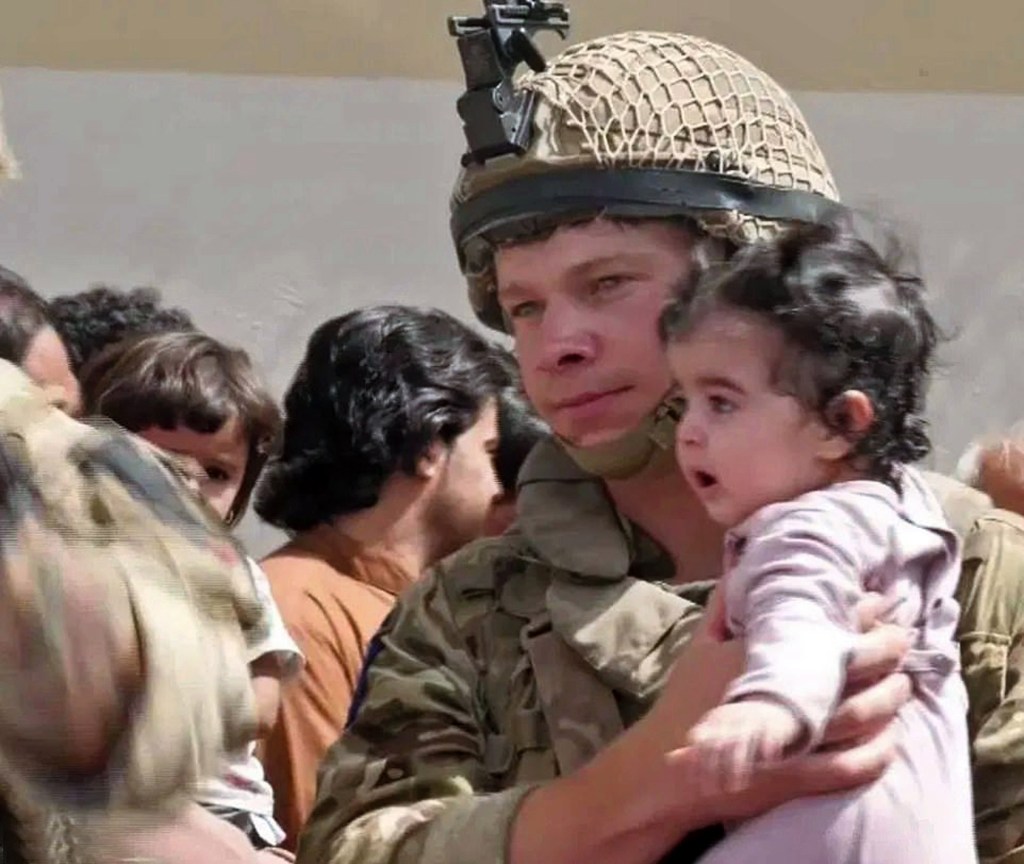
A woman passes her baby over the fence to an American soldier. She does not know the soldier. She does not know if the baby will be safe. She does not know whether she will ever see the baby again. But she knows that she must give the baby to someone, anyone, so that he doesn’t grow up there.

A sixteen year old boy with a promising career as a footballer grabs on to the side of a plane. He begs. He hopes the plane will take him too. The plane takes off, flinging him to the ground. He dies instantly.

An elderly woman with nothing to her name takes off on a long journey across desert mountains by foot. If she is lucky, she will arrive in a squalid refugee camp and spend the rest of her days living in white tents managed by the UN. She probably will not be so lucky.

Today those people are Afghans. 

Only a few generations ago, they might have been you. 

Most of the people here have ancestors who fled just as these refugees do today.

The great migration of Jews into England came at the end of the 19th Century. They had been living in the Pale of Settlement in Russia and Eastern Europe for centuries. Under Tsarist persecution, Jews were confined only to certain parts of the Russian Empire. They worked as peasants and in menial jobs, building their own communities in the shtetls.

When the Tsar’s power was threatened and the Russian Empire began to crumble, his supporters blamed the Jews. For decades, state-backed mobs rampaged through the villages. They torched houses, massacred people, stole property and made life unbearable. We call these waves of antisemitic violence pogroms.

So, our forebearers fled. Most did not make it. Some arrived in England. When they did, they were met by hostility, racism, cramped housing and sweatshop jobs. 

Not long ago, the hordes of fleeing refugees were you. You know what it meant to be a stranger. Even if you do not remember. 

The Torah asks you to remember. According to our narrative, thousands of years ago, we were strangers in the land of Egypt. We were refugees from a famine in Canaan. We were wandering migrants with no home. We were enslaved and confined to one part of the Nile and worked hard labour building garrisons for the Pharaoh. We were mistreated and judged with prejudice. We are instructed by Scripture to remember how that felt.

This week’s parashah sets out the rights of migrants. Never abuse them. Do not exploit them. Pay them upfront. Don’t hold their property hostage. Give them dignity. Don’t mess them around. Make sure they have food and shelter. Look after them.

Why? Over and over again, Deuteronomy repeats: “Always remember that you were a slave in the land of Egypt. That is why God enjoins you to observe this commandment.”

You have to support strangers because they are you. When you look at migrants and refugees, you are not allowed to see them as different. You have to look at them as you. It is the most-repeated commandment in the whole of Torah: to know what it is like to be a foreigner in a foreign land. Remember what this means.

Not everyone remembers. 

Last week, Danny Finkelstein wrote in The Times praising border controls. He took his family story of fleeing as refugees from the Nazis to advocate for keeping some foreigners out.

He wrote, and I quote here: “strongly believe in immigration control. And I am not in the slightest bit put off by the suggestion that this would have prevented my grandfather from becoming a British citizen […] yes, I would deny immigration to some very deserving and worthy people I would be quite happy to live next door to. Even people I would be happy to be related to. Just because I favour immigration for someone, that doesn’t mean I favour it for everyone.”

Personally, I cannot share Mr. Finklestein’s flippant disregard for immigrants, or join him in championing border controls. Like his, my family also fled the Nazis. Most did not make it out. Only a few, who were children, or who could prove they would be useful as nurses, were permitted entry. Under the current system, I doubt they would have been allowed. If I were a refugee today, I would not fare so well as my grandfather did.

But the reason I object to Danny Finkelstein so strongly is not selfish pragmatism. It is religious. It is because I truly believe what the Torah teaches about the rights of strangers. Those refugees are my ancestors who fled persecution. They are my progenitors from millennia ago who were strangers in the land of Egypt. Those Afghans, gripping onto planes and handing their babies to soldiers and walking for miles in the sun… they are me.

And they could be me again.

The only thing that stands between a comfortable citizen today and a desperate refugee tomorrow is luck. 

We in this room do not have to think about what we would do if our corner of the world was faced with famine or war. We do not have to imagine where we would go when faced with our own version of the Taliban.

But if ever I did have to think about this, I would pray that somebody, somewhere, had taken to heart the message of the Torah. I would want somebody to say that no number is too many, that their homes were open, and that my life mattered, no matter what I could provide.

Thankfully, there are people in Britain today, making precisely this case. 

The Jewish Council for Race Equality has put together a Jewish community response to the Afghan refugee crisis. It sets out clear actions the government must undertake to meet its moral obligations.

It must scrap its anti-asylum seeker legislation. It must stop deporting Afghans back to certain danger. It must allow more refugees into this country. 

I urge you all to sign this petition in support of these very reasonable demands.

These are really the minimum standards we must meet. The Torah never even thinks to introduce border controls or to police citizenship. Our Scripture assumes that migration is natural and inevitable. God’s instruction is that, once strangers are with you, you give them all the rights and compassion you would show to someone you have known all your life.

Torah repeats itself so many times to drill home this message.

Always remember that you were a slave in the land of Egypt. That is why God enjoins you to observe this commandment.

Shabbat shalom. 

I delivered this sermon at South West Essex and Settlement Reform Synagogue on 21st August 2021 for Parashat Ki Teitzei.