sermon · social justice · torah

Don’t make trans people scapegoats

“It makes no sense to hate anybody. It makes no sense to be racist or sexist or anything like that. Because whoever you hate will end up in your family. You don’t like gays? You’re gonna have a gay son. You don’t like Puerto Ricans? Your daughter’s gonna come home Livin’ La Vida Loca!”

This quotation is so erudite, you may wonder which ancient sage said it. That was in fact, the comedian Chris Rock, in his 1999 “Bigger and Blacker” set.

I must have been about 10 when I heard that line, but it has always stuck with me. Over the years since, I have watched it become true. The world is so small that whatever bigotries someone holds, the people they hate are bound to end up in their own homes.

Recently, I realised that this had happened to me. I hope I am not much of a hater, but a friend pointed out to me how much I used to make jokes about Surrey. I used to say that we should saw around the county lines of Surrey and sink it into the sea, drowning all the golf courses and making a shorter trip for Londoners to the beach. 

Now, here I am, eating my words. I am about to marry a man from Surrey and have all my in-laws in Surrey. I’m the rabbi for a congregation in Surrey, and looking to move as soon as I can to Surrey. That thing I hated, even in jest, is right here in my family and inside of me.

I had some terrible stereotypes that everyone who lived here was a tax-dodging, fox-hunting billionaire. They weren’t grounded in reality. They were just about my own fears, projected onto people I had never met. 

Chris Rock was right. Whoever you hate will end up in your family. 

More than that: whoever you hate is already something inside of you. 

All of us can do it: we can stereotype, generalise, and project all our antagonisms onto a group as a way to cast off all the fears we have about ourselves. What do we call someone who captures all this externalised hatred? A scapegoat.

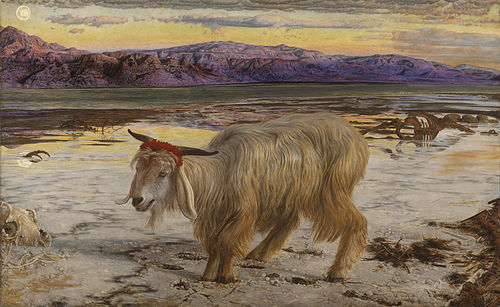
In this week’s Torah portion, we read about the original scapegoat. As part of the rituals for collective atonement, Aaron the High Priest gets two goats and brings them into the tabernacle. They pick straws for the goats. 

The lucky one is to be sacrificed for God. Onto the lucky one, Aaron ceremonially transmits all the sins of the Israelites, then chases it out into the wilderness. As it scarpers off, the scapegoat symbolically carries away all of the Israelites’ misdeeds.

The biblical narrative describes a psychological trick we can all play on ourselves. When we are ashamed of something inside ourselves, we take all that fear, turn it into hatred, and throw it at whatever unwitting bystander will carry it. 

Is this not precisely what Britain has been doing to trans people?

Gender is changing. The roles of men and women are shifting dramatically. There are so many new ways to live gender, to express ourselves, and to talk about our identities. 

Rather than embrace these changes and think about what opportunities they can afford us all to be more free, reactionary parts of British society have whipped up a concoction of bigotry and thrown it all at trans people. Every anxiety our bigots have about gender has been exaggerated and projected onto one small part of the population, who have been turned into monsters through these prejudiced eyes. 

It makes sense that people will find social changes scary and destabilising, but why should trans people bear the brunt of those fears?

A few years ago, I went to hear a panel of esteemed Jewish leaders give a retrospective talk about the ordination of gay, lesbian, bi and trans rabbis. On the bimah was Rabbi Indigo Raphael, Europe’s first openly trans rabbi. 

In his opening words to the congregation, Rabbi Raphael proclaimed: “I am a transgender man. I am not an agenda; I am not an ideology; and you can’t catch trans by respecting my pronouns.” The room immediately erupted into applause.

He should not need to say it. He shouldn’t need to defend his own existence, but such is the level of moral panic in parts of Britain that he has to assert his right not to be scapegoated before he can even teach Torah.

In the last few weeks, trans people have been subjected to legal rulings and government decrees that may make their lives unlivable and keep them from basic participation in public life. Like the goats of the ancient world, they are being cast out into the wilderness to carry away all of people’s fears.

It should not be this way. 

When we feel like scapegoating others, the best thing to do is look inside ourselves. We need to face our fears and work out why others bother us. The chances are, it’s something in ourselves that we’re not happy with, and when we need to get right with our own souls.

When we get to know those we “other” we get to know ourselves better. And when we realise we can like the difference in others, we learn more about what we can like in ourselves.

Reflecting on this, Margaret Moers Wenig, an American Reform rabbi wrote an essay called “Spiritual Lessons from Transsexuals.” She talks about how knowing trans people has enriched her own spiritual life. 

Interacting with trans people, Rabbi Wenig says, has taught her that all of us can craft our bodies as we will; we are all more than just our flesh and blood; we have living souls that can differ from others’ assumptions; that only God knows who we truly are. These are wonderful lessons that can only be learned when we turn away from fear and embrace curiosity.

They chime with my own experiences. At first, knowing trans people made me question myself. If gender is something we can change, am I really a man? With time, seeing other people embrace their gender and become who they are has made me feel far more happy in my own gender. I am a man, and I like being a man, and I like being an effeminate man.

When we turn away from fear, we see that we have no need for scapegoats. The parts within us don’t need to be divided up so that some are holy and others need to be chased out into the wilderness. Every part of us is for God.

The world has more than enough hate. It’s time we swapped it for loving curiosity.

After all, Surrey, it turns out, is rather lovely.

Shabbat shalom.

judaism · theology

Be humble about what we can know


Before the Enlightenment, the world was governed by unknowable spirits and invisible entities.

There was so much we did not know.

If your farm didn’t produce any crops or the skies did not give you enough rain, you did not have modern technology to inform you about drought predictions for the next three years. You would have no way to know that the water coming from your clouds was directly connected to oceans miles away.

But you had your priests, and your rituals, and your superstitions. You had small gods in the hill country to which you offered libations. And, so far, when you had upheld your traditions, the rain came as it was supposed to.

When you got sick with a skin infection, you could not see a GP who would consult a modern medicine manual and give you a cream that would clear it up in just a few days. You would not have knowledge about germs, allergies, and viruses.

But you had your priests, and your rituals, and your superstitions. You had your rules governing sin and repentance. You had reliable experience that bodily suffering could be healed by atonement. And, so far, when you had upheld your traditions, the rain came as it was supposed to.

Please hold this in mind as we read this week’s Torah portion.

It may be easy for a modern mind, after the Enlightenment, to scoff at the strange priests, rituals, and superstitions that govern these chapters in the Book of Leviticus.

You might feel slightly embarrassed to imagine the rites our ancestors slit open goats, threw their entrails around and burned them for days until they stunk out a tent as expiation for their sins.

You might squirm at the vivid descriptions of cotton-clad priests flailing around the limbs of slaughtered cattle to win the favour of their god.

It may even seem primitive how they delight at the animal fat creating explosive fire, which they see as evidence of their god’s approval.

But they were doing what they could with what they knew. And they were engaging earnestly with what they did not know. Beyond the world they experienced was an unfathomable mystery, and they wanted to draw closer to it.

Indeed, only verses later, we get an insight into their own feelings of inadequacy. We get a real sense that they knew how much they did not know.

Nadav and Abihu do absolutely everything right. They follow the priests, carry out the rituals, and trust in the superstitions. They are formally inducted into all the correct practices by their father, Aaron the High Priest.

They do everything right. And then they die.

The burning animal fat explodes in a blaze that kills them both.

How can our ancestors make sense of this?

Our Torah gives two answers. The first is from Moses. Moses recalls a prophecy when God said: “Among those who approach me I will be proved holy; in the sight of all the people I will be honored.’”

We may interpret this as a way of Moses defending God. Moses is saying: while this may feel like a violation of our belief system, it is in fact proof of it. Holiness is a very dangerous quality.

God has demonstrated how sacred it is to engage in the rituals. God has shown what honour and risk are involved in holy service. 

So, for Moses, this sudden death of their priests does not undermine their belief system. It’s just evidence of how little they understand about their sacred rituals. In the fire, they have reached the limits of their knowledge.

Aaron, too, offers an answer. Silence.

We may interpret Aaron’s unspoken response variously. We may read into it horror, resignation, anger, acceptance, or solemnity.

But regardless of what he was feeling, we see that Aaron has no intellectual answer to the problem. He neither agrees nor disagrees with Moses. Aaron finds the limits of speech. He finds the boundaries of what he can even express.

Moses and Aaron lived in a world of unknowable spirits, governed by superstition. They made sense of their confusing world through priests and sacrifices. And no matter how well they constructed their rituals, they still found their limits.

There were things they did not know.

But we live in an era after such theologies. From the 17th Century onwards, Western Europe was gripped by a profound truth.

As the people challenged the unlimited power of the established church, philosophers pulled apart the stories religions had told.

This was the Enlightenment.

No more would they be hoodwinked by magical thinking or damned by promises of divine retribution. Everything, every idea, would be subjected to ruthless scrutiny. The greats of these generations would challenge the tenets of even science itself.

We live now in a world formed by their ideas. While our ancestors were beholden to talismans, omens, and sacrificial fire, we have evolved to hold modern ideals of truth and rational enquiry.

So, why hasn’t religion disappeared?

Isn’t that the obvious next question?

We have rid ourselves of superstitions, but synagogues are stronger than ever. Most of the world is still deeply religious. Despite constant predictions of its demise, faith remains stronger than ever.

For those who wish to understand God’s persistence after the Enlightenment, they may want to look to Immanuel Kant.

Kant was the last of the Enlightenment thinkers. His impact on this period of intellectual history was so great that some even date its end to his death.

Kant was a profound writer on truth, ethics, the scientific method, and what we can really know. He was also a devout Christian.

Kant was animated by the same questions that bothered our ancestors who witnessed Nadav and Abihu die.

He was not confused about why burning fat could cause a blaze, or why religious rituals didn’t always yield the same results. Those were the questions of the past.

The question still lingered, however: why does it seem like there is no justice in the world? Why do bad things happen to good people, and why do the wicked seem to get away with it? Why, no matter what happens, does evil seem to persist?

In his essay, The Miscarriage of All, Kant says he will put God’s justice before the trial of reason. Kant contemplates all the possible answers.

Maybe what we think is evil isn’t really. Maybe the world works in ways we don’t understand so that evil has to be permitted. Maybe there are other forces in the world beyond God’s goodness.

And Kant gives us an answer, which is… we don’t know.

All of these explanations only expose the limits of our understanding.

None of the answers anybody has come up with is satisfactory.

We are finite beings trying to understand Infinite Truth.

And still, says Kant, we retain our faith.

For Kant, none of these questions undermine the existence of God’s justice. They just show what we do not know.

So, perhaps we need to approach these stories with more humility and less contempt.

The ancient priests may well have splashed ox blood around an altar to ward off sin, but we are no closer to answering the questions that motivated their rituals.

We are barely separated from them by any time at all.

We are still just animals, scrambling in the dark, trying to make sense of our world.

And we still need each other, with all our beliefs and rituals, to get through this life that can seem so unjust.

We are each other’s guides through a mystery we may never resolve.

We need to be humble about what we do not know.

judaism · sermon

The tribes that broke apartheid

We are all members of tribes. Human beings are tribal creatures. We organise into packs and stick together. We identify into groups. 

You are probably a member of more than one tribe. You are a member of this synagogue, which binds together hundreds of families into a community. You might also have your workplace, neighbourhood group, union, political party, youth movement, charity association. 

Tribes are a core part of life. And it is this week, as we receive the Ten Commandments at Mount Sinai, that the Israelites become a tribe. When we left Egypt, we were slaves. We were a mixed multitude escaping persecution. Now, as we stand in the wilderness, we form into something stronger. But what kind of tribe do we become? 

In 2008, a group of researchers got together to study different tribal cultures. David Logan and his team looked at hundreds of workplaces and social groupings to see how they operated. While all these groups formed tribes, they found that there could be very divergent kinds. 

These researchers divided up the tribes into five kinds, based on their cultures. At the lowest level, Level One, were those tribes that functioned worst and, at the highest level, Level Five, were those that functioned best. 

Interestingly, as we look at the stages, it seems like exactly the progression the Israelites go through as they form as a tribe. They begin low on these researchers’ scale and, as the story continues, they advance to higher levels of performance. 

At Level One, tribes take the attitude that life is awful. They systematically sever relationships with other tribes and pool with people who think like they do. They are entire groups of angry misanthropes. These are the kinds of people who say “everyone is horrible, so we’ll be horrible, too. People will attack and rob us, so we’re going to get them first.” People who think life sucks will be toxic towards themselves, their own group members, and anyone they consider an outsider.

This is the Israelites at the start of the Exodus narrative. They are crying out for help under tyrannical persecution. They are a mixed multitude of all the lowest classes of Egypt, and have no concept of anything but toil. They don’t even trust Moses when he tries to start setting them free.

At Level Two, tribes say “my life is awful, but there is better stuff out there.” The world might be a good place, but I don’t have access to the goodness in it. These are the kinds of people who will bemoan how persecuted they are. They will complain that other groups have better jobs, or get taken more seriously, or produce better culture, or have more influence. These tribes don’t believe in themselves enough to make positive changes for their own tribe, let alone others.

This is the next stage for the Israelites. They decide that there is a better world out there. Their lives are horrible but, if they left Egypt, they might get a taste of something better. They get up and go, seeking to find a new life as they leave through the Sea of Reeds.

In a Level Three tribe, the mantra is “I’m great, and you’re not.” Here, people are competing for prestige, wealth, and honour. These are groups where everyone wants to compare notes about how much better their kids are doing in school, or how much better their careers are going. The tribe can do good things, but only because it creates cultures where individuals flourish.

That’s the level we reach at the start of this week. Betzalel emerges as a fantastic architect and interior designer, showing off his skills at the Tabernacle. Aaron and his family come forward to be priests. They show how well they can perform religious rituals. But, because they have no defining values, they end up worshipping a golden calf and recreating the same systems they knew in Egypt.

Stage Four is where really impressive tribes begin to emerge.  These are groups where people are united by something greater than their individual competences. They turn from small groups into something large and meaningful. They are actually conscious of being a tribe, and united by values. They extend their reach by connecting with other tribes and finding points of value alignment. 

Only now, as Moses presents the Ten Commandments, can the Israelites reach Stage Four. They are a conscious tribe, united by shared values. We, these freed slaves, have one God. We reject idols. We honour our families. We hold time sacred. We refuse to engage in murder, theft and lies. We are one people joined by a shared vision of what a just society could be. Anyone who shares that dream can join us.

But that is not the end of the journey. The highest level is rare, and most groups never get there. 

The fifth level is when a tribe is united by values that affirm life, each other, and the future. We only see glimpses of this kind of tribal behaviour in Tanach – on those incredible occasions when the prophets extend their message full of joy about who humanity is and hope of what it could be.  

The researchers who ranked the groups only offered one example of a tribe that reached such a high level. That was the Truth and Reconciliation Commission in South Africa. 

This was convened in 1996. With Nelson Mandela’s release from prison and the end of formal apartheid, nobody knew which direction the country would go in. Some anticipated civil war, or resurgent racist nationalism.

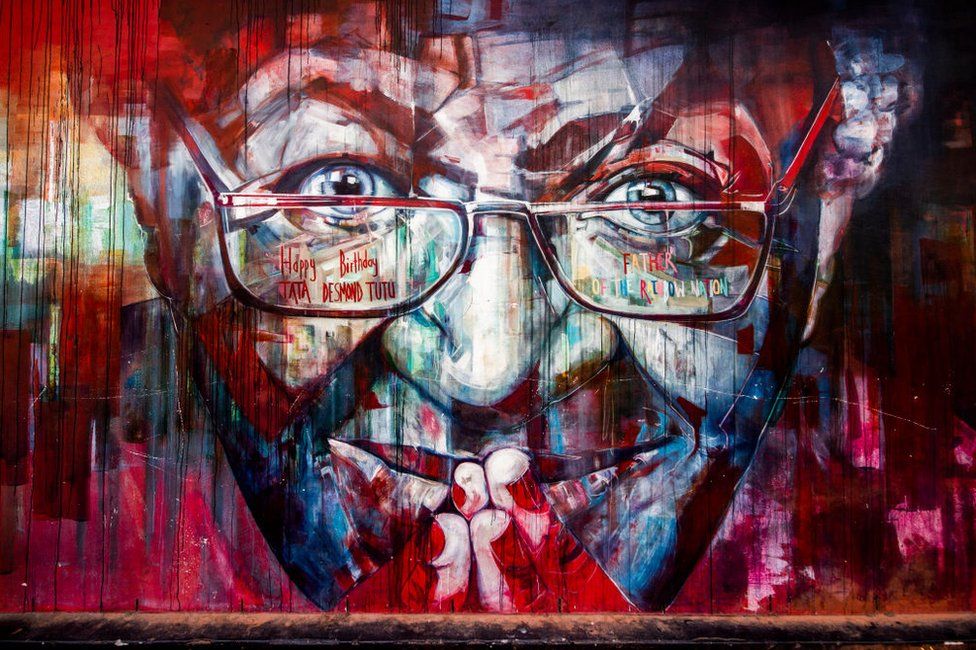
Archbishop Desmond Tutu brought together thousands of tribes from all across South Africa. He set up the Truth and Reconciliation Commission, which would aim to restorative justice between all people. Victims and perpetrators faced each other, to speak honestly about what had happened during apartheid, and how they could make amends.

He united people on a programme that they could be better than they had been. He coalesced people around a vision that they could be honest with each other and foster a future based on cooperation. 

Consider what courage and moral fortitude that must have taken. For decades, black, Indian, and Coloured South Africans had been subjected to segregation, poverty and violence. The anti-apartheid activists had faced imprisonment, state abuse, and separation from their families.

After all that, Tutu took these tribes to a level we almost never see. He created a culture where people believed in themselves, in each other, and joined by a vision of joy and hope. 

When Desmond Tutu died just over a month ago, it reminded people of what a giant he had been for religious people worldwide. His theology was one that still intimidates many. He preached true universalism, arguing that God was not a Christian, but belonged to every religion. He advocated sincere justice, never shrinking from social issues. And he believed, despite all he saw, that people were capable of fantastic things.

That was what made his assembly of tribes exceptional. Only those who see the best in people and hold the greatest of values can take people beyond what they know. If we are to defeat the racism, segregation and division that plague us today, we need to muster similar attitudes.

So, which tribe will we Jews be today? Will we sit at the bottom rung, only believing the worst about the world? Will we be like those who complain that we don’t count but others do? Will we create a culture where individuals can flourish but don’t cohere as a whole group? Will we unite around clear values and come together consciously with pride? And can we achieve that rarest of things: a level where we affirm what is wonderful in ourselves and the world, and foster unity around a joyous vision of the future?

The faith that inspired us at Sinai tells us today: we can achieve remarkable things. If we believe in ourselves, we will.

judaism · sermon

What do Jews look like?

A woman on a train walked up to a man across the table. “Excuse me,” she said, “but are you Jewish?”

“No,” replied the man.

A few minutes later the woman returned. “Excuse me,” she said again, “are you sure you’re not Jewish?”

“I’m sure,” said the man.

But the woman was not convinced, and a few minutes later she approached him a third time. “Are you absolutely sure you’re not Jewish?” she asked.

“All right, all right,” the man said. “You win. I’m Jewish.”

“That’s funny,” said the woman.” You don’t look Jewish.”

This classic Jewish joke actually highlights a good question: what do Jews look like? I am often told either that I do look like one, or that I don’t, and when I ask what it is… nobody ever wants to tell me! Whatever the reason, people have in their minds a picture of a Jew.

As it turns out, this isn’t altogether a new thing. Indeed, this week, we read about the clothes for Aaron and his descendants of the priestly caste. They have a strict identifying uniform.

Linen headdress, sash and and robes. A metal encrusted breastplate. Ephod, urim, tumim, incense. Aaron looks holy. Aaron looks like he stands out. Aaron looks… Aaron looks a lot like the Tabernacle he serves.

Aaron is to dress in the same white linen that we are told covers the Holy of Holies. He is to wrap himself in yarns of crimson and turquoise, just like the sashes that decorate the sanctuary. He is framed in gold like the Tabernacle’s curtain rails. He must wear a breastplate encrusted with stones representing the twelve tribes, just as the stones were ritually placed at the major resting points of the Israelites. 

Aaron is the Tabernacle in miniature. He is a microcosmic representative of the function he serves. The clothes he wears even assist in atoning for the Israelites’ sins, just as a sacrificial altar would.

Aaron dresses like what he does. He says: I am going to do holy things, and I require holy garb to do it in.

What a contrast with the Megillah we read just yesterday. In the book of Esther, there is an initial threat to the Jews. Haman, their wicked adversary, stomps through the city and plots Jewish mass murder. But Esther, our triumphant hero, foils the plot and overturns the decision. Now, instead, her uncle Mordechai will stomp through the streets of Shushan.

The Book of Esther draws our attention especially to what Mordechai was wearing on his horseback gallivant. “Mordecai left the king’s presence in royal robes of blue and white, with a magnificent crown of gold and a mantle of fine linen and purple wool.”

What does Mordechai look like? He looks just like a Persian palace. He has the crown and clothes of a king. He has the horse of his vizier. He looks like the empire. He looks like his enemy.

Having adopted the outfit of the oppressor, Mordechai soon acts like one. Under his instruction, the Jews go off on their own rampage, killing Haman, his sons, and 75,500 of their supporters. What Haman had planned for Mordechai, Mordechai did to Haman.

In Reform Judaism, we often gloss over this awkward ending, but it is very important. Victims given power can become no different to their persecutors. Here, the Megillah wants to slap us in the face with that fact. Look, it says, Mordechai looks just like everything he set out to oppose!

There must be a lesson in this for us. If we can look holy and we can look like oppressors, we have to think carefully about how we appear. 

Perhaps, then, I am right in my decision to always wear a collared shirt and suit jacket when I come to preach on Shabbat. After all, these clothes show that I’m serious and taking the services seriously. 

Ah, but the trouble is, arms dealers, politicians and tobacco lobbyists also wear suits. Aren’t I just dressing up like them, mimicking the clothing of 21st Century professionals, and subconsciously siding with them?

Perhaps, then, I need to switch to jeans and a t shirt? Oh, those haven’t been subversive since Tony Blair got out a guitar and rebranded the country as “Cool Britannia.” Mark Zuckerberg goes to work in jeans and a t-shirt, I’d hardly be making a different point.

Maybe I should copy our friends in Gateshead. After all, if I wear a black hat, long coat and beard, nobody will doubt that I’m Jewish. The people who stumbled to tell me why I looked Jewish before will now have a very clear answer.

Only the trouble is Haredim just dress like Eastern Europeans did 300 years ago. Theirs might fit someone else’s stereotypes better, but there’s nothing more authentic about it. Besides, I’m not convinced I’d look any less oppressive to a great number of Progressive Jews.

So how do we stop ourselves looking like our oppressors? In honesty, I think a Jew only looks like our enemy when we are determining what Jews should look like. When we stereotype, we repeat prejudices. When we gatekeep people for their clothes, we play into classism and prejudice. When we set out an image of a Jew, we exclude and hurt others. Deciding who looks Jewish is the least Jewish thing we can do.

So, what does a Jew look like? Open arms. An open heart. A broad smile. Curious eyes. A face that says, welcome, you are welcome here. A Jew looks like someone who knows that Jews look like everyone. 

Shabbat shalom.