israel · sermon · theology · torah

Why does God not just stop the war?

“How many more signs do you need that God is not there?”

This was the question one congregant asked last week when I went round for a cup of tea. In fact, a few of you have asked similar things recently.

None of you was asking out of arrogance or triviality, but expressing a real despair at the state of the world.  The ongoing war, which has claimed far too many lives, is enough to incite a crisis of faith in even the most devout believers.

Why will God not just stop the war? It is a serious question, and one that deserves a serious answer.

How desperate are we all to see a ceasefire, to see Gaza rebuilt, to see the hostages returned home, to know that the Israelis will no longer hide in bomb shelters, to know that no more people will be rushed to hospitals, to see an end to all the violence and bloodshed?

And it goes deeper than that. How much do we all wish that none of this had ever happened; that there was no war for us to wish to end?

In our anguish at the cruelty, we cry out to the Heavens. There is no answer from On High, so we wonder if there is Anyone there listening at all.

I will not be so presumptuous as to imagine I have the answers. I do not know the nature of God and can give no convincing proof of how our Creator lives in this world. In fact, if I found anyone who thought they did, I would consider them a charlatan.

The great 15th Century Sephardi rabbi, Yosef Albo, said: “If I knew God, I would be God.” We are, all of us, animals scrambling in the dark, as we try to make sense of the mystery.

But we come to synagogue so that we can scramble in the dark together, feeling that if we unpick the mystery in community, we will get further, and develop better ideas. Allow me, then, to share some of my own thinking, so that we can be in that conversation together.

How many more signs do you need that God is not there?

In our Torah, there were times when God did indeed show signs of presence. In the early chapters of Genesis, God walks through the Garden of Eden in the cool of day. At the exodus from Egypt, God came with signs and wonders and an outstretched arm. As the Israelites wandered in the desert, God appeared as a pillar of cloud by day and a pillar of fire by night.

This is the kind of sign that we might want from God now, then.

At a hostel in Jerusalem, I met an evangelical Christian who was absolutely convinced that everything happening in the Middle East was already foretold by the Bible and that God was about to rain down hell on the Palestinians and then all the Jews would finally accept Jesus.

Suffice to say I do not think such a God would be worthy of worship.

And I highly doubt this is the kind of divine intervention any of us would embrace.

Is there an alternative way we could wish for a sign?

Some great indication that Someone greater than us is involved in the story and cares about human suffering. Perhaps just a gentle hand to reassure us everything will be OK.

Deep down, most of us know that no such sign will come.

God did, however, send another sign in the Torah. A sign, perhaps, not to look for signs. A sign that God was not going to get involved, no matter how desperate it all seemed.

The rainbow.

At the start of the story of Noah, the world was filled with violence. Everyone had turned to war – nation against nation – all against all. The entire planet was rife with destruction.

God slammed down on the reset button. God sent a flood so catastrophic that it killed everyone bar one family. The flood was like a thorough system cleanse, designed to strip the earth back to its original state and allow Noah to rebuild.

Then, as soon as the rains had stopped and the land had returned, God looked at the devastation, and swore: “never again.”

God promised Noah: “I will maintain My covenant with you: never again shall all flesh be cut off by the waters of a flood, and never again shall there be a flood to destroy the earth.”

God hung a rainbow in the sky, and told Noah it was a symbol that there would be no more divine interventions:

“When I bring clouds over the earth, and the bow appears in the clouds, I will remember My covenant between Me and you and every living creature among all flesh, so that the waters shall never again become a flood to destroy all flesh.”


The rainbow, then, is a sign that God is there, and a sign that God will not get involved. Even if humanity goes back to being as violent as it was in the Generation of the Flood, God is not going to step in and destroy as at the start.

If the rainbow is a sign that God will not come and strike people down when the world is in crisis, it is also a sign of the other half of the covenant. Human beings must now be God’s hands on earth. We have to be the ones to do what we wish God would.

For Jews in the rabbinic period, every rainbow was a reminder to them that God would not act, so they had to take the initiative. They would look up at the sky and say “blessed is God, who remembers the covenant.”

According to the Jerusalem Talmud, no rainbow was seen during the entire lifetime of Rabbi Shimeon bar Yochai. He was so righteous and brought so many others to do good deeds that there was no need to be reminded any more of the covenant. Bar Yochai was one who acted so much like he was God’s actor on earth that even God did not need to send reminders.

The idea that human beings had to be God’s hands became even more important in the post-Holocaust world. Rabbi Eliezer Berkovits escaped from Germany in 1939 and went on to become one of the leading Orthodox rabbis of the 20th Century. For him, a traditional religious Jew, grappling with the enormity of the Shoah, he had to find a way to deal with God’s seeming absence at Auschwitz.

So, Rabbi Berkovits said, the problem lay not with God’s inaction, but with humanity’s. In his book, Faith After the Holocaust, Berkovits wrote:


“Since history is man’s responsibility, one would, in fact, expect [God] to hide, to be silent, while man is going about his God-given task. Responsibility requires freedom, but God’s convincing presence would undermine the freedom of human decision. God hides in human responsibility and human freedom.”

What Berkovits is saying is that it might be in God’s nature to prevent catastrophe, but it would undermine human nature if God did. In order that people can realise our freedom and our full potential, God has to stand back.

It seems that, in almost every generation, Jews are asking why God does not intervene to stop violence.

In each generation, we find an answer: God does not intervene, because that’s our job.

It’s not that any of these classical sources doubt God’s existence or question God’s presence. They just don’t think it is God’s responsibility to act. It is ours.

There is no flood coming to wipe out war or lightning bolt coming from the sky to strike down the wrongdoers.

We began with a question.

How many more signs do you need that God is not there?

Perhaps we can now reframe it positively.

How many more signs do you need that you must act?

God is not going to stop war. So we have to do our bit to bring it to an end.

Even in our small corner of the world, we have to do all we can to push for peace and justice.

So, on the days when you find yourself looking for the sign, you be the sign.

You need to be the sign to somebody else that there is hope in this world.

You need to be the sign that peace is possible.

You need to be the rainbow.

Shabbat shalom.

sermon · story · torah

Abel was a nomad, and you may wander too

When they lived in Eden, Adam and Eve did not have to labour for their food. Yet, in the moment that they were expelled from paradise, God gave them stern instructions on what they would have to do.

God warned: “Through painful toil you will eat food from it all the days of your life. By the sweat of your brow you will eat your food until you return to the ground, since from it you were taken; for dust you are and to dust you will return.”

Where once they had a homeland, the original people were cast out into a state of permanent exile, to live in the world with all its struggles.

This fable, though mythic, tells us something true about how human beings came to have the life we do. While there was probably never really an original idyll where people lived without work, there was a moment, millennia ago, when humanity’s ancestors shifted how they lived. 

For most of our history, we had wandered. All people were nomadic. They hunted and gathered, migrating between caves and carrying temporary shelters all over the neolithic continents.

Then, as the last Ice Age ended, around 11,000 years ago, people discovered that they could store seeds from one year to the next. They developed agricultural systems, with plots of land dedicated to growing crops. Having once roamed the earth, they could stay put in a single place, which would be their land. 

Cain and Abel are archetypal characters who tell us about this great change. Abel was a nomad, who herded flocks and grazed them over the hills. His name means “breath” or “waif” – for, like a cloud that drifts across valleys, he wafted without leaving a trace. He was a symbol of the old way of constant movement. 

Cain, his brother, had a name which meant “acquire” or “possess.” Just as God had warned his parents when they were cast out from Eden, he worked by the sweat of his brow. He laboured on the soil, where he sowed, grew, and harvested plants for food.

At the dawn of civilisation, these were the two types of people: those who cultivated the land in fixed places; and those who travelled with no fixed abode. Everything that was movable, like herds and clothes, was held by the nomads, the Abels. Everything immovable – like allotments and orchards – was owned by those who settled, the Cains.

Our Torah says that God favoured Abel over Cain, and it probably felt that way. While agriculture can keep people settled and build lasting cultures, it is unpredictable. One bad year of too much rain, or not enough, or bad seeds or infertile soil, can leave an entire community famished and ruined. 

A pastoralist, on the other hand, has a tough but durable existence. The life of a shepherd means much moving, but that is part of what makes their life sustainable. Sheep can be moved to wherever water is healthy and available. A goat can graze on thistles and other crops that people find inedible.

So, yes, to the ancient mind, it may have seemed like God looked more kindly on the one who wandered than the one who farmed. 

Cain killed Abel. 

The one who tilled the land and made it his home sought to destroy that wandering waif. Perhaps, indeed, he did. Perhaps the founders of the earliest civilisations enforced their new way of life with violence and coercion. 

But not successfully. As soon as Cain commits the first murder, God tells him what he will become. Cain cries out at his punishment: “Today you are driving me from the land, and I will be hidden from your presence; I will be a restless wanderer on the earth, and whoever finds me will kill me.”

For killing Abel, Cain would become Abel. Having been the acquirer, he would take his place as a nomad. Having been so sure in his farmland, Cain would return to the ancient ways of roaming. 

God said to Cain: “Abel had no homeland. Now neither do you. Abel was forced to wander. Now you will wander too.”

Generations passed, but the draw of homeland was irresistible. In ancient Mesopotamia, Abraham was called “ha-ivri” – border-crosser; the one who passed between places. 

He heard the voice call out: “Go, get going, to a land that I will show you,” and Abraham traversed to Canaan, to a new land where he hoped he would settle. 

He took his family, and his possessions, his movable goods that had sustained him in all his wanderings, and went in search of home. 

But, having reached the land that God would show him, he saw it and he left. He pitched his tent and built an altar, then carried on to Egypt. When he returned, he did so as a nomad, travelling with his flocks, threatened by the Canaanites and Perizites who had acquired the land, as Cain had once done.

Abraham sought a home, and found one, but it was never a permanent space. He had wandered to be in one place, but in that one place, he found he had to keep on wandering. 

Abel, Cain, and Abraham all wandered. So did the Israelites in the desert. Deep in our ancient stories, there is an idea that, while a settled home may be desirable, migration is part of the human experience. We may dream of Edens, but life is unpredictable, and fortune may force us to move. 

In Torah stories, we learn the survival of migrants, passed down from generations who knew what it meant to move with the seasons. 

It is a deep knowledge, from before we were Israelites or even Jews, stretching back to our history as neanderthals. 

Please do not imagine that I am romanticising exile. Travelling breeds resilience and creativity, but it is far from idyllic.

Instead, wandering is an inevitability. 

In every community and in every family, if you go back far enough, you will find a traveller. In the stories of our Torah, you learn that it could be you.

Abel was a restless nomad, and we may wander too.

Shabbat shalom.

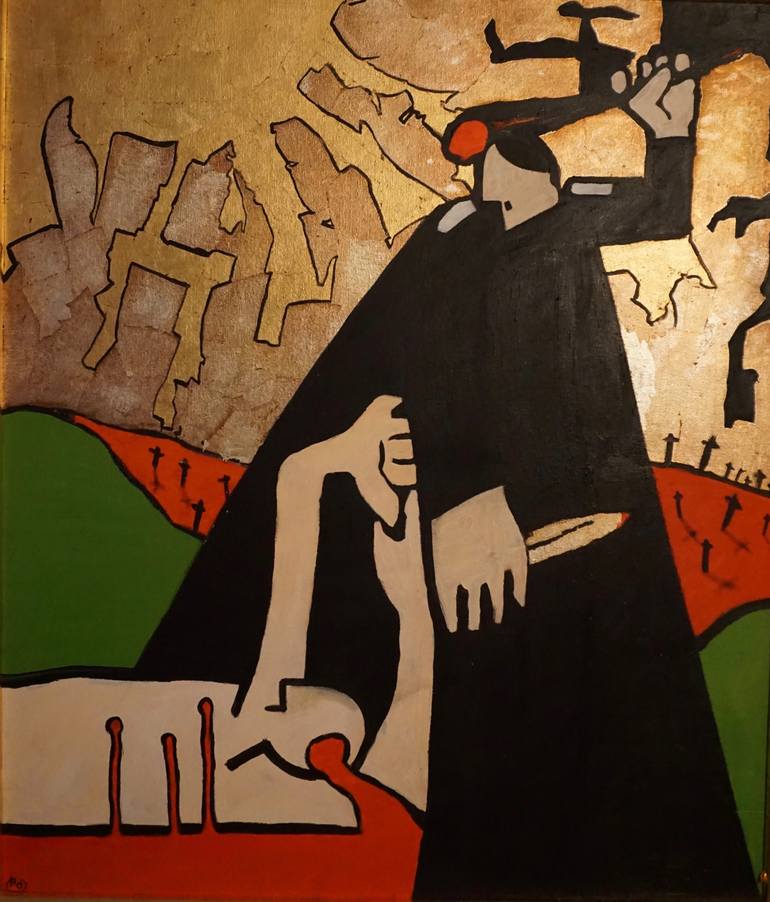
Cain and Abel, by Frank Hoesel

I learnt this Torah from Rabbi Joel Levy at the Conservative Yeshiva in Jerusalem.

story · torah

A letter to Joshua, from Moses

Dear Joshua,

It’s me, Moses.

Please forgive my shaky handwriting. It has been many years since I wrote anything down.

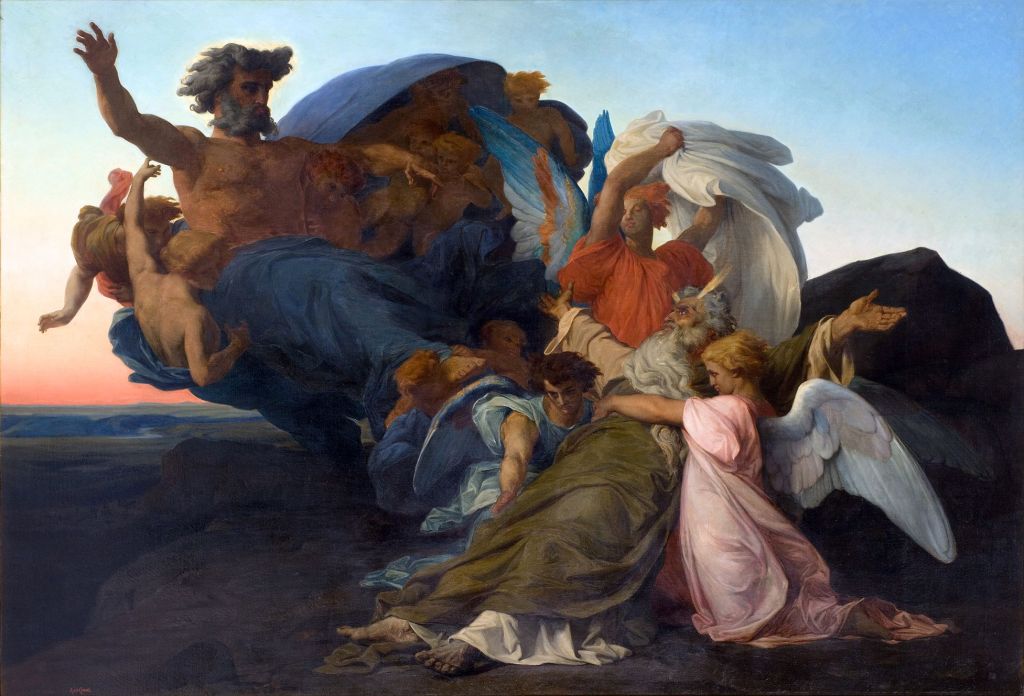
Can you believe it has already been forty years since we came to that great desert mountain and came into contact with the One God? Twice, I carried those miraculous tablets, etched with the Laws of Life, down from that mountain peak.

I could not carry them now. I would not have the strength. And I do not just mean that because of the way my hands tremble when I lift my food or the staggered steps I take when I wake in the morning. I do not have the zeal I once did. I cannot go on much longer.

Joshua, I am dying, and I will soon be dead.

I wish desperately that I could walk with you across that Jordan. All I have ever wanted was to arrive with you at that great destination to which we have journeyed.

But the Eternal One has told me that I will not go on much longer. I will die here, in the desert, and be buried in the wilderness sands.

At first, I was affronted. I cried out to my Maker. ‘Why, God? Why can I not pass over to finally see the freedom for which I have longed?’

God, who has given me so many words, remained silent.

I think I have an answer, though.

The truth is I was free the moment I first left Egypt. Before I returned with my staff and my message. Before any of those miracles and signs and visions. Before I even knew the God of Israel watched over us.

I was free as soon as I took my life into my own hands and refused to be part of the Egyptian system any longer. Once I decided not to be a slaver; not to subjugate others, nor to be subjugated, I was already then mentally emancipated.

These years we have spent in the desert were a way to work out what to do with that freedom. We have been reciting these laws and developing these rituals to find ways of living that keep us from ever going back to the oppressive ways of Egypt.

Joshua, this is what I need to tell you. Do not go back there. Not even in your mind. Do not try to own and control people. Do not allow others to own or control you. Let your soul be free, so that you can dedicate it to the God who led you here.

I am writing this down so that you can refer back to it, and remember what the point of it all was. Why we left Egypt. Why we spent all this time trudging thirsty through shrubland. Why we said we would go to that country from which our ancestors came many mythical centuries ago.

The point was not the land. The point was what we might do there. That we might be free. That we might finally see every human being as a living representation of their Creator. That we might cease using each other as means to an end but as ends in themselves. That we might truly know the Oneness of God and the deep mysteries underlying our universe.

That’s why I’m writing this now, as a reminder.

I know, I have said this all many times before. Call this my mishneh torah, my deutero-nominon; the repetition of everything I said before. It needs to be repeated, over and again, because freedom is hard to achieve and subjugation is such an easy default.

Please, read it out loud. Read it many times. Read it all the time. Even when the words feel trite and you feel like you have repeated the same phrases all your life, keep coming back to it. Remind yourself why you are here. Remind yourself what is at stake in this brief life we have been given.

I will say it again. Do not become like them. Do not worship the work of your hands. Do not think that work is the goal. Do not seek to own and control. Do not kill or oppress or endanger. Choose life. Seek God. Find holiness in everything that lives.

Joshua, I worry, even as I write these words, that you will not heed them. I know you want to. Ever since you were a boy, you used to sit at my feet and lap up every word. You were desperate to be closer to Divinity, to reach for higher things.

When I said we could conquer Canaan, only you and your friend Caleb believed me. You saw giants and were certain you could slay them. You had more faith than any of us. You had more faith than I did.

Joshua, there have been times when you carried me. Literally. In the war against the Amalekites, you put your shoulders under my arms and kept me upright. You are so, so faithful.

But where will all that zealotry go, once you are charged with leading people in the land? When you no longer have giants and Amalekites left to fight, what will you do with all your conviction?

I am asking too much of you. I am asking you to remember a life you have not lived.

You never knew Egypt. You were born here, in the wasteland, after we had already fled. You don’t remember what it was like to be owned. You cannot know what it meant to be a subject of a system that meant to destroy you.

In some ways, this means you have always been free, because you were not born a slave. In other ways, it means you have never been free, because you have never had to fight for it. You do not know what it feels like to start moving, then notice you are shackled, and to keep moving still, and to never stop moving, and to keep going with nothing but faith to carry you.

And you cannot know it. Just as I cannot follow you over the Jordan River, you cannot follow me out of Egypt. Some lessons can only be learned by life’s journey, and some journeys can only be made once.

Perhaps, when you go into that new country, you will make the place I dreamed about. Maybe it will flow with milk and honey. It might become a light unto the nations, where everyone lives with equality and dignity, where everyone can walk in the ways of God.

Or perhaps you will make a new Egypt. You, who never knew Egypt, will find new ways to conquer and subjugate and destroy. Maybe you will crown kings and build empires and wage wars.

Then what will the point have been?

I am asking too much of you. I am asking you to build a world I could not, and to do it all without my help. I am asking to you to know things you have not learnt, and to be perfect in ways I was not. I am sorry to put so much pressure on you. It is not fair.

You may not be able to do what I am asking. But at least you can remember. Tell your children where we came from. Teach them where we were trying to go.

And, then, perhaps, when they see new Egypts emerging, or they see that new Zions are possible, they will find paths through the wilderness that you and I could not see. Keep the story alive, so that the dream may continue.

Joshua, I am going to die here.

These words are all you will inherit from me.

I love you, Joshua.

Your friend,

Moses

sermon · torah

You can’t be in a community on your own

Can you help me build a community?

Hi, my name is Lev, and I’m a rabbi. I’m here because I need your help.

I’m looking for a Jewish community. I’ve been trying to build one on my own, but it’s been so difficult.

Last week, I put on my best clothes, and sat in my living room alone saying “amen.” Honestly, it wore off after only five minutes. So I went into my kitchen, where I lay out a lovely spread of bridge rolls and fish balls. I stood around awkwardly with crisps on a paper plate, but there was nobody to make small-talk with.

It was worse during the Holidays. At Purim, I played every character in the spiel, and acted it out to myself. At Pesach, I had the Afikoman in a place I thought my guests  would never find it, but then, I was the only guest, and I found it straight away. At Simchat Torah. I danced around fervently to klezmer, but there were no musicians, and the hora doesn’t work solo.

All I wanted to do was go to a bat mitzvah, find a friend, and kvetch about the rabbi. But there was no bat mitzvah. There was no friend. And I was the rabbi!

So I’m looking for your help. Can you tell me what I’ve been doing wrong?

It seems like in order to do anything Jewish, you need a community.

Apparently I’m not alone in coming up against this problem. In fact, the Talmud relates that even back in Babylon, rabbis needed communities in order to be Jews.

Once, according to the very beginning of Berachot – the tractate on blessings –  Rav Nahman had not been to the synagogue for a little while.

Rav Yitzhak came to see him, and said: “where have you been? Why haven’t you been at shul?”

Rav Nahman answered: “I’ve been sick.”

So Rav Yitzhak suggested: “Gather ten of your students, and we’ll hold services in your house.”

Rav Nahman said: “I don’t want to impose on anyone.”

So Rav Yitzhak suggested: “Why not get a messenger who will come and tell you when we’re doing prayers, so you can join in?”

Rav Nahman went to protest, and then Rav Yitzhak finally asked: “what’s really going on here?”

And Rav Nahman finally answered: “You have told me many things the community could do for me, but nothing that I can do for the community. I need to feel like God won’t hear your prayers unless I’m there.”*

What do we learn from this story?

First, we learn that it really is important to come to synagogue.

Second, we learn that if you can’t come to synagogue, the synagogue can still come to you.


And, third, we learn that people need to feel needed.

A synagogue is not a subscription service. It’s a membership organisation. You only get out of it what you put into it. And people only come when they have something to put in.

It is the definition of community: we are all in it together, building it together, with a shared stake in its future.

Sometimes, in previous synagogues, Jews said to me: “I’m a member, but I don’t want to be involved.” And I used to say: “don’t worry, Judaism will still be here when you need it.”

But that’s not necessarily true, is it? Judaism needs people who believe in it; who turn up, week in, week out, to keep it living. There is no Judaism without Jews, and Judaism needs every single Jew.

In our Torah portion this week, Moses teaches that if you have an extra sheaf of corn, you need to set it aside for others. When you have olives left on your trees, leave them so that people wandering by can eat them. Got leftover grapes? Share them round.

The point is, in the economy of the Torah, you don’t just feed yourself. You feed everyone. Yes, you make sure you have enough to eat, and then you give away the rest.

The same is true with our religious selves. Yes, we all need the spiritual sustenance we get from coming to synagogue. We all need the companionship; the moments of the serenity; and the support through tough times.

But, when you feel full up on Judaism, that’s when it’s time to share what you have. If your cup overflows, make sure you give the other synagogue goers a sip.

Everyone in this community needs you here. You have skills, strengths, time, and energy that are completely unique to you.

We need you.

I need you. I’m here because I’m a rabbi and I can’t build a Jewish community alone.

This synagogue is in an important moment of transition. Just a couple of weeks ago, you said goodbye to your beloved rabbi of seven years, Rene. In the next few weeks, you will spend Rosh Hashanah and Yom Kippur with our wonderful colleague, Daniel. And then, at Sukkot, I’ll be starting with you.

I am really hoping that this will be a long term partnership, where we will grow together. For that to happen, I really do need your help. I need you to turn up to synagogue, do mitzvot here, and make all our Shabbats and festivals meaningful. I need you to offer up your time and skills, wherever you can, to make this community run successfully.

Above all, I am asking you to make room for me.

In this week’s haftarah, the prophet Isaiah says: “Enlarge the site of your tent, extend the size of your dwelling.”

So that’s my request to you. I’m a Jew looking for a community. Can you make your dwelling a bit bigger to let me in? Can I come and be part of your tent?

I can’t be a Jew alone. And I’d like to be a Jew with you.

Shabbat shalom.

*Not exactly what he says, but it’s a sermon, and I’m taking license.

sermon · torah

Love is at the heart of the Torah

Within the Torah, there are 5 books.

There are 54 parshiyot.

There are 5,888 verses.

There are 79,980 Hebrew words.

And there are 304,805 letters.

The counting of numbers, verses and spaces actually has a great importance in the Jewish tradition. The word in Hebrew for a scribe is the same as for one who counts (sofer). The Talmud says this is because the original sages spent their time counting the numbers and letters of scrolls.

Now, sometimes, the Talmud is making stuff up, or telling a joke that has been lost to the ages, but in this case, they are almost certainly right. 

Counting words, numbers and verses was a great way to ensure that the Torah was standardised, so there could be no differences between the authoritative versions of God’s Word.

Counting words helps us to work out important things about Torah. For example, the Talmud tells us, you can count from the beginning to the end and find the word that is slap bang in the middle of the scroll.

If you do it by letter, says the Babylonian Talmud, you get the word “belly” – gachon. Yes, right in the middle of our Torah is a big tummy, just like on a human being. It fits, doesn’t it? How much of Jewish culture is about food?

If you do it word by word, then the middle two words of the whole Torah are “darosh darash” – search and search; diligently enquire. The middle words of the Torah are all about asking and questioning. How fitting! We love asking, and searching for answers. Aren’t we always questioning, adding questions to our questions? (Well, are we?)

And, if you do it by verse, then you get to the central verse of the whole Torah, Leviticus 13:33. Here it is, the great lesson our Scripture has been trying to tell us: “then the man or woman must shave themselves, except for the affected area, and the priest is to keep them isolated for another seven days.”

I’ve got nothing. 

Now, the Babylonian Talmud has given us some good answers about the middle of the Torah. But none of them are quite what we’re looking for.

Because if you hold the Torah in your hands, if you physically roll the Torah looking for a midpoint, you’d think it would be here, in this week’s parasha. 

Spatially, the centre of the Torah is here, at the start of Kedoshim. Here, at the beginning of Leviticus 19, God tells the Israelites: “you shall be a holy people, for I, God, am holy.”

And if you follow this bit of Torah down to its centre, right to the middle here, you get the central commandment of the Holiness Code: “love your neighbour as yourself.”

That, says the Palestinian Talmud, is the real heart of the Torah. Never mind all the numbers and counting. If what you are looking for is what the Torah is all about, follow your heart, and get to its intuitive core.

There, in the Yerushalmi, Rabbi Akiva says: “the greatest principle of the Torah is to love your neighbour as yourself.” He says, if someone is going astray, this is the only thing you have to remind them of to get them back on track. 

You may have heard this before. In the Christian Gospel of Mark, Jesus says that the greatest principle of Torah is to love your neighbour as yourself. He might have got more famous than Rabbi Akiva, but he certainly wasn’t the saying’s originator. That’s just a nice Jewish boy, repeating a good rabbinic tradition. 

In fact, anyone who spends more than a minute with our religious tradition will understand that to be so. Love is at the heart of the Torah. That is all any of it is about. 

Yes, the belly matters, of course it does. But it’s not just because we need food to keep ourselves sustained. It’s not even because food is a way of transmitting culture. It’s because through feeding and being fed we can show how much we love each other. These kiddishes, these Friday night dinners, the old recipes handed down, the food bank drives, the seder meals, the cakes we bake… they are all simply different ways of demonstrating love.

And yes, the searching and inquiring matters too. But it’s not just because we’re a learned and inquisitive people. It’s not just because we put such high value on education and on our Scriptures. It’s because it is a beautiful way of showing each other how much we love each other. You sit with a child to tell them a Bible story. You sit with a friend to study some text together. You sit with an elder to ask them for their wisdom. Sure, on some level, you’re just trying to get information. But, at core, these are ways of showing love.

Hold that in mind, then, as we return to the central verse of Torah, in the purity laws given to priests: “they must shave themselves, except for the infected area…”

No, sorry, I’ve still got nothing.

A few weeks ago, I sat down here with the Council to talk about what it would look like to come here as a rabbi, and whether we might be a match. One of your leaders asked: “what do you think are the core functions of the synagogue?” I gave my honest answer: “The synagogue only really serves one purpose, and that is to get people to love each other more.”

We come together, in these Jewish communities, to show that we love others as we love ourselves. We will eat together and learn together and pray together because we love each other. 

We will love each other enough to be with each other in our most trying moments of death, disease and disaster. We will love each other enough to celebrate together through our joys of life, and build each other up.

This synagogue already has a wonderful reputation. Rene, your outgoing rabbi, has told me how much he loves you. Charley, your former rabbi, and now movement head, has shared the same. Danny, your rabbi emeritus, has told me how lucky I am to be coming here. 

I meet adults who grew up here, friends of Laurence, and they share what a warm and wonderful place this is. In just the few meetings I have had with members, I can already see why.

The love that people speak of you all with is because of the love that you put out and create in your community.

I cannot wait to start here, and to love you as much as everyone else does.

וְאָהַבְתָּ לְרֵעֲךָ כָּמוֹךָ

May you love your neighbour as you love yourself.

Shabbat shalom.

sermon · theology · torah

Purity or justice

Let’s start with a question.

An adult couple accidentally runs over their pet dog. Instead of burying their dog in the garden, they take it home, cook it in the oven, and eat it. 

Here’s the question: have they done something immoral? 

Most of us will have an instinctive reaction: what that couple did was disgusting. We will feel some revulsion.

But whether you think it was morally wrong will depend on how you see the world. It will depend on your moral palate. 

This was what was demonstrated by the Jewish-American psychologist, Jonathan Haidt, in his popular book, The Righteous Mind.

Haidt sought to find out why it was that caring, rational people could disagree so profoundly on moral issues. Why was it that America was so polarised? There, people fight furiously about issues like abortion, guns, and marriage, as if they have no common moral basis.

Haidt argues that we do have shared moral bases, but our morality is more like the palate on our tongue. “We humans all have the same five taste receptors, but we don’t all like the same foods,” he says. “It’s the same for moral judgments.”

We have, he says, five main taste receptors: care, fairness, loyalty, authority, and sanctity. 

If you are an educated person who lives in an urban area of a Western capitalist country, you are likely to feel that the couple who ate their dog did not do anything morally wrong. You’ll be disgusted, sure, but you might not think that they violated any kind of moral rule.

That’s because, in these cultures, people have a moral palate that puts a big emphasis on ethics of care and harm. If nobody was hurt, then there’s nothing immoral.

If, however, you live in a close-knit community of farmers, you are far more likely to say that the couple who ate their dog did do something morally wrong. That’s because those cultures have a strong sense of sanctity and taboo.

Both of these systems are ways to help people get on with each other. In a busy metropolis like London, you need to be able to live and let live, because if you can’t tolerate diversity, society will fall apart. In a tribal farming community, like ancient Israel, you need to have strong social norms to protect people.

Both these impulses – care and sanctity – come from a deep, ancient social need. 

Since humanity’s beginning, our survival has depended on our ability to care for our most vulnerable members. How would we have lasted a single generation if not for looking after the young, the old, and the vulnerable?

From the start of civilisation, we have also needed to be able to express disgust. It comes down to the most basic distinction between excrement and edibles. We need to tell each other: “this food is poisonous; this disease is contagious; this behaviour is dangerous…” Without clearly agreed boundaries and taboos, we would quickly perish.

It is worth holding these two tendencies in mind – care and sanctity; purity and justice – as we approach our readings for this week.

Our Torah portion goes into minute detail about how to do proper sacrifices, how to lay out the Temple, and who is supposed to do what in religious services. To us, the attention to detail might seem absurd.

But remember that this is part of a group of people’s moral palate. This is their sense of the sacred. Messing it up, from their point of view, would be ethically disastrous. It would be similar to eating the family pet. 

No wonder, then, that the prophet Ezekiel opens the haftarah by telling the Israelites “if they are ashamed of all they have done, make known to them the design of the temple.” Failure to get it right, says Ezekiel, is a serious sin.

There are two great moral impulses in Torah: justice and purity. This trend appears throughout the whole Scripture: contradictory, competing moral voices speak through our books.

The voice of justice tells us about care and compassion. It tells us about fairness and redistribution. The voice of justice charges us towards more equality and more freedom. Justice says that a society is only as strong as its weakest members.

The voice of purity tells us about how to keep holy things sacred. It tells us what the boundaries are on sex, so that we do not cross them. The voice of purity tells us not to eat octopus and not to mix linens. Purity makes sure everything is kept in its proper place, so that society can function, and people feel safe.

The voice of purity might feel less relevant to us today. We celebrate the prophets for their concern for the most vulnerable, because it fits so well with our ethics of care. We see ourselves in the narratives of the exodus because they chime with our moral intuitions about freedom from slavery. Laws on architecture… feel less like big moral issues.

That’s because what the big taboos and boundaries are can change a lot between time periods. 

When I was growing up, one of the big focuses of popular disgust was gay men. There was a long period when the media was seemingly obsessed over sex between men, especially in public toilets. This was the full gambit of taboos: waste and excrement; sex between the wrong sorts of people; and blurring the boundaries between public and private.

I think that is why some of the things that cause people moral disgust today just don’t bother me. I have had to push through a society telling me I was disgusting, and unlearn that contempt towards gay people. Now, the other sources of disgust just seem like passing fads. 

Knowing that has helped me understand where others are coming from.

I find Haidt’s ideas about moral palates really helpful for thinking through why sometimes it’s hard for people to agree. My ethical taste buds are highly attuned to care and fairness, but I don’t get much flavour from sanctity, and I can barely taste authority. 

Please do not think that one of these is left-wing and the other is right-wing. There are plenty of conservatives deeply motivated by wanting to make sure people are cared for and that distribution is just. There are just as many socialists who want to ensure the purity of the Marxist tradition, and to live in a world without contaminating ideas or contaminating people. 

What we morally feel is not just about ideology, but about all the factors in our cultures and upbringing that make us need to focus on certain values.

So, this is my advice. The next time you encounter someone that you really disagree with, try not to assume they are evil or weird. Think back, instead, to this Torah portion. Maybe what is just a building to you is somebody else’s Temple. Maybe what really triggers one person just doesn’t impact you.

Haidt’s goal, when he did this study, was to make it possible for people to talk to each other across divides. I don’t want us to become like America, where some issues cause massive wedges between neighbours. 

So let’s try listening to each other, and hearing each other’s worldviews.

Shabbat shalom.

israel · theology · torah

I believe that God is screaming.

A few weeks back, I attended a retreat with Christian colleagues. At some point, surprisingly enough, we got onto talking about God. I asked one of the priests a question: “do you believe God speaks to you?”

He looked slightly bewildered by the question. “Literally?” he asked. “No, not really.” He shook his head.

The answer seemed obvious. After all, we were liberals, at an interfaith event. That kind of talk is for fundamentalists. We’re all too rational for that. 

“Why?” he asked, turning back to me, “do you?”

“No,” I said, sheepishly. I don’t know why I felt so embarrassed. Of course, many believers see the voice of God mostly as a metaphor, or as a way of giving expression to moral intuition. I’m just not one of them. 

I do believe in a personal God, who has a loving relationship with every human being on earth. And I do talk to God. It’s not that I expect answers in any sense, but I do believe some One is listening: that prayers are more than idle words I recite to myself.

Perhaps my Christian colleague would have agreed with me if I’d put it in these terms, because finding vocabulary to talk about God is hard. Words like ‘literally’ and ‘metaphorically’ start to evaporate when you are dealing with faith.

I think, perhaps, the reason I gave a sheepish no – maybe even that I asked the question at all – was that I was having a mini-crisis of faith of my own. Ever since the war broke out, I have been praying differently, more fervently, desperately begging the Universe for peace. I have been hurling questions and recriminations into the void. I have been wondering… do I still believe in this God?

My personal relationship with God has carried me through some of the toughest times. When I have felt most lonely, God has been like a best friend. When I have hated myself, God has been like a lover. When I have needed direction, God has been a wise counsellor. I have looked to God in every time of disaster, and always found comfort in a loving Presence that reaches out and caresses from across a boundary of unknowability.

But now I listen for God’s voice. And all I can hear is screaming. 

As long as there have been people who believed in religious meaning, there have been those who questioned it. Usually, they were the same people. Abraham, Moses, Hannah, Kohelet, Job: they all had faith, and they all questioned it. They asked questions so that they could challenge their beliefs, and refine them. Lately, although less adequately than those prophets, I have been forced to do the same thing.

The first question we usually ask when confronted with crises of faith is “do I believe in God?” Fairly regularly, people come to me with conclusions one way or the other: “you should know, rabbi, I don’t believe…” or “you should know, I have a strong sense of belief…” My follow-up is always the same “… and what is it that you do (or don’t) believe in?”

For me, the answer is moral truth. When I talk about believing in God, what I am saying is that moral statements are not just opinions. When we say “murder is wrong” we are not just expressing a preference, like “my favourite flavour of ice cream is tutti-frutti.” We are describing a reality, no different to the claim that there are 24 hours in a day. We are describing something literally true.

I think that’s what God is. When we want to know why our feet are firmly on the ground, we give the shorthand answer of “gravity.” When we want to explain why objects in space interact with each other as they do, we use words like “attraction.” And when we want to express how we know that murder is wrong, we use the word “God.”

So, in feeling the great sense of angst I have had since the war began at the end of the High Holy Days, I am forced to return to the old questions. I am forced to ask whether I still think moral statements are true. I am forced to ask whether I still believe murder is wrong.

I do.

And that is why I believe that God is screaming.

What we talk about when we describe God is obviously more complicated: it is something infinite, and greater than we can put into words. That’s why words like “metaphor” and “literal” are so inadequate – because we are describing something more real than reality. So we have to find shortcuts. We have to find ways of talking about God in human language, to make sense of God on human terms. God is then “a tender parent”; “a loving shepherd”; “a righteous judge”; “a generous creator.” All of these are good descriptors, and all of them are incomplete.

I have been relying on a version of God that has worked for me for a while. I have imagined a sweet aunty or a gentle older friend. In times of loneliness, desperation and heartache, that image of a loving God has helped me get through the day. But that image doesn’t serve me now. I think if I used God for comfort in a time like this, I would be retreating from responsibility. God does not need me to feel safe now, but to shake me from illusions and complacency.

If God is the moral voice of the universe, that voice must be crying out in desperation.

In the last few months, 23,000 Palestinians in Gaza have been killed by Israeli bombs. I am kept awake at night thinking about that. I imagine God, smothered by the rubble of obliterated hospitals, calling out. Like Abel, stricken by Cain, the voice of the blood is calling out from the ground (Gen 4:10). I imagine God, pulled from the wreckage, crying: “Thou shalt not kill. (Ex 20:13) Thou shalt not kill. (Deut 5:17)”

Those were the commandments given to the Jews, above all others. In some variations, it is the very first commandment, the one that holds the most power. And as Israel stands in the dock at the Hague, it is not only South Africa that places it on trial, but God too, who comes with the accusation: “did I not tell you: thou shalt not kill.”

Since the war began, Israeli settlers, with governmental support, have seized around 20 villages in the West Bank, displacing thousands of people, so that Jewish Israelis can expand their territory and claim others’ homes. I imagine God calling out from deserted towns, on the trail with refugee families, wailing “thou shalt not steal” (Ex 20:15), “thou shalt not steal” (Deut 5:19).

Netanyahu says, unabashedly, that he will push the Palestinians from Gaza and create a new border with Egypt. The Torah answers, in desperation: “thou shalt not move thy neighbour’s boundary” (Deut 19:14). Land theft is a sin.

Israeli soldiers enter Gaza and use Jewish symbols as weapons. They recite the Shema from the pulpits of mosques and place mezuzahs on Palestinian homes. They desecrate our religion. They destroy our faith. From the depths of history, God cries out “honour thy mother and thy father (Ex 20:12); honour thy mother and thy father (Deut 5:16).” Do not profane the faith of your ancestors with war crimes.

Worse still, the politicians claim that God gave them the right. That this is what the Torah intended. Can you not hear the scream of revulsion as God decries: “thou shalt not take My name in vain (Ex 20:7); thou shalt not take My name in vain (Deut 5:11).” This is what was intended: do not abuse God’s name for worthless pursuits like war, but elevate it for the purposes of peace. 

I believe that God is screaming. 

The commandments may once have been given as words of instruction or even as a love letter, but now they are a desperate plea. 

God says “I am the Eternal One thy God, which brought thee out of the land of Egypt, from the house of bondage. Thou shalt have none other gods before me.”

No other gods. No state, no flag, no military, no leader, no ideology, no grudge, no border, nothing. None of these can ever be placed before God. None of them have any trump over God’s words.

God’s word says: “You shall not pollute the land in which you live; for blood pollutes the land, and no expiation can be made for the land, for the blood that is shed in it.” (Num 35:33)

So I believe I can hear God screaming: thou shalt not kill.

And I do not want to silence that voice. I want to amplify it. I want the Holy Torah to be heard now, more than ever. I hear God screaming, and I want to join in.

Thou shalt not kill.

Thou shalt not kill.

Thou shalt not kill.

judaism · sermon · torah

Perhaps we are not powerless

I have a horrible, on-off relationship with the news. I wouldn’t call it a love-hate relationship so much as a hate-hate relationship. 

There are days when I can do nothing but stare at it, soaking in every detail: climate collapse; species extinction; earthquakes: natural disasters; social breakdown; cost of living; refugees in detention centres; wars, wars, wars…

And then there are days when I switch off entirely. I become so overwhelmed I refuse to hear the radio or see current events on TV. I don’t look at any of the news apps or social media for fear that I’ll be reminded of all that is wrong in the world.

Whether endlessly scrolling through the horrors or studiously avoiding admitting they are there, I think I’ve become trapped in a cycle of feeling powerless. It’s all so big, and so frightening. 

But what can I do? I’m one person, seeing the world collapse, and all I can do is observe. 

If this feels at all relatable to you, perhaps you’ll find some comfort in this week’s Torah portion, as I did.

After all, didn’t Moses feel too small and powerless too, at the beginning? He tried to change things, and look where that got him. Stuck in exile, looking after sheep. Moses looked at all that was wrong in his world, found it far too much to bear, and retreated into the wilderness. 

And he would have stayed there too. He could have lived out the rest of his life with a lovely family tending flocks in Midian. 

But God had other ideas. God heard the cry of the Israelites in bondage and decided it was time to set them free. 

So God reached out to Moses from a thornbush. God set a small thicket in the wilderness ablaze and called Moses on his mission.

A thornbush, of all things. Why would God decide to speak from such a lowly and despised place? The thornbush is, at best, a plant to be ignored and, at worst, an annoyance that scratches against bare legs. It’s the desert equivalent of stinging nettles. 

In our Talmud, Rav Yosef says: not because the thornbush is the greatest of plants did God choose to speak from it, but because it is the least of the creatures. God disregarded all the most beautiful trees of the desert in order to be with the lowliest. 

Similarly, God chose to give the Torah from Mount Sinai not because it was the highest or most magnificent of desert peaks, but because it was small and covered in unremarkable roughage. 

In the natural world, God singles out the powerless and unimportant. That’s where God works the real miracles. 

That’s why God chose Moses too. Moses had no idea of his miraculous birth or impressive destiny. As far as he was concerned, he was a loner in the desert.

When Moses gets the call, it’s not God that he doubts. He doubts himself

His first question is: “Who am I that I should go to Pharaoh and bring the Israelites out of Egypt?”

God doesn’t build Moses up or tell him how he wonderful he is. He says: just trust. Have faith.

We don’t get to decide what times we live in or what role we have to play in them. God decided that Moses was going to take the Israelites from Egypt and that was what was going to happen.

But Moses still can’t see how he can make a difference. He doesn’t doubt God’s power, he doubts his own. He says: “what if nobody believes me? What if they don’t listen to me? What if they don’t trust that I spoke with God?”

At this point, God shows Moses some miracles. We might think these miracles are about God flexing Divine might, showing Moses all the wonders. In fact, a bush burning in the desert without being consumed by flames would be quite enough to achieve that.

These miracles aren’t about showing God’s power: they’re about showing Moses his own. 

First, God turns Moses’s shepherd’s crook into a venomous snake. Moses recoils in fear. Then God turns it back again.

Next, God afflicts Moses with a deadly skin disease. Moses thinks his life is over. Then God heals him.

Both miracles make Moses face his greatest fears. They are exposure therapy. The worst thing that Moses could imagine is death. God shows him that he can stare it in the eye. Moses thinks he is not brave enough. God shows him that he is.

It’s not that Moses ever doubted God’s power. What he doubted was his own. Now God shows him he does indeed have power. He is stronger and more resilient than he realised.

It’s not that Moses ever doubted God’s importance. What he doubted was his own. Why would anyone care what a stammering wreck like him had to say? 

When God performs miracles through Moses, the message is clear: “I, the Eternal One, care. I care enough to work wonders on you. I care enough to meet you in the desert. I care enough to save you from death.”

And, if God can care about Moses that much, why can’t the Israelites? Why can’t Moses care about Moses that much?

Still, Moses is not ready to own his power. He protests to God: “I can’t speak. I’m slow of speech and stammer constantly.”

God gives the perfect answer: “And who made you that way?”

God made Moses that way. God decided that Moses would be who he was. His speaking ability is not a flaw – it’s the characteristic God gave him that makes him exactly the right man for the moment.

What a message this brings for us, who feel so powerless and insignificant. 

What are we but matter in the void, and yet the Creator of the Universe has chosen for us to be alive at this time?

Who are we with all our foibles and imperfections? But God has made us exactly as we are.

So why don’t we trust in ourselves, and recognise our own power? 

Don’t ask why God made a world with so many problems and sent no solution. The solution is here: God made us.

So I think I need to stop the cycle of doomscrolling and avoiding. Life isn’t just something that happens to me – it’s something I make, too. Society doesn’t just exist apart from me, I’m an active player in making it. And the news isn’t just something that lives on TVs and in devices – it’s something that we can create, every day, if we so choose.

In the Mishnah, Ben Azzai teaches: “Hate nobody, because everyone has their time and everything has its place.” 

We did not choose to be born here and now, but God saw fit that we should be alive at this place and time. God wants us here, in this moment. 

We are like that weedy thornbush in the desert. We might seem insignificant. But God has chosen for us to be here. And, because of that, we can burn brightly enough to change everything.

Shabbat shalom.

sermon · torah

The things you hate in others are the things you hate in you.

The things you hate in others are the things you hate in you.

All too often, we create monsters out of others because we fear there is something monstrous in ourselves. We turn outsiders into figures of hate because there is something we cannot stand inside ourselves.

In the Talmud, Laban is called the trickiest of tricksters. He came from a family of tricksters, in a town of tricksters, and all he ever did was trick.

Now, Laban was indeed a trickster. He was a thief and a manipulator. But was he really the worst of the worst? Most importantly, was he really worse than Jacob?

Laban did wrong, multiple times. He behaved appallingly. 

From the outset, he took Jacob in on false pretences. 

Laban told Jacob that, if he worked for him for seven years, he could marry his younger daughter, Rachel. Jacob adored Rachel, and was willing to do anything for her, so fulfilled his obligations. 

Then, on the day of the wedding, Laban swapped out Rachel for her older sister, Leah. Laban made Jacob work another seven years to marry the woman of his dreams.

Once Jacob had married both daughters, Laban continued to trick and deceive. He kept trying to rob Jacob, arbitrarily changing the terms of the contract. 

Jacob says that Laban had tried to swindle him with new rules ten times. In our midrash, the rabbis say it was in fact a hundred. Laban absolutely stole, and absolutely tricked.

Now, can we compare this to Jacob?

Only last week, we saw how Jacob tricked his father and his brother to steal from them. Jacob dressed up as his brother, pretended to cook like his brother, and stole his brother’s birthright. Jacob took advantage of his elderly father, who was going blind, to swindle him out of a blessing.

Jacob, too, stole and tricked.

To read the rabbinic tradition, however, you would think it only went one way!

The midrash bends over backwards to exonerate Jacob. It says that his father, Isaac, knew what was going on all along, and was only pretending to be deceived. It says that his mother, Rebecca, was given prophecy by God, so she knew what the future of her sons entailed. Throughout rabbinic commentaries, we get apologia for why Jacob was really right to receive the birthright, and why Esau would have been a terrible choice.

None of this is in the text. It is really a PR campaign to protect Jacob’s reputation. 

Laban, by comparison, is subjected to thorough demonisation.

The rabbis say that Laban sought to kill Jacob, despite there being no evidence of it. They go further: Laban wanted to massacre the Israelites entirely so they would have no future. Laban wanted to subjugate the Israelites worse than Pharaoh ever could. The rabbis say Laban lived hundreds of years, and could think of nothing else but swindling Israelites throughout that entire time, motivated only by spite. They call him ugly, and stupid, and say he slept with animals.

Contrary to the plain reading of the text, our tradition turns Laban into a monster, with every flaw exaggerated to absurd degree. They warp him from being a simple trickster into a demonic tyrant.

Our rabbis’ goal is to divide the world into the two camps: the innocent and the evil. On the one side, they have Jacob, who, no matter what he did, can never be held accountable. On the other side, they have Laban, the pinnacle of malice. No matter what may have motivated him, Laban will always be depicted as a corrupt crook, lusting after the death and misery of others.

In fact, the crimes of Jacob and Laban were almost identical. Laban tricked; so did Jacob. Laban stole; so did Jacob. 

There is a good reason why the rabbis would want to defend Jacob and castigate Laban in this way. Jacob is us. He changed his name to Israel and became the founder of the Jewish people. If Jacob is bad, so are we. 

Laban is our enemy. If he can be excused, what does that make us? How can we be the good guy, if he is not the bad one?

Naomi Graetz, a scholar at Ben Gurion University, compiled all these sources and suggests that what is going on here is a classic case of negative projection. 

We know that Jacob did those bad things. But, if we throw them all onto Laban, they no longer stick to us. By constructing Laban as a monster, we can feel assured in the positive self-image we want to hold. 

This, she says, is what groups often do. They create “others” – people that they imagine to be different to them – so that they can throw at them the worst fears of what they themselves might be.

The things we hate in others are often, really, the things we like least about ourselves.

Hating others gives us an easy way to escape our own feelings of discomfort. If we can hate them, we don’t have to look too hard in our own mirror.

In mediaeval Europe, that was a big part of how antisemitism functioned. Jews were the “other” onto which their neighbours projected all their anxieties.

The Jews, according to the antisemitic imagination of the time, were usurers, stealing money from people. In the Middle Ages, most money-lenders were not Jewish. They were Christians. At this time, certain Christians were also becoming very wealthy as landlords and merchants. Rather than deal with it as a social problem shared by everyone, they racialised it. They turned it into a Jewish problem, so that they did not have to face it as their own.

Even the blood libel, a mediaeval conspiracy theory that Jews drank Christian blood, can be understood as projection. As part of regular Catholic services, they drink the blood of Jesus, in the form of wine. Clearly feeling some guilt about their own rituals, they thrust this fear onto the Jews. It is not us who drink blood, it’s them!

It is probably not a coincidence that the modern antisemitic trope of Jews ruling the world came about when the European empires were at their height.

Antisemitism was a way for Europeans to resolve their discomfort about who they were by turning it into hatred of someone else.

Still, if I only talk about how bad and racist others once were, I would be projecting. The point is not that they can do it, but that we can. 

We are very capable of making demons where there are just people. We can just as equally project our own fear by turning it into hatred of others.

We need to remember that the world is not made of heroes and villains. Humanity cannot be divided up so easily. 

If we look at the biblical story, as it appears in the Torah, Laban is not a monster. Nor is Jacob. They are just people. Flawed, messy, human beings, doing wrong, and making mistakes. They both did wrong. But neither of them were evil.

The Torah gives us a whole host of complicated characters. They are not models of perfect behaviour. They are not even moralising cautionary tales. They are just a reflection of reality: which is complex and scary. We learn best from our imperfect prophets. 

Rather than trying to resolve our anxieties with hatred, let us look inside ourselves.

When you see something in someone else that you hate, ask: what is it in me that makes me feel this?

When another group seems like devils, ask yourself: are we really angels?

People will do wrong. All the time. They will mess up and cause pain in all kinds of ways.

Most of the time, we cannot change that.

But we can work on the things we can change in ourselves.

We can forgive the things we cannot change. 

And if you accept that you are capable of harm, without it making you evil, you may be able to have compassion for yourself.

And you may find that you love yourself, after all. 

You may see yourself the way God sees you. As an imperfect human who makes mistakes. Not a monster. Just a mess. A thoroughly lovable mess. 

And if you can love yourself, warts and all, you may find you have less space left to hate others. You may find that you contain more compassion and empathy than you knew. 

The things we hate in others are the things we hate in ourselves.

The things we love in ourselves, we can love in others too.

Shabbat shalom.

sermon · torah

If only we understood each other less

“Nobody understands me!”

It’s the rallying cry of adolescence. 

I would never want to be a teenager again. 

What a difficult time. Do you remember how lonely and anxious it all felt? Do you remember how much you felt like nobody understood?

As adults, we now often put down this pubescent behaviour to hormones, or, worse, to the kid just being annoying. 

But what young adults are going through is really important. All that sadness and angst is a healthy part of their development. 

They are realising that the world is a much meaner and more confusing place than they had thought in infancy. 

And the truth is they are right: very few people understand them. And they understand very few others. That takes real adjustment. 

But once teens can accept how little understood they are, that can make them much more functional adults. 

They can embrace their individuality and celebrate it. They can appreciate difference, without feeling a need to change others. And, when they find people who are like them, and who do understand, they can appreciate the connection so much more. 

Understanding how little understood we can be helps us to truly value loving and being loved.

So, it’s true, nobody understands me. Isn’t that wonderful?

What kind of world would it be if everyone automatically understood everyone else! We would lose our humanity. We would just be cattle, following along, without the possibility of freedom or growth. 

That’s what it was like at the Tower of Babel.

This story in Genesis l tells of humanity’s own coming of age. 

At some point, in mythic time, we all spoke the same language. Like robots, we all set about making a massive tower. 

God saw us and said “who knows what they’ll do next!” So God confounded us, gave us all different languages, and dispersed us throughout the world.

That is God’s message at Babel. Diversity is the foundation of society. Humanity needs to mature. You need to be different and know that you are different. It is a good thing not to understand and not to be understood.

The ancient Israelites knew the value of not being understood all too well. To them, Babel was not just an ancient city. It was the capital of the major empire that colonised them.

Babylon took over the entirety of the ancient Near East. Wherever they went, they imposed their laws, their government, their military, and their taxes. 

They also imposed their language. They spread their alphabet to all of their colonies. What we now call the Hebrew alphabet is, in fact, the script of the Babylonian empire. The original Paleo-Hebrew script is now lost to stone blocks in museums.

The Babylonians carved up and named the territories. That naming, that fact of telling everyone who they were, and where their borders were, was their way of exerting control. It was the basis in words for all that would follow: all the military and economic violence they would enforce. 

During Jehoiakim’s reign, the Babylonians took hold of Judah and tried to turn it into a vassal state.

The ancient Judeans rebelled, fighting for their homeland and their dignity.

The Babylonians took all of the Jewish leaders and imprisoned them. They forced thousands of them into a tiny strip of land, hoping to militarily crush the rebellion.

Of course, no people forced into subjugation will just concede. When rebels are backed into a corner, they usually fight back even harder.

That’s exactly what happened with the Judeans. Less than a decade later, those left in the country launched another assault on Babylon. 

In response, the Babylonians completely flattened Judea. They ripped down its cities, destroyed Jerusalem, and killed anyone who stood in their way. They installed their own puppet dictator, Gedalia.

As you would expect, the Judeans killed Gedalia and kept on resisting. 

We must, therefore, understand the story of the Tower of Babel in the context of what Babylon meant to the Jews. To them, the Babylonians were the people who wanted to destroy and persecute them. They were the empire that wanted to steal their money and their land.

While warriors fought with swords, storytellers fought back with this literary protest. 

They said: “Look at the Babylonians: they want to force everyone to have one language and want to bend everyone to their will.”

Our ancestors told the story of Babel as a warning. Look at what happens when you force a language on people. You end up like Babylonians. You become monsters. Once you impose your words on others, there is nothing to stop you imposing your will. 

We must have diversity. We must be incomprehensible. We must be as unlike each other as possible, so that nobody can be subjugated to another. 

The true story of the history of the world is not that it went from a single language to many, but that it began with many languages and had fewer and fewer. 

As empires rose, they enforced their own words and worldviews, and suppressed the heterogeneity of all they conquered.

The reason that so many people of the mediaeval world spoke Greek, Latin, Arabic, or Chinese was because those were the biggest empires. The reason that so many people today speak English, French or Spanish, is because our small European countries colonised over half the globe. 

Their primary purpose may have been to take the land and resources of those countries. But as part of doing that, they also needed to impose languages on people. They needed to force people to conform to words they had previously not known.

They said: this is now Christendom, and that is the Uma. This is the Old World, and that is the New. This is Europe, and that is Barbary. This is civilisation, and those are savages. This is white, and that is black. 

They took the world under one language, and forced it to conform to their understanding. They understood the world, for the sake of controlling and conquering it.

With each century of imperial conquest, hundreds of languages are rendered extinct. When languages die, we lose not only a way of speaking, but can witness an entire culture being eliminated. 

This is why the definition of genocide does not only encompass killing people, but can include destroying ways of life.

So, let us suggest, understanding each other might not be such a good thing. If anything, we might aspire to understand each other less.

Our Torah wants us to look for something better than understanding. It tells us this story not just because they are angry about their subjugation as the oppressed, but also because they are worried for the souls of their oppressors.

To the ancient Judeans, the Babylonians were stuck in a spiritual adolescence. Like immature children, who just want to manipulate the world, the Babylonians had not yet achieved the wisdom of accepting what they cannot know. 

They taught an alternative theology to the conquering power of Empire. Not knowledge. Love.

Love is the Torah’s answer.

When you love someone, you do not want to control them. Quite on the contrary, you want them to be free. 

When you love someone, you don’t want to change them. 

When you love someone, you don’t want to categorise them.

And yes, you may want to understand them, but in the sense of being infinitely curious about them, wondering who they are, and how they think. But always knowing that you cannot reduce them or ever comprehend their essence.

So, it is time to stop trying to understand people. It is time to stop trying to be understood. 

We need to understand each other less and love each more.

Nobody understands me. Thank God.

Shabbat shalom.