protest · social justice

We must build a wall to protect you from the Moabites.

We must build a wall to protect you from the Moabites.

We must build a wall. You cannot trust the Moabites.

The Moabites are on the other side of the salty Dead Sea and the Jordan River. A river is not big enough to keep the Moabites away from our land. They will take everything we have if they get the chance.

The Moabites are dangerous and brutal. They will destroy you if they get the chance. 

We must destroy the Moabites before they can destroy us. We must kill their kings. Their king Eglon is a murderous tyrant. You will never be safe as long as he reigns. You must kill him.

You must kill every Moabite that stands in your way. You must capture the Moabite city of Heshbon. We need it to keep the Moabites away from us. 

We must build a wall to protect you from the Moabites.

They must never come near you. 

You must never meet them. 

Because, if you met the Moabites, you might see that they are not monsters. You might see that they are like you.

And then you would not be able to kill them.

And then you would ask why we are building walls.

And then you would ask who was building these walls.

So you must always abhor the Moabites. You must fear them and revile them.

We must build a wall to protect you from the Moabites.

It must be high enough to protect you from them. It must be high enough to protect you from yourselves. It must be high enough to protect you from peace.

You may not immediately notice it, but nestled in this week’s Torah portion is an early example of war propaganda. In the vulgar and violent story of Lot is an origin myth for the Israelites’ greatest enemy: the Moabites.

The scene begins as God destroys Sodom and Gamorrah, two cities so wicked and licentious that they have to be wiped out and turned into the Dead Sea.

Only Lot and his daughters escape from that awful place. They retreat into the mountains on the east of the Jordan. There, the two daughters get Lot drunk, seduce him, and use him to sire their children.

The oldest is called Moab. And to really drive the point home, the Torah adds explicitly: the father of the Moabites.

The women in this story are not even given names. They are just grotesque plot devices to tell us how awful the Moabites are. 

Those people, Israel’s nearest neighbours to the east, are so wicked that they came from Sodom. Their ancestors are so twisted that they were born of incest, drunkenness, and assault. It is a story to inspire revulsion in its Israelite listeners.

This is part of a general campaign of literary warfare against the Moabites, continued throughout the Torah. 

Isaiah promises that the Moabites will be trampled like straw in a dung pit. Ezekiel vows endless aggression and possession. Amos says the whole of Moab must be burned down. Zephaniah swears that Moab will end up just like Sodom, a place of weeds and salt pits, a wasteland forever.

The war propaganda reflects real wars. The ancient Israelites did repeatedly wage war, conquer, and capture Moabites. They did kill their kings, and they did turn Moab into a vassal state. 

Based on the Moabites’ texts, we can see that it also went the other way, and that Moab also captured, conquered and slaughtered Israel.

We do not know how many Israelites or Moabites died in these wars. We do not know how many people grieved their families and homes. All that remains is the propaganda of the competing tribes.

Today, it is hard to imagine why anyone would have hated the Moabites so much, or even that we would believe the hyped-up stories of how vulgar they were. With centuries of hindsight, we can see that they were probably very similar to the Israelites, but dragged into wars for the glory and material wealth of their kings.

Of course, there were dissenting voices at the time. The Book of Ruth can be read as a polemic about love between Israelites and Moabites. It is a beautifully humanising story where the central character, Ruth, is portrayed as a Moabite who is kind, loving, devoted to her family, and committed to Israelites.

As long as there has been war propaganda, there has been anti-war propaganda, and our Torah contains it all.

This Shabbat, we honour Remembrance Day. We think of all of those who died in wars past, and those who served their countries in military operations. This feels so close to our hearts, as we reflect on the great toll wars took on military personnel and their families, including many in our communities. 

We remember the pain of those who have lived through and died in the awful wars that have passed.

This solemn day dates back to the armistice of the First World War, on November 11th 1918. The following year, England hosted France for a shared banquet as they recalled the ceasefire. From then on, it became an annual day of reflection on the horrors and sacrifices of war.

During the First World War itself, even as the conflict was ongoing, many challenged the war. The great British-Jewish soldier-poet, Siegfried Sassoon, charged that the war had been whipped up by jingoistic propaganda.

In July 1917, Sassoon published “A Soldier’s Declaration,” which denounced the politicians who were waging and prolonging the war with no regard for its human impact. 

Sassoon lambasted “the callous complacence with which the majority of those at home regard the continuance of agonies which they do not share, and which they have not sufficient imagination to realise.”

It is true that people like me, who enjoy peace, cannot even contemplate the pain that people went through in fighting wars and enduring bombing. 

Today, we honour them.

Honouring them does not mean parroting propaganda and whipping up war. 

Quite on the contrary. It is the duty of every civilian to ensure as few people as possible ever have to fight in wars. It is our responsibility to minimise the number of people who suffer and die in armed conflicts.  It is our task to pursue peace.

We, who will never know the sacrifices of the front line, must heed Sassoon’s call, and resist the drive to war.

So instead:

We must tear down every wall with the Moabites. 

Yes, with the Moabites, and, yes, with the Germans, the Russians, the Chinese, the Koreans and the Iranians.

We must find commonalities and engage in shared struggles.

We must learn to trust our fellow human beings and distrust the propaganda of war.

We must cease all killing. The machinery of war has destroyed too much and taken too many lives. We must endeavour to put an end to violence and destruction.

We must learn to understand the people we are told are our enemies.

We must tear down every wall.

Shabbat shalom.

israel · sermon · social justice

We must drag the sun over the horizon


In Judaism, night comes before day. The day begins when the sun sets and the first stars appear in the sky.

This has been the way of the world since its mythic origins.

In the beginning, there was endless darkness. Then God said “let there be light.” And there was light.

And God separated the light from the darkness. The first distinction. And the darkness God called night, and the brightness God called day.

And there was evening, and there was morning. A first day.

Having created nights and days, God populated them with matter. At the end of each period of creation, there was evening, then there was morning. Each day.

During the sixth day, God created human beings and placed them in a garden. Then there was evening.

The first human beings had never seen an evening before. They did not know that the sun could set. They did not know the difference between night and day.

What must it have been like for the first sentient beings to realise who they were and who their Creator was, only to see the sun disappear? How frightened they must have been!

Perhaps they called out to God and asked for guidance. But that evening marked the beginning of the seventh day, and God was resting. God did not answer them.

Our Talmud teaches that when the first human beings saw their first nightfall, they fell into despair. Adam feared that the sun had disappeared as punishment for his sin. He worried that the world would now return to the endless darkness with which it began.

Eve cried. She fasted and prayed. Adam and Eve wrapped their arms around each other and held their bodies close as they prepared for the end.

Then the dawn broke.

And they realised: this is the way of the world.

The world began in autumn, at the festival of Rosh Hashanah.

When the first winter nights crept in, and they saw the length of days decreasing, they panicked once more. Now in exile from Eden, they had no way of knowing what would come next.

Again, they fasted, wept, and prayed.

Then the spring came, and brought with it longer days.

And they realised: this is the way of the world.

We begin with darkness. Light follows.

There is evening. Then the dawn comes.

There is winter. And it always becomes spring.

This is the way of the world.

We can observe this dialectic in almost all matters of life. Our suffering is followed by joy. Our struggles are replaced by triumphs.

Some days feel like endless nights, but the dawn is always waiting for those who are patient for it. So we hold each other close and wait for the sun to rise.

This is the way of the world.

These trends appear, too, in history. There will be periods of decline followed by ages of plenty. There will be economic busts, and there will be booms. There will be war, but peace will come.

This is the way of the world.

But human history is different from all other natural rules. The order of night and day and the structure of the seasons was predetermined before we arrived on this earth.

History, on the other hand, is made by human beings. History is the one area of life where we can, collectively, choose what happens. Our actions determine whether we live in the winter of war or bountiful springtime.

So, it is incumbent upon us not just to hold each other and wait for morning, but to drag the sun over the horizon and demand that day appears.

In 1969, “Shir LaShalom,” became the anthem of the Israeli peace movement. In the final stanza of the song, we sing out: “Do not say the day will come. Bring on the day.”

Just as people make the active decision to go to war, peace is also a choice. Those who want an end to war cannot just wait in the darkness.

We sang Shir LaShalom in this sanctuary on Simchat Torah. I felt, and I think many of you did too, truly jubilant at the news of ceasefire and hostage release. After two years, we could finally see a possible end to the suffering.

My jubilation was tinged with pain as I remembered the last time that Shir LaShalom was chanted throughout synagogues.

That was in 1995. Yitzhak Rabin and Yasser Arafat had shaken hands on the lawn of the White House. They had agreed to the Oslo Accords.

While already imperfect and tentative, the Oslo Accords of three decades ago were the last major effort at a comprehensive peace deal between the Israelis and Palestinians. They paved the way for mutual recognition and the possibility of two states.

High on the dream of peace, Rabin joined Peace Now protesters in Tel Aviv Square and sang along to Shir LaShalom. With the lyrics still in his breast pocket, Rabin headed to the car park. There, a far right fundamentalist waited for the Prime Minister, and shot him dead.

There is still a copy of Shir LaShalom, stained with Rabin’s blood. There are those words, covered in the blood of a man who tried to make peace: do not say the day will come, bring on the day.

Yes, we must indeed bring on the day. But there are some who want to return us to endless night.

An Israeli fanatic shot dead Rabin to stop his day from dawning.

When Hamas saw the prospect of the Oslo Accords creating two states, they launched suicide bombing attacks on public transport. They took control of Gaza and promised endless war.

The Israeli far right wrested control over the offices of government. They promised there would be no Palestinian state and that every effort to achieve one would be swiftly repressed.

It saddens me that, even in the brief interludes since Rabin’s assassination when Netanyahu’s party has not had control over the legislature, few Israeli politicians have attempted to break from their logic of violence and occupation as the only answer to the Palestinian national question. 

Daybreak always comes, but there are those who prolong the darkness, and we have been living through a terribly long night. The call to bring on the day from earlier generations has been eclipsed by militarism and fear.

We have endless war. This is the way of the world.

But this is the way of the world as some have chosen to make it. And we can make the world another way.

On Monday, we saw the first thing in a long while that looked like a sun beam.

We celebrated the hostages coming home and an end to the bombing of Gaza. It was the first reminder we have had in a long time that peace is possible, and war is a choice.

We are able to bring on the day.

Now we must create even more sunshine.

But we have become so accustomed to darkness that the dawn may even be painful.

In daylight, we will have to look hard at the choices that made this war so prolonged and destructive. We will likely see that peace was possible much earlier and that more hostages might have come back alive sooner. We may ask searching questions about the morality of this war.

In the light of day, we will have to look hard at what Israel has become, and what the spiritual state of our Jewish institutions now is.

But we must bring on the day. We cannot return to the long-lasting night of war, murder, zealotry, and extremism. We cannot let anything that happened in the last two years ever happen again.

Throughout this dark night, our Progressive Jewish counterparts in the Israeli Reform Movement have been pushing hard for serious change.

They have been protesting outside Netanyahu’s house every Saturday evening. They have been joining Palestinian olive farmers in the West Bank to protect them from settlers. They have been demanding a real overhaul of the deep, structural causes of this century-long conflict.

My month with Rabbis for Human Rights before I began here helped positively frame my rabbinate. Although the picture on the ground is bleak, it made me realise just how many people are desperately trying to create daylight in the darkest contexts.

I hope that we will not fall into complacency now because the hostages are home. The task of peace building is more pressing than ever.

I want us to draw ever closer to those who are defending human rights and trying to bring about a future based on dignity and equality. I hope that, next year, we can bring a full delegation of Progressive Jews to support the West Bank olive harvest. I hope this can be a moment where we truly embrace the cause of peace.

This is not the seventh evening of creation. It is not the time to rest. We cannot leave our colleagues alone in this struggle now.

This is the first dawn of a new morning.

It is an opportunity for real accountability. It is a chance for meaningful peace building. It is the first crack of sunshine, and we have to drag out every possible ray of light to join it.

We must wrest the light into the darkness.

We cannot say the day will come.

We must bring on the day.

halachah · sermon · social justice

How does the Torah say we should treat refugees?

There is a verse in the Torah so radical that one of my teachers did not believe me it was even in there. 

I was working on a project as a rabbinical student and I brought a text that cited this verse. 

“That can’t be in the Torah,” my teacher said. She was a serious scholar, with not only rabbinic ordination but also a PhD in rabbinics and a host of published articles. 

“No ancient society would allow a law like that. The entire economy would collapse.”

I thought, perhaps I had misread it. It was a bold claim. So I went back to look. 

But there it was, nestled among a litany of miscellaneous commandments in Deuteronomy. On one side of this law was the instruction to make sure soldiers did not have nocturnal emissions, and on the other side was the requirement not to bring money gained from prostitution as a Temple offering. 

There it was, a law completely at odds with ancient society, which threatened to collapse an entire economy if enforced:

Do not hand over a slave to his master who is taking refuge with you from his master. He will dwell with you in your neighbourhood in the place he chooses, in one of your gates that is good for him. Do not oppress him.

– Deuteronomy 23:16-17

Let us start by acknowledging why this law is so radical. Ancient agrarian states were built on slavery. Prisoners of war, pillaged people, indentured servants and trafficked humans did back-breaking work to make the farms run. Their unpaid labour was what made the brutal machinations of early states even possible. 

Here we have a rule: do not hand over any slave to their master. The Torah is biased, and it’s not on the side of the owners!

More than this, if you get a runaway, your duty is to look after them. You have to give them accommodation. You have to give it in a place where the refugee himself feels is good for him, within the gates of one of your towns.

This is bold.

But still, it may be I had misunderstood. We already know from many other Torah sources that Israelites cannot be held as slaves. They might be debt labourers and bondsmen, but if somebody is part of the Israelite family, they can never be subjected to lifelong slavery. 

So, perhaps, this law is just talking about what to do if an Israelite runs away. In such a case, they might have been the slave of another Israelite, in which case they were being held against the law. Of course you would then give the slave refuge. 

Or they might have been an Israelite running away from another country, like an Edomite who had captured them in war. Well, then, they have come back to their people and need to be cared for.

So, have I mistranslated? Is this actually about Israelite slaves?

I’d have to look at earlier translations to check what it means. 

The earliest translation of the Torah is Targum Onkelos, a 2nd Century rendition of Scripture into the vernacular Aramaic. 

This translation gives details that clarify things. In this case, it adds an adjective to the Torah’s word for slave. עממין – from the foreign nations. A non-Israelite. The translation is unambiguous: we are talking specifically about foreigners.

This is even more radical. It’s saying we insist on looking after complete outsiders. They have no connection to us. 

They may even, then, be running away from Israelite masters. The Torah is saying that, if a slave runs away from their master, even though the slave is definitely not one of us, and the master might actually be one of us, we are on the side of the slaves.

About a century after this translation, the rabbis in the school of Rabbi Akiva wrote a commentary on the Book of Deuteronomy to expound its meaning. The book is called Sifre Devarim, and it takes all the legal verses from these books and adds oral traditions about how to interpret the laws.

Sifre’s explanation of this verse gives details on how you are supposed to treat a runaway slave when they come to you. Not only do you have to welcome them into your towns, say the rabbis, you also have to make it possible for them to make a living. They have to live with you, and not on the borders of the town.

It adds that the commandment not to oppress the runaway extends even towards words. Even the language you use must be kind. And it insists: you have to make them feel like the place they have come to is better than the one they left.

This is even bolder than where we began. It’s an official open borders policy to every runaway, with the requirement that they not only get refuge but actually get a livelihood and integration in the place where they move to. 

It is not only uneconomical, it goes against all the foundations of the ancient economy. 

You cannot even appeal to other economic reasons. There’s no organised mass of runaway slaves that the law-givers need to accommodate. There’s no suggestion that there was great pressure from the peasantry to be kind to foreigners.

It is a law entirely based on compassion.

What makes this law so radical is that it seems to be motivated entirely by altruism. That is why my teacher was so incredulous about the law being in the Torah at all.

And yet, isn’t that why we turn to the Torah to begin with? Not for cold economics, but to know the right way to live. We want a moral guide for how we should treat people.

Rabbi Julia Neuberger, who serves as a crossbencher in the House of Lords, has been a consistent voice for refugees, as each successive government has threatened hostility and sanctions.

As a lawmaker and a rabbi, she has to balance the high moral demands of our religion with the practicalities of government. 

In all her addresses, she emphasises the need for compassion. She treats refugees as a litmus test for the compassion of a society, because their marginal status tells us how our country is likely to treat everyone else. 

Baroness Neuberger advocates firmly for the rights of refugees.

Perhaps that is why the Torah introduces this seemingly radical rule. It wants to set a culture where the most vulnerable people get the best possible treatment, so that the whole of society will be based on kindness. 

The foundation of Torah law is about caring for the poor, the orphan, and the widow. This most intense case – a complete outsider running away from slavery – is the Torah’s own test for its moral system. 

It is a test every society faces. How people treat refugees shows what they think of human beings.

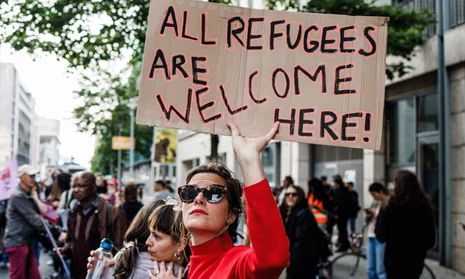
For the past few weeks, protesters have been gathering outside hotels, demanding refugees be sent back. The main political parties have entered into a race to the bottom for how unwelcome they would make refugees. 

Their rhetoric and laws may turn out to be a threat to us all. They may undermine the very basis of a compassionate society. 

Let us consider what would happen if Britain implemented Torah laws in its approach to refugees.

What would happen if this country made an active decision to welcome refugees and refuse to send them back? To deliberately integrate them and make sure they were firmly part of our towns? To set them up so that they could make a livelihood and refuse any insult to them? 

Would this collapse our economy, or would it make this place better for everyone?

And, if we had to choose, why would we not choose to follow the Torah?

Shabbat shalom.

sermon · social justice · torah

Don’t make trans people scapegoats

“It makes no sense to hate anybody. It makes no sense to be racist or sexist or anything like that. Because whoever you hate will end up in your family. You don’t like gays? You’re gonna have a gay son. You don’t like Puerto Ricans? Your daughter’s gonna come home Livin’ La Vida Loca!”

This quotation is so erudite, you may wonder which ancient sage said it. That was in fact, the comedian Chris Rock, in his 1999 “Bigger and Blacker” set.

I must have been about 10 when I heard that line, but it has always stuck with me. Over the years since, I have watched it become true. The world is so small that whatever bigotries someone holds, the people they hate are bound to end up in their own homes.

Recently, I realised that this had happened to me. I hope I am not much of a hater, but a friend pointed out to me how much I used to make jokes about Surrey. I used to say that we should saw around the county lines of Surrey and sink it into the sea, drowning all the golf courses and making a shorter trip for Londoners to the beach. 

Now, here I am, eating my words. I am about to marry a man from Surrey and have all my in-laws in Surrey. I’m the rabbi for a congregation in Surrey, and looking to move as soon as I can to Surrey. That thing I hated, even in jest, is right here in my family and inside of me.

I had some terrible stereotypes that everyone who lived here was a tax-dodging, fox-hunting billionaire. They weren’t grounded in reality. They were just about my own fears, projected onto people I had never met. 

Chris Rock was right. Whoever you hate will end up in your family. 

More than that: whoever you hate is already something inside of you. 

All of us can do it: we can stereotype, generalise, and project all our antagonisms onto a group as a way to cast off all the fears we have about ourselves. What do we call someone who captures all this externalised hatred? A scapegoat.

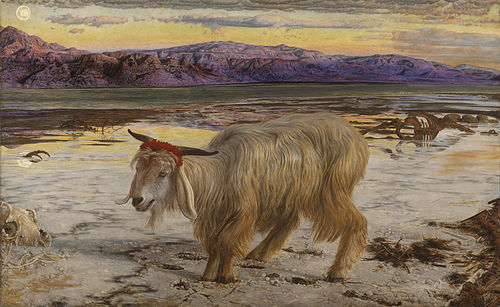
In this week’s Torah portion, we read about the original scapegoat. As part of the rituals for collective atonement, Aaron the High Priest gets two goats and brings them into the tabernacle. They pick straws for the goats. 

The lucky one is to be sacrificed for God. Onto the lucky one, Aaron ceremonially transmits all the sins of the Israelites, then chases it out into the wilderness. As it scarpers off, the scapegoat symbolically carries away all of the Israelites’ misdeeds.

The biblical narrative describes a psychological trick we can all play on ourselves. When we are ashamed of something inside ourselves, we take all that fear, turn it into hatred, and throw it at whatever unwitting bystander will carry it. 

Is this not precisely what Britain has been doing to trans people?

Gender is changing. The roles of men and women are shifting dramatically. There are so many new ways to live gender, to express ourselves, and to talk about our identities. 

Rather than embrace these changes and think about what opportunities they can afford us all to be more free, reactionary parts of British society have whipped up a concoction of bigotry and thrown it all at trans people. Every anxiety our bigots have about gender has been exaggerated and projected onto one small part of the population, who have been turned into monsters through these prejudiced eyes. 

It makes sense that people will find social changes scary and destabilising, but why should trans people bear the brunt of those fears?

A few years ago, I went to hear a panel of esteemed Jewish leaders give a retrospective talk about the ordination of gay, lesbian, bi and trans rabbis. On the bimah was Rabbi Indigo Raphael, Europe’s first openly trans rabbi. 

In his opening words to the congregation, Rabbi Raphael proclaimed: “I am a transgender man. I am not an agenda; I am not an ideology; and you can’t catch trans by respecting my pronouns.” The room immediately erupted into applause.

He should not need to say it. He shouldn’t need to defend his own existence, but such is the level of moral panic in parts of Britain that he has to assert his right not to be scapegoated before he can even teach Torah.

In the last few weeks, trans people have been subjected to legal rulings and government decrees that may make their lives unlivable and keep them from basic participation in public life. Like the goats of the ancient world, they are being cast out into the wilderness to carry away all of people’s fears.

It should not be this way. 

When we feel like scapegoating others, the best thing to do is look inside ourselves. We need to face our fears and work out why others bother us. The chances are, it’s something in ourselves that we’re not happy with, and when we need to get right with our own souls.

When we get to know those we “other” we get to know ourselves better. And when we realise we can like the difference in others, we learn more about what we can like in ourselves.

Reflecting on this, Margaret Moers Wenig, an American Reform rabbi wrote an essay called “Spiritual Lessons from Transsexuals.” She talks about how knowing trans people has enriched her own spiritual life. 

Interacting with trans people, Rabbi Wenig says, has taught her that all of us can craft our bodies as we will; we are all more than just our flesh and blood; we have living souls that can differ from others’ assumptions; that only God knows who we truly are. These are wonderful lessons that can only be learned when we turn away from fear and embrace curiosity.

They chime with my own experiences. At first, knowing trans people made me question myself. If gender is something we can change, am I really a man? With time, seeing other people embrace their gender and become who they are has made me feel far more happy in my own gender. I am a man, and I like being a man, and I like being an effeminate man.

When we turn away from fear, we see that we have no need for scapegoats. The parts within us don’t need to be divided up so that some are holy and others need to be chased out into the wilderness. Every part of us is for God.

The world has more than enough hate. It’s time we swapped it for loving curiosity.

After all, Surrey, it turns out, is rather lovely.

Shabbat shalom.

social justice · theology · torah

We are waiting for a different Messiah

Some years ago, an Orthodox friend asked me: “what would you do if the Messiah came and it turned out we’d been right about everything? What would you say to the Messiah?”

What would I do if the End of Days came, and Elijah literally came storming out of the whirlwind in a chariot made of fire and declared that the Son of David had arrived to cast judgement? And that we were to be judged on how strictly we had separated men and women; how well we had obeyed family purity laws; how stringently we had adhered to traditional authorities?

What would I say to this Messiah?

I have thought about it for a good few years and I think I now have my answer.

I would say: “F@£& off.”

I would tell that messenger: “You are not my Messiah and you’re not my king. Now go back where you came from.”

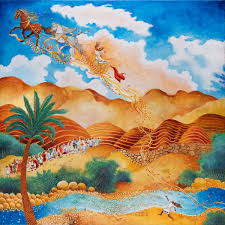
In this week’s haftarah, we read the prophet Ezekiel’s vision of the valley of the dry bones. For centuries, Orthodox Judaism has based its understanding of Messianism on these verses.

Ezekiel finds himself in a desert surrounded by skeletons. God tells Ezekiel to prophesy to the bones, and he does so, covering them in sinew, breathing life back into their lungs, and reviving their bodies, so that they stand up as a skeleton army.

These, says God, are representative of the people of Israel.

So, Orthodox Jewish tradition teaches, a day will come when the dead are literally physically resurrected. The corpses of pious Jews throughout the ages will be brought back to life; the exiles gathered to Jerusalem; and all judged by a righteous king descended from the biblical King David.

For this reason, many Orthodox Jews eschew cremation, and insist on being buried intact, so that their bodies can be resurrected at the End of Days. They vie for graves on the Mount of Olives, so that they can have front row seats when the Messiah arrives at the walls of Jerusalem and summons up the dead from their tombs.  

In recent decades, religious fanatics have come to espouse an even more intense version of this apocalyptic vision. 

There are Orthodox Jewish extremists, funded by American evangelical Christians, who are trying to destroy the Al Aqsa Mosque on the Temple Mount; build a Third Temple; and restore animal sacrifice and priestly leadership.  They seek to expand Israel’s borders to restore the ancient Kingdom of King David.

This week, Rabbi Charley Baginsky was quoted powerfully in The Times, saying: “We are afraid — not just for Israel’s future, but for Judaism itself. What becomes of our tradition if it is captured by messianic extremism, by racism disguised as religion, by power without principle? If the current trajectory continues, if Jewish supremacy becomes policy, then Judaism itself may become synonymous with oppression.”

In this context, you might be forgiven for thinking that messianism itself is the problem. Surely a religious zeal that drives people to commit such crimes is itself dangerous. For some, witnessing this fervour makes them question the foundations of Judaism itself.

The Israeli religious scholar, Avraham Uriah Kalman, warns against this way of thinking. His article earlier this year, entitled Another Messianism, addresses a tendency in Israeli secular society to dismiss all religion as varying stripes of nationalist fanaticism.

Yet, he claims, precisely because of the strength with which racist extremists have captured Judaism, we must return with equal zeal in our reclamation of Judaism. We, who believe in justice, democracy, and human rights must just as vigorously defend our corner.

If we do not have an equally powerful vision for what society could be, we will always be on the back foot, compromising with monstrous ideologies that want to blow up buildings and raze down villages.

Our ethics are grounded in the Jewish tradition. They are derived from the Jewish texts. They are sourced from the Living God. 

We cannot allow the far right to take exclusive hold over any part of Jewish life, or we surrender it to them. That includes Messianism – the grand utopian visions of ideal societies promoted in every book of the Prophets. 

The Prophets, whose mission of speaking truth to power and uplifting the lowly, are far more in line with our Progressive visions of the world than they are with the soulless dreams of those who want to oppress women and gays as part of their supremacist agenda. 

In the Prophets, we see clear visions of a perfected world. Their writings testify to a world of peace; where all resources are shared; where everyone lives in dignity; and where all are free.

Outside of specific esoteric texts like this week’s mystical imaginings from Ezekiel, it is hard to see any of the far right’s fantasies reflected in our Prophetic texts.

Messianism is really supposed to represent a rupture in the established order, but that is not really what the far right offers. War, racism, and misogyny are already the norm. At core, they don’t really want to change anything except to make existing tendencies more violent and oppressive.

So, says Dr Kalman, progressives must embrace messianism. We must turn to the Prophets as our source of hope, rather than buckling under the weight of despair. From our own utopian visions, we can develop ethics that speak to our daily lives and help us practically realise a better religious vision.

Kalman draws on a whole range of Jewish religious traditions, including Talmud, Kabbalah, Musar, and 17th Century Tzfat mystics. 

Yet, curiously, he seems not to be aware that this project, of developing a Progressive Messianism, has already been deeply thought through. The early Reform movement in Germany, from which Liberal Judaism descends, was animated by looking to the Prophets to rethink Jewish eschatology.

The early Reformers taught that the Messiah would not be a man, but an Age. 

It would not be characterised by Temple and Kingdom revival, but through the realisation of the values of the Prophets. It would be a world of peace and justice, achieved through the moral advancement of all humanity.

Explaining this theology, Rabbi Sybil Sheridan writes: 

“Though the end goal is world peace, the ideal is not pacifism, nor is it the peace of treaties at the end of war that are based on winners and losers. That notion continues the imbalance of power among peoples and nurtures the resentment that leads to dreams of revenge. The peace of the Messianic Age is a peace forged in complete mutuality. No one should be afraid that people may covet their vine or fig tree, no one will fear the loss of land or resources, no one will be humiliated. The world provides enough for everyone and sufficiency will take away the desire for war.”

While we Progressives do not accept the Orthodox doctrine of bodily resurrection and rebuilt Temples, that does not mean we should reject Messianic thinking. Times of despair and horror are when we most need to cling onto our hopes for a better world.

Progressive Messianism takes the task of perfecting the world away from mythical figures like Elijah and King David, and places it directly in our own hands. It says: we will not wait for someone else to bring about redemption; we are going to do it ourselves.

So, if Elijah came down from the Heavens and declared that the Orthodox had been correct all along, I would tell him he was wrong. 

For thousands of years, we have sought to create a better world. We have learnt through struggle about the dignity of women; the importance of justice; and the shame of racism. We now have a much better idea of how the world can be.

We can see a future in which every human being lives in harmony with each other and their planet. We can see a world where all live in freedom and peace. We are sure now that we can live in love and equality. 

We are going to realise our Messianic age.

And nobody- not even a prophet descending from the skies – is going to stand in our way.

protest · sermon · social justice

When a swastika appeared on my primary school wall

Do you remember the first sermon that really moved you?

I do. It was a primary school assembly.

Mrs. Kilou stood at the front of the hall, as all us uniformed children awaited the morning messages.

She began with a question: “who knows what I hate most in the world?”

A kid suggested: “Lateness.”

“No, not lateness.”

Another offered: “scruffiness.”

“No, not scruffiness.”

One more: “When we don’t do our homework.”

“No, this is the thing I hate most in the world. Way worse than lateness or scruffiness or not doing the homework. The thing I truly despise.”

Finally, a kid ventured: “racism.”

“Racism, that’s right!” She spat the word and the whole crowd sat up to attention. The fury in her voice was palpable.

She had good reason to be angry. Somebody had spray-painted a large swastika on the outer wall of our primary school.

***

For the last two months, I have been trying to work out what to say. There have been days recently when many of the parents from this community didn’t send their children into school, worried that they would be targets. Members have shared stories of taking down their mezuzot, and hiding their symbols of Jewishness. I have felt, at times, like the community is overtaken by panic.

What do you say to people who are so anxious and angry? How do you meet people in their fear, and help them move beyond it?

I haven’t known what to say. So, the last few times I have stood on this bimah, I have just shared what is in the Torah.

But there is a trauma that needs to be addressed.

It doesn’t help to tell people that there is nothing to fear. That only makes people feel alone in their feelings, and that just makes them more afraid.

What repeated studies show is that what matters about handling traumatic events is less what happens afterwards than what happened before. People are better able to negotiate destabilising situations when they already have a strong sense of self; feel proud of who they are; and have a clear story about themselves.

So, I think the best thing to do from here, for now, is to tell my own story. My own relationship to antisemitism.

My account is, of course, personal, and not definitive. But I hope it will open up spaces for others to share their stories, and for us to begin a conversation about who we are, and what experiences formed us.

***

The swastika on my school wall was not for me. Not in the direct sense. That is to say: whoever drew it did not have Jews at the forefront of their minds.

We were not a Jewish school. We were a multicultural one in the centre of an industrial town, surrounded by white suburbs, and even whiter countryside. The other students, my friends, were Pakistani Muslims, kids from the Caribbean, refugees from Kosovo… we were a little bubble of people from everywhere, and, though I did not know it then, were a source of moral panic among readers of certain newspapers. We were, to those that feared integration, a symbol that Britain wasn’t British anymore.

And, of course, that swastika very much was for me. It was an attack on my community. It was antisemitic because all swastikas are. It was calling to me, because all racism does.

Around that time, my parents began telling me stories. But not the stories you would expect. They didn’t tell me about family members who had escaped Germany or died there. They did not explain why some members of the synagogue had tattoos on their arms, or how others had met each other on refugee trains. I only came to learn that much later.

They told a story about how, not long ago, the Council had erected a new housing block. One of the first people to be offered a home there was a black woman. Racists came to protest. ‘Houses should be for whites.’ The Pakistani community centre came out in large numbers and escorted the racists back to the train station and out of town.

This is an oral history, and I won’t be able to verify it from newspaper reports, but I suspect my parents made it sound more peaceful than it really was.

They told me other stories too. Stories of hundreds turning out to see off the National Front. Stories like how the Jews and the Irish united to defeat the Blackshirts at Cable Street. Stories of partisans and resistors.

They told me how people could stand up against racism and win. They told me about how, when it comes to racism, our greatest strength is each other.

I don’t know if this was their intention, but I learnt then that the swastika was not something to be feared. It was something to be destroyed. And that people could, and did, destroy it, wherever it appeared.

So, I grew up feeling not so scared of Nazis as determined to stamp them out.

***

Some university students spend their weekends studying. Others spend them partying. Me and my friends? We spent our weekends chasing the English Defence League.

Don’t get me wrong. I did study. And I did party. But some of my most formative memories from that time were of bundling into minivans and car convoys with my housemates to towns in the Midlands and the North.

At that time, Tommy Robinson had assembled a band of white supremacists, bored football hooligans, and lost boys, to go and protest wherever there was a mosque. They usually targeted the mosque itself, and would go to the towns with the express aim of intimidating the Muslims.

Opposing them felt like the only right thing to do. Fighting fascism felt like a calling in a very similar way to how the rabbinate does today.

There was a group of us, from different towns, who always went along, led by a gentle couple called Simon and Sadia. We were always met by locals, usually gathered from community centres and religious groups, who would join in showing the racists that they weren’t welcome.

I learnt from these forays into antifascist activism that, while there were always some who resisted fascism, they weren’t necessarily popular. Media narratives after each protest often framed the unfolding events as if the fascists and their opponents were equally bad. As if it would be better if these small groups of students and locals stayed home and let the racists go unchallenged.

I might have believed them, if it weren’t for what I saw happen in Dudley. There, the English Defence League significantly outnumbered the protesters. Police lost control of the situation. Over that weekend, in broad daylight, those thugs went round smashing in the windows of any house with black and brown people living in it.

As we ran away from the violent gangs storming the town, we passed a house where a black teenager had been visiting a white family. Their windows had been smashed. “I’m sorry,” he was saying, “I think it’s because of me.”

I learnt from this a lesson that has informed how I think about all racism and antisemitism since. Our strength is in each other. Our defence is our neighbours.

This runs contrary to some of the received wisdom about antisemitism. We are, after all, a small minority that lives in concentrated areas of large British cities. One story about how to handle the prejudice we face is that we must depend on the state to defend us against the baying mob of our neighbours. It is because of this that older members will share the axiom: “as long as the king is safe in his castle, we’ll be safe in Tower Hamlets.”

My experiences turn this on its head. The non-Jewish majority is not our enemy. They are our most reliable bulwark against racism. When it comes to fascists, we are the masses and the masses are us. Our greatest strength is each other.

***

That story, of solidarity in the face of racism, is also played out in the story of this synagogue. My friend, Joseph Finlay, just completed his PhD, looking at Jews and race relations in post-war Britain. During his archival research into the history of fighting racism, one shul kept cropping up. This one.

During the 1960s and 1970s, this synagogue was led by the visionary rabbi, Dow Marmur. He arranged visits from volunteers to homes of new immigrants to Redbridge, as well as English conversation classes to help neighbours settle in. In 1978, the synagogue held a “multiracial dance,” in a clear statement of unity against racist scaremongering about miscegenation.

Rabbi Marmur brought a motion to the RSGB Conference of 1968, which encouraged other synagogues to adopt similar policies, and follow SWESRS’ example. He accompanied his motion with a powerful sermon.

While others shied away from fighting racism, or even expressed sympathy with the anti-black and anti-immigrant feeling, Rabbi Marmur issued an impassioned plea. Yes, he said, the racists do draw comparisons between Jews and black people, and “we have a special duty to remember the Prophet’s comparison and to affirm that we are, in fact, alike -in the beneficent eyes of God!”

He encouraged meaningful solidarity, urging “let us beware of condescending and patronising “do-goodery” … “And at no time must we allow ourselves to be fobbed off with cowardly calls for “prudence” and “caution” when these are euphemisms for inactivity and indifference.” Finally, Marmur compelled his listeners: “the primary force of our involvement must be our religious conviction; God bids us act-and we must obey!”

This summons stands at the centre of my own response to antisemitism. It is not only the swastika that calls me, but, more importantly, the voice of the Living God.

In that voice, I hear the demand to continue being Jewish, without apologies.

In God’s Word, I hear the call to resist antisemitism, not only out of self-preservation, but from a religious demand that there must be diversity.

And in God’s Torah, I hear, always, that most-repeated verse: “love your neighbour.” Yes, love your neighbour as yourself. Love them because they are you. Love each other because that is our strength.

And our love for each other may be our salvation.

Shabbat shalom.

halachah · judaism · social justice

Are Jews allowed to lend money at interest?

Of course, I am Jewish, but I also consider myself very English. I am English in the very parochial sense that I love canal boats, think provincial churches are beautiful, will definitely barbecue on the only day of summer, and put mayonnaise with everything. But, last autumn, I did the most English thing I have ever done. 

I wrote a disapproving letter of correction.

I had never done it before. I’ve never written in to the BBC or a newspaper. To the best of my knowledge, I’ve never sent a letter of complaint about anything. But this one was too important to simply ignore.

Someone in a play had misrepresented a complex point of Jewish law. 

Now, this may seem trivial. But, six months later, I am still so incensed about this common misconception of halachah, that I feel the need to preach on it. 

In September, last year, I got a real treat: to go see one of our members perform at the Royal Court Theatre. Rachel Hosker, who will be getting married under our auspices in the summer, was performing in a play called ‘Jews. In their Own Words.’ Written by Jonathan Freedland, the play interviews famous Jews, including Tracy-Ann Oberman, Luciana Berger, Margaret Hodge, and Howard Jacobson, trying to give a sense of antisemitism, past and present. 

I’m not a theatre critic, but let me tell you: Rachel acted fantastically. She and the rest of the cast did a fantastic job of bringing the characters to life. 

But there was a line, really a throwaway comment, that stuck with me. The play was attempting to explain the trope of the money-hungry Jew, and how Jews had come to be associated with money-lending. An actor representing CST’s Dave Rich said: “the rulings of the church forbade lending money at interest, which was considered usury, whereas Jewish law allowed it.”

This, to me, is alarmingly inaccurate. It shows not only a misunderstanding of Jewish law, but also of antisemitism, and how it works. It places the responsibility for Jews as medieval money-lenders onto Jews, and our religion. Nothing could be further from the truth.

If it was the case that Jewish law allowed money-lending at interest, you would be hard-pressed to explain the commandment in this week’s Torah portion: “You may not act as a creditor to your people. You may not exact interest from them.” You would also have to reckon with the same commandment, given in the Holiness Code: “Do not exact advance or accrued interest, but fear your God… Do not lend your money at interest, and do not give your food at interest.” The same commandment is repeated again in Deuteronomy: “do not deduct interest from loans to your kindred.”

Of course, you might say, the Torah is not the only source of Jewish law. Perhaps these commandments are amended in the Mishnah, or the Talmud, or the Codes. No, no, and no. The Mishnah says charging interest is so reprehensible that it involves breaking six commandments. The Talmud says that even scribes and witnesses who participate in such contracts are guilty. 

In the defining law code for most of the Jewish world, the Mishneh Torah, Rambam looks at the word for interest – neshech – which is the same as the word for a snakebite, and says it is called as such “because it bites, it causes pain to a fellow human being, and consumes a person.” He repudiates it completely.

Be in no doubt: Jewish law does not permit money-lending at interest.

So, how did it happen that Jews nevertheless ended up associated with money-lending, despite its very explicit prohibition?

In the 4th Century CE, Church Father Augustine of Hippo declared that Jews would be permitted to survive as “living witnesses” to the truth of the Bible, but must be kept in a degraded state, with the mark of Cain, for their refusal to accept Jesus. This became the official policy of Christian Europe’s primary institutions: its churches and monarchies. 

Jews were allowed to live in England neither as citizens nor serfs. They could not own land or participate in the nation. They were excluded from universities, and cut out of the professions. They were only allowed to live in the country on condition that they did the dirty work of the ruling class: tax collecting and money-lending. 

Now, most Jews did not do such jobs. They did the work that was needed for their community, as bakers, vintners, stonemasons, and millers. But, as long as some Jews fulfilled these functions for the monarchy, all Jews could live in European countries as “treasured subjects” – effectively pets of the king. 

This had a profound impact on the lives of medieval European Jews. They were forced to wear humiliating clothes to mark them out. Associated with tax collecting and money-lending, many of the local peasants associated the Jews with all the financial problems they faced. 

The local lords actively exploited this division. They drummed up hatred against Jews, and treated them as a pressure valve, so that, in times of economic crisis, peasants would attack their local Jews rather than turn their ire on the landowner class.

That is why the worst pogroms that we have recorded came in times when the monarchy was in financial straits. In England, these came when the country was bankrupted by its military Crusades to capture Jerusalem. Jews, the perceived cause of money problems, and naturally associated with the Holy Land, had all the anger and resentment of impoverished people poured out on them. 

If the monarchy or the Church were struggling with their own debts, they had an easy way out: they could simply expel the Jews and confiscate all their property. In 1290, Edward I expelled the Jews from England to cancel his debts and win back the support of the knights and lords in parliament, who were also heavily indebted.

This put the rabbis, the arbiters of Jewish law, in a very difficult position. If they permitted lending at interest, they would turn their backs on their entire religious inheritance. If they insisted that Judaism forbade money-lending at interest, they would effectively force their community to leave where they were. And, since all of Christian Europe had adopted the same policy, they would have nowhere to go. 

So, the rabbis had to find a way. They looked at the laws, which said such lending was only prohibited to their kin. Rabbi David Kimchi, writing in medieval France during pogroms and expulsions, said that Jews were not permitted to lend at interest to people who respect Jews. The corollary was that if people would not treat the Jews as full human beings, then they, in turn, could lend to them at interest. In England, the Christians had estranged them and made them explicitly not their kin.

This is why correcting this point on the understanding of Jewish law is so important. It is not just because we are sticklers for getting the halachah right. It is so that we understand what antisemitism is and how it works. 

We Jews did not create this system. We did not allow it, nor have the power to stop it. For over a millennium, European powers embedded and promoted antisemitism to prop up their system. As Rabbi Lionel Blue, of blessed memory, so pithily wrote: “The problem of the Jews in Europe was never the Jews. It was Europe.”

Now, we are citizens in this country. With Emancipation, we might have hoped that it would bring an end to cultures of debt and division. True, most of the banks and money-lenders are now not owned by Jews, and very few Jews today engage in such work. 

But that is not because we are living closer to the laws of the Torah or our rabbis. It is because the whole of our society is caught up in loans. All of us are more indebted and more divided than we ever were. We are pitted against each other by a media eager to see us all fighting. 

Combating antisemitism does not only mean counteracting myths and biases against Jews. It is also about dismantling the material realities that created antisemitism. The hatred of Jews erupts when we are scapegoated for economic problems in society. We must not only contradict the myth that we are responsible, but also fight to ensure that the problems people face of economic hardship and drowning in debts no longer exist. 

When we realise that the world has enough for all of us, and distribute it so that everyone can prosper, we will be far closer to a world without prejudice and fear.

Shabbat shalom.

sermon · social justice

A peasant farmer was my father

A peasant farmer was my father

When my mind wanders, I like to think about where I would go if I could travel in time. Have you ever considered this? When you would want to visit?

Personally, my first thought is Paris in the 1890s. In my higher moments, I project myself into medieval Andalus, the Golden Age of Hebrew poetry in Spain. 

And, of course, I’d love to go back to biblical times. Wouldn’t it be marvellous to see the First Temple in all its glory? What would it be like to inhabit that world of prophets and visionaries?

But this time travel thought experiment always comes with a corollary. I’d have to be a rich man. No matter what spot of history I got dropped in, the only way to enjoy it would be to be part of the elite.

If I were sent back to biblical times without that condition, I’d probably be a peasant farmer. We like to imagine our ancestors as great kings and high priests. In reality, they were less than a small fraction of the ancient Israelite population.

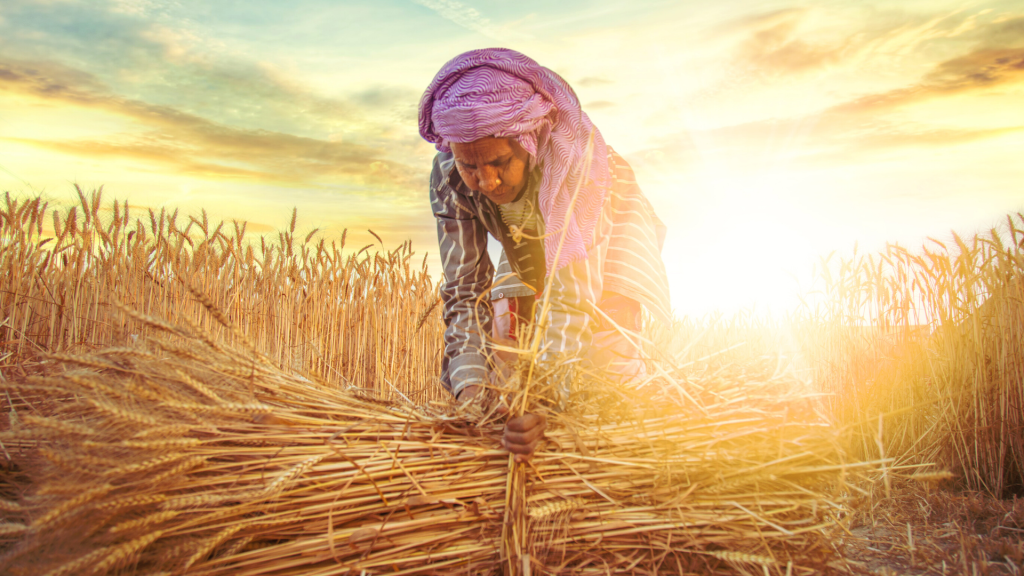
95% of people in the biblical period worked the land. Dropped back to the time of David and Solomon, we probably wouldn’t be in their courts, but in the fields. 

I take a perverse pride in this knowledge.

Think how hard they must have worked to bring that ancient society into being!

As a peasant farmer in the ancient world, you would have about 3 acres, growing different crops, including grains, fruit trees, and olives. You would, almost certainly, have a chicken run and a small herd of goats. 

If you were really fancy, you might also have a cow.

Your home would be a collection of huts and tents, stretching out to include your extended family. Each would be a bustling, cramped place, with pots and pans and a fire stove. Your animals would potter in and out of your sleeping quarters. 

I am not trying to paint a romantic vision of any of this. Your life would be hard. You would pull a plough with your own hands and sow seeds with your back hunched over. You would cultivate and cut and glean your trees in the searing heat. 

You would spin your own wool, stitch your own clothes, bake your own bread, build your own dwellings, subsist on whatever you needed to survive.

Yes, all that is true for women, too, with an additional burden. You would give birth to ten children and breast feed all of them. You would count yourself incredibly lucky if all of them lived past the age of 5. If they did, they would likely be married off in their teens. 

No, there is nothing romantic about the lives of our real ancestors. 

But we should be proud of them. 

Peasants, labourers and serfs might not be the subject of great poetry and sagas, but without their efforts, nothing exists. There could be no food, no shelter, no community, and no culture, without their graft. That gruelling work made civilisation possible.

This week’s parashah tells us something of how they built ancient Israelite society.

If they had just stuck to their own homesteads, they would have had to survive on the paltry gains of subsistence farming. In a bad year – if rains failed to fall or crops failed to grow – they would simply perish.

So, our family, the farmers of the ancient world, signed up to participate in the agrarian state. 

The agrarian state was responsible for distributing food and creating common irrigation and transport systems. In ancient Israel, the centre of that state was the Jerusalem Temple. 

Our parashah explains the criteria for participating in its systems. You must not glean your fields right to their edges, so that you leave enough for travellers and strangers. You must donate a tenth of your grain and livestock to support those in the community who are most vulnerable, like widows and orphans. 

In some ways, this is the foundation of the earliest welfare state. 

But the poor are not the only beneficiaries of this redistribution. 

In fact, they were not even its primary targets. 

Our parashah begins with a ritual that Israelites must undertake each year. At each harvest of the year, you must collect your first and best fruits. You must bring these, the choicest of all the crops you worked so hard to create, and give them to the priests.

You must lift them above your head and say: “A wandering Aramean was my father. He was enslaved in Egypt, but God brought him out into this land of milk and honey. Now, I bring before you, the first fruits of the soil that God has given me.”

The priest will sacrifice it, perform closed rituals, and eat it in front of you.

That priest did not work to produce those fruits. He did not share in the exhausting work of raising children in a hovel, or run ploughs over the land. In fact, he wasn’t responsible for any land.

The priest’s sole job was to be the leader of the ancient cult. He was in charge. He profited from your work. 

That great Temple in Jerusalem, with all its priests and writings and rituals, only existed because the poor majority paid in and made it happen. That entire society functioned on the basis of our ancestors’ labour. How could they have done it without the work of the people who harvested the grain, built the bricks, and cared for the sick? 

I don’t resent the ancient priests. 

That work made possible great cultural developments. At that time, we couldn’t have had literary culture, organised society, music or scientific discovery without a class who had the leisure time to devote to such pursuits.

We then wouldn’t have benefited from the innovations in agriculture, technology, transport and trade that makes our lives today less horrible than they were in ancient times.

But, while resentment for ancient figures might not be productive, we should feel entitled to be critical.

After all, their world is our world. For all the social progress we have made, the divisions that defined civilisations millenia ago are only greater than they were then.

Far fewer people profit far more from the work of the majority than ever did in the biblical period. 

Almost all of us, I know, are worried about how energy price gouging, interest rate rises, and higher costs of living will affect us. Some are already feeling the effects of an economy where wages won’t rise but prices keep going up. 

Meanwhile, the energy companies and their shareholders are making record profits. These last few years, which have been so frightening for most people, have been a period of great abundance for the world’s richest. 

This is not accidental. The rich are not rich in spite of the poor. They are rich because of the poor.

Perhaps those inequalities were essential to create our current world. But how much greater would society be if we decided to eradicate them? Just imagine what we could accomplish if nobody had to worry about heating their home or feeding their family.

We could unleash the great talents of everyone, whether priest or pauper; shareholder or sharecropper; king or taxi driver. We could enjoy this world, with all its bounties, without the constant friction of struggle.

On reflection, if I could travel in time, I don’t think the past would be the place for me. I would prefer, instead, to make my way to the future.

I want to go to the time when technology is harnessed to benefit everyone in the world, regardless of who they are and where they live. An era in which it is not just a small minority that creams off the profits of the many, but when everything is redistributed between everyone. One in which the gains of civilisation are shared with all humanity. 

We can’t change the past. We can’t go back and rescue our ancestors from the harsh realities of peasantry. But we can build a different future for the next generation. We can make it so that the future is not defined by the same problems of the past.

Let us travel to that point in time together. 

Shabbat shalom.

Ki Tavo 5782, South West Essex and Settlement Reform Synagogue

judaism · social justice · story

Welcome to the Queer Yeshiva

Hello and welcome to the Queer Yeshiva.

My name is Lev. I’m one of the teachers here, with Jo, Hava and Daniel.

A month ago, I was ordained as a rabbi. One of the things that most made me want to be a rabbi was bring gay. I wanted to be part of a religious life that made being queer feel as empowering and magical as it really is.

I love being queer. I love queer people. One of the things I love most about us is that no matter what life throws at us, we always rebuild.

I think about the lives of queer people. Everyone I know has had to struggle with who they are, face down violence, and out of adversity, rebuild themselves as someone stronger than anyone could have imagined.

When I was a kid, I was already too fabulous to be contained. All I wanted in life was to wear dresses and do Spice Girls dance routines. I knew I was different and I didn’t care.

But the rest of the world did. I grew up in a small town with few opportunities. For most of my teens, I was beaten up on a near daily basis. I was attacked at school, walking home, in the shops, and outside my front door. That was only the other kids. The adults were worse: at best they ignored it; at worst they encouraged it. At the school leavers’ assembly, the teachers gave me an award for “most likely to have a sex change.”

But I’m not bitter. I’m proud. I came out of all that knowing who I was and willing to fight for others. That’s why we have parades. That’s why we stand up celebrate our community, because we have withstood discrimination and violence and built out of it fantastic cultures. All that queer art, queer music, and queer innovation- that came out of queer struggle. We are who we are because of who we were.

And that’s not limited just to us here. That’s something queer people have to do in every generation. Think how many times we have been destroyed, and think how many times we have rebuilt.

Consider only the last century. At the beginning of the 1900s, our people were dealing with criminalisation, as many had been imprisoned. Against that backdrop, Magnus Hirschfield created the Institut for Sexualwissenschaft, pioneering the understanding of queer people.

His work was burned by the Nazis. Queers were turned into pariahs and murdered in te death camps. Even once the Second World War was over, many homosexuals were forced to stay in prison to complete their sentences.

In the aftermath, our ancestors picked themselves up again. They built the Gay Power movement. They formed the Lavender Menace. They created the ballroom scene in the nightclubs of New York.

Once again, they were decimated by the AIDS crisis. Government indifference and vengeful homophobia killed a generation of queers.

And still, we could not be destroyed. We came back stronger, demanding legislative changes and pushing for a transformed world. We recreated community to fight for our liberation.

In every generation, people have tried to destroy us. In every generation, they have failed. We will always rebuild. We will always imagine a greater future. We will always reappear.

We are indestructible.

In that sense, we are the heirs to the rabbinic tradition.

Judaism, as we know it, is the product of people who saw their world crash around them repeatedly and, every time, rebuilt it.

Our Judaism was born out of a time of fundamental crisis. At the start of the last millennium, the Jews were a nation. They had their country, the land of Israel. They had their capital, Jerusalem. They had their cultic centre, the Temple. They had their religious leadership, the priests. And they had their religious practices, sacrifices.

Then, they faced catastrophe. The Romans came and waged an aggressive war, killing off the leadership, and starving the people of Jerusalem. They destroyed the Temple and abolished its customs.

Yesterday was the fast of Tish BAv. It was, for many religious Jews, a day of weeping and despair. We recalled the genocide, the disruption, the pain. We remembered the destruction of the Temple in the context of all the times that Jews have been destroyed.

But, in that act of ritualised remembering, we also remember that we have survived. Jews and Judaism have kept going, even two thousand years later.

Let us remember why.

Faced with annihilation, the Jews had three choices. One: they could dig their heels and pretend nothing happened. They could decide that they were going to carry on with the Temple and the priesthood, even though they were gone.

Two: they could abandon their old religion altogether. That was what normally happened to ancient peoples when they were conquered: they gave up their old traditions and gave in to colonisation.

Three, the third option: they could retell their story for the sake of their contemporary situation. They could look at everything they had been, and use their history to reimagine their future.

Our rabbis chose option three.

Put yourself in their position.

Imagine you were there, not just in the aftermath but right in the thick of it. Jerusalem is under seige. Your family are starving. Your people are fighting the Romans, but mostly they’re fighting each other. You can see your world on fire. You don’t even know if you will survive.

What would you do?

That’s how it was for Rabban Yohanan Ben Zakai. He was alive then. That was what he saw.

He told his students to put him in a coffin, pretend he was dead, and smuggle him out of Jerusalem. Once out of the besieged city gates, he got out and demanded to speak to the Roman emperor, Vaspasian.

As it happened, Vaspasian was willing to compromise. He said: “OK, tell me you want.”

Rabban Yochanan Ben Zakai said: “Give me Yavne and students of Torah.”

What was Yavne? It was a refugee camp in the middle of nowhere. It was filled with displaced people. Who were the students of Torah? Just a bunch of people who remembered what the old religion used to be like.

Why? Why would you ask for such a thing? If the commander of the imperial Roman army is willing to negotiate, why not find a way to get the troops to leave?

Because a people that knows who they are cannot be destroyed.

Sure, the colonisers might go, and the Jews might live, but Judaism could end. The only way for anyone to live on after facing near annihilation is to look at where they’ve been. They have to take a long look at their story and reimagine it for a new era.

Rabban Yochanan Ben Zakai and his students learnt everything. They committed to memory their whole history so that they could recite it by heart.

Then, they revolutionised it. They said: we don’t need the land of Israel or Jerusalem any more. From now on, we’re going to be spread across the whole world. We’re going to make our religion portable so that it can be sustained in any nation.

They looked at their Temple and its sacrifices and said: we’re not going back to that. We’re going to reinvent our practices. We will replace them with prayer and study. As long as people keep our words alive, we won’t need for animals to die.

They looked at the priesthood and said: that’s done. From now on, we have no hierarchy.
From hereon out, we are equals. The measure of Jewishness won’t be who your father was but how imaginative you can be in reexamine your tradition.

They looked over their old systems of justice, and interrogated them. Who is included here, and who is left out? What is justice going to look like for us now? They were so radical that they tried to work out how they could turn the Torah against the Torah.

And that instantly transformed Judaism. Rabbi Yochanan’s disciples weren’t from the elites. They were blacksmiths and peasant farmers and outsiders. They saw, from that vantage point, how their people could creatively rebuild. And that is why we have our Judaism today.

And here’s the thing. Rabbi Yochanan had, maybe, ten students. There were fewer people in his beit midrash than there are in this room.

You only need a handful of visionaries to spark a revolution.

Be in no doubt, that is what could happen here this week.

We are, as always, facing catastrophe. Queer people are under attack once more. The planet is burning. Capitalism is in crisis. The old ways of doing Judaism are floundering.

Do you think that the future of Judaism is going to be secured by happy people in their comfortable homes? No way. They have nothing to lose from the current situation. They don’t have the imagination to see how things could be different.

The future of our people lies with those on its margins. Its the queers. It’s the weirdos. It’s the radicals. It’s you.

That’s why we’re here. We’re going to do what queers and Jews have always done. We’re going to rebuild while our world is on fire.

We’re going to learn everything we can, internalising the words of our ancestors so fully thar they will travel with us everywhere. We’re going to re-analyse them in light of our own circumstances, seeing how these traditions bear on our own lives and struggles. And, out of that, We’re going to completely retell our story.

This is where the future of Judaism starts again.

I love being queer. I love queer people. And I can’t wait to see what we achieve.

This talk was based on the Crash Talk by Rabbi Benay Lappe, used for Queer Yeshiva Summer Intensive 5782 in Essex

judaism · sermon · social justice

You are not sick

Imagine if I stood up here on a shabbat and I told you I could fix you. 

Imagine if I said there was something fundamentally wrong with you. That some property intrinsic to you, about your soul, was fundamentally wrong. Sinful.

Imagine if, when we read out the names of people in need of healing, your name was on there. You hadn’t asked to be placed there and you felt fine. But somebody in the community had decided that who you were, as a person, was contrary to their religious beliefs, and that made you sick.

Imagine if your child or grandchild came to see me at the synagogue and ask for rabbinic advice about their personality. Instead of offering them love and support to be happy with who they were, I told them that they needed to repent. I told them that God thought they should feel guilty. I told them they should pray and fast until the wickedness in them was gone.

Imagine it. Imagine any preacher in any religious building doing such a thing.

You don’t have to imagine. It happens today, here in Britain.

It is called conversion therapy. 

Conversion therapy is when queer people are told, often by a religious leader, that prayer, exorcism or counselling can change their gender or sexuality. It is when somebody tells a gay person that they can be made straight, or a trans person they can be made cis.

It happens in the British Jewish community. One survivor of this practice, Joe Hyman, spoke out about how a religious Jewish group tried to counsel him out of homosexuality. At first, it involved telephone appointments where he was told he could be healed. He sat round in a room and was forced to examine every homosexual thought he experienced through a lens of judgement and shame.

Another British-Jewish woman, Maya, went through conversion therapy classes that told her that her parents hadn’t nurtured her enough and that she must have been abused as a child. 

There are Jewish retreats in New York and Israel, where participants are made to do psychologically damaging activities including stripping naked and berating themselves while staring at a mirror.

You might well wonder why such an abhorrent practice has not yet been banned. For that, you would have to ask Boris Johnson. 

This week, his government leaked reports that they have abandoned plans to stop conversion therapy. They have bowed to pressure from conservatives and fundamentalists. 

When the various LGBT charities expressed their outrage, and the public followed suit, the government back-pedalled, but only slightly. They said they would ban conversion therapy for sexuality, but not for gender identity. They have decided that lesbian, gay, and bi people should not be subjected to this psychological torture, but that they will keep it up for trans people. 

Not content to only permit the practice, the government has decided to get in on bullying trans people. Boris Johnson used a recent speech to mock trans people. A public discourse has emerged that pathologises and humiliates people who do not conform to gendered expectations. 

Trans women, in particular, are the subject of a horrible narrative of hate. I don’t think it would be helpful or responsible to repeat the things I’ve heard, even from respectable platforms like the BBC. You have probably heard it too, and speaking it from the pulpit would only lend this hate speech legitimacy it doesn’t deserve.

The pathologisation of sex and bodies is as old as the Bible. In ancient Israel, when a person’s genitals seemed emitted an unusual discharge, or found they could not ejaculate, a priest would declare them a zav. This meant they were ritually impure, prohibited from entering holy places and forbidden from engaging in acts of worship. 

This was not just recognising the existence of genital problems or sexual diseases. It was making them into signs of defilement. It was saying that the people who had them were in some way sinful. It turned the body into something shameful. 

By the time of the Mishnah, the rabbis were conscious of how problematic this system of stigmatising people was. They announced mitigating circumstances for when somebody might not be considered a zav: if they had jumped; lifted something heavy; been unwell; seen something arousing; thought about something sexual; had eaten or drunk something unusual. If they had done any of these things, even if they had symptoms of a zav, they were not considered a zav. They were exempt from being treated as sick.

To this already expansive list, Rabbi Akiva added two more categories: if somebody had eaten or drunk anything at all, they were not a zav. His students were astonished. They said: “if that’s the case, there will be no more zavim anywhere any more!” Rabbi Akiva responded: “it is not your job to make sure people are considered impure.”

Rabbi Akiva understood something profound. Nobody should be considered sick. Nobody should be stigmatised for who they are. So, to combat the stigma, he found a way to make sure everyone was exempted.

That is what is needed today to combat this senseless hatred against trans people. That is why we so desperately need to ban conversion therapy and stop treating people as if there is something wrong with them.

All we are asking is that people can access non-judgemental support to talk about their gender. We are asking that people can be free to explore it, open to the possibility that their gender might not be the one they have always been told it was. We are asking for people to have the freedom to go on a journey with their gender, open to the possibility that this might mean changing their name, or their pronouns, or the way they dress, or the way their body looks. 

I understand that perhaps that might sound frightening to some. But what truly terrifies me is that people can’t. Young people exploring their gender currently cannot feel safe turning to authority figures to talk about their gender when there is so much vitriol emanating from the country’s highest offices of power. And they are even less safe when leaders continue to have the power to tell trans kids that they are sick and can be cured.

From this pulpit, there is only one message you will get. You are not sick. You are loved. You are supported by this community. You are safe to be whoever you want to be. 

In this synagogue, we believe in a loving God. In this religious movement, we affirm that you have a unique journey to find your own way with your Creator. And we will never try to change you.

Shabbat shalom.

With massive thanks to Rabbi Laura Janner-Klausner for helping me think through how to talk about this when the issue makes me so emotional