judaism · sermon · social justice

How much should I give away?

In 2013, a survey revealed that Jews were the second biggest charitable donors in the UK. 

Muslims were first. 

Ever since, I’ve been trying to recruit Jews into competition so that next time a survey is run, we will win.

Coming second is fine, I guess. But if we’re going to be a light unto the nations and take moral responsibility for the world, we should be coming first no problem. 

They didn’t win because there are more of them than us. That wouldn’t be a fair comparison. Muslims outdid us on both how much each person gave on average, and how much they gave as a proportion of their income.

I’m not really advocating getting into a competition between the religions. There’s enough of that going on in the world.

But I do think there is something important we can learn from Muslims. One of the reasons they do so well on charitable giving is because of how seriously they take the messsage from this week’s parashah. 

Here, we read Reeh. This part of Torah introduces the concept of tithing. Tithing is an old English word, meaning ‘taking a tenth.’ And that is exactly what is prescribed here. Every Israelite must take a tenth of their produce and give it to the priests for redistribution. 

The priests then use some of it for upkeep of the community; some for orphans and widows; some for the poor; and some for supporting migrants passing through. 

This is the basis of Ancient Israelite society. The world of the Bible was very unequal, and living conditions were particularly harsh, so they truly saw the importance of a basic welfare system. 

In the Ancient Near East, almost everyone was a subsistence farmer. Each extended family had a small plot of land, which they would use for harvesting crops, rearing animals, and general living. One bad year on the farm could render an entire family destitute.

The Torah introduced social provision, so that everyone contributed and anyone who needed it could benefit. Richer people did pay additional levies on their crops, so that a tenth was the minimum, but some could give much more. The earliest tzedakah was probably much more like modern taxes for the welfare state than charity. 

But that should not excuse us taking seriously our obligation to give to charity. I’m sure we all agree that the welfare state is a wonderful thing, and that it is impressive that it has a biblical basis. I don’t need to tell you to pay your taxes. You don’t have much choice in that.

What you do have control over is your tzedakah. Your charitable giving. It is a mitzvah doraita, a commandment from Torah, that we are supposed to give 10% of our take-home income to charity. 

Now, who actually gives 10% of their income to charity? Anyone here? I am embarrassed to admit that I don’t. I have regular standing orders that go out to causes I care about, but when I look back on the year, I never actually make it to a tenth of my income.

I feel especially ashamed to admit this, because that tenth is supposed to be the bare minimum. Maimonides teaches that people should give more if they can, as long as they are not consequently rendering themselves in need of charity. 

But my motto is never to lead perfect be the enemy of good. All of us can start by taking charitable giving seriously as a spiritual practice and building it into our daily lives.

Muslims do this with what they call “zakat.” At the end of every week, they give at least 2.5% of their earnings to charity. They’re big donors because they make this a consistent practice and see it as a fundamental part of their religion.

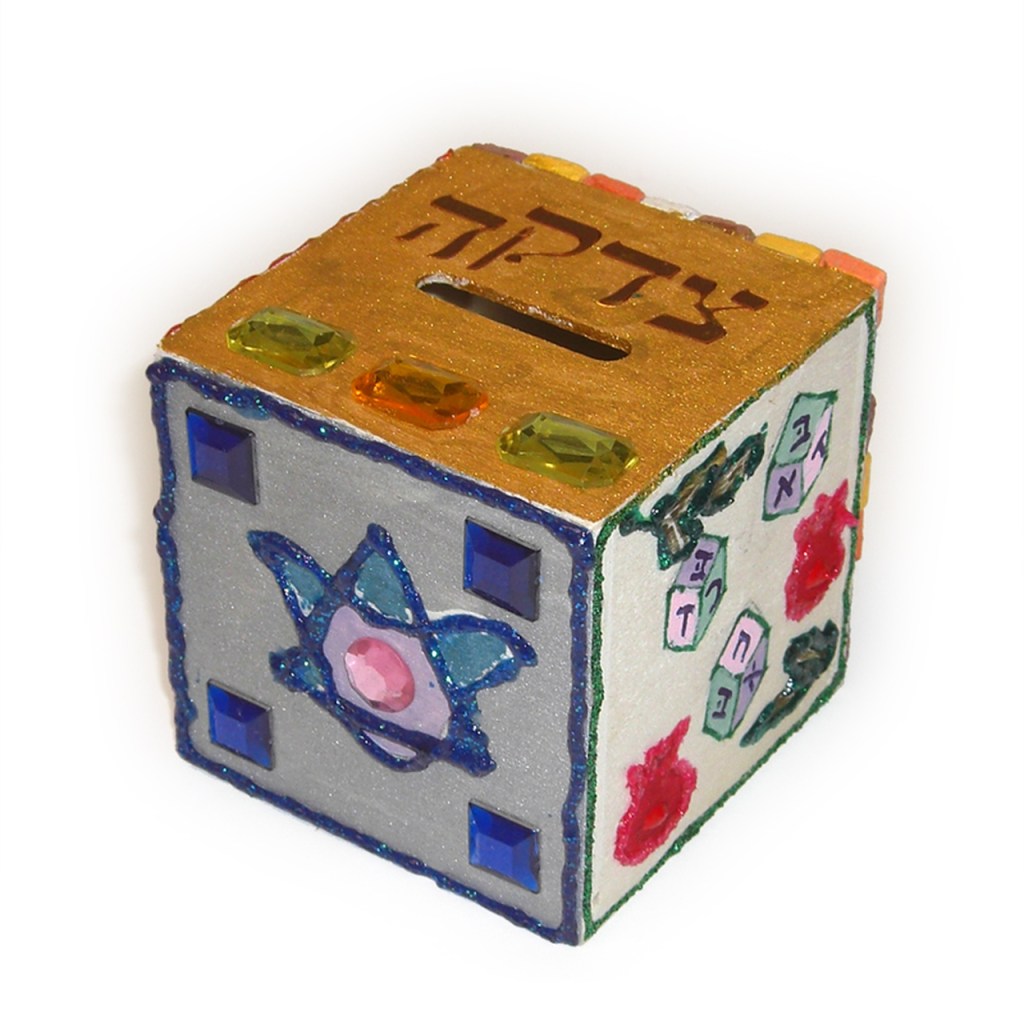
It is also a fundamental part of Judaism. Charitable giving is supposed to be essential for us all. Some older members may remember that, not long ago, every home had a pushke, or tzedaka box, which would collect whatever spare change a person had. Giving has been heavily integrated into some people’s Jewish lives, and it should be again.

Elul is coming. It is the last month of the Jewish year. It is our time for reflection. We use this time to look inward and assess our deeds. 

In Hebrew, this process of introspection is called “cheshbon hanefesh” – auditing the soul. We weigh up our good deeds with our bad, and put our own morals on the scales of judgement. A part of this must surely mean re-examining our giving. A cheshbon is a bill, a record of how much you owe. We owe many things: deeds, love, kindness and study. But we also do literally owe money to those who need it more than we do. 

Now is the time to redouble our efforts at donating and to make sure we do fulfil our sacred requirements. The synagogue will be sending round its High Holy Day appeal soon, and I encourage you to give it a good look.

Giving to others is good for us. It strengthens our soul and sense of self-worth. It is good for others. It means people less fortunate get the support they need. It means great causes can continue to thrive.

And, of course, giving is good for the Jews. Especially if it might mean we win a competition. 

Shabbat shalom.

judaism · liturgy · sermon

Pray for the right kind of rain

Every day, we pray for the right kind of rain. 

The Amidah praises God’s holiness and dominion over the natural world. 

We change how we address God in rhythm with the seasons. In the summer, we thank God for making dew descend. in the winter, for bringing on heavy rains. 

For us living in cities, we can feel quite disconnected from how important this water cycle is. I only catch snippets of how it causes concern. A radio broadcast says British farmers are worried that there hasn’t been enough frost in January. In a supermarket, a cashier tells me there is a shortage of aubergines because there wasn’t enough rain in Portugal this year. 

The cycle of the right rains affects whether we have enough to eat. It can mean the difference between living safely and losing everything. There is a reason the greatest catastrophe our ancestors could imagine was a flood.

This week, we gained a sense of how important and delicate the rain cycle is. 

At the start of the week, I was heading back from a holiday in the Lake District. It was searing hot. The hottest summer we’ve ever had, people kept saying. As I climbed mountains, normally soft moss felt like dry straw under my hands. The shops had stopped selling barbecues and matches. 

Everyone said that the slightest spark could set the whole forest on fire. We would wind up like California or the Amazon, with acres burnt to a crisp. Thankfully, it didn’t happen, but I left with an awareness of the forests’ fragility and a deep concern that England was not ready for climate catastrophe. 

Only days later, I came back to intense flooding. The rains fell intensely, relentlessly. I thanked God that I was safe inside as the skies turned black and stayed that way for what seemed like days. The area around our synagogue was drenched. Charlie Brown’s roundabout flooded again. Some in this community saw damage to their property. Members of our synagogue were displaced: moved initially to the higher floor of the care home, then relocated. 

I was taken aback by how well our care team took to handling the crisis. Claire, Sue, Debz and others made sure everyone who might be affected received calls, and that anyone who needed help got it. They showed the very best of what this synagogue is for. 

But I was most impressed by the bnei mitzvah students I met this week. Jacob and Layla, twins, are preparing to come of age around Pesach, at the time when we stop praying for heavy winter rains and start celebrating the gentle dew. I asked them what they want to be when they grow up. Jacob wants to be a primary school teacher. Layla says she wants to be an environmental activist.

I have to be honest. When I was Layla’s age, I had no idea campaigning could be a job. It is a testament to her curiosity and sense of justice that she has found this out.

But it is also a wake-up call of how dire things are with our environment that Layla has to think of this job. The problems we saw this week had many causes. We have a rapidly changing climate. Companies have over-consumed fossil fuels and spoiled the ecosystem. Developers have built on flood plains. Much of the development after the Olympics destroyed natural wetlands, worsening the situation. But all of these factors share a common problem: we have taken nature for granted.

In this week’s parashah, we read: 

If you listen, if you truly pay attention, the Eternal One your God will grant the right rains at the right times: autumn rain for autumn and spring rain for spring. You will be able to eat and so will your cattle. 

But you must guard yourself against a straying heart. If you serve other gods and bow down to them, God’s anger will blaze out against you. God will shut up the sky. There will be no rain.

This text might feel familiar. It is the second paragraph of the Shema, found on page 214 in your siddur for the Shabbat morning service. You may have read it before, but it’s unlikely you’ll have heard it read aloud in any service. 

It is the custom of this synagogue, and of all Reform synagogues, to read these verses in silence. So, why do we whisper it? 

One reason is that we are very uncomfortable with what is implied theologically here. It suggests that good things happen to good people and bad things to bad people. We know this isn’t true. The righteous suffer and the wicked prosper. Our rabbis knew long ago that there is no individual reward for good deeds in this life. So we won’t say it out loud when we have doubts about it.

But what if it is true? The warnings in these verses are not about how God might deal with individuals, but the impact of actions on entire groups of people. If you don’t pay attention to the ethics of Torah, you all can be destroyed. If you worship gods other than the Source of all creation, you will find yourself helpless before the forces of nature. Cause and effect. Action and consequence. 

In the biblical world, worshipping other gods meant turning to material things. Whereas the idol-worshippers bowed down to wood and stone, what marked out the ancient Israelites was that they only prayed to the transcendental God, who held all of nature in balance.

And that is what is happening in our world today. We are disregarding our ethical obligations to care for the planet, and we are seeing what happens. People have substituted the Eternal God for the material elilim of oil and gas. We have traded humility before nature for the arrogant belief that we can control and manipulate our environment without consequences. 

Now we are living the impact. We are dealing with the wrong rains. We are witnessing floods here, in China, in Germany, in New York, and in India. 

The Torah warns us: “Do not believe you have made all this with your own hands!”

We may have built cities and roads and bombs and planes, but we didn’t make the grass grow. We haven’t made the sun shine. It’s not us that makes the rains fall. 

All that is in the hands of a supreme Creator, who has charged us with protecting and sustaining this planet. We must hear, and truly pay attention, to that God, whose Word calls to us today. We must take up the challenge of replacing fossil fuels with renewable energy; of rebuilding our world in harmony with nature, rather than against it; of tackling carbon emissions and climate disaster. We must enable Layla to inherit a living planet so that she actually has something to protect.

We must act now. 

Shabbat shalom.

This sermon is for South West Essex and Settlement Reform Synagogue, 31 July, Parashat Eikev

sermon · social justice · theology

What do we stand for?

Five years ago, I interviewed to start rabbinic training. Over four days, I went into different rooms, where rabbis, academics and lay leaders quizzed me about why I wanted to be a rabbi. 

It was intense. In one interview, one of the rabbis asked me: “what do you think you most want to learn while you are here?”

I said: “I’d like to learn what we stand for.” 

My interviewers scrunched up their faces. I imagined them thinking, “are you sure you’re in the right place?”

How could I not know what we believe? We are Progressive Jews; we stand for Progressive Judaism. Perplexed, she pushed me: “can you think of any principles of Progressive Judaism?” 

I thought, and said: “informed choice.” We do what we like, in conversation with Jewish tradition.

The rabbi sat back and took notes. I wasn’t sure whether I had given a correct answer, and she was confused how I could say I didn’t know what we stood for if I had that grounding, or if I’d missed something more important.

What I was trying to ask was: surely we don’t just choose whatever we like? A Progressive Jew can’t make the informed choice to commit murder. We don’t look at that central commandment and think: ‘ah, but it was for its time.’ We have a shared assumption that the prohibition on killing applies to every time. So how do we make these informed choices? What decides for us which choices are right and wrong?

Permissiveness is not really a value. It’s something you do out of indifference. There must be something stronger than that motivating our congregants to get out of bed and labour for the welfare of their community. 

Apparently, I am not alone. Throughout my time as a student, going to congregations across the country, people have asked me that very same question in different ways. 

What are the values of Reform Judaism? What does living by Progressive Jewish values actually mean?

After 4 years of study, well… I still don’t have the answer. But I feel much closer to it than I did when I started. And the answer begins with this week’s parashah.

At the end of Masei, we hear the story of the daughters of Tzelafchad. They come forward before Moses and assert their rights to inheritance. Their father, they say, was a good man who had no sons. As it stands, his property will be passed on to nobody, and these women will be left destitute. They argue that they should be the ones to inherit his estate. Moses talks to God. God agrees.

This is a big deal in Torah terms. It shows that a law can change. Decisions are not fixed in stone but can adapt with the times. It fits exactly with the Progressive mindset. We look at the laws again, and work out if they are still relevant. Moses looked at inheritance law, saw that it wasn’t working, and decided it was time to set a new precedent.

This is at the heart of Progressive Judaism. We progress. We treat the Torah and our traditions as our basis, but we are always willing to review it, and find new ways that better suit our reality.

The case of the daughters of Tzelafchad is a great example. It fits with our intuitions about what is right and wrong. Of course these women should inherit.

But does that mean every time a law changes, it’s an improvement? In the course of the Torah, laws also change to take rights away from people. Laws can change that make people’s lives worse. 

The reason why we consider this legal change so praiseworthy is because it makes life better for people. In particular, because it makes life better for women. 

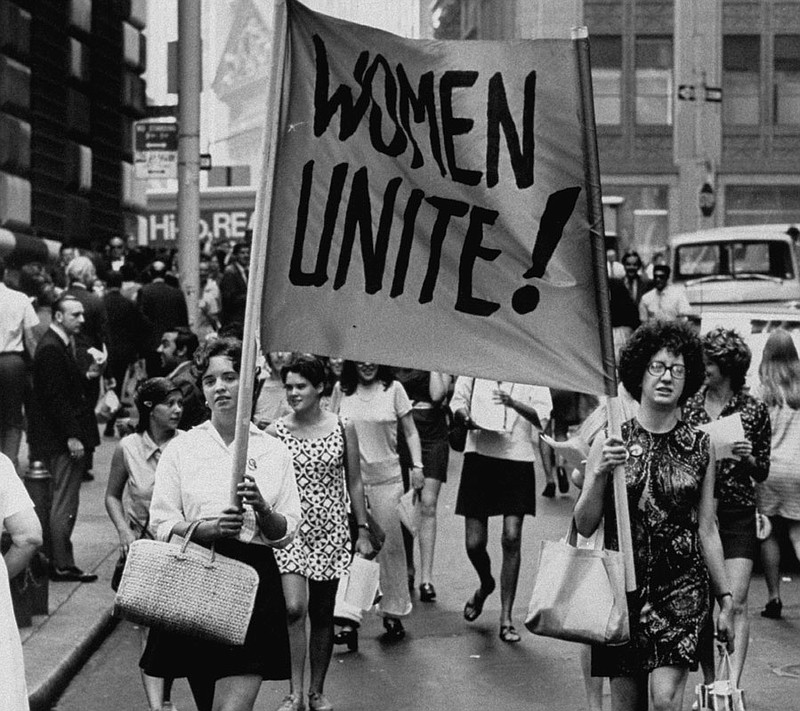
It fits with the feminist lesson we have learnt from history. Through the last century of the women’s liberation movement, our religion learned the importance of giving everyone their full rights and abilities to participate in Jewish life.

We have our own hashkafah: our own way of looking at the world. We see progress in terms of what gives people the most equality, dignity, and justice. 

Other strands of Judaism may give priority to tradition, nationalism, or conservatism. We say that what matters is equity. 

We did not decide to pursue this egalitarian cause because we thought it would make things easier. Quite on the contrary: it made things harder for many people. At the start of our movement, people were disowned by their families and ridiculed by the religious establishment because of their conviction that equality mattered. They took the more difficult course because it was the right one.

Since the early days of Reform Judaism, we have prioritised gender equality. This week, I met with one of the founder members of SWESRS, who said that in their very first days, the community discussed what they wanted from a synagogue. Even in the 1950s, they insisted that equality between men and women would be of the utmost importance.  

This synagogue has gone on to create a legendary legacy. The UK’s first woman rabbi, Jackie Tabick, was raised here. This is a place with a proud history of putting forward that great principle of Reform Judaism: that equality matters.

That is how we approach the question of whether and when to change a law. We are not beholden to tradition, forced to do everything today and tomorrow, just because we did it that way yesterday. Nor will we go along with every change, just because it feels fashionable or convenient. 

At every stage, the question we ask ourselves is: is this right? Is this just?

We seek to make changes that will make people more equal, more empowered, and more dignified. 

So, now, if I am asked what we stand for, I have a much clearer answer.

We stand for equality.

We stand for the emancipation of all of humanity.

We stand up for the oppressed and stand beside the marginalised.

We stand in the footsteps of Moses, who changed laws because he could see that justice mattered.

We stand before God, proud to inherit a tradition; and courageous enough to change that tradition for the better. 

That is where we stand.

Shabbat shalom. 

This sermon is for South West Essex and Settlement Reform Synagogue, Parashat Matot-Masei, 10th July 2021

sermon · spirituality

In defence of large groups of people

The great sage of the Mishnah, Ben Zoma, once exclaimed:

How hard must the first ever human being have worked before he had bread to eat! He plowed, sowed, reaped, sheaved, threshed, winnowed, separated the grain from the chaff, ground the grain into flour, sifted, kneaded, and baked… and only then did he get the chance to eat. But I wake up and find all of these prepared for me.

He added:

How hard must the first human being have worked before he had clothes to wear. He sheared, laundered, combed, spun and wove… and only then could he put on a shirt. But I wake up and find all of these prepared for me.

And, of course, he is right. How many hands must have touched everything we enjoy. Ben Zoma knew this was true 2,000 years ago. How much more true is it now that we live in a globalised world with food, clothes and technology Ben Zoma could not even have fathomed.  Anything that anyone in this world does is because many people have worked together to make it happen.

But Ben Zoma also says something ridiculous. He imagines that Adam, the first human being, did all this alone. We know that is patently false. First of all, at the very minimum, Adam was accompanied by Eve in Eden. And, if we follow the biblical story, God provided that first couple with everything they needed. They could pick fruit off the trees without trouble and never bothered with bread. They didn’t even need clothes until they had left their paradise garden.

When Adam and Eve did leave Eden, they immediately found wives for their male children. The Torah doesn’t explain how they got there, but any other explanation for how humanity came about would be very troubling. The Torah knew that it was impossible for human beings to ever achieve something on their own.

And, in fact, the Talmud, where this saying from Ben Zoma is quoted, knew this too. This imaginary world where individuals only do things for themselves comes as part of a sugya that speaks in celebration of groups of large people. The Talmud marvels at the diversity of human beings, where every face and mind is completely different. It speaks in praise of migration, hospitality, crowded marketplaces and huge throngs flocking to the same place.

Human beings are social animals. From the off, we have done everything in groups. Before civilisation, we hunted and gathered in packs. When we first set up farmsteads and villages, we did so together, in groups. The modern world was built by people sharing technology, innovation, resources, and working together to develop them. The only evolutionary advantage that human beings really have is that we can organise in ways that no other animal can.

For the last year, some forms of collectivity have been permitted, and some have been forbidden. People have been allowed to meet each other in warehouses, factories, and takeaways, where they make and distribute things to those who can afford them.

People have not been allowed to encounter each other in parks, or houses, or community centres, or gyms. They have rarely been able to accompany the sick at their bedsides, or celebrate births and marriages, or share ideas in public forums. 

Now, as things ease, people are permitted to gather, but only if they are spending money. We can meet in shops, pubs, and restaurants, and even sit indoors without masks on. But very few of the community activities for children have returned. Older people in hospitals and hospices are still rarely seeing their families. 

Certainly, almost every form of protest or public demonstration remains criminalised, and it may stay so for a very long time. Like last summer, even with a nearly completed vaccination programme, the government is keen to rush people back to work, but reluctant to allow people time to just be together and heal. 

Still fearing the virus, despite minimal risk of transmission to the vulnerable, many people have given up on public transport. There is more regular car use in the UK now than at any previous point in history. I see people avoiding each other, avoiding making real contact, even though the option is there.

I look at this so-called ‘recovery’ from Coronavirus and wonder if anybody has considered what actually makes life worth living. We are not automatons, created to work like robots. The best part of being human is other human beings. We are social creatures, whose purpose is derived from what we can do together. 

And there is a place where people are supposed to be able to meet for just that purpose. Its name in Greek is ‘synagogue,’ which means ‘shared path.’ In Hebrew it is called a ‘beit knesset: ‘a house of meeting.’ In Yiddish, we call it ‘shul,’ which just means ‘school.’ This. This is it. This thing where we come together to sing in unison and study communally and hear how people are really doing, this is what life is supposed to be about. 

This. This place where babies are blessed, bnei mitzvah celebrated, weddings solemnised, healing recognised and deaths memorialised. This is how people recognise the humanity in others, and in themselves. 

This is my last service with you. I have absolutely adored working with you. I have got to know so many of you in such depth, without even leaving my home. I have heard about your families, your fears, your hopes, your dreams, and your life stories. I cannot wait to do that with you in person again.

We have weathered an entire year together through a pandemic. That much is remarkable. I have been so impressed by the ways you have continued to pastorally support each other online, and to provide essential services to the vulnerable. 

The next stage is going to be hard. It means meeting people face to face again. It means taking risks, being brave, and trusting each other. It means accepting compromises and imperfections. But above all, it means truly building a community that is loving and generative. 

I look forward to returning to Newcastle to see you all again in the building, in person, shaking hands, embracing, and catching up on the things that matter. I sincerely hope it will not be long before this community sings in harmony once more and natters over homemade foods at kiddush. 

At no point in our history has anyone managed to go it alone. The future sees us together.

Shabbat shalom. 

sermon · theology · torah

Make yourselves fringes

.

I started wearing a kippah full-time out of the house about six years ago. I was growing increasingly religiously observant and wanted to see how it felt to physically mark my faith. I have worn the kippah almost every day since, and feel naked if I greet guests or leave the house without one.

The results have surprised me. First of all, Britain is way more accepting than I anticipated. I have lived all over London and travelled all over the country and never had a negative reaction. 

I am often met with positivity and fascination. Non-Jews ask me questions and start conversations I’d never otherwise have had.

Meanwhile, Jews come up to me to see if my kippah offers them a sense of belonging. It is like a hat that McDonald’s workers wear saying “ask me about our special offers”, except mine says “ask me about our special task.”

I am very aware that how I conduct myself through life now reflects not only on me but on Jews and Judaism as well. I have become an ambassador for Judaism. I feel obligated to live a more ethical life, and I wonder if that is, perhaps, the point. 

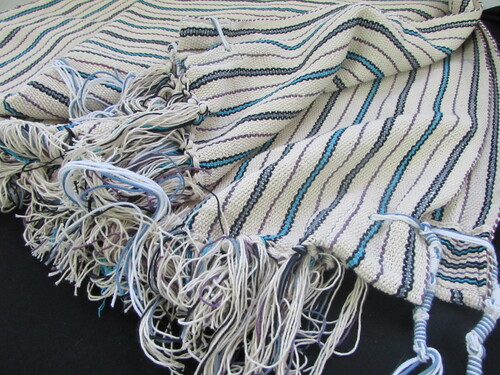
Religious clothing carries deep meanings for those who wear it, and has done throughout our history. The kippah itself is not mentioned in the Torah. It is a medieval innovation in Judaism. In the world of the Bible, the item of clothing that symbolised Jews’ distinctiveness and sacred purpose was the tzitzit. 

In this week’s parashah, Shlach, God tells Moses: “Speak to the children of Israel and say to them: make for themselves fringes upon the corners of their clothes for all generations, and put a blue thread among them.”

Now, says God, whenever you see them, you will remember what God has commanded of you. You will do what is right instead of what you like. And these fringes will make you holy before God.

But why? What is it about these fringes that should serve such a purpose? Are they simply visual aids? And, if they are, what is it about dangling threads at the corners of garments that should work to remind us of holiness and covenant?

Rashi suggests that the reason is not fringes themselves blue strand among them. This, he says, was once the colour of royalty, and an expensive dye to acquire. The thread is a reminder to the Israelites of their shared regal status – an affirmation both of their equality between each other and of their special status in the eyes of God. 

But the blue string that was once part of the tzitzit can no longer be seen. The dye that was once used no longer exists. Although efforts have been made to revive it, for most Jews, our fringes have no dye. 

I think the fringes have a meaning of their own. To me, these tzitzit are meaningful because of where they are.

They are situated on the margins. They are so often translated as being “fringes.” They are at the edges.

In this way, they are like Jews.

Every Jew, no matter how visible or assimilated, knows what it means to be on the fringes. It might be the ambivalence we feel as Christmas rolls around, or the unease we feel at a cultural reference that doesn’t include us. It might be a story in the news that we know we are reading differently precisely because we are a Jew.

Throughout history, we have used our marginal position to better understand both the non-Jewish world we inhabit and the Jewish one we inherit. Jewishness gives us a perspective not everyone has: a sense of how life can look from the edges.

When we see tzitzit, we see ourselves: the fringes.

The great 20th Century philosopher, Hannah Arendt, argued that this was no coincidence. We are not just on the margins because others have put us there, but because that is where we are supposed to be. 

Arendt says that, even after the Jews were given citizenship and turned into emancipated members of European states, most Jews continued to be “pariahs.” 

They were marginalised, never fully accepted into European society. As a refugee from Nazi Germany, Arendt knew this well.

From this position as pariahs, Jews could either consciously embrace who they were or pretend they were assimilated. Arendt says we should be conscious pariahs. We should embrace our marginality. We should use our special position as outsiders to see things the way nobody else can.

But tzitzit are more than just fringes. They are the sacred part on the border that give purpose to the centre. Without its fringes, a tallit is just a scarf. The fringes are the visibly different part that mark it out as holy.

Is this not the role of the Jew in the world? Is this not what it means to be ‘a light unto the nations’; that we are visible reminders to the world of who God is and what it requires of us? Isn’t it exactly our holy purpose to transform the world from the vantage point of our difference?

We who turn up to synagogue, who keep up our strange ways of living at the weekend, who sometimes have unusual dietary requirements. Yes, we who sometimes don kippot and dress in fringes. We have embraced our difference and turned it into a point of pride. We have chosen to live a life by Jewish ethics, transforming society and ourselves. 

That is where these tzitzit point us.

They tell us not only that we are sacred for our place on the margins, but that we need to look beyond our space to the further fringes. There are others more excluded than we are, whose difference has made them more vulnerable and excluded.

The fact that they are fringe makes them, like us, sacred. They have perspectives we cannot. Their difference is spiritually powerful. It is not that we should pity the people more marginalised than we are, but that we should seek to bring them from the borders to the centre.

This Torah portion concludes with reminding us why we wear these fringes: God brought you out of the land of Egypt.

With that special deliverance came a sacred purpose.

Countless times, the Torah implores us: you know the heart of a stranger, for you were strangers in the land of Egypt. 

If our holy purpose comes from being on the fringes, we need to look to those further out for where to go. Torah tells us about its most marginalised people: orphans, strangers, widows. These are the people that ancient Israelite society too often left out.

In ancestral times, these were the people without income or papers. Judaism calls on us to look to those most marginalised people. Unless we are centering them in our decision-making, we are failing in our religious duties.

The tzitzit at the edges of our tallits remind us where to look. They tell us that the margins are where things matter most.

So, make yourselves fringes. Now whenever you see them, you will remember what God has commanded of you. You will do what is right instead of what you like. And these fringes will make you holy before God.

Shabbat shalom.

This sermon was inspired by the political philosophies of bell hooks and Melanie Kaye/Kantrowitz. It is for Parashat Shlach at Edgware and Hendon Reform Synagogue, to be delivered Saturday 5th June.

sermon · theology

Why do people get sick?

Why do people get sick?

In a year when so many have experienced ill health, it is worth asking why this has happened. Throughout the pandemic, we have been reminded that some will get the virus with no symptoms; some will get the virus and recover; some will get the virus and will not recover. But what determines who gets sick and who gets better? Who decides who has to suffer and who will not?

There are plenty of medical professionals in this congregation who can answer part of that question much better than I can. Statistics, underlying factors, mitigating circumstances, health inequalities, access to medicine. All of these things certainly play a role. 

But they don’t answer the fundamental question that animates us: why? Why my loved one? Why me? That is not a medical question but an existential one. It is about whether there is a God, whether that God cares, and what a religious Jew might do to change their outcomes. 

For that, we look to the Jewish tradition. Let’s start with this week’s parashah. Here, we read one of the earliest examples of a supplicatory prayer. Moses sees his sister, Miriam, covered in scaly skin disease. He cries out: “El na rafa na la.” God, please, heal her, please. We hear the desperation in Moses’ voice as he twice begs: “please.” Don’t let her become like one of the walking dead. 

In this story, there is a clear explanation for why Miriam gets sick and why she gets better. Miriam’s skin disease is a punishment. She insulted Moses’ wife, talking about her behind her back with Aaron. 

When she gets healed, it is because she atones for her sins and Moses forgives her. She goes to great lengths of prayer and ritual to have her body restored. Sickness is a punishment and health is a reward.

In some frum communities, you might still hear this explanation. All kinds of maladies are offered as warnings for gossiping. When people get sick, they’re encouraged to check their mezuzot to make sure their protective amulets are in good working order. 

In some ways, these are harmless superstitions. When everything feels out of control, why not look for reasons and things you can do? But hanging your beliefs on this is dangerous. Plenty of righteous people get sick and plenty of wicked people lead long and healthy lives. 

If you follow the logic of this Torah story, you run the risk that, when your loved one’s health deteriorates, you might blame them for their ethical conduct, when really there is nothing they could do. It is a cruel theology that blames the victim for their sickness.

In the Talmud, the rabbis felt a similar discomfort. They decided that skin diseases were an altar for atonement. When people got sick, it was God’s way of testing the most beloved. The righteous would suffer greatly in this world so that they would suffer far less in the next.

When Rabbi Yohanan fell ill, Rabbi Hanina went to visit him at his sick bed. He asked him: “Do you want to reap the benefits of this suffering?” Rabbi Yohanan said he did not want the rewards for being sick, and was immediately healed. 

We hear these ideas today, too. People will say that God sends the toughest challenges to the strongest soldiers. But I don’t think this theology is any more tenable. How can anyone say to a child with cancer that their sickness is an act of God’s love? Who could justify such a belief?

No. The truth is that these theories of reward and punishment should leave us cold. We live in a world full of sickness and suffering, and it’s attribution is entirely random.

Maimonides, a 13th Century philosopher, saw that these explanations for sickness did not work. He was a doctor; the chief physician to the Sultan in Egypt. He had read every medical textbook and saw long queues of people with various ailments every day. How could he, with all his knowledge, think that sickness was a punishment or a reward?

Maimonides taught that God has providence over life in general but not over each life in particular. God has a plan for the world, but is not going to intervene in individual cases of recovery. He disparaged the idea that mezuzot were amulets or that people could impact their health outcomes with prayer. 

I feel compelled to agree with Maimonides’ rationalist Judaism. Sickness is random and inexplicable. So is health. The statistics and medical knowledge that I set aside at the start of this sermon have much better answers than I can muster.

So, what do we do? We, who are not healthcare professionals or clinicians seeking a cure? 

Like Moses, seeing the sickness of Miriam, we pray. We pray with our loved ones, not because we think it will make God any more favourable to them, but because it is a source of comfort to those who are sick. Praying with someone shows that you love them and care about their recovery. We do it for the sake of our loving relationships.

Like Rabbi Hanina, seeing the sickness of Rabbi Yohanan, we visit the sick. We attend to people, not because we imagine we can magically cure them with words, but because company is the greatest source of strength in trying times. We go to see people in hospital, not for their bodies, but for their souls.

And, like Maimonides, we approach the world with humility. We refuse to believe in superstitions that are false or harmful. We accept that we live in a mystery and there is much we do not know. 

In this time of sickness and difficulty, it is very Jewish to ask: “why do people get sick?” The Jewish response to questions is to ask more questions. And the most Jewish question we can ask here is: “when people are sick, how can I help?”

Shabbat shalom.

I gave this sermon at Newcastle Reform Synagogue for Parashat Behaalotchah on 29th May 2021.

judaism · sermon · social justice

A world without walls

There was a time before there were fences and walls. 

At some point in the distant past, recorded only in our folktales, the world used to grow wild and free. Trees and plants sprouted wherever they wanted. Animals moved at their own will. There were no roads, no houses, no cars, and no banks. 

Back then, human beings were hunter-gatherers. Our ancestors lived in caves, chased down animals with spears, foraged for berries, and moved wherever the weather was best. 

Then, about 10,000 years ago, something changed. In a place that we now call the Middle East, a group of people realised that they did not just have to take whatever nature allowed them. 

They could change their environment to meet their needs. They could plant, sow, grow, cultivate, reap and nurture crops. They could turn entire fields into places where just one thing was grown, like olive groves, barley fields and orchards. 

This was the beginning of civilisation.

It was also the beginning of war. Armies grew. The spears that had been used to hunt cattle were now used to kill people. 

Fences were put up. At first, they were used to keep animal livestock in. Then, they were used to mark out who owned which fields. Then, they were used to keep people in their place.

The people who had control of the fields needed people to work them. The workers, often vanquished or nomadic people, needed a place to stay and a way to get fed when all the food was fenced in. 

So the workers became indebted to the owners. The landowners would feed and house the workers. The workers would labour over the land to make it profitable. The landowners gained more wealth and more land. The workers became increasingly in debt. 

Sometimes, people were born into slavery, and this would be passed down for generations. Their debt to the landowners could never be repaid. 

The owners, in turn, passed on the land to their children.

This presented a big problem. People could become infinitely indebted, with no hope of their descendants ever paying it off. People could become infinitely wealthy, as they conquered more land and made more people work for them. The owning people would have to use increasingly violent measures to make sure the working people did not rebel against them. 

That was the situation in the ancient world. Debt. Wealth. Slavery. Borders. Violence. Revolutions.

And, according to the 19th Century historian Moses Finley, every revolution had the same demand: cancel all the debts and redistribute all the land. 

When you understand this historical background, this week’s parashah, Behar, makes a lot more sense. This week, we read Leviticus 25. It is a remarkable chapter of the Bible in that, on its own, it comprises an entire sidra of the Torah, and all 50 verses deal with the same subject. This whole chapter is dedicated to how the ancient Israelites could break the cycle of debt, slavery and land acquisition. 

It begins with the shmita. Every seven years, you give the land a break. You cannot overwork it. It is like a shabbat for nature, free from human interference. 

Then you count seven lots of seven, seven shmitas, adding up to forty-nine years. In the fiftieth year, you have a Jubilee. Now all the land must be redistributed again. Noone can accumulate all the fields. It is a complete reset. Everyone goes home. Noone exploits anyone else. 

At this time, all the debts are annulled. Nobody can rack up infinite obligations to others.

There is no ancient version of Carol Vordeman advertising that you can consolidate all your debts into one monthly loan repayment.

This means that even slaves can be set free. The law forbids landowners from charging interest to their slaves. They can’t charge them extra for the food they eat or the place where they sleep. They might be in debt, but they have to have a way of getting out of it. 

Every seven years, slaves have the option to go free. Then, in the Jubilee year, all slaves are redeemed. Nobody can remain in slavery forever.

Repeatedly, Leviticus insists:

 לֹֽא־יִרְדֶּ֥נּֽוּ בְּפֶ֖רֶךְ

Do not grind them down. 

Don’t be ruthless.

Leviticus was written in a time of great inequality, when landowners took up huge amounts of land and charged huge amounts of interest. Workers accrued huge amounts of debt and passed on slavery to their great-grandchildren. Leviticus came to offer an alternative. The system of Jubilees means nobody can become too rich and nobody can become too poor.

This system works because there is someone to defend the poor and resist the rich. There is a force stronger than any spear and higher than any fence. There is a being who will advocate against even the wealthiest landowner and the mightiest army.

That being is God. 

Nobody can be a slave forever, because, ultimately, we all serve God. Nobody can own the land forever because, ultimately, the land belongs to God. In this religious system that our Torah creates, nobody can really claim to be better than anybody else.

God tells us something that no ledger sheet can. Whereas debtors can calculate the value of every loan and landowners can weigh up the worth of every harvest, faith tells us about the things we cannot count. 

You can’t put a value on human life. You can’t put a value on freedom. You can’t put a value on social harmony.

This is why the Torah makes such a special contribution to human history. In a world structured by violence, it tells us that people must be set free. In a world divided by inequality, it tells us that everyone has equal value. It calls on us to relieve all debts and free all slaves. 

Ours is a world of fences and walls. Ours is a world of great debt and great wealth. Ours is a world where some are too poor and some are too rich. 

But Leviticus challenges us to remember a world before this was the case. It instructs us to imagine a world where inequality is no longer the case. 

It teaches us to build a world without fences or walls. Let us heed that call.

Shabbat shalom. 

israel · sermon · story

The holiness of Mount Meron

I want to talk about what it takes to make a space sacred. 

And I want to consider what it would take to desecrate a sacred space.

There is a cave on Mount Meron. It is not just any cave. It is a pilgrimage site whose reputation and mystery has grown over the centuries.

And this is the place where, on Thursday night, thousands were trampled in celebrations of Lag BaOmer. 

In this cave, two of Judaism’s greatest sages are said to be buried: Rabbi Shimeon bar Yochai, abbreviated to Rashbi, a tanna in 2nd Century Yavne, and his son, Elazar ben Shimeon. 

Rashbi was a rebel against Rome. He criticised the imperial regime to his fellow rabbis. His colleague, Rabbi Yehudah, went straight to the Roman authorities and snitched on him. The Romans immediately promoted Yehudah and put out a bounty to kill Rashbi.

And that was how Rashbi and his son first wound up in a cave. The Talmud, written around five centuries later, says that this was a site of great miracles. There, in that grotto, a carob tree sprouted so that the two would always be able to eat. A well of water sprung out from the ground so they would always be able to drink. 

Every hour of the day, Rashbi and his son sat in the sand, buried up to their necks, hiding and studying Torah. They prayed and learned their traditions. After twelve years, the prophet Elijah, known for visiting pious sages, came to the cavern’s entrance and told the rabbis that the emperor had died and they were free. 

But during those twelve years of religious study, Rashbi had acquired knowledge and power far beyond what he previously knew. He went out into the world and looked upon it. 

Everywhere he went, he saw sin. Wherever he laid his eyes, Rashbi shot fiery lasers that destroyed everything in sight. God called out from the Heavens that he had better get back inside the cave. He stayed again for another twelve years. 

Finally, he came out from the cave and was able to participate in the world. 

Many years later, Rashbi died on Lag BaOmer, the 33rd day between Pesach and Shavuot. He was buried in a cave on Mount Meron. 

That was the beginning of the sanctification of the cave. 

No sources say that the cave where Rashbi and his son experienced miracles was the same as the one where they were laid to rest. It takes imagination to make the connection.

Such imaginative storytelling spurred on the legend of the cave. In 13th Century Guadalajara, in northern Spain, a mystic named Rabbi Moshe de Leon published and sold a mysterious new book. He claimed it contained the secrets of the universe itself. This book was called the Zohar. 

The text, said de Leon, had been written by Rashbi, a thousand years previously. He promoted a story: during Rashbi’s legendary time in that cave, he was not just a witness to miracles. He received a divine revelation. 

God disclosed to him hidden meanings of the Torah. These teachings, encapsulated in the Zohar, were the foundation of an esoteric practice that we now call Kabbalah.

Over the course of centuries, such Jewish mysticism would gain ever greater traction. Disciples of Kabbalah spread, and so did the myth of the cave. As the story grew, the cave became even more holy and potent. 

Three hundred years later, Kabbalah had become a movement. In the Galilee region of northern Eretz Yisrael, students of Yitzhak Luria and other great mystics assembled to learn these special teachings. They developed their own liturgy and renewed Jewish theology. They also initiated pilgrimages to sacred sites, including the tomb in the cave on Mount Meron.

In the subsequent centuries, the movement of Chassidism in Eastern Europe came to preach the importance of kabbalah. They popularised folk stories, promoted ecstatic singing and taught that there were certain special rebbes – charismatic leaders that pious Jews should follow. 

They called these legendary leaders ‘tzaddikim’ – righteous ones, and considered Rashbi a prime example. They believed that praying by the tomb of a tzaddik would make God more likely to hear them.  So, even in the 18th Century, when travel was difficult, Chassidim voyaged across Europe to visit Rashbi’s shrine.

Now, for more than 200 years, this cave has been a prime site for Orthodox Jews to attend and worship. In particular, on Lag BaOmer, Rashbi’s yahrzeit, the place fills up with people. In the preceding days, people camp across the mountain. 

On Lag BaOmer itself, fires are lit, songs are sung and people come to celebrate from all around the world. The stories that have made the cave sacred are retold.

That was what it took to turn this cave into a sacred place. Miracles. Legends. Imagination. Revelation. Pilgrimages spanning centuries. Millennia of development of Jewish tradition. 

Mostly, the cave has been sanctified by storytelling. 

For the purposes of storytelling, it does not matter whether Rashbi was really granted miracles. It is of no importance whether the caves were the same. 

It is even less significant whether Moshe de Leon inherited the Zohar from that ancient sage or made the whole thing up himself. What matters is the story. The Jews have turned this into a holy space by how engaging with it.

But that engagement has not been entirely for good and not every story is positive. Now comes the story of the disaster.

In 1911, just over a century ago, a catastrophe struck the cave. The roof above Rashbi’s shrine collapsed, killing 11 people and injuring many more. At the time, campaigners called for health and safety regulations to be implemented so that no such catastrophe could occur again. Their warnings were not heeded.

Rabbi Mark Solomon, one of our senior teachers at Leo Baeck College, recalls attending the pilgrimage in 1983. Even then, he said, “the crowd was so intense that I was sure I was going to be crushed to death. It was one of the scariest moments of my life.” 

In the years since, the number of attendees has only grown. But, despite appeals to the government, no health and safety measures have been added. This year, with so little planning due to Covid, there were even fewer arrangements to keep people safe.

And so, on Thursday night, catastrophe struck. People were trapped in a tight space with no crowd control. They panicked. A crush ensued. People threw themselves over each other. Hundreds are in hospital or seriously injured. 44 people were killed, among them little children.

Yisrael Meir Lau, the former Ashkenazi Chief Rabbi of Israel, immediately spoke out. Like thousands of Jews, he had to check that members of his own family were not numbered among the dead. 

“We could have prevented this,” he said. He insisted this was not a natural event like plague or fire, but something in which human beings had colluded. He has called for an immediate inquiry.

And that, I believe, is where the question of whether a site can be made from holy to profane begins. It begins with what story we tell next.

Mount Meron is a sacred site because it is imbued with spiritual stories. We cannot allow those stories to be replaced with memories of whitewash and cover-up. People must take responsibility and there must be changes so that nothing like this happens again. 

We know from experience in Britain that the only way to heal from a tragedy is through honesty, transparency and change. We learnt this far too late from the Hillsborough Disaster and still have not seen those lessons learnt with Grenfell. When officials refuse to accept liability and instigate changes, all that remains on the sites where disaster happens is the trauma of failure.

If a site can take centuries to make sacred, it can be desecrated in an instant. 

Let us pray, then, that the government, officials and religious leaders engage in serious introspection. Let us pray that real changes are made to prevent repetitions of such disasters. Above all, let us pray for recovery for the injured and the memories of the dead. May their memories be for a blessing.

Shabbat shalom.

sermon · social justice · torah

A charter of Disabled people’s rights

Do not curse the deaf. 

Do not put a stumbling block in front of the blind.

Revere your God.

This week’s parashah is Kedoshim, the centre of the whole Torah. It is the centre in two senses: we are slap bang in the middle of our scroll. When the warden performs the hagbahh tomorrow, the Torah will look almost completely even on both sides.

It is also, I feel, the spiritual centre of our Scripture. This is the part of the Torah that tells us what the rest of it was for. All the stories and speeches that surround the rest of the text can be summarised in this portion. 

Many of the verses from elsewhere in Torah are repeated. Some of it might seem superfluous. Kedoshim reads a little bit like the Torah’s greatest hits, reminding us of some its most popular laws and aphorisms.

But the collection is not random. The smattering of commandments I recited at the beginning all have something important in common. They are about what rights and obligations people have in relation to each other.

This year has brought home to many of us that we cannot take our health for granted. Our bodies are fragile and the time on earth we have is precious.

If you were to become blind, or deaf, or sick, or old, what could you expect from society? What are the minimum standards that others owe you? And, if you are blessed with youth and good health, what must you do to honour others?

Do not place a stumbling block before the blind. You might think: of course! Who would do such a thing? Who would want to trip up the disabled? But cities are structured and buildings managed in ways that are full of stumbling blocks. Every staircase to access public transport; every meeting held miles away from places people can reach; every building without a wheelchair ramp; every space without accessible toilets; every show without subtitles; and every badly laid-out street. These are all stumbling blocks.

Do not curse the deaf. And again, you would say: who would do such a thing? Surely nobody would be so cruel as to insult people who cannot hear them! But this happens all the time. Every headline that calls disabled people scroungers; every job that refuses to make adjustments; every effort to make welfare harder to access; every time the price of medication is jacked up; every time a comedian makes fun of a disability… aren’t all these insults to the deaf?

These are all ways that disabled people are kicked while they’re down.

Instead, the Torah tells us we need to lift each other up.

May we be the ones to remove every stumbling block and replace every curse with a blessing.

Shabbat shalom.

This sermon is for Edgware and Hendon Reform Synagogue, Parashat Kedoshim, on 23rd April 2021

sermon · social justice · theology

God is the reason I am gay

God is the reason I am gay. 

I am not making any claims about how God made me or what plans God had in store. I have no idea whether my personality was predetermined. I do not have any opinion on whether I am gay because of nature or nurture. I stopped caring about that a long time ago. 

But I still say that God is the reason I am gay. Because God is the reason that, if I were given the choice whether or not to keep being gay, I would stay exactly as I am. God is the reason I am proud to be open.

Growing up, there were many reasons I ought to have felt shame. In the 1990s, there was widespread public panic about gay men. I remember as a child opening up a ‘dictionary of new words.’ On one of the first pages was AIDS, whose entry redirected to ‘Gay-Related Disease.’ News stories proliferated about gay men grooming children, having sex in toilets and ruining families. The public image, only 20 years ago, was that gays were dirty, lived in sewers, and spread disease. 

Synagogue was a place where I felt safe. In the small shul in my provincial town, I found serenity. And I heard religious leaders and cheder teachers speak about the innate dignity of all human beings; the Divine spark that permeated through everyone; the obligation to protect the stranger and the vulnerable. 

The first time I ever heard an adult defend gay rights was in a community member’s living room. I must have been 11. Recently, a local parliamentary candidate had been outed after he was found having sex in a public toilet. Someone said something homophobic – I don’t remember the details. 

A middle-aged Jewish woman leapt to the gay man’s defence. She spoke with absolute passion. She laughed when one of the homophobes said he had a gay friend. She was a grown-up telling off a bigot, and she rallied the rest of the room behind her. 

As a young queer boy questioning who I was, I looked up to her and thought that was what Judaism looked like in practice. That was what it meant to defend the marginalised. I had permission – from her, and from the God in whom she believed – to be gay.

Gradually I came to realise that I was one of the people that the Jewish woman in the living room had been defending. I didn’t meet many other people like me until I got to university. When I did, I heard from many of them how religious hatred had hurt them and made them reluctant to be open about who they were.

I was grateful that I had known the true God. Progressive Jews worshipped the Source of love and justice, the universal God who did not judge, and who always stood beside the oppressed, and never sided with the oppressor. I thanked God for making me gay.

Later still, I looked around for role models. I wondered what gays could become. I knew a few celebrities existed, like Graham Norton, Elton John and George Michael. But my greatest comfort was knowing that there were gay rabbis. Rabbis like Lionel Blue. 

As I looked for purpose in my twenties, I had an inspiring lesbian rabbi. I realised how much strength and joy a synagogue could give, especially to future LGBT kids. I decided I had to create that safe space for others. So God made me gay and, in turn, being gay made me seek out God.

That is the power of religion. Done right, it can affirm people when they are weakest. It can give hope to children that people like them deserve defending. It can be the champion of all who are suffering. It can be the cause of their liberation. 

And that power can be profoundly abused. There are those who wield religious power to scare gays into submission. There are those who sit down with queer children and tell them that they need to seek forgiveness for their sinful thoughts. That they have been brainwashed by transgender ideology. That they are mentally disturbed. That they are possessed by demons. 

Apparently it is called ‘conversion therapy.’ In this practice, authority figures tell LGBT people that they can stop them being trans or turn them straight. They convince them that if they suppress their personalities, conform to rigid gender roles and only love who they are told, they will be healed. And they do so in the name of God.

And this practice is legal. In Britain. Today. 

It is even practised within the British Jewish community. Recently, LGBT people have come forward to share their traumatic stories of how they were manipulated into believing they could be ‘cured’ of non-conformity. They were convinced that if they failed, they would lose their family and community for having let down God.

If queer-affirming religion can make me the person I am today, imagine the damage it can do to teenagers struggling to work out who they are. 

As the possibility was raised that this cruel practice could be stopped, a coalition of evangelical churches comprising thousands of members published an open letter saying that banning conversion therapy would effectively outlaw their religion.

At Easter, Labour leader, Keir Starmer, went to one of those very churches to give his festive address. In response to the consternation this provoked from LGBT people, Stephen Timms, a Labour MP, tweeted in support of the homophobic church.

The two most recent prime ministers, Boris Johnson and Theresa May, had both visited this church too, causing outrage. The former Liberal Democrat leader, Tim Farron, recently accepted a donation of £75,000 from an evangelical church that lobbies in defence of conversion therapy.

When politicians spend their time and take money from homophobic religious institutions, they send out a clear message. They tell religious lesbian, gay, bi and trans people that they are, at best, indifferent to homophobia. 

When public figures choose to attend these places of worship that claim they can cure gays, rather than any of the mainstream faith houses that embrace gays, they send a message about what they consider to be proper religion, and which God they think matters.

But it is possible to send a different message. We can say that conversion therapy is unacceptable. While banning the practice won’t stop it happening, it lets everyone know that it is not OK. Young people will still talk to their rabbis about how they’re feeling, but religious leaders should not be able to answer LGBT children by promising to take away their gayness or transness.

Instead, they can give them a better message. Young LGBT people can grow up to see that their lives are sacred and deserve to be protected. They can know that they are wonderful as they are and do not need to be changed. 

God is the reason I am gay, and I wouldn’t have it any other way.

I wrote this sermon for Leo Baeck College, where I am in my fourth year of studies.