judaism · ritual · spirituality

Sacred skinny-dipping

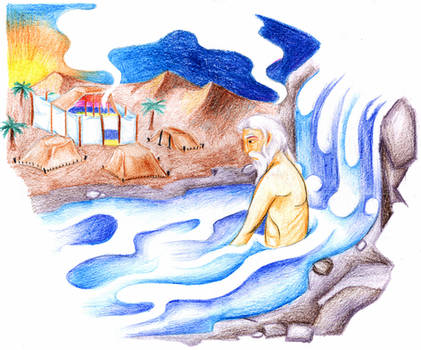
It was midsummer in a basin in the Welsh valleys. I found myself completely naked with a friend in a lukewarm tub of rainwater. We were supposed to wait for it to properly heat up over the log fire, but I was in a hurry to go from teaching Torah there to preaching in north-west London. The sunshine compensated for us. 

All around there were huge green trees, rolling hills, a babbling brook. Hippies not far away chanted in Hebrew while banging on drums.

“OK,” I said. “Now what do I do?”

“So I’m going to tell you my practice,” she said, “but you can come up with your own.”

Her practice, I later discovered, was the same one as you would find Orthodox Jews performing on Friday afternoons, as sanctioned by rabbis and law books. She had a way of making every tradition feel New Age.

She dunked fully underwater three times, twice emerging to recite a prayer.

Al hatvilah – thank you, God, for making me holy by commanding me in immersion.

Shehechiyanu- thank you, God, for keeping me alive to see this day.

On the third dip, she came up, smiled and said: “That’s all there is to it.”

I copied her every move. And that was it: my first mikveh.

I had previously associated this ritual with Orthodox women washing off the ritual impurity associated with menstruation. It had seemed to me outdated and misogynistic. 

The only other people I knew of who did it were converts, undergoing a form of Jewish baptism to initiate them into the religion. I had thought, cynically, that these new Jews were washing off the goy.

But here was my teacher, Yael Tischler, far more radical than I was in terms of religious innovation and transgressive liturgy; a witchy feminist affiliated to the Kohenet movement in America – a bohemian collective for women-centred spirituality. 

With her, the act of immersion didn’t feel problematic. It felt like my whole body was wrapped up in Jewish history. It felt connected to the earthy, fleshy customs of long-gone ancestors.

This was strange, because I know that none of my recent ancestors would have done such a thing. Liberal Jews were, by and large, decidedly opposed to many embodied rituals. 

Like their reforming Christian counterparts, many of the early Progressive Jews felt that religion should be a matter of intellectual faith. It should be stripped down to its essential meanings, devoid of excessive piety or symbols. 

In the great platforms decreed from Germany and the USA, Reform Jews repudiated circumcision, abandoned kashrut and denounced tallits. They ridiculed shockeling, the Eastern Ashkenazi prayer movements, as “bowing and scraping.” One British Liberal rabbi called kippot “the eccentric trappings of the Orient.”

As you can imagine, mikvaot did not get much of a look-in. For decades, ritual immersion was not a requisite part of conversion at the Reform beit din. Today, very few progressive Jews will attend the mikveh before their wedding. It is almost unheard of that a progressive Jew will have a regular toiveling practice as the Orthodox do.

This week’s parashah probably provides a good explanation as to why progressives are so uncomfortable with it. This week, we read Tazria-Metzora, a portion dedicated to defiling skin diseases, leprous houses, sexual infections and menstrual impurity. 

To escape the uncleanness that falls upon people by contact with these things, ancient Israelites would ritually immerse in a mikveh. The Torah describes mayyim chayyim – running water – in which people would wash themselves. We know that in the period after the Great Exile, the mikveh was likely an enormous bath at the entrance to the Second Temple. 

In the biblical world, the mikveh does seem troubling. It exists for a people obsessed by physical purity, who want to remove their blemishes before they enter sacred spaces. I would not feel comfortable advocating immersion to congregants on the grounds that their bodies are unclean and carry associations of sin. 

But my teacher, Rabbi Debbie Young Somers, argues that our rabbis fundamentally transformed what mikveh meant. She did her rabbinic thesis on mikvaot and has taught about their virtues in numerous study sessions. When I asked her for sources for this sermon, she immediately sent me detailed source sheets and tweeted her glee that the subject matter was being discussed in our synagogue. 

Impurity, Rabbi Debbie argues, is not the same as defilement for the rabbis. It is what happens when you come close to something holy. Touching religious texts, having sex, giving birth and changing to a more holy status, are acts that require immersion. Faeces, urine and vomit, which are more obviously disgusting, do not require any religious ritual. When we wash ourselves, we are not scrubbing away sinful dirt, but acknowledging sacred contagion.

In a post-Temple world, nobody can be clean or unclean. The mechanisms for such processes are gone and the need to do so – so that one might perform an animal sacrifice in the correct state – thankfully no longer exists. 

The Talmud records that, nevertheless, Jewish women took the obligation of ritual immersion upon themselves. It was a choice that antique ancestresses made as part of their covenant with God. When they did, the rabbis largely trusted women to self-regulate and organise their own mikvaot. It might well be that they already had very little authority over this aspect of life.

Today, feminists are returning to these practices. Led mostly by religious women, efforts to reclaim the mikveh are popping up all over the world. Scholars and lay people are extolling the virtues of immersion for both men and women.

People take these ritual baths before life-changing events, like trying for a baby, getting married, starting a new job and completing a course of study. They also use the mikveh to process life’s trials, like miscarriage, recovery from illness, divorce and redundancy. 

That was how I ended up, a few summers ago, doing sacred skinny dipping in the countryside. I am now convinced that it is a deeply moving spiritual practice, and I commend it to anyone who is interested. 

The Sternberg Centre in North London has a functioning mikveh. There is also a programme underway called the Wellspring Project, which hopes to soon create a mikveh-oriented wellbeing centre. In Manchester, the new building for Jackson’s Row is planned to have a mikveh.

And the wonderful thing about mikveh is that you don’t have to travel far to do it. You can toivel in any naturally occurring water, like seas, lakes and rivers. Just turn up, jump in, and dip your head underwater. 

And thank God for the commandments. 

And thank God for your body.

And thank God you’re alive.

And thank God that we can take these ancient practices and make them our own.
I gave this sermon on Shabbat 17 April 2021 for Parashat Tazria-Metzora at Newcastle Reform Synagogue
festivals · judaism · sermon · torah

We are leaving the tight spaces

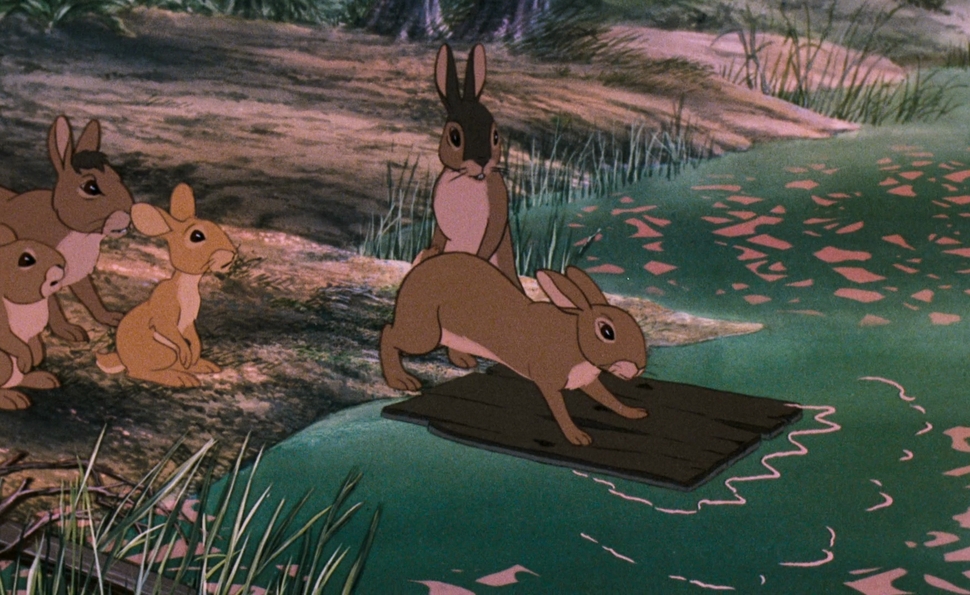
As a child, I loved Watership Down. Based on a book by Richard Adams, it was turned into an animated film in 1972. On rainy days, I kept going back to it, and my love has continued as an adult.

In Watership Down, a group of rabbits leave the only warren they have ever known to build a new burrow. They promise each other they will find a “strange and marvelous place where no one even stops to notice that you stare about you.”

Fiver, a small, stammering rabbit has profound visions. His brother, Hazel, explains them to the other rabbits and convinces them it’s time to leave. On the way, these escapees miraculously cross a great body of water, pass over a treacherous highway, lodge with suspicious friends and find terrifying enemies. But ultimately they reach their destination: an enormous, fertile hill, topped by a fruit tree. 

As an adult, I can now see that it was an allegory for the Exodus from Egypt. In fact, now that I look back, I can see how every event in Watership Down maps on somehow to a story in the Torah.

I come back to it with new eyes and realise that Watership Down made the biblical story relatable to me in a unique way. From my perspective as a child in England, I had no concept of what a desert was like and I’d never been to a Middle Eastern city.

But I knew the joy of tall trees and long grass. I knew what it was like to find the perfect hill on a warm spring day. Somehow the rabbits felt real in a way that even Moses and Miriam did not.

Don’t get me wrong. This was no pastoral idyll. Parts of the film were terrifying. Some people look back and wonder how it was even classed as suitable for children. It includes death, peril and violence between bunnies. 

But the most frightening part of all is not the journey the rabbits take. It’s Fiver’s vision of what will happen if they don’t leave. He imagines the rabbits trapped in their burrows, squeezed to death as men filled in the holes. He foresees them all being crushed in the tight confines underground. 

That is their Egypt. I don’t know whether Richard Adams had any knowledge of Judaism. In fact, I highly doubt it. But, somehow, with this image, he captured a great Jewish esoterical tradition about Egypt.

In Hebrew, the word for Egypt is Mitzrayim. The Zohar, a great medieval exploration of biblical mysticism, breaks down this word. Tzar, in Hebrew, is a narrow place. Tzarim is the plural: narrow places. The prefix ‘mi’ means ‘out of.’ Mitzrayim: “out of confined spaces.” Egypt is the narrow straits we must escape. 

Today is a special Shabbat in the liturgical calendar. This morning, we read the very last of Exodus. Tomorrow, we start the new month of Nissan.  It is called Shabbat haChodesh – the Shabbat of the Month. We leave Exodus and begin the month of the festival of Pesach, the celebration of our liberation.

That liberation does feel quite imminent to me, even if the Jewish calendar doesn’t quite match up with the government’s road map. We are on our way out of confinement and heading for open spaces.

The most profound moment on that journey for me has been getting my first dose of the vaccine. About a month ago, faith leaders were summoned by our local authorities to get the life-saving injection. 

I knew that this was not just important but felt like a holy moment. In the build up to being jabbed, I consulted with all my colleagues about what blessing I should recite when it happened. Everyone had different opinions

Some suggested we should say “rofei hacholim” – God heals the sick. Others thought the best prayer was “shehechiyanu,” the blessing that thanks God for allowing us to live to see the day. In the end, I said “hatov vehameitiv”: God is good and does God. It’s the prayer you say when something happens for your benefit and the benefit of the entire community. 

This week, Reform Judaism distributed our own liturgy for what we can see when the vaccine comes our way. Rabbi Paul Freedman has carefully compiled a single a4 document with words to recite in Hebrew and in English. 

The prayers are familiar, but the opening verses took me by surprise. Rabbi Freedman has chosen to start us off with a line from Psalm 118: 

ืžืŸ ื”ืžืฆืจ ืงืจืืชื™ ื™ื”

Out of the meitzar I called to God.

The meitzar. The thing that causes distress. The small and confined place. The thing that presses us down. 

Out of the meitzar. Out of the narrow spaces. Out of Egypt.

Yes, that is truly what receiving the vaccine means. For over a year, we have been in narrow spaces. My French colleagues even call lockdown ‘confinement.’ We have been in our homes. We have been stuck in our front line workplaces and unable to go any further. We have only seen each other in small boxes, the narrow Zoom frames on our small computer screens. These have been our Mitzrayim. 

And now, as we turn to the new month of Nissan, we can finally see a way out. Our own exodus is beginning to feel tangible. In only two weeks, we will do our seder again online, and we will tell each other that we are leaving Egypt. We will promise each other to see each other next year in person. And this time, God willing, it will be possible.

So do take your vaccine when your turn comes. The Jewish community is responding well to the call from medical experts to get immunised, and I’m thrilled every time I hear that one of you has had the jab. 

If you have doubts and want to speak to a medical professional about what it involves, just ask and I will happily put you in touch with someone.

Please don’t hesitate or wait because you think someone else might be more deserving. Our epidemiologists and ethicists all say the same thing: when the doctors say it’s your turn, take your turn. Every immunised person protects many more people in the community.

We have known confinement and narrow spaces. We have lived in Egypt. And now we have been given our own little miracle. The vaccine is a sign and wonder. With an outstretched arm, you can receive it, and thank God that you will live to see another season.

The wide expanse awaits us. Soon, like the rabbits of Watership Down, we too will congregate in open spaces. We will sit under fruit trees on perfectly verdant hills surrounded by family and friends.

Our own Promised Land is in reach.

Shabbat shalom.

judaism · sermon

Moses kept wearing a mask

This year has changed us forever.

When Moses came down Mount Sinai, his face was radiant. He had horns of light emanating from his head. 

He had, in fact, been on the precipice for 40 days and 40 nights. During that time, he did not eat food or drink water. Some say he did not sleep. What was it like for him up there? What did he see and feel during that intense period at God’s side?

The Torah only records snippets. A moment where God passed in front of his face. The midrash suggests vignettes: that Moses watched God placing crowns on the letters of the Torah and saw Jewish future. Maimonides imagines Moses acquiring true knowledge, suddenly enlightened by philosophical and scientific truth about how the world was kept in order.

But we have to speculate. It is not just because the Torah is sparse, but because whatever happened on Sinai must have defied explanation. A period of complete solitude. A time when nobody else was there to corroborate events. A time of deep spiritual introspection. Moses saw something he could not fully communicate.

So the only real evidence of Moses’s experience was how it transformed him. Set aside the commandments and the miracles, Moses himself was internally and externally changed by the experience at Sinai. Everyone could see that, from now on, Moses’s face shone with rays of light.

In Jewish terms, it has been a year since lockdown began. A year ago, I attended Leo Baeck College’s Purim party. At the start of our revelry, Principal Rabbi Dr Deborah Kahn-Harris warned that we should enjoy ourselves because it might be the last time we met for a while. I remember thinking how unnecessarily pessimistic she was being. A week and a bit later, around Shabbat Parah, the government instructed everyone to stay home except for essential travel.

Today is, once more, Shabbat Parah. Happy anniversary. 

It will be hard to explain afterwards what happened in this year. Perhaps we will remember echoes of the rituals that sustained us. Clapping for carers. Zoom services. Calls with family. But if future generations ask me what this year was like, I will struggle to give a coherent answer.

Our experiences over this last year have not been uniform. Some have shielded at home for the full year, only seeing a small circle of people, if that. Others have gone to work in essential services but nevertheless been unable to visit family. Some have had to learn how to homeschool children. Others have been prevented from meeting grandchildren. 

When we doing emerge, I suspect we will struggle to explain even to each other what this year was like. The only proof that we ever went through it will be in how we are changed.

After Sinai, Moses kept on wearing a mask. Now that Moses’ face had those shiny horns, his appearance frightened people. Even his closest relatives found it difficult to look at him. He kept hold of a special veil, which he wore at all times, and only removed to communicate with God.

I suspect we will probably do the same. We will keep wearing masks on public transport now for years to come. We will probably also maintain some of the technology to which we have become accustomed. I’m sure many synagogues will still stream services and do online study sessions long after the pandemic is over as a way to include more vulnerable members. 

But the real evidence of what we went through will be in how we are changed. And that is something we will have to decide for ourselves. 

When the lockdown began, I imagined the great societal changes that might come about as a result. Greater respect for key workers. A commitment to tackling climate change. New rights and protections for the vulnerable.

I still have hopes that those dreams will be realised. But when Moses came down the mountain, he did not only carry with him the moral law. He also brought his own metamorphosis. His shining face and altered insides. 

As the end of lockdown is in sight, I wonder how we will be different as individuals. Will be more focused on family, or more keen to befriend strangers? Will we live carefree, or with more caution? Will we focus more on community or on individuality? And now, after this year, will we feel closer to God, or further away?

Those aren’t questions anyone can answer for anyone else. They are the product of soul-searching. 

We now have a road map out of lockdown. If everything goes well, we could be back to having large gatherings again in the summer. But that doesn’t mean we will go back to being the people we were before. This year has transformed us forever.

Who we will now be we have to decide.

Only we can determine how our faces will shine.

Shabbat shalom.

This sermon is for Edgware and Hendon and Reform Synagogue on Saturday 6th March 2021, Parashat Ki Tisa.

judaism · sermon

What do Jews look like?

A woman on a train walked up to a man across the table. โ€œExcuse me,โ€ she said, โ€œbut are you Jewish?โ€

โ€œNo,โ€ replied the man.

A few minutes later the woman returned. โ€œExcuse me,โ€ she said again, โ€œare you sure youโ€™re not Jewish?โ€

โ€œIโ€™m sure,โ€ said the man.

But the woman was not convinced, and a few minutes later she approached him a third time. โ€œAre you absolutely sure youโ€™re not Jewish?โ€ she asked.

โ€œAll right, all right,โ€ the man said. โ€œYou win. Iโ€™m Jewish.โ€

โ€œThatโ€™s funny,โ€ said the woman.โ€ You donโ€™t look Jewish.โ€

This classic Jewish joke actually highlights a good question: what do Jews look like? I am often told either that I do look like one, or that I don’t, and when I ask what it isโ€ฆ nobody ever wants to tell me! Whatever the reason, people have in their minds a picture of a Jew.

As it turns out, this isn’t altogether a new thing. Indeed, this week, we read about the clothes for Aaron and his descendants of the priestly caste. They have a strict identifying uniform.

Linen headdress, sash and and robes. A metal encrusted breastplate. Ephod, urim, tumim, incense. Aaron looks holy. Aaron looks like he stands out. Aaron looksโ€ฆ Aaron looks a lot like the Tabernacle he serves.

Aaron is to dress in the same white linen that we are told covers the Holy of Holies. He is to wrap himself in yarns of crimson and turquoise, just like the sashes that decorate the sanctuary. He is framed in gold like the Tabernacle’s curtain rails. He must wear a breastplate encrusted with stones representing the twelve tribes, just as the stones were ritually placed at the major resting points of the Israelites. 

Aaron is the Tabernacle in miniature. He is a microcosmic representative of the function he serves. The clothes he wears even assist in atoning for the Israelites’ sins, just as a sacrificial altar would.

Aaron dresses like what he does. He says: I am going to do holy things, and I require holy garb to do it in.

What a contrast with the Megillah we read just yesterday. In the book of Esther, there is an initial threat to the Jews. Haman, their wicked adversary, stomps through the city and plots Jewish mass murder. But Esther, our triumphant hero, foils the plot and overturns the decision. Now, instead, her uncle Mordechai will stomp through the streets of Shushan.

The Book of Esther draws our attention especially to what Mordechai was wearing on his horseback gallivant. “Mordecai left the kingโ€™s presence in royal robes of blue and white, with a magnificent crown of gold and a mantle of fine linen and purple wool.”

What does Mordechai look like? He looks just like a Persian palace. He has the crown and clothes of a king. He has the horse of his vizier. He looks like the empire. He looks like his enemy.

Having adopted the outfit of the oppressor, Mordechai soon acts like one. Under his instruction, the Jews go off on their own rampage, killing Haman, his sons, and 75,500 of their supporters. What Haman had planned for Mordechai, Mordechai did to Haman.

In Reform Judaism, we often gloss over this awkward ending, but it is very important. Victims given power can become no different to their persecutors. Here, the Megillah wants to slap us in the face with that fact. Look, it says, Mordechai looks just like everything he set out to oppose!

There must be a lesson in this for us. If we can look holy and we can look like oppressors, we have to think carefully about how we appear. 

Perhaps, then, I am right in my decision to always wear a collared shirt and suit jacket when I come to preach on Shabbat. After all, these clothes show that I’m serious and taking the services seriously. 

Ah, but the trouble is, arms dealers, politicians and tobacco lobbyists also wear suits. Aren’t I just dressing up like them, mimicking the clothing of 21st Century professionals, and subconsciously siding with them?

Perhaps, then, I need to switch to jeans and a t shirt? Oh, those haven’t been subversive since Tony Blair got out a guitar and rebranded the country as “Cool Britannia.” Mark Zuckerberg goes to work in jeans and a t-shirt, I’d hardly be making a different point.

Maybe I should copy our friends in Gateshead. After all, if I wear a black hat, long coat and beard, nobody will doubt that I’m Jewish. The people who stumbled to tell me why I looked Jewish before will now have a very clear answer.

Only the trouble is Haredim just dress like Eastern Europeans did 300 years ago. Theirs might fit someone else’s stereotypes better, but there’s nothing more authentic about it. Besides, I’m not convinced I’d look any less oppressive to a great number of Progressive Jews.

So how do we stop ourselves looking like our oppressors? In honesty, I think a Jew only looks like our enemy when we are determining what Jews should look like. When we stereotype, we repeat prejudices. When we gatekeep people for their clothes, we play into classism and prejudice. When we set out an image of a Jew, we exclude and hurt others. Deciding who looks Jewish is the least Jewish thing we can do.

So, what does a Jew look like? Open arms. An open heart. A broad smile. Curious eyes. A face that says, welcome, you are welcome here. A Jew looks like someone who knows that Jews look like everyone. 

Shabbat shalom.

judaism · sermon

Pharaoh’s hard heart

Pharaoh had a hard heart. The Torah tells us so in many different expressions.

God says: ื•ึทืึฒื ึดึฅื™ ืึทืงึฐืฉึถืึ–ื” ืึถืชึพืœึตึฃื‘ ืคึทึผืจึฐืขึนึ‘ื”

I will harden Pharaohโ€™s heart.[1]

ื•ึทื™ึถึผื—ึฑื–ึทืงึ™ ืœึตึฃื‘ ืคึทึผืจึฐืขึนึ”ื”

Pharaohโ€™s heart stiffened.[2]

ื•ึทื™ึทึผื›ึฐื‘ึตึผึคื“ ืคึทึผืจึฐืขึนื”ึ™ ืึถืชึพืœึดื‘ึผึ”ื•ึน

Pharaoh weighted his heart.[3]

ื•ึฐืœึนืึพืฉึธืึฅืช ืœึดื‘ึผึ–ื•ึน

Pharaoh refused to concern his heart.[4]

Every time, the Torah uses a different verb: Harden, stiffen, weighted, turned away. Every time, the Torah uses a different grammatical form: passive, active, reflexive, causative.

The distinctions are so significant that their similarity can be lost in translation. English versions will tell you that Pharaoh was stubborn, indifferent, callous. They will elide that in every one of these Hebrew idioms, the common word is Pharaohโ€™s heart.

We are supposed to imagine a heart that has long been bolted shut to cut himself off from the feelings of others. In the ancient world, the heart was considered the seat of all thoughts and feelings, much in the same way as we think of the mind today. A hardened heart is one that wonโ€™t permit any thoughts or feelings but oneโ€™s own.

That was Pharaoh. That is how the Torah describes Pharaoh every time it explains why he would not let the Israelites go. Pharaoh would not let people out because he would not let people in.

Over the last year, I have come to relate to that hard-heartedness. The pandemic and lockdown have been a stressful experience. Personally, I think I have turned inwards, focusing much more on myself and my family than on others and their needs. I have looked forward, determined to get through the crises, but I have not looked around at others and made the conscious effort I should to empathise.

A heart that canโ€™t let anyone in also isnโ€™t ready to let itself out. I wonder how the last year will affect peopleโ€™s psyche. Has the last year, with its necessary focus on isolation and separation, prepared us for the hard emotional work of returning to being in community? What kinds of people will be when we emerge from this year? Will we have the empathy we need to let our people go?

This is Mental Health Shabbat. It is a time for us to reflect on the state of our hearts. We do not want our hearts to be hard, like Pharaohโ€™s. It is a time to open up our hearts, so that we can let our own feelings out, and the feelings of others in.

This was a short sermon for Friday night at Edgware and Hendon Reform Synagogue.


[1] Ex 7:3

[2] Ex 7:13

[3] Ex 8:28

[4] Ex 7:23

judaism · sermon · torah

Matchmaker, matchmaker

โ€œMatchmaker, matchmaker, make me a match. Find me a find, catch me a catch…โ€

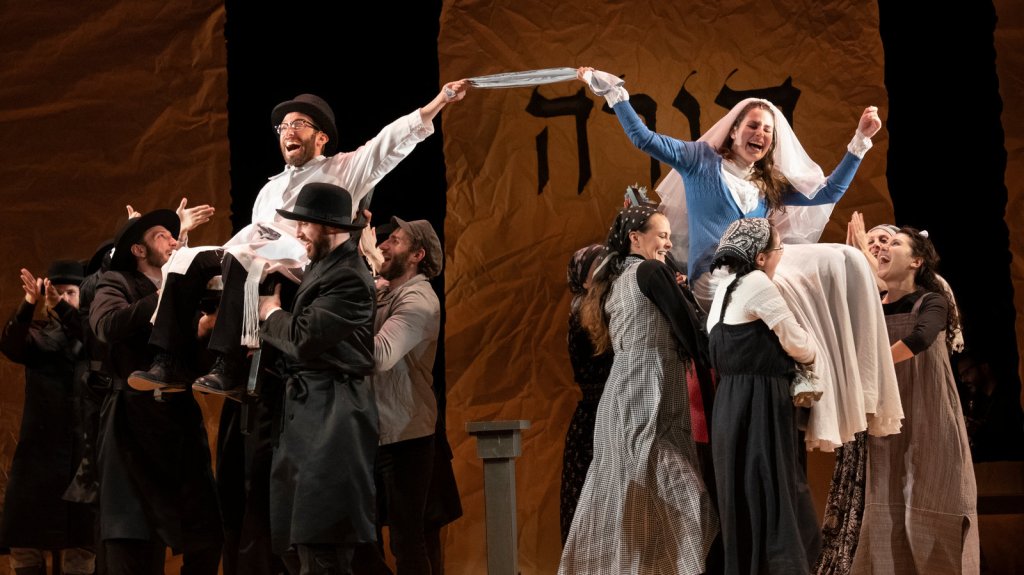
Tzeitel, Hodel and Chava joyously sing these words in their iconic scene from Fiddler on the Roof. Itโ€™s a classic musical film set in Tsarist Russia at the turn of the century, when huge upheavals are taking place throughout the Jewish world. People are moving, traditional ways of living are changing, and new ideas are coming to the fore. 

Nowhere is this difference clearer than in the confusing world of romantic relationships. According to shtetl customs, the girls would expect to be matched with their perfect partners by a shadchan, or matchmaker, and they would settle down to a quiet life of conventional piety in the kitchens while their husbands worked on making a living and reading the Talmud. So, at the start of the story, each of the girls calls upon the matchmaker – called Yenta – to find them their dream husband. They wish for someone wealthy, learned, and acceptable to their parents.

But this is a world where conventions are being upended, and fate has other plans for the lovebirds. Tzeitel, the eldest, turns down her match with the old, ugly and wealthy butcher, refusing the match made for her by the shadchan. Instead, she marries the poor and humble, but decent, tailor. Her father agonises with the betrayal of tradition, but ultimately acquiesces.

Next up is Hodel. A Torah scholar would have been lovely for a foregone era, but at the turn of the 20th Century, a Marxist radical and heretic was exactly what she craved. She falls in love with a Jewish social revolutionary, much to her fatherโ€™s dismay. A communist! Of all things. Once again, he agonises over the break with tradition, but ultimately accepts it as inevitable.

Finally, the youngest daughter finds someone completely unacceptable. A Russian Orthodox man from outside the village. Her father cannot even bear to permit a marriage to a non-Jew, so they wed in secret. The scandal it must have caused. 

What a far cry this all was from the idealised matchmaking process envisaged in this weekโ€™s parashah. The story of Rebecca and Isaac falling in love is like a classic romantic comedy from a bygone era. The star of our scene is Eliezer, Abrahamโ€™s servant, who is set by his master a major task. Isaac cannot marry a Canaanite, but must marry someone from his own tribe. She must be strong and wealthy and beautiful and kind and willing to marry Isaac of her own accord. 

Eliezer prays to God and says that the ideal woman will help him feed his camels. Well, Rebecca does far more than that. She comes down herself, despite being a noblewoman, and offers Eliezer a drink. She chastises the other women at the well for not having done the same. She calls up the water from the well effortlessly and carries gallons of that to feed Eliezerโ€™s entire caravan of camels. Oh, this Rebecca is strong and wealthy and beautiful and kind! She is exactly what Eliezer had sought after. He immediately pulls out a wedding ring for Rebecca to wear through her noseโ€ฆ

But was she willing? After all, Isaac has been pretty much a non-entity in this story so far. He hasnโ€™t even talked since Abraham tried killing him as part of a wild game of chicken with God, and seems to spend most of his time wandering about in fields looking contemplative. Yes! She puts on the ring instantly and agrees to marry him, then gets consent from her own family. 

Just a few days later they meet each other for the first time and fall in love. 

Now, isnโ€™t that how relationships are supposed to be? It might seem strange to modern ears, but those were the expectations of our ancestors. A matchmaker, like Eliezer in the Torah, or Yenta in Fiddler on the Roof, would set up a couple. They would come from similar backgrounds in terms of class, status and religion. They would often even be cousins. Their parents arranged the relationship and, once they were together, they built a home and learned to love each other. 

That world was upended with the modern era, when emancipation, urbanisation, and progressive ideals started to change peopleโ€™s expectations of relationships. In this new reality, people had choices. 

They could leave their village, practise their religion differently, decide not to practise it at all, and marry non-Jews. Women could even have opinions. Fiddler on the Roof speaks to the concerns emerging from that new reality of relationships a century ago. Today, many of those tensions still exist.

Progressive Judaism was, in part, a response to those worries. Jews could have rejected modernity and held tight to the old ways of doing things in the time of Rebecca and Isaac. Jews could have rejected Judaism and embraced modernity, leaving behind all the traditions and texts in the past. 

Or we could find a middle way, our way, that embraced modern relationships and traditional Judaism under one chuppah. This is what we have done. We have come to celebrate interfaith partnerships, second marriages, non-conformists and unusual relationships. Tzeitel, Hodel and Chava would all be able to find a home in our synagogue. 

We  are finding new ways to embrace the realities of modern relationships and families. Our synagogues today are becoming welcoming places for single parents, people who have chosen not to have children, couples who have no intention of marrying, blended step-families and a whole host of other options. It should be a point of pride that we accept people as they come, in all their diversity.

Yet something is making a comeback that would have surprised the cast of Fiddler, and even a previous generation of Progressive Jews. Matchmaking is on the way into fashion. Yes, the matchmaker, matchmaker is back. The majority of people meet their partners because they are introduced by friends or coworkers, like Yelta and Eliezer of the past. The role of families in matchmaking may have declined, but the practice itself continues.

Personally, Iโ€™m thrilled about this development. I love matchmaking. There is an old superstition that someone who matches three couples will merit a place in the World to Come, and I boast that I can sin as much as I like now.

When the first national lockdown began, I worked with my housemate to put together a โ€˜Love is Blindโ€™ matchmaking experiment, where we paired people up based purely on personality, without them getting to see each other. Nearly a year later, one of our matches is still a couple going strong. As the new national lockdown begins, weโ€™re doing the same enterprise again; this time introducing people for dates via Zoom.

Itโ€™s just a bit of fun to help our friends pass the time, but it tells us something important about relationships in the 21st Century. Of course, modern matchmaking has to celebrate relationships in all their diversity. The old model of putting together a man and a woman to make babies doesnโ€™t fit anymore. One of the reasons matchmaking fell out of fashion was that that style of connecting people was coercive and stifling.

But we can still connect people, if we do away with the prejudices of the past. Modern matchmaking takes a proudly pro-LGBT stance, reveling in our community’s gender and sexual diversity. Equally, the people we match often donโ€™t expect to find the right person on their first date, and are just as interested in finding friends or casual flings. The idea of a bashert – a single partner who will fulfill someoneโ€™s needs for life – is no longer so significant to people.ย 

Society has already adapted to that change. Iโ€™m sure that Progressive Judaism will find ways of doing the same. Ultimately, what we most want to retain is that people can be loved and accepted, no matter how they choose to live. With that in mind, let us continue to find new ways to celebrate people and the relationships they have. That is the true Jewish tradition.

I gave this sermon on 14 November 2020 for Parashat Chayyei Sarah at Newcastle Reform Synagogue.

judaism · sermon · theology

Abraham and the Paradox of Jewish Evangelism

A priest, a monk and a rabbi are debating which of their religions is the correct one. They decide to settle it with a contest to convert a bear to their religion.

The rabbi tries first. Two days later, the priest and the monk end up visiting him in the hospital.

The rabbi says: “OK, maybe I shouldn’t have begun with circumcision.”

Letโ€™s set aside the foreskin jokes, because I donโ€™t think the rabbi would have had much better luck with a lady bear. Isnโ€™t it a strange fact of our religion that we almost never set out to proselytise?

We, of course, welcome all sincere converts, and this synagogue is happy to encourage anyone on their spiritual journey. But you wonโ€™t find us outside Asda, handing out flyers with words from the Mishnah. And you certainly wonโ€™t turn on your TV to see a rabbinic televangelist warning you about the perils of pork.

But if you think you have stumbled upon spiritual knowledge, donโ€™t you want to share it with the world? Who are we to zealously guard the secrets of the universe?

Even if you take a more humble approach to Judaismโ€™s teachings, and think theyโ€™re just as good as any other peopleโ€™s, there must be something particularly worthwhile about Judaism for you to log in to this morningโ€™s service rather than watching Bargain Hunt. (Wait, donโ€™t go, I promise this is going somewhere!)

That strange paradox of Judaism – that we have a universal truth but donโ€™t seek to spread it – is encapsulated in the story of Abraham.

This week, God tells Abraham: โ€œGo out by yourself. I will make your name great and you shall be a blessing.โ€[1]

Then, in the next two verses, as if a parallel to the first, God says: โ€œAll the families of the earth shall be blessed by you.โ€ Then Abraham goes out with Lot and Sarah.[2]

Soโ€ฆ does Abraham go out to bless himself or does he go out to bless others? Which is it?

This is the great tension in Judaism. Do we exist only for Jews? If so, why are we trying to change the world? Or do we exist for humanity? In which case, why arenโ€™t we trying to make everyone Jews?

Our midrash plays with this tension. Bereishit Rabbah, a collection of rabbinic explorations of Genesis, contains an unusual parable. In it, Rabbi Berekhyah compares Abraham to a tightly sealed bottle of perfume. The bottle was left in the corner and nobody smelt it. As soon as it was moved, its fragrance was emitted. This, says our midrash, is what it was like when God told Abraham to go out from place to place and make his name great in the world.[3]

Makes perfect sense, right? No? Fine, letโ€™s unpack it.

Abraham is a tightly closed bottle of perfume when he starts out in Haran. At this stage, Abraham has encountered God. Abraham has realised that the idols amount to nothing and the Creator of the Universe is a singular and invisible presence. He is somehow pure and untouched. The Pagans have not affected his beliefs, and he has not affected theirs. He is hermetically sealed.

Then God tells him to lech lecha – to go out. Abraham moves around out from Haran and down to Shchem and Beโ€™ersheva in the land of Canaan. As he moves between these places, others get to smell him. They encounter the truth that Abraham has learned about ethical monotheism. God is one and just! Now everywhere he goes people can get a whiff of this knowledge.

Only thereโ€™s another problem. Bottles of perfume donโ€™t emit their scent because you move them. They only work when you open them. In this analogy, the balsamic bottle that is Abraham still remains sealed. How is he spreading his fragrances everywhere if he hasnโ€™t even opened up?

I donโ€™t think the editors of our midrash have made some mistake. I think they are telling us something profound about the Jewish paradox. We have a truth that we want others to know and yet we donโ€™t want to convert anyone. Our role as a light unto the nations is that we go from place to place, showing others who we are, but not changing anything about who they are. We are still Abraham, that sealed bottle, going out from Haran, somehow expecting others to smell our perfumes but not opening up wide to spread our scent.

The very word โ€œevangelismโ€ is a Greek one, meaning good news, referring to the Christian Gospels. The early Church actively went out on recruitment drives, telling people about Jesus and his message. We have no such good news to share. What would we say to people? โ€œRejoice! God has commanded you to pursue justice and only eat unleavened bread in the springtime!โ€ Jewish evangelism seems somehow a contradiction in terms.

And yet we do go out and share our beliefs. We are happy to expound our Torah to anyone. We expect to transform the societies we are in. When we speak out for justice wherever we live, we are very much hoping that others will take note of our concern for the stranger and adjust their actions accordingly. How can we reconcile this desire to change others with our lack of desire to convert them?

Perhaps the problem isnโ€™t perfume metaphors and paradoxes. Maybe the issue is how we understand Judaismโ€™s mission. Abraham wasnโ€™t sent out to turn others into Jews. Abraham was sent out to be a Jew.

Abraham had to go out and be different, to hold a truth that no one else held. Even when he passes it on to his children, they each hold a different truth. Isaac becomes the founder of our Judaism. Ishmael becomes the founder of Islam. They go out holding different truths, both contradictory and complementary. Abraham’s revelation of God’s unity is a realisation that this universal God can never be captured by one person in a single truth.

Abrahamโ€™s mission wasnโ€™t to make everyone Jews. It was to enable everyone to be themselves. It was that all these other nations could celebrate their differences, just as Abraham loved his own.

That is our task today. We don’t say to the nations: “we want you all to be Jews.” We say: “we want you all to be you.”

We are models of difference in a society where we are not a majority and in a world where we are not dominant. Our role is to show how to conduct that uniqueness in a way that demonstrates dignity.

This is our evangelism. That is the truth we hold and that we want to share. That difference is a wonderful and treasured thing. From our differences, we are blessed. And in our differences, we bless each other.

So go out from Haran and share that sacred truth. And donโ€™t worry – you donโ€™t need to go circumcising bears.

This sermon is for Parashat Lech Lecha. I will give this sermon on Saturday morning 31st October 2020 at Newcastle Reform Synagogue, and a shortened version the night before for Edgware and Hendon Reform Synagogue.


[1] Gen 12:1-2

[2] Gen 12:3-5

[3] Ber Rab 39:2

festivals · judaism · sermon

How to survive the rainy season

Reb Zalman Schachter-Shalomi was a Hassidic rabbi who left behind his Orthodox community to join the American hippies in the 1960s. He wound up founding the Renewal Movement, combining traditional Judaism with New Age meditation and spirituality.

He used to tell this story of an encounter he had with Brother Rufus, a Native American medicine man. Reb Zalman and Brother Rufus were attending a conference of psychologists and mystics; the psychologists were studying the mystics. As Reb Zalman was explaining the Jewish festival of Sukkot, which occurs at the autumn equinox, and the holiday of Pesach, which comes at the spring equinox, Brother Rufus lit up! โ€œOh,โ€ he said, โ€œin the autumn you teach your children the shelter survival, and in the spring you teach them the food survival.โ€

This answer makes a lot of sense of what Sukkot is actually about. Disconnected from the rural desert living of our ancient ancestors, the practice of erecting temporary shelters and covering them in fertility talismans might seem incomprehensible. But for those who are connected to the earthโ€™s agricultural cycles, Sukkot makes a lot of sense. Itโ€™s about learning to survive the rainy season.

The Torah portion commands us to spend eight days in temporary shelters to recall our wandering in the wilderness. For the ancient Israelites, this probably wasnโ€™t just recollection of a mythic past. In a world where entire years could be upended by flash flooding, droughts and unexpected ecological malfunction, being able to move must have been a necessity. Any young person would need to know how to build shelter and brave the elements. Considered in this light, Sukkot feels more like a biblical precursor to Scouts and Guides.

By the time of the Mishnah, Jews had migrated away from nomadic agricultural living towards inhabiting larger settlements and cities. Yet even this 2nd Century text seems to capture something of the necessity of surviving the rainy season. It talks about which building materials and supporting structures are appropriate. It instructs us to make sure there are holes in our roof – a sure indicator that weโ€™ll really experience everything the Heavens can throw at us. The Mishnah maintains the survival lessons.

And then, suddenly, the Mishnah seems to strike an altogether different note. Out of nowhere, it tells us about all the different ways to conclude the festival celebrations. The text stops being about surviving and starts being about how to be joyful. Harps, lyres, cymbals and trumpets. Psalms and songs and dancing. Shofar blasts. Meat. Banqueting. Carnival. In fact, the Mishnah tells us: โ€œif you havenโ€™t seen a party like this, youโ€™ve never seen joy before in your life.โ€

Why would the Mishnah jump from teaching us the survival methods of our ancestors to talking about all this revelry? Perhaps the answer is that theyโ€™re not so distinct after all. Joy isnโ€™t an add-on to survival: itโ€™s integral to it. If you really want to get through the rainy seasons and the darkness of winter, youโ€™ve got to have the right mindset. Cosy homes and well-stocked cupboards matter a lot, but attitude counts too.

The health psychologist Kari Leibowitz reckons she can back this up with science. She studied the mental health of people living in the polar regions of Norway, when winter brings exceedingly long nights and disrupted sleep patterns. Amazingly, she found that Norwegians were just as happy in the winter as at any other time of year. This was because many Norwegians approached the long nights as a challenge that excited them. The more people saw winter as a fun time, the more fun they actually found it.

Maybe thatโ€™s what our forebears of Torah and Mishnah knew from years of experience. If you want to get through the rainy season, you have to actually want the rain to come. You have to be a little bit thrilled by the idea. Surviving is not just about keeping our bodies intact – itโ€™s about having mental determination to get through. 

Some of that is about what you imagine when you think of the rainy months. Iโ€™ve already started picturing hot chocolates, roast vegetables, games of Scrabble and complicated jigsaw puzzles. Iโ€™m imagining arts and crafts while sitting under piles of rugs with the baby in a handmade jumper. 

Of course, not everybody has access to the luxuries Iโ€™m describing. Some people are legitimately worried that autumn could bring tighter finances, struggles heating their houses and even homelessness as recession kicks in. These are serious issues, and itโ€™s not fair to expect people facing such challenges to feel joy. So why not start easing their minds now?

Our food banks, mutual aid societies and housing shelters need your support. Get down now to donate what you can, and give what you can through their websites. If you want to practice feeling joy, helping others is a great way to start. 

So thatโ€™s how weโ€™re going to survive the rainy months. By knowing our history. By learning traditional skills. By experiencing joy. By helping each other. 

After all, thereโ€™s only one way we can get through all this: together.

I gave this sermon for Sukkot 5781 on 3rd October 2020 at Newcastle Reform Synagogue.

festivals · high holy days · judaism

A journey through time

Sermonettes for Rosh Hashanah

This year is unlike every other in so many ways. In order to keep people engaged with the services, I delivered sermonettes between prayers, as two-minute reflections on the meaning of the festival. The seven drashes for Rosh Hashanah 5781 follow.

  1. On breathing

How wonderful are Jacobโ€™s dwelling places! How good it is for us here, where for the first time in living memory, we are not all gathered in one place but we are all in each otherโ€™s tents. This whole community has gathered together in dispersed places. And although we are distant, we are somehow together. We are with each other, in our living rooms.

This is, of course, not a normal New Year, and this is not the usual format. Rather than preach at you uninterrupted for twenty minutes, this morning I am simply going to guide you through the service. At each stage, I will offer little sermonettes explaining our purpose here today.[1] Welcome, and thank you so much for coming on this journey.

Jewish liturgy takes us on a journey through time. Each service is a journey from primordial history through the present towards the ultimate redemption of humanity. The Jewish High Holy Days take us on a journey from the creation of humanity towards the Messianic Age.

And today – today, right now – is where it all begins. On the seventh day of creation, at this precise time in history, the first human being was created. The Holy One breathed air into Adamโ€™s nostrils and that wind became his soul.[2] So, too, was his wife called Chava. Chava – Eve – literally means breath. She is both breath and life. We are here with Adam and Eve at the dawning of humanity once more.

Rabbi Zahavit Shalev taught us that every night when you go to sleep, your soul disappears and returns to God. Then, when you wake up in the morning, God returns your soul to you so that you can breathe alive once again.[3] As we wake, we say to God: โ€œthank you, Sacred Name everlasting, that you have returned my soul to me in compassion, unending is your faith.โ€[4] We are here at the beginning of a day at the beginning of time, grateful to be alive.

Right now, you are Adam. You are Eve. You are the first person rising up on the first day, breathing for the first time, saying to God: โ€œthis soul that you have placed inside of me is pure.โ€

[1] Everything about these sermonettes I owe to my teacher, Dr. Jeremy Schonfield

[2] Genesis 2:7

[3] From her rabbinic dissertation on sleep

[4] Modeh Ani, Forms of Prayer 2008, p. 18

* * *

2. On taking responsibility

Eight days after a baby is born, it becomes liable for its first commandment.

By ten days, it has been named, or washed, or circumcised. It ceases to be an embryo and takes on its first responsibilities of being Jewish. It realises that being human is a blessing and a privilege, and that it must honour the duties that come with that.

Ten days after we are created on Rosh Hashanah, we come into contact with Yom Kippur. We are forced to inspect our lives and accept that we are responsible. We take on the commandments laid down to us by God. We accept that we are not just flesh and bones, but living spirits with moral responsibilities.

Ten generations after Adam came Noah,[1] who learned that people could fail in their responsibilities. Ten generations after Noah came Abraham,[2] who realised how painful keeping promises could be. Abraham, we read today, was called upon by God to head up Mount Moriah and sacrifice his youngest son. Abraham encountered God and learned that this came with reward, but came with responsibility too.

Ten minutes after we wake up, we are faced with our obligations. Having thanked God for our souls, we return our debt of gratitude by doing the most important commandment that has been given to us. We study.[3]

You are here. A ten day old baby. Abraham receiving Godโ€™s call. A full human being, learning that you are responsible. Learning that you must learn.

[1] Genesis 5

[2] Genesis 10

[3] New Forms of Prayer Draft Liturgy, p. 32

* * *

3. On ancestors

The Amidah is a journey within a journey. It begins with Abraham and Sarah and ends with King David building Jerusalem. When we begin this voyage in time, we cast our minds back to our ancestors. We remember Sarahโ€™s hospitality; Rebeccaโ€™s generosity; Rachelโ€™s patience and Leahโ€™s humility.

Amidah means standing. It is the standing prayer, and we are literally standing in their footsteps. We are here because of our ancestors. Generations of human beings from hunter-gatherers to the creators of our modern industrial cities have brought us to this moment.

And we, as Jews, are here as Jews, because of every other Jew. For thousands of years, people have put their feet together on this day at this time of year and recited these words. By showing up today, we have kept that tradition going. We are another link in the chain.

Over time, we have come to do things differently. Spontaneous prayer gave way to memorised blessings, which gave way to words written on scrolls, which became prayer books with the advent of the printing press, that we can now see on computer screens in front of us.

Although the medium has changed, the message has not. Ethical monotheism. Judaismโ€™s mission of doing justice in the name of the One God. We stand in the footprints left by ancient prophets, affirming the faith they once held.

* * *

4. On being yourself

Stop. Breathe. Take a moment. Shut your eyes.

Feel your breath rising and falling. Donโ€™t try to force it. Just notice how you inhale and exhale. Pay attention to your nose, chest, lungs, shoulders, mouth. Feel the breath coming in and out of it.

When we began this journey through time, you acknowledged that the soul within you was pure. That is your natural state. Good. Honest. Righteous. Beautiful. That is who you are.

When you looked back over your ancestors, you remembered their piety. Of course, they made mistakes, but it is their goodness that has endured. So will it be with you.

You not only have ancestors. You are an ancestor. You are leaving your own tracks in the sand. What you put into the world now will stay long after you are gone.

Breathe. Contemplate. What do you want to leave behind?

Breathe. Remember. Who are you, deep down?

Breathe. Know that you are loved and lovable and able to love. Make the conscious choice to fill the world with the best of who you are.

Open your eyes. Open your lips. Pray that you may become who you are.

* * *

5. On being vulnerable

The service is reaching its apex. When we started, it was summer. Suddenly, you look around and see that autumn is coming. We are at the turning point of the year, when green leaves turn brown and Elulโ€™s rays give way to Tishreiโ€™s rains. We will change our blessings. Soon we will stop asking God for dew and start requesting fertile rains. We have journeyed through the seasons.

You are older now than when this service began. Yes, an hour and a half  has passed, and with it you have learnt more about who you are and who you want to be.

You are spiritually older, too. You have been Adam, Eve, Abraham, Sarah, Rachel, David. And now, you have grown enough that you can finally be you. You can find yourself exactly as you are, vulnerable and exposed. You can be present in this mortal body.

Your body is mortal. This year has brought home for many of us how fragile health can be. We have asked God to make peace for us as it is in Heaven. We ask God now for healing. We accept that our bodies are frail. Souls need plenty of sustenance. As individuals, as Jews, as humanity, we pray for Godโ€™s sacred restitution.

* * *

6. On the messianic future

The future awaits us!

The shofar is a herald for many things, but above all it was once used as a siren to announce that a dignitary was coming. When kings and queens approached a town, the shofar would sound to announce their arrival. That sound alerted the villagers to prepare their banquets and make a welcome party.

This section of the shofar service is called malchuyot. It shares its root with melech – king; malkah – queen; malchut – sovereignty. It means royalties. This is the time of our acknowledgement of Godโ€™s supremacy over all.[1] It is a reminder that the day will eventually come when everyone will understand Godโ€™s unity.

We sound the shofar and announce that the Ultimate Sovereign is coming. God is on the way.

When compiling the liturgy in the 3rd Century, Rav ordained that within this section we would recite โ€˜aleinuโ€™ – the prayer affirming Godโ€™s majesty and our messianic future. It speaks of the coming day when all humanity will be united by a single God.

As progressive Jews, we understand this not as Davidic kingship or nationalist aspirations for supremacy, but as the coming of an age of peace and justice. We look forward to a utopian future in which all struggles are brought to an end, replaced by enduring joy. And we accept that it is our responsibility to bring about that perfect society.

[1] Babylonian Talmud Rosh Hashanah 16a

* * *

7. On today

You have been young and old. You have been the first human being and witnessed humanityโ€™s ultimate redemption. You have breathed so many cycles, taking advantage of the beautiful soul placed within you. And now, having been through all of this, having seen time from every angle, all you are left with is today.

Today.

Rabbi Joshua ben Levi once met Elijah. He asked him: when will the messiah come? Elijah said: โ€œThe Messiah is at the gates of Rome, sitting among the poor, the sick and wretched. Like them, he changes the bindings of his wounds, but does so one wound at the time, in order to be ready at a moment’s notice.”

Rabbi Joshua went out to the gates of Rome, and lo and behold, he found the Messiah sitting there, tending to his wounds. Rabbi Joshua said to the Messiah: โ€œWhen will you be coming?โ€ The Messiah looked up and joyously answered: โ€œToday!โ€

The next day, Rabbi Joshua went back to Elijah and complained: โ€œThe Messiah lied to me. He said he was coming today and did not.โ€ Elijah replied: โ€œHe said he would be coming today, if only you would hear his voice.โ€[1]

Olam haba zeh olam hazeh. The world to come is the world we are in.

We are here today with nothing but the present. Whatever the past and future might hold, this moment is sacred. And so we call on God – hayom teamtzeinu. Give us strength today. Give us blessing today. Remember us for life today. Amen.

[1] Babylonian Talmud Sanhedrin 98a

festivals · high holy days · judaism

Spiritual Dialectics

Sermonettes for Erev Rosh Hashanah

This year is unlike every other in so many ways. In order to keep people engaged with the services, I am delivering sermonettes between prayers, as two-minute reflections on the meaning of the festival. The four drashes for Erev Rosh Hashanah 5781 follow.

  1. On lighting candles

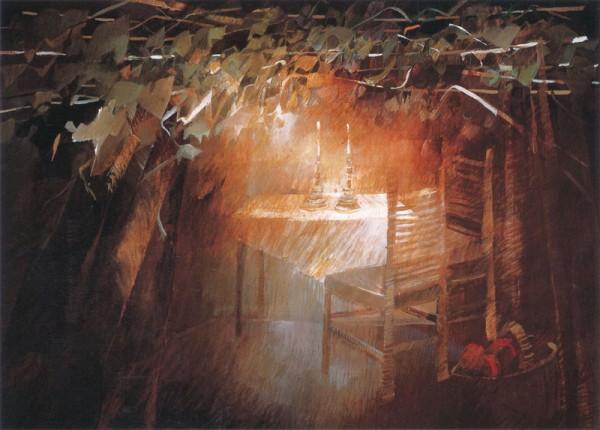
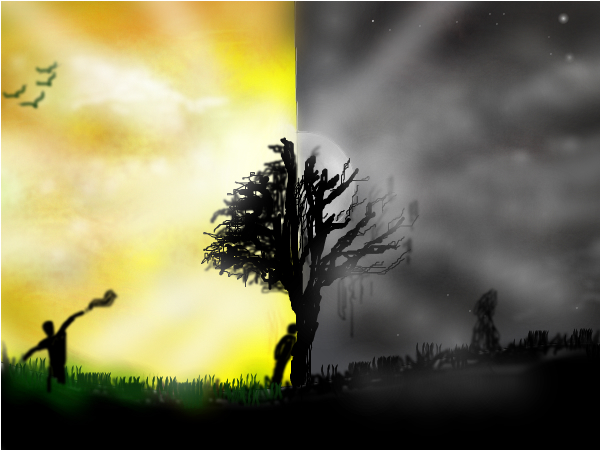
The world stands balanced between darkness and light. Just as the day comes, night will surely follow. And when night falls on a night like tonight, on a holy night, we light a candle.[1]

Adam was afraid of the dark. When the first human being witnessed the sun start to fall on his first evening on the planet, he cried out because he thought the sun would never return and the darkness marked his death. Throughout the night, he and Eve cried, until dawn came, and he realised that God had made day to follow night.[2]

As night falls, we too can feel fear. But we know something that Adam did not. We know that the day will come. We know that even in the midst of utmost darkness, light will surely come.

This year, celebrating Rosh Hashanah may inevitably feel bittersweet. We are dipping our apples in a honey that has tasted pandemic and economic collapse. Many of us are facing uncertainty about our health, finances and relationships. It is natural that we should wonder how much we can go on.

But by coming here tonight, we affirm that we will go on. We remember the thousands of years we endured since the first human being looked upon the first night sky. We acknowledge that we do not only pray that day will come, but that we can work to bring on the day.[3] And we know that no matter how dark it may seem, we can always light a candle.

[1] New Forms of Prayer Draft Liturgy, p. 19

[2] Babylonian Talmud Avodah Zarah 8a

[3] Yaakov Roblit, Shir laShalom

* * *

2. On the holiness of hope

โ€œYouโ€™ve got to have hope. To some people the only thing they have to look forward to is hope.โ€ These were the words of Harvey Milk, a gay Jewish immigrant in California; an activist who transformed politics in defence of minorities. As he sought election to office, he told his captive audience: โ€œYou have to give them hope.  Hope for a better world. Hope for a better tomorrow. Hope that all will be alright.โ€

And it wasnโ€™t alright for Harvey Milk, who was assassinated 40 years ago. But it was alright for many others. Because of his fight, I grew up in a better world than I otherwise would have done. Because of the sacrifices he made, I live in a world that gay people of the past could only have imagined. And Iโ€™ll be damned if Iโ€™m going to give up hope now.

We are all here because of the optimism of previous generations. The immigrants who packed their bags, believing they could make a better life here. The survivors who made it through the camps because they had the strength of will. The feminists who insisted that women had a place in the synagogue, not just as spectators but as leaders. Every Jew who decided that showing up was  worthwhile and kept the faith of our people alive through the centuries. We owe it to them, and to the generations who will follow us, to keep hope alive.

The psalm that Howard and Fiona just read for us teaches: โ€œWhen the wicked flourish, they are only like grass […] but the righteous shall flourish like a palm tree, growing tall like a cedar in Lebanon. Even in old age, they will bear new fruit and shine green in the courtyards of our God.โ€[1] Remember this. Remember that the wickedness we see in the world is only grass that will wither, but that righteousness plants firm roots in the soil and refuses to be moved.

Know that just as we live in the dialectic of night and day, so too do we live in an unending struggle between right and wrong. As Jews, we will hold on to our faith in what is right. And in pursuit of it, we will remind the world of the holiness of hope.

[1] Psalm 92, excerpted and adapted

* * *

3. On blessing the new moon

There was a time in King Solomonโ€™s life when he was given over to nihilism. He wrote Qohelet, the book of Ecclesiastes, in which he declared: โ€œEverything is vanity.โ€ He said of laughter, โ€œIt is mad,โ€ and of pleasure, โ€œWhat use is it?โ€[1]

His advisers tried to console him, but Solomon only retorted with a challenge: โ€œtell me something that will always be true.โ€ Many days and weeks passed, but no one could respond. One day, a jeweller came in holding up a ring. On it, she had engraved three words: ื’ื ื–ื” ื™ืขื‘ื•ืจ – this too shall pass.

Yes, the only certainty is change. We recite hashkiveinu – cause us to lie down and let us rise up to life renewed.[2] We go to sleep only to wake up. We wake up, and we go to sleep. We live in this constant cycle.

In a moment, we will recite the blessing for the new moon. The moon, like us, like life, exists in a constant state of flux. It waxes only to wane and fills out only to diminish again. Note that is not the full moon we bless, when the night sky is brightest and the moon appears most whole. It is the new one, when only a slither hangs in the night sky, promising only potential.

When the rabbis blessed the moon, they used to gaze up at it and say: โ€œDavid, king of Israel, long may he live.โ€[3] David was, of course, long dead. He, the father of Solomon, was for them the prototype of the messianic age. He represented an imaginary perfect society of the past. And he stood in as the harbinger of the future utopia. We do not live yet in a perfected world, but we can look up at the sky and see the moon as our model. Just as the moon starts out as a tiny crescent and expands to its fullest form, we too can live in the darkest of times and know that completeness will follow. Whatever this pandemic throws at us, we know that it will pass, and a brighter future awaits us.

[1] Ecclesiastes 2:1-2

[2] New Forms of Prayer Draft Liturgy, p. 53

[3] Babylonian Talmud Rosh Hashanah 25a

* * *

4. On sickness and health

We live in the balance between sweet and bitter; darkness and light; completion and absence; justice and iniquity. Above all, this year, we live in the balance between sickness and health.

Let us take time to reflect on sickness. On all those who have died of Covid. The 40,000 who died in the UK and over 900,000 who have died worldwide. We think of all those who have survived Covid but still live with its scars – those who still have trouble walking, breathing and carrying out daily activities. We think of all those suffering with sicknesses unrelated to the pandemic, often marginalised and ignored. We contemplate the mental health of everyone in our society, as we face anxiety, depression and trauma. We pray for everyone whose bodies, minds and spirits need healing.

But in the dialectic of health, we are also able to celebrate the vitality we still possess. We show joy at all those who are alive. We are grateful that we who sit here tonight are counted among them. We can think of the community we have built, the solidarity we have engendered and the strength we have found in each other. Let us pray, then, not only that we will be healed, but that we will be active in helping others to heal.