judaism · sermon

Are Jews a religion or a race?

At present, Reform and Liberal Judaism are deciding whether to become a single movement. You will be able to vote on this, and I encourage you to do so. 

As the procedural questions unfold, it is hard to imagine how strongly felt the ideological divisions were between the two movements, even forty years ago. I believe, however, that those differences are now almost entirely within the movements, rather than between them. 

On some fronts, we will find unity, and on others, differences will remain.

There is one point, however, which, to me, is so intrinsic to Liberal thought that I could not stand it to see it lost. That is: there is no such thing as a Jewish race.

There is no such thing as Jewish blood, as a Jewish womb, as Jewish DNA, or as Jewish features.

It is precisely because our Liberal tradition teaches that there is no Jewish race that we have been able to fully embrace converts and, from the very beginning, accepted patrilineal Jews. 

These ideas were critical stumbling-blocks to merger attempts in previous decades. Reform Judaism would not accept patrilineal Jews, and insisted that converts went and were reborn from the “Jewish womb” of a mikvah.

In the past few years, Reform Judaism has come to accept patrilineal Jews, and Liberal Judaism has come to accept that the mikvah can be a meaningful ritual.

Yet not everyone has come to accept the underlying ideology that made these matters so central to Liberal Judaism. The originators of our movement saw Judaism as a religious community, where Jewishness was communicated socially, not “biologically.”

That is no longer a sectarian issue. There are Reform rabbis who ardently agree on this point; and there are Liberals who, instead of denying any racial Jewishness, focus on being “inclusive” about who belongs.

Rejecting the idea of a Jewish race was absolutely foundational to early Liberal thinkers. Regardless of whatever new ideas emerge as rabbis come together, I intend to hold doggedly to their understanding of Jewishness.

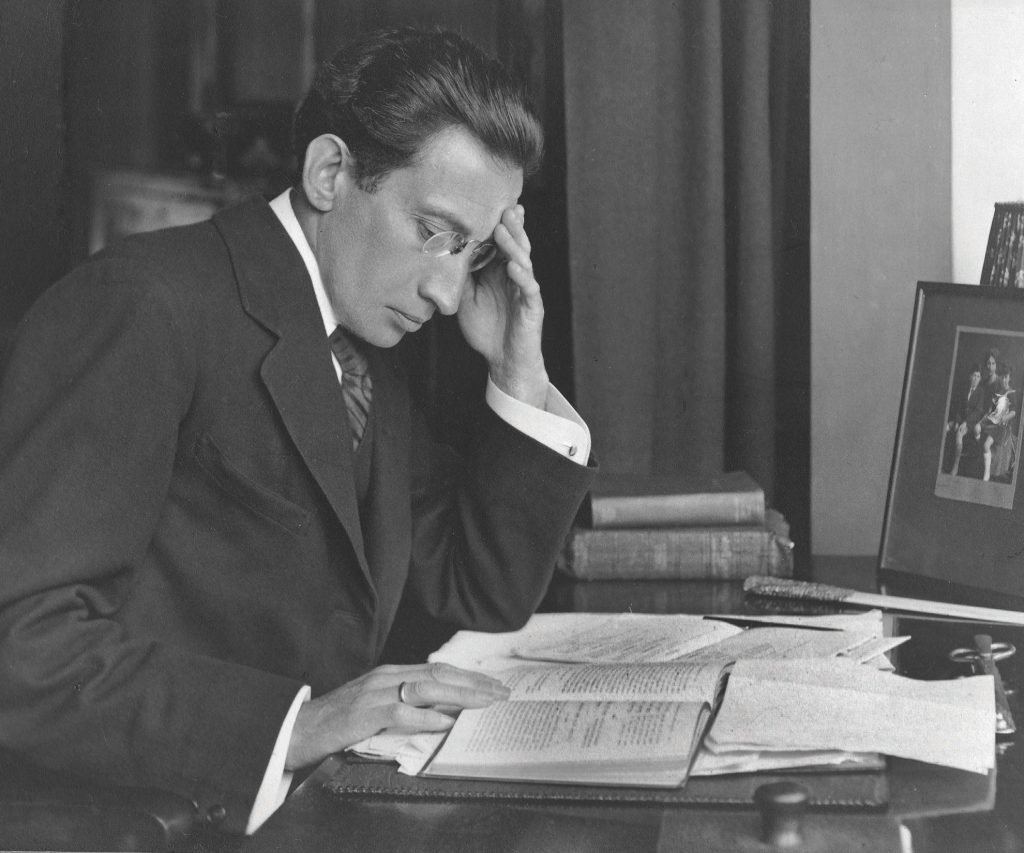
Israel Mattuck was the first Liberal rabbi in the UK. In 1911, he was recruited by Lily Montagu and Claude Montefiore from America to lead the Liberal Jewish Synagogue in St John’s Wood. He was a prolific preacher, ideologue, and scholar.

At the LJS, Dr Mattuck taught a Confirmation class, for 16-year-olds affirming their faith. He later took his notes and turned them into a book, entitled Essentials of Liberal Judaism so that everyone would know what he thought it meant to be a Jew.

Jews, he insisted, were not a race, but spanned the globe. What made people  Jewish was that they held Jewish ideas, followed a Jewish way of life, and kept Jewish observances. 

He wrote: “In spite of all the differences among them, the Jews of the world constitute a people; but they are a people in a different sense from any other people. Their unity is based on religion and history.”

Editing in 1947, Mattuck was eager to avoid any misconceptions. He insisted that this history was not an unbroken tale of misery and persecution, but one of great spiritual achievements. We were, he said, the first witnesses to God’s unity through the revelation at Sinai. Our history was that of the prophets, the priests, the scholars, the mystics, and all those who sought to reach closer to religious truth. 

Mattuck was clear that you could not be Jewish in anything more than name if you rested on race. You want to be a Jew? Walk humbly with God, taught Rabbi Mattuck from the prophet Micah. 

There is no race – only a demand to live right.

Now, you may be thinking, this all sounds a lot like the Critical Race Theory that Mr Trump so zealously warned us about. Indeed it is! And the American President has good reason to fear people taking a critical approach to race.

In the USA, races were invented to divide and rule people so that the wealthy whites could maintain their plantation economy. Poor whites were incentivised to enforce and uphold slavery by being given some privileges on the basis of their skin colour.

As a result, they felt they could identify with the rich whites, even though they had very little in common with them socially or economically. Using racism, they demeaned and humiliated the stolen Africans so that they would not have the confidence to challenge their own condition.

That is why race-critical scholars in America have the slogan: “race exists because of racism, not the other way round.”

In Race: A Theological Account, the African-American scholar of religion J. Kameron Carter shows how racist ideology had earlier roots – in how European Christians treated Jews. 

To create a system where Jews were second-class citizens, they needed an ideology where Jews were defective human beings. So they made up stories about Jewish bodies, Jewish blood, Jewish noses and hair – even Jewish horns – to justify their system of oppression. It was a nasty division for the purposes of exploitation.

This was exactly why Mattuck was so resistant to talk of Jews as a race, and so adamant about our religion.

In 1939, Mattuck wrote his first major work, What are the Jews?, which was a harsh rebuttal, not only to Jewish racial nationalism, but to racial nationalism as such.

We belong everywhere, he asserted. In the Age of Enlightenment, all citizenship should be communicated on civic grounds, never on ethnic or religious ones. 

A Jew, he felt, could be a nationalist, but they must first adhere to the religious calling. That is: they could be Jewish and happen to have nationalist leanings, but it could not define them as Jewish. 

Nevertheless, he thought that, by properly conceiving of ourselves as a religion, we would be more likely drawn to universal ethics. We would measure our Jewishness by our conduct towards others and our connection with our God, rather than by the supposed quality of our genetic make-up. We could pull apart the stories that separated people and build common bonds.

Racial thinking, thought Mattuck, must be resisted.

Race is a horrible and divisive lie. Religion is a beautiful and unifying truth.

I want to be open about why this idea is hard for others to hold.

It is more demanding. It says that nobody can take their Jewishness for granted, and must work for it. It means that you cannot be “born” Jewish, but have to live Jewish. It sets high ethical and practical demands on anyone who claims Jewishness.

When we say that there is no Jewish race, we also mean that somebody with an unbroken chain of matrilineal descent but without any Jewish upbringing or identity must also learn how to be Jewish, in the same way as a patrilineal Jew would. Everyone has to properly engage with the traditions and practices. Contrary to the doctrine of inclusion, this makes us more exclusive than the Orthodox.

Denying the existence of a Jewish race also has profound implications for how we engage with Israel. If we are a religious community, the demand to achieve a Jewish ethnic majority – still less racial supremacy – is not just grotesque. It is absurd. The measure of whether the state was sufficiently Jewish would not be by how many Jews there were, but by how well it upheld Jewish moral values.

Yet it is precisely because of this more demanding approach to Jewishness that I will keep holding onto it. The call that we be moral in our dealings, conscientious in our practices, and connected with our traditions is a far better one than the narrow pull of racial nationalism. 

Through such a religion, we may connect to every other Jew in a spirit of solidarity.

Through religion, we may connect to all of humanity, by recognising our shared Creator.

Through religion, we may draw nearer to the mystery that is our God.

Through religion, we may live out the words of our haftarah: “For you who revere My Name, the sunbeams of righteousness will rise, with healing in their wings. Then you will go forth and skip about like calves from the stall.”

Shabbat shalom.

judaism · sermon · torah

Who created the Jews?

One day, word came to Joseph, “Your father is failing rapidly.” So Joseph went to visit his father, and he took with him his two sons, Manasseh and Ephraim.

 When Joseph arrived, Jacob was told, “Your son Joseph has come to see you.” So Jacob gathered his strength and sat up in his bed.

Jacob was half blind because of his age and could hardly see. So Joseph brought the boys close to him, and Jacob kissed and embraced them. Then Jacob said to Joseph, “I never thought I would see your face again, but now God has let me see your children, too!”

He drew them close, so close, and kissed their foreheads, then offered his blessing, his last testimony upon his grandchildren. He placed his hands on his grandchildren’s heads and said:

“The  whole world hates us! They’ve always hated us, right from Pharaoh until today. They’ll never accept us, because they’re jealous of us. They can’t stop thinking about us, even though we’re a tiny fraction of the world. Well, good! We’re going to keep being Jewish to spite them. That’s it, boys, be Jewish to wind up the antisemites. As long as they hate us, wear your yarmulkes.”

Of course, this is not what Jacob said to his grandchildren. 

What would have happened to Jews and Judaism if this was all Jacob had to pass on?

Ephraim and Mannasheh would have nothing on which to base their identities but a negative. They would see themselves as Jews only by victim of circumstance. Their choices would be to reluctantly accept their Jewish status as a miserable burden from previous generations; or to concoct a paranoid worldview that lashed out at everyone; or to ditch being Jewish as soon as they got the chance. 

Jacob would just have left the boys a neurotic mess, with no pride in themselves or joy in their lives. 

Jacob would not have said this to his children, but what are we teaching to ours? Are we teaching them to love being Jewish, with all its culture, rituals, festivals, beliefs, and ways of building community? Are we showing them how to love themselves and their heritage so that they can delight in it for many generations?

Or, are we imparting a negative identity based on misery and fear? 

If you open up some of our communal newspapers or listen to some of our representative bodies, it is very much the latter. Maybe it is not as vulgar as the parody I just made up for Jacob, but it comes through in how they talk, and what stories they choose to tell.

It is as if, for them, Jews only exist because of antisemites, and our Jewishness is only exerted when defending ourselves against antisemitism. 

This idea is not new.

In 1944, as the war came to an end, French philosopher Jean-Paul Sartre was trying to understand antisemitism. He wrote “Portrait of an Antisemite,” in which he looked to his contemporary antisemitism in France. Sartre saw antisemitism as a lie to uphold class distinctions. The rich relied on antisemitism because it gave them an excuse to put the blame for inequality and injustice somewhere else. The poor turned to antisemitism because, by creating outsiders, it gave them a feeling of belonging to a nation in which they really had no portion.

Antisemites, he said, were people who couldn’t face their own reality, and absconded from their own freedom, to project their fears onto Jews, both real and imagined. From this, he coined the famous saying that “if Jews didn’t exist, antisemites would invent them.”

This was a useful way to begin to understand antisemitism – as a fear constructed about Jews, but in spite of what any Jews were actually like. 

Sartre then goes on to ask a question: “does the Jew exist?” That is, if antisemites are just angry at imaginary Jews, what does that make of real Jews? Sartre concludes that Jews do exist, because of their shared experience of antisemitism. Jews exist in response to the persecution they face. Quite literally, he says, “the antisemite creates the Jew.”

The Jews themselves, he said, were outside of history, but victims of its oppression. If antisemitism were to disappear, then, so, too, would Jews. If only everyone were to throw off the shackles of class society, the Revolution would resolve the contradictions that antisemitism needed, and Jews would be able to assimilate into a newly-ordered utopia. Then, they could give up being Jews, and finally become citizens of their countries.

What he outlines is really a popular Bolshevik understanding of antisemitism, sprinkled with existentialism. For many opponents of antisemitism, its appeal was that it could suggest a way out of hatred and racism. 

But, for those of who are Jews, that’s not helpful at all. If being liberated as people means being destroyed as Jews, why would we want such a thing?

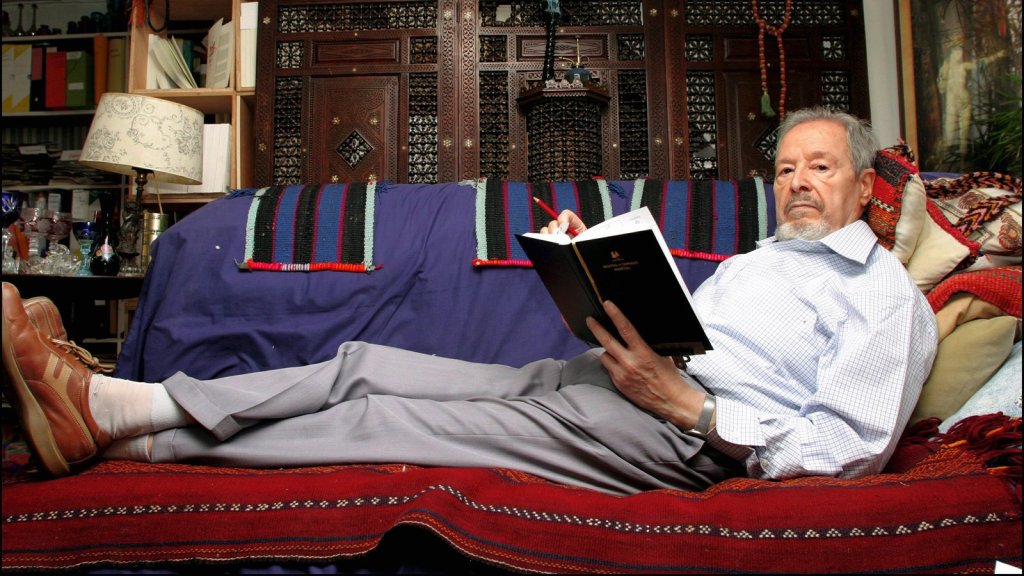
Sartre had a friend, interlocutor, and fellow intellectual, in Albert Memmi. Like Sartre, he was a French-inflected socialist. But, unlike Sartre, Memmi was a Jew. Born in Tunisia in 1920 to a poor Jewish family, Memmi became a leading thinker, and a revolutionary in Tunisia’s war for independence. Sartre admired Memmi, and brought his anticolonial writings to a European audience.

In response, Memmi wrote “Portrait of a Jew,” and its follow-up, “The Liberation of the Jew.” Memmi was able to describe first-hand experiences of antisemitism on two continents. His personal struggles with prejudice elucidated very clearly why Jews would not want to assimilate into Christian France, even in the classless society Sartre imagined. Centuries of racism and religious discrimination showed him that neither Christianity nor Frenchness offered much hope for Jewish emancipation.

More interestingly, Memmi decided to answer for himself the question, “does the Jew exist?” For Memmi, the answer was a resounding “yes.” Jews exist, and, contra Sartre, have our own history, culture, and civilisation. Yes, that has been created in response to antisemitism, but also in spite of it. Jews were constantly creating our own culture.

Jewishness, said Memmi, was what Jews decided to create in each generation, and could be constantly remade, as part of Jews’ engagement with their own heritage. For Memmi, if antisemitism did not exist, Jews still would. Even if, as many Bolsheviks imagined, the world could be freed of superstitious religion, the Jewish national culture would carry on, and thrive in new ways.

So, antisemitism may create the Jewish condition, but it was the Jews who created Jewishness. We were the authors of our history.

After the service, we will hear from Rachel Shabi, as she talks to us about antisemitism and its challenges. Her thoughts are prescient, and we should pay close attention to them. We need to understand antisemitism, where it comes from, and how to combat it.

Yet we must remember that studying antisemitism can only tell us about antisemites. It cannot teach us about Jews. 

Jews make Jews. We decide who we are. Through our love of our heritage and community, we build up Judaism, and we make it what it should be.

So, when we talk to the younger people in our communities, we cannot let their identities be formed by fear of antisemitism. 

We must tell them why we have chosen to keep on being Jewish, and give them good reasons to keep it up too. Whether raised Jewish, converted, or affirmed, all of us have chosen being Jewish, and for good reasons that are bound up in love, not defined by hate.

Tell them about your favourite recipes and the best of Jewish songs. Show them Jewish art and take them to Jewish plays. Celebrate the festivals with them because you truly want to bring them to life. Mourn and fast with them because it is filled with meaning.

Teach them that God has given us a sacred task on earth; that we exist in this world to perfect it. That everything we do can light up divine sparks. That we are called upon to unify all that exists with its Creator.

Bless them with the words that Jacob actually spoke, and say:

“May the God before whom my grandfather Abraham and my father, Isaac, walked—
the God who has been my shepherd all my life, to this very day, the Angel who has redeemed me from all harm. May the Eternal One bless these children. May they preserve my name and the names of Abraham and Isaac. And may their descendants multiply greatly throughout the earth.”

Albert Memmi

judaism · sermon · torah

Perhaps we are not powerless

I have a horrible, on-off relationship with the news. I wouldn’t call it a love-hate relationship so much as a hate-hate relationship. 

There are days when I can do nothing but stare at it, soaking in every detail: climate collapse; species extinction; earthquakes: natural disasters; social breakdown; cost of living; refugees in detention centres; wars, wars, wars…

And then there are days when I switch off entirely. I become so overwhelmed I refuse to hear the radio or see current events on TV. I don’t look at any of the news apps or social media for fear that I’ll be reminded of all that is wrong in the world.

Whether endlessly scrolling through the horrors or studiously avoiding admitting they are there, I think I’ve become trapped in a cycle of feeling powerless. It’s all so big, and so frightening. 

But what can I do? I’m one person, seeing the world collapse, and all I can do is observe. 

If this feels at all relatable to you, perhaps you’ll find some comfort in this week’s Torah portion, as I did.

After all, didn’t Moses feel too small and powerless too, at the beginning? He tried to change things, and look where that got him. Stuck in exile, looking after sheep. Moses looked at all that was wrong in his world, found it far too much to bear, and retreated into the wilderness. 

And he would have stayed there too. He could have lived out the rest of his life with a lovely family tending flocks in Midian. 

But God had other ideas. God heard the cry of the Israelites in bondage and decided it was time to set them free. 

So God reached out to Moses from a thornbush. God set a small thicket in the wilderness ablaze and called Moses on his mission.

A thornbush, of all things. Why would God decide to speak from such a lowly and despised place? The thornbush is, at best, a plant to be ignored and, at worst, an annoyance that scratches against bare legs. It’s the desert equivalent of stinging nettles. 

In our Talmud, Rav Yosef says: not because the thornbush is the greatest of plants did God choose to speak from it, but because it is the least of the creatures. God disregarded all the most beautiful trees of the desert in order to be with the lowliest. 

Similarly, God chose to give the Torah from Mount Sinai not because it was the highest or most magnificent of desert peaks, but because it was small and covered in unremarkable roughage. 

In the natural world, God singles out the powerless and unimportant. That’s where God works the real miracles. 

That’s why God chose Moses too. Moses had no idea of his miraculous birth or impressive destiny. As far as he was concerned, he was a loner in the desert.

When Moses gets the call, it’s not God that he doubts. He doubts himself

His first question is: “Who am I that I should go to Pharaoh and bring the Israelites out of Egypt?”

God doesn’t build Moses up or tell him how he wonderful he is. He says: just trust. Have faith.

We don’t get to decide what times we live in or what role we have to play in them. God decided that Moses was going to take the Israelites from Egypt and that was what was going to happen.

But Moses still can’t see how he can make a difference. He doesn’t doubt God’s power, he doubts his own. He says: “what if nobody believes me? What if they don’t listen to me? What if they don’t trust that I spoke with God?”

At this point, God shows Moses some miracles. We might think these miracles are about God flexing Divine might, showing Moses all the wonders. In fact, a bush burning in the desert without being consumed by flames would be quite enough to achieve that.

These miracles aren’t about showing God’s power: they’re about showing Moses his own. 

First, God turns Moses’s shepherd’s crook into a venomous snake. Moses recoils in fear. Then God turns it back again.

Next, God afflicts Moses with a deadly skin disease. Moses thinks his life is over. Then God heals him.

Both miracles make Moses face his greatest fears. They are exposure therapy. The worst thing that Moses could imagine is death. God shows him that he can stare it in the eye. Moses thinks he is not brave enough. God shows him that he is.

It’s not that Moses ever doubted God’s power. What he doubted was his own. Now God shows him he does indeed have power. He is stronger and more resilient than he realised.

It’s not that Moses ever doubted God’s importance. What he doubted was his own. Why would anyone care what a stammering wreck like him had to say? 

When God performs miracles through Moses, the message is clear: “I, the Eternal One, care. I care enough to work wonders on you. I care enough to meet you in the desert. I care enough to save you from death.”

And, if God can care about Moses that much, why can’t the Israelites? Why can’t Moses care about Moses that much?

Still, Moses is not ready to own his power. He protests to God: “I can’t speak. I’m slow of speech and stammer constantly.”

God gives the perfect answer: “And who made you that way?”

God made Moses that way. God decided that Moses would be who he was. His speaking ability is not a flaw – it’s the characteristic God gave him that makes him exactly the right man for the moment.

What a message this brings for us, who feel so powerless and insignificant. 

What are we but matter in the void, and yet the Creator of the Universe has chosen for us to be alive at this time?

Who are we with all our foibles and imperfections? But God has made us exactly as we are.

So why don’t we trust in ourselves, and recognise our own power? 

Don’t ask why God made a world with so many problems and sent no solution. The solution is here: God made us.

So I think I need to stop the cycle of doomscrolling and avoiding. Life isn’t just something that happens to me – it’s something I make, too. Society doesn’t just exist apart from me, I’m an active player in making it. And the news isn’t just something that lives on TVs and in devices – it’s something that we can create, every day, if we so choose.

In the Mishnah, Ben Azzai teaches: “Hate nobody, because everyone has their time and everything has its place.” 

We did not choose to be born here and now, but God saw fit that we should be alive at this place and time. God wants us here, in this moment. 

We are like that weedy thornbush in the desert. We might seem insignificant. But God has chosen for us to be here. And, because of that, we can burn brightly enough to change everything.

Shabbat shalom.

judaism · sermon

How to be a Jewish man

וּבְמָקוֹם שֶׁאֵין אֲנָשִׁים הִשְׁתַּדֵּל לִהְיוֹת אִישׁ

Pirkei Avot 2:6

“In a place where there are no men, strive to be a man.”

This is one of the central teachings of the founder of rabbinic Judaism, Hillel. You may know him better from his famous aphorisms “treat others as you would be treated” and “if not now, when?” This one gets quoted a little less. Perhaps it is because we instinctively recoil at the expression. It brings to mind those horrible exhortations to “man up.” 

So uncomfortable are we with the idea that some have reinterpreted the verse as “in a place where there is no humanity, strive to be human.” We want to make it gender-neutral, so as not to exclude over half of the Jewish population. But it seems to me that the verse means what it says: “in a place where there are no men, strive to be a man.” 

This is a teaching about masculinity, and it comes with Hillel’s own manifesto of what it means to be a Jewish man:

A brute cannot fear sin; an ignorant person cannot be compassionate; a lazy person cannot learn; an angry person cannot teach; and a money-grabbing person cannot become wise. 

These are the qualities of masculinity Hillel is seeking to impart: be conscientious, not brutal. Be loving, not bigoted. Be studious, not idle. Be generous, not rash. Be sagely, not greedy.

This is a far cry from the image of manhood many of our boys are receiving. 

This week, I want to talk about manhood and masculinity. I must, therefore, apologise to the rest of the room, because, in many ways, this sermon is mostly for the men. I hope, however, that the women and non-binary people in this community will appreciate that this is coming from an urgent need to intervene in ongoing conversations directed at teenage boys in Britain. 

Every few years, a new figurehead emerges for an unfolding crisis of masculinity. Their goal is to bring back an imagined past of burly blokes who hunted animals, chopped wood and went to war. Right now, their leader is Andrew Tate – a man who looks like he stole the entire Russian Olympic swimming team’s supply of steroids. 

Tate is a famous YouTuber, determined to restore what he sees as masculinity lost to a war on men. He wants a return to men’s “natural instincts” as territorial, violent and unemotional. He advocates for men to adopt avarice and aggression to bend the world to their will. His advice to his subscribers is to control, manipulate and stake ownership over women. 

He has even forayed into the world of theology, saying: “Read the Bible, every single man had multiple wives, not a single woman had multiple husbands. It’s against the will of God.” This is his justification for having multiple “girlfriends” whose passports he has confiscated and made to work for him in scam call centres.

This misogyny is taking a sinister hold on our youth. A study carried out only a few months ago found that 8 in 10 British teens had watched his videos and nearly half had a positive view of what he had to say. Increasingly, schoolteachers are raising alarm bells about boys being radicalised into sexism.

We have to be honest. If boys are looking to answers like these, it is because they are confused about what their role is in our society. We have to be able to answer them with better values and better role models.

Let us look at the example of Moses. Early on in his story, Moses witnesses a slaver beating an elderly Israelite. According to our Torah, Moses looked this way and that, saw that there was no man, and beat the slaver back. Our tradition asks: what can mean that Moses saw no man? We know that everyone saw what Moses did. 

Rather, he saw no man in the sense that Hillel advocated. He saw nobody who cared enough to do anything. The rabbis rebuke Moses for his violence, but praise him for his motivations. What made him a man, in this setting, was that he burned with compassion, even for a complete stranger, and the lowliest in society. His masculinity is defined by his sense of love and justice.

Right now, Andrew Tate is going through the judicial courts in Romania for human trafficking, sexual exploitation, and violence against women. Tate is nothing like what Torah imagines to be a real man. He has literally taken on the role of the slaver. He is everything that God sees as contemptible and wrong.

In this week’s parashah, Moses warns the Israelites not to become like the other nations. He insists that Israelites must not be seduced into worshipping what others worship or valuing what they value. Their practices, Moses warns, burn their sons and their daughters. So it is with the misogyny we see here: it might look alluring to some, but are ultimately destructive.

According to Professor Daniel Boyarin, one of the world’s leading Talmud scholars, Jewish masculinity has always been articulated differently. In Eastern Ashkenaz, the ideal male was gentle and pale, buried in books, concerned with sensitivity and kindness. They imagined the non-Jews, by comparison, as brutes. Their boasts of success in domination of women, land, and resources were dismissed as “goyishe naches.”

For most of Jewish history, women have been the primary breadwinners in households. This is still the case, especially in the most traditional communities. Eastern European Jews prized many of the things that non-Jews saw as feminine traits. They were musicians, gardeners, candle-makers, tailors, and translators. Our Christian neighbours were so surprised by Jewish men’s commitment to housework and childcare that it was even a common rumour among gentiles that Jewish men menstruate. 

Think about this in the context of the bar mitzvah, and what we do to turn Jewish boys into men. They are set the task of learning a new language, and mastering a section of holy text. We get them to talk about how these words make them feel, and treat their ideas as if they matter. We send them on expeditions to do charity work, getting them to raise money, visit the sick and care for the elderly. We encourage them to lead the community in prayer. These are the values of traditional Jewish masculinity: scholarly, thoughtful, emotional, charitable, and caring.

Professor Boyarin is keen to be clear that this does not mean Jewish masculinity is unproblematic. After all, we, too, have operated a patriarchal society, and it is still an ongoing struggle, even in Reform synagogues, for us to produce gender-equal communities. 

Personally, much of my own journey over the last three years has been to learn that being a man is not just about self-sacrifice, but must also include self-care. I had imagined my only role was to provide, and didn’t know how to receive. I have had to learn to talk about feelings with trusted friends, include my own needs in important decisions, and strive towards open dialogue. This is hard, but I recognise that this is part of the work of becoming a good Jewish man.

I know that there are many men in this community who have been on similar journeys. I see the way you love your families; how you treat discussions with reasoned compassion; how you have spent your lives perfecting your professional crafts; how you seek to model your lives on Torah teachings of gentle wisdom.

That is why this is a heartfelt plea to the men in the community to talk with teenage boys in their lives about what being a man means. Teach them what you have learned about respect, tolerance, and sensitivity. Talk to the boys. Because somebody else is talking to them, and you would be horrified by what he is saying. 

And if his ideas infect the minds of our youth, we will lose our nice Jewish boys. And then there truly will be no more men. 

So, in a place where there are no men, strive to be a man. A loving, kind, generous, sensitive, and gentle man.

Shabbat shalom. 

judaism · sermon · theology

Barbie World’s Jewish Metaphysics

As you know from all the advertising hype, there is a film out at the moment that deals with some of the most complex moral and philosophical questions of our time. It is already touted to win many awards, and has spurned fantastic conversations about truth, ethics, and politics.

I’m talking, of course, about Barbie.

Barbie already holds such a sentimental place in my heart. While the other boys liked wrestling, Fifa and war toys, I just wanted to play with my dolls’ hair. 

I know, you’d never guess it. The butch man you see before you was once obsessed with the Dreamtopia Mermaid Barbie.

So, last week I did my duty as a good consumer, and went to the cinema for the first time since Dead Pool 2 came out. A lot has changed since I last went to the movies five years ago, and it seems that now everyone dresses up as the characters in the film. I was thrilled to get out my Ken costume, which I never knew I would have a use for.

During the film, I laughed, I cried, I reminisced. And as I left the theatre, I thought: “I’m sure I can squeeze a sermon out of this.”

Yes, that’s right, welcome to your Shabbat morning dvar Torah on the theological metaphysics of Barbie World.

Don’t worry if you haven’t seen the movie: I promise that will not help this make any more sense. 

To help put this into perspective, I’ll give a quick summary of the storyline. Margot Robbie is a Barbie girl, in a Barbie world. Her life in plastic is fantastic. She is driven by the power of imagination. Life is her creation. 

In Barbie World, a doll can be anything. A President, a marine biologist, a Nobel Laureate, a mechanic, a pastry chef, or a lawyer. Even a rabbi.

But then a great intrusion comes into Barbie’s dream world. She finds that she now has cellulite and existential dread. This plastic world of fantasy suddenly starts to turn into something… horrifyingly human. 

Barbie therefore must travel to the world in which people play with her, to find out what is going on in the world of real girls. 

The result is distressing. It turns out that the real world is defined by misery and hatred, and, in this world, girls absolutely cannot do anything they want. 

I am interested in the interplay between these two worlds. In the plastic world, anything is possible, but none of it matters. In the human world, everything matters, but nothing is possible. These two versions of reality conform to two popular narratives.

The first is that this world is just a simulation. That view is being propogated right now by Elon Musk and Neil deGrasse Tyson. It says: none of this is really real. Our world is like Barbie World: it is someone else’s fantasy that we are stuck in, playing roles. Anything is possible, but only the terms of the magnificent computer directing our lives.

I understand why that idea is so appealing. The word is a mess. There is something reassuring about believing that none of it is really happening and it’s all out of our control.

Although today this idea can appeal to new innovations in quantum physics, it is actually a very old idea. In the 17th Century, Irish philosopher Bishop George Berkeley promoted a similar philosophy, called “immaterialism.” We are all, he said, simply ideas in the mind of God.

Berkeley continues: if this world is just an illusion, your only duty is to conform to the role you have been given. You must blindly follow authority. We must all submit to the law and do as we are told.

Barbie has been told that she must fulfill the stereotype she has been molded in, and she has no choice but to accept it.

We need not wonder why a group of billionaires would like us to think this way. If reality is just an illusion, we just have to accept our place. And there’s no point resisting it, because the script has already been written, and none of it means anything anyway.

But the alternative world of the Barbie film – the human world – is not compelling either. In the human world, everything is made up of futile facts. It’s all real, and there’s nothing you can do about it. The grass is green. People grow old. You will get cellulite. Patriarchy is inevitable. It is all meaningful, but its only meaning is that everything is deeply, existentially depressing.

This is also a very popular worldview right now. It is best encapsulated by conservative talk show host, Ben Shapiro, whose dictum is “facts don’t care about your feelings.”

And that idea can be seductive too. The world is changing so fast and so much. Why can’t everyone just accept that everything is the way it is and stop moving so much?

Ben Shapiro offers brutal reality as an antidote to too many ideas. You think this world is horrible? Tough. You’re lumbered with it. This vulgar materialism, that says everything just is the way it is and nothing will ever change, is just as reactionary as the immaterialism that says nothing matters. 

So, let’s get to the point. What does Judaism have to say about this? 

Is this all just a simulation so that we are all just living in a fantasy world?

Or is this all the cold, hard, truth of reality?

In the 20th Century, Jewish philosopher Ernst Bloch tried to offer a third way. Bloch was a religious socialist from Germany, who fled around Europe as the Nazis took power everywhere he went. For him, it was deeply important to develop a view of the world where the unfolding horrors of fascism could be stopped. Any metaphysics that kept people from changing their circumstances had to be resisted.

Bloch turned to great religious thinkers of the past to remind people: it doesn’t just matter what is; it matters what could be. 

This world is real, and the one thing we know about reality is that it is constantly in flux. Everything is as it is, and everything will be different. 

Everything is subject to change. Everything that is is also something else that is not yet.

Ice turns into water turns into steam. Acorns become sprouts become mighty trees. People grow and age and learn. Societies progress from hunter-gatherers out of feudal peasantry and move to abolish slavery. 

In all of their forms, these things are exactly what they are, and are also everything they could be. They are only what they are for a brief moment as they are becoming something else. The movement of water into ice is just as real and possible as the movement for women’s equality.

To put it another way: this world is real, but it doesn’t have to be. There are so many other very real worlds we could live in. 

Ernst Bloch would have loved the metaphysics of Barbie World. It doesn’t just leave us with the misery of the real world or the pointlessness of the fantasy world. It shows us that both worlds speak to each other. The real world can become more like the fantasy world, and the fantasy world can become more like the real one.

This is the Jewish approach. Our task is not just to accept the world but to change it. As Rabbi Jonathan Sacks used to teach: “faith is a protest against the world-that-is by the world-that-ought-to-be.” Faith, for Sacks, is the demand that this imperfect world could be more like the utopian one. Like Bloch, Sacks talked about Judaism as the “religion of not-yet,” always moving towards what it would one day be.

This is what animates the Jewish religious mind: the possibility that this world, here and now, could be transformed into the vision we have of a perfected Paradise. 

So, how do we get there? 

Once again, we have to take our inspiration from Barbie. When Barbie  wanted to get from the fantasy world to the real one, first, she got in a car, then on a boat, a tandem, a rocket, a camper, a snowmobile, and finally a pair of rollerskates. 

To bridge the gap between worlds, all she had to do was put one foot in front of the other. 

That is what we must do too. We must take small steps in our pink stilettos, and set out towards the real fantasy world.

Utopia already awaits us.

Shabbat shalom.

judaism · theology

Why Jews do not believe in Hell

When I was a teenager, I went on some kind of away day with other Progressive Jewish youth.

The rabbi – I can’t remember who – told a story. 

A woman dies and enters the afterlife. There, the angels greet her and offer her a tour of the two possible residencies: Heaven and Hell. 

First, she enters Hell. It is just one long table, filled with delicious foods. The only problem is that they all have splinted arms. Their limbs are fixed in such positions that they could not possibly feed themselves. They struggle, thrusting their hands against the table and the bowl. Even if they successfully get some food, they cannot retract their arms back to their mouths. They are eternally starving, crying out in anguish. That was Hell.

Next, she enters Heaven. Well, it’s exactly the same place! There is a long table, filled with delicious foods, and all the people sitting at it have splinted arms. But here, there is banqueting and merriment; everyone is eating and singing and chatting. The difference is simply that, while in Hell, people only tried to feed themselves, here in Heaven they feed each other. 

She ran back to Hell to share this solution with the poor souls trapped there. She whispered in the ear of one starving man, “You do not have to go hungry. Use your spoon to feed your neighbor, and he will surely return the favour and feed you.”

“‘You expect me to feed the detestable man sitting across the table?’ said the man angrily. ‘I would rather starve than give him the pleasure of eating!’

The difference between Heaven and Hell isn’t the setting, but how people treat each other.

At the conclusion of this story, one of the other teenagers – I can’t remember who, but I promise it wasn’t me – put his hand up and said: “But I thought Jews don’t believe in Hell?”

The rabbi shrugged and said: “True. It’s just a story.”

Years later, though, the story, and the resultant question, have stuck with me. 

Was it just a story? Do Jews really have no concept of Hell?

The truth is complicated. 

Among most Jews, you will find very little assent to the idea of punishment in the afterlife.

In part, that is simply because most of Judaism does not have a clear systematic theology. There is no Jewish version of the catechism, affirming a set of views about the nature of God, the point of this life, and the outcomes in the next. 

Rather, Judaism holds multiple and conflicting ideas. On almost every issue, you can find rabbinic voices in tension, holding opposite views that are part of the Truth of a greater whole. We don’t mandate ideas, we entertain them.

So, a better question would be: does Judaism entertain the idea of Hell?

And the answer is still: it’s complicated. 

Yes, it does. The story that rabbi told of the people with the splinted arms comes from the Lithuanian-Jewish musar tradition. It is attributed to Rabbi Haim of Romshishok.

The idea of pious Jews going on tours of Heaven and Hell has a long history. In the Palestinian Talmud, a pious Jew sees, to his horror, his devoted and charitable friend die but go unmourned. On the same day, a tax collector, a collaborator with the Roman Empire, dies and the entire city stops to attend his funeral. 

To comfort the pious man, God grants him a dream-vision of what happened to each of them in the afterlife. His righteous friend enjoys a life of happiness and plenty in Heaven, surrounded by gardens and orchards. The tax collector, on the other hand, sits by waters, desperately thirsty, with his tongue stretched out, but unable to drink. Where one gave in this life, he received in the next. Where the other took in this life, he was famished in the next. 

This is a revenge fantasy. The story comes from oppressed people coming to terms with the success of their conquerors and the humiliation of the good in their generation.

The fantasy is powerful, and the motifs repeat throughout Jewish history. In almost every generation, you can find people pondering about how bad people will be punished and good people will be rewarded when this life is over.

But, with equal frequency, you can find Jewish scepticism about this view of the world. The Babylonian rabbis warn us not to speculate on what lies in the hereafter, for God alone knows such secrets. Our greatest philosophers like Rambam and Gersonides strenuously deny any concept of post-mortem torture. 

These debates have persisted even into the modern era. During the Enlightenment, there were those who claimed that a rational religion could have no place for the primitive nonsense of Hell. Equally, there were those who said belief in divine retribution was the hallmark of a civilised belief system.

So where did the idea come from, asserted so confidently by that teenager on a day trip, that Jews have no concept of Hell?

The truth is it is very recent.

In surveys of attitudes, Jewish belief in Hell plummeted after the Second World War.

In all the revenge fantasies and horror stories that people could concoct about Hell, not one of them sounded as bad as Auschwitz. 

There is no conceivable God who is cruel enough to do what the Nazis did. No such God would be worthy of worship.

We have no need to fantasise about freezing cold places filled with trapped souls, or raging furnaces. We need not imagine a world after this one where people are starved and tortured and brutalised. We know that world has already existed here on earth.

Isn’t Hell already here still? Doesn’t it still exist right here in this world for all those mothers putting their toddlers in dinghies hoping the sea will take them away from the war? Don’t those horrors already exist in for people working in Congolese gold mines or Bangladeshi sweat shops? 

Hell is already here. It is war and occupation and famine and drought and slavery and trafficking. There is no need for nightmares of brimstone when people are living these things every day.

That was the point of the story that rabbi was telling us. 

The difference between Heaven and Hell isn’t the setting, but how people treat each other.

We already live in a world of plenty. We have the flowing streams and gardens and orchards our sages imagine. But, like the inhabitants of Hell, we are pumping sewage into the streams, turning the gardens into car parks, and logging the orchards for things we do not need. 

We are sat before a fine banquet where there is enough for everyone, but half the population are not eating while a tiny minority are engorged with more than they need. We are living the vision laid out in the parable.

Yes, this world is a Hell, but it could be a Heaven too. 

The difference between Heaven and Hell isn’t the setting, but how people treat each other.

Look at all that we have. Look at the support we can give each other. We may have splinted arms but all we need do is outstretch them. 

We have the capacity to annihilate all hunger, poverty, and war. We really could end all prejudice and oppression. This planet could be a paradise!

And, if we know that we can make this world a Heaven, why would we wait until we die? 

Shabbat shalom.

halachah · judaism · social justice

Are Jews allowed to lend money at interest?

Of course, I am Jewish, but I also consider myself very English. I am English in the very parochial sense that I love canal boats, think provincial churches are beautiful, will definitely barbecue on the only day of summer, and put mayonnaise with everything. But, last autumn, I did the most English thing I have ever done. 

I wrote a disapproving letter of correction.

I had never done it before. I’ve never written in to the BBC or a newspaper. To the best of my knowledge, I’ve never sent a letter of complaint about anything. But this one was too important to simply ignore.

Someone in a play had misrepresented a complex point of Jewish law. 

Now, this may seem trivial. But, six months later, I am still so incensed about this common misconception of halachah, that I feel the need to preach on it. 

In September, last year, I got a real treat: to go see one of our members perform at the Royal Court Theatre. Rachel Hosker, who will be getting married under our auspices in the summer, was performing in a play called ‘Jews. In their Own Words.’ Written by Jonathan Freedland, the play interviews famous Jews, including Tracy-Ann Oberman, Luciana Berger, Margaret Hodge, and Howard Jacobson, trying to give a sense of antisemitism, past and present. 

I’m not a theatre critic, but let me tell you: Rachel acted fantastically. She and the rest of the cast did a fantastic job of bringing the characters to life. 

But there was a line, really a throwaway comment, that stuck with me. The play was attempting to explain the trope of the money-hungry Jew, and how Jews had come to be associated with money-lending. An actor representing CST’s Dave Rich said: “the rulings of the church forbade lending money at interest, which was considered usury, whereas Jewish law allowed it.”

This, to me, is alarmingly inaccurate. It shows not only a misunderstanding of Jewish law, but also of antisemitism, and how it works. It places the responsibility for Jews as medieval money-lenders onto Jews, and our religion. Nothing could be further from the truth.

If it was the case that Jewish law allowed money-lending at interest, you would be hard-pressed to explain the commandment in this week’s Torah portion: “You may not act as a creditor to your people. You may not exact interest from them.” You would also have to reckon with the same commandment, given in the Holiness Code: “Do not exact advance or accrued interest, but fear your God… Do not lend your money at interest, and do not give your food at interest.” The same commandment is repeated again in Deuteronomy: “do not deduct interest from loans to your kindred.”

Of course, you might say, the Torah is not the only source of Jewish law. Perhaps these commandments are amended in the Mishnah, or the Talmud, or the Codes. No, no, and no. The Mishnah says charging interest is so reprehensible that it involves breaking six commandments. The Talmud says that even scribes and witnesses who participate in such contracts are guilty. 

In the defining law code for most of the Jewish world, the Mishneh Torah, Rambam looks at the word for interest – neshech – which is the same as the word for a snakebite, and says it is called as such “because it bites, it causes pain to a fellow human being, and consumes a person.” He repudiates it completely.

Be in no doubt: Jewish law does not permit money-lending at interest.

So, how did it happen that Jews nevertheless ended up associated with money-lending, despite its very explicit prohibition?

In the 4th Century CE, Church Father Augustine of Hippo declared that Jews would be permitted to survive as “living witnesses” to the truth of the Bible, but must be kept in a degraded state, with the mark of Cain, for their refusal to accept Jesus. This became the official policy of Christian Europe’s primary institutions: its churches and monarchies. 

Jews were allowed to live in England neither as citizens nor serfs. They could not own land or participate in the nation. They were excluded from universities, and cut out of the professions. They were only allowed to live in the country on condition that they did the dirty work of the ruling class: tax collecting and money-lending. 

Now, most Jews did not do such jobs. They did the work that was needed for their community, as bakers, vintners, stonemasons, and millers. But, as long as some Jews fulfilled these functions for the monarchy, all Jews could live in European countries as “treasured subjects” – effectively pets of the king. 

This had a profound impact on the lives of medieval European Jews. They were forced to wear humiliating clothes to mark them out. Associated with tax collecting and money-lending, many of the local peasants associated the Jews with all the financial problems they faced. 

The local lords actively exploited this division. They drummed up hatred against Jews, and treated them as a pressure valve, so that, in times of economic crisis, peasants would attack their local Jews rather than turn their ire on the landowner class.

That is why the worst pogroms that we have recorded came in times when the monarchy was in financial straits. In England, these came when the country was bankrupted by its military Crusades to capture Jerusalem. Jews, the perceived cause of money problems, and naturally associated with the Holy Land, had all the anger and resentment of impoverished people poured out on them. 

If the monarchy or the Church were struggling with their own debts, they had an easy way out: they could simply expel the Jews and confiscate all their property. In 1290, Edward I expelled the Jews from England to cancel his debts and win back the support of the knights and lords in parliament, who were also heavily indebted.

This put the rabbis, the arbiters of Jewish law, in a very difficult position. If they permitted lending at interest, they would turn their backs on their entire religious inheritance. If they insisted that Judaism forbade money-lending at interest, they would effectively force their community to leave where they were. And, since all of Christian Europe had adopted the same policy, they would have nowhere to go. 

So, the rabbis had to find a way. They looked at the laws, which said such lending was only prohibited to their kin. Rabbi David Kimchi, writing in medieval France during pogroms and expulsions, said that Jews were not permitted to lend at interest to people who respect Jews. The corollary was that if people would not treat the Jews as full human beings, then they, in turn, could lend to them at interest. In England, the Christians had estranged them and made them explicitly not their kin.

This is why correcting this point on the understanding of Jewish law is so important. It is not just because we are sticklers for getting the halachah right. It is so that we understand what antisemitism is and how it works. 

We Jews did not create this system. We did not allow it, nor have the power to stop it. For over a millennium, European powers embedded and promoted antisemitism to prop up their system. As Rabbi Lionel Blue, of blessed memory, so pithily wrote: “The problem of the Jews in Europe was never the Jews. It was Europe.”

Now, we are citizens in this country. With Emancipation, we might have hoped that it would bring an end to cultures of debt and division. True, most of the banks and money-lenders are now not owned by Jews, and very few Jews today engage in such work. 

But that is not because we are living closer to the laws of the Torah or our rabbis. It is because the whole of our society is caught up in loans. All of us are more indebted and more divided than we ever were. We are pitted against each other by a media eager to see us all fighting. 

Combating antisemitism does not only mean counteracting myths and biases against Jews. It is also about dismantling the material realities that created antisemitism. The hatred of Jews erupts when we are scapegoated for economic problems in society. We must not only contradict the myth that we are responsible, but also fight to ensure that the problems people face of economic hardship and drowning in debts no longer exist. 

When we realise that the world has enough for all of us, and distribute it so that everyone can prosper, we will be far closer to a world without prejudice and fear.

Shabbat shalom.

judaism · sermon · torah

Hold onto your grudges

Friends, the message of this week’s homily is: hold on to your grudges. 

Throughout your life, people will hurt you. Sometimes intentionally, sometimes unintentionally, and you must hold on tight to that hurt. Make sure you bottle it up and let it fester until you are ready to seek revenge. 

That’s where great drama always comes from. Thanks to grudges, we were treated to eight seasons of Desperate Housewives.

At the end of your life, you may wonder what legacy to pass on to your children. Perhaps you have considered wealth or sentimental items or tidbits of wisdom. Can I suggest that you add to that list: give your children a grudge to bear.

The best kinds of grudges are intergenerational. It’s never enough to be resentful on your own. Share it with your loved ones.

If you can keep a grudge going until nobody remembers what the original broiges was about, you will have really succeeded. Without ancient grudges, we would never have had Romeo & Juliet. And look how well that turned out. 

So remember every way in which you were wronged and make sure to even the score.

That’s what King David did. At the end of his life, reflecting on his mortal life, and preparing for the hereafter, he called his son Solomon near to him. He began by offering up some advice. “Act like a man,” David instructed. 

From personal experience, I can tell you that whenever somebody has told me to man up, what follows is always emotionally healthy. And this occasion is no exception. 

David told Solomon: “Remember what Joab, son of Zeruiah, did to me. Remember how he engaged in bloodthirsty mutiny. Do what you like with him, but do not let his grey head go down to the grave in peace.”

And David wasn’t done. He had other grudges to pass on. “Solomon,” he urged. “Remember Shimei son of Gera, the Benjamite from Bahurim, who called down bitter curses on me the day I went to Mahanaim. I said I wouldn’t kill him. But I didn’t say you wouldn’t kill him. So do what you like with him, but do not let his grey head go down to the grave in peace.”

Like a good Jewish boy, Solomon made sure his reign over Israel began with a killing spree.

Let King David be a role model to you all. If someone has insulted you during the course of your life, make sure you remember their names. If you can’t get retribution yourself, make sure your bitterness lives on beyond the grave.

Now, you might think, “of course, King David has big gripes to pass on. He’s a king, after all. He had real enemies. All of my slights feel petty in comparison.” Don’t worry. If misery is good enough for the elites, it’s good enough for the masses, too. It’s time we took a stand for equal distribution of resentment. Anyone can carry hate.

Just look at Jacob. Jacob was blessed with thirteen children. And couldn’t stand any of them. Throughout their lives, he made sure they all knew who his favourites were. First, Joseph. Then Benjamin. 

At the end of his life, Jacob did what every good Jew ought to do. He settled old scores and told everyone what he really thought of them. He brought his boys round to make sure they could hear his views.

“Gather round, my sons, and listen to your father.”

“Reuben,” he says, “you will never succeed at anything.”

“Simeon and Levi, you are too angry to deal in anything but violence.”

“Issachar, you’re an ass. Dan, you’re a snake. Gad, people will trample all over you.”

Then, just to top it off, he turns to Joseph and says: “Joseph, you are really beautiful. You’ve done great things.”

That’s how you do it. That’s how you end your life, making sure the people close to you knew how little you thought of them.

But, for some reason, Joseph’s brothers did not love their blessings. They had hoped for a slightly more conciliatory deathbed scene.

So, they got together and talked to Joseph. They said: “Um, Joseph, you might not have heard this, but as dad lay dying, he begged you to forgive us. He said, now that you’re in charge of Egypt, you shouldn’t hurt us and you should let us have food here.”

And Joseph said: “Dad didn’t say that, did he?”

“No. Dad didn’t say that.”

If Joseph had learned from history and all the good examples you’ve heard, Joseph would have known that the best thing to do is hold onto his grudges and get revenge on his siblings while they were weakest.

But, in a shocking turn of events, Joseph decides not to. He says: “I’m not in the place of God. I’m not here to keep score and dole out punishment. Whatever has happened, do not be afraid; I will provide for you and your little ones.”

And, with just a few words, Joseph can annul decades of mistrust. He can undo his father’s callous favouritism. He can bind his siblings back together as a family.

And, with those words, Joseph seemingly corrects every sibling rivalry of his family. From Cain and Able to Abraham and Lot to Jacob and Esau. All of a sudden, an intergenerational curse is lifted. They can heal. 

Joseph had every reason to hold onto his grudges. He was sold into slavery. His brothers pretended he was dead. He was wrongly imprisoned. He was betrayed by his friends. Of everyone who had held their grudges, Joseph probably had been through the worst. 

But he decided to forgive. He concluded the origin story of the Jewish people with love and kindness. 

The Baal haTurim, a great Jewish lawmaker of the 14th Century, said that Joseph should stand as an example to us all. Say out loud what is hurting you rather than holding onto your pain. And harbour no desire for revenge.”

So, OK, I lied. The moral of this sermon wasn’t that grudges are good. Sure, they are natural, but they’re not helpful or healthy.

I don’t really think you should pass on your bitterness to your descendants. Tempting, but not constructive.

In fact, for a lot of this, I was being sarcastic. I hope you won’t hold it against me.

Shabbat shalom.

judaism · sermon · torah

If you don’t believe in equality, you don’t believe in love

This is the week of our Torah dedicated to love stories. Our religious texts often contain laws or stories of struggle, but this is a unique reprieve, in which we are offered some romance.

At the beginning of our parashah, Sarah dies, and Abraham bargains for the perfect burial site. He wants to ensure her burial arrangements are in exact order. Later, he will be buried beside her, so that they can be joined forever in the hereafter.

The Talmud clearly picks up on how sweet these negotiations are, because it embellishes a story of what happened many centuries after they had died. Rabbi Benah was marking burial caves. When he arrived at the Cave of Machpelah, where Abraham and Sarah were buried, he found Abraham’s faithful servant Eliezer, standing before the entrance.

Rabbi Benah said to Eliezer: “Can I go in? What is Abraham doing?”

Eliezer replied: “Abraham is lying in Sarah’s arms, and she is gazing fondly at his head.”

Rabbi Benah said: “Please let him know that Benah is standing at the entrance. I don’t want to barge in during a moment of intimacy.”

Eliezer said: “Go on in, because, in the higher world that they inhabit, souls no longer experience lust. All that is left is love.”

Benah entered, examined the cave, measured it, and left.

It’s such a beautiful story. It teaches what an ideal relationship should be, where a couple loves each other long after death.

Perhaps, most significantly, it tells a story of mature love; of what happens when relationships really do last, and people carry on loving each other until their last days. I think we all know of such couples, but their stories rarely appear in our culture. We get romantic comedies. We get depictions of what love is like when it’s just starting out, but not so much about how it endures. Our media shows the hero get the girl, but not how they make their relationships work.

Don’t get me wrong. I love a good rom com. Yes, I did think Ten Things I Hate About You was a masterpiece when I was a teenager. And I absolutely did binge watch both series of Bridgerton on Netflix.

They all follow a predictable plotline. Two loveable heroes, and you’re rooting for them both. They encounter a tribulation. They overcome an obstacle. There’s a grand gesture. They realise they’re supposed to be together. In the end, there’s a wedding and they all live happily ever after.

In a way, that’s the story that we find immediately after Sarah’s funeral. Abraham realises that Isaac needs a wife. He sends out a search party, led by ten camels. He sets a test: whichever woman offers water to the camels by the well is the one meant for Isaac.

Immediately, we root for Rebekah. She is beautiful. She’s strong. She’s hard-working. She offers to feed all the camels, and rushes back and forth, drawing water from the well, feeding an entire herd of camels. Obstacle surmounted, we get our grand gesture. She is presented with a huge gold nose ring and two huge gold bracelets. She accepts. Their families rejoice. Everyone agrees that this was arranged by God.

There’s just one snag to reading a romantic comedy into all of this. The hero in the story isn’t Isaac. The man who goes out with all the camels, sets the challenge, starts the relationship, and makes the big gesture, is Abraham’s servant, Eliezer. By rights, if this were a love story directed by Richard Curtis, the wedding would be between Rebekah and Eliezer!

Isaac isn’t even involved. They’re engaged and the deal is done before the couple have met. Rebecca doesn’t know what he looks like. When Isaac later comes clopping along on his horse, Rebecca asks who it is. We have to hope that she was impressed, but we can’t be sure.

All we know is that, once married, Isaac feels comforted after the death of his mother. The heroin in our story, at the end, is reduced to a replacement mum for her husband. A love story this is not.

But, do they at least go on to have a happy marriage? Of course not. They were forced together as strangers as part of an economic arrangement.

In the entirety of our Torah, they never say two words to each other. They just pick favourite children and pit them against each other. They trick each other, lie, and form an unbelievably dysfunctional family.

The whole thing is a nightmare. It’s far more Silent Hill than Notting Hill.

This could never have been a love story! We’d never have got Sandra Bullock narrowly missing out on an Oscar for her heart-wrenching performance as Rebekah. We can only wish for Sacha Baron Cohen bumbling as a comedy father Abraham.

90s cinema didn’t invent romantic love, but it was far closer to its origins than Isaac and Rebekah were. The idea of romantic love, as we know it, was born out of the Enlightenment.

During the Age of Reason, philosophers had the wild idea that partnerships between people might be based on more than just combining property and keeping families happy. They suggested that marriage might not just be a way for nobility to make treaties between nations, but borne of a deep feeling common to all people. They even offered up the radical idea that women were people, and might have an opinion on their relationships too.

In those heady days, Judaism split between those who accepted the ideas of the Enlightenment, and those who did not. We, who embraced those fantastic ideas of equality, became the Movement for Reform Judaism.

As we accepted the ideas of love between equals, our rituals and ceremonies have progressed with us.

In a traditional ceremony, the woman is acquired with a ring. The ring is, in its origin, a symbol that the woman has been purchased. When Rebekah received her nose ring and bracelets, she was effectively accepting the shackles of her new owner.

In our ceremonies, both partners to the wedding mutually acquire each other, or even forgo rings in favour of an alternative symbol of equal partnership. Both partners encircle each other under the chuppah, showing their shared space.

Whereas in a traditional ceremony, a woman may remain silent, Reform weddings require explicit consent from both parties. Both read their vows, and some couples choose to produce their own.

This may now seem obvious and intuitive, but it is only because the ideas of the Enlightenment have taken such hold. Love – the idea that people can be equal and caring partners – has had to be won.

Love is really a Reform value. It is something special to our movement. Our ancestors spent centuries fighting for the idea of meaningful love, so that we could celebrate it today in all its forms. You can only really celebrate love in a place that really believes human beings are equal.

And that is why Sarah, holding Abraham in her arms, gazing lovingly at his head, joined with him in an immortal embrace, was the first Reform Jew.

Shabbat shalom.


Parashat Chayyei Sarah, 5783

judaism · social justice · story

Welcome to the Queer Yeshiva

Hello and welcome to the Queer Yeshiva.

My name is Lev. I’m one of the teachers here, with Jo, Hava and Daniel.

A month ago, I was ordained as a rabbi. One of the things that most made me want to be a rabbi was bring gay. I wanted to be part of a religious life that made being queer feel as empowering and magical as it really is.

I love being queer. I love queer people. One of the things I love most about us is that no matter what life throws at us, we always rebuild.

I think about the lives of queer people. Everyone I know has had to struggle with who they are, face down violence, and out of adversity, rebuild themselves as someone stronger than anyone could have imagined.

When I was a kid, I was already too fabulous to be contained. All I wanted in life was to wear dresses and do Spice Girls dance routines. I knew I was different and I didn’t care.

But the rest of the world did. I grew up in a small town with few opportunities. For most of my teens, I was beaten up on a near daily basis. I was attacked at school, walking home, in the shops, and outside my front door. That was only the other kids. The adults were worse: at best they ignored it; at worst they encouraged it. At the school leavers’ assembly, the teachers gave me an award for “most likely to have a sex change.”

But I’m not bitter. I’m proud. I came out of all that knowing who I was and willing to fight for others. That’s why we have parades. That’s why we stand up celebrate our community, because we have withstood discrimination and violence and built out of it fantastic cultures. All that queer art, queer music, and queer innovation- that came out of queer struggle. We are who we are because of who we were.

And that’s not limited just to us here. That’s something queer people have to do in every generation. Think how many times we have been destroyed, and think how many times we have rebuilt.

Consider only the last century. At the beginning of the 1900s, our people were dealing with criminalisation, as many had been imprisoned. Against that backdrop, Magnus Hirschfield created the Institut for Sexualwissenschaft, pioneering the understanding of queer people.

His work was burned by the Nazis. Queers were turned into pariahs and murdered in te death camps. Even once the Second World War was over, many homosexuals were forced to stay in prison to complete their sentences.

In the aftermath, our ancestors picked themselves up again. They built the Gay Power movement. They formed the Lavender Menace. They created the ballroom scene in the nightclubs of New York.

Once again, they were decimated by the AIDS crisis. Government indifference and vengeful homophobia killed a generation of queers.

And still, we could not be destroyed. We came back stronger, demanding legislative changes and pushing for a transformed world. We recreated community to fight for our liberation.

In every generation, people have tried to destroy us. In every generation, they have failed. We will always rebuild. We will always imagine a greater future. We will always reappear.

We are indestructible.

In that sense, we are the heirs to the rabbinic tradition.

Judaism, as we know it, is the product of people who saw their world crash around them repeatedly and, every time, rebuilt it.

Our Judaism was born out of a time of fundamental crisis. At the start of the last millennium, the Jews were a nation. They had their country, the land of Israel. They had their capital, Jerusalem. They had their cultic centre, the Temple. They had their religious leadership, the priests. And they had their religious practices, sacrifices.

Then, they faced catastrophe. The Romans came and waged an aggressive war, killing off the leadership, and starving the people of Jerusalem. They destroyed the Temple and abolished its customs.

Yesterday was the fast of Tish BAv. It was, for many religious Jews, a day of weeping and despair. We recalled the genocide, the disruption, the pain. We remembered the destruction of the Temple in the context of all the times that Jews have been destroyed.

But, in that act of ritualised remembering, we also remember that we have survived. Jews and Judaism have kept going, even two thousand years later.

Let us remember why.

Faced with annihilation, the Jews had three choices. One: they could dig their heels and pretend nothing happened. They could decide that they were going to carry on with the Temple and the priesthood, even though they were gone.

Two: they could abandon their old religion altogether. That was what normally happened to ancient peoples when they were conquered: they gave up their old traditions and gave in to colonisation.

Three, the third option: they could retell their story for the sake of their contemporary situation. They could look at everything they had been, and use their history to reimagine their future.

Our rabbis chose option three.

Put yourself in their position.

Imagine you were there, not just in the aftermath but right in the thick of it. Jerusalem is under seige. Your family are starving. Your people are fighting the Romans, but mostly they’re fighting each other. You can see your world on fire. You don’t even know if you will survive.

What would you do?

That’s how it was for Rabban Yohanan Ben Zakai. He was alive then. That was what he saw.

He told his students to put him in a coffin, pretend he was dead, and smuggle him out of Jerusalem. Once out of the besieged city gates, he got out and demanded to speak to the Roman emperor, Vaspasian.

As it happened, Vaspasian was willing to compromise. He said: “OK, tell me you want.”

Rabban Yochanan Ben Zakai said: “Give me Yavne and students of Torah.”

What was Yavne? It was a refugee camp in the middle of nowhere. It was filled with displaced people. Who were the students of Torah? Just a bunch of people who remembered what the old religion used to be like.

Why? Why would you ask for such a thing? If the commander of the imperial Roman army is willing to negotiate, why not find a way to get the troops to leave?

Because a people that knows who they are cannot be destroyed.

Sure, the colonisers might go, and the Jews might live, but Judaism could end. The only way for anyone to live on after facing near annihilation is to look at where they’ve been. They have to take a long look at their story and reimagine it for a new era.

Rabban Yochanan Ben Zakai and his students learnt everything. They committed to memory their whole history so that they could recite it by heart.

Then, they revolutionised it. They said: we don’t need the land of Israel or Jerusalem any more. From now on, we’re going to be spread across the whole world. We’re going to make our religion portable so that it can be sustained in any nation.

They looked at their Temple and its sacrifices and said: we’re not going back to that. We’re going to reinvent our practices. We will replace them with prayer and study. As long as people keep our words alive, we won’t need for animals to die.

They looked at the priesthood and said: that’s done. From now on, we have no hierarchy.
From hereon out, we are equals. The measure of Jewishness won’t be who your father was but how imaginative you can be in reexamine your tradition.

They looked over their old systems of justice, and interrogated them. Who is included here, and who is left out? What is justice going to look like for us now? They were so radical that they tried to work out how they could turn the Torah against the Torah.

And that instantly transformed Judaism. Rabbi Yochanan’s disciples weren’t from the elites. They were blacksmiths and peasant farmers and outsiders. They saw, from that vantage point, how their people could creatively rebuild. And that is why we have our Judaism today.

And here’s the thing. Rabbi Yochanan had, maybe, ten students. There were fewer people in his beit midrash than there are in this room.

You only need a handful of visionaries to spark a revolution.

Be in no doubt, that is what could happen here this week.

We are, as always, facing catastrophe. Queer people are under attack once more. The planet is burning. Capitalism is in crisis. The old ways of doing Judaism are floundering.

Do you think that the future of Judaism is going to be secured by happy people in their comfortable homes? No way. They have nothing to lose from the current situation. They don’t have the imagination to see how things could be different.

The future of our people lies with those on its margins. Its the queers. It’s the weirdos. It’s the radicals. It’s you.

That’s why we’re here. We’re going to do what queers and Jews have always done. We’re going to rebuild while our world is on fire.

We’re going to learn everything we can, internalising the words of our ancestors so fully thar they will travel with us everywhere. We’re going to re-analyse them in light of our own circumstances, seeing how these traditions bear on our own lives and struggles. And, out of that, We’re going to completely retell our story.

This is where the future of Judaism starts again.

I love being queer. I love queer people. And I can’t wait to see what we achieve.

This talk was based on the Crash Talk by Rabbi Benay Lappe, used for Queer Yeshiva Summer Intensive 5782 in Essex