israel · sermon · social justice

We must drag the sun over the horizon


In Judaism, night comes before day. The day begins when the sun sets and the first stars appear in the sky.

This has been the way of the world since its mythic origins.

In the beginning, there was endless darkness. Then God said “let there be light.” And there was light.

And God separated the light from the darkness. The first distinction. And the darkness God called night, and the brightness God called day.

And there was evening, and there was morning. A first day.

Having created nights and days, God populated them with matter. At the end of each period of creation, there was evening, then there was morning. Each day.

During the sixth day, God created human beings and placed them in a garden. Then there was evening.

The first human beings had never seen an evening before. They did not know that the sun could set. They did not know the difference between night and day.

What must it have been like for the first sentient beings to realise who they were and who their Creator was, only to see the sun disappear? How frightened they must have been!

Perhaps they called out to God and asked for guidance. But that evening marked the beginning of the seventh day, and God was resting. God did not answer them.

Our Talmud teaches that when the first human beings saw their first nightfall, they fell into despair. Adam feared that the sun had disappeared as punishment for his sin. He worried that the world would now return to the endless darkness with which it began.

Eve cried. She fasted and prayed. Adam and Eve wrapped their arms around each other and held their bodies close as they prepared for the end.

Then the dawn broke.

And they realised: this is the way of the world.

The world began in autumn, at the festival of Rosh Hashanah.

When the first winter nights crept in, and they saw the length of days decreasing, they panicked once more. Now in exile from Eden, they had no way of knowing what would come next.

Again, they fasted, wept, and prayed.

Then the spring came, and brought with it longer days.

And they realised: this is the way of the world.

We begin with darkness. Light follows.

There is evening. Then the dawn comes.

There is winter. And it always becomes spring.

This is the way of the world.

We can observe this dialectic in almost all matters of life. Our suffering is followed by joy. Our struggles are replaced by triumphs.

Some days feel like endless nights, but the dawn is always waiting for those who are patient for it. So we hold each other close and wait for the sun to rise.

This is the way of the world.

These trends appear, too, in history. There will be periods of decline followed by ages of plenty. There will be economic busts, and there will be booms. There will be war, but peace will come.

This is the way of the world.

But human history is different from all other natural rules. The order of night and day and the structure of the seasons was predetermined before we arrived on this earth.

History, on the other hand, is made by human beings. History is the one area of life where we can, collectively, choose what happens. Our actions determine whether we live in the winter of war or bountiful springtime.

So, it is incumbent upon us not just to hold each other and wait for morning, but to drag the sun over the horizon and demand that day appears.

In 1969, “Shir LaShalom,” became the anthem of the Israeli peace movement. In the final stanza of the song, we sing out: “Do not say the day will come. Bring on the day.”

Just as people make the active decision to go to war, peace is also a choice. Those who want an end to war cannot just wait in the darkness.

We sang Shir LaShalom in this sanctuary on Simchat Torah. I felt, and I think many of you did too, truly jubilant at the news of ceasefire and hostage release. After two years, we could finally see a possible end to the suffering.

My jubilation was tinged with pain as I remembered the last time that Shir LaShalom was chanted throughout synagogues.

That was in 1995. Yitzhak Rabin and Yasser Arafat had shaken hands on the lawn of the White House. They had agreed to the Oslo Accords.

While already imperfect and tentative, the Oslo Accords of three decades ago were the last major effort at a comprehensive peace deal between the Israelis and Palestinians. They paved the way for mutual recognition and the possibility of two states.

High on the dream of peace, Rabin joined Peace Now protesters in Tel Aviv Square and sang along to Shir LaShalom. With the lyrics still in his breast pocket, Rabin headed to the car park. There, a far right fundamentalist waited for the Prime Minister, and shot him dead.

There is still a copy of Shir LaShalom, stained with Rabin’s blood. There are those words, covered in the blood of a man who tried to make peace: do not say the day will come, bring on the day.

Yes, we must indeed bring on the day. But there are some who want to return us to endless night.

An Israeli fanatic shot dead Rabin to stop his day from dawning.

When Hamas saw the prospect of the Oslo Accords creating two states, they launched suicide bombing attacks on public transport. They took control of Gaza and promised endless war.

The Israeli far right wrested control over the offices of government. They promised there would be no Palestinian state and that every effort to achieve one would be swiftly repressed.

It saddens me that, even in the brief interludes since Rabin’s assassination when Netanyahu’s party has not had control over the legislature, few Israeli politicians have attempted to break from their logic of violence and occupation as the only answer to the Palestinian national question. 

Daybreak always comes, but there are those who prolong the darkness, and we have been living through a terribly long night. The call to bring on the day from earlier generations has been eclipsed by militarism and fear.

We have endless war. This is the way of the world.

But this is the way of the world as some have chosen to make it. And we can make the world another way.

On Monday, we saw the first thing in a long while that looked like a sun beam.

We celebrated the hostages coming home and an end to the bombing of Gaza. It was the first reminder we have had in a long time that peace is possible, and war is a choice.

We are able to bring on the day.

Now we must create even more sunshine.

But we have become so accustomed to darkness that the dawn may even be painful.

In daylight, we will have to look hard at the choices that made this war so prolonged and destructive. We will likely see that peace was possible much earlier and that more hostages might have come back alive sooner. We may ask searching questions about the morality of this war.

In the light of day, we will have to look hard at what Israel has become, and what the spiritual state of our Jewish institutions now is.

But we must bring on the day. We cannot return to the long-lasting night of war, murder, zealotry, and extremism. We cannot let anything that happened in the last two years ever happen again.

Throughout this dark night, our Progressive Jewish counterparts in the Israeli Reform Movement have been pushing hard for serious change.

They have been protesting outside Netanyahu’s house every Saturday evening. They have been joining Palestinian olive farmers in the West Bank to protect them from settlers. They have been demanding a real overhaul of the deep, structural causes of this century-long conflict.

My month with Rabbis for Human Rights before I began here helped positively frame my rabbinate. Although the picture on the ground is bleak, it made me realise just how many people are desperately trying to create daylight in the darkest contexts.

I hope that we will not fall into complacency now because the hostages are home. The task of peace building is more pressing than ever.

I want us to draw ever closer to those who are defending human rights and trying to bring about a future based on dignity and equality. I hope that, next year, we can bring a full delegation of Progressive Jews to support the West Bank olive harvest. I hope this can be a moment where we truly embrace the cause of peace.

This is not the seventh evening of creation. It is not the time to rest. We cannot leave our colleagues alone in this struggle now.

This is the first dawn of a new morning.

It is an opportunity for real accountability. It is a chance for meaningful peace building. It is the first crack of sunshine, and we have to drag out every possible ray of light to join it.

We must wrest the light into the darkness.

We cannot say the day will come.

We must bring on the day.

israel · sermon · torah

This is Torah. This is its reward.

Loving others will not make you popular.

Pursuing peace will not make you safe.

Choosing life will not protect you from death.

But, if you do not love others, if you do not seek peace, if you do not choose life, who will you be?

When Moses ascended Sinai, he found God adding flourishes to the Torah’s letters, which only Rabbi Akiva would ever be able to read. Moses asked to see what became of Akiva.

The Holy One showed Moses how the Romans flayed Rabbi Akiva’s skin as they martyred him, then sold his flesh in their marketplace.

Moses threw his hands in the air and demanded: “Is this Torah, and this its reward?”

“Silence,” said God. “Such is My will.”

This is Torah. This is its reward.

Vivian Silver was murdered by Hamas on October 7th.

Vivian Silver founded the Israeli peace organisation, Women Wage Peace. She worked for human rights groups like Btzelem and ALLMEP. She lived on Kibbutz Beeri, near the Gaza border, where she engaged in solidarity work with Bedouins, Gazans, and Palestinian construction workers.

Three days before October 7th, she organised a march of 1500 Israeli and Palestinian women for peace.

On October 7th 2023, terrorists broke into her home and murdered her.

Even as she hid from the militants, she gave an interview to Israeli radio, where she said the very fact that she was under attack showed the need for a peace deal.

A year later, her son, Yonatan Zeigen, eulogised her. He said:

“Being a peace activist is not something to save you from being killed in war. It’s something to prevent a war from happening. And to create a reality where war is not an option.”

Silver’s love of others did not make her popular.

Pursuing peace did not make her safe.

Choosing life did not protect her from death.

But it made her fully human.

This is Torah. This is its reward.

On Monday evening, as my community sat down to listen to poetry in preparation for Tisha B’Av, I received a text to say that a Palestinian peace activist I knew had been murdered.

Awdah Hathaleen was shot in the chest in his home.

Awdah lived in the village of Umm al-Khair in the south Hebron hills. I visited his village twice last year with Rabbis for Human Rights. The second time, I stayed in the bunk beds adjacent to his home. In the morning, he brought breakfast to me and the other solidarity activists.

A delegation of Progressive rabbis met Awdah earlier this year when they went to the West Bank with Yachad.

Awdah was an English teacher. He was born in the south Hebron hills and had known tanks, guns and occupation all his life. He worked with Israelis to protect his home and build a peaceful future.

This did not make him popular. For some Palestinians in neighbouring villages, this meant that he was engaged in normalisation with the Israeli occupier.

Indeed, after the Oscar-winning movie about his village, No Other Land, gained international recognition, the BDS movement called to boycott it, because it showed Israelis and Palestinians working together.

Awdah chose the path of non-violence. Even after his uncle, Haj Suleiman, was crushed by an Israeli police tow truck; yes, even after his elder was cruelly murdered; and yes, even after those who killed his uncle were never brought to justice; after all that, he still chose the peaceful path.

For the settlers who wanted to capture his home and ethnically cleanse his village, his activism made him a target.

He and his family never knew safety.

Awdah wrote for 972 Magazine, a joint Israeli-Palestinian publication, about the struggles of raising his traumatised son in this village under attack. He wrote: “He even knows some of the settlers by name. Sometimes I tell him that they went to jail; I’m lying, but I want to make him feel safe.”

He was lying. Settlers who carry out murders do not go to jail.

The man who murdered Awdah was called Yinon Levi. He was filmed doing it. Still, the only person who has been taken into custody by the Israeli police is Awdah’s cousin, Eid, a fellow non-violent activist.

Yinon Levi was already subject to EU sanctions and recognised internationally as a terrorist. But he is protected by government minister, Ben Gvir, who has dedicated his life to helping settlers get away with murder. Even before the far right coalition took power, plenty of settlers had been able to perpetrate atrocities with impunity.

Loving others did not make Awdah popular.

Pursuing peace did not make him safe.

Choosing life did not protect him from death.

No; you will not be better off if you do the right thing.

But God does not ask us to live lives that are comfortable.

There is no commandment in the Torah that we should be popular.

All of us, regardless of religion, are placed on this earth to be God’s stewards; to uphold God’s most sacred commandments; that we must choose life, pursue peace; seek justice; and love the stranger.

This is Torah. This is its reward.

This sacred work comes with no promises. But who else would you want to be?

It is a charge often laid against woolly moralists like me that we do not really get how militants like Hamas think; that we just cannot understand the mentality of the settlers.

That is true. I do not want to think like them. I do not want to become like them.

Who will we be if we let our hearts become warped and set our minds to cruelty?

Loving others will not make you popular. But it will make you loving. And pursuing peace will make you peaceful. And seeking justice will make you just. And that is what your God asks of you.

We are approaching Tisha B’Av, when we recall every catastrophe that befell our people. If you believe that peace is possible and that these assaults on basic humanity are wrong, you can add another disaster to the roster. On Monday, Awdah was murdered.

Yes, a Muslim murdered by a Jew is a tragedy for us all.

A man who was committed to non-violence was shot in the chest by a settler, leaving behind 3 children. He was 31.

Do not give in to cynicism or try to calculate what you might gain for kindness. This world has no guarantees. And we know nothing about the hereafter.

You do what is right because it is right. Because if you do not, who will you be?

This is Torah. This is its reward.

May God have mercy on us all.

diary · israel

The maddening well of war

There is a story – I cannot remember where I heard it – about a village where the well was cursed by an angry magician. Anyone who drank from its water immediately became mad. They became violent and hostile. They were certain of things that could not possibly be true – but when anyone challenged them on their delusions – they flew into a furious rage.

The royals of this town had their own water source. When they tried to talk to their subjects, they were the ones who were deemed mad. They could not govern, because all the villagers, having drunk from the well, saw their leaders as insane. So, the king and his family went down to the cursed well and drank from it themselves, so that they, too, would be afflicted with insanity, but at least able to retain their power.

In the immediate weeks after October 7th, this story repeated in my mind relentlessly.

When Jews met each other, they immediately scoped each other out. We asked: how are you feeling? Where are you on this?

But the question we were really asking was: have you drunk from the well?

Have you thrown yourself into the grip of the madness that demands war?

At a friend’s house, another Jewish religious leader, having made sure everyone in the room had not swallowed the poisoned water, said: “don’t worry, this happens sometimes. People get angry and frightened and turn to violence, but… it passes. They will calm down.”

So we hunkered down and waited. Waited for the effects of the maddening well of war to wear off.

A ceasefire and a hostage deal. Those were the words coming from everyone who had not drunk from the well.

“One day,” we said, “everyone will say they always opposed this.”

“And, when they do, we will not begrudge them for it. We will just be happy to have the killing over.”

I wondered when the day would come. When people would finally come to their senses and say that enough was enough.

Within days, the death toll in Gaza exceeded any number of any previous war. Then, in weeks, it reached into the thousands. Then tens of thousands. It seemed that the numbers dead only made the mad more ravenous.

And we, who said it should stop, were ever more out of sync with our society; ever more criminally insane.

A ceasefire and a hostage deal. It was a basic humanitarian position that guaranteed everyone got to live. It would bring the captives home and stop the massacre of Gaza.

There were moments, even, when they demonstrated what could be. Temporary ceasefires with limited hostage releases. But, even then, the drive to war was insatiable.

I have asked myself many searching questions over the last eighteen months. Increasingly, the one that pains me is: what happens the day after this all ends, when my people finally awaken from their stupor? What will Jews and Judaism have become when the effects of the well wear off and everyone finally sees what happened?

There have been so many needless deaths. So much unfathomable destruction. So many dreams have been killed.

Now, I think that people are finally shaking the madness. I feel I can talk more openly, and I see others doing the same.

I feel ashamed. I feel like I did not do enough to prevent this. I wish I had been louder and bolder from the start. I wish I had been prepared for this, so I wouldn’t be shocked by it. I regret having turned away from watching at times, unable to bear the pain.

And you? How are you feeling now? Where are you on this?

I have a feeling that, after a year and a half, something is finally changing. Now it seems like the ripple of peace may become an anti-war wave. Maybe now the cleansing waters of truth will finally come and dilute all the curses of the well.

If you are one of the people who feels like your heart is beginning to turn, you are not alone.

I do not begrudge you. Trauma does that. Anger and fear can break you, and you don’t know how and when it will happen.

I am just happy that the killing may finally come to an end.

Now there is even more trauma to heal. Now there is even more peace to pursue.

We have been waiting for you. We are still waiting for you.

But the well is still there.

The war machine is still waiting for you, too.

israel · sermon

Remember in order not to forget

There are ways of remembering intended to make you forget.

There are ways of forgetting intended to help you remember.

So, says the Torah, remember in order not to forget.

This week is Shabbat Zachor, the Sabbath of remembrance. Just before Purim, we are called to read three additional lines of Scripture. Deuteronomy instructs:

Remember what Amalek did to you on your journey out of Egypt [… ] You shall erase the memory of Amalek from under heaven. Do not forget.

Remember… erase the memory… do not forget.

Is the demand to remember not contradicted by the insistence on erasing the memory?

Is the commandment to remember not exactly the same as the one not to forget?

Perhaps not. There are ways of remembering that encourage forgetting, and ways of forgetting that make you remember.

Alan Bennett’s play, The History Boys, is an exploration of what it means to teach history, and what we can learn from it.

In a powerful scene, the newest teacher, Tom Irwin, takes his sixth-form grammar school students on a tour of a war cemetery.

As they walk, he tells them:

The truth was, in 1914, Germany doesn’t want war. Yeah, there’s an arms race, but it’s Britain who’s leading it. So, why does no one admit this?

That’s why. The dead. The body count. We don’t like to admit the war was even partly our fault cos so many of our people died. And all the mourning’s veiled the truth. It’s not “lest we forget”, it’s “lest we remember”. That’s what all this is about -the memorials, the Cenotaph, the two minutes’ silence-. Because there is no better way of forgetting something than by commemorating it.

The truth to these words is palpable. In every village square throughout Britain there is a stone column, inscribed with names. The Cenotaph is so finite. Its concrete defies questions. You cannot ask it: what did they die for?

As we lay wreaths, the liturgy intones that the war dead “made the ultimate sacrifice.” These words carry such gravity that you forget it was a conscript army. You dare not ponder: who sacrificed them, and for what cause?

Then, there is silence. So much silence that you cannot hear the echo: was it worth it?

Real memories are not fixed. They are fluid and living, constantly opening up new interpretations and interrogations. When you really remember, you pore over the details with others, seeking perspectives you missed, guided by a quest for greater understanding. You always want to know what you can learn from it, since the memory teaches something new to each moment.

But, as Alan Bennett’s character teaches us, that is not what happens with certain war memorials.

They are ways of remembering in order to make you forget.

There are, too, ways of forgetting to make you remember.

In 1988, the Israeli historian and Holocaust survivor, Yehuda Elkana, wrote an article for HaAretz called The Need to Forget. Not long after its publication, this article entered the new Jewish canon as one of the most challenging and profound commentaries on Shoah memorialisation.

In it, he warns against the danger that Holocaust consciousness poses to Israeli society.

He writes:

I see no greater threat to the future of the State of Israel than the fact that the Holocaust has systematically and forcefully penetrated the consciousness of the Israeli public.

Reflecting on the school trips to Yad Vashem, Elkana comments:

What did we want those tender youths to do with the experience? We declaimed, insensitively and harshly, and without explanation: “Remember!” “Zechor!” To what purpose? What is the child supposed to do with these memories? Many of the pictures of those horrors are apt to be interpreted as a call to hate. “Zechor!” can easily be understood as a call for continuing and blind hatred.

So, says Elkana, while the rest of the world may need to remember the Holocaust, the Israelis needed to learn to forget it. They needed to uproot the injunction to remember “to displace the Holocaust from being the central axis of our national experience.”

Elkana’s invocation of forgetting is also an invitation to remember. Forget the past in order to remember that we have a future. Forget the cruelties inflicted on our people in order to remember that we are greater than our misery. Forget the wars in order to remember the possibility of peace.

Elkana is not talking about an alternate reality where everyone wakes up tomorrow with amnesia about the last hundred years of history. He is talking about an active process of forgetting: forgetting by asking new questions and building new memories.

These are ways of forgetting intended to help you remember.

There are ways of remembering intended to make you forget.

But, the Torah tells us: remember in order not to forget.

What type of remembering would this be?

A full remembering, the type repeated twice by our parashah, the kind that forces you not to forget.

This remembering, then, must be one that always asks questions and returns to itself. A history that invites constant revision and ever wants to teach new lessons.

For the last sixteen months, Israel has been gripped by war. It has been unavoidable as its details have filled our news feeds and lives.

I know it is too soon to start the painstaking soul-searching involved in real remembering.

But it is plenty early enough to forget.

Already there are those who would like us to forget, so that they can eschew their own accountability.

How easily we can be made complicit in their acts of wilful forgetting.

So I have been considering how to fulfil the Torah’s commandment to remember.

I want to remember in fullness and complexity, always returning to new questions.

I want to remember all the suffering, for there has been so much suffering.

I want to remember all the dead. Every name. There are so many names.

I want to remember all those responsible. Every name. There are so many names.

I want to remember all the alternatives, because there have always been so many options, and there are still so many other ways.

I want to remember completely who I have been, who we have been, at best and at worst throughout this whole time.

It is too soon to remember.

It is too much to remember.

It is too painful to remember.

But, if we do not remember, we will forget.

israel · poem

A prayer on hearing promises of a ceasefire

May God bless the hands of the father’s outstretched arms as he waits for his daughter to come home

May God bless the hands of the mother who raises them to the sky over the ruins of her home

May God bless the hands of the old man who rummages through destroyed buildings, looking for his dead

May God bless the hands of the undertakers who dig graves after months of waiting to give the deceased a dignified burial

May God bless the hands of the unskilled builders who pick up bricks and decide to remake what they lost

May God bless the hands of the volunteers who lift heavy boxes filled with aid and distribute them in displaced persons camps

May God bless the hands of those who drive buses taking people back to their homes

May God bless the hands of the soldiers who put down their rifles and swears that they have shot their last ever bullet

May God bless the hands of those who collapse on the ground in tears of relief

May God bless the hands of those who clench fists as they realise they are not numbered among the lucky ones

May God bless the hands of those who dance in the streets

May God bless the hands of the politicians who sign treaties for ceasefires

May God bless the hands of those who hold placards and say this isn’t enough 

May God bless the hands of those who wag fingers and say this isn’t over

May God bless the hands of those who outstretch palms and say this could be over

May God bless the hands of those who shake hands and say this will be over

May God bless the hands of everyone who clasps their palms in supplication and begs for peace

May God bless the hands of the one who chooses life

May God bless the hands now buried in the earth

israel · sermon · theology · torah

Why does God not just stop the war?

“How many more signs do you need that God is not there?”

This was the question one congregant asked last week when I went round for a cup of tea. In fact, a few of you have asked similar things recently.

None of you was asking out of arrogance or triviality, but expressing a real despair at the state of the world.  The ongoing war, which has claimed far too many lives, is enough to incite a crisis of faith in even the most devout believers.

Why will God not just stop the war? It is a serious question, and one that deserves a serious answer.

How desperate are we all to see a ceasefire, to see Gaza rebuilt, to see the hostages returned home, to know that the Israelis will no longer hide in bomb shelters, to know that no more people will be rushed to hospitals, to see an end to all the violence and bloodshed?

And it goes deeper than that. How much do we all wish that none of this had ever happened; that there was no war for us to wish to end?

In our anguish at the cruelty, we cry out to the Heavens. There is no answer from On High, so we wonder if there is Anyone there listening at all.

I will not be so presumptuous as to imagine I have the answers. I do not know the nature of God and can give no convincing proof of how our Creator lives in this world. In fact, if I found anyone who thought they did, I would consider them a charlatan.

The great 15th Century Sephardi rabbi, Yosef Albo, said: “If I knew God, I would be God.” We are, all of us, animals scrambling in the dark, as we try to make sense of the mystery.

But we come to synagogue so that we can scramble in the dark together, feeling that if we unpick the mystery in community, we will get further, and develop better ideas. Allow me, then, to share some of my own thinking, so that we can be in that conversation together.

How many more signs do you need that God is not there?

In our Torah, there were times when God did indeed show signs of presence. In the early chapters of Genesis, God walks through the Garden of Eden in the cool of day. At the exodus from Egypt, God came with signs and wonders and an outstretched arm. As the Israelites wandered in the desert, God appeared as a pillar of cloud by day and a pillar of fire by night.

This is the kind of sign that we might want from God now, then.

At a hostel in Jerusalem, I met an evangelical Christian who was absolutely convinced that everything happening in the Middle East was already foretold by the Bible and that God was about to rain down hell on the Palestinians and then all the Jews would finally accept Jesus.

Suffice to say I do not think such a God would be worthy of worship.

And I highly doubt this is the kind of divine intervention any of us would embrace.

Is there an alternative way we could wish for a sign?

Some great indication that Someone greater than us is involved in the story and cares about human suffering. Perhaps just a gentle hand to reassure us everything will be OK.

Deep down, most of us know that no such sign will come.

God did, however, send another sign in the Torah. A sign, perhaps, not to look for signs. A sign that God was not going to get involved, no matter how desperate it all seemed.

The rainbow.

At the start of the story of Noah, the world was filled with violence. Everyone had turned to war – nation against nation – all against all. The entire planet was rife with destruction.

God slammed down on the reset button. God sent a flood so catastrophic that it killed everyone bar one family. The flood was like a thorough system cleanse, designed to strip the earth back to its original state and allow Noah to rebuild.

Then, as soon as the rains had stopped and the land had returned, God looked at the devastation, and swore: “never again.”

God promised Noah: “I will maintain My covenant with you: never again shall all flesh be cut off by the waters of a flood, and never again shall there be a flood to destroy the earth.”

God hung a rainbow in the sky, and told Noah it was a symbol that there would be no more divine interventions:

“When I bring clouds over the earth, and the bow appears in the clouds, I will remember My covenant between Me and you and every living creature among all flesh, so that the waters shall never again become a flood to destroy all flesh.”


The rainbow, then, is a sign that God is there, and a sign that God will not get involved. Even if humanity goes back to being as violent as it was in the Generation of the Flood, God is not going to step in and destroy as at the start.

If the rainbow is a sign that God will not come and strike people down when the world is in crisis, it is also a sign of the other half of the covenant. Human beings must now be God’s hands on earth. We have to be the ones to do what we wish God would.

For Jews in the rabbinic period, every rainbow was a reminder to them that God would not act, so they had to take the initiative. They would look up at the sky and say “blessed is God, who remembers the covenant.”

According to the Jerusalem Talmud, no rainbow was seen during the entire lifetime of Rabbi Shimeon bar Yochai. He was so righteous and brought so many others to do good deeds that there was no need to be reminded any more of the covenant. Bar Yochai was one who acted so much like he was God’s actor on earth that even God did not need to send reminders.

The idea that human beings had to be God’s hands became even more important in the post-Holocaust world. Rabbi Eliezer Berkovits escaped from Germany in 1939 and went on to become one of the leading Orthodox rabbis of the 20th Century. For him, a traditional religious Jew, grappling with the enormity of the Shoah, he had to find a way to deal with God’s seeming absence at Auschwitz.

So, Rabbi Berkovits said, the problem lay not with God’s inaction, but with humanity’s. In his book, Faith After the Holocaust, Berkovits wrote:


“Since history is man’s responsibility, one would, in fact, expect [God] to hide, to be silent, while man is going about his God-given task. Responsibility requires freedom, but God’s convincing presence would undermine the freedom of human decision. God hides in human responsibility and human freedom.”

What Berkovits is saying is that it might be in God’s nature to prevent catastrophe, but it would undermine human nature if God did. In order that people can realise our freedom and our full potential, God has to stand back.

It seems that, in almost every generation, Jews are asking why God does not intervene to stop violence.

In each generation, we find an answer: God does not intervene, because that’s our job.

It’s not that any of these classical sources doubt God’s existence or question God’s presence. They just don’t think it is God’s responsibility to act. It is ours.

There is no flood coming to wipe out war or lightning bolt coming from the sky to strike down the wrongdoers.

We began with a question.

How many more signs do you need that God is not there?

Perhaps we can now reframe it positively.

How many more signs do you need that you must act?

God is not going to stop war. So we have to do our bit to bring it to an end.

Even in our small corner of the world, we have to do all we can to push for peace and justice.

So, on the days when you find yourself looking for the sign, you be the sign.

You need to be the sign to somebody else that there is hope in this world.

You need to be the sign that peace is possible.

You need to be the rainbow.

Shabbat shalom.

high holy days · israel · sermon

The point was not to sacrifice your children

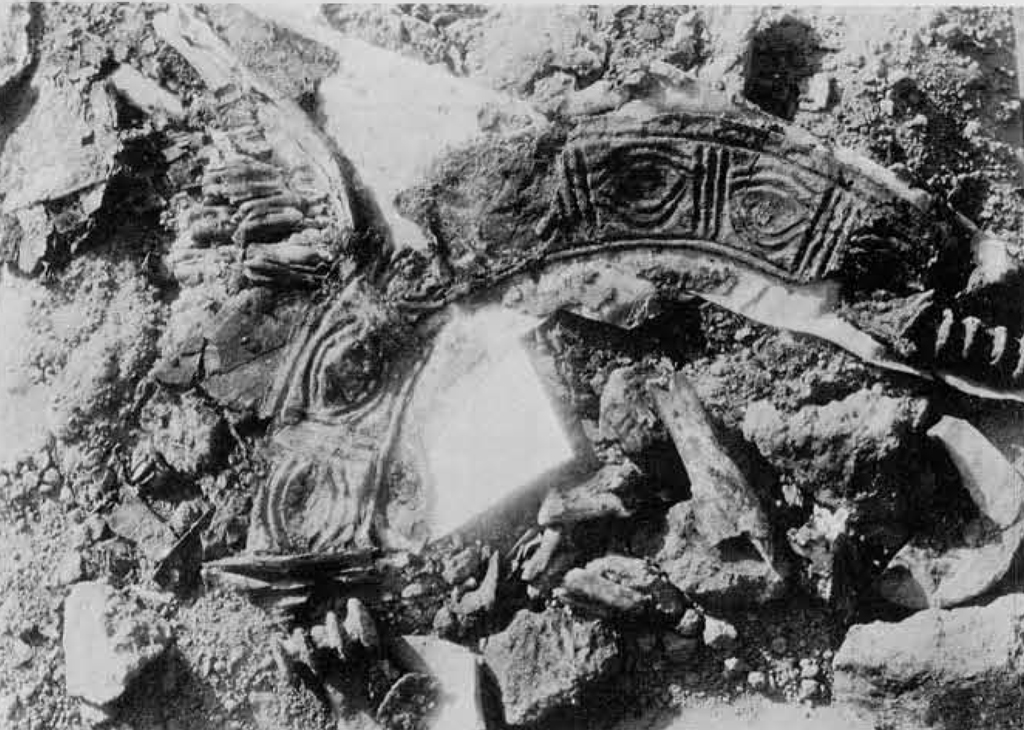
In 1922, archaeologists dug up a site in modern-day southern Iraq. There, they found incredible spans of gold and sophisticated armour, and Iron Age Sumerian artefacts, encased within stone walls. They dubbed this place “the Royal Cemetery of Ur,” an ancient Babylonian mausoleum. 

On that site, they also discovered evidence of hundreds of human sacrifices. Among the human sacrifices, a considerable number were children.

Nearly all of the skeletons were killed to accompany an aristocrat or member of the royal family into the afterlife. Some had drunk poison. Some had been bashed over the head with blunt objects. After their death, many were exposed to mercury vapour, so that they would not decompose, but would remain in a lifelike posture, available for public display.

Excavations from the Royal Cemetery at Ur

This site dates to sometime around 2,500 BCE in the ancient city of Ur. According to our legends, another figure came from the  ancient city of Ur sometime around 2,500 BCE. 

His name was Abraham. 

In the biblical narrative, Abraham wandered from Ur to ancient Canaan, where he began to worship the One God, and founded Judaism.

The world in which Abraham purportedly lived was rife with child sacrifice. Across the Ancient Near East, archaeologists have uncovered remains of children on slaughtering altars. They have found steles describing when and why they sacrificed children. They have found stories of child sacrifice from the Egyptian, Greek, Sumerian, and Assyrian civilisations.

So problematic was child sacrifice in the ancient world that our Scripture repeatedly condemns it. The book of Leviticus warns: “Do not permit any of your children to be offered as a sacrifice to Molech, for you must not bring shame on the name of your God.” The prophet Jeremiah describes disparagingly how the Pagans “have built the high places to burn their children in the fire as offerings to Baal.” In the Book of Kings, King Josiah tears down the altars where people are sacrificing their children.

Abraham put a stop to the practice of child sacrifice. It seems to happen suddenly, and without warning, and with even less explanation. No reason is given why he abruptly ended all the cultural deference that had gone before and opposed an entrenched religious practice. 

The question we now must ask is: why?

One reason that comes to mind is that it is so obviously immoral. Surely it should be self-evident that you don’t kill kids! But that wasn’t obvious to all the people around Abraham. And that wasn’t obvious to traditional commentators, either. In their world, the morally right thing was always to obey God.

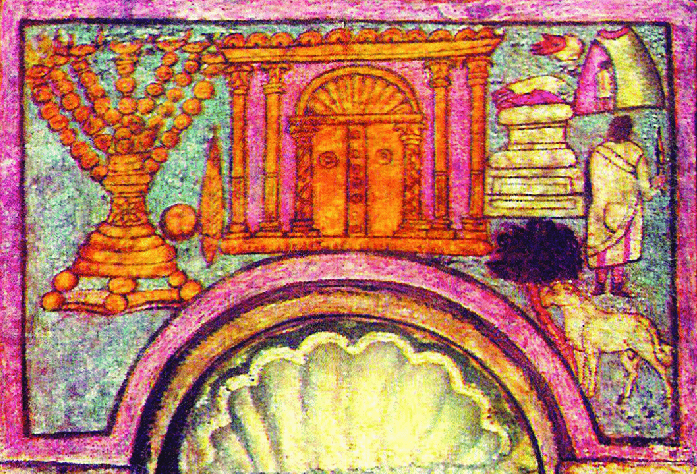
Fresco of the Binding of Isaac at the 3rd Century Duro Europos Synagogue, Syria

A traditional reading says that Abraham stopped child sacrifice in obedience to God. In the story we read today, Abraham is called upon by God to go up on Mount Moriah and slay his son. Only at the summit, when he holds up his arm to murder Isaac, does God stop him, telling Abraham that he has proved his devotion to God by not withholding his son, and that he does not have to kill Isaac. 

Yet there are several problems with this story. If we adhere to the traditional reading, God still wanted child sacrifice, and felt that doing so would prove Abraham’s devotion. In fact, nearly all traditionalist readers interpret it this way,saying that obedience before God should be a sacred virtue. A conservative reader of the Bible says that the moral of the story is that we should be subservient to God, and do what we are told.

God said not to perform child sacrifices, so we no longer do. That would mean, then, that if God had said child sacrifice was permitted, we would still be doing it.

In 2007, the Israeli philosopher Omri Boehm offered a radical reinterpretation of the story of the binding of Isaac. The story, Dr Boehm argues, is not about Abraham’s fealty to God, but his disobedience. Dr Boehm shows how, reading against the grain of traditional interpretation, this is not a story where God changes tact and decides not to ask for child sacrifices anymore, but where Abraham rebels against authority and refuses to commit murder.

For Boehm, what was truly radical about the Binding of Isaac was that it set out a new set of values, completely at odds with those of the Ancient Near East. Where other cultures practised child sacrifice because it was part of their established culture, Abraham resisted and put life above law. Where others encouraged obedience to authority, so much that poor people could be killed in the palaces of Ur to serve their masters in the afterlife, Abraham made a virtue of rebellion. For our ancestor Abraham, refusing to follow orders, even God’s, was the true measure of faith. By not killing, even if God seemingly tells you to, you show where your values really lie.

This is not a story about obedience, but rebellion. And that message – of resistance against authority in defence of human life – has much to teach us today.

Boehm reconstructs what the archetypal story of child sacrifice was in the Ancient Near East. Across many cultures and time periods, there was a familiar refrain to how the story went. The community is faced with a crisis: some kind of famine, natural disaster, or war. The community realises that its gods are angry. To placate the gods, the community leader brings his most treasured child and sacrifices him on an altar following the traditional rites. Then, the gods are pleased and the disaster is averted.

We can see that the biblical narrative clearly subverts the storytelling tradition that was around it. In other cultures, the community leader really did sacrifice his special child, and that really did please their Pagan god. In our story, the community leader does not sacrifice his special child, and the national God proclaims no longer to desire human sacrifice. This is already then, a bold message to the rest of the world: you might sacrifice children, but we will not.

Boehm takes this a step further and looks at source criticism for the text. Most scholars of Scripture accept that Torah is the work of human hands over several centuries. One of the ways we try to work out who wrote which bits is by looking at what names for God they use. Whenever we see the name “Elohim” used for God, we tend to think this source is earlier. Whenever we see the name “YHVH” used for God, we tend to assume the source is a later edit by Temple priests.

The story of the binding of Isaac is odd because it uses the name “Elohim” almost the entire way through, until the very end, when the angel of God appears and tells Abraham not to kill Isaac. That means that most of the text is from the early tradition and only the very end part, where the angel of God tells Abraham not to kill Isaac, comes from the later priests.

So, Boehm asks, what was the earlier version of the text? If you take out the verses where God is YHVH and have only the version where God is Elohim, what story remains?

Well, in the version that we know, where both stories are combined, an angel of God calls out and tells Abraham not to sacrifice Isaac. That’s the bit where God is YHVH. If you take that out, and have only God as Elohim, Abraham makes the decision himself. No angel comes to tell him what to do. Next, if we cut out the parts where God is YHVH, there is no praise from the angel, telling Abraham he made the right choice. Instead, you get a story where Abraham deliberately disobeys his God because he loves the life of his son more.

Adi Nes, ‘Abraham and Isaac’, 2004

The earliest version of the text, before the Torah was edited and a later gloss was added, is one in which Abraham is commanded by God to sacrifice Isaac, goes all the way up Mount Moriah, and then refuses. Without prompt or praise from God, Abraham decides to sacrifice a ram instead of his son. In the earliest version of the biblical narrative, when source critics have stripped away priestly edits, God tells Abraham to sacrifice his son and Abraham rebels.

The earliest version, then, is an even more radical counter-narrative to the other stories of the Ancient Near East. Not only do we not sacrifice children. We also recognise that sometimes you have to say no to your god. In this version, rebellion is more important than obedience, especially when it comes to human life.

This isn’t just a modern Bible scholar being provocative and trying to sell books. In fact, Boehm shows, this was also the view of respected Torah scholars like Maimonides and ibn Caspi. These great mediaeval thinkers didn’t think of the Torah as having multiple authors, but they could see that multiple stories were going on in one narrative. One, they thought, was the simple tale of obedience, intended for the masses. But hiding between the lines was another one, for the truly enlightened, that tells the story of Abraham’s refusal.

Boehm terms this “a religious model of disobedience.” By the end of the book, you go away with the unshakable impression that Boehm is right. True faith, he says, is not always doing what you think God is telling you. Sometimes it is reaching deep within your own soul to find moral truth. Sometimes you really show your values by how you defy orders.

In his conclusion, Boehm takes aim at Rabbi Shlomo Riskin, an American religious leader, who lives in the West Bank settlement of Efrat. Rabbi Riskin had said, in his analysis of the binding of Isaac, that Abraham was a model of faith by his willingness to kill his son. Riskin insisted that he was willing to sacrifice his own children in service of the state of Israel.

This, says Boehm, is precisely the opposite of the message of the binding of Isaac. The point was not to let your children die. The point was to bring a final end to child sacrifice. The point was not to submit to unjust authority, but to rebel in defence of life. 

Rabbi Riskin does not realise it, but by offering child sacrifice, he is really advocating for the Pagan god. He is describing the explicitly forbidden ritual of allowing your children to die. 

Abraham thoroughly opposed these false gods who demanded ritual murder. They were idols; and child sacrifice a monstrous practice that we were supposed to banish to the past. The very essence and origin of Jewish monotheism is its thorough rejection of killing children.

Boehm could not have known how pertinent his words would become. This year has been one of the worst that those of us connected to Israel can remember. Beginning on October 7th, with Hamas’s horrendous massacres and kidnappings, the last Jewish year has seen us rapt in a horrific and seemingly never-ending war.

This year, thousands of Israelis were killed. This is the first time in a generation that more Israeli youth have died in war than in car crashes. Reading through the list of names, it is remarkable how many of the soldiers were teenagers. 

That is not to even mention the 40,000 Palestinians whom the IDF have killed. According to Netanyahu’s own statements, well over half were civilians. Around a third were children. As famine and food insecurity rises, the risk of deaths will only accelerate. It has been agonising to witness, and I cannot imagine how painful it has been to live through.

Yet, during my month in Jerusalem, I saw that the voice of Abraham has not been extinguished. There are few groups I hold in higher esteem than the Israeli peace movement. Against untold threats and coercion, in a society that can be intensely hostile to their message, they uphold Abraham’s injunction against killing.

One of the leaders of the cause against war was Rachel Goldberg-Polin. On October 7th, her 19-year-old son, Hersh, was kidnapped by Hamas. His arm was blown off and he was taken hostage in Gaza. From the very outset, Mrs. Golderg-Polin argued fervently for a ceasefire and a hostage deal that would bring her son home. She warned that the only way her son would come home alive would be as part of political negotiations. 

At the end of August, as Israeli forces neared to capture Hersh as part of a military operation, Hamas shot her son, Hersh, in the head. 

Rachel Goldberg-Polin’s refusal to give up hope, refusal to sacrifice her son, and steadfast insistence on peaceful alternatives is a true model of Abraham’s faith.

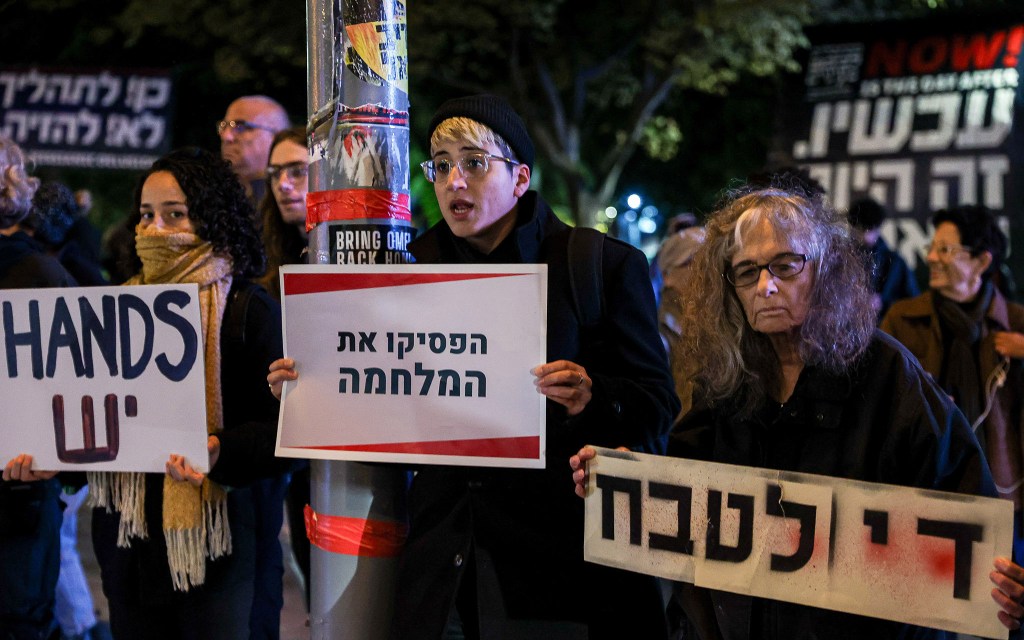
Israeli peace protestors

And it involves serious rebellion too. When I met with hostage families in Jerusalem, I was shocked to hear how, for protesting against the war to bring their families home, they had been beaten up by Ben Gvir’s police. I saw this with my own eyes when I marched alongside them. People shouted and jeered at them, and the police came at them with truncheons.

In July, when I went with Rabbis for Human Rights to defend a village in the West Bank against settler violence, we were joined in our car full of nerdy Talmud scholars by a surprising first-timer. A strapping 18-year-old got in to volunteer in supporting the Palestinian village. What was most remarkable was that he himself lived in a West Bank settlement. 

He explained that he had refused to serve in the military. He did not know that others had done it before, or that there were organisations to support Israeli military refusers. Instead, he said, he thought to himself: “if I don’t go, they won’t kill me; if I do go, I might kill someone.” What could be a truer expression of Abraham’s message: no to death! No to death, no matter the cost.

He really had to rebel. For refusing to serve in the war, the conscientious objector I met spent seven months in jail. Still now, there are dozens of Israeli teenagers in prison because they would not support the war.

Throughout my time in Jerusalem, I attended every protest against the war and for hostage release that I could. One of the most profound groups I witnessed was the Women in White, a feminist anti-war group going back decades. One of these women, with grey hair and the look of a veteran campaigner, held a placard that read in Hebrew: “we do not have spare children for pointless wars.”

Is this not exactly what Abraham would say? We will not sacrifice our children on the altar of war!

Theirs is truly the voice of Abraham, the true voice of Judaism. It is the voice that opposes child sacrifice. Theirs is the voice that upholds the God who chooses life. 

Talmud tells us that, when we blast the shofar one hundred times on Rosh Hashanah, we are repeating the one hundred wails of Sisera’s mother when she heard her son had died. Sisera was, in fact, an enemy of the Israelites, who waged war on Deborah’s armies, and was killed by the Jewish heroine, Yael. Still, at this holy time of year, we place the grief of Sisera’s mother at the forefront of our prayers. 

We take the cry of every mother who has lost a child and we make it our cry.

Thousands of years after the Sumerian Empire had ceased existing, archaeologists dug up its remains, and saw a society that practised child sacrifice. From the very fact of how they carried out murder and permitted death, the excavators could tell a great deal about what kind of society this was. One that killed people to serve their wealthy and their gods.

One day, thousands of years from now, historians may look upon us too, and ask questions about what our society was like, and what we valued. May we take upon ourselves the mantle of Abraham. 

May they look back and say that we chose to value life. May they look back and see that our people despised death and war. May they look back on us and see a society that practised faithful disobedience.

Amen.

diary · israel

To a pilgrimage site with no pilgrims

Occasionally, I hear Jews complain that everyone is obsessed with Israel. It’s true: this country gets way more coverage than pretty much any other. The coverage of the war on Gaza greatly eclipses anything broadcast about Yemen, Congo, or Sudan.

But can we really be surprised? More than a third of the world considers this land to be holy. Jews pray in this direction three times a day. Muslims believe their prophet ascended to Heaven here. Christians believe their god was born here. For the Bahai, their founder died here.

I do not think it is controversial to say that this land is, in some sense, sacred.

It is not that this country has any more God in it than anywhere else. Religious Jews hold that the Divine Presence departed from here with the destruction of the Temple, and that God’s place is now as dispersed as Jews are throughout the world.

But for at least the last 2,500 years, religious believers have invested their hopes and directed their prayers here. That decision to imbue the land with holiness surely has an impact.

Since the late medieval period, Jews have held that there are four holy cities in the land: Jerusalem; Tiberias; Hebron; and Tzfat. As a result, people have decided to be buried in them, retire to them, have their remains moved to them, pray to them, and study in them.

Having finished my volunteering in Jerusalem, I did what a good religious Jewish boy does. I went with my boyfriend on a pilgrimage to the sacred city of Tzfat.

We took a long bus ride through the hillsides, past the holy Mount Meron and along the Sea of Galilee into this beautiful blue city.

For centuries, this town has been considered an important religious site for Jews. Almost everything a worshipper would recognise from Friday night prayers began on these ramshackle cobbled streets. Mysticism was born here.

The Shulchan Aruch, the most important law code for observant Jews, was written here. That was what I was really excited to see: the synagogue where its author, Rabbi Yosef Karo, composed his authoritative work of religious law.

This law code holds a deeply special place in my heart (as it does for most religious Jews). My copy was gifted to me by my mentor, Rabbi Laura Janner-Klausner. She studied the codes with my grandfather, who loved halachah more than any Liberal Jew of his era (or since, probably.)

It also holds a deep connection for my partner, Laurence. He is a direct descendant of Rabbi Moses Isserles, who wrote a gloss to the Shulchan Aruch, called the ‘Mapa’, which turned it into the definitive law code for Ashkenazi Jews, especially his Lithuanian ancestors.

Laurence’s ancestry is a source of great pride to me, although he still has really no idea what the significance is.

Nevertheless, I think our backgrounds have contributed to why we connect so well. Because of our upbringings in the Liberal movement, and our ancestors who cared so much about Jewish law, we both see our Judaism in ethical terms. We regularly have moral conversations about what to eat, how to handle workplace difficulties, where to give charitable donations, and how to run our home.

When we first started dating, we had long conversations on our hikes over questions of Jewish medical ethics, like euthanasia, organ donation, and brain-death. In all of these, we refer back to our principles as religious Jews, and to the great writers on these ethical questions, like Rabbi Karo.

When we arrived at the Rabbi Yosef Karo Synagogue in Tzfat, it was shut. It hadn’t been open all day. It hadn’t been open for months. It would not be opening again any time soon.

In fact, everything was shut. Not a single art gallery, synagogue, or museum was open. We were lucky enough that one coffee shop was open in the Old City, where we got a drink, and found out what was happening. Nothing was open because there was nobody to open it for.

The northern towns have been entirely evacuated for fear of rockets from Hizbullah. No pilgrims have come for a long time, fearing for their safety. There are no tourists stopping by to look at the shops.

From the perspective of the locals, the central government has abandoned them. While the military successfully intercept nearly all the missiles from Lebanon, there has been no material support for the pious Jews who live and pray here, completely dependent on tourism.

When we first got here to the north, we felt like we could barely tell there was a war on. There were so few guns and next to no propaganda posters. It turns out we were looking for the wrong thing.

What we had not noticed were all the absences. All the missing shops, traders, youth trips, international tourist groups. There was nobody speaking English, Chinese, French, or Russian. Now the absences are the most gapingly obvious things here.

For many years, critics of Israeli nationalism have warned that arrogant militarism offered no hope for the Jewish people. For this, we have been accused of being traitors, bleeding heart liberals, communists, terrorist-enablers, and doe-eyed dreamers (usually by exactly the same people.)

I wonder if they will begin to see that it is precisely their hubris and warmongering that is destroying them.

This war is bankrupting them; their economy is in tatters; they are isolated and facing criminal charges in the Hague. Many Jews now look to this land with horror and fear.

Before the founding of the state, the mainstream religious position was one of opposition to Zionism. At that time, Orthodox leaders warned that building a military state would strip the land of its holiness. For them, this was an existential and mythical claim, borne partly out of their objections to secular modernity.

Today, however, it takes on a new meaning. The land is imbued with holiness because people have decided it is so.

Without pilgrims, even the shrines of great rabbis lose their significance. In the shadow of constant war, the place is stripped of its sanctity.

I am left wondering: what happens to the Holy Land if people can’t see anything holy here?

Noah knew that the Garden of Eden was the Holy of Holies, and the dwelling-place of God; and Mount Sinai was the centre of the desert; and Mount Zion was the centre of the navel of the earth. These three were created as holy places facing each other. – Jubilees 8:30

diary · israel

The dawn will come

My soul looks to God as a nightguard watches for the morning. – Psalm 130:6

I used to think the night guard was watching for the dawn with eagerness, excitement, and trepidation.

I just did a night shift watching out for army vans and settlers in the village of Umm al-Khair.

Now I know that the night guard simply greets the dawn with a weary sigh.

The last time I was here, we came to see the ruins of their destroyed homes. After we left, settlers and military shot at them.

In the short time since, the settlers have ramped up their aggression. They come in large, fanatical groups to terrorise the neighbourhood.

Night is a time when they feel most at risk. They also now have the added fear that the army, which is now entirely comprised of military reservists from the Hebron settlements, will come and carry out late night arrests.

So the locals stay awake, watching. They say they cannot sleep anyway. If they shut their eyes, fear is waiting in the dark.

The Talmud teaches that there is a state that is neither asleep nor awake. A rabbinic colleague once compared this to breastfeeding a newborn in the night. Now I know another version of this non-sleep. Fear.

I could not sleep either. We were supposed to sleep in shifts of a few hours. I lay down for about four hours.

A local boy stayed up with us to practise his English through the night. He wants to go to university. He hopes he will have passed his exams, but he’s worried, because he was distracted during the maths test, as his house had just been bulldozed.

We watched for every vehicle, every sign of activity, praying that the night would be “boring.”

When dawn broke, the children flooded into the playground where we had been camping out. I spun them round on the merry-go-round and pushed them on the swings.

A five-year-old came up with a cheeky grin and wanted to tell one of the international activists something. She took out an app on her phone that translated for hi.: “Gaza is my family, they are being bombed by Israel.”

In the light of day, I could see the human impact of the occupation. Kids – normal, sweet kids – who already know they are under siege.

Destroyed homes. Murals on walls professing the village’s resilience. Women cooking breakfast and men pouring cups of tea for activists who stayed the night.

Dawn will come to this sacred scrubland.

I know that morning will one day come, after decades upon decades of occupation and war.

But daybreak will not be the moment when all is set right. It will simply be when we take stock of what happened in the night.

In the daylight, we will see all the bodies of repeated catastrophes and finally be able to mourn them.

When dawn comes, we will see all that has been destroyed, and we will realise how much work has to be done to heal and repair.

I will wait for morning to come to Palestine-Israel just like the night guard waits for the first rays of daylight: restlessly, anxiously, hoping there will be enough remaining to begin the processes of reconciliation and rebuilding.

Dawn will surely come, but that will only be the beginning.

Wait, O Israel, for God, for God holds love and redemption. It is God who will redeem Israel from all their sins. – Psalm 130:7-8

diary · israel

Water is a more precious resource than I realised

Needing to use the toilet when you’re out and about is always embarrassing. After days going between different spots without returning to the hostel, it is inevitable.

But that embarrassment is multiplied tenfold in the home of a West Bank Palestinian. There, water is too scarce a resource to be wasted. The cistern is never full and needs to be filled up only in extremis. You can imagine my horror at being the cause for such a use of water when visiting people in Nablus.

You can recognise which homes are Palestinian in the West Bank because they have enormous water tankards above their rooves, which they fill up whenever possible. Unlike the settlers, they are cut off from the grid and cannot access basic running water.

Consider what this means for people. Clean drinking water is hard to come by in a valley thar, yesterday, reached highs of 44°C. You have to severely ration showers in the dustiest place I’ve ever been.

Yesterday, all the Bedouin men were called up to fix a problem. There was a leak in one of the water tankards by the grazing pastures. It was a hole at the bottom of the barrel that was spilling out the region’s most precious resource. Just a small gap, but enough to risk livelihoods.

They got all their resources together over a few hours in the hottest part of the day and patched it as best they could. It will do for now, but it will not last.

It is so unjust. The authorities could simply hook them up to the water supplies. Only meters away, Israelis are having baths and watering lawns.

Yet the Palestinians cannot even access water on their own ancestral lands, as an entire machinery seeks to destroy them.

Isaac returned and dug water-wells that were dug in the days of Abraham his father, which the Philistines had stopped up after the death of Abraham. He gave the wells the names that his father had given them. But when Isaac’s servants were digging the wells in the valley, they found there a spring of fresh water. The shepherds of Gerar argued with the shepherds of Isaac saying: “this water is ours!” Genesis 26