festivals · judaism · torah

What happened at Mount Sinai?


We are days away from Shavuot, the Feast of Weeks, when we celebrate having received the Torah. At this festival, we affirm we have received God’s word and that it is unfailing.

This is what we think we know: these words are not only God’s.


They have human origins, and they were written over many centuries. The Torah is not a single, unaltered revelation. It is a book with a history.

What happened at Mount Sinai matters immensely. It is the foundation of our faith. It is the basis not only of Judaism but of every monotheism that followed it.

The story has been told so many times. Hordes of Hebrews fled from Egypt, gathered around the foot of a desert peak, and heard the voice of the One True God.

What they experienced, they told to their children, and they to theirs, until – after generations – the vision was written down into a collection of stories and laws we call the Torah.

We have to know what really happened at Sinai; so much hinges on this indecipherable point of history.

We have to believe in the real world, where history is something made by human beings, who work, and struggle over resources, and build societies.

We have to believe in the God of Judaism, who is revealed through history.

We must synthesise the two. We cannot split the material and the spiritual. We need to know what the material reality was that lay underneath this spiritual truth. We need to know what happened at Sinai.

We cannot truly know, but we have to try and work it out. A group of human beings felt so inspired that they wrote down ten commandments and passed them on for thousands of generations. Why?

A group of human beings, who surely worked and slept and ate and drank and dreamed, proclaimed that they had seen God.

Something marvellous must have happened at that time. Something awe inspiring – to give us this treasury of ancient wisdom. Who committed these words to paper, what happened to them, and what made these commandments feel so important to them?

What really happened at Mount Sinai? The biblical historian pores over our texts, strips them back, digs out inconsistencies, looks for parallels in ancient cultures, and analyses the language in which the stories are told. The biblical historian discards impossibilities, looks for likelihoods, and reconstructs the best possible version of events.

We cannot know for certain, but we can do our best to do the same – to discard, seek and reconstruct. And, when we do, the truth of/ Mount Sinai that we are left with is far more radical than we might imagine.

For the historian, Mount Sinai may not have been Mount Sinai at all. It may be, as the Samaritans claim, Mount Gerizim, near Nablus, since that is also one of the mountains the Torah names as a site of revelation. It may have been Mount Pisgah or Mount Nebo, on the eastern side of the Jordan River, since our Torah names those locations too.

We do not know at which mountain the important revelation happened. But there was a mountain.


This is what we think we know: there was a mountain.

Some people went there. They may not have been Jews, since that word did not exist yet. They may not even have been Israelites, since the story teaches that they only became Israelites through the process of what happened at that mountain.

They were, says the Torah, a mixed multitude. They were drawn from all the nations of the Ancient Near East: from Ethiopia and Yemen; through Egypt and Sudan; to Lebanon and Syria.

They were, by their own self-description, border-crossing nomads. They had no land or title. There are no records to suggest they owned any weapons, let alone that they had military strength.

If we are to trust how they wrote about themselves, they were menial workers. Water drawers; grain carriers; tenant farmers; shepherds. They had been slaves. They were a ragtag of the ancient world’s lowest classes.

We do not know who these people were. But they were poor and transient.

This is what we think we know:
the poorest people of many ethnicities came together at a mountain.


We are not sure when it happened. It may have been any time from the 15th Century BCE. The latest it could have been is the 5th Century BCE, when the Torah was edited into its final form. That is a difference of nearly a thousand years.

We do not know what brought them to that mountain. We cannot prove that the exodus took place exactly as it was described in the Torah.

But we do know that, in the 12th Century BCE, there was a massive societal collapse in all the nations of the Mediterranean basin. In the broad period when our Torah tells us that our ancestors received the Ten Commandments, the Egyptian empire was crumbling.

We also know this. When Egypt was collapsing in the late Bronze Age, a Pharaoh wrote a stele, complaining of slave uprisings by a group of nomads on the fringes of his empire. He calls those people Habiru. The biblical historian notes the linguistic similarity between these people and the Hebrews.


This is what we think we know: the poorest people of many ethnicities rebelled together against a decaying empire some time around the late Bronze Age.
They met at a mountain.

The stories they tell of their experiences at that mountain are fantastical. Fire descended from heaven. Thunder crashed and lightning roared. Thick smoke descended over the peak. The earth trembled violently. The Creator of Heaven and Earth became manifest before them.

How can we know if any of this happened? Nobody else could have testified to what they saw. There are no contemporary meteorological records. There are only two possibilities: either the authors of our Torah really believed that was what they experienced, or they made it up.

If they made it up, so many others were convinced that they had been part of that experience at the mountain, that they faithfully transmitted the story for hundreds of years to their children and grandchildren. Which is more likely: that these people lied, or that they genuinely believed they had a transcendent experience?

This is what we think we know: the poorest people of many ethnicities rebelled together against a decaying empire some time around the late Bronze Age.
At a mountain, they had an experience so profound that they felt as if they saw God manifest, and it changed their lives and the lives of their descendants forever.

The God they thought they heard told them: “Although the whole earth is Mine, you will be for Me a dominion of priests and a holy nation.”

The poorest people in the world affirmed belief in a God who knew no borders and rejected all hierarchies. Every one of these ancient landless waifs would be holy.

According to our Torah, those people entered into a covenant.

Until this point in history, contracts of these kind were predominantly made between empires and vassal states. They took the form: “you will pay me tribute, and I will be your landlord.”

This was a covenant of a new kind. It said:
“you will do justly by one another, and I will be your God.”

They ratified this new agreement and remade what a covenant was. They swore an oath, committing themselves to an entirely new society. They bound themselves to a Law that knew no Sovereign save for a universal God.

They promised that their society would have no more killing; no more trafficking in human beings; no more greed. They declared fealty to each other, to their God; and to their sacred days of rest.

Take our texts. Strip them back. Dig out inconsistencies. Look for parallels in ancient cultures. Pay close attention to language. Discard impossibilities.

From what remains, you can reconstruct the best possible version of events.

This is where we have arrived.
This is what we think we know.

Thousands of years ago, poor people from many ethnicities got together in common rebellion against a decaying empire. They had an experience so profound that they felt as if they saw God manifest.
At a mountain, they made a covenant to create a society based on dignity.

Many hands have since re-written and interpreted that event – but, deep at its core, buried under years of transmission and analysis, was one moment.

This, is what we think we know:

Somewhere in history, there was a slave rebellion by a mountain.

And it was marvellous.

Originally published in Vashti.

festivals · high holy days · theology

ecclesiastes (taylor’s version)

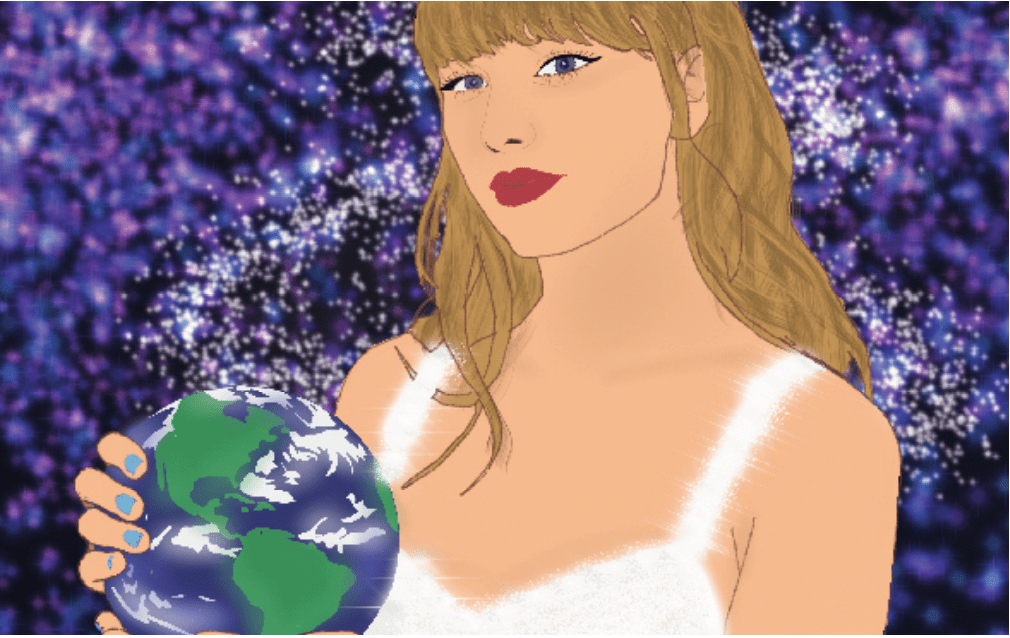
Not long before I started here, Rebecca came back very excited from a Taylor Swift concert. Taylor Swift, I understand, is a very famous popular music singer. 

Rebecca had been to the much-coveted “Eras” tour, where Taylor Swift went through her back catalogue of music. For Swifties – Taylor Swift’s fans – their favourite artist has “eras,” each represented by a different album. Fans ascribe themselves to an “era” – their favourite musical period from the singer.

In her enthusiasm for what she had seen, Rebecca suggested I do a sermon about Taylor Swift.

I curtly replied: “I think I’ll probably talk about Torah.”

That was wrong. I shouldn’t have said that. 

If something is relevant to the congregation, there should be a way to make it relevant to Torah. So, I got thinking about what connections there might be, not because I like Taylor Swift, but because I do like a challenge.

And I got thinking, you know who else had eras, each represented by unique creative output?

King Solomon.

According to our tradition, Solomon wrote the Song of Songs as a young man; the book of Ecclesiastes in his middle age; and the Book of Proverbs when he was old.

The Song of  Songs is a wonderful collection of erotic love poetry, beloved of weddings, and recited at Pesach as we celebrate fertility. It makes sense that this was composed by somebody young and virile. The Book of Proverbs is a compilation of wisdom and dictums: the sort of knowledge someone can only accumulate by living a full life and learning from everyone. 

The Book of Ecclesiastes – called, in Hebrew, Qohelet – is the text attributed to middle age. It is a deep meditation on what happens in a crisis of faith, asking what the meaning of life is, and seeking a transformed relationship with God. It makes sense for midlife, when we question our grand narratives, and find new existential purposes. 

It is the Megillah, the sacred text, for this festival of Sukkot. It is so appropriate for this autumn festival, when we build a beautiful structure and watch our sukkah get drenched in rain and torn apart by winds. The Swifties may hold by many different eras, but we Jews, at this festival of Sukkot, are very much in our Qohelet era.

With that in mind, I offer up a pop quiz. I’ll read out a verse, and you tell me: is it a Taylor Swift lyric, or a section from Ecclesiastes?

Some of you may need to sit this out, because you are superfans, and will therefore already have rote memorisation of every part of Tanach.

  1. I saw that there is nothing better for people than to be happy in their work. That is our lot in life. And no one can bring us back to see what happens after we die. (Ecclesiastes 3:22)
  2. Did you not write it down? Just one more thing to do. Where were you, and didn’t they pray, too? (Taylor Swift, Didn’t They, 2003)
  3. Did some bird flap its wings over in Asia? Did some force take you because I didn’t pray? (Taylor Swift, Bigger than the Whole Sky, 2020)
  4. A man might have a hundred children and live to be very old. But if he finds no satisfaction in life and doesn’t even get a decent burial, it would have been better for him to be born dead. (Ecclesiastes 6:3)
  5. If clarity’s in death, then why won’t this die? (Taylor Swift, Should’ve Would’ve Could’ve, 2022)
  6. Anything I wanted, I would take. I denied myself no pleasure. […] But as I looked at everything I had worked so hard to accomplish, it was all so meaningless—like chasing the wind. (Ecclesiastes 2:10-11)
  7. Tell me I was the chosen one / Show me that this world is bigger than us / Then sent me back where I came from / For a moment I knew cosmic love (Taylor Swift, Down Bad, 2023)
  8. Sometimes people say, “Here is something new!” But actually it is old; nothing is ever truly new. We don’t remember what happened in the past, and in future generations, no one will remember what we are doing now. (Ecclesiastes 1:10-11)
  9. Someone told me there’s no such thing as bad thoughts. Only your actions talk (Taylor Swift, Guilty as Sin, 2024)
  10. It seems so wrong that everyone under the sun suffers the same fate. Already twisted by evil, people choose their own mad course, for they have no hope. There is nothing ahead but death anyway. (Ecclesiastes 9:3)

When I set out on this task of connecting Qohelet to Taylor Swift, it was just a bit of fun. I was surprised to find something really profound through it.

Many of her fans have paid close attention to Taylor Swift’s developing relationship with faith. They have even engaged in a religious textual analysis of her latest album.

Writing for a British Christian magazine, cultural commentator Giles Gough notices “two Taylors.” The early Taylor, he says, has “an uncomplicated yet sincere relationship with God,” befitting of her Bible Belt upbringing. Later, she only turns to God in times of crisis, “typical of the mainstream, secular world she inhabits.” 

Gough speculates that Taylor Swift is “someone who has deconstructed their faith, and come out of it not really knowing what she believes. […] Swift seems to still be reaching out to God and when she is unable to find him, has perhaps tried to find salvation in romantic love.”

If his interpretation is correct, then Taylor Swift is even closer to King Solomon than we thought. She is asking the same questions and wrestling with the same theological issues as the Book of Qohelet does. 

In Ecclesiastes, the convoker is eager to hold onto his old views of the world. He insists: “Fear God and obey his commands, for this is everyone’s duty. God will judge us for everything we do, including every secret thing, whether good or bad.” (Ecclesiastes 12:13-14). 

At the same time, Solomon wrestles with nihilism, saying: “People and animals share the same fate—both breathe and both must die. So people have no real advantage over animals. How meaningless! Both go to the same place—they came from dust and they return to dust. For who can prove that the human spirit goes up and the spirit of animals goes down into the earth?” (Ecclesiastes 3:19-21)

This wrestling may, in fact, be a part of the human condition. In 1981, the psychologist and theologian James W Fowler developed a theory of “stages of faith.” He argued that people naturally go through a process of questioning their ideas, revisiting them, and finding new narratives to accompany their changes in life. This process helps adults to reach mature religious belief, where they can embrace diversity through universal principles of love and justice.

So, Taylor Swift, King Solomon, James Fowler, and the festival of Sukkot all seem to be teaching us the same thing: that it is OK to have doubts. You don’t have to cleave to a naive faith in a higher power, but can wrestle with God, and challenge your traditions. 

In doubt and uncertainty, we grow. In dogmatism, we remain static.

So, whatever era you are in, embrace it. Strive for curiosity. Love questioning.

And have  a very happy Sukkot.

Shabbat shalom.

festivals · sermon

Do not leave any part of yourself in Egypt


Several years ago, at a seder, I was introduced to a new custom.

When it came time to sing Dayyenu, a Persian-Jewish friend passed us all a spring onion each.

“In my family,” she said, “we hit each other over the heads with spring onions while we are singing this song.”

“It’s supposed to get out of our heads any feeling that we might want to remain in Egypt. So we remind each other by hitting our heads that we do not want to go back there.”

I instantly fell in love with it, and have adopted it into my own family seders. In fact, in my home, it can turn into a bit of a food fight, as we chuck the spring onions around the room.

One year, a Muslim friend came, and was quite baffled by the proceedings. I put quite a unique twist on my seders, and try to make them fun. That year, I had people dress up as the Ten Plagues from bits of fabric around the house, and do a lip-synching competition to the Prince of Egypt soundtrack. As he left, he said: “I can believe all of it is normal Judaism, apart from that bit with the spring onions.” I said: “That’s the only bit that was a real tradition!”

Maybe you might not bash your dinner guests with greenery, but you do sing Dayyenu, don’t you? It’s such a highlight.

I worry that some of our families’ seders don’t get there. The food’s coming out of the oven, everything has already gone on far too long, you’re anxious to eat, maybe you skip this important bit. I hope you don’t.

How about afterwards, when you’ve finished eating: who does the whole thing? Who carries on and sings hallel afterwards, and does the benching, and drinks the next two glasses of wine?

I hope you do. In fact, if this sermon has a message, it’s this: do the whole seder.

As you will see, this is not just me being a stickler for making sure people treat liturgy seriously, or insisting on the importance of halachah. This is about how we live our lives.

Our story begins with slavery and ends with freedom.

So, when you come to have your Pesach meals, make sure you don’t just tell the story of slavery. Make sure you talk a good deal about the freedom that comes afterwards.

The haggadah is actually split into two parts. In the first half, we are supposed to see ourselves as slaves in Egypt, weighed down by the yoke of bondage. Then, we eat. After dinner, we are free. We cross the Sea of Reeds and sing praises to our God. We raise a glass of wine to our redemption. We raise another glass to our future. We keep back a fifth glass for Elijah, who will come and bring about the final redemption, when everyone everywhere will finally know freedom.

Now, which of those two halves of the meal is more important?

Of course, it’s the second one. We don’t get together with our families and communities to dwell on how miserable it was to be stuck in Egypt. We get together to rejoice that we are free. How wonderful is this festival, the season of our liberation, that reminds us of that miraculous exodus out of oppression.

We sing Dayyenu (and bash each other with spring onions) immediately before we eat. That moment comes on the cusp between staying in slavery and leaving for liberty.

Dayyenu comes at the point where we are leaving slavery for freedom. By bashing each other’s heads with the spring onions, we say: “don’t leave any part of your head there! Don’t go back there, not even in your mind! Don’t dwell on those narrow places that kept you oppressed!”

Come on, we’re about to be free. We’re about to eat. Let’s look now to the future, where we will never have to think about those things again.

There’s a good reason why we might use spring onions in particular for the hitting. When the Israelites do get free, and start wandering in the desert, they start moaning about how much they miss slavery. They whinge about how much better being oppressed was. And what do they say they missed eating? The onions.

Those Israelites understood something. Being oppressed can feel easier than getting free. Sure, Egypt might have involved great persecution, but you always knew where you stood. Getting free, or at least trying, is tough. It’s unpredictable. It combines dizzying excitement with a terror of the unknown.

So we have to remind ourselves, over and over again, that however difficult freedom feels, it is better than oppression. However easy it might be to wallow in misery or stay in a victim mentality, there is so much more to be gained from shaking off our chains.

The first part of the seder says: we were slaves in Egypt. The second reminds us: but God helped us get free.

In the 19th Century, the Progressive Jew Israel Abrahams wrote about exactly this optimism for the Jewish Chronicle. He began his article by saying how wonderful it was that even persecuted medieval Jews insisted on keeping their doors open for Elijah on seder night, adamant that God would protect them. He said: “truly there is no danger to Judaism while such eternal hope prevails over despair.”

Israel Abrahams goes on to talk about the messianic hope that Jews hold at Pesach. Look at the bigger picture of history, he says, and you can see that it is not a delusion. “Persecutions come and go, but the Jews go on.” Away with all pessimism,” he says, “away with all pessimism.”

Can you believe that such words appeared in the Jewish Chronicle? How much can change in just over a century! Today, there is no way our communal organs would say how great it is that Jews would keep their doors open. They’d tell us to keep them locked. They’d sell us a more advanced security system. They’d put in a fundraising pitch for CST while they were at it.

Can you imagine any of our great and noble communal representatives sharing a positive view of Jewish history and an even more positive view of our future? No, their message is always the same: we are terrified; we have always been persecuted; we always will be persecuted. All we can do is build up bigger defences, hire tougher security guards, buy more effective security cameras; and keep our bags packed to run away just in case.

Sometimes I think Anglo-Jewry is stuck in the first half of the seder. It is as if many of us believe that we ourselves were slaves in Egypt, but nobody can believe that we were redeemed.

Do any of us really believe we are worse off than Jews were in the time of Israel Abrahams? Do we have more reason to cower than did medieval Jews? And, if we did, is cowering behind even greater security really our best answer?

The point of the seder isn’t that we were slaves. It’s that we got free.

Think of the wonderful things Jews are doing, and that British Jews have done. We are stars of stage and screen, fully represented at every level of politics, working in every strata of society, innovating, building, and living happy lives among our neighbours.

Sure, you can talk about the bad bits. Whenever I talk about the good, someone is eager to remind me of some proof of how much they all hate us. Some people leap to lecture on antisemitism and misery at even the suggestion that things might sometimes be good. That is a mentality that keeps your head in Egypt.

It’s not that everything is miserable and it’s not that everything is fine. It’s always a bit of both, no matter who you are.

The point is that everything could be wonderful. We could build a future so much better than this one.

Many times, with God’s help, we have achieved wonderful things.

When you take up the third cup at your seders, remember all the incredible things you and your ancestors have achieved.

When you take up the final cup, look towards the great utopia you can build here on earth.

And when you leave your Pesach seders this year, don’t carry around with you the slavery and misery of the first part of the meal. Bring out into the world Judaism’s message of hope.

Keep your eyes always on the best of what may be to come.

Beat out of your head any desire to wallow in misery.

Do not leave any part of yourself in Egypt.

Shabbat shalom.

festivals · theology

We are still leaving Egypt

We are still leaving Egypt.

There was a time when we lived at the whim of tyrants; when we worked without a break and only rested so we could work more; when we owned nothing but debts. 

There was a time when we lived in mitzrayim. Today, we translate that word as ‘Egypt,’ fixing it to a specific time and place. 

Our Torah does not permit us to read the story as if from a history textbook. Which Egypt were we living in? What were its borders? In which century did it take place? Who was the Pharaoh?

In Torah, all Pharaohs are simply called Pharaoh. To the migrant labourers and the chattel slaves of the ancient world, it made no difference whether the emperor was Ramses, Amenhotep or Cleopatra. As far as their lives were concerned, each century was broadly the same.

We want to imagine that this place is miles away from here and centuries apart from now. We want to draw a line to divide ourselves from the past.

The word for Egypt – mitzrayim – means ‘narrow, oppressive straits.’ It means places of anguish and control. That place does not have fixed borders between Sudan and the Mediterranean sea. It is a place we have all inhabited. It is a place we all still inhabit.

At Pesach, we are commanded to tell the story of the Exodus as if we ourselves had lived it. The haggadah instructs us to recall the events as if they are part of our collective experience. 

It is not just so that we can remember the bitterness of slavery in the taste of maror, or the tears of persecution in our salt water. This is far more than bringing a story to life. 

It is so that we will understand that Egypt was not simply one place and time. It is any place and time in which people are not free. And because it is any place and time, it is every place and time.

We must understand that we really were slaves in Egypt. We must believe, deep within the sinews of our bodies, that we are still there.

Because if we can remember how we were oppressed, we will remember that we were able to free ourselves. 

We will feel the strength and joy that comes from rising up and leaving constricting spaces. It is so that we will feel empowered to do it again. We must still leave Egypt.

The seder is a process of embodied retelling to help us understand that message.

Yes, in the first half of the seder, we read that we were slaves in the land of Egypt. But, in the second, we invoke Messianic redemption. 

When our plates are cleared and the afikoman has been retrieved and the dinner is done, we turn back to our haggadahs and complete our seder. 

We pour out a fifth glass of wine, open the door, and implore the prophet Elijah to return and finally bring us to freedom. We acknowledge that the struggle is not yet complete. We still have to leave the Egypts of our era.

As the seder concludes, we lift our glasses and promise: “next year in Jerusalem!”

Please do not mistake this toast for a tourism brochure. We are not praying for cheap easyJet tickets to Tel Aviv. The Jerusalem we hope to reach next year is miles away from the one in Israel today. 

Our fellow Reform Jews in Israel are still very much in exile, and crying out to leave their own narrow straits. If the Jerusalem in the contemporary Levant were the one we were reaching for, Judaism would be over. History would be complete, and so would the sacred purpose of the Jews.

If that were Jerusalem, the ultimate Jerusalem, we would have to say that we are satisfied with segregation, militarism, and fanaticism. 

But we are not. 

We are not in Jerusalem until the whole world knows unending freedom. Until there is no more oppression, we are all in Egypt.

We British Jews are still in Egypt too. We have made many advancements. We are citizens in our country with full civic rights. When this was granted to European Jews, many felt it was so miraculous that they considered the exile to be over.

Moses Mendelssohn, the founder of the Jewish Enlightenment, proposed that the social and moral progress encapsulated by Jewish emancipation would bring about a new society. A utopia of tolerance and conclusion based on the values Judaism had imparted to humanity. What would such a place be called? Jerusalem. 

He titled his book as such, anticipating that, when we reached such an age, Berlin would be Zion.

For all our greatest aspirations, Europe has not become the Promised Land. Not yet. Nor is Israel. Not yet. 

If we limit ourselves to imagining emancipation as a geographical phenomenon, we will keep chasing after new countries, hoping they will be our final destination, only to find that, in every location, we remain in exile.

That is because exile is not simply a place. It is a state of being isolated from the true and complete justice of God. 

That promised land is yet to be found.

As long as there is progress to be made, we will keep journeying.

As long as there are slopes to freedom, we will continue to climb that mountain. 

Until the day when we are all free, every year, we will pray that, next year, we will live in a world redeemed. 

Now, we are still leaving Egypt.

Next year in Jerusalem. 

festivals · story

Set a place for Elijah


If you receive a knock on your door over this Pesach season from a beggar, please be warned. It could be Elijah.

You have been setting a place at the table for him every year, leaving him an extra glass of wine. You have been waiting for him. Did you never imagine what he would look like?

Sure, in the children’s stories, he is like a jolly Jewish Santa carrying presents. But you are all old enough and learned enough to know how Elijah is really depicted in our tradition.

When you think of Elijah, you need to imagine somebody who absolutely stinks. You need to picture wild matted hair and cackling laughter and a leather hip flask filled with hooch. 

The prophet is a drinker, and who can blame him?

No crueller punishment has ever been doled out than that given to Elijah the Tishbite. Elijah was cursed with unending life.

His sentence came in the time of Queen Jezebel but he was already much older than that. Nobody knew how old, or where he was from.

Back then, the people called him the Tishbite: the immigrant. The name stuck so hard that later generations imagined he must have come from a place called Tishab. 

He made enemies in life. Prophets always do. They have God on their side, but the powerful have the weapons, and, for now, the truth of swords is stronger than Scripture. 

At first, Elijah revelled in his mission. He was a notorious outcast. He went out in the streets making fun of the false gods. He wound people up in the markets. He poured scorn on every priest. 

And, at first, his adversaries found him entertaining too. He was like a court jester, telling the monarchs what they didn’t want to hear, as onlookers cheered him on.

But the joke grew thin. And the ruling powers had enough.

“I swear by all my gods, I will kill you,” said Queen Jezebel, and Elijah fled into the mountain caves. 

“The trouble is,” Elijah wailed, “people don’t know what’s good for them. Nobody is faithful any more. The real ones have vanished from humanity. Everyone lies. They have twisted lips and two faces. Why can’t you just cut out their tongues?”

God gave him food and water and rest through the kindness of ravens. 

“Please, Almighty,” prayed the prophet. “Send me a sign.”

The wind rattled mercilessly through the mountains, shattering rocks and splitting cliffs.

“Please, God,” said Elijah. “Just a small sign of Your provenance.”

In the valley below, the earth rumbled and quaked apart.

“Are you there, God?” he asked.

Over the tops of the hills, Elijah saw black smoke puffing out of white flames as a raving fire blistered through the thickets. 

That’s when Elijah made his fatal error. He begged God to let him die.

“I’m not looking for miracles, O Merciful One. I’m all out of hope. I have had enough. Please take my life.”

Then there was silence. 

No more infernos or hurricanes or earthquakes. 

The pressure dipped. The ravens stopped chirping. 

Not even an echo in the still canyon. 

He heard a whisper in the cave. 

“What are you doing here, Elijah?”

The Tishbite stood up in the dark silence. He mustered his courage. He announced: “I am a zealous warrior for the Almighty God. And I am the only one left.”

“A zealous warrior who wishes he were dead?”

Elijah got ready to speak, but the whisper interrupted him.

“A man of the people who despises the people? A faithful prophet who does not see miracles? A truth teller who lies in the face of God?”

Elijah was still and small.

“Faithless, are they?” 

God’s words reverberated in the cave. 

“In that case,” said the Creator. “You will need to watch over them. They will never perform our rituals without you there. So you will attend every circumcision and attend every seder until the end of time. Then you will see how faithless My people are.”

A hurricane of flames burst from the clouds and dragged Elijah, screaming, into the sky.

“Your mission is ongoing,” the Eternal One instructed him. “You will turn the hearts of parents to their children and the hearts of children to their parents. You will be my herald of a greater age.”

“When people are ready to listen to you, when they believe you and see you,” said God, “then I will send the Messiah.”

So Elijah trudged on. He stood in the gateways of every city, proclaiming visions of a coming world. “There will be no hunger or war; neither envy nor competition. Goodness will flow in abundance and all the delights will be freely available as dust. The occupation of the entire world will be solely to know God.”

But nobody listened. 

He had no more cheerleaders, and no more adversaries. He was just another vagrant with a vivid imagination. 

Do you know what happens to a body when it is condemned to live? It trundles on with all the distress of ageing but without any hope of repose. Over centuries, the bones break, the eyes dim, the flesh rots, the organs become riddled with disease. In each era new viruses and plagues are created and you contract them all. It takes a long time, but you get sick and your lungs fill up and feet swell and your joints fuse and your muscles contract and your pores reek and your hands tremble.

It is like being unbelievably tired but never, ever allowed to sleep. 

It took a while before Elijah really allowed time to lay waste to his body. Before he let his hair become matted and knotted. Before he stopped washing and his skin turned to oily fungal patches.

Talmud teaches that, when the Romans ruled the world, he used to sit at the gates of their capital city. He would sit with the other beggars, tending to his wounds. He would unwrap each bandage and then tie it again, gingerly holding his body together as it broke.

A great rabbi came to visit him and recognised him from a mystic’s description. 

“My master, my teacher, peace be upon you,” the young rabbi beamed as he alighted on the prophet.

Elijah was filled with joy. For a brief moment Elijah felt he was seen. 

“When will the Messiah be coming?” The rabbi asked. 

“Today!” Elijah laughed. “Today! Today! Today!”

The rabbi went back to his homeland with the prophet’s words in his ears. 

“Today,” said Elijah, as he sat back down to tend his wounds. “Today. If you are able to see me and you are willing to hear my words, it really could be today.”

“I don’t think that was really Elijah,” the rabbi said to his friends on his return.

So the Messiah didn’t come then, and the Messiah hasn’t come yet. 

Some snooty Jews are expecting him to turn up with beaming smiles and a suit and tie. Or they imagine he will be a wispy spirit. Or they think the Heavens will open and they will see God themselves. 

They open the door to him. But, even with the place set and the doors wide open, they don’t notice that the old prophet is already there, dressed in his rags and nursing his whiskey. He has always been there.

Only when we are able to realise that intoxicated crazy people might be Elijah will we really be able to see the prophet.

And when we all recognise that every outcast and despised person may be the harbinger of the greater age, we will not need to wait any longer. The Messianic age will have already arrived. 

So, set a place for Elijah this Pesach. Fill a glass of wine for his health. Open your door to welcome him.

Just be sure you know who you’re looking for.

Shabbat shalom.

festivals · sermon

I saw a world turned upside down

Yosef, the son of Rabbi Yehoshua, had a near-death experience. Yehoshua asked him: “what did you see?” He said: “I saw a world turned upside down, where the poor were rich and the rich were poor.” His father answered: “You saw a world turned right way up.”

For a long time, this was my favourite passage from all of Gemara. Recently, I’ve started to feel more conflicted about it. 

This brief story is an interlude in Masechet Bava Batra of the Babylonian Talmud. The chapter is all about economic redistribution, charity, the rights of the poor, and fiscal justice. It encapsulates a beautiful idea. The poor should know what it is to be rich and the rich should know what it is to be poor.

Six years ago, the then-26-year-old duke, Hugh Grosvenor, became the world’s richest man under 30. Upon his father’s death, he inherited £10 billion, a title, and some of London’s most profitable land deeds. He remains Britain’s fourth richest person.

According to a recent report by the Joseph Rowntree Foundation, 1 in 5 households in this country are in poverty. 7.2 million households are going without essentials, like heating, food, showers, toiletries and adequate clothing. 

It’s hard to picture statistics, so let’s take a story. Heather is a mum of two girls, aged 10 and 4, in Camborne, Cornwall. Her family is one of those millions in poverty. They opted to tell their story to ITV. Cameras followed her round as she worked multiple shifts, round the clock, and fed her family from food banks.

What would it be like if, as in Yosef ben Rabbi Yehoshua’s vision, the two swapped places?

How would the duke fare if he woke up as a social renter on a council estate in Cornwall, with no money, and unpaid debts, and needed to get his children to school but couldn’t afford the bus fare?

How would it be for Heather if she suddenly found herself a duchess, living on a 300 acre estate in Lancashire, waited on for every meal, never having to clean, and able to indulge in boozy parties costing upwards of £5 million? She wouldn’t need to go shopping. She would own the shopping centre.

It is a tempting fantasy. Seeing this world, so clearly turned upside down, I, too, take pleasure in imagining seeing the day.

We can see why it would have appealed to the authors of the Talmud, too. Rabbi Yehoshua was a poor tailor living under Roman persecution. Yehoshua saw the incredible wealth of Emperor Hadrian, which he had extracted from colonising and impoverishing the people of Eretz Yisrael, among many other territories of his Empire. Why wouldn’t Yehoshua, a pious scholar, want to switch places with that brutish tyrant?

But is it really motivated by righteousness, or is it just a desire for revenge? As we approach Purim, I remember what can happen when a world is turned upside down like that. How easily the oppressed can become the oppressors. How quickly hurt people can hurt people.

Our story begins in a world where one man has a ludicrously bloated empire and spends all his time flaunting his wealth on extravagant banquets. Achashverosh has a harem of women at his beck and call, who live in fear of death and exile.

This is a system already ripe for abuse, and, when Haman is appointed as chief vizier, we see just how far that society can go in its cruelty. Haman insists that everyone bow down to him. He took an ethnic disliking to Mordechai and the Jews, who, in turn, refused to accept his authority. So Haman plans a genocide, with full indulgence from the king and his court. He erects a stake on which to impale Mordechai.

In the end, the world is turned upside down. Mordechai is put in Haman’s position. He is given royal robes and the signet ring. He gallops through town on a horse and everyone bows down to him. Haman is impaled on the stake he planted for Mordechai.

Then, the Jews enact a genocide. In one day, they kill three hundred men. On the next, they kill seven thousand. They massacre and exterminate all who stand in their way, including women and children, with royal permission to plunder their possessions.

Look, a complete inversion of events! The poor are rich and the rich are poor. The strong are weak and the weak are strong.

But, is this justice? 

In Progressive movements, we are so embarrassed by this chapter of the Megillah that we often omit it from our readings. In Orthodoxy, the goal is to get so drunk you don’t know what’s happening. By the end, you’re supposed to be unsure whether you are booing or cheering for Mordechai. That’s not a surprise: if we hears it sober, we’d probably jeer everyone.

The problem the story highlights is not that some people are good and others are wicked, but that broken systems make good people do wicked things.

The same system that permitted egregious exploitation and violence remains intact, with different people doing the killing. Everything is turned upside down, but, somehow everything is just the same.

This story is just a fantasy. There was no historical massacre by Jews in ancient Persia. In reality, they never got the upper hand during their exile. This is just their dream of what they might do if that world was turned upside down.

That doesn’t mean the fantasy is harmless. While Jewish history includes many times when we have been oppressed, it also includes occasions when we have been the oppressors. 

There is nothing in our history to indicate we are any less capable of cruelty and malice. In fact, we know too well that oppressed people, when handed power, can act in ways that would make their persecutors blush. Revenge is a powerful drug.

That doesn’t mean we should never try to turn the world upside down. We are still right to take umbrage at the outrageous wealth of Hugh Grosvenor while most live in poverty. It is still correct to hiss Haman as he uses his powers for ethnic persecution. 

But a world where the rich are poor and the weak are mighty is not a world turned upside down. It is the same world with people in different positions. 

The problem is not Yosef ben Yehoshua’s dream. It’s his lack of imagination. 

When we dream of the inversion of this world, we need to think of more than just switching who gets to be in charge. 

We, too, must have a vision of a world turned upside down. Where there are no rich and there are no poor because everyone has enough. Where there are no persecutors and there are no oppressed because power is shared evenly and democratically. Where racism and abuse are unfathomable because communities strive towards accountability and progress.

That would be a world turned right way up. 

Shabbat shalom.

festivals · sermon · talmud

Why did the Rabbis rewrite Hanukkah?

Hanukkah. It’s such a great festival. The candles, the dreidls, the latkes. Everything about it seems so heimishe, so wholesome, so Jewish.

Would you believe me if I told you that, in the biggest, most important corpuses of Jewish literature, it barely gets a mention?

Of course, it doesn’t appear in our Bible, the Tanach. Hanukkah is one of the only festivals we celebrate that isn’t ordained by the Torah. That’s because everything recalled by the Hannukah festivities took place in the 2nd Century BCE, right at the time our canon was closing. All the stories that were going to be in our Bible were already there. 

The accounts of what happened – how the Hasmoneans rose up against Greek occupation – were only preserved by the Catholic Church, who considered them ‘Apocrypha,’ or intertestamental books, leading up to the time of Jesus. The Jews didn’t hold on to them.

But it’s not just our Bible that omits Hanukkah. Even our rabbis, the creators of Judaism as we know it, scarcely paid attention to the festival.

The Talmud is an enormous compendium on every aspect of Jewish life. Want to know about marriages? There’s a book for that? Divorces? There’s a book for that. What to do if somebody swears an oath that they won’t cut their hair and then wants to renege on it? There’s a book for that. What to do if your ox attacks another farm animal? Book for that.

Every festival has its own book. Yom Kippur, Rosh Hashanah, Pesach, Purim, Sukkot, and Shavuot all get extensive tractates. But not Hannukah.

If you want to know what the Talmud says about Chanukah, you have to look in a completely different treatise, on the topic of Shabbat. There, it gets a brief mention, in amongst a much larger conversation about candles. 

In the whole library that is rabbinic literature, Chanukah only gets four pages (or two sheets, front and back) dedicated to it. What did this poor Festival of Lights do to deserve such neglect?

You might say, well, it’s just a minor festival. It’s not one of our big ones. It’s only really become a major holiday in response to the booming of commercialised Christmas.

But, looking at what the Talmud actually says about Chanukah, we are confronted by a bigger mystery. The Talmud begins with a debate between the two great Sages who founded rabbinic Judaism, Hillel and Shammai. Shammai says that we should start by lighting eight candles, and decrease each day. Hillel says we should start with one and work our way up. As usual, we follow Hillel.

Here’s the thing. This debate does not appear anywhere earlier in the tradition. It’s not in the Mishnah or the Tosefta, where we would expect to find it. It’s certainly not attested from the time of Hillel and Shammai. Hillel would only have been born about 50 years after the Maccabees came to power. Surely we would expect to find something contemporary?

The Talmud seems to have invented this debate, nearly 800 years after the event took place and the rabbis named were alive.

There’s a good reason why they would want to do that. When we tell the story of Chanukah, we tell the rabbis’ version. We tell the story as it appears in the Talmud. You’ve probably heard it already. The invading Greeks defiled the Sanctuary and all that was left was one cruse of oil. That cruse of oil lasted eight days, which was an astonishing miracle. Now, as a result, we light candles for eight days.

The story from the time paints a very different picture. The Books of Maccabees were probably written as military propaganda by the Hasmoneans themselves. They show a zealous army of militants, who rose up against Greece, but spent a good chunk of their time massacring Jews who they thought had assimilated too much. They were, effectively, a terrorist organisation.

When they won power, they set up a theocratic dictatorship. They put themselves in charge of the monarchy, the Temple, and the economy. They ripped up centuries of checks and balances in Israelite politics. They engorged themselves with wealth and crushed all dissent.

At the time when Hillel was alive, they would still have been in power. It is unlikely they thought highly of the rabbis, whose interest in Jewish law would have threatened their power. They probably didn’t think much of the early rabbinic schools either, which looked suspiciously like Greek philosophy academies. There’s no way Hillel and Shammai would have celebrated their festivals.

It seems that, centuries later, the celebration of the Hasmonean victory persisted, but people had forgotten why. So, our rabbis came up with a new story to replace it. They replaced war with joy. They replaced spears with candles. They replaced military victory with faith in God.

That’s why they omitted the story of military conquest. Instead, they developed the stories of miracles and burning lights that we recognise today. They replaced the corrupt rulers and zealous extremists with pious sages, who saw the festival as a celebration of God’s surety, rather than of human strength.

The rabbis concocted a festival lectionary, giving us biblical readings to focus our mind on its themes. They chose for our haftarah the prophecy of Zechariah: “not by might, nor by power, but only by My Spirit, says God Almighty.” 

This verse directly contradicts the Maccabee myth. Not might. Not power. But God, and faith, and peace.

That is the Judaism we have inherited. That is the Judaism our rabbis intended for us when they created the Talmud. They wanted us to live as the prophets of old dreamed: in peace with our neighbours; seeking justice at every turn; and walking humbly with our God.

Faced with persecution under the corrupt tyranny of the Maccabees, our rabbis reinvented Judaism so that it would be a positive guiding force for all people.

That is a much greater revolution than the Hasmonean victory. 

That is the real miracle of Chanukah.

May this Festival of Lights bring you boundless joy. Chag urim sameach. 

May this Day of Rest bring you peace. Shabbat shalom.

festivals · high holy days · sermon

Is time a cycle or a line?

Do you ever feel like we’re going round in circles?

No, really.

We just spent our evening going round and round. We circled the synagogue seven times; we spun around on the spot. We rotated so much we got dizzy.

Then, having spun and circled and danced with the Torah, we read the very last bit of the story, only to begin it again. No sooner had our narrative ended than we immediately restarted it.

Our storytelling does not begin with creation and end with the death of Moses, because the death of Moses is immediately followed by the story of creation. You cannot hear one without hearing the other. We are locked in a cycle.

How fitting that this celebration of circling is the completion of our High Holy Day festivals. They began with Rosh Hashanah, when, our tradition teaches, the world was first created, and they end with Simchat Torah when, we read, the world was first created. Our festivities began with a new beginning and end by redoing the same beginning all over again.

This makes sense in the context of our festival cycle, where one simchah always follows from the last and leads to the next one. Which one is the beginning, and which one is the end? If you tried to place your finger anywhere in the cycle, you would soon find it slipping away from you, as it made way for the next turn on the same wheel.

Our Torah, our festivals, our planet, and our bodies, all turn with anticipated regularity. So we go on in circles.

This view of time is antithetical to the modern mind. Everything in contemporary thought speaks of progress. We came from a finite beginning, and we are heading to a finite end.

The world began at one point, when it was created, and will end at another, when it will be destroyed. Humanity came into existence around 300,000 years ago, and could last another 8 million, but it will at some point cease to be.

In the intervening period while humans exist, we progress from intelligent apes to hunter-gatherers, to shepherds, to subsistence farmers; through the metallic ages to feudalism, to capitalism.

Yet this view of time, as a progression from one clear point to a closing at another, is a distinctly modern one.

For most of Jewish history, time has not been a journey from beginning to end, but a constant cycle.

The great 20th Century literary critic, John Berger, explained this mentality. For those who work the land, life is precisely a cycle. The work of each day is in a routine with every other. Each year follows the same pattern as the one before.

Autumn, spring, summer, winter. We reap, we sow; we plant, we harvest. We mulch the ground and till it with seeds and water it and take in the yield and repeat the same process again.

Every individual is born into a world where that wheel is already in spin and, when they die, the world carries on turning in just the same way.

When peasants imagine time, therefore, they think only of three stages. The first is our present life of survival, confined as it is to that ongoing cycle. At either end is an identical period of perfection. We began in a paradise and we are heading to a paradise. The ideal world existed long ago in the distant past, and we will return there when the world is set right.

If the distant past and the messianic future are the same place, then time is a cycle. We are only ever heading to the place from which we began.

This is precisely the position of traditional Jewish theology. Our souls began in Eden, dwell temporarily in this life to struggle, and will one day return to that same Eden.

It is the traditional Jewish view of time. Humanity was given a perfect world; we live now in a time of violence and injustice; the world will be returned to its sublime state once more.

When we put the Torah back in the ark, we summon this Jewish view of time: חַדֵּשׁ יָמֵינוּ כְּקֶדֶם – renew our days as of old. Make our times new, like they were at the beginning.

Within these times, then, says Berger, our only way forward is to trudge the same path. We walk on the same roads as our ancestors did and beat them down again for the next generation.

In Judaism, we call that path “halachah”: the way, the route. These are the rites and customs of our ancestors. We will repeat them and we will pass them on. The cycle continues.

But there is a problem with this view of time. Berger acknowledges that, if life is seen from this standpoint, the only correct moral viewpoint is conservative. We must repeat what we have done before. We cannot deviate from it whatsoever.

That is, effectively, a parody of Orthodox Judaism’s view of history. The religion is the same as it always was and we must endeavour not to let it change. Our ancestors knew more than we did, and we will be in a constant descent of generations until a long-awaited messianic age.

In such a worldview, there is no room for development, innovation, or change.

There is a reason why “going round in circles” is an insult!

However much progress may conflict with the passing of the seasons, it conforms with what we know of what has happened over the centuries.

We are all here as Reform Jews because we have seen something in the past that we wanted to correct: whether it was inequality between the sexes; an inability to watch TV on a Saturday afternoon; or simply a desire to hear the organ in shul. If everything must remain static, our synagogue could not exist.

Reform Judaism is an effort to reconcile the two views of time. It straddles the traditional cycle and modern progress. It says that we can go round and go forwards at the same time.

How is this possible?

I like the analogy of time as a snail shell. Yes, it goes in cycles, but at the end of each turn, it moves forward, just slightly. We go round and we go out. We go back on ourselves in order to advance.

If it feels like we are going round in circles, that’s because we are, but we are not always coming back to exactly the same place.

When we arrive at this new Simchat Torah, we are reliving the old one, but we are here as transformed people. We are slightly different than when we saw it last, so the festival is too.

We go back on ourselves in order to move forwards.

Chag sameach.

festivals · high holy days · sermon

From an open roof to a closed scroll

We are nearing the end of Sukkot and entering Simchat Torah.

We move from fragility to strength, from an open roof to a closed scroll, from the impermanence of life to the eternal truth of God.

What makes a sukkah kosher is its frailty. With its open walls and starlit roof, it stands in for all our wanderings and confusion. It is makeshift and temporary.

In its fragile state, it teaches us about the human condition: that we are vulnerable, at the whim of forces beyond our control. Into this transient home, we bring guests, both living and ancestral, who teach us that we only live by community. 

The sukkah teaches us about the human heart: that it must be open and porous, welcoming to strangers, able to let others in and accept our own emotional helplessness.

But the sukkah also has another feature of what makes it kosher. It must be able to stand for eight days. It must be strong enough to withstand the weather. It cannot be drowned by rain or upended by windstorms. 

This, too, teaches us about the spirit. We must be resilient. We must be confident enough to know our boundaries. We must be strong enough not to let others wave or topple us.

This is the tension we hold in the transition between Sukkot and Simchat Torah: between fragility and strength.

There is a story that Abraham’s tent was open on all sides. 

Wherever Abraham looked, he could see whether strangers were coming to visit him.

If he looked out and saw them coming, he would run to meet them. Abraham was the model of generosity, so full of love for the wayfarer that he would do anything to let them in.

This explains why he greeted the angels who came to visit him at Mamre so enthusiastically, even though he thought they were just human beings. It explains how he was righteous enough to receive God’s blessing, and to become the progenitor of monotheism. 

This is the version of the story that we find in Bereishit Rabbah, and you will find it printed in all sorts of commentaries. It is a beautiful myth that captures our imaginations and features heavily in sermons preaching charity. It teaches us about the importance of welcoming. 

But it is not the only version of the story in rabbinic literature. A few centuries later, Avot deRabbi Natan, a commentary on the same text, explains it slightly differently. Instead of the example of Abraham, this midrash says we should be like Job. 

It teaches:

Your house should have a spacious entrance on the north, south, east, and west, like Job’s, who made four openings to his house. Job opened up every side so that the poor would not be troubled to go all around the house: no matter what direction a stranger came from, they could enter in their stride.

At a glance, it tells the same story, just with a different prophet named. Job was also described as righteous and upright, a man who feared God and turned away from evil. 

But there is a difference. Unlike Abraham’s, Job’s house is actually mentioned as having four sides. How do we know? Because, at the very start of Job’s story a messenger comes to tell Job that his house has blown down. “A mighty wind swept in from the desert and struck the four corners of the house. It collapsed on the young people and they are dead.”

Job’s house was so open that it was destroyed and killed everyone in it.

Job’s house was open on all sides. No wonder it fell down!

This later midrash is satirising the earlier one. Sure, openness is good, but too much openness leaves you exposed. 

We have to exist, instead, in the tension between fragility and strength; between vulnerability and boundaries.

It may seem strange to preach boundaries from the bimah. Admittedly, it feels strange to me. 

I used to believe that openness was the ultimate religious value. That being hospitable and welcoming were the most important spiritual attributes. And I do still hold them in high regard.

But I am increasingly learning that it is equally important to have structural integrity, and borders, and lines that cannot be crossed. Without them, the entire structure collapses, and the people the structure was established to protect can be destroyed with it.

Sukkot teaches us to live with utmost susceptibility, but only for a short time. We must eat and sleep and live in this shaky fruity shack, exposed to all elements and strangers. It teaches us to put ourselves in harm’s way. 

But not forever.

At some point, the sukkah must come down. At some point, we must return to our own beds and kitchen tables and modern comforts. At some point, we have to hold on to something firm.

As we enter Simchat Torah, we turn to that certainty. That is our Torah, our faith, our belief in God-given moral truths. We grasp it steadfastly, and refuse to waiver from it.

Torah is our foundation. It is our immovable structure. There is some truth that we must hold on to tightly, never allowing it to be permeated or eroded. For us, that is our moral conviction.

The Mishnah instructs us to build a fence around the Torah. This commandment has been abused by some in Orthodoxy to justify always taking the most conservative approach, defending every law against the slightest leniency or adaptation. As such, Reform Jews have often poured scorn on the assertion, seeing it always as a reactionary threat.

But a fence is not the same as a wall. In fact, the word used in the Mishnah is siyag, which is closer to hedge. It is a boundary. It is a line that keeps some things in and some things out. It is a way of protecting the essence. 

That does not mean it has no ways in and no ways out. It just means that some things must be shielded. 

We are nearing the end of Sukkot and entering Simchat Torah.

We move from fragility to strength, from an open roof to a closed scroll, from the impermanence of life to the eternal truth of God.

We have learnt to be vulnerable and precarious. Now, we must learn to protect what we love.

Shabbat shalom.

Shabbat Chol HaMoed 5783, October 15th 2022

festivals · sermon

But Ruth was a Moabite

In the Louvre, there is a towering stele, engraved with glyphs in an ancient language. Cast into the stone are the words purported to come from King Mesha of Moab. It tells of how the kingdom of Israel waged war against the Moabites and subjugated them.

He tells how King Omri decided to destroy the house of Moab forever. How he occupied land and oppressed the people. How the Israelites demanded tribute from the Moabites and forced them to send hundreds of men as captive slaves.

And our sources? Our sources agree. The Bible tells the same story. In the book of Kings, Mesha, king of Moab, is described as a sheep breeder who had to hand over 100,000 lambs and the wool of 100,000 rams. He is treated as a despised servant, mocked for his weakness at being conquered. Our Bible groats that the Moabites were utterly destroyed.

But. But Ruth was a Moabite.

Ruth came from the plains of Moab where there was famine and joined herself to Naomi’s household. She joined with them and was a model of love and kindness. She was strong and noble. Ruth is still the model of decency. And she was a Moabite.

These weeks, we turn to the book of Numbers. Almost the entirety of this chapter is a polemic against the Moabites. It tells of never ending war. It talks about how the Moabites feared the Israelites strength and number; how the Israelites went and crushed them. It triumphantly promises that a scepter shall rise out of Israel and smash the forehead of Moab. Death to Moab. Death to the Moabites.

But… Ruth was a Moabite. Ruth was a Moabite. Could she be included in these celebrations of ethnic cleansing? How could anyone do that to Ruth?

In the Psalms, God jokes that Moab is a washpot. The basin in which God’s feet are cleaned. Ezra laments in disgust that Israelites would ever marry Moabites. Numbers calls the Israelites who married Moabites harlots. Deuteronomy treats this intermarriage as a sin.

But Ruth was a Moabite. And Ruth married Boaz. And their story is the one we turn to when we want to understand true love. Their union is how we imagine all marriages should be. For them, marriage wasn’t a problem. It was a joy. Who could forbid such a thing?

When King David took power in Israel, he set out to conquer and destroy the Moabites. He trapped them in the valley and allowed nobody to leave. He split the Moabite camp in two with a line. On one side, he massacred them. He killed them without exception. On the other side, he enslaved them, and kept them as degraded servants.

But Ruth was a Moabite. And Ruth married Boaz. And they has children. And grand-children and great-grandchildren. And one of those descendants was David. Yes, King David, too, was a Moabite by ancestry. He was a product of one of those forbidden unions.

In so many places, the Bible speaks of destroying and degrading the Moabites. Only a few verses in one solitary book speak of Ruth as a Moabite, and position her as a source of love and the originator of the Israelite nation.

The Bible is not so much a book, but a library in discussion with itself. It is a compendium of different contradicting voices.

Somewhere, at some time, some voice thought it was important to say that Ruth was a Moabite. And she was a model of love and kindness. And she took better care of her family than anyone could. And she was the pinnacle of loyalty and devotion. And she was the grandmother of King David. And she was a Moabite.

You might wonder why anyone would bother. The entire Bible is a torrent of hatred against Moabites. Every word is oppositional. All the history speaks of war and conquest. Why would one lone author put their head above the parapet to suggest something otherwise? Why would it be worthwhile to say that Ruth was a Moabite?

But think about it. There are countless verses of contempt for Moabites, and only one that suggests they are worthy of love. And which one do we remember? Does anyone today feel any animosity towards the ancient tribe east of the Jordan? Does anyone still take pride in Israel’s long-gone military victories against its neighbours?

No. But people remember that Ruth was a Moabite.

Empires rise and empires fall. Nations come in and out of being. The names of kings and warriors are lost to the ages. But one loving word can last a thousand lifetimes.

The voices of hatred and jingoism are fleeting. They cannot be sustained. But the voice of love – the voice of humanity – that speaks out across centuries and spans generations. It lasts long after the malaise has subsided.

Ancient Israel was a great kingdom. It was able to conquer lands and bring neighbouring nations to their knees. It could compel people to erect stone monuments to their own misery. And the thought of it makes us, at best, uncomfortable.

But, now, all we take pride in is love. The love our people have had for their God. The love our leaders have had for their Torah. The love they have had for each other. They love they have had for strangers.

Gentle words. Small memorandums of compassion. Fleeting acts of kindness.

A verse. Ruth was a Moabite. Remember that, Ruth was one of them.

Shabbat shalom. Chag sameach.