sermon · spirituality

It’s not just what you see, it’s the way that you see it

During prayers, I find my mind wanders- or rather focuses. It sees things it otherwise wouldn’t.

The details of the space I am in suddenly interest me in new ways. I, who live in a world of words, suddenly find myself in a world of space: physical and embodied.

Look around: what do you see?

Perhaps a more pertinent question is: how do you see it? In a synagogue, walls are not just walls. Ceilings are not just ceilings. Curtains are not just curtains.

Every inch of space buzzes with meaning, crying out for interpretation.

For months, we have looked at this space with a certain set of eyes. For the Council, commissioning a new sanctuary, they have looked at the room with eyes of possibility. For the team responsible for the redesign, they have been looking at the space with the eyes of architects, artists and technicians. Those who were accustomed to this space have perhaps looked at it with nostalgic loss, knowing that their familiar sanctuary would be transformed.

I want to invite you now to look at this space anew: through the eyes of a believer.

In 539 BCE, Cyrus the Great permitted the Jews to return to Jerusalem and rebuild their Temple, which had been destroyed in the reign of Nebuchadnezzar. A generation of exiled elites returned and remade their holy space.

The books of Ezra and Nehemiah are dedicated to explaining what happened in those formative years.

Ezra recounts the dramatic unveiling ceremony for the new Temple. He says that, when the elders of the generation saw the new Temple, they began to cry, while the young cheered out in jubilation.

Seventy years they had been held captive. Seventy years they had not seen their holy mountain.

For the old, this was a place they never dreamed they would see again, certainly not within their own lifetimes. For the young, this was a place that had only existed in myth and psalm.

What a moving experience it must have been to witness it.

So, I invite you to come to this building with the eyes of exiles. True, our four weeks in the next door hall do not quite compare to the seventy years the Jews spent in Babylon.

Nevertheless, soak it up, because it is a marvel to enter after a period away. Absence surely makes the heart grow fonder, and I know I had missed the beautiful serenity of this synagogue.

Yet the commentaries on the book of Ezra believe that the elders were not shedding tears of joy. Rashi says they were, in fact, crying for the Temple they had lost. The First Temple, he says, was even bigger. Solomon’s Temple was enormous by comparison.

This is an interesting proposition, because it is almost certainly not true. We do not have any archaeological evidence to suggest there was a First Temple, still less a bigger one with wider foundations. By all accounts, it is far more likely that the First Temple was smaller and more frail.

Yet, Rashi is right that the elders could truly have believed the old Temple was bigger and grander. When they last saw it, they would all have been infants.

My primary school’s doors were enormous wooden structures that towered over all who entered them… until I returned as an adult and realised they were just doors.

There may be a part of you that looks back with wistful nostalgia at the old sanctuary, dilapidated though it was. This is natural: in our synagogues we find safe spaces that ground us in our youth. Adjusting can be hard.

So, this is an invitation: try to look at this space through the eyes of a child. Try to feel the comfort and wonderment that you did in your youth.

When Ezra returned and rebuilt the Temple, he sought to recreate all that was best in the one that had stood before.

Like us, the Jews dedicated and blessed their Second Temple in the month of Adar, between the festivals of Purim and Pesach.

They brought in what they had preserved from the last Temple: cleansing bowls and musicals instruments. Where they could not repeat, they replicated, weaving curtains and priestly garments.

In Solomon’s Temple, there had been a permanently lit flame above the altar, symbolising God’s eternal presence with the Israelites.

When the exiles returned with Ezra, they relit the pyre, to show that, while they had left the Temple, God had never left them.

After the destruction of the Second Temple, the Jews installed in their synagogues a ner tamid, an everlasting light. Through this emblem, the flames showed that God’s light was not only in every time, but also in every space.

So, look at our light, with its memorial to the Shoah, and see how this same flame has burned for 3,000 years, linking us to hundreds of generations of worshippers.

But do not stop there, or you may be tempted by conservatism.

After the Temple, our rabbis reinvented every ritual item so that they could have new homes in the synagogues.

The Ark that contained the Two Tablets of the Law became the ark that holds our Torah scroll. The breastplate and crown that the priests wore became adornments for Torah. The sacrificial altar became the bimah from which Torah was read.

In every object, you can see the theological creativity of our people. You witness the myriad ways in which we constantly reinvent and reanimate our traditions.

So, look at the details of this sanctuary and embrace all the ways that our artists and architects have participated in that great tradition of innovation.

Everything contains the holy sparks of what went before. Every spark is breathed new life by the creatives who recreate it.

You, too, can fill this space with life, as you bring your own meanings to it.

Come to this sanctuary. Come with the eyes of an exile; the eyes of an elder; the eyes of a child. Come with eyes that are ancient and new. Come with eyes that have seen thousands of years and still look to the future.

Then bring those eyes back out into the world – and see what needs to be done.

Shabbat shalom.


israel · sermon

Remember in order not to forget

There are ways of remembering intended to make you forget.

There are ways of forgetting intended to help you remember.

So, says the Torah, remember in order not to forget.

This week is Shabbat Zachor, the Sabbath of remembrance. Just before Purim, we are called to read three additional lines of Scripture. Deuteronomy instructs:

Remember what Amalek did to you on your journey out of Egypt [… ] You shall erase the memory of Amalek from under heaven. Do not forget.

Remember… erase the memory… do not forget.

Is the demand to remember not contradicted by the insistence on erasing the memory?

Is the commandment to remember not exactly the same as the one not to forget?

Perhaps not. There are ways of remembering that encourage forgetting, and ways of forgetting that make you remember.

Alan Bennett’s play, The History Boys, is an exploration of what it means to teach history, and what we can learn from it.

In a powerful scene, the newest teacher, Tom Irwin, takes his sixth-form grammar school students on a tour of a war cemetery.

As they walk, he tells them:

The truth was, in 1914, Germany doesn’t want war. Yeah, there’s an arms race, but it’s Britain who’s leading it. So, why does no one admit this?

That’s why. The dead. The body count. We don’t like to admit the war was even partly our fault cos so many of our people died. And all the mourning’s veiled the truth. It’s not “lest we forget”, it’s “lest we remember”. That’s what all this is about -the memorials, the Cenotaph, the two minutes’ silence-. Because there is no better way of forgetting something than by commemorating it.

The truth to these words is palpable. In every village square throughout Britain there is a stone column, inscribed with names. The Cenotaph is so finite. Its concrete defies questions. You cannot ask it: what did they die for?

As we lay wreaths, the liturgy intones that the war dead “made the ultimate sacrifice.” These words carry such gravity that you forget it was a conscript army. You dare not ponder: who sacrificed them, and for what cause?

Then, there is silence. So much silence that you cannot hear the echo: was it worth it?

Real memories are not fixed. They are fluid and living, constantly opening up new interpretations and interrogations. When you really remember, you pore over the details with others, seeking perspectives you missed, guided by a quest for greater understanding. You always want to know what you can learn from it, since the memory teaches something new to each moment.

But, as Alan Bennett’s character teaches us, that is not what happens with certain war memorials.

They are ways of remembering in order to make you forget.

There are, too, ways of forgetting to make you remember.

In 1988, the Israeli historian and Holocaust survivor, Yehuda Elkana, wrote an article for HaAretz called The Need to Forget. Not long after its publication, this article entered the new Jewish canon as one of the most challenging and profound commentaries on Shoah memorialisation.

In it, he warns against the danger that Holocaust consciousness poses to Israeli society.

He writes:

I see no greater threat to the future of the State of Israel than the fact that the Holocaust has systematically and forcefully penetrated the consciousness of the Israeli public.

Reflecting on the school trips to Yad Vashem, Elkana comments:

What did we want those tender youths to do with the experience? We declaimed, insensitively and harshly, and without explanation: “Remember!” “Zechor!” To what purpose? What is the child supposed to do with these memories? Many of the pictures of those horrors are apt to be interpreted as a call to hate. “Zechor!” can easily be understood as a call for continuing and blind hatred.

So, says Elkana, while the rest of the world may need to remember the Holocaust, the Israelis needed to learn to forget it. They needed to uproot the injunction to remember “to displace the Holocaust from being the central axis of our national experience.”

Elkana’s invocation of forgetting is also an invitation to remember. Forget the past in order to remember that we have a future. Forget the cruelties inflicted on our people in order to remember that we are greater than our misery. Forget the wars in order to remember the possibility of peace.

Elkana is not talking about an alternate reality where everyone wakes up tomorrow with amnesia about the last hundred years of history. He is talking about an active process of forgetting: forgetting by asking new questions and building new memories.

These are ways of forgetting intended to help you remember.

There are ways of remembering intended to make you forget.

But, the Torah tells us: remember in order not to forget.

What type of remembering would this be?

A full remembering, the type repeated twice by our parashah, the kind that forces you not to forget.

This remembering, then, must be one that always asks questions and returns to itself. A history that invites constant revision and ever wants to teach new lessons.

For the last sixteen months, Israel has been gripped by war. It has been unavoidable as its details have filled our news feeds and lives.

I know it is too soon to start the painstaking soul-searching involved in real remembering.

But it is plenty early enough to forget.

Already there are those who would like us to forget, so that they can eschew their own accountability.

How easily we can be made complicit in their acts of wilful forgetting.

So I have been considering how to fulfil the Torah’s commandment to remember.

I want to remember in fullness and complexity, always returning to new questions.

I want to remember all the suffering, for there has been so much suffering.

I want to remember all the dead. Every name. There are so many names.

I want to remember all those responsible. Every name. There are so many names.

I want to remember all the alternatives, because there have always been so many options, and there are still so many other ways.

I want to remember completely who I have been, who we have been, at best and at worst throughout this whole time.

It is too soon to remember.

It is too much to remember.

It is too painful to remember.

But, if we do not remember, we will forget.

israel · poem

A prayer on hearing promises of a ceasefire

May God bless the hands of the father’s outstretched arms as he waits for his daughter to come home

May God bless the hands of the mother who raises them to the sky over the ruins of her home

May God bless the hands of the old man who rummages through destroyed buildings, looking for his dead

May God bless the hands of the undertakers who dig graves after months of waiting to give the deceased a dignified burial

May God bless the hands of the unskilled builders who pick up bricks and decide to remake what they lost

May God bless the hands of the volunteers who lift heavy boxes filled with aid and distribute them in displaced persons camps

May God bless the hands of those who drive buses taking people back to their homes

May God bless the hands of the soldiers who put down their rifles and swears that they have shot their last ever bullet

May God bless the hands of those who collapse on the ground in tears of relief

May God bless the hands of those who clench fists as they realise they are not numbered among the lucky ones

May God bless the hands of those who dance in the streets

May God bless the hands of the politicians who sign treaties for ceasefires

May God bless the hands of those who hold placards and say this isn’t enough 

May God bless the hands of those who wag fingers and say this isn’t over

May God bless the hands of those who outstretch palms and say this could be over

May God bless the hands of those who shake hands and say this will be over

May God bless the hands of everyone who clasps their palms in supplication and begs for peace

May God bless the hands of the one who chooses life

May God bless the hands now buried in the earth

judaism · sermon · torah

Who created the Jews?

One day, word came to Joseph, “Your father is failing rapidly.” So Joseph went to visit his father, and he took with him his two sons, Manasseh and Ephraim.

 When Joseph arrived, Jacob was told, “Your son Joseph has come to see you.” So Jacob gathered his strength and sat up in his bed.

Jacob was half blind because of his age and could hardly see. So Joseph brought the boys close to him, and Jacob kissed and embraced them. Then Jacob said to Joseph, “I never thought I would see your face again, but now God has let me see your children, too!”

He drew them close, so close, and kissed their foreheads, then offered his blessing, his last testimony upon his grandchildren. He placed his hands on his grandchildren’s heads and said:

“The  whole world hates us! They’ve always hated us, right from Pharaoh until today. They’ll never accept us, because they’re jealous of us. They can’t stop thinking about us, even though we’re a tiny fraction of the world. Well, good! We’re going to keep being Jewish to spite them. That’s it, boys, be Jewish to wind up the antisemites. As long as they hate us, wear your yarmulkes.”

Of course, this is not what Jacob said to his grandchildren. 

What would have happened to Jews and Judaism if this was all Jacob had to pass on?

Ephraim and Mannasheh would have nothing on which to base their identities but a negative. They would see themselves as Jews only by victim of circumstance. Their choices would be to reluctantly accept their Jewish status as a miserable burden from previous generations; or to concoct a paranoid worldview that lashed out at everyone; or to ditch being Jewish as soon as they got the chance. 

Jacob would just have left the boys a neurotic mess, with no pride in themselves or joy in their lives. 

Jacob would not have said this to his children, but what are we teaching to ours? Are we teaching them to love being Jewish, with all its culture, rituals, festivals, beliefs, and ways of building community? Are we showing them how to love themselves and their heritage so that they can delight in it for many generations?

Or, are we imparting a negative identity based on misery and fear? 

If you open up some of our communal newspapers or listen to some of our representative bodies, it is very much the latter. Maybe it is not as vulgar as the parody I just made up for Jacob, but it comes through in how they talk, and what stories they choose to tell.

It is as if, for them, Jews only exist because of antisemites, and our Jewishness is only exerted when defending ourselves against antisemitism. 

This idea is not new.

In 1944, as the war came to an end, French philosopher Jean-Paul Sartre was trying to understand antisemitism. He wrote “Portrait of an Antisemite,” in which he looked to his contemporary antisemitism in France. Sartre saw antisemitism as a lie to uphold class distinctions. The rich relied on antisemitism because it gave them an excuse to put the blame for inequality and injustice somewhere else. The poor turned to antisemitism because, by creating outsiders, it gave them a feeling of belonging to a nation in which they really had no portion.

Antisemites, he said, were people who couldn’t face their own reality, and absconded from their own freedom, to project their fears onto Jews, both real and imagined. From this, he coined the famous saying that “if Jews didn’t exist, antisemites would invent them.”

This was a useful way to begin to understand antisemitism – as a fear constructed about Jews, but in spite of what any Jews were actually like. 

Sartre then goes on to ask a question: “does the Jew exist?” That is, if antisemites are just angry at imaginary Jews, what does that make of real Jews? Sartre concludes that Jews do exist, because of their shared experience of antisemitism. Jews exist in response to the persecution they face. Quite literally, he says, “the antisemite creates the Jew.”

The Jews themselves, he said, were outside of history, but victims of its oppression. If antisemitism were to disappear, then, so, too, would Jews. If only everyone were to throw off the shackles of class society, the Revolution would resolve the contradictions that antisemitism needed, and Jews would be able to assimilate into a newly-ordered utopia. Then, they could give up being Jews, and finally become citizens of their countries.

What he outlines is really a popular Bolshevik understanding of antisemitism, sprinkled with existentialism. For many opponents of antisemitism, its appeal was that it could suggest a way out of hatred and racism. 

But, for those of who are Jews, that’s not helpful at all. If being liberated as people means being destroyed as Jews, why would we want such a thing?

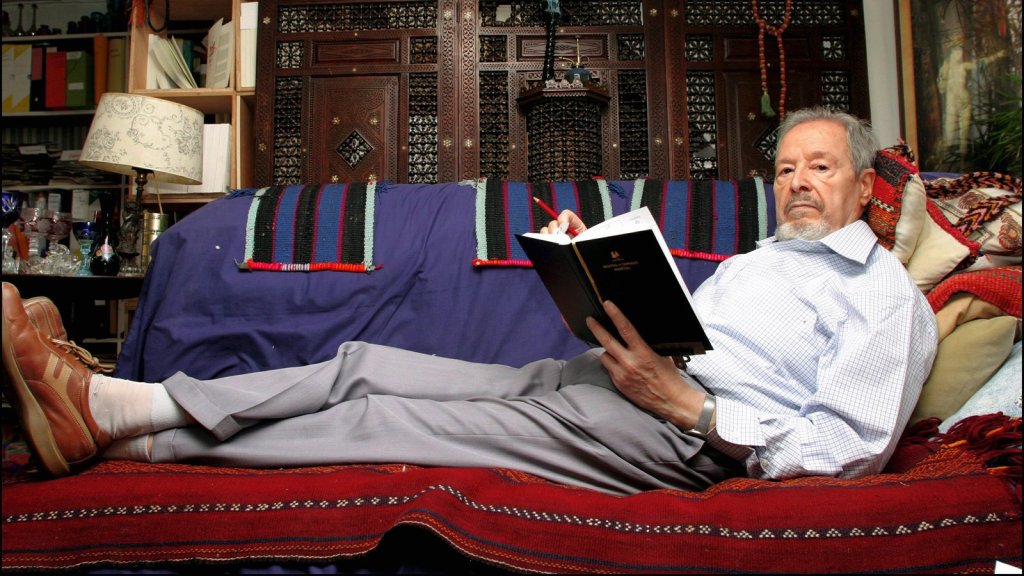
Sartre had a friend, interlocutor, and fellow intellectual, in Albert Memmi. Like Sartre, he was a French-inflected socialist. But, unlike Sartre, Memmi was a Jew. Born in Tunisia in 1920 to a poor Jewish family, Memmi became a leading thinker, and a revolutionary in Tunisia’s war for independence. Sartre admired Memmi, and brought his anticolonial writings to a European audience.

In response, Memmi wrote “Portrait of a Jew,” and its follow-up, “The Liberation of the Jew.” Memmi was able to describe first-hand experiences of antisemitism on two continents. His personal struggles with prejudice elucidated very clearly why Jews would not want to assimilate into Christian France, even in the classless society Sartre imagined. Centuries of racism and religious discrimination showed him that neither Christianity nor Frenchness offered much hope for Jewish emancipation.

More interestingly, Memmi decided to answer for himself the question, “does the Jew exist?” For Memmi, the answer was a resounding “yes.” Jews exist, and, contra Sartre, have our own history, culture, and civilisation. Yes, that has been created in response to antisemitism, but also in spite of it. Jews were constantly creating our own culture.

Jewishness, said Memmi, was what Jews decided to create in each generation, and could be constantly remade, as part of Jews’ engagement with their own heritage. For Memmi, if antisemitism did not exist, Jews still would. Even if, as many Bolsheviks imagined, the world could be freed of superstitious religion, the Jewish national culture would carry on, and thrive in new ways.

So, antisemitism may create the Jewish condition, but it was the Jews who created Jewishness. We were the authors of our history.

After the service, we will hear from Rachel Shabi, as she talks to us about antisemitism and its challenges. Her thoughts are prescient, and we should pay close attention to them. We need to understand antisemitism, where it comes from, and how to combat it.

Yet we must remember that studying antisemitism can only tell us about antisemites. It cannot teach us about Jews. 

Jews make Jews. We decide who we are. Through our love of our heritage and community, we build up Judaism, and we make it what it should be.

So, when we talk to the younger people in our communities, we cannot let their identities be formed by fear of antisemitism. 

We must tell them why we have chosen to keep on being Jewish, and give them good reasons to keep it up too. Whether raised Jewish, converted, or affirmed, all of us have chosen being Jewish, and for good reasons that are bound up in love, not defined by hate.

Tell them about your favourite recipes and the best of Jewish songs. Show them Jewish art and take them to Jewish plays. Celebrate the festivals with them because you truly want to bring them to life. Mourn and fast with them because it is filled with meaning.

Teach them that God has given us a sacred task on earth; that we exist in this world to perfect it. That everything we do can light up divine sparks. That we are called upon to unify all that exists with its Creator.

Bless them with the words that Jacob actually spoke, and say:

“May the God before whom my grandfather Abraham and my father, Isaac, walked—
the God who has been my shepherd all my life, to this very day, the Angel who has redeemed me from all harm. May the Eternal One bless these children. May they preserve my name and the names of Abraham and Isaac. And may their descendants multiply greatly throughout the earth.”

Albert Memmi

sermon · torah

When do we know that the day has come?

How can we tell that it is morning?

Perhaps, says the Mishnah, it is when we can see the difference between light blue and white. Or when we can see the difference between sky-blue and leak-green. Or perhaps it is when the sun is fully visible in the sky.

‘No,’ says the Tosefta. It is the moment when you can stand four paces from a friend and recognise their face. That is when you know that the day has come.

In the sunlight, new rays shine upon a familiar face and you can truly see them. In the morning, when the darkness has receded, you can recognise who is standing before you.

How different is this face, and yet how familiar. I see this person, this stranger, and, if the day has come, they are no longer a stranger. They are recognisable. It is possible to interpret their face fully; to understand it in ways one could not comprehend in the night.

Then we know that it is morning.

This is not just true for the passing of time. This is something that happens in life.

There are moments when we encounter someone we thought we knew, and new information, or a new realisation, means that we see them in a completely new light. They are transformed. And, in that process, we, who thought we knew, are transformed too, and our understanding of ourselves is changed.

In 4th Century Greece, the philosopher Aristotle termed this moment “anagnorisis.” It means recognition, or discovery. Aristotle writes that, in the world of theatre, anagnorisis “is a change from ignorance to knowledge, producing either friendship or hatred in those who are destined for good fortune or ill.” 

How different you appear in the new light of day. I stand four paces away from you and I can finally see that the night has disappeared and some glints of the morning have come.

It is most effective, says Aristotle, when it coincides with a reversal. The one who seemed weak is strong; the one who appeared as a pauper is rich; the one who we thought was dead has been alive all along.

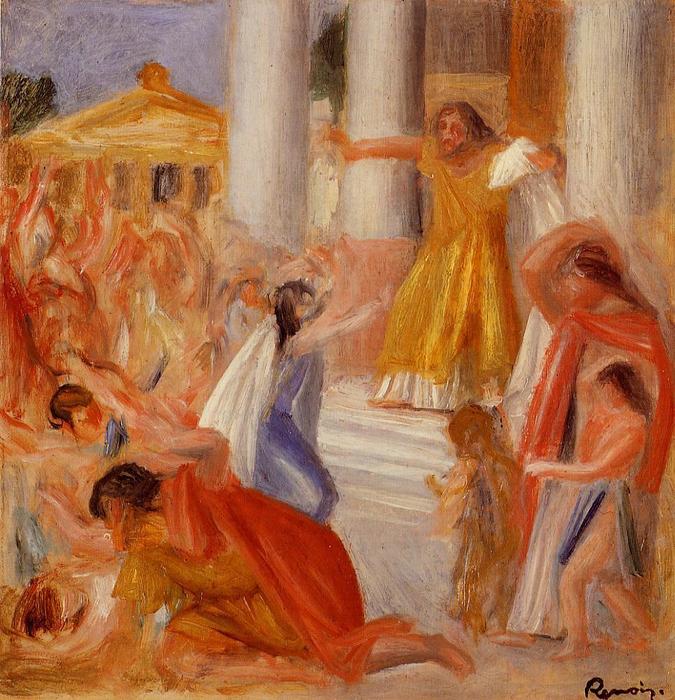
Aristotle presents the example of Oedipus. Throughout the entirety of his tragedy, Oedipus believed he was avoiding a prophecy that warned he would kill his father and marry his mother. In the moment of anagnorisis, at the cathartic climax of the play, Oedipus discovers that he had already fulfilled this prediction right at the start of his story. His father was not his father and his mother was his wife.

The idea of anagnorisis received a revival a few months ago, when the British-Palestinian author, Isabella Hammad, delivered the annual Edward Said lecture. Hammad spoke of anagnorisis as it appears in Palestinian literature, where recognition scenes are crucial.

“To recognise something,” says Hammad, “is to perceive clearly what you have known all along, but that perhaps you did not want to know. Palestinians are familiar with such scenes in real life: apparent blindness followed by staggering realization. When someone, a stranger, suddenly comes to know what perhaps they did not want to know.”

In Hammad’s understanding, anagnorisis is not just a literary trope, but something deeply personal and political, filled with moral meaning.

Let us turn, then, to our own narrative. This week, in the Torah, we witness one of the most staggering moments of anagnorisis.

Joseph wept so loudly that the Egyptians heard him, and Pharaoh’s household heard about it.

Joseph, the Egyptian vizier, strips off his royal clothes, and cries out: “I am your brother Joseph!”

Until this point, Joseph’s brothers believed that he was probably dead, or a slave somewhere miles away. Joseph’s brothers had believed that he was contemptible; a downtrodden misfit. Joseph’s brothers had believed that they themselves were contemptible; that they had sold their own kin into slavery and could never be redeemed for their sin.

Now they learn that Joseph is alive and is, in fact, the vizier over Egypt.

But this itself is not anagnorisis. Because in a real moment of recognition it is not only the characters who understand the truth of their situation, but the audience also discovers something new. We, the audience, already knew that the vizier was Joseph.

So, what did we really find out?

Joseph cried because he finally knew that his brothers regretted what they did to him, and that his father truly mourned his loss. He wailed because he now realised that these brothers could act as a family and care for their youngest brother. Joseph’s brothers were really penitent. Joseph never knew this, and nor did we.

When Joseph sees his brothers as they really are, Joseph changes how he sees himself. 

“Then Joseph said to his brothers, “Come close to me.” When they had done so, he said, “I am your brother Joseph.” One word in Hebrew – just one word – changes entirely our understanding of who Joseph is in this context.

 אֲחִיכֶם – your brother

“I am your brother.”

Joseph recognises himself as someone else. Not as the grand vizier of Egypt, but as the lost brother of his family.

Now we, the audience, can finally understand what Joseph wanted from this tragic play all along. All he ever wanted was to be loved. He did not really want power or favouritism or grandeur. He was just a lonely boy who wanted to be loved and did not know how. He resorted to such ridiculous measures to get attention, but all he ever wanted was to be accepted by his family. He wanted to be their brother. 

This story was not about what we had thought. We thought it was a divine unfolding of a great man’s place in history. We thought we were reading a rags-to-riches story that explained the hidden greatness of our nation and its God.

Then, instead, we see the entire cast as vulnerable human beings. Joseph is just a flawed boy seeking to make his family happy. Judah is just a stupid brother who made a terrible decision and regretted it. This is no tale of triumph, but is a far more gentle narrative, about family reconciliation and the power of repentance.

In the light of this moment, the entire story of the Torah comes into sharp focus. Cain killed Abel. Abraham tried to kill Isaac. Jacob tricked Esau. Laban tried to kill Jacob. Everyone in this family, going right back to the beginning, deployed violence and cruelty to achieve their aims. This is the first time, the climax of the book of Genesis, when these men are able to be vulnerable, use their words, and find healing. 

Suddenly, we understand that this story was not about fulfilling a prophecy but about breaking an intergenerational curse. 

In this moment of anagnorisis, everybody is somebody else. They are not hostages to fortune but breathing human beings capable of shaping their own family relationships. They cease being stock characters and become emotionally deep people who can recognise the vulnerability in each other.

So, how do we know when it is morning?

In the sunlight, new rays shine upon a familiar face and you can truly see them. In the morning, when the darkness has receded, you can recognise who is standing before you. How different is this face, and yet how familiar. 

When you can stand four paces away from someone whom you thought was a stranger, and see yourself anew. That person is not a stranger, and you are in fact a friend.

There is no more a struggle for power, but a moment of recognition. You recognise who you are, and you can finally say: “I am your brother.”

I am your sister. I am your family. I am your kin.

Now I recognise myself in you.

Now I know that the day has come.

Shabbat shalom.

Pierre-Auguste Rodin, Oedipus Rex
story · torah

When is a person truly dead?

At home, my fiance paces back and forth, preparing for his exams in anaesthetics. In a week, he will be tested orally to see if he can become a consultant. He recites definitions of key medical terms, revises laws of physics, gives diagnoses of uncommon diseases. 

One definition he has repeated so many times it is now imprinted in my mind too.

Death is the irreversible loss of capacity for consciousness and loss of capacity for breathing.

At times, we have pondered over such terms together. On long walks, we have discussed medical ethics through Jewish lenses. We have debated whether and how modern medicine aligns with ancient wisdom. 

Now is not the moment to challenge him on the medical definition of death. But the definition sticks with me, because this is an area where I do not think science and religion align. 

While Laurence prepares for his exams, you will have to listen to my thoughts on what Judaism teaches about mortality.

Death is the irreversible loss of capacity for consciousness and loss of capacity for breathing.

Is it? Is that what it means to die?

If it were, then would living simply be brain activity and breathing? Is that all we are?

Chayyei Sarah – the life of Sarah – is our portion. It opens with her death. By telling us about her life from her death, the Torah is telling us something about how life and death interact. 

The parashah is a recounting of Sarah’s burial. It is a terse text, where the primary narrative concerns Abraham’s attempt to purchase a lot for internment. 

So much is left unsaid. So many emotions are not expressed. In the silences and interstices, we are left to reconstruct our own imaginings of what Abraham was thinking. Let us try.

Abraham proceeded to cry and eulogise Sarah.

He held her hands, once so strong and firm. Those hands had kneaded bread for strangers at a moment’s notice. They had sewn garments for whole families. They had, at times, pointed accusations, separated children, raised objections… Strong hands. Determined hands. Strong, determined hands, that were now drained of all their vigour, and sat coldly in his own palms.

Abraham rose from beside his dead, and spoke to the Hittites.

Abraham sprang into action. Sarah had not died in the land of her own family in Egypt, nor of Abraham’s in Chaldea. They were in a strange place, far from their own homes, among Hittites in the hill-country of Canaan. 

Abraham said: “Here I am, a stranger and a foreigner among you. Please sell me a piece of land so I can give my wife a proper burial.”

Sarah had left her father’s home in the palaces of Egypt, where she lived as a princess. She was an aristocrat in a great empire who gave it up to travel with a wandering man. Abraham claimed to have spoken with the One True God, and Sarah just followed him. She forsook luxury for a life on the road. Now, she lay dead on the road, and there would be no fine processions to pyramids to entomb her.

The Hittites replied to Abraham, “Listen, my lord, you are an honoured prince among us. Choose the finest of our tombs and bury her there. No one here will refuse to help you in this way.”

Sarah used to laugh with her whole belly. Her shoulders bounced up and down. She can find humour where nobody else could. Even when she struggled with infertility, she found ways of making jokes. Abraham would not hear her laugh again.

So Abraham bowed low before the Hittites and said, “Since you are willing to help me in this way, be so kind as to ask Ephron son of Zohar to let me buy his cave at Machpelah, down at the end of his field. I will pay the full price in the presence of witnesses, so I will have a permanent burial place for my family.”

Sarah had been so beautiful people tripped over themselves staring at her. On their wanders, every prince desired her. Sarah was as beautiful at 127 as she had been when they had first met. She was still just as honourable and God-fearing. Nobody would be as good and beautiful and true again. 

Ephron was sitting there among the others, and he answered Abraham as the others listened, speaking publicly before all the Hittite elders of the town. 

Sarah received no ennoblement or reward for marrying Abraham. Yet so much honour came to Abraham through her. She could see visions and speak with God. 

“No, my lord,” he said to Abraham, “please listen to me. I will give you the field and the cave. Here in the presence of my people, I give it to you. Go and bury your dead.” 

Abraham had bargained over everything. He had struck a deal with Avimelech to share water sources. He had even negotiated with God over the destruction of a city. This was a bargain he could not accept.

Abraham again bowed low before the citizens of the land, and he replied to Ephron as everyone listened. 

“No, listen to me. I will buy it from you. Let me pay the full price for the field so I can bury my dead there.”

Abraham was ageing too. Who would bury him? He had cast out one son and tried to murder another. 

Ephron answered Abraham, “My lord, please listen to me. The land is worth 400 pieces of silver, but what is that between friends?”

What is four hundred shekels between strangers? What is a price on the life of Sarah? What sort of burial could ever be enough for her? 

Ephron said: “Go ahead and bury your dead.”

These are some words we may complete into the silences. They come from the other biblical stories and midrash, and they paint a fuller picture. In the spaces, we see that this is not a negotiation over a burial plot, but a negotiation over the nature of death.

Death is the irreversible loss of capacity for consciousness and loss of capacity for breathing.

Is it? Is that what it means to die?

If it were, then would living simply be brain activity and breathing? Is that all we are?

Medically, scientifically… maybe.

Spiritually, Jewishly… no. 

Death is as much a journey as life is. 

For seven days, we eulogise, as the last imprint of a person leaves us. For thirty days, we mourn, as the shock and grief harrow us. For eleven months, we pray, as some part of the soul heads on its journey to Heaven. 

Then, every year, we say the names of the dead, and some part of our loved ones returns to us. Their soul breaks through the gaps in Aramaic words and we feel them with us once more.

Thousands of years later, we still say Sarah’s name, and some part of her keeps living long after breath and consciousness. 

We are more than what we exhale: we are the laughter and joy we bring to others. We are more than our own thoughts: we are the memories living on in others. 

In memory, in prayer, in faith, we grasp something greater than the material world.

Trusting in You, Eternal God, we see life beyond death.

Amen.

Van Gogh, The Cave of Machpelah

israel · sermon · theology · torah

Why does God not just stop the war?

“How many more signs do you need that God is not there?”

This was the question one congregant asked last week when I went round for a cup of tea. In fact, a few of you have asked similar things recently.

None of you was asking out of arrogance or triviality, but expressing a real despair at the state of the world.  The ongoing war, which has claimed far too many lives, is enough to incite a crisis of faith in even the most devout believers.

Why will God not just stop the war? It is a serious question, and one that deserves a serious answer.

How desperate are we all to see a ceasefire, to see Gaza rebuilt, to see the hostages returned home, to know that the Israelis will no longer hide in bomb shelters, to know that no more people will be rushed to hospitals, to see an end to all the violence and bloodshed?

And it goes deeper than that. How much do we all wish that none of this had ever happened; that there was no war for us to wish to end?

In our anguish at the cruelty, we cry out to the Heavens. There is no answer from On High, so we wonder if there is Anyone there listening at all.

I will not be so presumptuous as to imagine I have the answers. I do not know the nature of God and can give no convincing proof of how our Creator lives in this world. In fact, if I found anyone who thought they did, I would consider them a charlatan.

The great 15th Century Sephardi rabbi, Yosef Albo, said: “If I knew God, I would be God.” We are, all of us, animals scrambling in the dark, as we try to make sense of the mystery.

But we come to synagogue so that we can scramble in the dark together, feeling that if we unpick the mystery in community, we will get further, and develop better ideas. Allow me, then, to share some of my own thinking, so that we can be in that conversation together.

How many more signs do you need that God is not there?

In our Torah, there were times when God did indeed show signs of presence. In the early chapters of Genesis, God walks through the Garden of Eden in the cool of day. At the exodus from Egypt, God came with signs and wonders and an outstretched arm. As the Israelites wandered in the desert, God appeared as a pillar of cloud by day and a pillar of fire by night.

This is the kind of sign that we might want from God now, then.

At a hostel in Jerusalem, I met an evangelical Christian who was absolutely convinced that everything happening in the Middle East was already foretold by the Bible and that God was about to rain down hell on the Palestinians and then all the Jews would finally accept Jesus.

Suffice to say I do not think such a God would be worthy of worship.

And I highly doubt this is the kind of divine intervention any of us would embrace.

Is there an alternative way we could wish for a sign?

Some great indication that Someone greater than us is involved in the story and cares about human suffering. Perhaps just a gentle hand to reassure us everything will be OK.

Deep down, most of us know that no such sign will come.

God did, however, send another sign in the Torah. A sign, perhaps, not to look for signs. A sign that God was not going to get involved, no matter how desperate it all seemed.

The rainbow.

At the start of the story of Noah, the world was filled with violence. Everyone had turned to war – nation against nation – all against all. The entire planet was rife with destruction.

God slammed down on the reset button. God sent a flood so catastrophic that it killed everyone bar one family. The flood was like a thorough system cleanse, designed to strip the earth back to its original state and allow Noah to rebuild.

Then, as soon as the rains had stopped and the land had returned, God looked at the devastation, and swore: “never again.”

God promised Noah: “I will maintain My covenant with you: never again shall all flesh be cut off by the waters of a flood, and never again shall there be a flood to destroy the earth.”

God hung a rainbow in the sky, and told Noah it was a symbol that there would be no more divine interventions:

“When I bring clouds over the earth, and the bow appears in the clouds, I will remember My covenant between Me and you and every living creature among all flesh, so that the waters shall never again become a flood to destroy all flesh.”


The rainbow, then, is a sign that God is there, and a sign that God will not get involved. Even if humanity goes back to being as violent as it was in the Generation of the Flood, God is not going to step in and destroy as at the start.

If the rainbow is a sign that God will not come and strike people down when the world is in crisis, it is also a sign of the other half of the covenant. Human beings must now be God’s hands on earth. We have to be the ones to do what we wish God would.

For Jews in the rabbinic period, every rainbow was a reminder to them that God would not act, so they had to take the initiative. They would look up at the sky and say “blessed is God, who remembers the covenant.”

According to the Jerusalem Talmud, no rainbow was seen during the entire lifetime of Rabbi Shimeon bar Yochai. He was so righteous and brought so many others to do good deeds that there was no need to be reminded any more of the covenant. Bar Yochai was one who acted so much like he was God’s actor on earth that even God did not need to send reminders.

The idea that human beings had to be God’s hands became even more important in the post-Holocaust world. Rabbi Eliezer Berkovits escaped from Germany in 1939 and went on to become one of the leading Orthodox rabbis of the 20th Century. For him, a traditional religious Jew, grappling with the enormity of the Shoah, he had to find a way to deal with God’s seeming absence at Auschwitz.

So, Rabbi Berkovits said, the problem lay not with God’s inaction, but with humanity’s. In his book, Faith After the Holocaust, Berkovits wrote:


“Since history is man’s responsibility, one would, in fact, expect [God] to hide, to be silent, while man is going about his God-given task. Responsibility requires freedom, but God’s convincing presence would undermine the freedom of human decision. God hides in human responsibility and human freedom.”

What Berkovits is saying is that it might be in God’s nature to prevent catastrophe, but it would undermine human nature if God did. In order that people can realise our freedom and our full potential, God has to stand back.

It seems that, in almost every generation, Jews are asking why God does not intervene to stop violence.

In each generation, we find an answer: God does not intervene, because that’s our job.

It’s not that any of these classical sources doubt God’s existence or question God’s presence. They just don’t think it is God’s responsibility to act. It is ours.

There is no flood coming to wipe out war or lightning bolt coming from the sky to strike down the wrongdoers.

We began with a question.

How many more signs do you need that God is not there?

Perhaps we can now reframe it positively.

How many more signs do you need that you must act?

God is not going to stop war. So we have to do our bit to bring it to an end.

Even in our small corner of the world, we have to do all we can to push for peace and justice.

So, on the days when you find yourself looking for the sign, you be the sign.

You need to be the sign to somebody else that there is hope in this world.

You need to be the sign that peace is possible.

You need to be the rainbow.

Shabbat shalom.

sermon · story · torah

Abel was a nomad, and you may wander too

When they lived in Eden, Adam and Eve did not have to labour for their food. Yet, in the moment that they were expelled from paradise, God gave them stern instructions on what they would have to do.

God warned: “Through painful toil you will eat food from it all the days of your life. By the sweat of your brow you will eat your food until you return to the ground, since from it you were taken; for dust you are and to dust you will return.”

Where once they had a homeland, the original people were cast out into a state of permanent exile, to live in the world with all its struggles.

This fable, though mythic, tells us something true about how human beings came to have the life we do. While there was probably never really an original idyll where people lived without work, there was a moment, millennia ago, when humanity’s ancestors shifted how they lived. 

For most of our history, we had wandered. All people were nomadic. They hunted and gathered, migrating between caves and carrying temporary shelters all over the neolithic continents.

Then, as the last Ice Age ended, around 11,000 years ago, people discovered that they could store seeds from one year to the next. They developed agricultural systems, with plots of land dedicated to growing crops. Having once roamed the earth, they could stay put in a single place, which would be their land. 

Cain and Abel are archetypal characters who tell us about this great change. Abel was a nomad, who herded flocks and grazed them over the hills. His name means “breath” or “waif” – for, like a cloud that drifts across valleys, he wafted without leaving a trace. He was a symbol of the old way of constant movement. 

Cain, his brother, had a name which meant “acquire” or “possess.” Just as God had warned his parents when they were cast out from Eden, he worked by the sweat of his brow. He laboured on the soil, where he sowed, grew, and harvested plants for food.

At the dawn of civilisation, these were the two types of people: those who cultivated the land in fixed places; and those who travelled with no fixed abode. Everything that was movable, like herds and clothes, was held by the nomads, the Abels. Everything immovable – like allotments and orchards – was owned by those who settled, the Cains.

Our Torah says that God favoured Abel over Cain, and it probably felt that way. While agriculture can keep people settled and build lasting cultures, it is unpredictable. One bad year of too much rain, or not enough, or bad seeds or infertile soil, can leave an entire community famished and ruined. 

A pastoralist, on the other hand, has a tough but durable existence. The life of a shepherd means much moving, but that is part of what makes their life sustainable. Sheep can be moved to wherever water is healthy and available. A goat can graze on thistles and other crops that people find inedible.

So, yes, to the ancient mind, it may have seemed like God looked more kindly on the one who wandered than the one who farmed. 

Cain killed Abel. 

The one who tilled the land and made it his home sought to destroy that wandering waif. Perhaps, indeed, he did. Perhaps the founders of the earliest civilisations enforced their new way of life with violence and coercion. 

But not successfully. As soon as Cain commits the first murder, God tells him what he will become. Cain cries out at his punishment: “Today you are driving me from the land, and I will be hidden from your presence; I will be a restless wanderer on the earth, and whoever finds me will kill me.”

For killing Abel, Cain would become Abel. Having been the acquirer, he would take his place as a nomad. Having been so sure in his farmland, Cain would return to the ancient ways of roaming. 

God said to Cain: “Abel had no homeland. Now neither do you. Abel was forced to wander. Now you will wander too.”

Generations passed, but the draw of homeland was irresistible. In ancient Mesopotamia, Abraham was called “ha-ivri” – border-crosser; the one who passed between places. 

He heard the voice call out: “Go, get going, to a land that I will show you,” and Abraham traversed to Canaan, to a new land where he hoped he would settle. 

He took his family, and his possessions, his movable goods that had sustained him in all his wanderings, and went in search of home. 

But, having reached the land that God would show him, he saw it and he left. He pitched his tent and built an altar, then carried on to Egypt. When he returned, he did so as a nomad, travelling with his flocks, threatened by the Canaanites and Perizites who had acquired the land, as Cain had once done.

Abraham sought a home, and found one, but it was never a permanent space. He had wandered to be in one place, but in that one place, he found he had to keep on wandering. 

Abel, Cain, and Abraham all wandered. So did the Israelites in the desert. Deep in our ancient stories, there is an idea that, while a settled home may be desirable, migration is part of the human experience. We may dream of Edens, but life is unpredictable, and fortune may force us to move. 

In Torah stories, we learn the survival of migrants, passed down from generations who knew what it meant to move with the seasons. 

It is a deep knowledge, from before we were Israelites or even Jews, stretching back to our history as neanderthals. 

Please do not imagine that I am romanticising exile. Travelling breeds resilience and creativity, but it is far from idyllic.

Instead, wandering is an inevitability. 

In every community and in every family, if you go back far enough, you will find a traveller. In the stories of our Torah, you learn that it could be you.

Abel was a restless nomad, and we may wander too.

Shabbat shalom.

Cain and Abel, by Frank Hoesel

I learnt this Torah from Rabbi Joel Levy at the Conservative Yeshiva in Jerusalem.

festivals · high holy days · theology

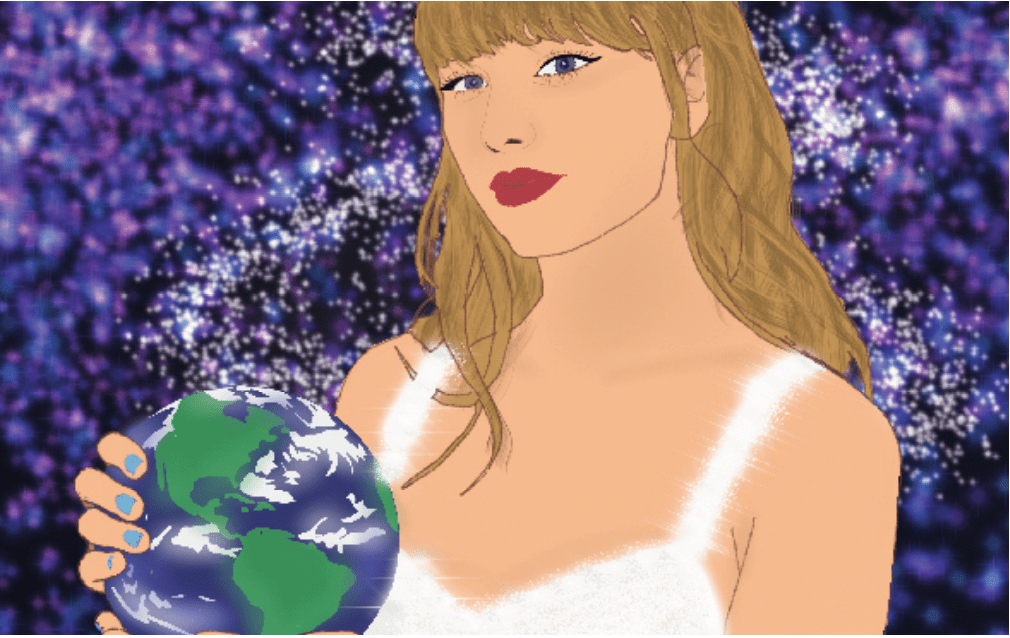
ecclesiastes (taylor’s version)

Not long before I started here, Rebecca came back very excited from a Taylor Swift concert. Taylor Swift, I understand, is a very famous popular music singer. 

Rebecca had been to the much-coveted “Eras” tour, where Taylor Swift went through her back catalogue of music. For Swifties – Taylor Swift’s fans – their favourite artist has “eras,” each represented by a different album. Fans ascribe themselves to an “era” – their favourite musical period from the singer.

In her enthusiasm for what she had seen, Rebecca suggested I do a sermon about Taylor Swift.

I curtly replied: “I think I’ll probably talk about Torah.”

That was wrong. I shouldn’t have said that. 

If something is relevant to the congregation, there should be a way to make it relevant to Torah. So, I got thinking about what connections there might be, not because I like Taylor Swift, but because I do like a challenge.

And I got thinking, you know who else had eras, each represented by unique creative output?

King Solomon.

According to our tradition, Solomon wrote the Song of Songs as a young man; the book of Ecclesiastes in his middle age; and the Book of Proverbs when he was old.

The Song of  Songs is a wonderful collection of erotic love poetry, beloved of weddings, and recited at Pesach as we celebrate fertility. It makes sense that this was composed by somebody young and virile. The Book of Proverbs is a compilation of wisdom and dictums: the sort of knowledge someone can only accumulate by living a full life and learning from everyone. 

The Book of Ecclesiastes – called, in Hebrew, Qohelet – is the text attributed to middle age. It is a deep meditation on what happens in a crisis of faith, asking what the meaning of life is, and seeking a transformed relationship with God. It makes sense for midlife, when we question our grand narratives, and find new existential purposes. 

It is the Megillah, the sacred text, for this festival of Sukkot. It is so appropriate for this autumn festival, when we build a beautiful structure and watch our sukkah get drenched in rain and torn apart by winds. The Swifties may hold by many different eras, but we Jews, at this festival of Sukkot, are very much in our Qohelet era.

With that in mind, I offer up a pop quiz. I’ll read out a verse, and you tell me: is it a Taylor Swift lyric, or a section from Ecclesiastes?

Some of you may need to sit this out, because you are superfans, and will therefore already have rote memorisation of every part of Tanach.

  1. I saw that there is nothing better for people than to be happy in their work. That is our lot in life. And no one can bring us back to see what happens after we die. (Ecclesiastes 3:22)
  2. Did you not write it down? Just one more thing to do. Where were you, and didn’t they pray, too? (Taylor Swift, Didn’t They, 2003)
  3. Did some bird flap its wings over in Asia? Did some force take you because I didn’t pray? (Taylor Swift, Bigger than the Whole Sky, 2020)
  4. A man might have a hundred children and live to be very old. But if he finds no satisfaction in life and doesn’t even get a decent burial, it would have been better for him to be born dead. (Ecclesiastes 6:3)
  5. If clarity’s in death, then why won’t this die? (Taylor Swift, Should’ve Would’ve Could’ve, 2022)
  6. Anything I wanted, I would take. I denied myself no pleasure. […] But as I looked at everything I had worked so hard to accomplish, it was all so meaningless—like chasing the wind. (Ecclesiastes 2:10-11)
  7. Tell me I was the chosen one / Show me that this world is bigger than us / Then sent me back where I came from / For a moment I knew cosmic love (Taylor Swift, Down Bad, 2023)
  8. Sometimes people say, “Here is something new!” But actually it is old; nothing is ever truly new. We don’t remember what happened in the past, and in future generations, no one will remember what we are doing now. (Ecclesiastes 1:10-11)
  9. Someone told me there’s no such thing as bad thoughts. Only your actions talk (Taylor Swift, Guilty as Sin, 2024)
  10. It seems so wrong that everyone under the sun suffers the same fate. Already twisted by evil, people choose their own mad course, for they have no hope. There is nothing ahead but death anyway. (Ecclesiastes 9:3)

When I set out on this task of connecting Qohelet to Taylor Swift, it was just a bit of fun. I was surprised to find something really profound through it.

Many of her fans have paid close attention to Taylor Swift’s developing relationship with faith. They have even engaged in a religious textual analysis of her latest album.

Writing for a British Christian magazine, cultural commentator Giles Gough notices “two Taylors.” The early Taylor, he says, has “an uncomplicated yet sincere relationship with God,” befitting of her Bible Belt upbringing. Later, she only turns to God in times of crisis, “typical of the mainstream, secular world she inhabits.” 

Gough speculates that Taylor Swift is “someone who has deconstructed their faith, and come out of it not really knowing what she believes. […] Swift seems to still be reaching out to God and when she is unable to find him, has perhaps tried to find salvation in romantic love.”

If his interpretation is correct, then Taylor Swift is even closer to King Solomon than we thought. She is asking the same questions and wrestling with the same theological issues as the Book of Qohelet does. 

In Ecclesiastes, the convoker is eager to hold onto his old views of the world. He insists: “Fear God and obey his commands, for this is everyone’s duty. God will judge us for everything we do, including every secret thing, whether good or bad.” (Ecclesiastes 12:13-14). 

At the same time, Solomon wrestles with nihilism, saying: “People and animals share the same fate—both breathe and both must die. So people have no real advantage over animals. How meaningless! Both go to the same place—they came from dust and they return to dust. For who can prove that the human spirit goes up and the spirit of animals goes down into the earth?” (Ecclesiastes 3:19-21)

This wrestling may, in fact, be a part of the human condition. In 1981, the psychologist and theologian James W Fowler developed a theory of “stages of faith.” He argued that people naturally go through a process of questioning their ideas, revisiting them, and finding new narratives to accompany their changes in life. This process helps adults to reach mature religious belief, where they can embrace diversity through universal principles of love and justice.

So, Taylor Swift, King Solomon, James Fowler, and the festival of Sukkot all seem to be teaching us the same thing: that it is OK to have doubts. You don’t have to cleave to a naive faith in a higher power, but can wrestle with God, and challenge your traditions. 

In doubt and uncertainty, we grow. In dogmatism, we remain static.

So, whatever era you are in, embrace it. Strive for curiosity. Love questioning.

And have  a very happy Sukkot.

Shabbat shalom.

high holy days · sermon

What did Jonah do inside the whale?

A simple Jew prays to God on Yom Kippur, and says “Ribon shel olamim, ruler of the Universe, I do not have much to repent of. Not compared to you. Unlike you, O God, I have not taken away children from their parents; I have not taken away parents from their children; I have not allowed disease and starvation and war. Compared to you, Holy One, I have been a saint. So, this year, I won’t be repenting. It’s your turn to repent.”

The rabbi asks him, “what were you praying there?” 

He tells her all that he’s said.

She says: “You fool! You let God off too easy. You should have told God to bring about the Redemption as well.” 

I don’t know about you, but I haven’t felt much like repenting this year. After all, what have I done, compared to the enormity of wrongs perpetrated? 

I haven’t killed anyone or waged any wars. I haven’t robbed anyone or embezzled any funds. To the best of my knowledge, I haven’t brazenly lied or misled. I certainly haven’t intentionally hurt anyone. I’m just not in the same league as the great sinners of our time.

And I don’t much feel like growing this year, either. Other years, I have enjoyed the stillness of Yom Kippur for reflection on being better. But I don’t feel like doing it this year. 

Sure, I’m grateful for turning off my phone so I don’t have to look at all the bad news, but that’s more about self-care than self-improvement. I’m more interested in switching off from the world than in switching onto myself. 

I mean, really, do I have to move? The world is changing so much, and not for the better. Shouldn’t I be allowed, as a one-off, to stop constantly evolving and just be as I am for a bit?

You know who else just wanted to stay still? 

Jonah.

I think Jonah knew exactly how I am feeling now. 

He was perfectly alright where he was, before God got involved and told him he needed to go and sort out all the problems of the world. 

Who was Jonah in the scheme of things? He certainly was not a big player in the wrongs of the world. All of Nineveh’s sins were enormous and happening miles away. Why should he have to change himself?

So, when God called on Jonah to get up, that was already asking too much. 

Jonah ran away to Tarshish. He shouted at God: “haven’t you got bigger fish to fry?” 

God said: “you want to see a big fish? I’ll give you a big fish!”

One came along and swallowed him whole.

Now, all of the story before is about Jonah not wanting to move and all of the story after is about what happened after God moved him. 

What happened in the whale, however, should really interest us. 

This year, I feel like I’m in the whale. I am sitting in a puddle from which I feel like I cannot budge. I am stuck here and have no idea how to get out. All around me, the waves are crashing down and there’s nothing I can do to stop them.

(A pedant will point out it’s not actually a whale. Technically, it’s a big fish, and the idea of it being a whale came later. But, technically, I’m not actually inside a whale at all, I’m in a synagogue, so I’m going to stick with the idea of the whale because it feels evocative.)

Now, I’m not even on the level of Jonah. My task is not nearly as big and I am not even inside a literal whale. So Jonah should be a good starting-place for my feelings of stubbornness and obstinacy.

What did Jonah do inside that whale? He despaired. He observed. He prayed. He sang. He learnt. And, eventually, he repented and grew.

So, this Yom Kippur, let’s engage with the whale. Let’s focus just on the three days Jonah spent inside the belly. Maybe we can learn from Jonah what to do when everything feels too overwhelming but we know we have to change anyway.

The second chapter of the book of Jonah is not narrative-form, like the rest of the book. Only the first verse, where Jonah gets swallowed by the whale, and the last verse, where the whale spits Jonah back out again, follow a linear storyline. 

The rest of the chapter, only eleven verses long, reads more like a poem. It is a song, where each verses contains a parallel structure. It would fit just as well in the Book of Psalms, where there are similar supplications to God. 

If the second chapter of Jonah is a journey, it is only a spiritual one. Jonah himself remains completely static, stuck in the belly of the beast. 

His soul, on the other hand, begins in the depths of despair, goes through questioning and defeat, recognises the glory of God, and finally comes out committed to getting out there, thanking God, making offerings, and taking part in the deliverance.

This feels like the most important chapter to us, then. We are just sitting and standing in the same space. But we are expecting our souls to move. 

I am feeling stuck in a world I cannot change, but I know I have to get somewhere else spiritually. We can’t just sit around here and hope to become better people. We know it needs work. But without a narrative, how do we know what to do?

Well, in the spaces left by the absence of narrative, the rabbis come up with their own stories. Pirkei deRabbi Eliezer is a collection of creative writing, compiled over many generations, that retells the biblical stories. These are our midrash, and in this rabbinic fan-fiction, we get a story to go with everything that Jonah says. 

From these stories, we might come up with our own meanings of what we should be doing here.

The first thing Jonah does is acknowledge where he is. He accepts that he is in the belly of the fish.

The midrash gives us a grandiose interpretation of what that looked like. It was like entering into the great synagogue: an enormous, echoey chamber. The fish’s eyes were two great windows, so that Jonah could see what was going on underwater. Inside the fish was a giant pearl, which illuminated the belly and shone out towards the sea. With a lamp and windows, Jonah had a clear vision of where he was.

What can we learn from this? We learn that we need to be honest with ourselves about where we are. The world is a bit of a mess right now, and there’s no point putting on a happy face and pretending everything is OK. Equally, we are pretty safe here. We in this room are not under attack, and the risk we would be is very low. 

So, start by taking stock of reality. Where am I? I’m in a synagogue, sitting on a comfy chair, with my feet planted on firm ground. I can see the lights of the room and smell that familiar sweet must of this religious space. 

But it’s not enough to just say where we are. We need to say how we feel. That’s what Jonah does next. 

He says: “I am crying out to God from my narrow-straits, please answer me.” Jonah says, “I am crying out from the belly of Hell, may God hear my voice.”

The midrash says, that’s exactly where the whale took him. It plunged him right down into the depths and showed him the gates to Hell. 

So, we need to do the same. We need to ask ourselves how we are really feeling. Be honest about the frustrations and worries and anger we feel. 

Next, Jonah finds a way to relate what is going on to what has gone before. In the depths of the ocean, Jonah says, he sees the billows and waves and reeds. 

According to the midrash, this is because the whale took him on a tour, not just of the sea, but of Jewish history. The whale showed Jonah the foundations of the earth, deep on the ocean-floor, and reminded him that God had made the world. The fish took him to the Sea of Reeds, and showed him the flora of the spot where the Israelites had crossed out of Egypt.

Faced with adversity, we have to remember that it has happened before. Once, there was nothing, then the world came into being. Once, we were slaves, but then we were freed. Wars and persecutions and empires have all come before and, somehow, our people have survived.

We, as individuals, have also survived challenges before. How recent was the Covid pandemic? We can take pride in our own resilience at getting through such troubles before.

Knowing what had gone before, Jonah was able to feel confident that he could face what was to come. Jonah cries out: “You saved my life from the very pits, O Eternal One my God!”

The midrash says that this came when the whale took Jonah down to meet the great sea-monster of the deep, Leviathan. Jonah told that nautical dragon: “You may think you are going to swallow me up, but I carry the promise of Abraham, and I know that one day, when God chooses, it will be you who gets eaten by the righteous.”

Like Jonah, let’s look at the problems ahead of us, and say: “I have faith. I can face you.”

Next, Jonah reflects back on what he has learned. He notices: “Those who cling onto empty folly forsake their own welfare.” He had been willing to stay where he was, clinging onto old vanities, but he did so at the expense of his own soul.

So, he proclaims, instead: “I, with loud thanksgiving, will sacrifice to You, God.”

We, too, can be grateful for what we have, and take on this next year in service of our Creator.

That is the journey on which Jonah took his soul, and it is where I hope to take mine over this Day of Repentance. 

I said I wanted to stay still, but stillness is not inactivity. The Rambam understood that serious thinking was the most active you could be. It connects you directly to that Most Active Intellect: the thinking, living God. 

In stillness, you can nurture who you are. Jonah was stuck in an underwater pit, but that was when he got most energised. It was when he really engaged in the audit of his soul.

This year, I have spoken to friends and community members and witnessed them say things they normally would never. People who would ordinarily be very liberal, turn racist. People who are normally very peaceful, justifying violence. People who are normally pretty discerning, regurgitating conspiracy theories. People who are usually nuanced, turn to absolutist thinking.

I am not saying this with any judgement. I say it because I’ve done it too.

And when I meet this now, I try to say to myself: I know you are scared and angry, and while you are feeling scared and angry, you can hold all those feelings. You are inside the whale. 

But one day, please God, you will be released from this whale, and you will have to reckon with who you became there. 

Take care of your soul. It is a precious gift. Don’t let it become too cynical or warped by the horrors that surround it.

That’s my goal for this Yom Kippur: to hold my soul with gentleness, and ask it to be porous and empathic and kind.

I am here, inside the whale. I cannot change what whale I am inside. I cannot stop the waves from crashing or remake the world so it is less scary. 

I can only change what I can change. And what I can change, in this moment, on this Yom Kippur, is myself. I just have to deal with who I am here and now. 

So, let’s be like Jonah. Let’s accept the whale we’re in, and, yes, despair, but also observe, pray, sing, learn, repent. 

And it may be that, when we finally get blown out from that great fish’s blowhole, we might still be better people than when we got swallowed up.

Amen.