judaism · sermon · torah

Matchmaker, matchmaker

“Matchmaker, matchmaker, make me a match. Find me a find, catch me a catch…”

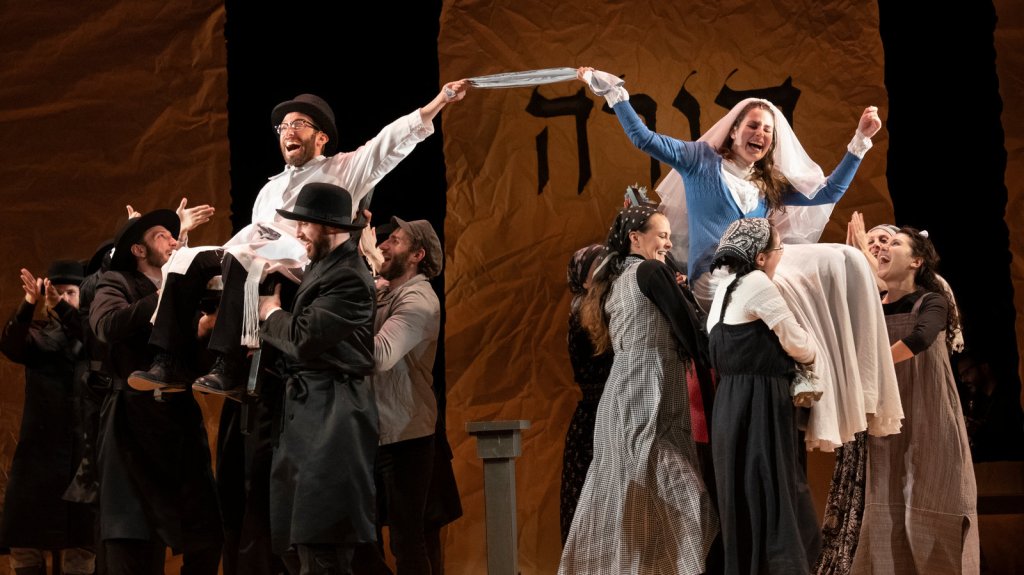
Tzeitel, Hodel and Chava joyously sing these words in their iconic scene from Fiddler on the Roof. It’s a classic musical film set in Tsarist Russia at the turn of the century, when huge upheavals are taking place throughout the Jewish world. People are moving, traditional ways of living are changing, and new ideas are coming to the fore. 

Nowhere is this difference clearer than in the confusing world of romantic relationships. According to shtetl customs, the girls would expect to be matched with their perfect partners by a shadchan, or matchmaker, and they would settle down to a quiet life of conventional piety in the kitchens while their husbands worked on making a living and reading the Talmud. So, at the start of the story, each of the girls calls upon the matchmaker – called Yenta – to find them their dream husband. They wish for someone wealthy, learned, and acceptable to their parents.

But this is a world where conventions are being upended, and fate has other plans for the lovebirds. Tzeitel, the eldest, turns down her match with the old, ugly and wealthy butcher, refusing the match made for her by the shadchan. Instead, she marries the poor and humble, but decent, tailor. Her father agonises with the betrayal of tradition, but ultimately acquiesces.

Next up is Hodel. A Torah scholar would have been lovely for a foregone era, but at the turn of the 20th Century, a Marxist radical and heretic was exactly what she craved. She falls in love with a Jewish social revolutionary, much to her father’s dismay. A communist! Of all things. Once again, he agonises over the break with tradition, but ultimately accepts it as inevitable.

Finally, the youngest daughter finds someone completely unacceptable. A Russian Orthodox man from outside the village. Her father cannot even bear to permit a marriage to a non-Jew, so they wed in secret. The scandal it must have caused. 

What a far cry this all was from the idealised matchmaking process envisaged in this week’s parashah. The story of Rebecca and Isaac falling in love is like a classic romantic comedy from a bygone era. The star of our scene is Eliezer, Abraham’s servant, who is set by his master a major task. Isaac cannot marry a Canaanite, but must marry someone from his own tribe. She must be strong and wealthy and beautiful and kind and willing to marry Isaac of her own accord. 

Eliezer prays to God and says that the ideal woman will help him feed his camels. Well, Rebecca does far more than that. She comes down herself, despite being a noblewoman, and offers Eliezer a drink. She chastises the other women at the well for not having done the same. She calls up the water from the well effortlessly and carries gallons of that to feed Eliezer’s entire caravan of camels. Oh, this Rebecca is strong and wealthy and beautiful and kind! She is exactly what Eliezer had sought after. He immediately pulls out a wedding ring for Rebecca to wear through her nose…

But was she willing? After all, Isaac has been pretty much a non-entity in this story so far. He hasn’t even talked since Abraham tried killing him as part of a wild game of chicken with God, and seems to spend most of his time wandering about in fields looking contemplative. Yes! She puts on the ring instantly and agrees to marry him, then gets consent from her own family. 

Just a few days later they meet each other for the first time and fall in love. 

Now, isn’t that how relationships are supposed to be? It might seem strange to modern ears, but those were the expectations of our ancestors. A matchmaker, like Eliezer in the Torah, or Yenta in Fiddler on the Roof, would set up a couple. They would come from similar backgrounds in terms of class, status and religion. They would often even be cousins. Their parents arranged the relationship and, once they were together, they built a home and learned to love each other. 

That world was upended with the modern era, when emancipation, urbanisation, and progressive ideals started to change people’s expectations of relationships. In this new reality, people had choices. 

They could leave their village, practise their religion differently, decide not to practise it at all, and marry non-Jews. Women could even have opinions. Fiddler on the Roof speaks to the concerns emerging from that new reality of relationships a century ago. Today, many of those tensions still exist.

Progressive Judaism was, in part, a response to those worries. Jews could have rejected modernity and held tight to the old ways of doing things in the time of Rebecca and Isaac. Jews could have rejected Judaism and embraced modernity, leaving behind all the traditions and texts in the past. 

Or we could find a middle way, our way, that embraced modern relationships and traditional Judaism under one chuppah. This is what we have done. We have come to celebrate interfaith partnerships, second marriages, non-conformists and unusual relationships. Tzeitel, Hodel and Chava would all be able to find a home in our synagogue. 

We  are finding new ways to embrace the realities of modern relationships and families. Our synagogues today are becoming welcoming places for single parents, people who have chosen not to have children, couples who have no intention of marrying, blended step-families and a whole host of other options. It should be a point of pride that we accept people as they come, in all their diversity.

Yet something is making a comeback that would have surprised the cast of Fiddler, and even a previous generation of Progressive Jews. Matchmaking is on the way into fashion. Yes, the matchmaker, matchmaker is back. The majority of people meet their partners because they are introduced by friends or coworkers, like Yelta and Eliezer of the past. The role of families in matchmaking may have declined, but the practice itself continues.

Personally, I’m thrilled about this development. I love matchmaking. There is an old superstition that someone who matches three couples will merit a place in the World to Come, and I boast that I can sin as much as I like now.

When the first national lockdown began, I worked with my housemate to put together a ‘Love is Blind’ matchmaking experiment, where we paired people up based purely on personality, without them getting to see each other. Nearly a year later, one of our matches is still a couple going strong. As the new national lockdown begins, we’re doing the same enterprise again; this time introducing people for dates via Zoom.

It’s just a bit of fun to help our friends pass the time, but it tells us something important about relationships in the 21st Century. Of course, modern matchmaking has to celebrate relationships in all their diversity. The old model of putting together a man and a woman to make babies doesn’t fit anymore. One of the reasons matchmaking fell out of fashion was that that style of connecting people was coercive and stifling.

But we can still connect people, if we do away with the prejudices of the past. Modern matchmaking takes a proudly pro-LGBT stance, reveling in our community’s gender and sexual diversity. Equally, the people we match often don’t expect to find the right person on their first date, and are just as interested in finding friends or casual flings. The idea of a bashert – a single partner who will fulfill someone’s needs for life – is no longer so significant to people. 

Society has already adapted to that change. I’m sure that Progressive Judaism will find ways of doing the same. Ultimately, what we most want to retain is that people can be loved and accepted, no matter how they choose to live. With that in mind, let us continue to find new ways to celebrate people and the relationships they have. That is the true Jewish tradition.

I gave this sermon on 14 November 2020 for Parashat Chayyei Sarah at Newcastle Reform Synagogue.

sermon · social justice

Until she was no longer useful

The Torah doesn’t tell us what happened. It tells us what always happens.

The weekly stories we read are not historical recountings of the lives of ancient people. They are contemporary retellings of the lives of modern people. Genesis is not a book about the past. It is about the present. 

So here is what happened. And here is what always happens.

Hagar had been an Egyptian princess in the court of Pharaoh. Sarah entreated her out to Canaan with promises of work. “You will serve such a holy man,” she promised her. She was given the name, Ha-Gar: the immigrant; the sojourner.

She worked as a maidservant. She, who had been so prestigious in her homeland, cleaned up after Abraham and Sarah in their tents. She washed their clothes and took care of their needs. 

Then Sarah realised that she was barren. She instructed Abraham to sleep with Hagar, and Abraham consented. We do not know how Hagar felt about her surrogacy.

They conceived on the first try. What a successful servant! Then Sarah became jealous. “Isn’t Hagar so haughty? Doesn’t she think she’s so much better than me?”

So she started afflicting Hagar and making her life unbearable. Hagar ran away. And then she came back, because where was she going to go?

Hagar did indeed bear a child, and called him Ishmael, meaning ‘God will hear.’ And then she was no longer useful.

Fertile woman. Hated woman. Did her work well. Did her work too well. Did her work so well she was no longer useful and had to be sent away

Sarah was threatened by her and demanded she leave. She was supposed to be a servant and now she was a competitor, with a rival child, an older boy. If Ishmael is allowed to grow up, he’ll take everything from Isaac. If Hagar is allowed to stay, she might have the upper hand.

And Hagar ran away into the wilderness and was so desperate she almost killed her son. But she found a well of water and they survived. Ishmael grew up to be a bowman.

We don’t know what happened next to Hagar. History does not record.

Now here is what happened. And here is what always happens.

Sentine Bristol was born in Grenada, a British colony in the Caribbean. The Empire lured her over to work in the United Kingdom. She came on a boat called the Windrush. She worked as a nurse in the NHS. A successful immigrant, keeping us alive. Too successful, stealing our jobs.

Aren’t they great, bringing their culture and ingenuity and skills? We will celebrate them in our Olympics opening ceremony. But it wouldn’t kill them to assimilate. Couldn’t someone else have done the work she was brought over here on the Windrush to do?

She brought her son with her. His name was Dexter. He worked as a cleaner until he was in his 50s. 

And then they were no longer useful. Hardworking immigrants. Parasitic immigrants. Did their work well. Did their work too well. Did their work so well they were no longer useful and had to be sent away. 

A new wave of nationalism swept the country. The Home Office destroyed the records of their having arrived in Britain. The government declared a policy of a “hostile environment” for illegal immigrants, which included people who did not have their papers because their papers had been destroyed.

So the state cast them out. Dexter had to prove he wasn’t a foreigner in the only country he’d known since he was 8 years old. And he couldn’t find the documentation. He lost his job and the right to claim benefits. He was threatened with deportation.

And no well appeared in the wilderness. And he didn’t go on to become a bowman or a great nation. He died of a heart attack from the stress of trying to keep his home. Sentine did not receive justice. She disappeared from the headlines two years ago. 

This is what happened. This is what always happens.

One group gains more wealth than another. Maybe by technology, maybe by force, maybe by resources, maybe by luck.  The wealthy people require the labour and expertise of others, so they entice them with promises of jobs and prosperity. People go wherever the wealth is. They become nurses, midwives, bricklayers, servants, dream-interpreters, delivery workers, chefs, surrogates, cleaners, plumbers and bus conductors. 

The migrant people are despised. They have taken our jobs and brought their diseases. Their ways are too different from ours; they refuse to assimilate. Their beliefs are too foreign from ours; they cannot be allowed into our spaces. We do not trust their food or their clothes or their appearance. They will overtake us by sheer force of their numbers or intelligence or might. They must be eradicated.

The migrant people are prized. Look at the wonderful ingenuity and work ethic they have brought to us. How lucky we are to have them in our ranks. Such awards we must give them for their brains, their athleticism, their musical talent. They have transformed our cuisine and our customs. We cannot imagine our culture without them. We must protect them.

And then they are no longer useful. Maybe they are feared or maybe their hosts become jealous. Maybe the wealthy people are no longer so wealthy, or maybe they no longer feel so wealthy. Maybe there is a new government or an old ideology or a charismatic movement promising to restore former greatness. And the migrant people are surplus to requirement, so they have to leave.

They go back where they came from or onwards to somewhere else, not that it makes much difference either way. They get deported or they go voluntarily because they know they’re not wanted any more, not that it makes much difference either way. They depart on foot into the desert unsure if their children will survive. They leave on camels, in caravans, on boats, in cars. They pile into buses and aeroplanes and dinghies, depending on which paperwork they have and how much money they can stump up front. 

And then they are forgotten. And we don’t know what happens to their story after that.

That is what happened. And that is what always happens.

The Torah’s stories tell of the time when humanity transitioned into a new kind of civilisation, one defined by inequality and migration. That is why they are not just about the past, they are about the present.

The Torah recalls what it was like for an Egyptian named Hagar to seek work and be abused among Israelites. It tells the story of an Israelite named Joseph who sought work and was abused among Egyptians.

And because it tells those stories of inequality and migration, it also tells the stories of all the people who moved to Britain over these centuries. Their struggles, our struggles, are reflected here too.

The Torah doesn’t tell us what happened. It tells us what always happens. Unless we do something about it.

I gave this sermon for Glasgow Reform Synagogue on Saturday 7th November 2020, Parashat Vayera.

judaism · sermon · theology

Abraham and the Paradox of Jewish Evangelism

A priest, a monk and a rabbi are debating which of their religions is the correct one. They decide to settle it with a contest to convert a bear to their religion.

The rabbi tries first. Two days later, the priest and the monk end up visiting him in the hospital.

The rabbi says: “OK, maybe I shouldn’t have begun with circumcision.”

Let’s set aside the foreskin jokes, because I don’t think the rabbi would have had much better luck with a lady bear. Isn’t it a strange fact of our religion that we almost never set out to proselytise?

We, of course, welcome all sincere converts, and this synagogue is happy to encourage anyone on their spiritual journey. But you won’t find us outside Asda, handing out flyers with words from the Mishnah. And you certainly won’t turn on your TV to see a rabbinic televangelist warning you about the perils of pork.

But if you think you have stumbled upon spiritual knowledge, don’t you want to share it with the world? Who are we to zealously guard the secrets of the universe?

Even if you take a more humble approach to Judaism’s teachings, and think they’re just as good as any other people’s, there must be something particularly worthwhile about Judaism for you to log in to this morning’s service rather than watching Bargain Hunt. (Wait, don’t go, I promise this is going somewhere!)

That strange paradox of Judaism – that we have a universal truth but don’t seek to spread it – is encapsulated in the story of Abraham.

This week, God tells Abraham: “Go out by yourself. I will make your name great and you shall be a blessing.”[1]

Then, in the next two verses, as if a parallel to the first, God says: “All the families of the earth shall be blessed by you.” Then Abraham goes out with Lot and Sarah.[2]

So… does Abraham go out to bless himself or does he go out to bless others? Which is it?

This is the great tension in Judaism. Do we exist only for Jews? If so, why are we trying to change the world? Or do we exist for humanity? In which case, why aren’t we trying to make everyone Jews?

Our midrash plays with this tension. Bereishit Rabbah, a collection of rabbinic explorations of Genesis, contains an unusual parable. In it, Rabbi Berekhyah compares Abraham to a tightly sealed bottle of perfume. The bottle was left in the corner and nobody smelt it. As soon as it was moved, its fragrance was emitted. This, says our midrash, is what it was like when God told Abraham to go out from place to place and make his name great in the world.[3]

Makes perfect sense, right? No? Fine, let’s unpack it.

Abraham is a tightly closed bottle of perfume when he starts out in Haran. At this stage, Abraham has encountered God. Abraham has realised that the idols amount to nothing and the Creator of the Universe is a singular and invisible presence. He is somehow pure and untouched. The Pagans have not affected his beliefs, and he has not affected theirs. He is hermetically sealed.

Then God tells him to lech lecha – to go out. Abraham moves around out from Haran and down to Shchem and Be’ersheva in the land of Canaan. As he moves between these places, others get to smell him. They encounter the truth that Abraham has learned about ethical monotheism. God is one and just! Now everywhere he goes people can get a whiff of this knowledge.

Only there’s another problem. Bottles of perfume don’t emit their scent because you move them. They only work when you open them. In this analogy, the balsamic bottle that is Abraham still remains sealed. How is he spreading his fragrances everywhere if he hasn’t even opened up?

I don’t think the editors of our midrash have made some mistake. I think they are telling us something profound about the Jewish paradox. We have a truth that we want others to know and yet we don’t want to convert anyone. Our role as a light unto the nations is that we go from place to place, showing others who we are, but not changing anything about who they are. We are still Abraham, that sealed bottle, going out from Haran, somehow expecting others to smell our perfumes but not opening up wide to spread our scent.

The very word “evangelism” is a Greek one, meaning good news, referring to the Christian Gospels. The early Church actively went out on recruitment drives, telling people about Jesus and his message. We have no such good news to share. What would we say to people? “Rejoice! God has commanded you to pursue justice and only eat unleavened bread in the springtime!” Jewish evangelism seems somehow a contradiction in terms.

And yet we do go out and share our beliefs. We are happy to expound our Torah to anyone. We expect to transform the societies we are in. When we speak out for justice wherever we live, we are very much hoping that others will take note of our concern for the stranger and adjust their actions accordingly. How can we reconcile this desire to change others with our lack of desire to convert them?

Perhaps the problem isn’t perfume metaphors and paradoxes. Maybe the issue is how we understand Judaism’s mission. Abraham wasn’t sent out to turn others into Jews. Abraham was sent out to be a Jew.

Abraham had to go out and be different, to hold a truth that no one else held. Even when he passes it on to his children, they each hold a different truth. Isaac becomes the founder of our Judaism. Ishmael becomes the founder of Islam. They go out holding different truths, both contradictory and complementary. Abraham’s revelation of God’s unity is a realisation that this universal God can never be captured by one person in a single truth.

Abraham’s mission wasn’t to make everyone Jews. It was to enable everyone to be themselves. It was that all these other nations could celebrate their differences, just as Abraham loved his own.

That is our task today. We don’t say to the nations: “we want you all to be Jews.” We say: “we want you all to be you.”

We are models of difference in a society where we are not a majority and in a world where we are not dominant. Our role is to show how to conduct that uniqueness in a way that demonstrates dignity.

This is our evangelism. That is the truth we hold and that we want to share. That difference is a wonderful and treasured thing. From our differences, we are blessed. And in our differences, we bless each other.

So go out from Haran and share that sacred truth. And don’t worry – you don’t need to go circumcising bears.

This sermon is for Parashat Lech Lecha. I will give this sermon on Saturday morning 31st October 2020 at Newcastle Reform Synagogue, and a shortened version the night before for Edgware and Hendon Reform Synagogue.


[1] Gen 12:1-2

[2] Gen 12:3-5

[3] Ber Rab 39:2

festivals · judaism · sermon

How to survive the rainy season

Reb Zalman Schachter-Shalomi was a Hassidic rabbi who left behind his Orthodox community to join the American hippies in the 1960s. He wound up founding the Renewal Movement, combining traditional Judaism with New Age meditation and spirituality.

He used to tell this story of an encounter he had with Brother Rufus, a Native American medicine man. Reb Zalman and Brother Rufus were attending a conference of psychologists and mystics; the psychologists were studying the mystics. As Reb Zalman was explaining the Jewish festival of Sukkot, which occurs at the autumn equinox, and the holiday of Pesach, which comes at the spring equinox, Brother Rufus lit up! “Oh,” he said, “in the autumn you teach your children the shelter survival, and in the spring you teach them the food survival.”

This answer makes a lot of sense of what Sukkot is actually about. Disconnected from the rural desert living of our ancient ancestors, the practice of erecting temporary shelters and covering them in fertility talismans might seem incomprehensible. But for those who are connected to the earth’s agricultural cycles, Sukkot makes a lot of sense. It’s about learning to survive the rainy season.

The Torah portion commands us to spend eight days in temporary shelters to recall our wandering in the wilderness. For the ancient Israelites, this probably wasn’t just recollection of a mythic past. In a world where entire years could be upended by flash flooding, droughts and unexpected ecological malfunction, being able to move must have been a necessity. Any young person would need to know how to build shelter and brave the elements. Considered in this light, Sukkot feels more like a biblical precursor to Scouts and Guides.

By the time of the Mishnah, Jews had migrated away from nomadic agricultural living towards inhabiting larger settlements and cities. Yet even this 2nd Century text seems to capture something of the necessity of surviving the rainy season. It talks about which building materials and supporting structures are appropriate. It instructs us to make sure there are holes in our roof – a sure indicator that we’ll really experience everything the Heavens can throw at us. The Mishnah maintains the survival lessons.

And then, suddenly, the Mishnah seems to strike an altogether different note. Out of nowhere, it tells us about all the different ways to conclude the festival celebrations. The text stops being about surviving and starts being about how to be joyful. Harps, lyres, cymbals and trumpets. Psalms and songs and dancing. Shofar blasts. Meat. Banqueting. Carnival. In fact, the Mishnah tells us: “if you haven’t seen a party like this, you’ve never seen joy before in your life.”

Why would the Mishnah jump from teaching us the survival methods of our ancestors to talking about all this revelry? Perhaps the answer is that they’re not so distinct after all. Joy isn’t an add-on to survival: it’s integral to it. If you really want to get through the rainy seasons and the darkness of winter, you’ve got to have the right mindset. Cosy homes and well-stocked cupboards matter a lot, but attitude counts too.

The health psychologist Kari Leibowitz reckons she can back this up with science. She studied the mental health of people living in the polar regions of Norway, when winter brings exceedingly long nights and disrupted sleep patterns. Amazingly, she found that Norwegians were just as happy in the winter as at any other time of year. This was because many Norwegians approached the long nights as a challenge that excited them. The more people saw winter as a fun time, the more fun they actually found it.

Maybe that’s what our forebears of Torah and Mishnah knew from years of experience. If you want to get through the rainy season, you have to actually want the rain to come. You have to be a little bit thrilled by the idea. Surviving is not just about keeping our bodies intact – it’s about having mental determination to get through. 

Some of that is about what you imagine when you think of the rainy months. I’ve already started picturing hot chocolates, roast vegetables, games of Scrabble and complicated jigsaw puzzles. I’m imagining arts and crafts while sitting under piles of rugs with the baby in a handmade jumper. 

Of course, not everybody has access to the luxuries I’m describing. Some people are legitimately worried that autumn could bring tighter finances, struggles heating their houses and even homelessness as recession kicks in. These are serious issues, and it’s not fair to expect people facing such challenges to feel joy. So why not start easing their minds now?

Our food banks, mutual aid societies and housing shelters need your support. Get down now to donate what you can, and give what you can through their websites. If you want to practice feeling joy, helping others is a great way to start. 

So that’s how we’re going to survive the rainy months. By knowing our history. By learning traditional skills. By experiencing joy. By helping each other. 

After all, there’s only one way we can get through all this: together.

I gave this sermon for Sukkot 5781 on 3rd October 2020 at Newcastle Reform Synagogue.

fast · high holy days · sermon

Closing the Gates

These are the short sermons I delivered for the final two services of Yom Kippur 5781.

Yizkor

This morning, I talked about how this year could be understood through the lens of grief. Yet nothing can compare to the grief of losing a loved one. Every feeling we described, of denial, bargaining, sadness, anger and acceptance, is intensely heightened by the enormity of the lives that have been lost in this last year.

I will not say numbers. Their lives were not statistics. They cannot be reduced to the collateral damage in government reports about which measures worked best. They were full human beings, imbued with the sacred light of God. They were people with pasts and dreams, filled with stories. They were complete people, with flaws and complexities and little idiosyncrasies.

And we have not yet even begun to mourn them. In the midst of a pandemic, we have been like the Israelites in the desert, forced to keep on moving and maintaining high spirits for an undefined period of time. We keep looking straight ahead to keep our spirits awake, so struggle to look back at the hurt. Even old wounds from people long dead have returned to us, and we have struggled to find ways to heal.

Here, in this moment, for this brief service, we can take the time. Let’s stop in this space and reflect. We remember the names of everyone who mattered to us. We loved them. We cared for them. They cared for us. We admired them. We looked up to them. They took inspiration from us. We laughed with them. We cried with them. We got angry with them. We hated them. Sometimes. We spent precious time with them. We did not spend enough time with them.

And now, in this moment, we remember them. And we refuse to let them ever be forgotten.

Neilah

This year has been challenging for all of us. As much as our physical health has been at stake, everyone’s psychological wellbeing has taken a toll. Public health experts warn that we are facing a delayed mental health crisis. 

This morning, I spoke about how the year could be understood through the stages of grief. Those feelings, however, can be pathological when taken to an extreme. Sadness can become depression. Anger can become anxiety. Denying what exists and accepting what does not can result in psychosis. 

We will need to pull together in the coming year. We will need to check in on each other more than ever and find new ways to support each other. Above all, please talk about your feelings. If it feels like it’s going too much, do talk to a rabbi for pastoral support, or to a doctor for medical help. It is important that we all look after each other.

I know that we begin Yom Kippur by annulling the vows we have made with God. I think, however, this year, we need to end by making a new one. We need to promise each other we will make it. We must swear to each other that we will do everything we can to keep our bodies, minds and souls alive in the coming year. Say it to God, make it a vow.

As the gates of prayer close, I vow that I will care for myself and my community. I vow that I will be honest with my feelings and kind to my body. I vow that I will be here next year.

Next year, in a world without pandemic. Next year, in a world built back better without racism and injustice. Next year, in a world where we can see each other in person. Next year, in the building, with each other, holding hands and singing together.

We will make it to next year. Shanah tovah.

high holy days · sermon

Being holy

These are the short sermons I am giving at Glasgow Reform Synagogue for Yom Kippur afternoon 5781.

Being holy

This afternoon’s Torah service instructs us: “You shall be holy, for I, the Eternal One your God, am holy.” But how do we live holiness? An answer to this comes from the great tradition of mussar. This was a movement that emerged in 19th Century Vilna for promoting Judaism as an ethical movement. The musarnikes, or moralists, argued that study alone was not enough, but that it had to be directed towards making Jews into better people.

The heir to that movement is the Mussar Institute in the USA. Earlier in the year, its leader, Alan Morinis, gave a four-day virtual conference at Edgware Reform Synagogue, advocating its ideas. In the musar system, people have attributes, called middot, that we must cultivate in order to be a holy people. Qualities like faith, modesty, willingness, and joy. In these short divrei Torah for the afternoon, I will give stories and quotations from the mussar tradition that reinforce our liturgical readings.

At every stage of this Torah reading, the reason for each commandment is “because I am the Eternal One your God.” It is repeated at the end of almost every verse. Rabbi Yisrael Salanter, the founder of the mussar movement, taught: “Do all you can to internalise faith and live with it daily.”

I know faith will mean many different things. For some, it is in God.  For others, it is in our fellow human beings. And for others still it is in the possibilities the future holds. Wherever your faith lies, cling to it, strengthen it, and build it into every decision you make.

Being simple

Our next Torah reading comes from Deuteronomy. It tells us: “These teachings are not too baffling for you, nor are they beyond your reach. It is not in the Heavens […] nor is it over the sea.” The Torah, we understand, is a simple text with a simple message. That message is summarised by Micah in the dictum: “do justice, love mercy, and walk humbly with God.”

This simple message is reinforced by the mussar tradition. Rabbi Eliyahu Dessler, a leader of the Orthodox community in 20th Century Britain, taught: “Human beings pursue worldly pleasures because they have a subconscious urge to still the pangs of spiritual hunger. Everyone has this nameless inner yearning: the longing of the soul for its state of perfection. Earthly indulgence is only an illusory substitute for this.”

In these trying times, we have to enjoy the simplicity of what we have. We may not be able to enjoy the luxuries of previous years, and even many essentials may seem out of reach. But this provides us with an opportunity to get in touch with what really matters. With our souls, with ourselves, with each other. To walk humbly with our God.

Being willing

Jonah ran away from everything he was supposed to do. He ran away to Tarshish to get away from Nineveh. He hid in the boat rather than face the other sailors. He sat in the belly of a giant fish before he accepted his responsibility. 

On Yom Kippur, we pray about the sins we have committed willingly and unwillingly. I think this year, we might also reflect on the good deeds we have done willingly and unwillingly. What has been a challenge to us to do right? 

Sometimes, for many, even getting out of bed in the morning feels difficult. The first line of the first part of the major law code, Shulchan Aruch, teaches: “One should strengthen herself like a lion to get up in the morning to serve her Creator, so that it is she who awakens the dawn.” 

The greatest challenge facing us this year is not to give in to futility. Whatever we can do, we must be full of enthusiasm. Rabbi Moshe Chaim Luzzatto of 18th Century Italy taught that we have to be self-motivated and not abandon ourselves to heaviness so that we come to merit divine service.

Even when the days can take their toll, may we approach winter’s tasks with willingness. May we pursue the needs of our community with enthusiasm, and hurry to do more for our loved ones.

Being joyous

We must be joyous. Of all the attributes to strive towards, joy might seem the strangest to mention in between the death bed confession and the recitation of sins. But it is, by far, the most important.

Rabbi Dovid Bliacher taught: “when faced with trouble, do not see it as a punishment for a past lapse, and do not be filled with guilt and despair. Rather, rejoice in this new opportunity to rise up by the medium of the test you now face.”

Even in the hardest times, we have to approach them with joy. Yes, we live in a crisis, but this is also an opportunity. Out of the rubble of Coronavirus, we can build back a better society, where people care for each other, where intergenerational communities support each other’s health and happiness, and where the needs of every human being on the planet are met.

Let us not delay for a moment in seeking to achieve that. And, as we go, let’s take joy in all that we have. This community. These friends. These bodies. This earth. This one precious life, in which every moment is a gift from God. Let us greet every day with joy.

high holy days · sermon

Grieving the Year

Stage 1. Denial

At the beginning of the Coronavirus crisis, the grief expert David Kessler described our relationship to these unprecedented times as a mourning process:

“The loss of normalcy; the fear of economic toll; the loss of connection. This is hitting us and we’re grieving. Collectively.”

No doubt, over the past 6 months, many of us have felt that complicated array of emotions associated with grief. Indeed, today, it is hard not to feel some anxiety and dissonance that we cannot do Yom Kippur in our usual ways.

Kessler suggests that the best way to face up to this feeling is to know the stages of grief and understand them. Denial. Bargaining. Anger. Sadness. Acceptance.

Each of these feelings is important and needs to be honoured. The Jewish tradition has much to teach us about them. In each of these difficult feelings there is holiness and meaning. I am going to tell Chassidic stories about each of these stages of grief, beginning with stage one: denial.

Rabbi Shmelke once asked the Maggid of Mezritch, to explain a difficult theological concept to him. He said: “Our sages teach that we should thank God for suffering as much as for wellbeing, and receive it with the same joy. How is that possible?”

The Maggid told him to seek out Zusya. Zusya had known nothing but poverty and heartbreak in his life. He had lost his children and lived with chronic illness. “He will explain suffering to you,” said the Maggid.

Rabbi Shmelke found Zusya at the House of Study and asked him the question: how is it possible to thank God for suffering? Zusya laughed: “You’ve come to the wrong person. I haven’t suffered a day in my life.”

As Rabbi Shmelke left the room, he realised that he must accept all suffering with love.[1

Stage 2: Bargaining

Abraham bargained with God to prevent the utter annihilation of Sodom. Moses bargained with God so that not all of Korach’s supporters would be killed. ‘Perhaps,’ thought an old Jew in Jerusalem, ‘I might be able to intercede with God too.’

So every day she went down to the Kotel – the Western Wall in the Old City. Each morning, she davened and prayed to God: “Sovereign of the Universe, I beseech you. Please bring an end to this plague and to economic crisis. Please put an end to the bush fires and the wars.”

“God,” she cried out at the Wailing Wall, “if you grant us peace and stability, I will devote every moment of my life to Torah and prayer. I will be the most righteous person in the world.’

She went down every week on Shabbat. And then every morning. And then three times a day. And then she was praying every day three times a day for months on end.

Her daughter asked her: “how do you feel with your new piety?”

“Like I’m talking to a brick wall.”

Stage 3: Anger

Once, Rebbe Levi Yitchok of Berditchev saw a tailor remonstrating as he prayed, throwing his fists up in the air. After the service, he called over the tailor to ask him what he’d been saying to God.

The tailor said: “I told God what was what. I said: ‘Listen, God, you want me to repent of my sins, but I’ve only committed minor offences compared to You. Sure, I don’t keep perfect shabbat or kosher, and I’m sorry about that. But You – You have taken away mothers from their babies and babies from their mothers. You have allowed all manner of injustice to continue. So let’s call it quits: You forgive me and I’ll forgive You.”

The Berditchever Rebbe laughed: “You’re a fool. You let God off far too easy. You should have demanded the Messiah and the redemption of Israel. That would have been a much fairer exchange.”[2

Stage 4: Sadness

Once, in the middle of the night, one of the Mitteler Rebbe’s children fell out of bed. Entirely engrossed in his studies, he did not hear the child’s cries. However, his father, the Alter Rebbe, heard the cries, closed his Torah books, and went to comfort the child. The Alter Rebbe later said to his son: “No matter how deeply immersed you are in holy pursuits, when a child cries you must hear it; you must stop what you’re doing and soothe their pain.”

So too: we must hear the crying child within us, and acknowledge our own pain.

Stage 5: Acceptance

Professor Aisha Ahmad is a political analyst in Canada, who has worked in Afghanistan, Pakistan, Somalia, Mali, Iraq, and Lebanon, often in some of the most challenging situations. She recently warned that, in her experience, the 6 month mark in a sustained crisis is always very difficult. She advises us:

“It’s not productive to try to ram your head through it. It will break naturally in about 4-6 weeks if you ride it out. This six month wall both arrives and dissipates like clockwork. So I don’t fight it anymore. We have already found new ways to live, love, and be happy under these rough conditions. Trust that the magic that helped you through the first phase is still there. You’ll be on the other side in no time.”

Once, Rabbi Mikhal of Zlotchev was asked: “You are poor, rebbe, and yet every day you thank God for taking care of all your needs. Isn’t that a lie?”

“Not at all. You see, for me, poverty is what I need.”[3]


[1] Martin Buber, Tales of the Hassidim: Early Masters, pp. 237-238

[2] Louis Newman, Hassidic Anthology, p. 57

[3] Elie Wiesel, Souls on Fire, p. 49

high holy days · sermon

Who is responsible?

This High Holy Days, I am only giving short divrei torah. These are the words I offer for Erev Yom Kippur 5781.

  1. All our vows

Remember this time last year? All the promises we made? How good did we think we would be, and how much did we think we would accomplish? It’s probably for the best that we get the chance to annually annul those commitments. 

Let’s begin by being honest. We ask too much of ourselves. The criticisms you make of yourself would make you shudder if you heard them said aloud, even to your worst enemy. Do you really believe God sees you in such a light? God, the Eternal One, full of compassion and slow to anger, lifts you up in kindness and forgets your transgressions.

Tonight is a chance to see yourself through Heaven’s eyes. The frustrations you feel at your projects can wait. Your aspirations can be laid aside. Right now, you are only human, held in the loving embrace of God’s peaceful tent. Forget everything you promised yourself you would become, and allow yourself to just be, as we join together for kol nidrei.

  1. Like clay in the potter’s hands

Who by fire, who by water, who by plague? Who at the right time, and who after a short life? 

We pray these words and they take on a heavier meaning this year. We are living through a pandemic that puts pressure on life, and seeing people taken before their time. 

I need you to know something of great importance. You are not being punished. God is not exacting revenge on you personally. Your loved ones are not suffering because of anything they’ve done wrong.

When the world flooded, the water did not discriminate between the righteous and the wicked. When the Angel of Death was released in Egypt, it did not look at the first borns’ deeds. And when the great martyrs of the rabbinic tradition were killed by Rome, it was not because of any failings on their part.

You did not create this, and any theology that casts personal blame for this situation does not represent a loving God. We must accept the things we cannot change. We are like clay in the hands of a potter.

  1. Responsibility in a pandemic

Sometimes being in a community means coming together in the same place. Sometimes being in community means doing things apart in our own homes. 

In either case, we are doing what we do out of love and moral responsibility to each other. In normal times, that means showing up for each other, bringing food and giving each other hugs. 

These are not normal times. Right now, the morally responsible thing to do is to stop the spread of the virus. The loving thing to do is to protect each other, especially our most vulnerable members. Doing things this way, by holding our services over Zoom, is our way of affirming that we truly care for each other as part of a community.

I know that this synagogue has been doing amazing work to support its members. It is so important at this time that we look out for each other, through our mutual aid societies, neighbourhood groups and social support networks. Please continue to call each other, drop round packages and be on the lookout for your community’s needs. And please donate what you can to the charity appeal. 

high holy days · poem

Kol Nidrei

Every year since starting as a rabbinic student, I have read this poem, by the Yiddish writer Wlasyslaw Szlengel. He wrote it in the Warsaw Ghetto in 1943, not long before the entire community was liquidated.

I’ve never understood the content and the words,
Only the melody of the prayer.
While my eyes I close, I see again
Reminisces from my childhood
The yellow grayish glow of candle light,
Sad movements of arms and beards,
I hear a cry, wailing
An immense plea for mercy, a miracle…
Whipping of the chest, clasping hands –
The glory of old books,
Fear of verdicts unknown and dark.
That night I’ll never tear off my heart,
A menacing mysterious night,
And the grieved prayer Kol Nidrei —
I know by now, when I feel bad
Or tomorrow, when fate will be more courteous to me,
In my thoughts I’ll come back to that night,
And always
In my heart I shall be in it.
Come with me – – –
Jews – frightened, beaten, persecuted,
Cast out of everything – – –
Depressed,
Humiliated.
You – that that your benches were broken,
Your faith as well and your skulls.
You – whose mouths are been shut,
As are the roads, the shops.
You – mud is thrown on your faces.
You – who know already what
Is fear from human being.
And you –
Who want to forget that only yesterday,
Or a hundred years ago,
Were Jews
Running away—
To the tangle of the big affairs,
To the excess of the big people
To the lie of the big words,
Hiding yourselves behind the backs
Of foreign ideas, not yours…
You – free of
Tallith,
Shabbathot,
Kapoth,
Come!
On the same long big night
to the foggy memories sunk in sentiments
In the heart and in the tear
Go back to the darkened prayer rooms
From long lost childhood,
Where grayish light gleam and candles cry,
Where Mothers wring their hands,
And through trembling hands,
Pages of yellow books murmur,
While injustice lie like a stone on our soul.
At least we shall be united in our hearts
In the sad prayer of Kol Nidrei.

festivals · high holy days · judaism

A journey through time

Sermonettes for Rosh Hashanah

This year is unlike every other in so many ways. In order to keep people engaged with the services, I delivered sermonettes between prayers, as two-minute reflections on the meaning of the festival. The seven drashes for Rosh Hashanah 5781 follow.

  1. On breathing

How wonderful are Jacob’s dwelling places! How good it is for us here, where for the first time in living memory, we are not all gathered in one place but we are all in each other’s tents. This whole community has gathered together in dispersed places. And although we are distant, we are somehow together. We are with each other, in our living rooms.

This is, of course, not a normal New Year, and this is not the usual format. Rather than preach at you uninterrupted for twenty minutes, this morning I am simply going to guide you through the service. At each stage, I will offer little sermonettes explaining our purpose here today.[1] Welcome, and thank you so much for coming on this journey.

Jewish liturgy takes us on a journey through time. Each service is a journey from primordial history through the present towards the ultimate redemption of humanity. The Jewish High Holy Days take us on a journey from the creation of humanity towards the Messianic Age.

And today – today, right now – is where it all begins. On the seventh day of creation, at this precise time in history, the first human being was created. The Holy One breathed air into Adam’s nostrils and that wind became his soul.[2] So, too, was his wife called Chava. Chava – Eve – literally means breath. She is both breath and life. We are here with Adam and Eve at the dawning of humanity once more.

Rabbi Zahavit Shalev taught us that every night when you go to sleep, your soul disappears and returns to God. Then, when you wake up in the morning, God returns your soul to you so that you can breathe alive once again.[3] As we wake, we say to God: “thank you, Sacred Name everlasting, that you have returned my soul to me in compassion, unending is your faith.”[4] We are here at the beginning of a day at the beginning of time, grateful to be alive.

Right now, you are Adam. You are Eve. You are the first person rising up on the first day, breathing for the first time, saying to God: “this soul that you have placed inside of me is pure.”

[1] Everything about these sermonettes I owe to my teacher, Dr. Jeremy Schonfield

[2] Genesis 2:7

[3] From her rabbinic dissertation on sleep

[4] Modeh Ani, Forms of Prayer 2008, p. 18

* * *

2. On taking responsibility

Eight days after a baby is born, it becomes liable for its first commandment.

By ten days, it has been named, or washed, or circumcised. It ceases to be an embryo and takes on its first responsibilities of being Jewish. It realises that being human is a blessing and a privilege, and that it must honour the duties that come with that.

Ten days after we are created on Rosh Hashanah, we come into contact with Yom Kippur. We are forced to inspect our lives and accept that we are responsible. We take on the commandments laid down to us by God. We accept that we are not just flesh and bones, but living spirits with moral responsibilities.

Ten generations after Adam came Noah,[1] who learned that people could fail in their responsibilities. Ten generations after Noah came Abraham,[2] who realised how painful keeping promises could be. Abraham, we read today, was called upon by God to head up Mount Moriah and sacrifice his youngest son. Abraham encountered God and learned that this came with reward, but came with responsibility too.

Ten minutes after we wake up, we are faced with our obligations. Having thanked God for our souls, we return our debt of gratitude by doing the most important commandment that has been given to us. We study.[3]

You are here. A ten day old baby. Abraham receiving God’s call. A full human being, learning that you are responsible. Learning that you must learn.

[1] Genesis 5

[2] Genesis 10

[3] New Forms of Prayer Draft Liturgy, p. 32

* * *

3. On ancestors

The Amidah is a journey within a journey. It begins with Abraham and Sarah and ends with King David building Jerusalem. When we begin this voyage in time, we cast our minds back to our ancestors. We remember Sarah’s hospitality; Rebecca’s generosity; Rachel’s patience and Leah’s humility.

Amidah means standing. It is the standing prayer, and we are literally standing in their footsteps. We are here because of our ancestors. Generations of human beings from hunter-gatherers to the creators of our modern industrial cities have brought us to this moment.

And we, as Jews, are here as Jews, because of every other Jew. For thousands of years, people have put their feet together on this day at this time of year and recited these words. By showing up today, we have kept that tradition going. We are another link in the chain.

Over time, we have come to do things differently. Spontaneous prayer gave way to memorised blessings, which gave way to words written on scrolls, which became prayer books with the advent of the printing press, that we can now see on computer screens in front of us.

Although the medium has changed, the message has not. Ethical monotheism. Judaism’s mission of doing justice in the name of the One God. We stand in the footprints left by ancient prophets, affirming the faith they once held.

* * *

4. On being yourself

Stop. Breathe. Take a moment. Shut your eyes.

Feel your breath rising and falling. Don’t try to force it. Just notice how you inhale and exhale. Pay attention to your nose, chest, lungs, shoulders, mouth. Feel the breath coming in and out of it.

When we began this journey through time, you acknowledged that the soul within you was pure. That is your natural state. Good. Honest. Righteous. Beautiful. That is who you are.

When you looked back over your ancestors, you remembered their piety. Of course, they made mistakes, but it is their goodness that has endured. So will it be with you.

You not only have ancestors. You are an ancestor. You are leaving your own tracks in the sand. What you put into the world now will stay long after you are gone.

Breathe. Contemplate. What do you want to leave behind?

Breathe. Remember. Who are you, deep down?

Breathe. Know that you are loved and lovable and able to love. Make the conscious choice to fill the world with the best of who you are.

Open your eyes. Open your lips. Pray that you may become who you are.

* * *

5. On being vulnerable

The service is reaching its apex. When we started, it was summer. Suddenly, you look around and see that autumn is coming. We are at the turning point of the year, when green leaves turn brown and Elul’s rays give way to Tishrei’s rains. We will change our blessings. Soon we will stop asking God for dew and start requesting fertile rains. We have journeyed through the seasons.

You are older now than when this service began. Yes, an hour and a half  has passed, and with it you have learnt more about who you are and who you want to be.

You are spiritually older, too. You have been Adam, Eve, Abraham, Sarah, Rachel, David. And now, you have grown enough that you can finally be you. You can find yourself exactly as you are, vulnerable and exposed. You can be present in this mortal body.

Your body is mortal. This year has brought home for many of us how fragile health can be. We have asked God to make peace for us as it is in Heaven. We ask God now for healing. We accept that our bodies are frail. Souls need plenty of sustenance. As individuals, as Jews, as humanity, we pray for God’s sacred restitution.

* * *

6. On the messianic future

The future awaits us!

The shofar is a herald for many things, but above all it was once used as a siren to announce that a dignitary was coming. When kings and queens approached a town, the shofar would sound to announce their arrival. That sound alerted the villagers to prepare their banquets and make a welcome party.

This section of the shofar service is called malchuyot. It shares its root with melech – king; malkah – queen; malchut – sovereignty. It means royalties. This is the time of our acknowledgement of God’s supremacy over all.[1] It is a reminder that the day will eventually come when everyone will understand God’s unity.

We sound the shofar and announce that the Ultimate Sovereign is coming. God is on the way.

When compiling the liturgy in the 3rd Century, Rav ordained that within this section we would recite ‘aleinu’ – the prayer affirming God’s majesty and our messianic future. It speaks of the coming day when all humanity will be united by a single God.

As progressive Jews, we understand this not as Davidic kingship or nationalist aspirations for supremacy, but as the coming of an age of peace and justice. We look forward to a utopian future in which all struggles are brought to an end, replaced by enduring joy. And we accept that it is our responsibility to bring about that perfect society.

[1] Babylonian Talmud Rosh Hashanah 16a

* * *

7. On today

You have been young and old. You have been the first human being and witnessed humanity’s ultimate redemption. You have breathed so many cycles, taking advantage of the beautiful soul placed within you. And now, having been through all of this, having seen time from every angle, all you are left with is today.

Today.

Rabbi Joshua ben Levi once met Elijah. He asked him: when will the messiah come? Elijah said: “The Messiah is at the gates of Rome, sitting among the poor, the sick and wretched. Like them, he changes the bindings of his wounds, but does so one wound at the time, in order to be ready at a moment’s notice.”

Rabbi Joshua went out to the gates of Rome, and lo and behold, he found the Messiah sitting there, tending to his wounds. Rabbi Joshua said to the Messiah: “When will you be coming?” The Messiah looked up and joyously answered: “Today!”

The next day, Rabbi Joshua went back to Elijah and complained: “The Messiah lied to me. He said he was coming today and did not.” Elijah replied: “He said he would be coming today, if only you would hear his voice.”[1]

Olam haba zeh olam hazeh. The world to come is the world we are in.

We are here today with nothing but the present. Whatever the past and future might hold, this moment is sacred. And so we call on God – hayom teamtzeinu. Give us strength today. Give us blessing today. Remember us for life today. Amen.

[1] Babylonian Talmud Sanhedrin 98a