sermon · social justice

It could be you

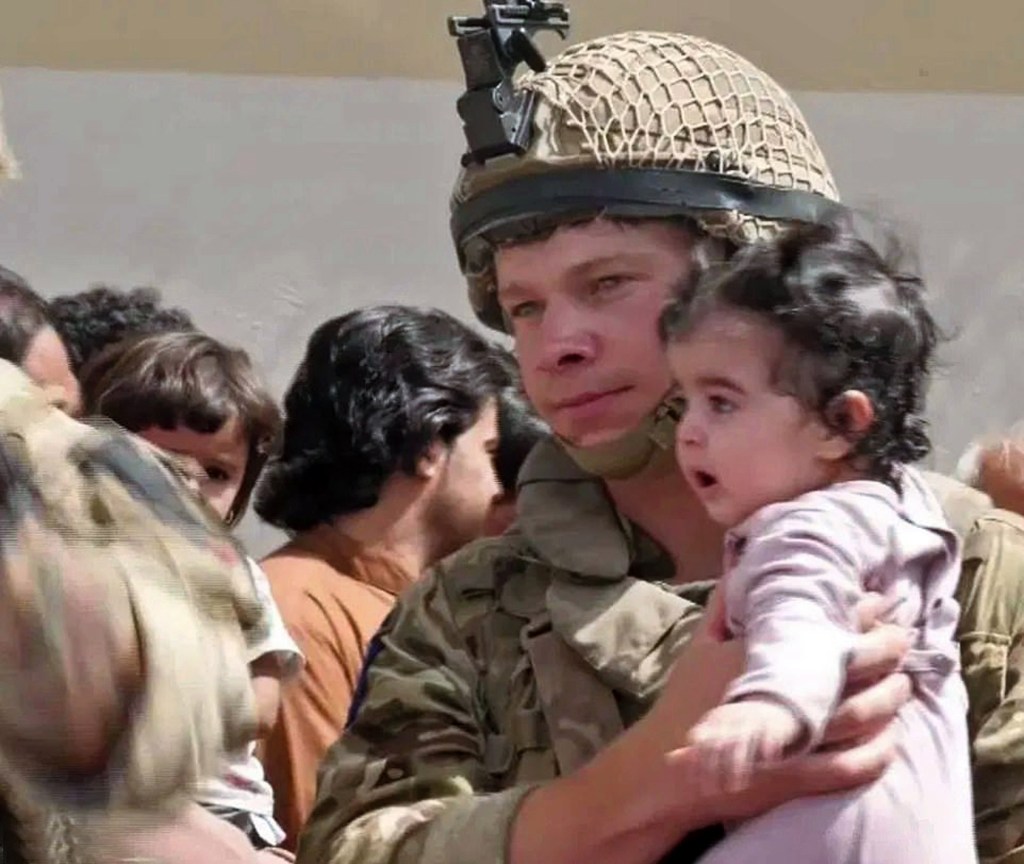
A woman passes her baby over the fence to an American soldier. She does not know the soldier. She does not know if the baby will be safe. She does not know whether she will ever see the baby again. But she knows that she must give the baby to someone, anyone, so that he doesn’t grow up there.

A sixteen year old boy with a promising career as a footballer grabs on to the side of a plane. He begs. He hopes the plane will take him too. The plane takes off, flinging him to the ground. He dies instantly.

An elderly woman with nothing to her name takes off on a long journey across desert mountains by foot. If she is lucky, she will arrive in a squalid refugee camp and spend the rest of her days living in white tents managed by the UN. She probably will not be so lucky.

Today those people are Afghans. 

Only a few generations ago, they might have been you. 

Most of the people here have ancestors who fled just as these refugees do today.

The great migration of Jews into England came at the end of the 19th Century. They had been living in the Pale of Settlement in Russia and Eastern Europe for centuries. Under Tsarist persecution, Jews were confined only to certain parts of the Russian Empire. They worked as peasants and in menial jobs, building their own communities in the shtetls.

When the Tsar’s power was threatened and the Russian Empire began to crumble, his supporters blamed the Jews. For decades, state-backed mobs rampaged through the villages. They torched houses, massacred people, stole property and made life unbearable. We call these waves of antisemitic violence pogroms.

So, our forebearers fled. Most did not make it. Some arrived in England. When they did, they were met by hostility, racism, cramped housing and sweatshop jobs. 

Not long ago, the hordes of fleeing refugees were you. You know what it meant to be a stranger. Even if you do not remember. 

The Torah asks you to remember. According to our narrative, thousands of years ago, we were strangers in the land of Egypt. We were refugees from a famine in Canaan. We were wandering migrants with no home. We were enslaved and confined to one part of the Nile and worked hard labour building garrisons for the Pharaoh. We were mistreated and judged with prejudice. We are instructed by Scripture to remember how that felt.

This week’s parashah sets out the rights of migrants. Never abuse them. Do not exploit them. Pay them upfront. Don’t hold their property hostage. Give them dignity. Don’t mess them around. Make sure they have food and shelter. Look after them.

Why? Over and over again, Deuteronomy repeats: “Always remember that you were a slave in the land of Egypt. That is why God enjoins you to observe this commandment.”

You have to support strangers because they are you. When you look at migrants and refugees, you are not allowed to see them as different. You have to look at them as you. It is the most-repeated commandment in the whole of Torah: to know what it is like to be a foreigner in a foreign land. Remember what this means.

Not everyone remembers. 

Last week, Danny Finkelstein wrote in The Times praising border controls. He took his family story of fleeing as refugees from the Nazis to advocate for keeping some foreigners out.

He wrote, and I quote here: “strongly believe in immigration control. And I am not in the slightest bit put off by the suggestion that this would have prevented my grandfather from becoming a British citizen […] yes, I would deny immigration to some very deserving and worthy people I would be quite happy to live next door to. Even people I would be happy to be related to. Just because I favour immigration for someone, that doesn’t mean I favour it for everyone.”

Personally, I cannot share Mr. Finklestein’s flippant disregard for immigrants, or join him in championing border controls. Like his, my family also fled the Nazis. Most did not make it out. Only a few, who were children, or who could prove they would be useful as nurses, were permitted entry. Under the current system, I doubt they would have been allowed. If I were a refugee today, I would not fare so well as my grandfather did.

But the reason I object to Danny Finkelstein so strongly is not selfish pragmatism. It is religious. It is because I truly believe what the Torah teaches about the rights of strangers. Those refugees are my ancestors who fled persecution. They are my progenitors from millennia ago who were strangers in the land of Egypt. Those Afghans, gripping onto planes and handing their babies to soldiers and walking for miles in the sun… they are me.

And they could be me again.

The only thing that stands between a comfortable citizen today and a desperate refugee tomorrow is luck. 

We in this room do not have to think about what we would do if our corner of the world was faced with famine or war. We do not have to imagine where we would go when faced with our own version of the Taliban.

But if ever I did have to think about this, I would pray that somebody, somewhere, had taken to heart the message of the Torah. I would want somebody to say that no number is too many, that their homes were open, and that my life mattered, no matter what I could provide.

Thankfully, there are people in Britain today, making precisely this case. 

The Jewish Council for Race Equality has put together a Jewish community response to the Afghan refugee crisis. It sets out clear actions the government must undertake to meet its moral obligations.

It must scrap its anti-asylum seeker legislation. It must stop deporting Afghans back to certain danger. It must allow more refugees into this country. 

I urge you all to sign this petition in support of these very reasonable demands.

These are really the minimum standards we must meet. The Torah never even thinks to introduce border controls or to police citizenship. Our Scripture assumes that migration is natural and inevitable. God’s instruction is that, once strangers are with you, you give them all the rights and compassion you would show to someone you have known all your life.

Torah repeats itself so many times to drill home this message.

Always remember that you were a slave in the land of Egypt. That is why God enjoins you to observe this commandment.

Shabbat shalom. 

I delivered this sermon at South West Essex and Settlement Reform Synagogue on 21st August 2021 for Parashat Ki Teitzei.
climate change · story · torah

Who built the ark

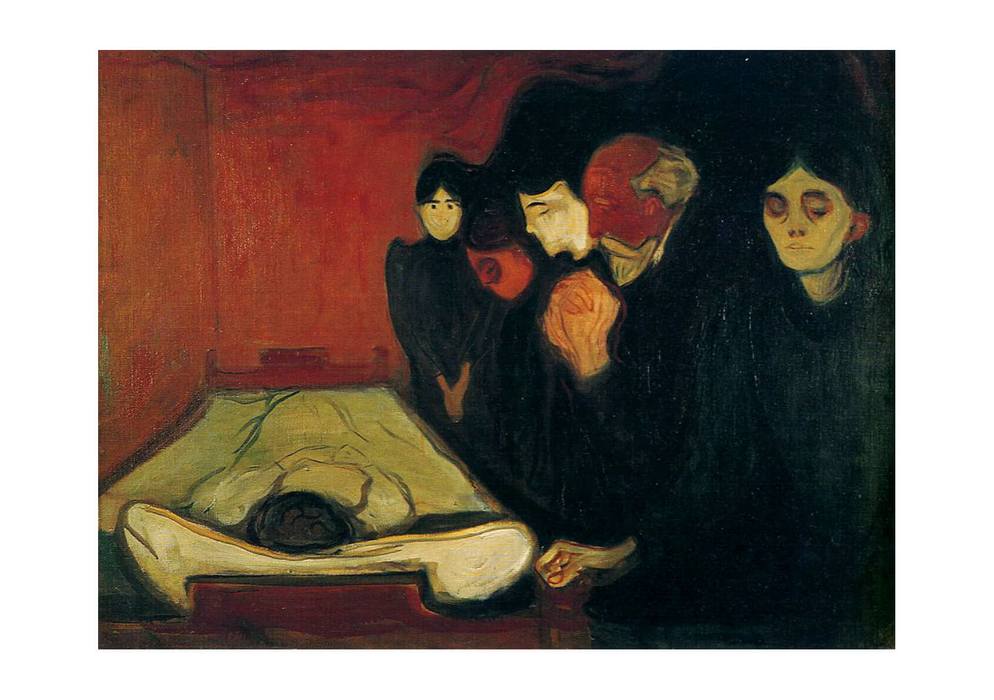
A boat is coming to carry people away from the flood.

You do not have a ticket.

You do not have the money to get a ticket. 

You cannot forge a ticket.

You fumble in your pocket anyway, despite knowing you will find nothing.

If you are wondering whether you know anyone who might be able to get you the money or the paperwork, you do not. You do not even know anyone who knows anyone.

The flood is coming. It has been coming for a while. It has reached others. You have heard reports. You have seen it yourself. You have met victims. 

You didn’t think it would come for you. At least, you didn’t think it would come for you to begin with. Now it is nearly here. 

So is the boat. But you are not allowed on the boat.

The boat is reserved for one man and his family. His name is Noah. He and his sons and their partners and their grandchildren will be rescued. You will not. You will not even be allowed on the ship even to serve them and clean up after them. You cannot stowaway.

Many said that floods were coming. They saw the weather signs. They felt the ground dry up. They knew the trees had stopped bearing leaves. They saw the black clouds and felt the stormy winds. 

You did not laugh at people who said the floods were coming. You did not join in with alarmist panic either. 

You did not commission people to make sure you would be insulated against environmental catastrophe because you didn’t have that kind of money. You knew you were powerless either way when the warnings came. 

You just kept working. What else could you do? You worked and raised your children and made sure you had shelter and a roof over your head. You had fun times with your friends and family. You tried to enjoy life. You tried not to think about it.

You got on with your job. 

And this is the kicker: your job is building boats. 

You are a skilled carpenter. You sand down wood and hammer nails and apply coats of varnish. You breathe in sawdust and work twelve hours a day and learn how to make the dimensions exactly right so that a ship of any size will float. 

You know the boat is coming because you are building it.

You were among the people commissioned to build the ark that is going to take that man and his family away.

You have never been able to afford to go on any of the boats you have made before. This will be no exception. 

Even with the floods already here and the rains rising all around you, you have no choice but to watch.

Noah will float away to safety on the boat that you are building, because he has the wealth to commission you. And the power to leave you behind. 

He has his wealth because his father, Lamech, had wealth. And his father before him had wealth; Methusaleh said he was so rich he could defy time. 

The family gained their wealth through placing indentured servants in long-term debt bondage. Their slaves would work the land without pay and Noah’s family would cream off the profits from their work. In that sense, Noah is no different from any other man who has wealth and power.

But he is different, because he will have a boat. People call him a visionary and a genius. People say he is a prophet because he knew that it was the right time to build a boat when he realised that floods were coming. Some of them stand on and watch in awe as you saw planks for him. 

In years to come, children will ask who built the ark. They will not say your name. They will chant back the name of the man who commissioned you to build it.

You are not building this boat alone. You are building it with hundreds of others. There are people who chop the wood, who transport it to you, who treat it, who clean it, who keep you fed, who watch the children, who make sure everyone is clothed, who design the ships, who furnish the insides, who create the infrastructure to make sure boats can be built. 

You are among many.

There would be enough room for all of you on this ark. Noah is taking his collection of exotic pets.

Nobody is impressed by your ability to make boats. They are impressed by Noah’s ability to commission you to make them. 

Many people do not share such reverence. They fight over the last scraps of food and clean water. They scramble to reach the highest perches, and push others out of them, even though it will ultimately be pointless because the floods will drown everyone. 

Everyone except the people on that ark.

They know that. People fight to reach the ship so that they can get a place on it. They will not get one.

Noah has hired the strongest people to prevent the others from fighting with each other. They form a solid ring to stop anyone reaching the boat. They control the food and water rations. The floods will drown them too.

The man they think is a genius because he has money will sail away on a boat you cannot afford to get on and leave the whole of humanity to drown.

Afterwards, he will tell the story from his perspective. He will say that everyone else was violent. He will say that you deserved to drown.

He will say that he was the only righteous person throughout the entirety of his generation. He will say that the flood was God’s will.

He will say that, if anything, he saved humanity. He will take the credit for the survival of the animals.

And you will be washed away.

So, why do you keep building?

Ark

I wrote this in response to unfolding environmental catastrophe. I will likely preach it in October for Parashat Noach.

judaism · sermon · social justice

How much should I give away?

In 2013, a survey revealed that Jews were the second biggest charitable donors in the UK. 

Muslims were first. 

Ever since, I’ve been trying to recruit Jews into competition so that next time a survey is run, we will win.

Coming second is fine, I guess. But if we’re going to be a light unto the nations and take moral responsibility for the world, we should be coming first no problem. 

They didn’t win because there are more of them than us. That wouldn’t be a fair comparison. Muslims outdid us on both how much each person gave on average, and how much they gave as a proportion of their income.

I’m not really advocating getting into a competition between the religions. There’s enough of that going on in the world.

But I do think there is something important we can learn from Muslims. One of the reasons they do so well on charitable giving is because of how seriously they take the messsage from this week’s parashah. 

Here, we read Reeh. This part of Torah introduces the concept of tithing. Tithing is an old English word, meaning ‘taking a tenth.’ And that is exactly what is prescribed here. Every Israelite must take a tenth of their produce and give it to the priests for redistribution. 

The priests then use some of it for upkeep of the community; some for orphans and widows; some for the poor; and some for supporting migrants passing through. 

This is the basis of Ancient Israelite society. The world of the Bible was very unequal, and living conditions were particularly harsh, so they truly saw the importance of a basic welfare system. 

In the Ancient Near East, almost everyone was a subsistence farmer. Each extended family had a small plot of land, which they would use for harvesting crops, rearing animals, and general living. One bad year on the farm could render an entire family destitute.

The Torah introduced social provision, so that everyone contributed and anyone who needed it could benefit. Richer people did pay additional levies on their crops, so that a tenth was the minimum, but some could give much more. The earliest tzedakah was probably much more like modern taxes for the welfare state than charity. 

But that should not excuse us taking seriously our obligation to give to charity. I’m sure we all agree that the welfare state is a wonderful thing, and that it is impressive that it has a biblical basis. I don’t need to tell you to pay your taxes. You don’t have much choice in that.

What you do have control over is your tzedakah. Your charitable giving. It is a mitzvah doraita, a commandment from Torah, that we are supposed to give 10% of our take-home income to charity. 

Now, who actually gives 10% of their income to charity? Anyone here? I am embarrassed to admit that I don’t. I have regular standing orders that go out to causes I care about, but when I look back on the year, I never actually make it to a tenth of my income.

I feel especially ashamed to admit this, because that tenth is supposed to be the bare minimum. Maimonides teaches that people should give more if they can, as long as they are not consequently rendering themselves in need of charity. 

But my motto is never to lead perfect be the enemy of good. All of us can start by taking charitable giving seriously as a spiritual practice and building it into our daily lives.

Muslims do this with what they call “zakat.” At the end of every week, they give at least 2.5% of their earnings to charity. They’re big donors because they make this a consistent practice and see it as a fundamental part of their religion.

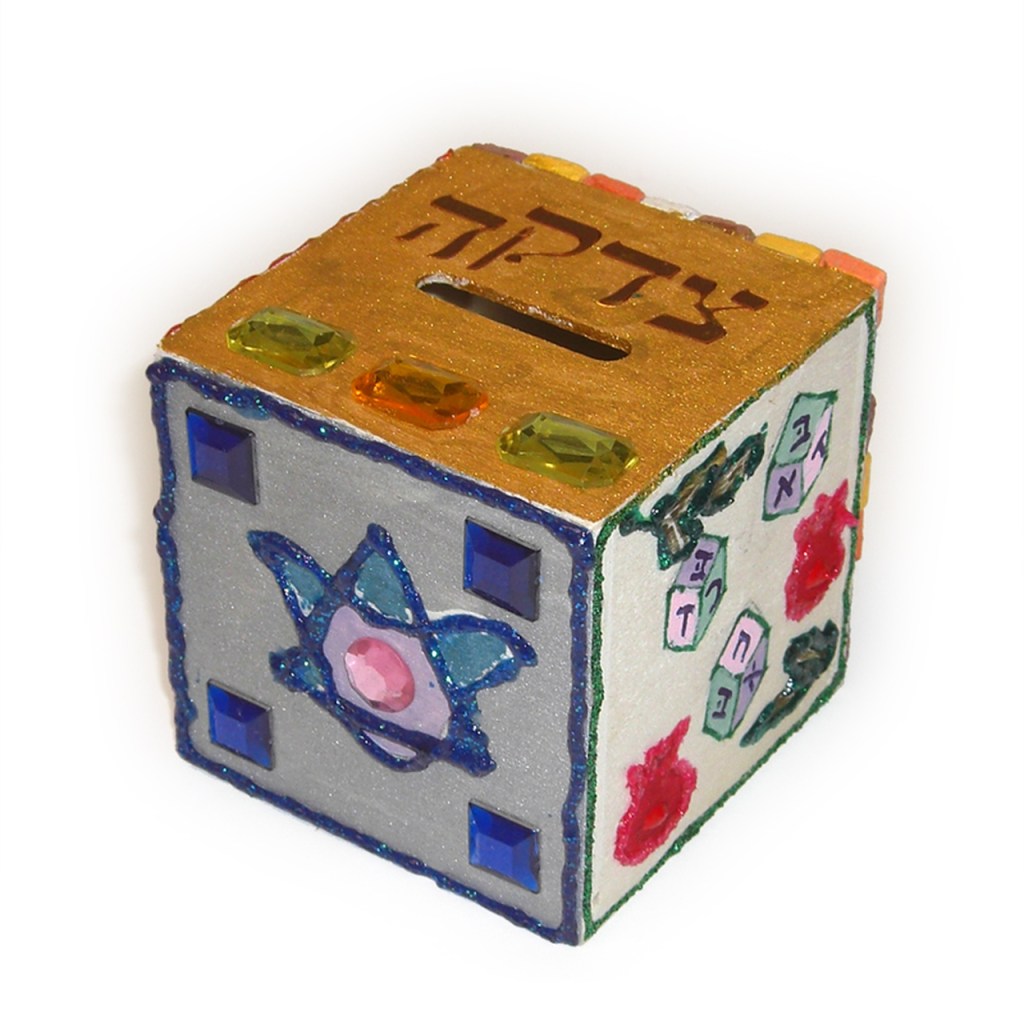
It is also a fundamental part of Judaism. Charitable giving is supposed to be essential for us all. Some older members may remember that, not long ago, every home had a pushke, or tzedaka box, which would collect whatever spare change a person had. Giving has been heavily integrated into some people’s Jewish lives, and it should be again.

Elul is coming. It is the last month of the Jewish year. It is our time for reflection. We use this time to look inward and assess our deeds. 

In Hebrew, this process of introspection is called “cheshbon hanefesh” – auditing the soul. We weigh up our good deeds with our bad, and put our own morals on the scales of judgement. A part of this must surely mean re-examining our giving. A cheshbon is a bill, a record of how much you owe. We owe many things: deeds, love, kindness and study. But we also do literally owe money to those who need it more than we do. 

Now is the time to redouble our efforts at donating and to make sure we do fulfil our sacred requirements. The synagogue will be sending round its High Holy Day appeal soon, and I encourage you to give it a good look.

Giving to others is good for us. It strengthens our soul and sense of self-worth. It is good for others. It means people less fortunate get the support they need. It means great causes can continue to thrive.

And, of course, giving is good for the Jews. Especially if it might mean we win a competition. 

Shabbat shalom.

judaism · liturgy · sermon

Pray for the right kind of rain

Every day, we pray for the right kind of rain. 

The Amidah praises God’s holiness and dominion over the natural world. 

We change how we address God in rhythm with the seasons. In the summer, we thank God for making dew descend. in the winter, for bringing on heavy rains. 

For us living in cities, we can feel quite disconnected from how important this water cycle is. I only catch snippets of how it causes concern. A radio broadcast says British farmers are worried that there hasn’t been enough frost in January. In a supermarket, a cashier tells me there is a shortage of aubergines because there wasn’t enough rain in Portugal this year. 

The cycle of the right rains affects whether we have enough to eat. It can mean the difference between living safely and losing everything. There is a reason the greatest catastrophe our ancestors could imagine was a flood.

This week, we gained a sense of how important and delicate the rain cycle is. 

At the start of the week, I was heading back from a holiday in the Lake District. It was searing hot. The hottest summer we’ve ever had, people kept saying. As I climbed mountains, normally soft moss felt like dry straw under my hands. The shops had stopped selling barbecues and matches. 

Everyone said that the slightest spark could set the whole forest on fire. We would wind up like California or the Amazon, with acres burnt to a crisp. Thankfully, it didn’t happen, but I left with an awareness of the forests’ fragility and a deep concern that England was not ready for climate catastrophe. 

Only days later, I came back to intense flooding. The rains fell intensely, relentlessly. I thanked God that I was safe inside as the skies turned black and stayed that way for what seemed like days. The area around our synagogue was drenched. Charlie Brown’s roundabout flooded again. Some in this community saw damage to their property. Members of our synagogue were displaced: moved initially to the higher floor of the care home, then relocated. 

I was taken aback by how well our care team took to handling the crisis. Claire, Sue, Debz and others made sure everyone who might be affected received calls, and that anyone who needed help got it. They showed the very best of what this synagogue is for. 

But I was most impressed by the bnei mitzvah students I met this week. Jacob and Layla, twins, are preparing to come of age around Pesach, at the time when we stop praying for heavy winter rains and start celebrating the gentle dew. I asked them what they want to be when they grow up. Jacob wants to be a primary school teacher. Layla says she wants to be an environmental activist.

I have to be honest. When I was Layla’s age, I had no idea campaigning could be a job. It is a testament to her curiosity and sense of justice that she has found this out.

But it is also a wake-up call of how dire things are with our environment that Layla has to think of this job. The problems we saw this week had many causes. We have a rapidly changing climate. Companies have over-consumed fossil fuels and spoiled the ecosystem. Developers have built on flood plains. Much of the development after the Olympics destroyed natural wetlands, worsening the situation. But all of these factors share a common problem: we have taken nature for granted.

In this week’s parashah, we read: 

If you listen, if you truly pay attention, the Eternal One your God will grant the right rains at the right times: autumn rain for autumn and spring rain for spring. You will be able to eat and so will your cattle. 

But you must guard yourself against a straying heart. If you serve other gods and bow down to them, God’s anger will blaze out against you. God will shut up the sky. There will be no rain.

This text might feel familiar. It is the second paragraph of the Shema, found on page 214 in your siddur for the Shabbat morning service. You may have read it before, but it’s unlikely you’ll have heard it read aloud in any service. 

It is the custom of this synagogue, and of all Reform synagogues, to read these verses in silence. So, why do we whisper it? 

One reason is that we are very uncomfortable with what is implied theologically here. It suggests that good things happen to good people and bad things to bad people. We know this isn’t true. The righteous suffer and the wicked prosper. Our rabbis knew long ago that there is no individual reward for good deeds in this life. So we won’t say it out loud when we have doubts about it.

But what if it is true? The warnings in these verses are not about how God might deal with individuals, but the impact of actions on entire groups of people. If you don’t pay attention to the ethics of Torah, you all can be destroyed. If you worship gods other than the Source of all creation, you will find yourself helpless before the forces of nature. Cause and effect. Action and consequence. 

In the biblical world, worshipping other gods meant turning to material things. Whereas the idol-worshippers bowed down to wood and stone, what marked out the ancient Israelites was that they only prayed to the transcendental God, who held all of nature in balance.

And that is what is happening in our world today. We are disregarding our ethical obligations to care for the planet, and we are seeing what happens. People have substituted the Eternal God for the material elilim of oil and gas. We have traded humility before nature for the arrogant belief that we can control and manipulate our environment without consequences. 

Now we are living the impact. We are dealing with the wrong rains. We are witnessing floods here, in China, in Germany, in New York, and in India. 

The Torah warns us: “Do not believe you have made all this with your own hands!”

We may have built cities and roads and bombs and planes, but we didn’t make the grass grow. We haven’t made the sun shine. It’s not us that makes the rains fall. 

All that is in the hands of a supreme Creator, who has charged us with protecting and sustaining this planet. We must hear, and truly pay attention, to that God, whose Word calls to us today. We must take up the challenge of replacing fossil fuels with renewable energy; of rebuilding our world in harmony with nature, rather than against it; of tackling carbon emissions and climate disaster. We must enable Layla to inherit a living planet so that she actually has something to protect.

We must act now. 

Shabbat shalom.

This sermon is for South West Essex and Settlement Reform Synagogue, 31 July, Parashat Eikev

judaism · ritual · spirituality

Wrap your body in prayers

Most of the time, when I’m experiencing something emotional, I feel it in my body before I can even process it. 

I’ll feel a sinking in my stomach and know I’m dealing with dread. I’ll wake up grinding my teeth and realise I must be anxious. I go to bed feeling full of life and visceral feel my joy.

Every emotion is a physical experience. It is not just something we can rationally understand.

In Biblical Hebrew, if you want to say that you are angry, you say that your nose flares. If you are compassionate, you are womb-ful. If you are sad, you rip your hair. If you are lustful, you are big-balled. If you feel respect and awe, that’s in your liver.

In the biblical imagination, the body is a map of all the emotions we might feel. Each limb and organ corresponds to the full range of affective experience. 

We must bear this in mind when we come to read this week’s parashah and its resultant commandments:

Put these words that I command you today on your heart… Wrap them as signs on your arms. Bind them in front of your eyes. 

The words are recited daily by the most observant Jews. They form part of the first paragraph of the Shema, Judaism’s central prayer. 

The Shema begins with an instruction to listen; to pay attention. Hear, O Israel, the Eternal One is our God. The Eternal God is One. 

It then tells us the embodied experiences we must have to make sense of what we are hearing. Heart. Arms. Eyes. 

Of course, these carry metaphorical meanings. For the ancient Israelites, the heart was the seat of thinking, much in the same way as we consider the brain in the modern West. When Torah tells us to keep it on our hearts, it means that it should be part of our whole intellectual being.

The arm is the site of action. It is synonymous with power. The arm is what gives to charity and shields the vulnerable. It is also the body part that raises swords and strikes stones. With an outstretched arm, God redeemed the Israelites from Egypt. The instruction to keep God’s word on our arms is a call to use our power for God.

Eyes, for the Hebrews, are for desiring. Your eyes can wander after foreign gods. They can delight at the wonders of nature. They can covet things that aren’t yours. They can favour children. The Eternal’s eye is always on those who have hope and mercy. If the commandments are frontlets before your eyes, enacting them as all you want to do. You are singularly focused on doing good deeds. 

Over time, our ancestors came to see these words as more than just symbols. Rabbi Akiva, the Mishnah’s great thinker on metaphor and interpretation, is credited with codifying the rules for tefillin.

Tefillin are compartmentalised boxes affixed to leather straps. You can see people wear them wrapped around their heads and arms in weekday morning prayers. 

These prayer aides were invented so that observant Jews could literally enact the commandment of binding the words on the body. Inside the boxes are the words of the Shema. Cheder children tell me they look like Go-Pros.

Carefully, we tie them to our arms, close by our heart. We wrap the leather straps around our arms, seven times. We place them as a crown around our heads, settled between our eyes. We finish up by plotting the straps around our fingers and palms in a set pattern.

If ever you come to Leo Baeck College’s shacharit services, you will see a bunch of students and teachers adorned in them. 

If the founders of the College and its movements could see us, they would be aghast. For many of the originators of our movement, such embodied practices were strange and arcane. 

Progressive Judaism was a response to the Enlightenment. Across Europe, people heralded the triumph of science and reason. Ideas, not feelings, were paramount. Rational thought, not embodied emotion, would be what guided humanity to greatness. 

Reforming rabbis of the past called the practice of bending knees in prayer “bowing and scraping.” They saw their Orthodox contemporaries’ kissing the scroll as a form of idolatry. Above all, they certainly never wore tefillin. 

When, in my early 20s, I asked my dad for a tefillin set for an upcoming birthday, he raised an eyebrow. “Isn’t that an Orthodox thing?” he asked. We didn’t talk much about the theology, but I told him I liked the idea of it, and he got me a beautiful pair.

In a way, he was right. Tefillin were an Orthodox thing. But, over time, progressive Jews have reclaimed them and made them our own. 

Reason is still deeply important. We still hold to the importance of modern scientific inquiry and rational debate. It’s just that we can no longer isolate what goes on in our bodies from what goes on in our brains. 

Living with chronic pain, I see daily how intertwined are my spine and my spirit. Every part of my mental and physical health is connected. I would struggle to draw a line between my body and my ‘self,’ and can’t really comprehend their separateness. 

This is just as true in prayer. So I wrap tefillin. I feel my religious inclinations before I can process them. 

I’ll stick a box on my left bicep and know that my body is part of the miracle of creation. I wrap it around my arms and I am bound by God, submitting to the commandments. I set the straps over my head and feel the weight of responsibility. I rest the box before my eyes and see what I have to do. I tangle the knots around my fingers as if I am being married and I am overwhelmed by the loving gift of a new day.

I wrap my body in prayers. I can work out what they mean later. 

I wrote this sermon for Leo Baeck College’s newsletter, Parashat Vaetchanan

sermon · social justice · theology

What do we stand for?

Five years ago, I interviewed to start rabbinic training. Over four days, I went into different rooms, where rabbis, academics and lay leaders quizzed me about why I wanted to be a rabbi. 

It was intense. In one interview, one of the rabbis asked me: “what do you think you most want to learn while you are here?”

I said: “I’d like to learn what we stand for.” 

My interviewers scrunched up their faces. I imagined them thinking, “are you sure you’re in the right place?”

How could I not know what we believe? We are Progressive Jews; we stand for Progressive Judaism. Perplexed, she pushed me: “can you think of any principles of Progressive Judaism?” 

I thought, and said: “informed choice.” We do what we like, in conversation with Jewish tradition.

The rabbi sat back and took notes. I wasn’t sure whether I had given a correct answer, and she was confused how I could say I didn’t know what we stood for if I had that grounding, or if I’d missed something more important.

What I was trying to ask was: surely we don’t just choose whatever we like? A Progressive Jew can’t make the informed choice to commit murder. We don’t look at that central commandment and think: ‘ah, but it was for its time.’ We have a shared assumption that the prohibition on killing applies to every time. So how do we make these informed choices? What decides for us which choices are right and wrong?

Permissiveness is not really a value. It’s something you do out of indifference. There must be something stronger than that motivating our congregants to get out of bed and labour for the welfare of their community. 

Apparently, I am not alone. Throughout my time as a student, going to congregations across the country, people have asked me that very same question in different ways. 

What are the values of Reform Judaism? What does living by Progressive Jewish values actually mean?

After 4 years of study, well… I still don’t have the answer. But I feel much closer to it than I did when I started. And the answer begins with this week’s parashah.

At the end of Masei, we hear the story of the daughters of Tzelafchad. They come forward before Moses and assert their rights to inheritance. Their father, they say, was a good man who had no sons. As it stands, his property will be passed on to nobody, and these women will be left destitute. They argue that they should be the ones to inherit his estate. Moses talks to God. God agrees.

This is a big deal in Torah terms. It shows that a law can change. Decisions are not fixed in stone but can adapt with the times. It fits exactly with the Progressive mindset. We look at the laws again, and work out if they are still relevant. Moses looked at inheritance law, saw that it wasn’t working, and decided it was time to set a new precedent.

This is at the heart of Progressive Judaism. We progress. We treat the Torah and our traditions as our basis, but we are always willing to review it, and find new ways that better suit our reality.

The case of the daughters of Tzelafchad is a great example. It fits with our intuitions about what is right and wrong. Of course these women should inherit.

But does that mean every time a law changes, it’s an improvement? In the course of the Torah, laws also change to take rights away from people. Laws can change that make people’s lives worse. 

The reason why we consider this legal change so praiseworthy is because it makes life better for people. In particular, because it makes life better for women. 

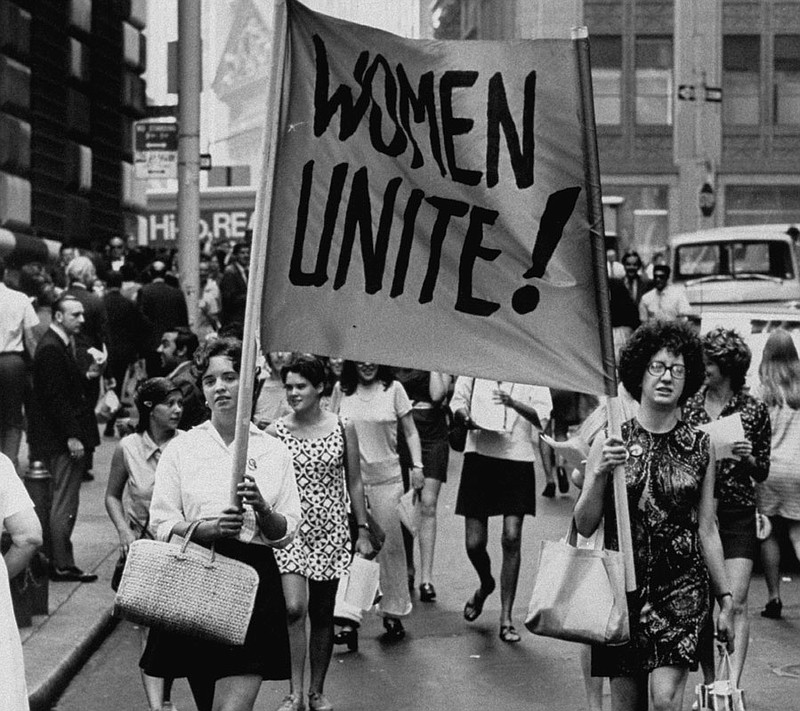
It fits with the feminist lesson we have learnt from history. Through the last century of the women’s liberation movement, our religion learned the importance of giving everyone their full rights and abilities to participate in Jewish life.

We have our own hashkafah: our own way of looking at the world. We see progress in terms of what gives people the most equality, dignity, and justice. 

Other strands of Judaism may give priority to tradition, nationalism, or conservatism. We say that what matters is equity. 

We did not decide to pursue this egalitarian cause because we thought it would make things easier. Quite on the contrary: it made things harder for many people. At the start of our movement, people were disowned by their families and ridiculed by the religious establishment because of their conviction that equality mattered. They took the more difficult course because it was the right one.

Since the early days of Reform Judaism, we have prioritised gender equality. This week, I met with one of the founder members of SWESRS, who said that in their very first days, the community discussed what they wanted from a synagogue. Even in the 1950s, they insisted that equality between men and women would be of the utmost importance.  

This synagogue has gone on to create a legendary legacy. The UK’s first woman rabbi, Jackie Tabick, was raised here. This is a place with a proud history of putting forward that great principle of Reform Judaism: that equality matters.

That is how we approach the question of whether and when to change a law. We are not beholden to tradition, forced to do everything today and tomorrow, just because we did it that way yesterday. Nor will we go along with every change, just because it feels fashionable or convenient. 

At every stage, the question we ask ourselves is: is this right? Is this just?

We seek to make changes that will make people more equal, more empowered, and more dignified. 

So, now, if I am asked what we stand for, I have a much clearer answer.

We stand for equality.

We stand for the emancipation of all of humanity.

We stand up for the oppressed and stand beside the marginalised.

We stand in the footsteps of Moses, who changed laws because he could see that justice mattered.

We stand before God, proud to inherit a tradition; and courageous enough to change that tradition for the better. 

That is where we stand.

Shabbat shalom. 

This sermon is for South West Essex and Settlement Reform Synagogue, Parashat Matot-Masei, 10th July 2021

sermon · spirituality

In defence of large groups of people

The great sage of the Mishnah, Ben Zoma, once exclaimed:

How hard must the first ever human being have worked before he had bread to eat! He plowed, sowed, reaped, sheaved, threshed, winnowed, separated the grain from the chaff, ground the grain into flour, sifted, kneaded, and baked… and only then did he get the chance to eat. But I wake up and find all of these prepared for me.

He added:

How hard must the first human being have worked before he had clothes to wear. He sheared, laundered, combed, spun and wove… and only then could he put on a shirt. But I wake up and find all of these prepared for me.

And, of course, he is right. How many hands must have touched everything we enjoy. Ben Zoma knew this was true 2,000 years ago. How much more true is it now that we live in a globalised world with food, clothes and technology Ben Zoma could not even have fathomed.  Anything that anyone in this world does is because many people have worked together to make it happen.

But Ben Zoma also says something ridiculous. He imagines that Adam, the first human being, did all this alone. We know that is patently false. First of all, at the very minimum, Adam was accompanied by Eve in Eden. And, if we follow the biblical story, God provided that first couple with everything they needed. They could pick fruit off the trees without trouble and never bothered with bread. They didn’t even need clothes until they had left their paradise garden.

When Adam and Eve did leave Eden, they immediately found wives for their male children. The Torah doesn’t explain how they got there, but any other explanation for how humanity came about would be very troubling. The Torah knew that it was impossible for human beings to ever achieve something on their own.

And, in fact, the Talmud, where this saying from Ben Zoma is quoted, knew this too. This imaginary world where individuals only do things for themselves comes as part of a sugya that speaks in celebration of groups of large people. The Talmud marvels at the diversity of human beings, where every face and mind is completely different. It speaks in praise of migration, hospitality, crowded marketplaces and huge throngs flocking to the same place.

Human beings are social animals. From the off, we have done everything in groups. Before civilisation, we hunted and gathered in packs. When we first set up farmsteads and villages, we did so together, in groups. The modern world was built by people sharing technology, innovation, resources, and working together to develop them. The only evolutionary advantage that human beings really have is that we can organise in ways that no other animal can.

For the last year, some forms of collectivity have been permitted, and some have been forbidden. People have been allowed to meet each other in warehouses, factories, and takeaways, where they make and distribute things to those who can afford them.

People have not been allowed to encounter each other in parks, or houses, or community centres, or gyms. They have rarely been able to accompany the sick at their bedsides, or celebrate births and marriages, or share ideas in public forums. 

Now, as things ease, people are permitted to gather, but only if they are spending money. We can meet in shops, pubs, and restaurants, and even sit indoors without masks on. But very few of the community activities for children have returned. Older people in hospitals and hospices are still rarely seeing their families. 

Certainly, almost every form of protest or public demonstration remains criminalised, and it may stay so for a very long time. Like last summer, even with a nearly completed vaccination programme, the government is keen to rush people back to work, but reluctant to allow people time to just be together and heal. 

Still fearing the virus, despite minimal risk of transmission to the vulnerable, many people have given up on public transport. There is more regular car use in the UK now than at any previous point in history. I see people avoiding each other, avoiding making real contact, even though the option is there.

I look at this so-called ‘recovery’ from Coronavirus and wonder if anybody has considered what actually makes life worth living. We are not automatons, created to work like robots. The best part of being human is other human beings. We are social creatures, whose purpose is derived from what we can do together. 

And there is a place where people are supposed to be able to meet for just that purpose. Its name in Greek is ‘synagogue,’ which means ‘shared path.’ In Hebrew it is called a ‘beit knesset: ‘a house of meeting.’ In Yiddish, we call it ‘shul,’ which just means ‘school.’ This. This is it. This thing where we come together to sing in unison and study communally and hear how people are really doing, this is what life is supposed to be about. 

This. This place where babies are blessed, bnei mitzvah celebrated, weddings solemnised, healing recognised and deaths memorialised. This is how people recognise the humanity in others, and in themselves. 

This is my last service with you. I have absolutely adored working with you. I have got to know so many of you in such depth, without even leaving my home. I have heard about your families, your fears, your hopes, your dreams, and your life stories. I cannot wait to do that with you in person again.

We have weathered an entire year together through a pandemic. That much is remarkable. I have been so impressed by the ways you have continued to pastorally support each other online, and to provide essential services to the vulnerable. 

The next stage is going to be hard. It means meeting people face to face again. It means taking risks, being brave, and trusting each other. It means accepting compromises and imperfections. But above all, it means truly building a community that is loving and generative. 

I look forward to returning to Newcastle to see you all again in the building, in person, shaking hands, embracing, and catching up on the things that matter. I sincerely hope it will not be long before this community sings in harmony once more and natters over homemade foods at kiddush. 

At no point in our history has anyone managed to go it alone. The future sees us together.

Shabbat shalom. 

sermon · theology · torah

Make yourselves fringes

.

I started wearing a kippah full-time out of the house about six years ago. I was growing increasingly religiously observant and wanted to see how it felt to physically mark my faith. I have worn the kippah almost every day since, and feel naked if I greet guests or leave the house without one.

The results have surprised me. First of all, Britain is way more accepting than I anticipated. I have lived all over London and travelled all over the country and never had a negative reaction. 

I am often met with positivity and fascination. Non-Jews ask me questions and start conversations I’d never otherwise have had.

Meanwhile, Jews come up to me to see if my kippah offers them a sense of belonging. It is like a hat that McDonald’s workers wear saying “ask me about our special offers”, except mine says “ask me about our special task.”

I am very aware that how I conduct myself through life now reflects not only on me but on Jews and Judaism as well. I have become an ambassador for Judaism. I feel obligated to live a more ethical life, and I wonder if that is, perhaps, the point. 

Religious clothing carries deep meanings for those who wear it, and has done throughout our history. The kippah itself is not mentioned in the Torah. It is a medieval innovation in Judaism. In the world of the Bible, the item of clothing that symbolised Jews’ distinctiveness and sacred purpose was the tzitzit. 

In this week’s parashah, Shlach, God tells Moses: “Speak to the children of Israel and say to them: make for themselves fringes upon the corners of their clothes for all generations, and put a blue thread among them.”

Now, says God, whenever you see them, you will remember what God has commanded of you. You will do what is right instead of what you like. And these fringes will make you holy before God.

But why? What is it about these fringes that should serve such a purpose? Are they simply visual aids? And, if they are, what is it about dangling threads at the corners of garments that should work to remind us of holiness and covenant?

Rashi suggests that the reason is not fringes themselves blue strand among them. This, he says, was once the colour of royalty, and an expensive dye to acquire. The thread is a reminder to the Israelites of their shared regal status – an affirmation both of their equality between each other and of their special status in the eyes of God. 

But the blue string that was once part of the tzitzit can no longer be seen. The dye that was once used no longer exists. Although efforts have been made to revive it, for most Jews, our fringes have no dye. 

I think the fringes have a meaning of their own. To me, these tzitzit are meaningful because of where they are.

They are situated on the margins. They are so often translated as being “fringes.” They are at the edges.

In this way, they are like Jews.

Every Jew, no matter how visible or assimilated, knows what it means to be on the fringes. It might be the ambivalence we feel as Christmas rolls around, or the unease we feel at a cultural reference that doesn’t include us. It might be a story in the news that we know we are reading differently precisely because we are a Jew.

Throughout history, we have used our marginal position to better understand both the non-Jewish world we inhabit and the Jewish one we inherit. Jewishness gives us a perspective not everyone has: a sense of how life can look from the edges.

When we see tzitzit, we see ourselves: the fringes.

The great 20th Century philosopher, Hannah Arendt, argued that this was no coincidence. We are not just on the margins because others have put us there, but because that is where we are supposed to be. 

Arendt says that, even after the Jews were given citizenship and turned into emancipated members of European states, most Jews continued to be “pariahs.” 

They were marginalised, never fully accepted into European society. As a refugee from Nazi Germany, Arendt knew this well.

From this position as pariahs, Jews could either consciously embrace who they were or pretend they were assimilated. Arendt says we should be conscious pariahs. We should embrace our marginality. We should use our special position as outsiders to see things the way nobody else can.

But tzitzit are more than just fringes. They are the sacred part on the border that give purpose to the centre. Without its fringes, a tallit is just a scarf. The fringes are the visibly different part that mark it out as holy.

Is this not the role of the Jew in the world? Is this not what it means to be ‘a light unto the nations’; that we are visible reminders to the world of who God is and what it requires of us? Isn’t it exactly our holy purpose to transform the world from the vantage point of our difference?

We who turn up to synagogue, who keep up our strange ways of living at the weekend, who sometimes have unusual dietary requirements. Yes, we who sometimes don kippot and dress in fringes. We have embraced our difference and turned it into a point of pride. We have chosen to live a life by Jewish ethics, transforming society and ourselves. 

That is where these tzitzit point us.

They tell us not only that we are sacred for our place on the margins, but that we need to look beyond our space to the further fringes. There are others more excluded than we are, whose difference has made them more vulnerable and excluded.

The fact that they are fringe makes them, like us, sacred. They have perspectives we cannot. Their difference is spiritually powerful. It is not that we should pity the people more marginalised than we are, but that we should seek to bring them from the borders to the centre.

This Torah portion concludes with reminding us why we wear these fringes: God brought you out of the land of Egypt.

With that special deliverance came a sacred purpose.

Countless times, the Torah implores us: you know the heart of a stranger, for you were strangers in the land of Egypt. 

If our holy purpose comes from being on the fringes, we need to look to those further out for where to go. Torah tells us about its most marginalised people: orphans, strangers, widows. These are the people that ancient Israelite society too often left out.

In ancestral times, these were the people without income or papers. Judaism calls on us to look to those most marginalised people. Unless we are centering them in our decision-making, we are failing in our religious duties.

The tzitzit at the edges of our tallits remind us where to look. They tell us that the margins are where things matter most.

So, make yourselves fringes. Now whenever you see them, you will remember what God has commanded of you. You will do what is right instead of what you like. And these fringes will make you holy before God.

Shabbat shalom.

This sermon was inspired by the political philosophies of bell hooks and Melanie Kaye/Kantrowitz. It is for Parashat Shlach at Edgware and Hendon Reform Synagogue, to be delivered Saturday 5th June.

sermon · theology

Why do people get sick?

Why do people get sick?

In a year when so many have experienced ill health, it is worth asking why this has happened. Throughout the pandemic, we have been reminded that some will get the virus with no symptoms; some will get the virus and recover; some will get the virus and will not recover. But what determines who gets sick and who gets better? Who decides who has to suffer and who will not?

There are plenty of medical professionals in this congregation who can answer part of that question much better than I can. Statistics, underlying factors, mitigating circumstances, health inequalities, access to medicine. All of these things certainly play a role. 

But they don’t answer the fundamental question that animates us: why? Why my loved one? Why me? That is not a medical question but an existential one. It is about whether there is a God, whether that God cares, and what a religious Jew might do to change their outcomes. 

For that, we look to the Jewish tradition. Let’s start with this week’s parashah. Here, we read one of the earliest examples of a supplicatory prayer. Moses sees his sister, Miriam, covered in scaly skin disease. He cries out: “El na rafa na la.” God, please, heal her, please. We hear the desperation in Moses’ voice as he twice begs: “please.” Don’t let her become like one of the walking dead. 

In this story, there is a clear explanation for why Miriam gets sick and why she gets better. Miriam’s skin disease is a punishment. She insulted Moses’ wife, talking about her behind her back with Aaron. 

When she gets healed, it is because she atones for her sins and Moses forgives her. She goes to great lengths of prayer and ritual to have her body restored. Sickness is a punishment and health is a reward.

In some frum communities, you might still hear this explanation. All kinds of maladies are offered as warnings for gossiping. When people get sick, they’re encouraged to check their mezuzot to make sure their protective amulets are in good working order. 

In some ways, these are harmless superstitions. When everything feels out of control, why not look for reasons and things you can do? But hanging your beliefs on this is dangerous. Plenty of righteous people get sick and plenty of wicked people lead long and healthy lives. 

If you follow the logic of this Torah story, you run the risk that, when your loved one’s health deteriorates, you might blame them for their ethical conduct, when really there is nothing they could do. It is a cruel theology that blames the victim for their sickness.

In the Talmud, the rabbis felt a similar discomfort. They decided that skin diseases were an altar for atonement. When people got sick, it was God’s way of testing the most beloved. The righteous would suffer greatly in this world so that they would suffer far less in the next.

When Rabbi Yohanan fell ill, Rabbi Hanina went to visit him at his sick bed. He asked him: “Do you want to reap the benefits of this suffering?” Rabbi Yohanan said he did not want the rewards for being sick, and was immediately healed. 

We hear these ideas today, too. People will say that God sends the toughest challenges to the strongest soldiers. But I don’t think this theology is any more tenable. How can anyone say to a child with cancer that their sickness is an act of God’s love? Who could justify such a belief?

No. The truth is that these theories of reward and punishment should leave us cold. We live in a world full of sickness and suffering, and it’s attribution is entirely random.

Maimonides, a 13th Century philosopher, saw that these explanations for sickness did not work. He was a doctor; the chief physician to the Sultan in Egypt. He had read every medical textbook and saw long queues of people with various ailments every day. How could he, with all his knowledge, think that sickness was a punishment or a reward?

Maimonides taught that God has providence over life in general but not over each life in particular. God has a plan for the world, but is not going to intervene in individual cases of recovery. He disparaged the idea that mezuzot were amulets or that people could impact their health outcomes with prayer. 

I feel compelled to agree with Maimonides’ rationalist Judaism. Sickness is random and inexplicable. So is health. The statistics and medical knowledge that I set aside at the start of this sermon have much better answers than I can muster.

So, what do we do? We, who are not healthcare professionals or clinicians seeking a cure? 

Like Moses, seeing the sickness of Miriam, we pray. We pray with our loved ones, not because we think it will make God any more favourable to them, but because it is a source of comfort to those who are sick. Praying with someone shows that you love them and care about their recovery. We do it for the sake of our loving relationships.

Like Rabbi Hanina, seeing the sickness of Rabbi Yohanan, we visit the sick. We attend to people, not because we imagine we can magically cure them with words, but because company is the greatest source of strength in trying times. We go to see people in hospital, not for their bodies, but for their souls.

And, like Maimonides, we approach the world with humility. We refuse to believe in superstitions that are false or harmful. We accept that we live in a mystery and there is much we do not know. 

In this time of sickness and difficulty, it is very Jewish to ask: “why do people get sick?” The Jewish response to questions is to ask more questions. And the most Jewish question we can ask here is: “when people are sick, how can I help?”

Shabbat shalom.

I gave this sermon at Newcastle Reform Synagogue for Parashat Behaalotchah on 29th May 2021.

article · spirituality

A Letter to God

Hi Judy,

I hope you don’t mind me calling you Judy. I know Lionel Blue used to call you Fred. I remember reading about it in one of those compilations of Thought for the Day segments he put out. He said we should talk to you like an old friend, with the same degree of familiarity. He called you Fred and addressed you like you were his conscience; a kind voice coaxing him to do better. I picture something approximate to Jiminy Cricket.

So I’ll address you as a friend and call you Judy. I want to call you Judy because I don’t know anyone who goes by that name, so I can invent an image from scratch without knowingly projecting my ideas of others onto you. I want to talk to you as a woman, maybe because I’m just sick of having religion dictated to me by older men. I imagine you queer, because Judy only you truly know how much I need my God to be non-conforming. 

So I’ll picture you, if I may. Pixie dyke haircut and hooped earrings. Comfortable trainers. A flowing blouse. Sitting on one of the chairs in my back garden, any back garden I’ve ever had. And you smoke a rolled-up cigarette, or maybe it’s a joint, and you don’t offer it to me because you know I quit smoking a long time back. But you are immortal and immutable, so you don’t need to worry about what impact all that tar will have on your health. 

Judy, I hope you don’t mind that I say “you” and not “You.” If I were writing high liturgy or biblical translations, I think I would have to capitalise you. But I’m following a theology that Rabbi Blue picked up from Martin Buber, who adopted it from German Protestants. I’m supposed to speak to you unguarded and as my full self, without illusions of grandeur, neither yours nor my own. 

I have to ask forgiveness just for talking to you this way, because I know it is heretical. Even imagining you is an affront to who you really are. Maimonides long ago instructed us that you had no physical form nor anything resembling one. Like the Rambam, I admire the austere iconoclasm of philosophical Islam. It pushes us to realise that you are incomparable to a human being. You are more akin to a force, like gravity or entropy. You are like the moral vibrations of the universe. We only can say what you are by saying what you are not.

But I can’t talk to a vibration or an equation. I can’t make friends with an abstraction. The truth is, Judy, I need you, and I need you to be a relatable human being, because I depend on your guidance for change. I need to picture someone who believes in me and my capacity for goodness, especially on days when I feel like I have nothing to give. I try hard to be someone better than I am, I honestly do, and imagining a slightly stoned lesbian can help with that.

I’m writing this because I want to connect to you, truly and faithfully. I want to reflect on what you mean to me. I want to try and develop morally and spiritually. So I talk to you like you’re here.

I don’t need you to say anything back. I don’t have any illusions about what role you play in the universe. I just need to feel that somehow you are there; listening to me; encouraging me. I just imagine a warm smile and a gentle hand on my shoulder. Jonah’s God. Shechinah. Someone intimate and loving.

If I have to accept that you are beyond comprehension, I wouldn’t be able to talk to you. I would feel like I’m shouting into a silent void. Elijah’s God. The God who isn’t there.

And there are few things I find more frightening than silence. Part of what prompted this letter was a series of exercises where I had to keep quiet for long periods because it was supposed to be spiritually enriching. I get that it is supposed to be enlightening. That’s the popular image of Orientalist postcards showing gurus meditating on the Ganges and fully-robed Buddhist monks sat for hours in silence. It is a significant part of the imagination of Westerners who can’t connect with their own traditions.

That’s not fair. That’s not (the only reason) why it makes me so uncomfortable. It’s also part of English religious history. There is so much I admire about the Quakers. I normally find myself chiming with their politics; impressed by the way they turn anti-militarist protest into acts of religious service. I admire that. I have felt deeply connected to you when in their presence. In your queerness and hunger for justice, I imagine that you blockade arms fairs too.

But I don’t feel your presence when in their silences. I feel anguished and frustrated when I’m forced to contend with silence. I once walked into a retreat happening in the home where I lived. The people weren’t talking or engaging with each other. It reminded me of hospices and retirement homes I had visited where the patients were so drugged up or afflicted by dementia that they had no idea what was going on. I left instantly. 

Later, I returned to sleep. While the more enlightened sat in the living room experiencing their quiet contemplations, I washed the dishes with a friend. She talked about her own discomfort, that these practices were stripped from their original contexts of social justice movements and anti-colonial practices, then re-packaged into the medicalised language of “wellness” or the neoliberal politics of “self-improvement.” I had not considered that such a practice could be radical, because I understood silence to be entirely isolating and alienating.

That comes from my own experiences. So much of being gay has, for me, been about deciding what to share and when. In nearly new spaces I wonder whether I can be camp, or if it will put people off. I wonder if I can tell the stories of who I am and who I love and the small queer family I am building, or whether it will invoke new anger from people. In most circumstances, I have to kill part of myself in order to fit in. Coming out isn’t a one-time event, and nor is being in the closet. It is a constant process of ascertaining whether somewhere is safe, and how much. That is why being coerced into silence affects me so much. It’s why I need to be able to talk to a God like you, Judy; someone who is an outsider too.

When I construct my own gay deity, I don’t feel like my queerness is the problem. I feel like it’s part of the solution. Growing up in a world made by other people to suit their own hierarchies has made me empathetic to the struggles of others. I don’t claim to understand what it is like for black men in Chicago or Palestinian children in Sheikh Jarrah or women working in Bangladeshi sweatshops. But I care about it because I know how I have felt when faced with injustice. And that burning rage against oppression feels holy. 

It doesn’t just feel like endless anger when I’m with you, Judy. It feels like it means something so much bigger. It is not just politically expedient solidarity or, worse, bleeding heart liberalism. The combined grief and anger of all persecuted people feels like it is deeply spiritually meaningful. It is the foundation for divine justice. It is proof that all of humanity is connected by something bigger than ourselves: a sense of righteousness in resisting iniquity. I think that is what the Latin American liberation theologians are getting at. I feel like they have sat in the back garden with you too.

Judy, it matters greatly that you are there at those barricades and back gardens. Without you, as a real and personal presence, all my fears about the world and desires to change it are misplaced. There is no right and wrong. Oppression is just something that happens. We are alone on a burning planet in an empty universe. There is nothing we can do to change that and, even if we did, it wouldn’t matter. I have to believe you are real. And that you are really real, not just as a story that I have chosen to believe, like existentialists who are nihilists with self-deception. I have to believe that moral statements mean something and a greater tomorrow can come.  I have to believe you are real or life will not be worth living. 

There are so many who want to treat you like you don’t exist. Some of them claim the Holocaust as a reason to deny you. God abandoned them at Auschwitz, so they will abandon God in turn. Or: if God were real, God would have intervened. I was asked this last year by Shoah survivors at a Tu Bishvat seder. I just listened. I told them they did not have to believe anything. Because my instinctive reaction is to say: what did you think would happen? Did you imagine God would strike Hitler down with a thunderbolt from the sky? Did you think God should just swallow up the camps into pits before they piled the Jews into the gas chambers? How would that work? But, faced with living survivors, I had nothing to say. Albert Friedlander taught that any theology had to be able to be repeated in front of a million murdered Jewish children. Faced with them, I had no answer.

I think that’s why I have to imagine you silent, just listening, and refusing to intervene. If I thought you could respond or intervene, I would be so angry at you. So I imagine you calmly reflecting, nudging me on, reminding me with your eyes that you did not kill all those people, Nazis did. You remind me with your smile that human beings are responsible for our own actions. Above all – that I am responsible for mine.

Because of that, I do look upon some atheism with cynicism. There are people whom it suits very well to deny that there is a God or that morality has any meaning. The world created by Thatcher and Reagan is one where everyone is an individual atom, compressed to its smallest form, seeking nothing but the maximisation of its own wealth and happiness. If there were some great force holding us all together, their entire project would be at an end. If there were such a thing as love or justice or retribution, they would have nowhere to turn. So they pretend not to know you. When they sit down and feel your presence beside them, they shut off the part of them that knows what it means. They are no different to those who thank you for their success, as if you would ever hand out rewards like cookies to children. 

I think I heard you once. I was in intense pain and struggling with life, around seven years ago. I was standing on top of a roof, smoking a cigarette. (I wasn’t looking to kill myself instantly, just slowly with tobacco.) I looked up at these overpowering grey clouds and I asked what I should do. And I heard this voice saying “forgive yourself.” It said “forgive yourself” over and over again, quietly at first, and then louder and louder. At that time, I felt like I had always been hearing those words; I’d only just paid attention to them for the first time. I felt like you were there with me, and that was your message for me. And once I’d heard it, truly heard on it, I no longer heard it, because I no longer needed it. Suddenly, I felt ten stone lighter and like I had a message for the whole world. 

Judy, you might be imaginary. I might have had a moment of insanity. We might be alone in a meaningless universe. There are so many scientific explanations, and I’m sure there could be so much wonder in the world even without faith. Maybe justice doesn’t matter as much as I think it does. Maybe. Maybe all kinds of things. But I’ve chosen a story that makes sense so I can live a life that feels right.

I have to believe. So I talk to you and write to you and call you Judy. I only ask one thing of you, Judy. Please don’t answer. Please don’t tell me what you think or what I need to do. The only thing worse than silence would be to hear your voice. I couldn’t bear your judgement, or your love. Either would be too much. Let me remain in doubt, that’s all  I ask. 

You take the last drags on your roll-up. You stub out the fag end on the ground. You put a hand on my shoulder and use my body to lift yourself upright. And you leave me again, for a while.

Thanks for listening, Judy.

Thanks for being here.

I love you.