sermon · torah

Who gets to see the world?

Hello, I am back from my holidays in Spain and France. I brought you all back some lovely little trinkets from The Louvre. Just don’t tell anybody you got them from me. 

I spent my holiday thinking about how easy it is for me to travel, and how impressive my journey would seem to previous generations. I wondered about what it was like in earlier centuries for people travelling the world. 

In 1532, a great king travelled across the Atlantic to meet a previously unencountered tribe. The king was, in some ways, disgusted by the society he encountered, which was rife with inequality, governed by a despotic ruler, near constantly in a state of war, and yet to develop serious hygiene practice.

He was, however, impressed by the luxuries he saw in the local king’s palace, and intrigued by the sophisticated religious culture the people had developed. 

The indigenous people went by many names, but the locals called themselves “the English.”

That’s right, in the early 16th Century, an Aimoré king travelled across the Atlantic from Brazil to the court of King Henry VIII and attended the palace as a distinguished guest.

We are used to thinking of international travel in the Tudor Age as something that voyagers from England, Portugal, Italy and Spain did to the so-called “New World,” but plenty of people also went the other way. 

Recently, the historian Caroline Dodds Pennock released a book called On Savage Shores, which looks at the people who travelled from the Americas to Europe. They gave their own verdicts on European society, often quite damning of its inequality and sanitation.

Dodds Pennock is well aware that, by telling these stories, she is reversing the gaze. To the indigenous travellers, it was the Europeans who were the strange exotic outsiders. 

If this feels surprising to us, it is probably because we are so in the habit of imagining that rich colonising men go out and see the world, but we don’t often think of those same men getting looked at by the world.

There is a reason that Abraham’s story of setting out from Haran was so compelling to its ancient listeners. Most people did not travel more than a mile from their own town. The world beyond was a mysterious and exciting place. They could only hear about the journeys, people, animals, and plants that others saw from testimonies, like those given in the Torah.

Abraham’s trek belongs, then, in a similar category of travel literature to Homer’s Odyssey, which was likely told as an oral story, and then committed to writing at a similar time to Abraham’s journey in the Torah. Odysseus encounters singing sirens, multi-headed monsters, and lotuses that make you forget your home. 

Abraham, on the other hand, goes on a thousand-mile hike with no less than the One True God. Along the way, he marries a foreign princess, meets the king of Egypt, does battle in the Dead Sea with local lords, and meets angelic messengers over a meal.

This story must have remained compelling to many generations of Jews afterwards. Medieval Jews were used to living in one place. They may have been visited by merchants and Crusaders. Some may have gone away on fixed routes as merchants, and there were times when whole communities had to leave in haste. 

But the idea that one of their own – the first ever Jew – went out on such an exciting adventure would have been thrilling to the Torah’s audience. 

We know much of what other people thought of the Jews they met. Medieval accounts describe Jews almost as a people fixed in time; like a noble relic from a simpler age. The European travellers who encounter Jews treat them with a combination of scorn and exotic interest. In that sense, the Jews of Europe had more in common with the colonised people of the Americas, who were similarly treated as foreign oddities. 

Bucking the trend, however, was a fascinating figure of the 12th Century, called Benjamin of Tudela. Born in the Spanish kingdom of Navarre, Benjamin went out on a journey tracing the Jewish communities of southern Europe, northern Africa, and south west Asia. 

He took a long route on pilgrimage to Jerusalem that brought him through countries we would know today as Italy, Greece, Turkey, Syria, Lebanon, Iraq and Iran. He seems also to have travelled around the Arabian peninsula, looking for the Jews of Africa, but never reaching the Gondar region of Ethiopia, where he might have found them. 

Benjamin recorded all of his encounters in Hebrew, in a book called Sefer HaMasa’ot, the Book of Travels. His chronicles were so fascinating that they were reproduced over many centuries, and translated into Latin and most European languages.

Today, Benjamin’s records have attracted scholarly attention, not least because they subvert our expectations of who goes exploring and who gets explored. Benjamin writes with fascination and joy about the Pope in Rome and the Caliph in Baghdad. 

Most importantly, when Benjamin meets Jews in other countries, he is at once meeting his own people and meeting people entirely different from himself. When he sees how other Jews do things differently, he feels joy in diversity. When he sees Jews doing well, he feels pride; and when he sees other Jews in a persecuted condition, he suffers with them as his own.

This is the great blessing of Benjamin’s travelogue: he can see the world through two sets of eyes – as both an outsider and as an insider. When he travels, he is never quite the colonialist going out to comment on others, but he’s never just looking at his own people. This gives him an impressive position of humble curiosity.

As British Jews, we may learn to do the same thing. 

We have a blessing by dint of our position. That blessing is a special ability to look at the world through multiple sets of eyes.

We can, indeed, look at the world through European eyes. We are Europeans, and we belong here. We can see England as it is imagined by the English, where this island is the centre of the world, its monarchs the most illustrious, its culture the highest human attainment. We should not shy away from seeing the best in Europe: we are part of it, and there is much to love.

We can also, if we choose too, see this continent through outsiders’ eyes. We can see its flaws, its delusions of grandeur, and its odd habits. We can be the best possible internal critics of our country, because we understand what it is to belong, and what it is to feel like we do not.

The danger in either of these sets of eyes is that we turn them into a haughty gaze. Like the early colonialists, we have the capacity to see every other culture as backward and barbaric, or its people and lands as subjects for exploitation. Inverting the gaze, we might come to see the Europeans as horrible invaders, without directing the critical lens on ourselves. 

But if, instead, we can approach the whole world with modesty, we can see every nation and every place with loving curiosity. With humility, we can see ourselves as fellow travellers with everyone else, discovering this wonderful world together.

If we can do this, then, like Abraham, we may truly learn to walk with God.
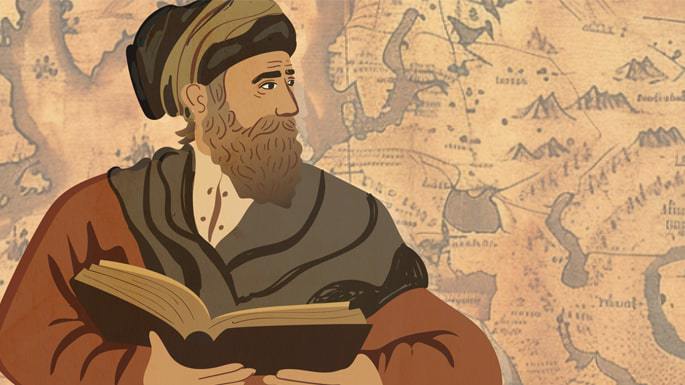
Benjamin of Tudela

israel · sermon · social justice

We must drag the sun over the horizon


In Judaism, night comes before day. The day begins when the sun sets and the first stars appear in the sky.

This has been the way of the world since its mythic origins.

In the beginning, there was endless darkness. Then God said “let there be light.” And there was light.

And God separated the light from the darkness. The first distinction. And the darkness God called night, and the brightness God called day.

And there was evening, and there was morning. A first day.

Having created nights and days, God populated them with matter. At the end of each period of creation, there was evening, then there was morning. Each day.

During the sixth day, God created human beings and placed them in a garden. Then there was evening.

The first human beings had never seen an evening before. They did not know that the sun could set. They did not know the difference between night and day.

What must it have been like for the first sentient beings to realise who they were and who their Creator was, only to see the sun disappear? How frightened they must have been!

Perhaps they called out to God and asked for guidance. But that evening marked the beginning of the seventh day, and God was resting. God did not answer them.

Our Talmud teaches that when the first human beings saw their first nightfall, they fell into despair. Adam feared that the sun had disappeared as punishment for his sin. He worried that the world would now return to the endless darkness with which it began.

Eve cried. She fasted and prayed. Adam and Eve wrapped their arms around each other and held their bodies close as they prepared for the end.

Then the dawn broke.

And they realised: this is the way of the world.

The world began in autumn, at the festival of Rosh Hashanah.

When the first winter nights crept in, and they saw the length of days decreasing, they panicked once more. Now in exile from Eden, they had no way of knowing what would come next.

Again, they fasted, wept, and prayed.

Then the spring came, and brought with it longer days.

And they realised: this is the way of the world.

We begin with darkness. Light follows.

There is evening. Then the dawn comes.

There is winter. And it always becomes spring.

This is the way of the world.

We can observe this dialectic in almost all matters of life. Our suffering is followed by joy. Our struggles are replaced by triumphs.

Some days feel like endless nights, but the dawn is always waiting for those who are patient for it. So we hold each other close and wait for the sun to rise.

This is the way of the world.

These trends appear, too, in history. There will be periods of decline followed by ages of plenty. There will be economic busts, and there will be booms. There will be war, but peace will come.

This is the way of the world.

But human history is different from all other natural rules. The order of night and day and the structure of the seasons was predetermined before we arrived on this earth.

History, on the other hand, is made by human beings. History is the one area of life where we can, collectively, choose what happens. Our actions determine whether we live in the winter of war or bountiful springtime.

So, it is incumbent upon us not just to hold each other and wait for morning, but to drag the sun over the horizon and demand that day appears.

In 1969, “Shir LaShalom,” became the anthem of the Israeli peace movement. In the final stanza of the song, we sing out: “Do not say the day will come. Bring on the day.”

Just as people make the active decision to go to war, peace is also a choice. Those who want an end to war cannot just wait in the darkness.

We sang Shir LaShalom in this sanctuary on Simchat Torah. I felt, and I think many of you did too, truly jubilant at the news of ceasefire and hostage release. After two years, we could finally see a possible end to the suffering.

My jubilation was tinged with pain as I remembered the last time that Shir LaShalom was chanted throughout synagogues.

That was in 1995. Yitzhak Rabin and Yasser Arafat had shaken hands on the lawn of the White House. They had agreed to the Oslo Accords.

While already imperfect and tentative, the Oslo Accords of three decades ago were the last major effort at a comprehensive peace deal between the Israelis and Palestinians. They paved the way for mutual recognition and the possibility of two states.

High on the dream of peace, Rabin joined Peace Now protesters in Tel Aviv Square and sang along to Shir LaShalom. With the lyrics still in his breast pocket, Rabin headed to the car park. There, a far right fundamentalist waited for the Prime Minister, and shot him dead.

There is still a copy of Shir LaShalom, stained with Rabin’s blood. There are those words, covered in the blood of a man who tried to make peace: do not say the day will come, bring on the day.

Yes, we must indeed bring on the day. But there are some who want to return us to endless night.

An Israeli fanatic shot dead Rabin to stop his day from dawning.

When Hamas saw the prospect of the Oslo Accords creating two states, they launched suicide bombing attacks on public transport. They took control of Gaza and promised endless war.

The Israeli far right wrested control over the offices of government. They promised there would be no Palestinian state and that every effort to achieve one would be swiftly repressed.

It saddens me that, even in the brief interludes since Rabin’s assassination when Netanyahu’s party has not had control over the legislature, few Israeli politicians have attempted to break from their logic of violence and occupation as the only answer to the Palestinian national question. 

Daybreak always comes, but there are those who prolong the darkness, and we have been living through a terribly long night. The call to bring on the day from earlier generations has been eclipsed by militarism and fear.

We have endless war. This is the way of the world.

But this is the way of the world as some have chosen to make it. And we can make the world another way.

On Monday, we saw the first thing in a long while that looked like a sun beam.

We celebrated the hostages coming home and an end to the bombing of Gaza. It was the first reminder we have had in a long time that peace is possible, and war is a choice.

We are able to bring on the day.

Now we must create even more sunshine.

But we have become so accustomed to darkness that the dawn may even be painful.

In daylight, we will have to look hard at the choices that made this war so prolonged and destructive. We will likely see that peace was possible much earlier and that more hostages might have come back alive sooner. We may ask searching questions about the morality of this war.

In the light of day, we will have to look hard at what Israel has become, and what the spiritual state of our Jewish institutions now is.

But we must bring on the day. We cannot return to the long-lasting night of war, murder, zealotry, and extremism. We cannot let anything that happened in the last two years ever happen again.

Throughout this dark night, our Progressive Jewish counterparts in the Israeli Reform Movement have been pushing hard for serious change.

They have been protesting outside Netanyahu’s house every Saturday evening. They have been joining Palestinian olive farmers in the West Bank to protect them from settlers. They have been demanding a real overhaul of the deep, structural causes of this century-long conflict.

My month with Rabbis for Human Rights before I began here helped positively frame my rabbinate. Although the picture on the ground is bleak, it made me realise just how many people are desperately trying to create daylight in the darkest contexts.

I hope that we will not fall into complacency now because the hostages are home. The task of peace building is more pressing than ever.

I want us to draw ever closer to those who are defending human rights and trying to bring about a future based on dignity and equality. I hope that, next year, we can bring a full delegation of Progressive Jews to support the West Bank olive harvest. I hope this can be a moment where we truly embrace the cause of peace.

This is not the seventh evening of creation. It is not the time to rest. We cannot leave our colleagues alone in this struggle now.

This is the first dawn of a new morning.

It is an opportunity for real accountability. It is a chance for meaningful peace building. It is the first crack of sunshine, and we have to drag out every possible ray of light to join it.

We must wrest the light into the darkness.

We cannot say the day will come.

We must bring on the day.

academic · poem

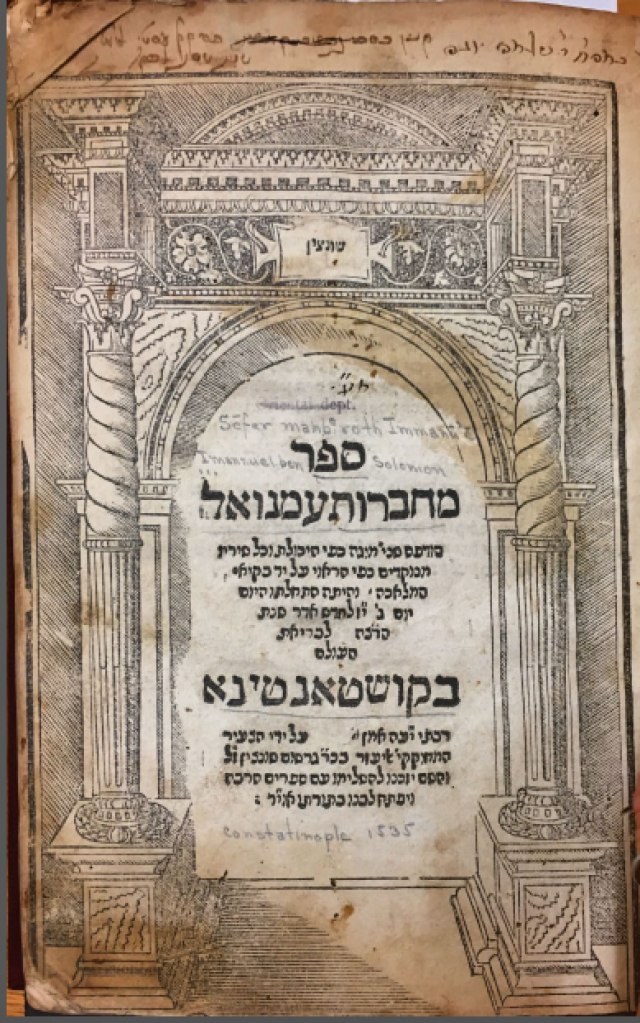
Immanuel of Rome’s 9th Machberet

Emmanuel of Rome –in Hebrew, Emmanuel haRomi; in Italian, Manoello Giudeo – was born to an aristocratic Italian-Jewish family in 1261. Although only a minor poet by comparison to his pre-Renaissance contemporaries, Emmanuel was the first ever poet to write sonnets in any language other than Italian. Around 1300, Emmanuel produced a series of Hebrew sonnet collections that dealt with both secular and religious themes.

Using Dov Yarden’s edition of the Hebrew, I have created English translations of Immanuel’s 9th Machberet, which is a series of sonnets for each month of the Jewish year. So far, there has not been any systematic effort to translate all of Emmanuel’s works and only a few contemporary scholars show much interest in him. By putting these translations into the public domain, I hope others will take up interest in him.

I tell my story and say: וָאֶשָּׂא מְשָׁלִי וָאֹמַר 

TISHRI 

In Tishri, I rejoice; as the feasts to God 
Awaken me, to songs of passion sing  
I will delight in honey and nectar 
A time when willows string up violins 
And I shall surround myself  with youth 
I’ll eat a banquet fit to feed a king 
While staring at the apple of my eye, 
The juice of grapes and pomegranates drink. 
My face in battle, like before a flame 
I won’t be mute, but surely I will sing 
As her warden, I open up my lips  
I borrow kisses from Ofra’s wellspring 
And thank the Lord who made humanity 
Complete with all the perfect openings  
בְּתִשְׁרִי אֶשְׂמְחָה כִּי מוֹעֲדֵי אֵל
 יְעִירוּנִי לְשׁוֹרֵר שִׁיר עֲגָבִים
 וְאֶתְעַנַּג בְּנֹפֶת צוּף וּפַנַּג
 וְכִינוֹרַי תְּלוּיִם עַל עֲרָבִים
 וְאַצִּיבָה סְבִיבוֹתַי נְעָרַי
 וּמוּל פָּנַי לְאַיֶּלֶת אֲהָבִים
 וְאֶסְעַד מַעֲדַן מֶלֶךְ וְאֶשְׁתֶּה
 עֲסִיס רִמּוֹן וְאֶשְׁכַּר דַּם עֲנָבִ
ים וְאֶשְׁכַּח רִישׁ וְלֹא אַחְרִישׁ וְאָרֹן
 וּפָנַי בַּקְּרָב כִּפְנֵי לְהָבִים
 וְאֶלְוֶה מִשְּׂפַת עָפְרָה נְשִׁיקוֹת
 וְלִפְרֹעַ שְׂפָתַי לָהּ עֲרָבִים
 וְאוֹדֶה אֵל אֲשֶׁר יָצַר בְּחָכְמָה
 בֵּני אָדָם וּבָרָא בָם נְקָבִים 

MAR-CHESHVAN 

In Mar-Cheshvan, we’re lifted up by light 
I long to stand on dark borders of clouds 
And cry out from the fastened fires of night 
So sticky honey drips on land unploughed 
Upon the borders of the fields I press 
The nectar into syrup and the olives into chow 

I drink until I forget poverty 
And drive out all the grief from hearts somehow 
I bless each bairn to any woman born  
I see this as the time for seeds to sow 
The autumn plants assert this as their hour 
Nothing has thorns that sting as sharp as now 
But shoots will spring from barren earth again 
Like men from graves, accomplishing God’s vow  
בְּמַרְחֶשְׁוָן מְאוֹר יַעְלוֹת וְזִיוָן
 אֱהִי עֹרֵךְ לְמוּל אֹפֶל עֲנָנָיו
 וְקָרָתוֹ בְּאֵשׁ חֵשֶּׁק אֲגָרֵשׁ
 וְתַמְרוּרָיו בְּנֹפֶת צוּף עֲדָנָי
 וּמוּל פִּרְשׁוֹ יְהִי חֵשֶק וְדִבְשׁוֹ
 וְאֶל מוּל בָּאֳשׁוֹ רֵיחַ שְׁמָנָיו

  אֲנִי אֶשְׁתֶּה וְאֶשְׁכַּח רִישׁ וְאַחְרִישׁ
 וְאָסִיר מִלְּבָבִי עִצְּבוֹנָיו
 וּמִכָּל חַי יְלוּד אִשּׁה אֲבָרֵךְ
 אֲנִי נֹחַ וְנִטְעֵי נַעֲמָנָיו
 אֲשֶׁר לוּלֵי נְעִימוֹתָם יְכֻסֶּה
 זְמָן חָרוּל וְעָלוּ קִמְּשׁוֹנָיו
 עֲלֵי יָשְׁרוֹ אֲחוֹנֵן אֶת עֲפָרוֹ
 בְּתוֹךְ קִבְרוֹ וְאֶרְצֶה אֶת אֲבָנָיו 

KISLEV 

In Kislev, God’s horseman I will be 
And through calm pride I surely will agree 
A light on high supports a needy man 
To lift the dust of earth to build freely 
We light each night an eight pronged candel’bra 
Drink whiskey like the finest smooth honey 
The beauty of the girls’ arms, so exposed 
Whose eyes, like light’ning, shine in front of me 
One woman sets the table for the meal 
Another one runs after her to clean 
One coyly turns aside and rends men’s hearts 
Another bakes up biscuits for high tea 
I need not wonder what the meal will be 
The main course is spread out in front of me
בְּכִסְלֵו אֶהְיֶה שָׁלֵו וְאוֹדֶה
 לְצוּר רֹכֵב בְּגַאְוָתוֹ שְׁחָקִים
 וְאוֹר עֶלְיוֹן אֲשֶׁר אִישׁ דַּל וְאֶבְיוֹן
 מְרִימִי מֵעֲפַר אֶרֶץ וּמֵקִים
 וְנֵרוֹת אֶהְיֶה מַדְלִיק שְׁמֹנָה
 וְשִׁקּוּיַי כְּנֹפֶת צוּף מְתוּקִים
 וְהַיָּפוֹת זְרוֹעֹתָן חֲשׂוּפוֹת
 וְעֵינֵיהֶן יְרוּצוּן כַּבְּרָקִים
 וְאַחַת עֹרְכָה שֻׁלְחָן וְאַחַת
 תְּשַׂדֵּד אַחֲרֶיהָ הָעֲמָקִים
 וְאַחֶרֶת תְּלַבֵּב הַלְּבִבוֹת
 וְאַחֶרֶת תְּבַשּׁל הָרְקִיקִים
 וְצַפִּיחִת וּמַעְשֵׂה הַחֲבִתִּים
 וּמַרְחֶשֶׁת מְזָוֵינוּ מְפִיקִים 

TEVET 

The tenth Tevet: a fast for those who died 
When God’s children, like roaring seas, shall thrive 
They come in waves before the courts of God 
Where fools can dream and helping hands can strive 
To dig the chilly ground; this cold man shakes  

Those muscly men who work the harsh outside 
Who pull the jumpers round their necks and hide 
On snowy roads beneath the winter sky 
On days like these, I look for doe-eyed dames 
In secret surfaces where they reside 
My life is like a dead stalk in decay 
And yet, with only a gaze, I revive 
I know that God will crush all those who hate 
But meanwhile, I’ll be fortified by wine 
בְּטֵבֵת בַּעֲשָׂרָה בוֹ יְצוּמוּן
 בְּנֵי אֵל חַי וְכַיַּמִּים יְהִימוּן
 לְבוֹא צַר בֵּית אֱלֹהִים וַחֲצֵרָיו
 בְּכֵילַפּוֹת וְכַשִּׁיל יַהֲלֹמוּן
 וְהַקֹּר יַחֲלֹף הָאִישׁ וְיִדְקֹר

  פְּנֵי שָׂרִים הֲכִי חָבוּשׁ בְּטָמוּן
 וּמִטְרוֹת עֹז וְטִיט חוּצוֹת וְקֶרַח
 וְשֶׁלֶג עַל מְסִילֹּתַי יְרֻמוּן
 לְעֵת כָּזֹאת אֲשַׁחֵר הַצְּבִיּוֹת
 אֲשֶׁר סוֹד עַל יְגוֹנִים יַעֲרִימוּן
 וְעֵינֵיהֶן וְהוֹד צִיצַת לְחֵיהֶן
 יְחַיּוּנִי נְבֵלָתִי יְקִימוּן
 וְאֵיךְ אִירָא וְיֵינִי לִי לְעֶזְרָה
 וְהוּא יִמְחַץ מְשַׂנְאַי מִן יְקוּמוּן 

SHVAT 

Your face is harsh as bastards’ are, Shevat 
You send your time and frosty ice like loaves 
The whizzing snow breaks skies and cools my heart 
I spot the lovers hiding in alcoves 
They thrust and grab with their bosoms exposed 
Their voices cry out loud within their homes 
I cursed the stupid sermons as I froze 
And realised I was better off alone  
שְׁבָט אַכְזָר וְעַז פָּנִים כְּמַמְזֵר
 וּבוֹ יַשְׁלִיךְ זְמָן קַרְחוֹ כְפִתִּים
 וְהַשֶּׁלֶג גְּאוֹן הַלֵּב יְפַלֵּג
 וְהַדּוֹדִים בְּחֵיק יַעְלוֹת נְחִתִּים
 וְרָצֵי הַצְּבִיּוֹת הֵם דְּחוּפִים
 וְכָרוֹזָא בְּקוֹל קָרֵא בְּבָתִּים
 אֲרוּרָה דֹּרְשָׁה צֶמֶר וּפִשְׁתִּים
 לְעֵת כָּזֹאת לְבַד מַעְשֵׂה חֲבִתִּים 

ADAR 

Adar arrives to teach the bawdy tale 
Of how Haman and Zeresh caused such shame
If I had not such wealth and dignity 
I could not feast upon these geese and game 
In my right hand, a cup of toddy wine 
I shout each time I hear Haman’s curs’d name 
I join my mates and drink myself insane 
Until the heroes and the brutes are same 
We cheer with throats full of liquor and food 
For tyrants who will never rise again 
Only good wine can expel pain and strife 
And so we praise its healing holy name  
בְּאַדָּר אֶהְיֶה ישֵׁב וְדֹרֵשׁ
 וְאַזְכִּיר חַסְדֵי הָמָן וְזֶרֶשׁ
 וְלִי יוֹנִים וּבַרְבֻּרִים אֲבוּסִים
 וְלֹא אָחוּשׁ הֲאִם לִי הוֹן וְאִם רֵישׁ
 וְהַיַּיִן מְבֻשָּׂם אֶל יְמִינִי
 בְּקוֹל קֹרֵא וּבַדִּבּוּר יְפָרֵשׁ
 וְאִם אֹמַר אֲרוּר הָמָן וְזֶרֶשׁ
 יְשִׁיבוּן אַל תְּקַלֵּל דּוֹד לְחֵרֵשׁ
 וְקוֹל קֹרֵא אֱכֹל וּשְׁתֵה לְשָׁכְרָה
 וְלֹא תַשְׁאִיר לְנֹחֵל אוֹ לְיוֹרֵשׁ
 בְּיַעַן הוּא לְבַד רִפְאוּת וּמָזוֹר
 וְכָל רַע וָחֳלִי גָּרֵשׁ יְגָרֵשׁ 

NISSAN 

Nissan, I will recall God’s miracles 
Come see our homes, delight with joyous Jews 
How good and pleasant are these former slaves 
Our ancestors whom God opted to choose 
Once cloaked in cloud, they wandered in deserts 
But now delight and wonder are our views 
Up from these blossomed trees call turtle doves 
Our doorways filled with special treats, infused I fall
in love with her between the flower beds 
And couples ride the heavens in pursuit 
I will sacrifice the flesh and wool 
Of lambs and rams and farmers’ choicest ewes 
Let me cry out to all my famished friends: 
Jerusalem and food wait here for you!  
Upon the Torah’s head a diadem 
And graceful bracelets embedded with jewels 
Her crown reveals her lovely wonderment 
Each heart lights up to listen to her news 
Although a broken world encroaches now 
When morning comes, the world awaits her truth 
בְּנִיסָן אֶזְכְּרָה נִסֵּי אֱלֹהִים
 וּבֹו אוֹרָה וְשִׂמְחָה לַיְּהוּדִים
 וַּמה טּוּבוֹ וַּמה יָּפְיוֹ אֲשֶׁר בּוֹ
 אֲבֹתַי יָצְאוּ מִבֵּית עֲבָדִים
 וּפָשַׁט הַזְּמָן עָנָן לְבֻשׁוֹ
 וְעָטָה אוֹר וְכֻלּוֹ מַחֲמַדִּים
 וְקוֹל הַתּוֹר עֲלֵי מִפְתָּן וְכַפְתּוֹר
 וְאֶרְאֶה עַל פְּתָחַי כָּל מְגָדִים
 וְחשֵׁק עִם חֲשׁוּקָה בֵּין עֲרֻגוֹת
 בְּשָׂמִים רֹכְבִים יַחְדָּו צְמָדִים
 וְאֶזְבַּח שׁוֹר וְשֶׂה נָקֹד וְטָלוּא
 לְבַד מִן הַתְּיָשִׁים הָעֲקֻדִּים
 וְאַעְבִיר קוֹל לְכָל צַד כָּל דְּכָפִין
 וְצָרִיךְ לֶאֱכֹל יִהְיוּ עֲתִידִים
 וְאַצִּיב יַעֲלַת הַחֵן לְנֶגְדִּי
  בְּרֹאשָׁהּ צִיץ וְעַל יָדָה צְמִידִים
 וְהִיא תַעְנוּג לְכָל לֵב נוּג וְלַחְרֹט
 פְּאֵר הוֹדָהּ יְדֵי הָעֵט כְּבֵדִים
 לְדַעְתָּהּ יֵצְאוּ יָדַי גְּדוּדִים
 וְעַד בֹּקֶר הֲכִי נִרְוֶה בְדֹדִים 

IYYAR 

Iyyar asks me a joyful oath to swear  
I join my hands, both left and right, as pairs 
With lustful oxen, all Hebrews will unite 
By seeking dreams and chirpy birdsong pray’r 
I will never see liberation come 
Nor hear lads singing in the streets somewhere 
The world removes the mourning clothes she wears 
To swap for fancy garb, with lovers shared 
I free myself from books I have to read 
The Talmud’s texts, to which I am an heir 
Instead, I’ll set myself beside a doe 
Her body giving life beyond compare 
And though the heat of morning beats us slow 
When death does come, we will be holy there  
בְּאִיָּר אֶשְׂבְּעָה שׂבַע שְׂמָחוֹת
 וּבִשְׂמֹאלִי וּבִימִינִי נְעִימוֹת
 בְּשׁוּרִי חשְׁקִים מִכָּל עֲבָרִים
 בְּצִיץ צִצִּים לְשַׁחֵר הָעֲלָמוֹת
 וְלֹא אֶרְאֶה לְבַד גִּילַת וְרַנֵּן
 וְלֹא אֶשְׁמַע לְבַד שִׁיר עַל עֲלָמוֹת
 וְתֵבֵל תַּחֲלִיף סוּת אַלְמְנוּתָהּ
 וְלִכְבוֹד חשְׁקִים תִּלְבַּשׁ רְקָמוֹת
 וְאֶתֵּן גֵּט לְעֵרוּבִין וְגִטִּין
 וְסַנְהֶדְרִין וּמַסֶּכֶת יְבָמוֹת
 וְאֶבְחַר לִי לְצֵידָה הַצְּבִיָה
 לְחִי שׁוֹשָׁן נְשָׁמָה לַנְּשָׁמוֹת
 פְּנֵי חַמָּה אֲשֶׁר כָּל שֹׁחֲרֶיהָ
 קְדֹשִים יִהְיוּ בָהּ אַחֲרֵי מוֹת 

SIVAN 

Sivan makes me remember all God’s deeds 
How by wonder, He lifts us up, proceeds 
He brought His treasur’d people to freedom 
His children follow after where he leads 
They see his words and statutes as their light 
Enlightened by the Torah’s sacred creed 
Hear us, O God, as we cry out to You 
Comfort our fears in this, our hour of need 
O, show us Moses, whom we need so close 
Who came from mountains in the clouds, decreed 
To us the ten statutes by which we live 
For Jeshurun bowed down and found he’d heed 
Then Esau saw that God fulfilled His will 
And Ishmael learnt that God would be his steed  
בְּסִיוָן אֶזְכְּרָה פִּלְאוֹת אֱלֹהִים
 אֲשֶׁר נִשָּׂא וְגָבַהּ עַל גְּבֹהִים
 אֲשֶׁר יָצָא לְיֵשַׁע עַם קְרֹבוֹ
 יְלָדָיו הֹלְכִים אַחְרָיו וְנִנְהִים
 וְנָתַן הוֹד וְנֵר מִצְוָה וְתוֹרָה
 לְעַם קָדְשׁוֹ לְאוֹר יִשְׁעוֹ כְמֵהִים
 וְשָׁמַעְנוּ אֱלֹהִים חַי מְדַבֵּר
 וְנַחְנוּ פֹּחֲדִים מֶנְהוּ וְרֹהִים
 וְרָאִינוּ אֲזַי משֶׁה בְּגִשְׁתּוֹ
 לְעַרְפַלָּיו וְעָמַדְנוּ תְמֵהִים
 וְהִתְוָה תָו עֲשֶׂרֶת דִּבְּרוֹתָיו
 הֲתִשְׁתּוֹחַח יְשֻׁרוּן עוֹד וְתָהִים
 שְׁאַל עֵשָׂו הֲרָאָה כֵן בְּעֹשָׂיו
 וְיִשְׁמָעֵאל הֲשָׁמַע קוֹל אֱלֹהִים 

TAMMUZ 

Stripped bare and broken, in Tammuz, I go 
To play and say the eulogies of woe 
My contrite heart cries out in broken pain 
My clothes are drenched in blood and wet sorrow 
That soaks the valleys of God’s holy home 
The plunder and destruction of my foes 
Those heathens burn the sacred sites they hate 
And tear up Torah scrolls, they overthrow 
An idol stands upon God’s conquered throne 
It breaks my heart in ways I’ve never known 
I take my sword, prepare myself for war 
The huntsman within me readies his bow 
So all of my tears will break down these walls 
In grieving the lost ones, I cry alone 
בְּתַמּוּז אֵלְכָה עָרוֹם וְשׁוֹלָל
 וְלִשְׂחוֹק אֹמְרָה נַפְשִׁי מְהוֹלָל
 וְאֶתְעַנֶּה בְּלֵב נִשְׁבָּר וְנֶעְכָּר
 וּמַלְבּוּשִׁי בְּדַם דִּמְעִי מְגוֹלָל
 אֲשֶׁר בּוֹ הָבְקְעָה עִיר בֵּית אֱלֹהַי
 וְהֵצַר צַר וּבָזַז בַּז וְשָׁלָל
 וּבָטְלוּ הַתְּמִידִים בּוֹ וְשָׂרַף
 אֲפוֹסְטוֹמוֹס לְתוֹרַת אֵל וְחִלָּל
 וְצֶלֶם הֶעֱמִיד תּוֹךְ הֵיכְלֵי אֵל
 מְשׂוֹשׂ לִבִּי לְזֹאת חָרַב וְדָלָל
 הֲיַעְרֹךְ צִיר אֱלֵי צִירִי וּמַכְאֹב
 לְמַכְאֹבִי אֲשֶׁר בָּא לִי וְעוֹלָל
 וְלָכֵן כֹּל אֲשֶר דִּמְעָה יְפַכֶּה
 וְיִתְאַבֵּל לְפִי שִׂכְלוֹ יְהֻלָּל 

AV 

Throughout the month of Av, I will cry and grieve 
I’ll pump out reservoirs of tears of pain 
For desecration of God’s wasted home 
The refugees removed by Rome’s campaign 
On one long day, like Haman’s sons we hang 
While God destroys His seat of holy reign 
With fuming rage, my life force God destroys 
I sob out floods of salty tear-filled rain 
Now traitors and cynics surround me 
But I won’t eat or make love for the slain 
And were it not for God’s endless mercy 
My mouth would never know to laugh again  
בְּחֹדֶשׁ אָב אֱהִי נִכְאָב וְאֶדְאַב
 וְאֶשְׁאַב מֵי דְמָעַי מִכְּבֵדִי
 וְאֶתְעַנֶּה לְחָרְבַּן בֵּית אֱלֹהַי
 וְעִיר קָדְשׁוֹ וְעַל הָגְלַת כְּבוֹדִי
 בְּיוֹם אָרוּךְ כְּמוֹ וָי”ו וַיְזָתָא
 בְּחֻמּוֹ נֶהֱפַךְ חֹרֶב לְשַׁדִּי
 וְהַמַּיִם אֲשֶר אֶשְׁתֶּה לְשִׂכִּים
 בְּמוֹ עֵינַי וְלִצְנִינִים בְּצִדִּי
 וְאַרְחִיק הַצְּבִיָּה מִיְּצֻעַיְ
 וְאֶתְגּוֹלֵל בְּמִטָּתִי לְבַדִּי
 וְלוּלֵי נַחֲמוּ בִּבְנֵי אֲוָזָיו
 יְמַלֵּא פִי שְׂחוֹק אֶבְכֶּה בְעוֹדִי 

ELUL I 

The nobles’ daughters now are frollicing 
On flower beds of Elul’s evenings 
And balls run down the rafters of downswings 
Like those who made our rabbis into kings 
O, let us go and see the vineyards spring 
We’ll search for fresh grown figs until ev’ning 
Where trees not only grow but even sing 
And they will speak words kind and flattering 
Lift up your hand and don’t forget a thing  

I wrote these words of verse when I was young 
So ev’ry month could have its praises sung 
Today, in age, I wrote another one 
In sacred oil to praise the Elul month 
And now my greatest poem has begun…  
בְּאֵלוּל אֶעֱלֹז עִם בַּת נְדִיבִים
 בְּעֶרֶשׂ רַעֲנָנָה עַל עֲרָבִים
 וְהַגֻּלּוֹת יְרֻצוּן בָּרְהָטִים
 כְּאִלּוּ יִתְּנוּ שָׁמַי רְבִבִים
 וְנַשְׁכִּימָה וְנֵצֵא לַכְּרָמִים
 לְשַׁחֵר הַתְּאֵנָה עַד עֲרָבִים
 וְאָז אֶרְאֶה גְפָנַי אֹמְרִים לִי
 בְּפֶה חָנֵף וּבִדְבָרִים עֲרַבִים
 הֲתִקַּח הַתְּאֵנָה דּוֹד לְמָנָה
 נְשָׂא יָדְךָ וְאַל תִּשְׁכַּח עֲנָבִים

  אֵלֶּה הֵם הַשִּׁירִים הַמְפֹאָרִים
 אֲשֶר חִבַּרְתִּי עַל הֶחֳדָשִׁים בִּימֵי הַנְּעוִּרים
 וְעוֹד חִבַּרְתִּי שִׁיר עַל חֹדֶשׁ אֱלוּל
 בֶּשֶׁמן מִשְׁחַת קֹדֶשׁ בָּלוּל
 וּלְיָפְיוֹ הוּא עִלָּה וְכָל שִׁיר זוּלָתוֹ עָלוּל
 וְהוּא זֶה 

ELUL II 

If only you would bless my eyes, Elul, 
For you I would become an Amora 
A lord of words, a student to Rava 
And I will fast and search for sweet Mannah 
Within the vineyards I will sit pretty 
And sing and dance although my death’s not far
And I will leave my soul behind in words 
I’ll suckle breasts from vine shoots as they are 
בְּאֵלוּל תְּבַלּוּל בְּעֵינַי יְהִי אִם
 אֲקַנֵּא לְרָבָא וְלִהְיוֹת אֲמוֹרָא
 אֲנִי הַתְּאֵנָה אֲבַקֵּשׁ לְמָנָה
 לְנַפְשִׁי וְאֶדְרשׁ אֲנִי רֹאשׁ אֲמִיָרה
 וְתוֹךְ הַכְּרָמִים אֲנִי בַנְּעִימִים
 אֲכַלֶּה יְמוֹתַי בְּשִׁירָה וְזִמְרָה
 וְאָשִׂים גְּפָנַי סְבִיב צַוְּרֹנַי
 לְעָנָק וְאִינַק שְׁדֵי הַזְּמוֹרָה 
high holy days · judaism · sermon

Knowing we will die helps us live to the fullest

Here’s the deal. Let’s see who will take it.

Today, you get a million pounds. But the catch is, tomorrow you die.

Any takers?

I didn’t think so.

You value living more than you value money. 

In fact, when you put death into the equation, you realise how much living matters to you. It matters more than any amount of wealth or status you could accrue.

Knowing we will die helps us understand what we value from life.

In many ways, Yom Kippur is a death rehearsal.

We act out today as if these were the last moments we would be alive.

Like the dying, we refrain from food and water. 

We turn up in modest clothes, without jewellery. Some wear white, the colour of the funeral shroud. Some wear kittels, the gowns in which we will be buried. Some wear tallits all day, from evening to evening – a unique point in the year when we do so – just as the dead are traditionally buried wearing their tallits. 

Over the course of this fast, we repeatedly recite vidui, the prayer of deathbed confession. We say psalms and chant petitions that are associated with death and funerals.

All of this serves as a ritual memento mori: a reminder that we will die.

Then, as we approach the end, we erupt into songs. We joyfully recite the neilah prayers. For many of us, there is a great rush of relief and joy as we realise we have made it through this marathon day. 

Yes, today is a reminder of our death, and it is one that affirms life. 

On this day, our Torah instructs us: “choose life.” Only by recognising that death is inevitable can we do so.

By really considering the finite amount of time we have on this earth, we are able to celebrate the days we have and live them to the fullest.

So much of modern Western society shies away from death.

For previous generations, death was a sacred process undertaken among family and community.

Today, it is sanitised: dealt with in hospitals and hospices by qualified experts.

There are great advantages to this. The professionalisation of death means that the sick can receive high quality care and pain relief right up to the last moments of their life. It takes a great deal of pressure off of family and friends, because the care for the dying does indeed require constant work.

But one downside to our compartmentalisation of death is that it means it is kept out of sight and taboo. 

When we do have to face death, it is often a shock, and can cause great trauma to living loved ones. Intellectually, all of us know we are mortal, but facing death as a lived and embodied experience can feel like a real rupture.

Having the Yom Kippur experience – which draws our attention to our mortality and makes us reflect on the quality of our lives – can be a powerful way to help us face death. In these rituals and fasts, we can prepare for our mortality. 

This real confrontation with death isn’t morbid. It’s a direction to truly embrace life. 

Knowing we will die helps us consider what we want to do with life.

In Progressive Judaism, we have a tendency to downplay some of the more explicit symbolism of death and mortality in our services. It is there in the machzor – in our silent confessions, themed readings, and traditional prayers. But our services often tiptoe over death’s undercurrents in the prayers.

This year, I have tried to reintroduce some of those themes to the service. 

Last night, at Kol Nidrei, we joined the rest of the Jewish world in holding the scrolls out of the ark, leaving it bare. The great American Reform liturgist, Rabbi Larry Hoffman, points out that the open ark is supposed to evoke a coffin. We stare into the empty space, which usually includes our Book of Life, and lay witness to our own tomb.

This morning, during shacharit prayers, we reintroduced the prayer “who by fire,” a traditional part of Unetaneh Tokef, which recounts the many ways in which a person might die. It is painful to consider life’s fragility, and all the vulnerabilities we face in life. 

But, by facing up to the possibility we will die, we get better at deciding how we will live.

We realise that we value life, and we take stock of what it is we love about it.

Marie de Hennezel is a French therapist focused on end-of-life care. In the early 90s, she was among the first staffers at a palliative care unit for people dying of HIV/AIDS. At this time, there was no cure – the deaths of HIV patients often involved rapid deterioration and great suffering. 

In 1995, de Hennezel wrote up her experiences of accompanying the dying into a memoir, entitled Intimate Death: How the Dying Teach Us to Live. The book even carried a foreword by French president Francois Mitterand.

She recounts stories of individual patients, as well as their carers, doctors, and nurses. In each vignette, she tenderly lays out how important it is to be with the dying. 

From her support, the patients often learn to live through challenging ordeals. Those who feel like giving up or who contemplate suicide decide that they will indeed live until their last moments on earth. By helping them face their death, the patients gain the strength to embrace their life.

This work, it seems, also transforms the carer. De Hennezel writes that she has learnt so much about living from the dying.

She writes poignantly:

Life has taught me three things: The first is that I cannot escape my own death or the deaths of the people I love. 

The second is that no human being can be reduced to what we see, or what we think we see. Any person is infinitely larger and deeper than our narrow judgments can discern. 

And third: one can never be considered to have uttered the final word on anything, is always developing, always has the power of self-fulfilment, and a capacity through all the crises and trials of life.

Let us take this as our message from Yom Kippur today.

Our lives are not over. We can affirm them. We can do so much with them.

And, though we do not always realise it, we love our lives more than any amount of wealth or status.

By facing up to the fact that we will die, we can live the days we have to the fullest.

Gmar chatimah tovah – may you be inscribed in the Book of Life for good.

Yom Kippur Yizkor 5786