judaism · theology

Be humble about what we can know


Before the Enlightenment, the world was governed by unknowable spirits and invisible entities.

There was so much we did not know.

If your farm didn’t produce any crops or the skies did not give you enough rain, you did not have modern technology to inform you about drought predictions for the next three years. You would have no way to know that the water coming from your clouds was directly connected to oceans miles away.

But you had your priests, and your rituals, and your superstitions. You had small gods in the hill country to which you offered libations. And, so far, when you had upheld your traditions, the rain came as it was supposed to.

When you got sick with a skin infection, you could not see a GP who would consult a modern medicine manual and give you a cream that would clear it up in just a few days. You would not have knowledge about germs, allergies, and viruses.

But you had your priests, and your rituals, and your superstitions. You had your rules governing sin and repentance. You had reliable experience that bodily suffering could be healed by atonement. And, so far, when you had upheld your traditions, the rain came as it was supposed to.

Please hold this in mind as we read this week’s Torah portion.

It may be easy for a modern mind, after the Enlightenment, to scoff at the strange priests, rituals, and superstitions that govern these chapters in the Book of Leviticus.

You might feel slightly embarrassed to imagine the rites our ancestors slit open goats, threw their entrails around and burned them for days until they stunk out a tent as expiation for their sins.

You might squirm at the vivid descriptions of cotton-clad priests flailing around the limbs of slaughtered cattle to win the favour of their god.

It may even seem primitive how they delight at the animal fat creating explosive fire, which they see as evidence of their god’s approval.

But they were doing what they could with what they knew. And they were engaging earnestly with what they did not know. Beyond the world they experienced was an unfathomable mystery, and they wanted to draw closer to it.

Indeed, only verses later, we get an insight into their own feelings of inadequacy. We get a real sense that they knew how much they did not know.

Nadav and Abihu do absolutely everything right. They follow the priests, carry out the rituals, and trust in the superstitions. They are formally inducted into all the correct practices by their father, Aaron the High Priest.

They do everything right. And then they die.

The burning animal fat explodes in a blaze that kills them both.

How can our ancestors make sense of this?

Our Torah gives two answers. The first is from Moses. Moses recalls a prophecy when God said: “Among those who approach me I will be proved holy; in the sight of all the people I will be honored.’”

We may interpret this as a way of Moses defending God. Moses is saying: while this may feel like a violation of our belief system, it is in fact proof of it. Holiness is a very dangerous quality.

God has demonstrated how sacred it is to engage in the rituals. God has shown what honour and risk are involved in holy service. 

So, for Moses, this sudden death of their priests does not undermine their belief system. It’s just evidence of how little they understand about their sacred rituals. In the fire, they have reached the limits of their knowledge.

Aaron, too, offers an answer. Silence.

We may interpret Aaron’s unspoken response variously. We may read into it horror, resignation, anger, acceptance, or solemnity.

But regardless of what he was feeling, we see that Aaron has no intellectual answer to the problem. He neither agrees nor disagrees with Moses. Aaron finds the limits of speech. He finds the boundaries of what he can even express.

Moses and Aaron lived in a world of unknowable spirits, governed by superstition. They made sense of their confusing world through priests and sacrifices. And no matter how well they constructed their rituals, they still found their limits.

There were things they did not know.

But we live in an era after such theologies. From the 17th Century onwards, Western Europe was gripped by a profound truth.

As the people challenged the unlimited power of the established church, philosophers pulled apart the stories religions had told.

This was the Enlightenment.

No more would they be hoodwinked by magical thinking or damned by promises of divine retribution. Everything, every idea, would be subjected to ruthless scrutiny. The greats of these generations would challenge the tenets of even science itself.

We live now in a world formed by their ideas. While our ancestors were beholden to talismans, omens, and sacrificial fire, we have evolved to hold modern ideals of truth and rational enquiry.

So, why hasn’t religion disappeared?

Isn’t that the obvious next question?

We have rid ourselves of superstitions, but synagogues are stronger than ever. Most of the world is still deeply religious. Despite constant predictions of its demise, faith remains stronger than ever.

For those who wish to understand God’s persistence after the Enlightenment, they may want to look to Immanuel Kant.

Kant was the last of the Enlightenment thinkers. His impact on this period of intellectual history was so great that some even date its end to his death.

Kant was a profound writer on truth, ethics, the scientific method, and what we can really know. He was also a devout Christian.

Kant was animated by the same questions that bothered our ancestors who witnessed Nadav and Abihu die.

He was not confused about why burning fat could cause a blaze, or why religious rituals didn’t always yield the same results. Those were the questions of the past.

The question still lingered, however: why does it seem like there is no justice in the world? Why do bad things happen to good people, and why do the wicked seem to get away with it? Why, no matter what happens, does evil seem to persist?

In his essay, The Miscarriage of All, Kant says he will put God’s justice before the trial of reason. Kant contemplates all the possible answers.

Maybe what we think is evil isn’t really. Maybe the world works in ways we don’t understand so that evil has to be permitted. Maybe there are other forces in the world beyond God’s goodness.

And Kant gives us an answer, which is… we don’t know.

All of these explanations only expose the limits of our understanding.

None of the answers anybody has come up with is satisfactory.

We are finite beings trying to understand Infinite Truth.

And still, says Kant, we retain our faith.

For Kant, none of these questions undermine the existence of God’s justice. They just show what we do not know.

So, perhaps we need to approach these stories with more humility and less contempt.

The ancient priests may well have splashed ox blood around an altar to ward off sin, but we are no closer to answering the questions that motivated their rituals.

We are barely separated from them by any time at all.

We are still just animals, scrambling in the dark, trying to make sense of our world.

And we still need each other, with all our beliefs and rituals, to get through this life that can seem so unjust.

We are each other’s guides through a mystery we may never resolve.

We need to be humble about what we do not know.

social justice · theology · torah

We are waiting for a different Messiah

Some years ago, an Orthodox friend asked me: “what would you do if the Messiah came and it turned out we’d been right about everything? What would you say to the Messiah?”

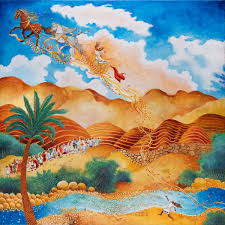
What would I do if the End of Days came, and Elijah literally came storming out of the whirlwind in a chariot made of fire and declared that the Son of David had arrived to cast judgement? And that we were to be judged on how strictly we had separated men and women; how well we had obeyed family purity laws; how stringently we had adhered to traditional authorities?

What would I say to this Messiah?

I have thought about it for a good few years and I think I now have my answer.

I would say: “F@£& off.”

I would tell that messenger: “You are not my Messiah and you’re not my king. Now go back where you came from.”

In this week’s haftarah, we read the prophet Ezekiel’s vision of the valley of the dry bones. For centuries, Orthodox Judaism has based its understanding of Messianism on these verses.

Ezekiel finds himself in a desert surrounded by skeletons. God tells Ezekiel to prophesy to the bones, and he does so, covering them in sinew, breathing life back into their lungs, and reviving their bodies, so that they stand up as a skeleton army.

These, says God, are representative of the people of Israel.

So, Orthodox Jewish tradition teaches, a day will come when the dead are literally physically resurrected. The corpses of pious Jews throughout the ages will be brought back to life; the exiles gathered to Jerusalem; and all judged by a righteous king descended from the biblical King David.

For this reason, many Orthodox Jews eschew cremation, and insist on being buried intact, so that their bodies can be resurrected at the End of Days. They vie for graves on the Mount of Olives, so that they can have front row seats when the Messiah arrives at the walls of Jerusalem and summons up the dead from their tombs.  

In recent decades, religious fanatics have come to espouse an even more intense version of this apocalyptic vision. 

There are Orthodox Jewish extremists, funded by American evangelical Christians, who are trying to destroy the Al Aqsa Mosque on the Temple Mount; build a Third Temple; and restore animal sacrifice and priestly leadership.  They seek to expand Israel’s borders to restore the ancient Kingdom of King David.

This week, Rabbi Charley Baginsky was quoted powerfully in The Times, saying: “We are afraid — not just for Israel’s future, but for Judaism itself. What becomes of our tradition if it is captured by messianic extremism, by racism disguised as religion, by power without principle? If the current trajectory continues, if Jewish supremacy becomes policy, then Judaism itself may become synonymous with oppression.”

In this context, you might be forgiven for thinking that messianism itself is the problem. Surely a religious zeal that drives people to commit such crimes is itself dangerous. For some, witnessing this fervour makes them question the foundations of Judaism itself.

The Israeli religious scholar, Avraham Uriah Kalman, warns against this way of thinking. His article earlier this year, entitled Another Messianism, addresses a tendency in Israeli secular society to dismiss all religion as varying stripes of nationalist fanaticism.

Yet, he claims, precisely because of the strength with which racist extremists have captured Judaism, we must return with equal zeal in our reclamation of Judaism. We, who believe in justice, democracy, and human rights must just as vigorously defend our corner.

If we do not have an equally powerful vision for what society could be, we will always be on the back foot, compromising with monstrous ideologies that want to blow up buildings and raze down villages.

Our ethics are grounded in the Jewish tradition. They are derived from the Jewish texts. They are sourced from the Living God. 

We cannot allow the far right to take exclusive hold over any part of Jewish life, or we surrender it to them. That includes Messianism – the grand utopian visions of ideal societies promoted in every book of the Prophets. 

The Prophets, whose mission of speaking truth to power and uplifting the lowly, are far more in line with our Progressive visions of the world than they are with the soulless dreams of those who want to oppress women and gays as part of their supremacist agenda. 

In the Prophets, we see clear visions of a perfected world. Their writings testify to a world of peace; where all resources are shared; where everyone lives in dignity; and where all are free.

Outside of specific esoteric texts like this week’s mystical imaginings from Ezekiel, it is hard to see any of the far right’s fantasies reflected in our Prophetic texts.

Messianism is really supposed to represent a rupture in the established order, but that is not really what the far right offers. War, racism, and misogyny are already the norm. At core, they don’t really want to change anything except to make existing tendencies more violent and oppressive.

So, says Dr Kalman, progressives must embrace messianism. We must turn to the Prophets as our source of hope, rather than buckling under the weight of despair. From our own utopian visions, we can develop ethics that speak to our daily lives and help us practically realise a better religious vision.

Kalman draws on a whole range of Jewish religious traditions, including Talmud, Kabbalah, Musar, and 17th Century Tzfat mystics. 

Yet, curiously, he seems not to be aware that this project, of developing a Progressive Messianism, has already been deeply thought through. The early Reform movement in Germany, from which Liberal Judaism descends, was animated by looking to the Prophets to rethink Jewish eschatology.

The early Reformers taught that the Messiah would not be a man, but an Age. 

It would not be characterised by Temple and Kingdom revival, but through the realisation of the values of the Prophets. It would be a world of peace and justice, achieved through the moral advancement of all humanity.

Explaining this theology, Rabbi Sybil Sheridan writes: 

“Though the end goal is world peace, the ideal is not pacifism, nor is it the peace of treaties at the end of war that are based on winners and losers. That notion continues the imbalance of power among peoples and nurtures the resentment that leads to dreams of revenge. The peace of the Messianic Age is a peace forged in complete mutuality. No one should be afraid that people may covet their vine or fig tree, no one will fear the loss of land or resources, no one will be humiliated. The world provides enough for everyone and sufficiency will take away the desire for war.”

While we Progressives do not accept the Orthodox doctrine of bodily resurrection and rebuilt Temples, that does not mean we should reject Messianic thinking. Times of despair and horror are when we most need to cling onto our hopes for a better world.

Progressive Messianism takes the task of perfecting the world away from mythical figures like Elijah and King David, and places it directly in our own hands. It says: we will not wait for someone else to bring about redemption; we are going to do it ourselves.

So, if Elijah came down from the Heavens and declared that the Orthodox had been correct all along, I would tell him he was wrong. 

For thousands of years, we have sought to create a better world. We have learnt through struggle about the dignity of women; the importance of justice; and the shame of racism. We now have a much better idea of how the world can be.

We can see a future in which every human being lives in harmony with each other and their planet. We can see a world where all live in freedom and peace. We are sure now that we can live in love and equality. 

We are going to realise our Messianic age.

And nobody- not even a prophet descending from the skies – is going to stand in our way.

judaism · sermon

Are Jews a religion or a race?

At present, Reform and Liberal Judaism are deciding whether to become a single movement. You will be able to vote on this, and I encourage you to do so. 

As the procedural questions unfold, it is hard to imagine how strongly felt the ideological divisions were between the two movements, even forty years ago. I believe, however, that those differences are now almost entirely within the movements, rather than between them. 

On some fronts, we will find unity, and on others, differences will remain.

There is one point, however, which, to me, is so intrinsic to Liberal thought that I could not stand it to see it lost. That is: there is no such thing as a Jewish race.

There is no such thing as Jewish blood, as a Jewish womb, as Jewish DNA, or as Jewish features.

It is precisely because our Liberal tradition teaches that there is no Jewish race that we have been able to fully embrace converts and, from the very beginning, accepted patrilineal Jews. 

These ideas were critical stumbling-blocks to merger attempts in previous decades. Reform Judaism would not accept patrilineal Jews, and insisted that converts went and were reborn from the “Jewish womb” of a mikvah.

In the past few years, Reform Judaism has come to accept patrilineal Jews, and Liberal Judaism has come to accept that the mikvah can be a meaningful ritual.

Yet not everyone has come to accept the underlying ideology that made these matters so central to Liberal Judaism. The originators of our movement saw Judaism as a religious community, where Jewishness was communicated socially, not “biologically.”

That is no longer a sectarian issue. There are Reform rabbis who ardently agree on this point; and there are Liberals who, instead of denying any racial Jewishness, focus on being “inclusive” about who belongs.

Rejecting the idea of a Jewish race was absolutely foundational to early Liberal thinkers. Regardless of whatever new ideas emerge as rabbis come together, I intend to hold doggedly to their understanding of Jewishness.

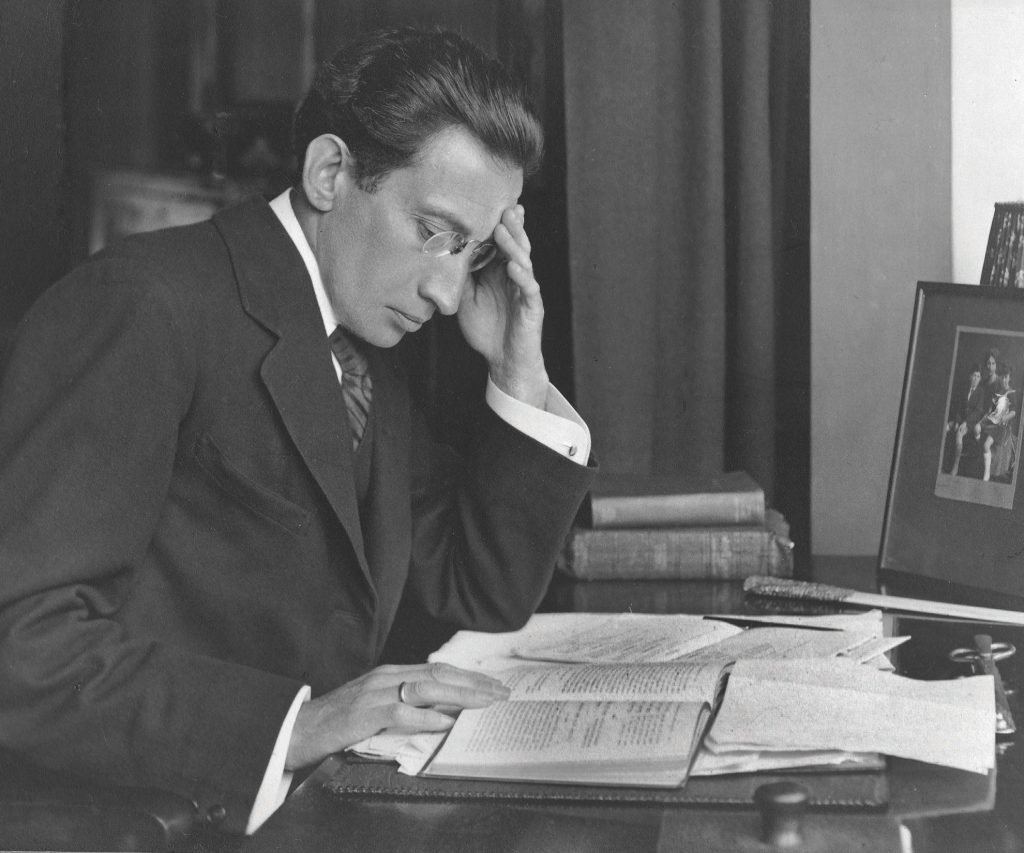
Israel Mattuck was the first Liberal rabbi in the UK. In 1911, he was recruited by Lily Montagu and Claude Montefiore from America to lead the Liberal Jewish Synagogue in St John’s Wood. He was a prolific preacher, ideologue, and scholar.

At the LJS, Dr Mattuck taught a Confirmation class, for 16-year-olds affirming their faith. He later took his notes and turned them into a book, entitled Essentials of Liberal Judaism so that everyone would know what he thought it meant to be a Jew.

Jews, he insisted, were not a race, but spanned the globe. What made people  Jewish was that they held Jewish ideas, followed a Jewish way of life, and kept Jewish observances. 

He wrote: “In spite of all the differences among them, the Jews of the world constitute a people; but they are a people in a different sense from any other people. Their unity is based on religion and history.”

Editing in 1947, Mattuck was eager to avoid any misconceptions. He insisted that this history was not an unbroken tale of misery and persecution, but one of great spiritual achievements. We were, he said, the first witnesses to God’s unity through the revelation at Sinai. Our history was that of the prophets, the priests, the scholars, the mystics, and all those who sought to reach closer to religious truth. 

Mattuck was clear that you could not be Jewish in anything more than name if you rested on race. You want to be a Jew? Walk humbly with God, taught Rabbi Mattuck from the prophet Micah. 

There is no race – only a demand to live right.

Now, you may be thinking, this all sounds a lot like the Critical Race Theory that Mr Trump so zealously warned us about. Indeed it is! And the American President has good reason to fear people taking a critical approach to race.

In the USA, races were invented to divide and rule people so that the wealthy whites could maintain their plantation economy. Poor whites were incentivised to enforce and uphold slavery by being given some privileges on the basis of their skin colour.

As a result, they felt they could identify with the rich whites, even though they had very little in common with them socially or economically. Using racism, they demeaned and humiliated the stolen Africans so that they would not have the confidence to challenge their own condition.

That is why race-critical scholars in America have the slogan: “race exists because of racism, not the other way round.”

In Race: A Theological Account, the African-American scholar of religion J. Kameron Carter shows how racist ideology had earlier roots – in how European Christians treated Jews. 

To create a system where Jews were second-class citizens, they needed an ideology where Jews were defective human beings. So they made up stories about Jewish bodies, Jewish blood, Jewish noses and hair – even Jewish horns – to justify their system of oppression. It was a nasty division for the purposes of exploitation.

This was exactly why Mattuck was so resistant to talk of Jews as a race, and so adamant about our religion.

In 1939, Mattuck wrote his first major work, What are the Jews?, which was a harsh rebuttal, not only to Jewish racial nationalism, but to racial nationalism as such.

We belong everywhere, he asserted. In the Age of Enlightenment, all citizenship should be communicated on civic grounds, never on ethnic or religious ones. 

A Jew, he felt, could be a nationalist, but they must first adhere to the religious calling. That is: they could be Jewish and happen to have nationalist leanings, but it could not define them as Jewish. 

Nevertheless, he thought that, by properly conceiving of ourselves as a religion, we would be more likely drawn to universal ethics. We would measure our Jewishness by our conduct towards others and our connection with our God, rather than by the supposed quality of our genetic make-up. We could pull apart the stories that separated people and build common bonds.

Racial thinking, thought Mattuck, must be resisted.

Race is a horrible and divisive lie. Religion is a beautiful and unifying truth.

I want to be open about why this idea is hard for others to hold.

It is more demanding. It says that nobody can take their Jewishness for granted, and must work for it. It means that you cannot be “born” Jewish, but have to live Jewish. It sets high ethical and practical demands on anyone who claims Jewishness.

When we say that there is no Jewish race, we also mean that somebody with an unbroken chain of matrilineal descent but without any Jewish upbringing or identity must also learn how to be Jewish, in the same way as a patrilineal Jew would. Everyone has to properly engage with the traditions and practices. Contrary to the doctrine of inclusion, this makes us more exclusive than the Orthodox.

Denying the existence of a Jewish race also has profound implications for how we engage with Israel. If we are a religious community, the demand to achieve a Jewish ethnic majority – still less racial supremacy – is not just grotesque. It is absurd. The measure of whether the state was sufficiently Jewish would not be by how many Jews there were, but by how well it upheld Jewish moral values.

Yet it is precisely because of this more demanding approach to Jewishness that I will keep holding onto it. The call that we be moral in our dealings, conscientious in our practices, and connected with our traditions is a far better one than the narrow pull of racial nationalism. 

Through such a religion, we may connect to every other Jew in a spirit of solidarity.

Through religion, we may connect to all of humanity, by recognising our shared Creator.

Through religion, we may draw nearer to the mystery that is our God.

Through religion, we may live out the words of our haftarah: “For you who revere My Name, the sunbeams of righteousness will rise, with healing in their wings. Then you will go forth and skip about like calves from the stall.”

Shabbat shalom.